
 Русский (RU)
 Українська (UK)
 Türkçe (TR)
 Italiano (IT)
 Français (FR)
 Português (PT)
 中文 (中国) (ZH)
 Español (ES)
 日本語 (JA)
 ไทย (TH)
 Deutsch (DE)
 Ελληνικά (EL)
 Polski (PL)
 Bahasa Indonesia (ID)
 Nederlands (NL)
 العربية (AR)
 한국어 (KO)

Middle school is a time when you begin discovering new interests, building confidence, and exploring what excites you. If you are looking for a way to do all of that beyond the classroom, summer programs for 8th graders can help you dive into your interests in a supportive environment while also preparing for the transition to high school. These programs let you engage in new activities, develop valuable skills, and experience subjects in a more hands-on and engaging way.
Imagine designing robots, conducting science experiments, solving math challenges, exploring engineering concepts, or working on team-based projects with students who share your interests. Some programs also allow you to experience life on a university campus, learn from professors and researchers, and participate in workshops that encourage creativity, critical thinking, and problem-solving. Some may focus on leadership, debate, or interdisciplinary learning that can help you build confidence and communication skills.
What kinds of summer programs are available for 8th graders?
Many universities, research institutes, and educational organizations offer summer programs in the form of workshops, camps, courses, lectures, and seminars specifically designed for middle school students. These programs may focus on STEM, mathematics, engineering, leadership, debate, data science, or interdisciplinary learning. You may participate in experiments, attend workshops, explore university labs, work on projects, and gain exposure to subjects that are not always covered deeply in school.
Finding a meaningful summer program can sometimes feel overwhelming. Some programs focus on lectures without enough interaction, while others may not provide opportunities for hands-on learning or mentorship. The best programs combine engaging activities, supportive instructors, and opportunities to actively participate in projects, discussions, and collaborative learning experiences.
To make the search easier, we’ve curated a list of 15 summer programs for 8th graders. The selection focuses on factors like the programs’ educational value, hands-on learning experiences, mentorship opportunities, and overall ability to help you explore new interests while building confidence and skills for the future.
For adjacent options, consider online summer programs for 8th graders.
15 Summer Programs for 8th Graders
1. Carnegie Mellon University’s Summer Engineering Experience (SEE)
Location: Carnegie Mellon University’s College of Engineering, Pittsburgh, PA
Cost: Free
Dates: July 13-17
Application deadline: March 23rd
Eligibility: Rising 8th to 9th grade students in the U.S.
Carnegie Mellon University’s SEE is a fully funded one-week engineering exploration opportunity for rising 8th and 9th-graders. During the program, you will explore design and various engineering disciplines through presentations and project work. You will complete two projects, for which you will work with items readily available at home.
The first project requires you to work with a group of peers to solve a real problem. The second project requires individual effort and the application of creative engineering design. Both projects are designed to help you practice critical thinking and apply design concepts to tackle challenges.
Why it stands out: You will explore engineering design through project work focused on problem-solving and explore engineering disciplines in a university environment at no cost.
2. Immerse Education’s Pre-University Summer School

Location: Cambridge, London, Oxford, Singapore, Sydney, Tokyo, and Toronto
Cost: Varies; summer school scholarship available through our bursary programme
Dates: Two weeks during the summer
Application deadline: Multiple summer cohorts with rolling admissions
Eligibility: High school students worldwide, ages 13-18
The Academic Insights Program allows high school students to experience university life firsthand. You will live on campus and study in small groups of 7 to 10 students, and learn from tutors from top universities like Oxford and Cambridge. You can explore a wide range of subjects, including computer science, economics, architecture, AI, business management, medicine, and philosophy.
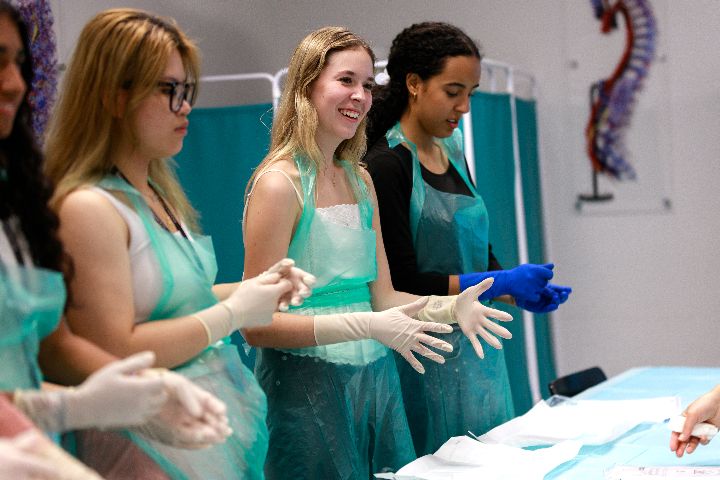
The courses are experiential and focus on hands-on learning, so you may conduct dissections in medicine, design a robotic arm in engineering, participate in a moot court for law, or build creative writing portfolios and business case studies. At the end of the program, you will complete a personal project and receive written feedback along with a certificate of completion. You can find more details about the application here.
Why it stands out: You will explore a chosen field under expert academics, work closely with a university student mentor, complete a project you can add to future applications, and experience genuine university college life.
3. MIT’s dynaMIT
Location: MIT Campus, Cambridge, MA
Cost: Free
Dates: One-week sessions in the summer (separate sessions for rising 6th – 7th graders and rising 8th – 9th graders); dates TBA
Application deadline: TBA
Eligibility: Rising 6th through 9th-grade students; the program is meant for students in the Greater Boston area
MIT dynaMIT is a free STEM-focused summer learning opportunity for middle school students. You will engage in hands-on activities designed to help you explore your interest in science and engineering under the mentorship of MIT undergraduate and graduate students. You will also participate in experiments and exercises focused on scientific inquiry.
You will gain experimental knowledge in a range of STEM fields, including electricity, forensics, materials science, and magnetism. The program is designed to offer you extensive STEM exposure over a week.
Why it stands out: It lets you explore various STEM fields through hands-on experiments and a project-based curriculum while connecting with MIT students.
4. UChicago Department of Mathematics Young Scholars Program
Location: University of Chicago, Chicago, IL
Cost: $250 – $1,000 based on family income (more information here); scholarships available
Dates: June 29th – July 24th
Application deadline: April 10th
Eligibility: Students in grades 7-12 in the Chicago area
The UChicago Department of Mathematics Young Scholars Program is a four-week day camp for middle and high school students interested in exploring advanced math. The curriculum focus can vary by year; the recent session focused on number theory. You will learn from faculty members, attend two lecture-based classes each day, and engage in small group sessions led by undergraduate mathematics majors.
You will also work on research projects and learn how to apply mathematical concepts to real-world problem-solving. The experience can help you prepare for high school, competition, and college math.
Why it stands out: It lets you deepen your understanding of mathematics through faculty-led lectures, small-group problem solving, and research-based projects focused on advanced mathematical thinking.
5. UC Berkeley and The Lawrence Hall of Science Teen Research Programs
Location: UC Berkeley Campus, Berkeley, CA
Cost: Varies by session; typically starting at $1,550 + optional residential fee; financial aid is available
Dates: Multiple week-long sessions between June and July
Application deadline: Rolling; typically, applications close on Sunday, the week before the program/residential package begins
Eligibility: Students entering grades 7-9 (international student eligibility not specified)
The Lawrence Hall of Science at UC Berkeley runs research-focused programs for middle schoolers across STEM fields, including tracks in body systems and biomedical innovations, animal behavior, biomedical engineering, and AI/machine learning. UC Berkeley departments and faculty design sessions, and graduate students and postdoctoral researchers conducting active university-level science lead the instruction.
You will spend the week exploring Berkeley’s labs, conducting hands-on investigations with scientific tools, and connecting with STEM professionals. Both residential and commuter options are available. At the end, you will receive a certificate of completion from UC Berkeley.
Why it stands out: It lets you explore interdisciplinary STEM fields through laboratory investigations, discussions, and collaborative research work on a university campus.
6. The Ohio State University’s Data Science Summer Camp
Location: The Ohio State University, Columbus, OH
Cost: $275; limited need-based scholarships available
Dates: July 6-10
Application deadline: June 1st
Eligibility: Rising 7th – 9th grade students enrolled in schools within the State of Ohio
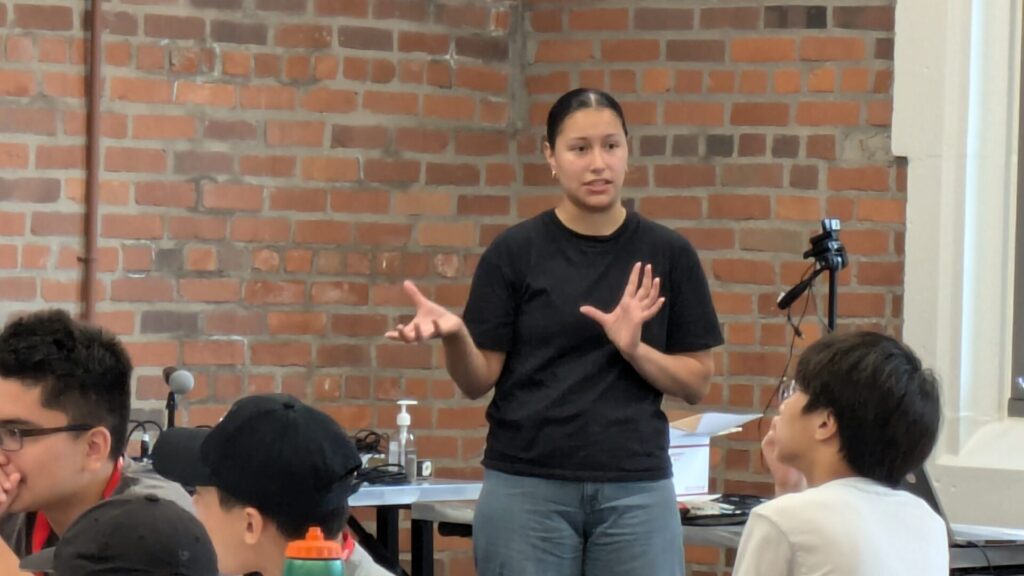
This is a one-week summer camp designed for middle school students interested in data science. You will spend the week learning scientific methods and processes applied in data extraction. You will also work with other students, connect with university students, and receive mentorship from experts in data analysis.
Activities are focused on problem-solving and analytics, helping you work with data and explore the applications of data science. You will also explore careers and future study opportunities in data science and analytics.
Why it stands out: It lets you build skills in data science through team-based projects under the guidance of scientists and Ohio State students.
7. Purdue University Physics Inside Out
Location: Purdue University, West Lafayette, IN
Cost: Free
Dates: June 8-12
Application deadline: April 15
Eligibility: Current 7th and 8th graders; international student eligibility not specified
Physics Inside Out is a free week-long event focused on principles of physics and their applications. You will explore a range of topics, including thermodynamics, nanotechnology, lasers, the electromagnetic spectrum, and magnetism, through hands-on activities and instructional sessions. You will also participate in laboratory experiments and work under the guidance of research staff and faculty at Purdue University.
The schedule allows you to explore college facilities, including the PRIME Lab particle accelerator and the Birck Nanotechnology Center. Throughout the week, you will connect with graduate researchers and professors to learn about future career pathways in astronomy and physics.
Why it stands out: It lets you explore physics through hands-on lab experiments in Purdue University labs, connect with researchers and faculty, and explore careers in the field at no cost!
8. CEISMC Summer P.E.A.K.S. @ Georgia Tech
Location: Georgia Institute of Technology, Atlanta, GA
Cost: $400 – $550; scholarships available
Dates: Weekly sessions between June and July; dates vary by session
Application deadline: Rolling
Eligibility: Rising 6th to 8th graders; international student eligibility not specified
CEISMC Summer P.E.A.K.S. is a series of short, focused summer sessions for middle schoolers who want to explore a topic in STEAM beyond the school curriculum. You can choose tracks in AI, architecture, music production, engineering, LEGO robotics, film production, and game design to explore interdisciplinary concepts through hands-on activities and project-based learning.
You will attend sessions on the Georgia Tech campus, work with peers on assignments, and learn from Georgia Tech faculty/staff, students, and local STEAM teachers. Most programs end with a final presentation or showcase, where you share your experience and projects with peers, instructors, and family members.
Why it stands out: It lets you explore STEAM areas through experiential learning and opportunities to build problem-solving, creativity, and presentation skills in a collaborative environment.
9. American Museum of Natural History Science Alliance Middle School Program
Location: American Museum of Natural History, New York, NY
Cost: $1,300/summer course; tuition assistance available
Dates: Multiple week-long summer courses available; dates vary by track
Application deadline: Varies by session
Eligibility: 6th to 8th graders; courses are typically not open to international students
Science Alliance Middle School Program, offered by the American Museum of Natural History, allows middle school students to explore science and museum-related fields through hands-on activities. You can choose from tracks in evolutionary biology, anthropology, geology, conservation science, astrophysics, and earth science.
Each track lets you learn about scientists’ work through fieldwork, lab work, experiments, and museum tours. You will also connect with scientists as well as examine, collect, and present scientific data.
Why it stands out: It lets you explore subjects like astrophysics, biodiversity, anthropology, and conservation science while learning from museum scientists and engaging in hands-on scientific exploration.
10. The College of New Jersey’s iSTEM Summer Academy
Location: The College of New Jersey, Ewing, NJ
Cost: $625/week
Dates: Week 1: July 6-10 | Week 2: July 13-17
Application deadline: TBA
Eligibility: Rising 8th to 12th graders; international student eligibility not specified
The iSTEM Summer Academy at TCNJ allows middle and high schoolers to spend one or two weeks exploring robotics, engineering, and product design through hands-on activities. In the MakerCraft week, you will work with CAD software, MATLAB, and Simulink to design and program a wearable product.
This experience can help you explore real applications of electronics, 3D printing, coding, and laser cutting. The iSTEM Automation and Robotics week will let you program microcontroller-based devices that help a robot perform various tasks. You will learn how to design automated circuits and build prototypes with rapid prototyping technology.
Why it stands out: It lets you explore advanced engineering and tech applications through real-world prototype and technology projects over the course of one to two weeks.
11. Stanford Pre-Collegiate Summer Institutes
Location: Virtual
Cost: $3,200; financial aid available
Dates: Session One: June 15-26 | Session Two: July 6-17
Application deadline: March 13th
Eligibility: Students in grades 8-11 from the U.S. and around the world
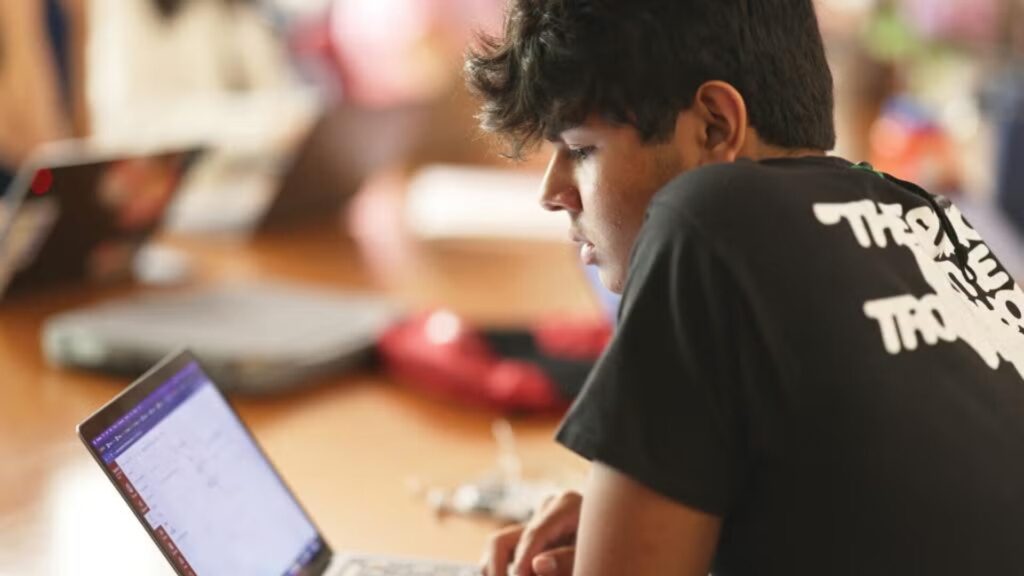
Stanford’s Pre-Collegiate Summer Institutes offer middle and high school students access to fully virtual academic sessions over the summer. You can choose from courses across the sciences, math, humanities, business, and social sciences, with options ranging from game design to philosophy.
Each class typically consists of lectures, discussions, homework, and project work. Some courses also let you work on a final project and present your work at the end. You will study alongside peers from around the world, gaining exposure to cross-cultural collaboration and a university classroom environment.
Why it stands out: It lets you explore a field of choice through virtual sessions led by Stanford instructors.
12. Duke Pre-College: Middle School Track
Location: Duke University, Durham, NC
Cost: $6,050 (residential) | $3,950 (commuter); scholarships available
Dates: June 13-24 | June 28th – July 9th | July 13-24
Application deadline: Rolling
Eligibility: Middle school students, ages 11 and up, who have completed one year of middle school with a 3.0+ GPA; students must be 13 or older to live on campus during the program. International students can apply
Duke University offers one of the more academically focused summer programs for 8th graders, with pre-college courses for middle school students across fields, from creative writing to aerospace engineering. You will explore fundamental concepts related to the chosen field through lectures, guided exercises, discussions, and hands-on collaborative work.
The curriculum typically includes capstone projects that let you apply learned concepts, culminating in written work, designs, plans, tech solutions, and prototypes. You will work with peers and learn from Ph.D. students. At the end, you will present your work.
Why it stands out: It lets you explore a discipline of choice through project work and lectures within a university classroom-like setting.
13. Arizona State University’s School of Computing and Augmented Intelligence Summer Camps
Location: Arizona State University (ASU), Tempe, AZ
Cost: $1,000 for the Game and AI camp | $900 for robotics camps
Dates: Two weeks in the summer; dates vary by camp
Application deadline: Rolling
Eligibility: Students in grades 7-12; grade-wise eligibility varies by camp; typically limited to U.S. students, but you can contact the ASU programme team to check international student eligibility
ASU’s tech camps let you spend about two weeks learning about robotics, programming/coding, and game design. Depending on the camp, you will learn about 3D animation, programming logic, game development, and game mechanics. You will also work with AI tools to generate sound effects, music, and 2D images for your game project.
You will receive assistance and support from ASU faculty and student assistants. At the end of the camp, you will complete developing your own original projects, which may be robotic devices or games, and present your work to peers and the camp instructor.
Why it stands out: It lets you explore emerging tech fields through project work, exposure to advanced tools and technologies, and opportunities to connect with faculty in a university setting.
14. MST@MSU: Mathematics, Science, and Technology at Michigan State University
Location: Michigan State University, East Lansing, MI
Cost: $75 non-refundable application fee ($95 after March 1); tuition: $1,045 for commuters/$2,100 for residential participants (if paid before March 1st) | $1,140 commuter fee/$2,490 residential fee (after March 1st)
Dates: June 22-26 | July 6-10 (you can attend one or both weeks)
Application deadline: May 8th
Eligibility: Students worldwide in grades 7 and 8; applicants must submit one of the following test scores: SAT Math or Evidence-Based Reading & Writing score of 480+, ACT composite/section score of 18+, CogAT at the 90th percentile, or IQ test scores
MST@MSU is a one-week summer program where you will take three two-hour classes in science and math each day on the Michigan State University campus. You can choose from classes in nuclear astrophysics, 3D animation, proteins, data science, game design, and calculus. The focus and activities vary by track.
For instance, certain science tracks let you work like a researcher, conduct lab experiments, collect data, and present your findings, following the process used by university scientists. You may also gain exposure to real scientific research being conducted at the university. The program is designed to let you engage in challenging STEM work while still keeping up with your standard school curriculum.
Why it stands out: It lets you build foundational STEM skills through hands-on, interdisciplinary classes in math, science, and technology while developing problem-solving and research thinking in a supportive learning environment.
15. Summer Transitional Enrichment Program (STEP) @ University of Wisconsin-Madison
Location: University of Wisconsin-Madison, Madison, WI
Cost: $1,500/session + $75 non-refundable application fee; scholarships available for WI students
Dates: Session 1: June 14-19 | Session 2: June 21-26
Application deadline: May 1st
Eligibility: Students finishing grades 6th to 8th; open to international students
STEP at the University of Wisconsin-Madison is a one-week residential program that lets middle school students enroll in accelerated courses to prepare for college. You will explore a field of interest, engage in hands-on learning, and find opportunities to build and refine problem-solving, critical thinking, and creativity.
You will work on projects to apply what you learn during the week. The program also offers group activities and social programming to help you connect with peers and get a taste of life on a college campus.
Why it stands out: It lets you explore academic subjects through hands-on residential learning while building independence, creativity, and problem-solving skills in a collaborative campus environment.
Start Thinking Ahead With Summer Learning
Eighth grade is a good time to try subjects more independently, from robotics and data science to debate, engineering, and creative projects.
The 15 summer programs for 8th graders featured here include engineering projects, math challenges, lab experiences, robotics, data science, and creative interdisciplinary learning.
From CMU and MIT to Berkeley, Duke, Stanford, Georgia Tech, and Purdue, these options build confidence through hands-on discovery and academic exploration.
Want to prepare early for future academic opportunities? Explore our University Preparation blogs for study skills, subject choices, application guidance, and next steps.