15 Data Science Courses for High School Students

TL;DR
You'll find 15 courses here, ranging from a free, fully funded week at Harvard to a three-week residential program at Columbia costing over $12,000. Most teach Python or R alongside statistics, visualization, and machine learning, though a few, like Syracuse's no-code option, are built for complete beginners. Programs run from one week to three, with eligibility spanning grades 8 through 12 depending on the institution. UC Berkeley's Pre-College Scholars stands out by placing you in actual undergraduate data science courses, ranked first in the US, alongside current Berkeley students for transferable credit. Immerse Education's Artificial Intelligence Summer School is among the internationally accessible picks, a two-week program in Oxford for students aged 13 to 18 with bursaries available.
There is a possibility you have experienced life with data science long before you knew what it was called. The playlist that guesses your next song, the map that reroutes you ten minutes before traffic builds, the sports broadcast that flashes a win probability mid-game. All of it runs on the same basic idea: collect data, find the pattern, make a prediction. At some point you start wondering how any of that actually gets built, and that question is usually what pulls people into the subject.
A proper course answers it far better than a tutorial video can. You will normally start with Python or R, then work through the parts nobody warns you about, like cleaning a messy dataset before you can analyze it. From there you move into visualization, where the challenge is making a chart that communicates one clear idea, and into statistical modeling, where you learn to test whether a pattern is real or just noise. Most courses also cover the basics of machine learning, so you leave understanding how an algorithm learns from examples and where it tends to go wrong.
Why take a data science course?
A course is often the first time you get to sit inside a university department instead of reading about one. You’ll work in campus computer labs, take instruction from faculty and graduate students who use these tools in their own research, and live alongside students who chose to spend their summer doing the same thing. That matters for the college application in practical ways.
You come away with a certificate or transcript entry, sometimes transferable credit, and a project you can point to in an essay or interview instead of describing a general interest in tech. It also tells you something more useful than any brochure will, which is whether you actually enjoy this work when it gets tedious.
For adjacent opportunities, consider ai summer programs and computer science programs for high school students.
To help you compare your options, here are 15 data science courses for high school students. They were shortlisted on academic depth, hands-on project work, and the reputation of the institution running them.
15 Data Science Courses for High School Students
1. Data Science in Action, Harvard T.H. Chan School of Public Health
Location: Boston, Massachusetts
Cost: None
Acceptance rate/cohort size: Selective; ~28 students
Dates: June 29th – July 3th (online, self-paced) and July 6–17 (in person)
Application Deadline: April 1st
Eligibility: High school students (rising freshman through senior) with basic algebra and an interest in attending college with a STEM focus; open to international students
This program is built around one concrete outcome: a car that drives itself using a neural network you programmed. You begin with a week of self-paced Python classes online, then move to campus for two weeks of lectures on statistical concepts, machine learning methods, and how those methods are used in fields including biomedicine.
You’ll work in teams, and each team receives a laptop, a Raspberry Pi, and the materials to build the car. For the final demonstration, you photograph physical objects, train your own classification algorithms to recognize them, and install the result into a camera-equipped toy car that navigates by what you built. Lunch hours are reserved for conversations with machine learning researchers from academia and industry.
Why it stands out: It is fully funded and closes with a working self-driving demonstration built on algorithms you wrote, which is rare for a free high school program.
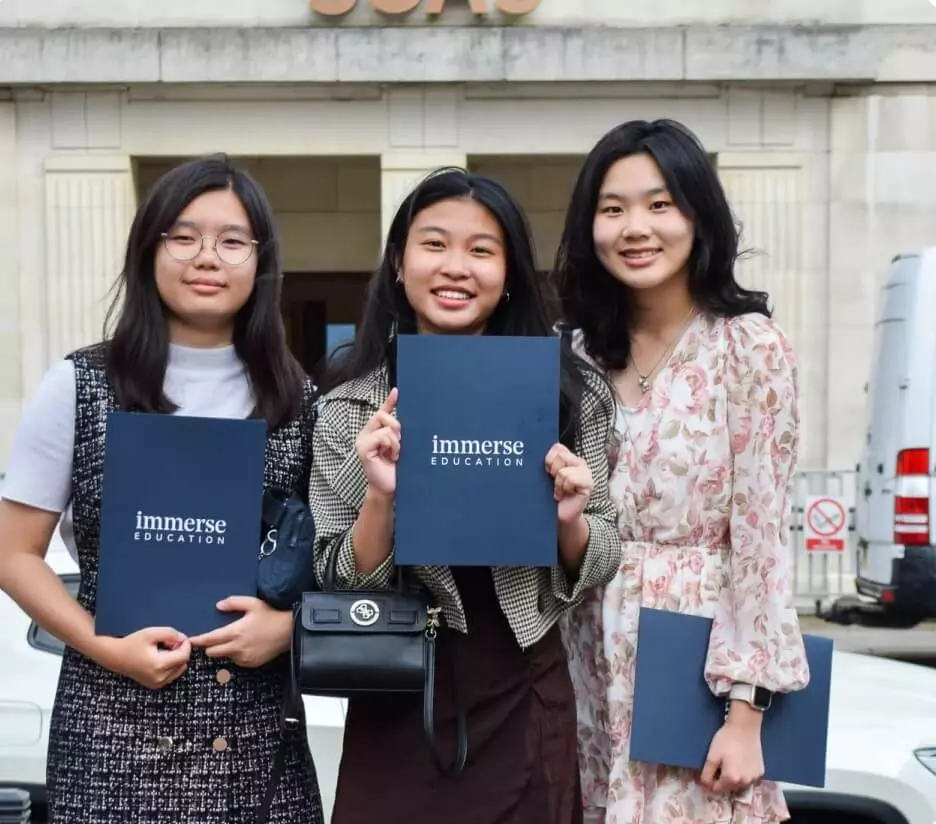
2. Immerse Education’s Artificial Intelligence Summer School

Location: Oxford
Cost: Varies; summer school scholarship available through our bursary programme
Acceptance rate/cohort size: Selective; an average of 7 participants per class
Dates: 2 weeks during the summer
Application Deadline: Multiple cohorts with rolling admissions
Eligibility: Students worldwide aged 13-18 currently enrolled in middle or high school; open to international students
The Academic Insights Program provides school students with an opportunity to take undergraduate-level classes at universities around the world. Participants work with academics from universities like Oxford, Cambridge, and Harvard in classes of 4-10 students. They attend university-style lectures and 1:1 weekly sessions with their tutor.
The program includes exploring machine learning, neural networks, and AI ethics through hands-on coding projects, team challenges, and simulations led by Oxford and Cambridge tutors. By the end of the program, you will complete a personal project and receive written feedback and a certificate of completion. You can find more details about the application here.
For more information, have a look at our guide on how to learn AI as a high schooler.
Why it stands out: It gives you structured, project-based AI training with expert mentorship, helping you build real machine learning and ethical AI understanding early.
3. Wharton Global Youth Program, University of Pennsylvania – Wharton Data Science Academy
Location: Philadelphia, Pennsylvania
Cost: $10,599 program fee plus $100 non-refundable application fee; need-based scholarships limited to Philadelphia public and charter school students, National Education Opportunity Network participants, and partner-organization nominees
Acceptance rate/cohort size: Highly competitive; approximately 75 students
Dates: Session 1: June 21st – July 11th; Session 2: July 12th – August 1st
Application Deadline: March 18th
Eligibility: Currently enrolled high school students in grades 10–11; strong background in mathematics and coding; interest in data analytics, with previous understanding of statistics preferred; minimum 3.3 unweighted GPA; non-native English speakers submit TOEFL 100, IELTS 7, or Duolingo 130 unless their school teaches in English; open to international students
In this program, you spend three weeks on Penn's campus with a curriculum that mirrors upper-level Wharton undergraduate courses. You start with data wrangling and visualization in R, using RStudio, RMarkdown, dplyr, and ggplot, then move through probability, hypothesis testing, regression, classification, cross-validation, LASSO, and tree-based ensembles.
Later modules cover text analytics before introducing neural networks and large language models, with Python and Colab used for the deep-learning work. You finish by building a capstone solution to a real-world problem and presenting it at the Data Science Live showcase. Guided labs, daily hands-on projects, and recitations with Penn teaching assistants keep the work practical, and finishing students earn a Wharton Global Youth Certificate of Completion.
Why it stands out: It is led by Wharton statistics professor Linda Zhao, a machine learning specialist who teaches modern data mining to undergraduate, MBA, master's, and PhD students across Penn.
4. Dartmouth College / Dartmouth Precollege – Dartmouth Precollege Summer Scholars – Data Science
Location: Hanover, New Hampshire
Cost: $8,299 (residential); $4,999 (commuter) + $100 application fee; international registration fee: $379 residential/$239 commuter
Acceptance rate/cohort size: Selective; cohort size not stated
Dates: June 28th – July 10th
Application Deadline: March 24th
Eligibility: High school students ages 15–18 as of spring; grades 9–12; STEM knowledge; completed Algebra and Geometry; 3.5+ GPA recommended; open to international students with English proficiency
In this program, you explore how quantitative analysis, algorithms, and technology can turn raw data into useful insights. You build Python fundamentals, work with Pandas and NumPy, perform exploratory data analysis, and create visualizations with Matplotlib and Seaborn. You apply these skills through projects involving Spotify data, interactive visualizations, a Python murder-mystery exercise, a simple game, and an AI chatbot.
You also study natural language processing through text analysis, sentiment analysis, and word clouds. You work with real-world datasets while learning to interpret results critically and question assumptions. The course culminates in a project, and you can retain your coding notebooks and programs for future use.
Why it stands out: It combines Python-based data analysis and natural language processing with varied hands-on projects involving visualization, AI, games, and real-world datasets.
5. Department of Biostatistics, Harvard T.H. Chan School of Public Health – StatStart
Location: Boston, Massachusetts
Cost: None
Acceptance rate/cohort size: Selective; ~8 students
Dates: July 6–30; group research project presentations July 31st
Application Deadline: May 15th
Eligibility: Rising high school juniors or seniors, with freshmen and sophomores eligible but given lower preference; basic algebra; able to commute to Boston; U.S. citizens or permanent residents; not open to international students
In the StatStart program, you spend a month at Harvard's Department of Biostatistics learning how data science is used to answer public health questions. You take non-credit classes in R programming and introductory statistics for four hours a day, four days a week, split between lectures and hands-on lab work.
You then apply those skills to a group research project and present it at a closing session, building statistical programming, computational thinking, and problem-solving skills along the way. The course is developed and taught by the department's own Biostatistics graduate students, who also mentor you directly and advise you on college applications and careers. Attendance is free, with a CharlieCard transit pass and daily lunch provided.
Why it stands out: It is a free, month-long biostatistics and data science course at a leading public health school, created and taught by the department's own graduate students for local high school students who are first-generation or from low-income backgrounds.


6. Wharton Global Youth Moneyball Academy
Location: The Wharton School, University of Pennsylvania, Philadelphia, Pennsylvania
Cost: $10,599; need-based scholarships are available
Acceptance rate/cohort size: Selective; approximately 75 students
Dates: July 5–25
Application Deadline: March 18th
Eligibility: Rising high school juniors and seniors (grades 10 and 11) with a strong math background and a love of sports; international applicants are welcome
The curriculum covers material from several Wharton courses, including STAT 101 and STAT 470, and goes considerably beyond what AP Statistics covers. You’ll learn to read and write code in R, the statistical programming language used by professional analysts, and apply it to real sports datasets to produce the kind of analysis you would read in outlets like FiveThirtyEight or Fangraphs.
Guest speakers from organizations including the Washington Nationals, Los Angeles Lakers, and Philadelphia Eagles share how they use data in their work. The program closes with a capstone team project in sports analytics, and strong work may be published in the Wharton Sports Analytics Journal.
Why it stands out: You work through a Wharton-level statistics curriculum and hear from data analysts at professional sports organizations, making this a strong option if you are drawn to the intersection of data and athletics.
7. Columbia Pre-College: Data Science and Machine Learning 1
Location: Columbia University Morningside Campus, New York, New York
Cost: Residential (3-week): $12,838; Commuter (3-week): $6,381; need-based financial aid is available for commuter and online tracks
Acceptance rate/cohort size: Selective; maximum 20 students per section
Dates: Summer A (in person): June 29th – July 17th; Summer B (in person): July 21st – August 7th
Application Deadline: Rolling basis; final deadline: March 2nd
Eligibility: Current high school students enrolled in grades 8 to 12; open to international students
In this course, you start with an overview of how data science and machine learning work in the real world, then move into introductory Python coding and a set of core machine learning algorithms. By the end, you will be able to analyze a dataset, identify patterns, and present your findings in a way that communicates something meaningful rather than just showing numbers.
The course is taught at Columbia University on the Morningside Campus in New York, and residential students live on campus and participate in extracurricular activities and events alongside other pre-college participants. The course equips you for the advanced Data Science and Machine Learning 2 course if you want to go further.
Why it stands out: You get a genuine beginner introduction to both data science and machine learning in one of the US's most recognized academic environments, with no prerequisites required.
8. Cornell Tech Summer Innovation Intensives
Location: Cornell Tech campus, Roosevelt Island, New York, New York
Cost: $6,500 + $45 application fee
Acceptance rate/cohort size: Competitive; cohort size not disclosed
Dates: July 13–30
Application Deadline: Rolling basis beginning in February
Eligibility: Students aged 15–19 who have completed at least their sophomore year of high school by the program start date; residing in the NYC Metropolitan Area for commuting; not open to international students
Cornell Tech's inaugural high school program sits on the graduate-level tech campus on Roosevelt Island and covers artificial intelligence, ethical coding, data science, and product innovation across three immersive weeks. You analyze large sets of data, design technology solutions to real-world problems, and pitch a final AI project at a showcase, which also earns you actual college credit.
The curriculum draws directly from the campus's focus on building AI systems for real applications, and you work in the same building where Cornell's graduate students and researchers are doing the same. The campus is connected to the rest of New York City by tram, subway, and bus, so sessions can include industry engagement across the city.
Why it stands out: You work and learn on a graduate-level AI campus, build a real project, and earn college credit, all without needing any coding background going in.
9. NYU Tandon Summer Program for Machine Learning
Location: NYU Tandon School of Engineering, Brooklyn, New York
Cost: $3,180
Acceptance rate/cohort size: Selective; maximum of 24 students per class
Dates: Session 1: June 15–27; Session 2: July 6–17; Session 3: July 20–31
Application Deadline: Session 1: April 17th; Sessions 2 & 3: May 1st
Eligibility: Current high school students in grades 9, 10, or 11 who have completed Algebra 2 and have some programming experience in any language; minimum 3.0 GPA required; open to international students
This two-week program puts the mathematics and computer science behind machine learning front and center. You work through how algorithms are built to recognize images and voices, control autonomous vehicles, monitor real-time traffic, and support diagnostic medical technologies. Core topics include model development through cross-validation, linear regression, and neural networks, along with how logic and mathematics are used to teach a computer to improve at a task over time.
A strong emphasis is placed on understanding how engineering problem-solving techniques apply to actual societal challenges, not just abstract concepts. Those living on campus in NYU's Washington Square Park residence halls can also take part in organized field trips to New York City attractions.
Why it stands out: The focus on the mathematical principles underlying ML, rather than just teaching you to use existing tools, gives you a more durable foundation for future computer science study.
10. Syracuse University Summer College: Data Visualization and Analysis
Location: Syracuse University, Syracuse, New York
Cost: Residential: $2,795; Commuter: $2,309; need-based financial aid, partial scholarships, and discounts are available
Acceptance rate/cohort size: Not-selective; limited cohort sizes
Dates: July 19–24
Application Deadline: May 1st
Eligibility: Rising high school sophomores, juniors, or seniors, or current high school graduates; open to international students
This is a deliberately no-code approach to data science, which makes it a strong starting point if you have never worked with data before. You begin by understanding what data is, how it is captured, and how to assess and clean a raw dataset. From there, you move into Microsoft Excel for your first visualizations, then into Tableau, which is widely used by working data analysts, to build dashboards and explore design principles for communicating data clearly.
The course also covers storytelling methods, so you learn not just to make a chart but to build a narrative around what the data shows. Completion earns a certificate of completion, with the option to request a noncredit transcript from Syracuse.
Why it stands out: It is one of the few data programs designed specifically for students with no prior experience, so you leave with practical visualization skills rather than unfinished code.
11. UC Berkeley Pre-College Scholars
Location: UC Berkeley, Berkeley, California
Cost: Session C: $15,987; Session D: $14,687; the Residential track offers one highly competitive media scholarship covering full tuition, room, and board
Acceptance rate/cohort size: Highly competitive; over 300 high school scholars
Dates: Session C: June 22nd – August 14th; Session D: July 6th – August 14th
Application Deadline: March 17th
Eligibility: Domestic and international students who have completed 10th or 11th grade, maintain a minimum 3.0 GPA, and are at least 16 years old by June 21; open to international students
Unlike most programs on this list, Berkeley Pre-College Scholars does not deliver its own curriculum. Instead, you enroll in two actual Berkeley Summer Sessions undergraduate courses and take them alongside current Berkeley students, earning official university credit that may transfer to your future college.
Data science is one of the most popular subject areas, and Berkeley's undergraduate data science program is ranked first in the US, so the pool of available courses reflects that strength. Living on campus in Bowles Hall puts you a short walk from the main campus and from the range of Berkeley facilities, including computer centers, the library, and recreational sports. Undergraduate resident assistants and mentors run a structured schedule of activities and excursions.
Why it stands out: You take real Berkeley undergraduate courses for credit alongside current students, which gives you a considerably more authentic preview of university-level data science than most pre-college programs can offer.
Join the Immerse Education 2027 Essay Competition
Follow the instructions to write and submit your best essay for a chance to be awarded a 100% scholarship.
12. Duke Pre-College: Introduction to Artificial Intelligence
Location: Duke University, Durham, North Carolina
Cost: Residential: $6,050; Commuter: $3,950; partial or full scholarships are available
Acceptance rate/cohort size: Selective; approximately 15 students per class
Dates: July 13–24
Application Deadline: Rolling enrollment until course reaches capacity
Eligibility: Current high school students in grades 9–12; must have completed one year of high school; students must be at least 14 years old by the session start date; open to international students
This two-week residential course introduces you to the concepts that sit beneath modern AI systems: machine learning fundamentals, algorithms, data-driven decision-making, and the ethical questions around bias, privacy, and accountability. The course is taught by Duke PhD students, faculty, and affiliated instructors, and combines daily lectures with interactive activities and a required capstone project that you design and present.
The capstone asks you to outline a conceptual AI application, specifying how data, algorithms, and ethical safeguards would work together to solve a real-world problem. Residential students live on Duke's East campus, eat in campus dining, and participate in evening workshops covering leadership, college preparation, and community service, plus organized off-campus excursions.
Why it stands out: The mandatory capstone project pushes you to think through an AI application end-to-end, including its ethical dimensions, which is closer to how the subject is taught at university than most high school AI introductions.
13. Quinnipiac University Data Sciences Lab
Location: Quinnipiac University, Hamden, Connecticut
Cost: Residential: $3,600; Commuter: $2,600
Acceptance rate/cohort size: Selective; typically 25–30 students
Dates: July 6–17
Application Deadline: June 1st
Eligibility: Current high school students, typically aged 15 to 18; open to international students
The Data Sciences Lab at Quinnipiac takes a deliberate, week-by-week structure rather than treating the subject as a single block. Week one moves from the basics of what data is, through probability and statistics, algorithms, R programming, and data visualization, including using tools like Canva and ggplot, and a discussion of whether AI-generated visualizations are actually accurate.
Week two turns to applied work: bioinformatics and medicine, data ethics through case studies of breaches and algorithmic bias, machine learning through a real-world survivorship prediction exercise, and career conversations with Quinnipiac alumni working in fields like sports analytics and epidemiology. The program closes with a Friday afternoon poster session.
Why it stands out: The day-by-day schedule gives you a genuinely broad tour of data science in two weeks, from basic statistics through machine learning to ethics and careers.
14. UCLA Computer Science Summer Institute / UCLA Samueli School of Engineering – UCLA CSSI Track 2 — Intro to Artificial Intelligence (COM SCI 97 Lec 1)
Location: Los Angeles, California
Cost: Certificate: $3,150; course credit: $3,821 domestic/$4,846 international; limited program-fee scholarships available
Dates: June 22nd – July 10th
Application Deadline: June 15th
Eligibility: High school students; age 15+ by June 22nd; minimum 3.5 GPA; grades 10–12 recommended; open to international students
In this course, you study how real-world data can be analyzed using machine learning, data analytics, and statistical modeling for prediction. You work through data selection and cleaning, feature engineering, model selection, and prediction methods as parts of the data science lifecycle.
The course is adapted from UCLA’s CS 188 data science curriculum and combines theoretical instruction with a hands-on overview of the data science domain. You also complete coursework, coding activities, group discussions, exams, and a tutor-supervised capstone project. Through this work, you develop skills in data preparation, analytical reasoning, predictive modeling, and applying data science techniques to practical problems.
Why it stands out: It gives high school students hands-on exposure to a UCLA-level data science and AI curriculum, with the option to earn four units of UCLA course credit.
15. UC Irvine, Donald Bren School of Information and Computer Sciences / DS4ALL – Data Science for All Summer Program for High Schoolers
Location: Irvine, California
Cost: $1,250 per student
Dates: July 6–10
Application Deadline: April 18th
Eligibility: 9th, 10th, or 11th grade high-school students as of April; Algebra II or Integrated Math II as a prerequisite; five full days of in-person attendance on the UCI campus, with a certificate awarded only for absence-free completion; open to international students
In this program, you spend a week at UC Irvine learning how data science and machine learning work, starting with data modeling, cleaning, wrangling, and visualization. You build and run your analyses in Apache Texera (Incubating), the open-source workflow platform developed at UCI, which lets you work with a no-code and low-code approach even with a limited computing background.
Across the five days, you create datasets and workflows, use Texera operators and Python user-defined functions, and move from model training into inference, classification, and clustering. You finish with a capstone project on real data, presented at a Day 5 showcase for families. UCI and UCLA professors and PhD students teach throughout, and absence-free completion earns a certificate.
Why it stands out: It teaches data science and AI/ML through Apache Texera, the open-source platform built at UC Irvine by the program's own faculty organizer, so you can run real machine-learning workflows without prior coding experience.
Frequently asked questions: Data Science Courses for High School Students
Do you need coding experience before taking a data science course?
No, several programs are specifically built for complete beginners. Syracuse University's Data Visualization and Analysis course takes a deliberately no-code approach, starting with Excel before moving into Tableau. UC Irvine's DS4ALL program uses a no-code and low-code platform so you can run real machine-learning workflows without prior programming background. Consider having a look at what data science and AI courses involve and how to build a career in them.
Which data science courses offer college credit?
A handful award transferable credit rather than just a certificate. UC Berkeley's Pre-College Scholars has you enroll directly in actual Berkeley undergraduate courses, earning official credit that may transfer to your future university. Cornell Tech's Summer Innovation Intensives and UCLA's CSSI Track 2 both offer a credit-bearing option alongside a certificate-only path. Most others, including Harvard's Data Science in Action and Dartmouth's Precollege Summer Scholars, award a certificate of completion rather than transcripted credit, so confirm which outcome matters most to you before enrolling.
Are there free data science courses for high school students?
Yes, two standout options on this list carry no cost at all. Harvard's Data Science in Action is fully funded and closes with a self-driving car demonstration built on your own code. Harvard's StatStart program is also free, running for a full month with a transit pass and daily lunch included, though it's limited to U.S. citizens or permanent residents who can commute to Boston. Most other programs charge tuition ranging from around $1,250 for a one-week course to over $15,000 for longer residential options.
What programming languages do these courses teach?
Python and R are the two most common languages across this list, often depending on the specific program's focus. Dartmouth's Precollege Summer Scholars and NYU Tandon both center on Python, while Wharton's Data Science Academy and Moneyball Academy use R, the language favored by many professional statisticians and sports analysts. A few programs, like Quinnipiac's Data Sciences Lab, cover both within a broader curriculum. If you already know one language, choosing a program built around it can help you focus more on data science concepts than new syntax.
Are international students eligible for these programs?
Most are, though a few restrict eligibility to U.S. residents or specific commuting areas. Harvard's StatStart and Cornell Tech's Summer Innovation Intensives are both closed to international applicants. Everything else on this list, including Wharton, Dartmouth, Columbia, and UC Berkeley, explicitly welcomes international students. Immerse Education's Artificial Intelligence Summer School is also open internationally, bringing students aged 13 to 18 together in Oxford for a two-week program covering machine learning, neural networks, and AI ethics.
How competitive are data science courses for high school students?
Selectivity varies considerably across this list. Wharton's Data Science Academy and Moneyball Academy are both highly competitive, accepting roughly 75 students each from a large applicant pool. UC Berkeley's Pre-College Scholars program draws over 300 accepted scholars but remains highly competitive given demand. Less selective options exist too: Syracuse's Data Visualization course is explicitly non-selective, and UC Irvine's DS4ALL program has straightforward eligibility criteria rather than a competitive review. Reviewing each program's stated acceptance details will help set realistic expectations.
Explore what a data science career looks like
Reading about data science and actually building a model from real data are two completely different experiences, and only one of them tells you if you'd enjoy the work.
Taking one of these data science courses for high school students lets you test that fit before committing years of study to the field.
Working alongside faculty, presenting a capstone project, and hearing from practicing analysts gives you a genuine preview of what the career actually demands day to day.
If this sparks something, browse more Career Exploration blogs to see where a data science path could eventually lead.






Unlock Inspiring Opportunities with the Immerse Education Newsletter
Join our newsletter to stay ahead with exclusive updates, exciting programme highlights, and expert insights from the world of immersive education.
Learn how Immerse can transform your life
An in-depth overview of our university and career preparation programmes
Get a glimpse into the life of an Immerse participant
Find the right programme for you with sample timetables, location showcases, and more