15 Law Summer Schools for Year 12 Students

Summary
You’ll find 15 law programmes here, from free schemes like UNIQ and Pathways to Law to paid courses at King’s College London and online options from Rice and Stanford. The biggest split is access: free programmes usually require a UK state school background, while paid and online courses accept students worldwide. Most suit you if you’re 16 or 17 and weighing up a law degree. InvestIN’s two-week course, for example, includes a mock murder trial and a Supreme Court advocacy session. Immerse Education’s Academic Insights pathway also runs two-week law courses in Cambridge, London, and Oxford.
If you’re curious about law, you may already be interested in courtroom arguments, landmark cases, or questions about rights and justice. But studying law goes well beyond learning what different laws say. You’ll need to interpret statutes and judgments, identify relevant precedent, analyse evidence, distinguish strong arguments from weak ones, and build a position that can withstand scrutiny. Law summer schools can give you an early opportunity to practise these skills through case analysis, legal research, debates, moot courts, mock trials, negotiation exercises, and university-style seminars.
Why pursue law summer schools in Year 12?
Depending on the program, you might explore areas such as criminal law, constitutional law, human rights, contract law, international law, and civil litigation while learning how lawyers approach unfamiliar legal problems. You may find yourself researching a case before arguing it in a moot court, interpreting competing judicial opinions, or constructing an evidence-based response to a legal scenario.
Programs hosted by universities can also introduce you to lectures, tutorials, academic expectations, and interactions with faculty or current students, giving you a more concrete sense of what studying law at university involves. These programs can therefore act as a foundation for your college journey, helping you test whether law suits the way you like to think and work while giving you practical experience of university-level academics and, for residential options, life on campus.
Here is our list of 15 law summer schools for Year 12 students.
15 Law Summer Schools for Year 12 Students
1. King’s College London Pre-University Summer School - Law
Location: King’s College London, central London, UK
Cost/Stipend: £3,295 per one-week course (£3,195 if you apply by January 29th) or £4,095 with accommodation (£3,995 early); £65 application fee
Acceptance rate/cohort size: The exact acceptance rate and cohort size are not disclosed; applications require a personal statement and evidence of English proficiency
Program Dates: Law session dates for the upcoming summer are still to be confirmed; the programme runs one-week sessions on July 5-9, July 12-16, July 19-23, and July 26-30
Application Deadline: April 9th
Eligibility: Students aged 16 or 17 before the course start date who are enrolled in their final three years of high school; English at CEFR B2 or above | Open to international students
Why it stands out? You’ll study law next to the Royal Courts of Justice and the Inns of Court, with assessed work that mirrors first-year undergraduate study.
King’s Pre-University Law course introduces you to the foundations of English and international law while examining key challenges within the discipline. Teaching combines seminars, lectures, workshops, and experiential learning activities. You’ll carry out independent research on a set topic, produce a structured response to an assignment brief, and work in a group to deliver a presentation, with your essay and presentation each counting for half of your assessment.
The course’s location beside the Royal Courts of Justice and the Inns of Court allows for activities and excursions that connect legal study with professional practice. If you complete the assignments and meet attendance requirements, you receive a King’s Certificate of Completion.
2. Immerse Education's Law Summer School

Location: Cambridge, London, and Oxford
Cost: Varies; summer school scholarship available through our bursary programme
Acceptance rate/cohort size: Selective; an average of 7 participants per class
Application Deadline: Multiple cohorts with rolling admissions
Program Dates: 2 weeks during the summer
Eligibility: Students worldwide aged 13-18 currently enrolled in middle or high school; open to international students
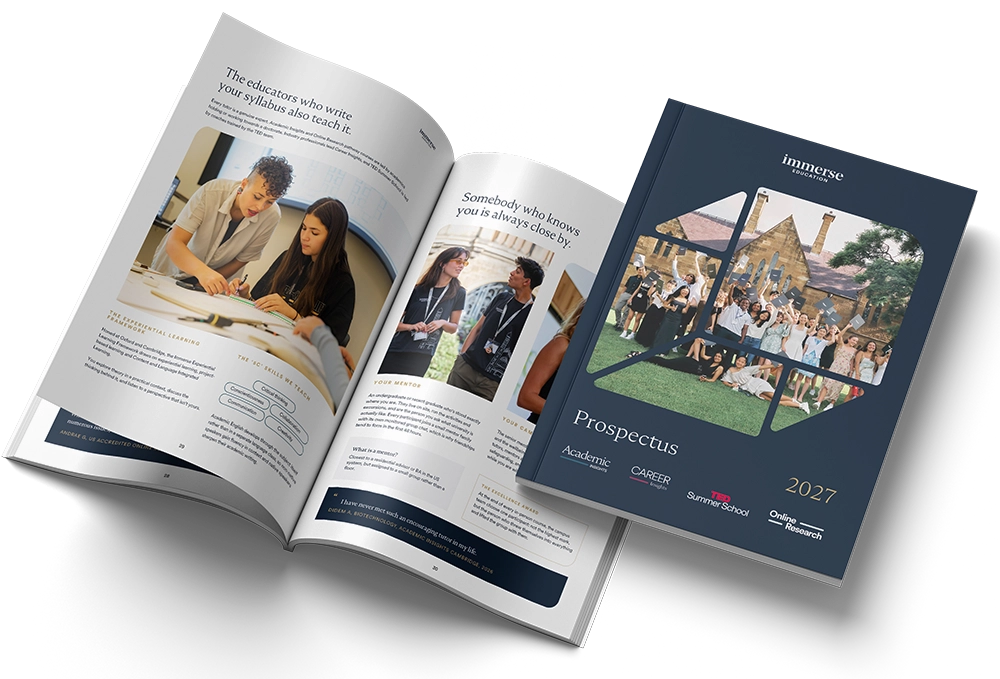
Immerse Education's Academic Insights pathway in Law provides school students with an opportunity to take undergraduate-level classes at universities around the world. Participants work with expert tutors from leading institutions in small seminar groups averaging 7 students, alongside two 1:1 tutorials, masterclasses, and guest speakers.
Through interactive seminars, case studies, and discussions intended to replicate the intellectual rigor of undergraduate law courses, you investigate fundamental topics of law, including contracts, criminal justice, human rights, and constitutional principles. The program helps you develop the abilities necessary for success in legal and related academic fields by emphasizing analytical reasoning, persuasive communication, and disciplined arguments. By the end of the program, you will complete a personal project and receive written feedback and a certificate of completion. You can find more details about the application here.
Why it stands out: You'll be taught by top faculty, work on an independent project, and live on campus, giving you a complete experience of future university life.
3. Lumiere Research Scholar Program
Location: Remote, you can participate in this program from anywhere in the world!
Cost: Varies depending on program type. Full financial aid available.
Program Dates: Varies by cohort: summer, fall, winter, or spring. Options range from 12 weeks to 1 year.
Application Deadline: Varies by cohort.
Eligibility: You must be currently enrolled in high school and demonstrate a high level of academic achievement.
The Lumiere Research Scholar Program is a rigorous research program tailored for high school students. The program offers extensive 1-on-1 research opportunities for high school students across a broad range of subject areas. The program pairs high school students with Ph.D. mentors to work 1-on-1 on an independent research project. At the end of the 12-week program, you’ll have developed an independent research paper!
You can choose research topics from subjects such as law, psychology, physics, economics, data science, computer science, engineering, chemistry, international relations, and more. You can find more details about the application here, and check out students’ reviews of the program here and here.
Why it stands out: You get 1-1 mentorship with a Ph.D. mentor and produce an independent research project by the end.
4. UCL Sutton Trust Laws Summer School
Location: University College London, Bloomsbury, London, UK
Cost/Stipend: Free; you stay overnight in UCL halls of residence
Acceptance rate/cohort size: Highly selective; applications go through the Sutton Trust, and places aren’t allocated on a first-come, first-served basis
Program Dates: A five-day residential week in the summer; dates for next summer have not been posted yet
Application Deadline: Applications run through the Sutton Trust and have closed in March in past cycles
Eligibility: Year 12 students in England or Wales, Year 13 in Northern Ireland, or S5 in Scotland (or equivalent) who attend and have always attended a state-funded, non-fee-paying school or college, and who meet the Sutton Trust’s eligibility criteria | Not open to international students
Why it stands out? You’ll study five areas of law with UCL staff for free, then receive free personal statement mentoring once the week ends.
You’ll examine Criminal, Contract, Family, Public, and Employment Law, giving you exposure to several areas you could later encounter during an undergraduate law degree. Teaching combines lectures with small-group classes and interactive workshops, so you can experience different formats used in university-level legal education.
You’ll also learn about the legal profession and the different routes to becoming a lawyer. Current UCL students act as Student Leaders, answering questions about university life and studying in London. If you complete the summer school, you’re paired with a subject-specific mentor through Causeway Education for free personal statement support.
5. University of Oxford UNIQ Law
Location: University of Oxford, Oxford, UK
Cost/Stipend: Free
Acceptance rate/cohort size: Selective; applicants are selected using UNIQ’s academic and socioeconomic selection criteria
Program Dates: A one-week residential, Monday to Friday, in late June or July; the most recent Law course ran July 6-10 or July 13-17
Application Deadline: Applications open December 15th and close at 1pm on January 19th
Eligibility: UK state-school students in Year 12 in England and Wales, Year 13 in Northern Ireland, or S5 in Scotland who have high academic potential and meet UNIQ’s general selection criteria; the programme prioritises students from underrepresented educational and socioeconomic backgrounds | Not open to international students
Why it stands out? You’ll experience Oxford law teaching and get ongoing application support afterwards, at no cost.
You’ll attend law taster lectures introducing topics you could encounter during an Oxford undergraduate Law degree. The course focuses on developing your own arguments, thinking analytically about challenging issues, and understanding unfamiliar material.
You’ll discuss and debate complex questions that affect everyone in society, and you’ll learn about a range of legal careers. The course is open to you whichever A levels you’re studying, so you don’t need a law background to apply. Beyond the residential, UNIQ includes regional events in spring and application support resources from August to December.




6. Rutgers University - New Brunswick Pre-College Summer Programs - Pre-Law and Mock Trial Summer Academy

Location: New Brunswick, New Jersey
Cost: $2,899
Dates: July 12-18; July 19-25
Application Deadline: Rolling basis until all places are filled, with final deadlines of May 29th (domestic) and April 12th (international)
Eligibility: Currently completing sophomore or junior year of high school; ages 16 to 18; minimum 3.0 GPA; English language proficiency; open to international students
In the Pre-Law and Mock Trial Summer Academy, you immerse yourself in the legal field through an intensive residential experience at Rutgers University. You learn the fundamentals of civil and criminal law by engaging in interactive lessons, guest lectures from legal professionals, and insightful courtroom visits.
Throughout the week, you practice writing direct and cross-examinations, prepare opening and closing statements, and play the role of an effective witness in mock proceedings. You develop critical advocacy and public speaking skills while navigating the structure of case theory and evidentiary objections. You culminate your learning experience by collaborating with your cohort to execute two comprehensive mock trials, applying your legal knowledge in a simulated courtroom environment.
Why it stands out: It offers high school students a realistic preview of a legal education by combining substantive instruction on civil or criminal law with the execution of two full mock trials in a single week.
7. Debate Chamber Law Summer School
Location: Woburn House, Bloomsbury, Central London, UK (non-residential)
Cost/Stipend: See Debate Chamber’s booking page for current fees; a discount applies if you book both courses, and full and partial bursaries are available
Acceptance rate/cohort size: The exact acceptance rate and cohort size are not disclosed
Program Dates: Two five-day courses in late July and August, 10:30am to 4:30pm; check the page for next summer’s dates
Application Deadline: Reserve a place with a 25% deposit; the balance is due eight weeks before the course starts
Eligibility: Students aged 15-18 | International eligibility not specified
Why it stands out? You’ll work through simulated client conferences, business negotiations, and mock trials while studying distinct areas of criminal and civil law.
You’ll study criminal law, family law, and jurisprudence in Part 1, and contract and tort law in Part 2, with each five-day course available separately. Seminars introduce key areas of law before moving into tricky and controversial legal questions. You’ll practise applying law through simulated client conferences, business negotiations, advocacy exercises, and mock trials, learning to spot weaknesses in an argument or body of evidence.
Working through problem questions with tutors and peers also develops the analytical reasoning and attention to detail expected in undergraduate law. The course is designed for school students, so discussions also cover what studying law at university is really like.
8. InvestIN - The Lawyer Summer Experience
Location: UCL and the surrounding University of London campus, with some days at legal venues across London, UK
Cost/Stipend: £2,290 for one week; £3,685 for two weeks; £4,620 for the two-week Enhanced programme. With residential accommodation, the totals are £3,865, £6,995, and £7,930.
Acceptance rate/cohort size: The exact acceptance rate and cohort size are not disclosed
Program Dates: Start dates on July 5th, July 19th, or August 16th
Application Deadline: No fixed deadline; places are first come, first served, and registration closes when the programme is full
Eligibility: Students aged 15-18; no prior legal knowledge required; B2 English for students learning English as a foreign language | Open to international students
Why it stands out? You’ll practise legal work through simulations, including arguing a human rights case in London’s Supreme Court with a barrister acting as judge.
You’ll approach law primarily through career simulations coached by lawyers working in criminal, corporate, human rights, and family law. In the first week, you’ll follow a mock murder trial from police interview and bail application through to cross-examining witnesses and delivering a closing speech. Other simulations cover corporate negotiations, a family law financial dispute, and an international treaty negotiation.
In the second week, you’ll prepare and deliver legal submissions on a human rights case in the Supreme Court. If you complete the two-week programme and its assessment, you can earn a Level 3 Award in Work Experience worth 8 UCAS points, alongside a physical certificate and an industry reference letter.
9. Oxford Brookes University Brookes Engage - Law, Crime and Justice
Location: Oxford Brookes University, Headington Campus, Oxford, UK
Cost/Stipend: Free; travel and meals for in-person activities are provided, and you can stay in university accommodation during the summer school
Acceptance rate/cohort size: Highly selective; applicants must meet the programme’s widening participation eligibility criteria
Program Dates: The programme starts in January of Year 12; the Law, Crime and Justice summer school runs July 6-8
Application Deadline: Applications for the Law, Crime and Justice stream have closed for the current cohort
Eligibility: Students aged 16+ in the first year of a two-year Level 3 qualification, such as A Levels or BTEC, who live in England and attend a non-selective state school or college, and who meet at least one widening participation criterion, such as free school meals or sixth-form bursary eligibility, care experience, or young carer status | Not open to international students
Why it stands out? If you successfully complete the programme, you gain access to a contextual offer from Oxford Brookes, usually around two grades lower.
You’ll explore Law, Crime and Justice through masterclass days on campus and a three-day summer school at Oxford Brookes. The stream focuses on law and criminology, with input from academics in history, philosophy, sociology, literature, and education, as you examine questions about fairness, power, and justice.
You’ll also receive mentoring from a current Oxford Brookes student who can help with subject questions and the move to university. Online content, personal statement support, and UCAS guidance continue into Year 13, ending with a mini graduation ceremony.
10. Innovate Summer Academy - Law and Global Justice
Location: University College London (UCL), Bloomsbury campus, London, UK
Cost/Stipend: Fees aren’t listed on the operator’s site; contact Innovate Summer Academy for current pricing
Acceptance rate/cohort size: The exact acceptance rate and cohort size are not disclosed
Program Dates: Summer programme; contact Innovate for upcoming dates
Application Deadline: Not specified
Eligibility: Pre-university students interested in law | International eligibility not specified
Why it stands out? You’ll study law on UCL’s Bloomsbury campus, with university and industry visits built into the programme.
Innovate Summer Academy is a pre-university programme hosted at UCL, where you choose one of five specialist subject areas, including Law and Global Justice. The programme combines expert-led academic study with university and industry visits, practical projects, and dedicated university application support.
Teaching draws on lecturers from leading universities such as Imperial College London, Cambridge, and UCL. The course is suited to you if you’re interested in international and human rights law and want to experience studying in central London.
11. Sutton Trust Pathways to Law
Location: Partner universities across the UK (in London, delivered by LSE), with a residential National Conference at the University of Warwick
Cost/Stipend: Free; travel expenses for in-person events are reimbursed
Acceptance rate/cohort size: Highly selective. The exact acceptance rate and cohort size are not disclosed.
Program Dates: Runs across Year 12 and Year 13; at LSE, the programme lasts 18 months, from November of Year 12 to April of Year 13
Application Deadline: Varies by university; LSE’s most recent deadline was October 19th, with next year’s dates posted by summer
Eligibility: Year 12 students in England and Wales, Year 13 students in Northern Ireland, or S5 students in Scotland (or equivalent) who attend and have always attended a state-funded, non-fee-paying school or college and live within commuting distance of a partner university; selection also considers academic attainment and factors such as first-generation university status and free school meals eligibility | Not open to international students
Why it stands out? You’ll combine university law tasters with a work experience placement and a residential national conference, all for free.
You’ll explore law through a combination of university teaching, skills workshops, work experience, and professional events rather than classroom study alone. You’ll be eligible to apply for an exclusive three to five day work experience placement, in person or online, where you’ll build skills and meet employers.
At LSE, activities have included taster lectures, a visit to the Inner Temple to learn about careers at the Bar, and a mock assessment centre. You’ll also be paired with a personal statement mentor and get support with university and apprenticeship applications. The fully funded National Conference at the University of Warwick adds networking with industry professionals and skills workshops.
Join the Immerse Education 2027 Essay Competition
Follow the instructions to write and submit your best essay for a chance to be awarded a 100% scholarship.
12. Wake Forest University Pre-College - Law Institute (Summer Immersion Program)
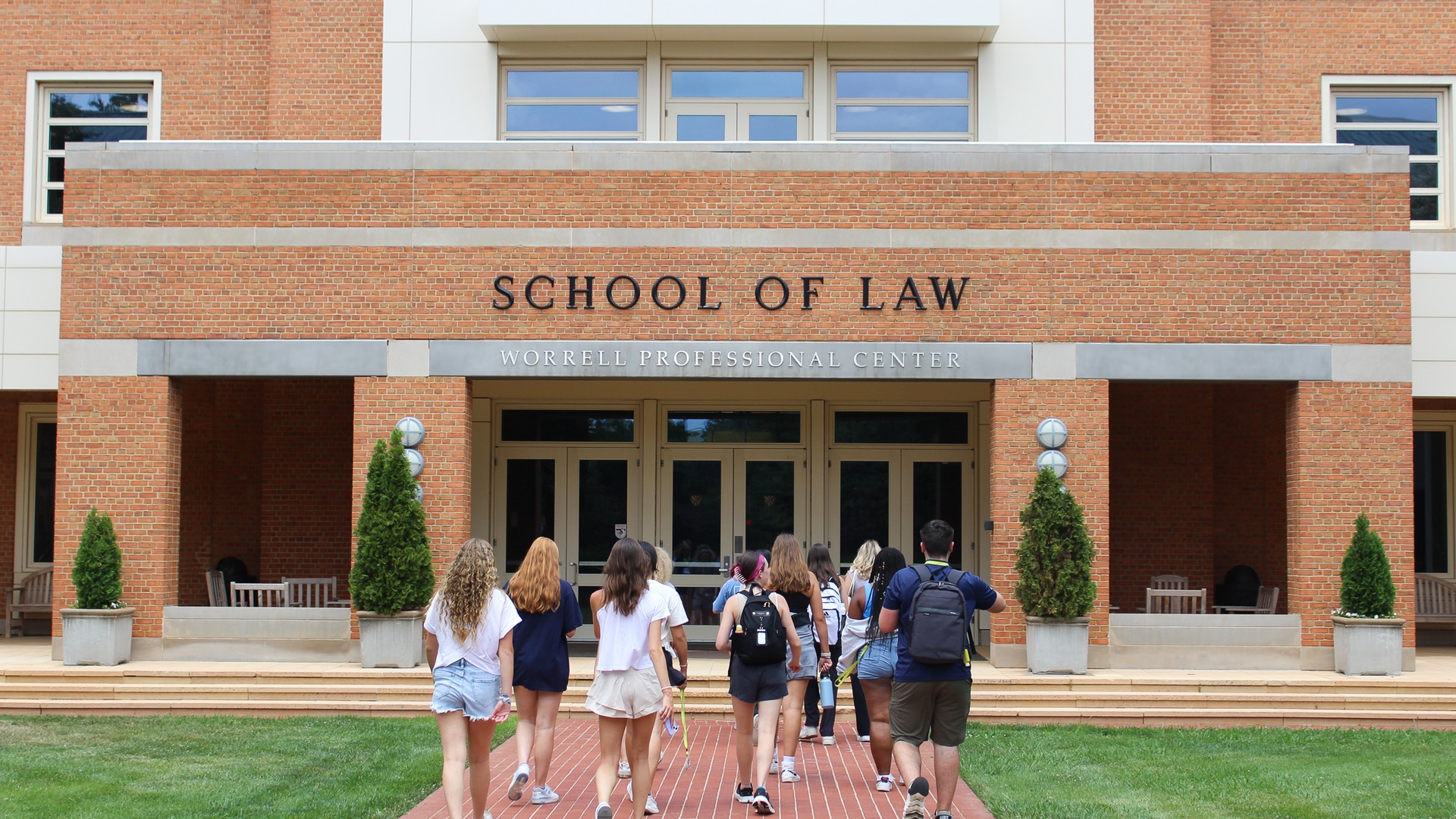
Location: Winston-Salem, North Carolina
Cost: $3,500 +$60 non-refundable application fee
Dates: June 14-19; July 19-24
Application Deadline: Rolling basis until all programs are filled
Eligibility: Current grades 9-12; good academic standing; no school suspensions; English fluency; open to international students
In this program, you explore legal practice, professional ethics, and pathways into law through a week-long residential experience. You examine civil and criminal litigation, family law, government law and lobbying, the judicial system, and transactional law.
You participate in a first-year law class, analyze case studies in teams, argue for a client in a criminal matter, and represent a company in a contract negotiation. You also practice reading legal cases, discuss confidentiality, conflicts, candor, and other ethical duties, and complete a disclosure exercise. Mentoring from law students and young lawyers, together with guest speakers, helps you develop legal reasoning, negotiation, teamwork, communication, and professional awareness.
Why it stands out: It combines simulated criminal advocacy and contract negotiation with a first-year law class and direct mentoring from law students and young lawyers.
13. Rice University Precollege - Law: Shaping a Just and Equitable World
Location: Online
Cost/Stipend: $1,795. Need-based scholarships are available.
Acceptance rate/cohort size: The exact acceptance rate and cohort size are not disclosed.
Program Dates: Courses of different lengths run throughout the year
Application Deadline: Apply for the next available course; no transcripts or recommendation letters are needed
Eligibility: Students aged 13 and above | Open to international students
Why it stands out? You’ll use legal case studies and a capstone task-force project to examine how property, employment, and education law can address connected social problems.
You’ll examine how law shapes civil rights, property ownership, intellectual property, employment rights, education, and access to equal opportunity. Case studies require you to analyse actual legal disputes and consider how legal rules interact with ethical questions about equality, equity, and justice. You’ll also investigate concepts such as community versus private property, equal pay, students’ educational rights, and the limits of legal remedies.
For the capstone project, you’ll act as part of a legal task force and develop a proposal addressing connected challenges involving education access, labour rights, and property ownership. The flexible online format includes 20-30 hours of video instruction, multimedia activities, simulations, assignments, and guidance from a mentor. After completing the course, you’ll receive a Certificate of Completion from Rice University.
14. Stanford Pre-Collegiate Summer Institutes - Legal Studies: Critical Thinking for Courtroom Success
Location: Online
Cost/Stipend: See Stanford’s Tuition and Financial Aid page for current fees and aid
Acceptance rate/cohort size: The exact acceptance rate and cohort size are not disclosed.
Program Dates: Two-week sessions; the most recent ran June 15-26 and July 6-17
Application Deadline: See Stanford Pre-Collegiate Summer Institutes’ admissions page for the current cycle
Eligibility: Students in Grades 9-11 at the time of application; as a Year 12 student, you’d typically apply while in Grade 11 equivalent | International eligibility not specified
Why it stands out? You’ll analyse complex fact patterns, weigh evidence, anticipate opposing arguments, and test your reasoning in a mock trial as an attorney or witness.
You’ll develop legal reasoning and argumentation through lessons drawing on Stanford University’s law, business, and education experts. Live classes use debates, role-playing, and group work to help you construct and defend arguments. You’ll then apply these skills in a mock trial, taking the role of an attorney or witness and awaiting the judge’s verdict.
The course also explores significant international human rights issues, adding a substantive legal dimension to the courtroom exercises. Each weekday includes two hours of live online teaching, with an additional office-hour window, while assignments and projects require approximately 2-3 hours of independent work per day.
15. William & Mary Pre-College Online - Constitutional Law: We The People
Location: Online
Cost/Stipend: $1,595. Need-based scholarships are available for students.
Acceptance rate/cohort size: The exact acceptance rate and cohort size are not disclosed.
Program Dates: Courses of different lengths run throughout the year
Application Deadline: Apply for the next available course; no transcripts or recommendation letters are needed
Eligibility: Students aged 13 and up; application materials must be submitted in English | Open to international students
Why it stands out? You’ll take the role of a Supreme Court justice, analyse precedent and competing methods of constitutional interpretation, and use them to reach a reasoned decision on a religious liberty case.
You’ll study constitutional interpretation, judicial review, federalism, the Bill of Rights, and the Fourteenth Amendment, using case studies to examine disagreements over the scope of government authority and individual rights. You’ll analyse Marbury v. Madison while considering how the judiciary determines constitutional meaning and how different interpretive approaches can produce competing conclusions.
The course also examines conflicts between state and federal authority and the constitutional mechanisms that limit government power. For your final project, you’ll analyse a Supreme Court religious liberty case, investigate relevant precedent, and adopt a constitutional interpretation to justify your decision as a simulated justice. The online course involves approximately 20-30 hours of video lectures, multimedia, simulations, assignments, and mentor-supported work. The curriculum is designed by William & Mary faculty, and completing it earns you an official William & Mary Certificate of Completion.
Frequently asked questions: Law Summer Schools for Year 12 Students
Do you need to study law at school to attend a law summer school?
No, most law summer schools don’t expect any legal background. Oxford’s UNIQ Law course is open to you whichever A levels you’re studying, and InvestIN’s Lawyer Summer Experience requires no prior legal knowledge. Programmes like Debate Chamber’s Law Summer School start with introductions to key areas of law before moving into harder questions. What matters more is curiosity, an interest in debate, and a willingness to read and argue carefully.
Are there free law summer schools for Year 12 students?
Yes, several free options exist, though most are limited to UK state school students. UNIQ Law, UCL’s Sutton Trust Laws Summer School, Brookes Engage, and Pathways to Law are all free, with travel or accommodation covered in many cases. Each has its own eligibility criteria, often based on school background, location, or widening participation factors. If you’d rather study from home, browse these free online law programs for high school students.
How much do law summer schools cost?
Paid law summer schools range from around $1,600 to several thousand pounds. Online courses from William & Mary and Rice cost $1,595 and $1,795. King’s College London’s one-week Pre-University Law course costs £3,295 for tuition, while InvestIN’s two-week programme costs £3,685, or £6,995 with accommodation. When you compare fees, check whether housing, meals, and excursions are included.
Can international students attend law summer schools in the UK?
Yes, several UK programmes on this list accept international students, including King’s College London, InvestIN, and Kensington Park School. Free outreach schemes like UNIQ and Pathways to Law are limited to UK state school students, so they won’t be open to you if you live abroad. Immerse Education’s Academic Insights pathway welcomes students from around the world, with law courses in Cambridge, London, and Oxford and an average of 7 participants per class. Check each programme’s English language requirement before applying.
Do law summer schools help with your university application?
They can, especially when they give you specific experiences to reflect on in your personal statement or at interview. Brookes Engage offers a contextual offer from Oxford Brookes, and completing LSE’s Pathways to Law means your LSE application gets additional consideration. InvestIN’s two-week course can earn you a qualification worth 8 UCAS points. Immerse Education’s Academic Insights pathway also lets you opt in to earn 8 UCAS points from age 14, alongside a personal project you present at the end of your course.
How else can you get legal experience in Year 12?
Work experience and shadowing can complement a summer school and show your commitment to law. Pathways to Law gives you the chance to apply for a three to five day work experience placement, and programmes like InvestIN include simulations led by practising lawyers. You could also attend court hearings, which many UK courts allow members of the public to observe. For more ideas, explore these law job shadowing opportunities for high school students.
Getting a head start on your law degree
Arguing a case in a mock trial or a moot can show you quickly whether legal reasoning is something you enjoy.
Seminars on contract, criminal, and human rights law also give you a feel for the reading and argument a law degree involves.
Many free schemes close their applications in autumn or winter, so it’s worth checking deadlines well before your Year 12 summer begins.
Once you’ve compared law summer schools for Year 12 students, explore our University Preparation blogs to plan your application with confidence.







Unlock Inspiring Opportunities with the Immerse Education Newsletter
Join our newsletter to stay ahead with exclusive updates, exciting programme highlights, and expert insights from the world of immersive education.
Learn how Immerse can transform your life
An in-depth overview of our university and career preparation programmes
Get a glimpse into the life of an Immerse participant
Find the right programme for you with sample timetables, location showcases, and more