


 Русский (RU)
 Українська (UK)
 Türkçe (TR)
 Italiano (IT)
 Français (FR)
 Português (PT)
 中文 (中国) (ZH)
 Español (ES)
 日本語 (JA)
 ไทย (TH)
 Deutsch (DE)
 Ελληνικά (EL)
 Polski (PL)
 Bahasa Indonesia (ID)
 Nederlands (NL)
 العربية (AR)
 한국어 (KO)

If you’re a high school student interested in law, debate, or understanding how rules shape society, you might already be curious about what studying law actually involves. Beyond courtroom dramas and headline cases, law is a discipline built on logical reasoning, structured argumentation, critical reading, and ethical analysis. One of the most accessible ways to explore this field is through free online law programs.
Imagine spending your time learning about criminal law, human rights, constitutional systems, or international relations from the comfort of your home. Picture analyzing case studies, participating in virtual discussions, and building arguments around real legal issues that affect societies today. Free online law programs for high school students make it possible to engage with complex legal concepts without the barriers of travel or cost.
How do you choose the right free online law programs for high school students?
With many options available, it’s important to distinguish between programs that offer structured, high-quality content and those that provide only surface-level overviews. Thoughtful research ensures you select a program that aligns with your learning style and goals.
Free online law programs may cover areas such as criminal law, corporate law, international law, and legal theory. You might work through case analyses, complete writing assignments, or engage in discussion-based learning that mirrors aspects of university coursework. Some programs also introduce you to legal careers and the skills required to pursue them.
You’ll learn from experienced educators, connect with peers who share your interests, and build a strong foundation in legal thinking. Along the way, you’ll gain a clearer sense of whether studying law at the university level is the right path for you.
To help you get started, we’ve curated a list of 15 Free Online Law Programs for High School Students. They’ve been selected for their accessibility, academic value, and ability to introduce you to the fundamentals of legal education in a flexible and engaging format.
To explore in-person options, you should check out law summer camps for high school students.
15 Free Online Law Programs for High School Students
1. Immerse Education’s Online Law Summer School

Location: Fully remote
Cost/Stipend: Varies by program type; summer school scholarship available through our bursary programme
Dates: Flexible; multiple cohorts in a year
Application Deadline: Rolling admissions; multiple dates throughout the year
Eligibility: Students worldwide aged 13-18 (accredited options require age 14+)
Immerse Education’s Online Research Programme introduces you to core areas of legal study through guided instruction in legal theory, case analysis, and structured argumentation. You work with a subject tutor in a small-group or one-on-one setting to examine legal principles and evaluate real-world applications of law.
The program centers on developing research methodology, source evaluation, and academic writing through a university-style research project. You complete the experience with a formal paper that demonstrates analytical reasoning and evidence-based conclusions. The curriculum is designed to build foundational readiness for college-level law study while strengthening critical thinking and interpretation skills.
Why it stands out: Tutor-guided legal research project with a structured academic writing focus.
2. ACLU SoCal Internships
Location: Remote (virtual/hybrid) in Los Angeles, Orange County, Inland Empire, Kern County, CA
Cost/Stipend: None
Acceptance rate/cohort size: Selective
Dates: Multiple semesters in fall, winter, spring, and summer
Application Deadline: Summer Internships – February 20th, Fall Internships – August 1st, Spring Semester and Winter Quarter Internships – December 5th, Spring Quarter Internships – February 13th
Eligibility: Students worldwide at all academic levels
The ACLU SoCal internship gives you structured exposure to civil rights law and public interest advocacy through work with legal, policy, and organizing teams. You support ongoing initiatives by conducting legal research, analyzing policies, and assisting with reports or know-your-rights resources.
The experience connects courtroom strategies with community outreach and campaign planning, showing how legal arguments translate into real-world impact. You gain familiarity with issue areas such as racial justice, immigrant rights, educational equity, and police accountability. The program emphasizes applied research, policy interpretation, and professional collaboration in a nonprofit legal setting.
Why it stands out: Integrates legal research with community-based advocacy work.
3. Harvard University’s Contract Law: From Trust to Promise to Contract
Location: Online via edX
Cost/Stipend: Audit for Free
Acceptance rate/cohort size: Not specified
Dates: 8 weeks; Self-paced
Application Deadline: No deadline
Eligibility: Open to all
The Contract Law: From Trust to Promise to Contract introduces you to how everyday promises become legally enforceable agreements under contract law. You study how contracts are formed through offer, acceptance, and consideration, and examine the legal limits on enforcing agreements. Guided by Charles Fried, the lessons use case-based examples to explain breach, remedies, mistake, and fraud in practical contexts.
You also explore how contract principles apply across consumer transactions, partnerships, and regulated environments. By the end, you build a structured understanding of how legal obligations are created, interpreted, and enforced.
Why it stands out: Connects real-world agreements to core legal doctrine through systematic case analysis.
4. Harvard University’s Child Protection: Children’s Rights in Theory and Practice
Location: Online via edX
Cost/Stipend: Audit for Free
Acceptance rate/cohort size: Not specified
Dates: 16 weeks; Self-paced
Application Deadline: No deadline
Eligibility: Open to all
As one of the well-known, and most specialized free online law programs for high school students, this course introduces you to child protection through international human rights law and a systems-based approach to safeguarding children. You examine how legal frameworks address risks such as exploitation, neglect, and abuse while analyzing the roles of governments, courts, and social institutions.
Led by Jacqueline Bhabha at the Harvard FXB Center for Health and Human Rights, the program connects legal standards to real-world policy and practice. You study how protection systems function in contexts such as migration, conflict, and contact with the law. By the end, you develop the ability to evaluate and strengthen child protection responses using a rights-based framework.
Why it stands out: Focuses on applying international human rights law to real-world child protection systems.
5. USC Center for the Political Future Internship
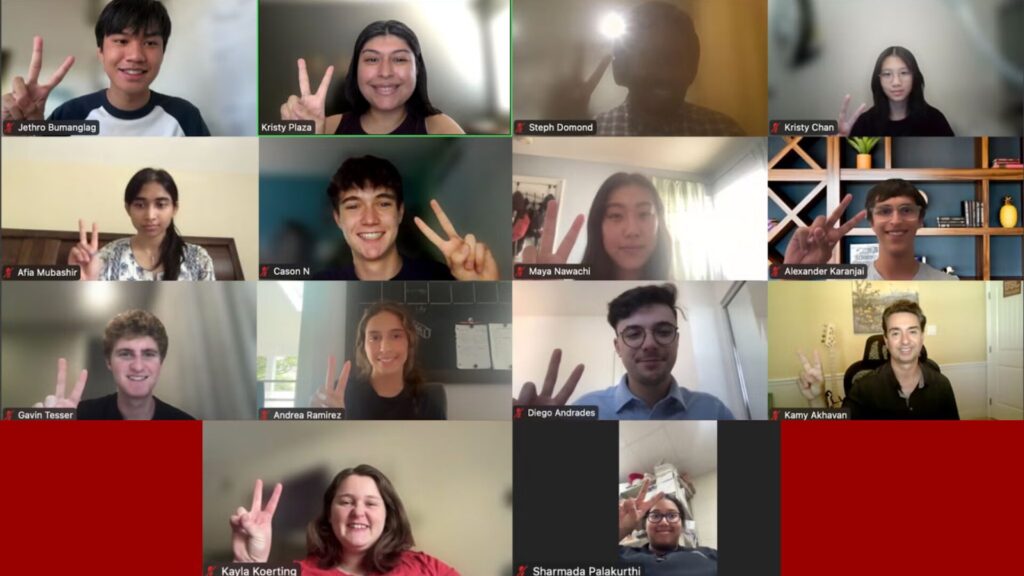
Location: Virtual
Cost/Stipend: Not specified
Acceptance rate/cohort size: Highly selective
Dates: June 1st – August 1st
Application Deadline: Typically in May
Eligibility: High school students worldwide; Minimum GPA of 3.5
The USC Center for the Political Future Summer Internship places you in a policy-focused legal environment where you examine how laws are proposed, debated, and evaluated in real legislative contexts. The program requires you to complete two core outputs: a legislative policy memo and a legislative process analysis.
From a law perspective, you engage with statutory language, assess how legal arguments support or challenge policy goals, and analyze how institutional rules shape legislative outcomes. The experience builds practical skills in legal-style writing, policy research, and structured argumentation while offering guided feedback in a professional, remote setting.
Why it stands out: You produce two law-relevant analyses centered on a real piece of legislation, simulating the research and writing tasks used in public law and policy practice.
6. Internships at the Foreign Policy Research Institute
Location: Remote option available
Cost/Stipend: No cost; Some internships are paid
Acceptance rate/cohort size: Competitive admissions
Dates: Spring: February – April, Summer: June – August, October – December
Application Deadline: Varies based on cohort
Eligibility: High school students around the world
This online internship with the Foreign Policy Research Institute introduces you to the intersection of law, policy, and international affairs through guided research and professional collaboration. You select a focus area, such as research, communications, events, or operations, and contribute to projects alongside scholars and practitioners.
The program includes seminars on foreign policy topics, career development workshops, and opportunities to engage with experts through virtual events. As you assist with research and analysis suitable for publication, you strengthen skills in policy writing, critical evaluation, and professional communication. Offered across multiple terms, the experience helps you understand how legal frameworks shape global relations and policy decisions.
Why it stands out: Combines mentor-guided policy research with publication-oriented work in a professional think tank setting.
7. Khan Academy: Constitution 101
Location: Virtual
Cost/Stipend: None
Acceptance rate/cohort size: N/A
Dates: Self-paced
Application Deadline: Available year-round
Eligibility: Anyone can join
Offered by Khan Academy, Constitution 101 introduces the structure, principles, and historical foundations of the U.S. Constitution through concise, modular lessons. The course examines core components such as the Articles, Amendments, separation of powers, and federalism to explain how authority is distributed within government.
Landmark Supreme Court cases are used to illustrate how constitutional interpretation evolves in response to social and political developments. Interactive exercises and quizzes reinforce concepts while strengthening analytical reading and evidence-based reasoning. Self-paced delivery makes it suitable for building a clear conceptual base in constitutional law and civic institutions.
Why it stands out: Structured case-based learning that connects constitutional text to real judicial interpretation.
8. University of Cambridge’s Exploring Law: Studying Law at University
Location: Online via Future Learn
Cost/Stipend: Free
Acceptance rate/cohort size: Unspecified
Dates: 6 weeks, self-paced
Application Deadline: No specific deadline
Eligibility: Primarily designed for UK students between 16 and 18 years old
As one of the most prestigious free online law programs for high school students, this six-week course from the University of Cambridge helps those aged 16–18 evaluate whether studying law at university aligns with their interests and goals. You examine the nature and sources of law while exploring major areas such as criminal, public, and private law through structured lessons.
The program introduces core academic skills, including interpreting legal sources, applying rules to real-world scenarios, and building reasoned arguments. You also gain insight into university life through perspectives shared by current law students and legal professionals. By the end, you develop a clearer understanding of legal study pathways and how to approach a strong university application.
Why it stands out: Combines foundational legal concepts with practical insight into studying law at a UK university.
9. Pasquines Internship
Location: Virtual
Cost/Stipend: None
Acceptance rate/cohort size: Selective
Dates: Opportunities are available year-round
Application Deadline: Rolling basis
Eligibility: High school students worldwide
The Pasquines Internship gives you hands-on exposure to how policy discussions and legal frameworks affect U.S. territories such as Guam, Puerto Rico, and American Samoa. Working remotely, you research governance issues, analyze public policy developments, and produce writing that explains political and institutional processes to a wider audience.
You also strengthen evidence-based writing, source evaluation, and structured argumentation through collaborative editorial work. Flexible scheduling allows you to contribute consistently while developing a clearer understanding of how law, policy, and media intersect in real-world civic issues.
Why it stands out: You analyze territorial governance and policy through a legal lens while producing publishable, research-driven writing.
10. Case Western Reserve University’s Introduction to International Law
Location: Online via Coursera
Cost/Stipend: None
Acceptance rate/cohort size: No information
Dates: Self-paced
Application Deadline: No deadline
Eligibility: Open to all
If you want to understand how justice works beyond national borders, this course gives you a structured entry point into international criminal law. You explore core legal concepts such as international tribunals, criminal responsibility, and procedural challenges in cross-border enforcement.
The curriculum combines readings, lectures, and interactive simulations that require you to apply legal reasoning to real-world scenarios. By completing the modules, you develop analytical skills in interpreting international legal frameworks and evaluating complex global justice cases.
Why it stands out: Focuses specifically on how international courts function in practice, not just theory.
11. Wadham College, University of Oxford- Think Like a Lawyer
Location: Hybrid (online sessions with in-person visits to Oxford and London, United Kingdom)
Cost/Stipend: Free
Acceptance rate/cohort size: No information
Dates: Two-year programme beginning in Year 12 (specific yearly dates not specified)
Application Deadline: 28th October
Eligibility: Open to Year 12 students (ages ~16-17) attending non-selective state schools in specific UK regions and who have been eligible for free school meals during secondary school. The programme is restricted to students living in designated UK areas, meaning it is not open to international students.
You can explore the foundations of legal thinking through the Think Like a Lawyer programme at Wadham College, part of the University of Oxford, delivered in collaboration with the global law firm Linklaters LLP. Over two years, you participate in a structured academic programme that includes eight online sessions designed to build legal reasoning and critical analysis skills similar to those taught in an Oxford law degree.
You also receive around 20 hours of one-to-one A-Level tutoring in a subject of your choice, along with mentoring for personal statements and guidance for the LNAT and university applications. The programme includes visits to Oxford’s Law Faculty and the Linklaters London office, helping you gain insight into both university life and careers in the legal sector.
Why it stands out: This programme stands out for combining academic training, personalised tutoring, and direct exposure to university and law-firm environments, giving you long-term mentorship and practical insight into studying law and pursuing legal careers.
12. Yale University’s A Law Student’s Toolkit
Location: Online via Coursera
Cost/Stipend: None
Acceptance rate/cohort size: Unspecified
Dates: Self-paced
Application Deadline: None
Eligibility: Open to all
Offered by Yale University on Coursera, this online course introduces you to the core terminology, reasoning methods, and analytical tools used in legal study. You examine how lawyers structure arguments, interpret legal texts, and apply precedent through short lectures and guided assignments.
The curriculum emphasizes close reading, logical analysis, and structured argumentation, skills central to first-year law coursework. By the end, you build a practical foundation for engaging with legal materials and evaluating competing interpretations.
Why it stands out: Focuses on how legal arguments are constructed, giving you a practical preview of law school thinking.
13. ColumbiaX: Freedom of Expression and Information in the Time of Globalization: Foundational Course
Location: Online
Cost/Stipend: None
Acceptance rate/cohort size: Unspecified
Dates: Self-paced
Application Deadline: Available year-round
Eligibility: Open to all
Offered by Columbia University on edX, this online course examines how international law and human rights frameworks protect freedom of expression and access to information. The curriculum analyzes global legal standards, landmark case studies, and the evolving challenges posed by digital media, disinformation, and state regulation.
Course materials typically include video lectures, readings, and scenario-based analysis to build legal reasoning and policy awareness. The program provides a structured overview of contemporary debates shaping media, governance, and public discourse.
Why it stands out: Focuses on global free speech law through real-world case analysis and international perspectives.
14. SBAND High School Mock Trial
Location: Case releases online; National Championship in Des Moines, Iowa
Cost/Stipend: None
Acceptance rate/cohort size: No official information
Dates: Online case release: March 28th
Application Deadline: December 31st
Eligibility: High school students
Through the State Bar Association of North Dakota High School Mock Trial, you engage with the structure and procedures of the American legal system in a competitive courtroom simulation. You study case materials, prepare legal arguments, and practice courtroom roles such as attorney or witness while developing reasoning and public speaking skills.
The program connects you with practicing attorneys and judges who guide preparation and provide feedback on trial strategy and procedure. You collaborate in teams to analyze evidence, construct arguments, and present cases in a formal trial setting. The experience builds practical understanding of litigation while strengthening analytical thinking and communication.
Why it stands out: Combines courtroom simulation with direct mentorship from legal professionals.
15. Penn Carey Law Online

Location: Online via Coursera
Cost/Stipend: None
Acceptance rate/cohort size: Unspecified
Dates: Self-paced
Application Deadline: No official deadline
Eligibility: Open to all
You explore foundational areas of American law through free, on-demand courses covering topics such as constitutional law, intellectual property, healthcare law, and regulatory compliance. The curriculum introduces core legal concepts, including torts, contracts, criminal law, and civil procedure, while showing how legal rules operate in real institutional settings.
Courses are structured to build analytical reading, case interpretation, and legal reasoning skills expected in university-level law study. The flexible format lets you progress independently while gaining a broad overview of how legal systems function.
Why it stands out: Offers university-level law coursework across multiple legal fields in a flexible, open-access format.
Beyond the Screen: Essential Reads for Legal Minds
Succeeding in legal studies requires much more than simple curiosity; it demands a dedicated commitment to understanding the complex, deep foundations of our modern justice.
Enrolling in free online law programs for high school students provides the essential academic framework to master difficult case studies and develop very sharp logic.
However, the most successful future attorneys distinguish themselves by moving beyond digital classrooms to engage deeply with the essential literature that shapes modern legal jurisprudence.
To dominate your legal career, click our Law Top Books Guide for the definitive reading list every ambitious and truly aspiring attorney absolutely needs today.