15 Science Summer Programs in Toronto for High School Students

TL;DR
You'll find 15 programs here spanning subjects like biology, chemistry, medicine, engineering, computer science, and physics, mostly hosted on university campuses across Toronto. Some are free and limited to Ontario residents, while others charge tuition but accept international applicants. Whether you're in grade 9 or entering grade 12, there's an option matched to your interests and eligibility. One free program, the University of Toronto's Summer Mentorship Program, even pays a $1,600 CAD stipend on completion. Immerse Education's Toronto Summer School is among the international-friendly, paid options, a two-week residential program for students aged roughly 15 to 18 with bursaries available.
Science summer programs offer high school students a genuine taste of what it means to do meaningful, high-level scientific work before ever starting college. They help you build an advanced skill set by placing you right at the center of active scientific investigation. You get to engage directly with core concepts like experimental design, statistical modeling, and computational analysis, using professional tools ranging from advanced laboratory apparatus to specialized software.
Beyond the research itself, spending weeks on a college campus gives you an authentic feel for university life as you collaborate with faculty mentors, work alongside driven peers, and navigate campus facilities. It’s a powerful way to gain practical academic experience, build technical confidence, and set a strong foundation for future study in STEM.
What science summer programs are available in Toronto for high school students?
Science summer programs in Toronto cover a broad range of disciplines, including biology, chemistry, medicine, engineering, computer science, mathematics, environmental science, biotechnology, and physics. Some programs focus on introducing you to university-level coursework through lectures and laboratory activities, while others immerse you in research projects where you'll contribute to ongoing scientific investigations.
You'll gain experience using professional laboratory equipment, solving real-world problems, collaborating with like-minded students, and learning from researchers and university instructors. If you’re considering a career in science, you should go through our guides on building a career in biomedicine and chemistry.
For Canada-wide opportunities, consider science programs in Canada for high school students.
With so many options available, choosing the right program can be challenging. To help you get started, we've compiled a list of 15 science summer programs in Toronto for high school students.
15 Science Summer Programs in Toronto for High School Students
1. University of Toronto – Science Unlimited Summer Camp
Location: University of Toronto, Department of Physics, Toronto, Canada
Cost: $300 CAD; bursaries are available
Acceptance rate/cohort size: Selective; 50 students
Dates: August 17–21
Application Deadline: April 17th
Eligibility: Students who have completed grade 10 or 11 by the start of the camp; open to international students
In this camp, you'll participate in hands-on sessions hosted by the Departments of Astronomy and Astrophysics, Chemistry, Computer Science, Earth Sciences, Mathematics, Physics, and the School of the Environment, allowing you to explore multiple STEM fields in one program.
Throughout the week, you'll work on experiments, demonstrations, and interactive activities while learning in university laboratories and classrooms alongside faculty and instructors. The program is designed to help you experience how scientific concepts are applied beyond the high school curriculum. By the end of the week, you'll have explored a range of STEM disciplines while gaining a better understanding of university-level science.
Why it stands out: Rather than focusing on a single subject, the program lets you explore seven different STEM disciplines through hands-on workshops taught by multiple University of Toronto departments.
2. Immerse Education's Toronto Summer School
Location: University of Toronto, Toronto, Canada
Cost/Stipend: Varies; summer school scholarship available through our bursary program
Acceptance rate/cohort size: Selective; an average of 7 students per class
Program Dates: 2 weeks during the summer
Application Deadline: Multiple cohorts with rolling admissions
Eligibility: Students aged 15-18; open to international students
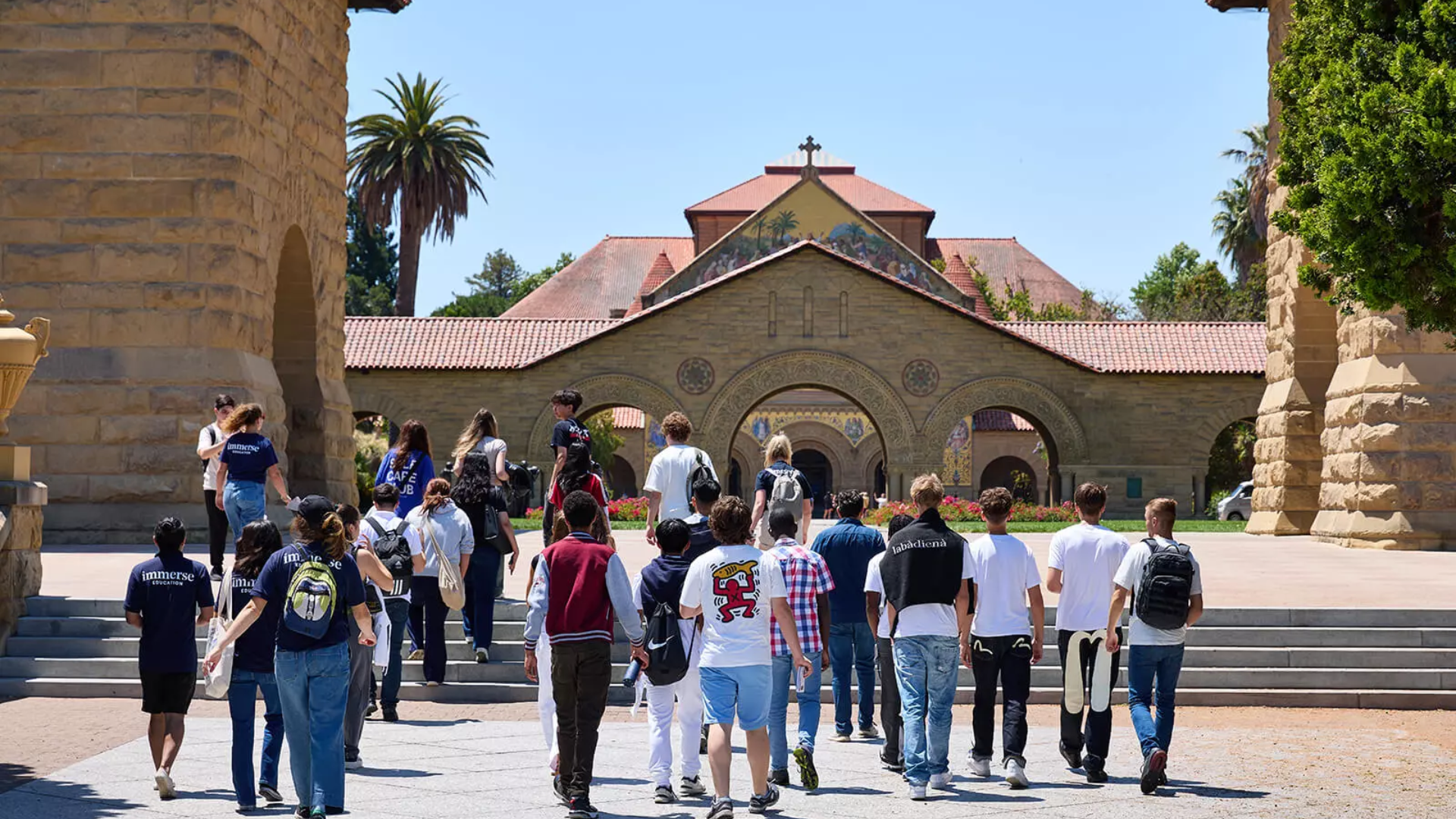
Immerse Education's Toronto Summer School allows you to experience university-style learning while studying and living at the University of Toronto. You can choose from subject tracks including software development and AI, international relations, business management, psychology, economics, and more, with small classes led by expert tutors.
Alongside interactive lessons, you'll take part in mentorship, personalized academic support, and collaborative projects that encourage critical thinking, communication, and discussion. Outside the classroom, you'll stay in university residences and participate in organized cultural activities and social events across Toronto. By the end of the program, you'll receive a certificate of completion and gain insight into university academics and campus life. You can find more details about the application here.
Why it stands out: Small class sizes and a wide range of subject options allow students to experience university-style academics while living on campus alongside peers from around the world.
3. York University – Spark Lab Summer Program
Location: York University, Keele and Markham Campuses, Toronto, Canada
Cost: $495 CAD (Five-day week); $435 CAD (Holiday four-day week); bursaries are available
Acceptance rate/cohort size: Open enrollment; cohort size not specified
Dates: June 29th – July 31st
Application Deadline: Rolling registration until filled
Eligibility: High school students in grades 9-12; open to international students
In this program, you can choose from two streams: Experimental courses led by undergraduate instructors, teacher candidates, or certified teachers, and Research courses developed by graduate students and professors based on their current research. You'll work in York University's undergraduate laboratories while completing experiments in topics such as astronomy, anatomy and physiology, biochemistry, forensic science, microbiology, neuroscience, genetics, and molecular biology.
The program emphasizes active experimentation over traditional classroom instruction, allowing you to use laboratory equipment and explore scientific concepts through practical investigations. Throughout the week, you'll build technical laboratory skills while gaining a better understanding of university-level science and potential STEM career pathways.
Why it stands out: The program offers both introductory experimental courses and research-focused classes across a wide range of scientific disciplines, allowing students to choose an experience that matches their interests and academic background.
4. University of Toronto – Blueprint Engineering Summer Program
Location: University of Toronto, St. George Campus, Toronto
Cost: None
Acceptance rate/cohort size: Highly competitive; limited cohort size
Dates: July 6–31
Application Deadline: April 12th
Eligibility: Canadian citizens or permanent residents in Grade 10 or 11 who self-identify as Black; not open to international students
Blueprint is a four-week engineering program designed to introduce students to different areas of engineering through project-based learning. You'll participate in workshops covering engineering design, computer science, robotics, coding, and applied physics while collaborating on a capstone project that addresses a real-world challenge.
Throughout the month, you'll work with faculty members and industry professionals while building technical and problem-solving skills through hands-on activities. The program also gives you experience working in teams and applying engineering concepts outside the classroom. By the end of the program, you'll have a stronger understanding of different engineering pathways and university-level study.
Why it stands out: It is a fully funded engineering program that combines technical training with mentorship for Black high school students.
5. Temerty Faculty of Medicine – Summer Mentorship Program (SMP)
Location: Temerty Faculty of Medicine, University of Toronto, St. George Campus, Toronto
Cost/Stipend: No cost / $1,600 CAD stipend upon completion
Acceptance rate/cohort size: Selective; approximately 100 students
Dates: July 6–31
Application Deadline: March 29th
Eligibility: Grade 11 students who are residents or students of a high school in Ontario and self-identify as Indigenous or Black African, Black Caribbean, Black North American, or multi-racial students who have and identify with their Black ancestry; must be 16 years of age by June 30, have completed Grade 10 Academic Science or any Grade 11 Science course; not open to international students
The Summer Mentorship Program introduces you to a wide range of health science careers through a month of academic and experiential learning. You'll explore disciplines including medicine, nursing, pharmacy, dentistry, kinesiology, and public health while participating in clinical simulations, workshops, and guest lectures.
You'll also have opportunities to shadow healthcare professionals and learn about different career pathways within Canada's healthcare system. Throughout the program, you'll build foundational knowledge of patient care, medical research, and healthcare education. The experience helps you better understand what studying and working in the health sciences can involve.
Why it stands out: It gives Indigenous and Black students direct exposure to healthcare careers through mentorship, clinical experiences, and access to one of Canada's leading medical faculties.




6. University of Toronto Faculty of Applied Science & Engineering – DEEP Summer Academy
Location: University of Toronto St. George Campus, Toronto
Cost: Domestic students: $732/week; International students: $1,111/week + $50 application fee; discounts are available
Acceptance rate/cohort size: Highly selective; approximately 400–500 students
Dates: Session A: July 6–10; Session B: July 13–17; Session C: July 20–24; Session D: July 27–31; Session E: August 10–14
Application Deadline: Round 1: March 23rd; Round 2: April 13th
Eligibility: Students in grades 9–12; grades 9/10: completed grade 9 math and science courses by June; grades 11/12: completed grade 11 math and science courses by June; open to international students
The DEEP Summer Academy at the University of Toronto offers you an immersive opportunity to explore advanced concepts in engineering, technology, business, and science. During the program, you will engage in academic classes, tackle complex design challenges, experiment with real technical tools, and collaborate closely with like-minded peers.
A unique feature of this academy is that it exposes you to cutting-edge, graduate-level research topics usually reserved for older university students, with courses taught directly by top Master's and PhD candidates. By participating, you will develop strong problem-solving abilities, enhance your creative thinking, and build practical engineering skills. Ultimately, this collaborative environment empowers you to take academic risks and prepares you for future university pathways in STEM.
Why it stands out: The program distinguishes itself by giving high schoolers a rare head start on exploring rigorous, graduate-level engineering concepts under the direct mentorship of active university researchers.
7. University of Toronto – Sciences Across the Spectrum
Location: University of Toronto, New College, Toronto, Canada
Cost: Non-Canadian: $6,275 CAD; Canadian: $4,850Acceptance rate/cohort size: Selective; small, seminar-style participatory classrooms
Dates: June Session: June 14th – July 4th; July Session: July 5–25; August Session: July 26th – August 15th
Application Deadline: Rolling admissions
Eligibility: Students aged 15–18 with an Advanced+ level of English; open to international students
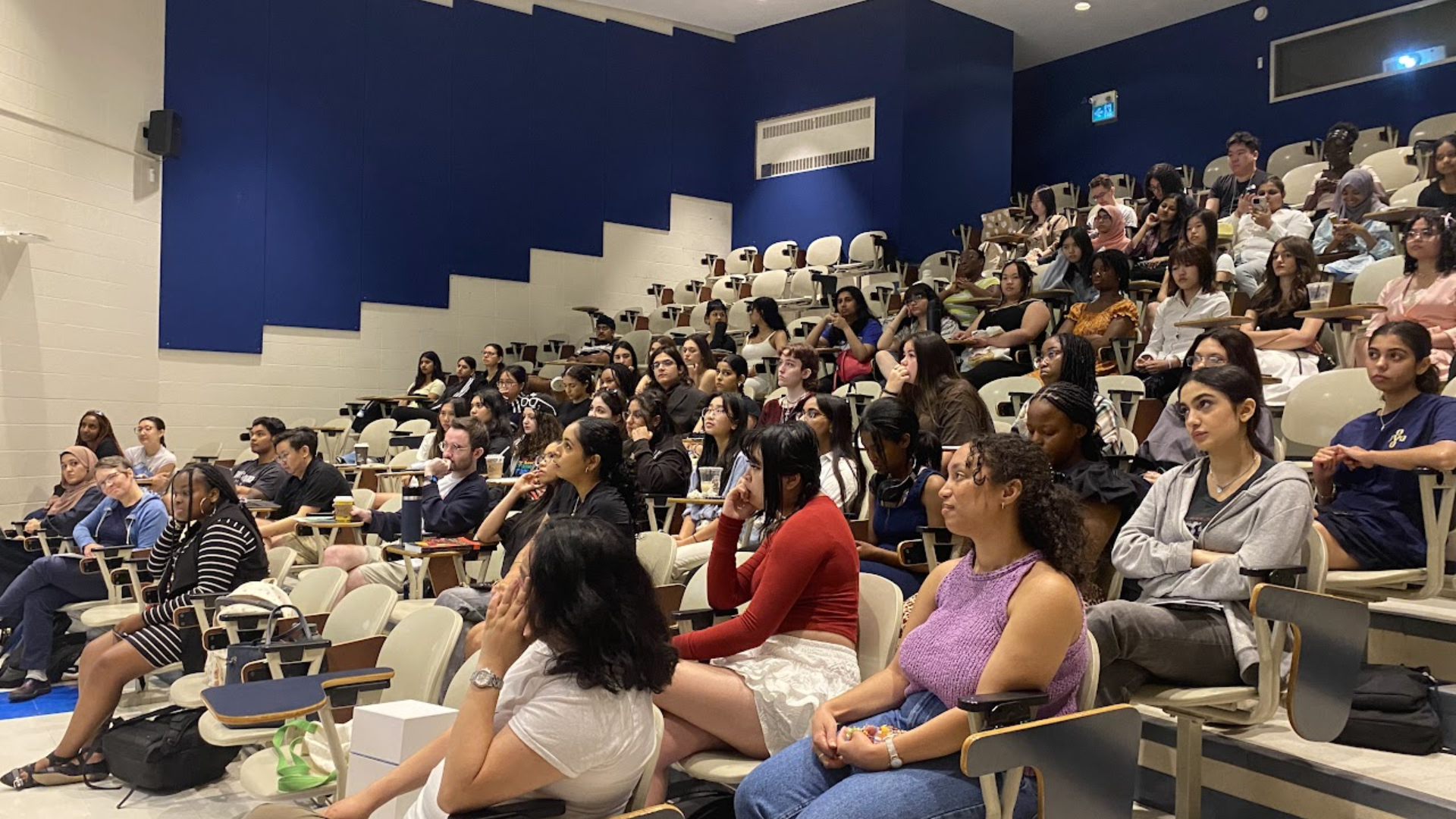
Sciences Across the Spectrum is a three-week pre-university course that introduces you to core concepts across physics, chemistry, biology, and earth sciences through a seminar-style learning environment. You'll participate in lectures, group discussions, case studies, and hands-on experiments where appropriate while exploring how different scientific disciplines connect through the scientific method.
Throughout the course, you'll develop skills in hypothesis formation, experimentation, data analysis, and scientific problem-solving before applying them to a small-scale independent research project. Classes meet for 15 hours each week and are designed to strengthen both your scientific knowledge and your academic skills in English.
Why it stands out: Instead of focusing on one branch of science, the course takes an interdisciplinary approach that helps you understand how concepts from multiple scientific fields work together through research and evidence-based inquiry.
8. University of Toronto Temerty Faculty of Medicine – STEAM-Design Program
Location: Toronto, Ontario, Canada
Cost: No cost / $1,600 stipend
Acceptance rate/cohort size: Moderately competitive; approximately 50 students
Dates: July 6–31
Application Deadline: March 29th
Eligibility: Age 16 by June 30th of the program year; completed or in-progress Grade 10 Academic Science or a Grade 11 U/M/C science course, completed before July 1st; residents or students of an Ontario high school; from a background facing systemic barriers in health sciences; STEAM-Design and Summer Mentorship Program alumni ineligible; not open to international students
In the STEAM-Design program, you spend four weeks at the University of Toronto's Temerty Faculty of Medicine exploring how biology, artificial intelligence, engineering, design and data shape health and health-care careers. You attend interactive sessions led by researchers, graduate students and practitioners, visit hospital partners, and meet student-led groups working on equity-focused health innovation.
You complete a Research Design Project alongside a university student mentor while earning a Grade 12 Science, University/College Preparation credit (SNC4M). The program introduces you to research and design thinking, so your project tackles a multidisciplinary health issue rather than a single-subject science question. You develop transferable skills in project development, teamwork, leadership, problem-solving, communication, social accountability and participatory design.
Why it stands out: It pays students $1,600 to complete a mentored health research project that also earns a grade 12 science credit toward their diploma.
9. Leslie Dan Faculty of Pharmacy, University of Toronto – Pharmacy Summer Camp @ U of T
Location: Toronto, Ontario
Cost/Stipend: $649–$799 CAD per week; limited scholarships covering one week’s tuition
Acceptance rate/cohort size: Open admission; up to 50 campers per week
Dates: Week 1: July 6–10; Week 2: July 13–17; Week 3: July 20–24; Week 4: July 27–31; Week 5: August 4–7
Application Deadline: Open until places filled
Eligibility: High school students in grades 9–12; international eligibility not explicitly stated
In this camp, you explore pharmacy and pharmaceutical sciences through week-long, hands-on sessions at the Leslie Dan Faculty of Pharmacy. You can study pharmaceutical sciences, pharmacology, human physiology, or healthcare communication through laboratory work, interactive lectures, case studies, simulations, and group activities. Depending on your week, you may compound medications, investigate drug interactions and poisoning cases, perform simulated physical assessments with manikins, or practise patient counselling and motivational interviewing.
You also learn about drug development, manufacturing, quality control, biopharmaceutics, anatomy, health literacy, and professional communication. Faculty members, PharmD students, and graduate students in pharmaceutical sciences lead activities and offer insights into study and career pathways in pharmacy, healthcare, and research.
Why it stands out: It combines hands-on pharmaceutical science labs and simulated patient activities with instruction from faculty, PharmD students, and graduate students.
10. T-CAIREM, University of Toronto Temerty Faculty of Medicine – AI in Healthcare Summer Bootcamp for High School Students
Location: Toronto, Ontario
Cost/Stipend: $875 plus tax (in-person) or $725 plus tax (virtual)
Acceptance rate/cohort size: Selective; cohort size not stated
Dates: July 13–17
Application Deadline: July 5th
Eligibility: Students entering or currently in grades 10 to 12; open to international students
In this program, you explore how artificial intelligence and machine learning are transforming the medical field. You participate in interactive workshops and hands-on Python coding sessions to develop machine learning models for health data. You also analyze real-world clinical questions, evaluate model types, and consider the ethics of deploying AI in medical settings.
Guided by University of Toronto medical students, you work in a team to build, evaluate, and communicate a machine learning model for a clinical problem. You conclude the experience by presenting your final group project to experts, building the communication skills needed to translate computational concepts into clinical practice.
Why it stands out: It uniquely combines foundational Python coding and machine learning development with crucial clinical considerations like healthcare regulations, ethics, and communicating models to clinical users.
11. Kherani Group, University of Toronto – Fusion Energy: Taming a Star — AEMS Academy
Location: Toronto, Ontario, Canada
Cost: CAD $495 (domestic) / $895 (international) limited-seat tuition; standard CAD $700 / $1,100 per week; partial financial assistance is available
Acceptance rate/cohort size: Selective; cohort size not stated
Dates: July 27–31
Application Deadline: Rolling until filled
Eligibility: High-school students in grades 11 or 12; Grade 10 applicants eligible but answer additional application questions; open to international students
In this program, you spend five days at the University of Toronto covering nuclear reactions, electromagnetism and plasma, fusion theory, fusion engineering, and a closing fusion hackathon. You visualize particle tracks in a cloud chamber, recreate classic electromagnetism experiments, operate a linear glow discharge machine to manipulate plasma, and 3D-print a take-home fusion reactor.
Faculty, graduate researchers, and senior undergraduates mentor you, and the week includes tours of research labs across the St. George campus. You learn how energy is released from the nucleus, how fusion differs from fission, and how radiation is detected and used safely. Discussion turns to the global energy challenge and career pathways in physics, engineering and nuclear science.
Why it stands out: It is an inaugural offering of the AEMS Academy, created by the University of Toronto's university-wide Atomic Energy Materials & Systems nuclear cluster and delivered with the Materials Science & Engineering and Electrical & Computer Engineering departments and the U of T Nuclear Energy Association.
Join the Immerse Education 2027 Essay Competition
Follow the instructions to write and submit your best essay for a chance to be awarded a 100% scholarship.
12. CREATE: Engineering Design Challenges
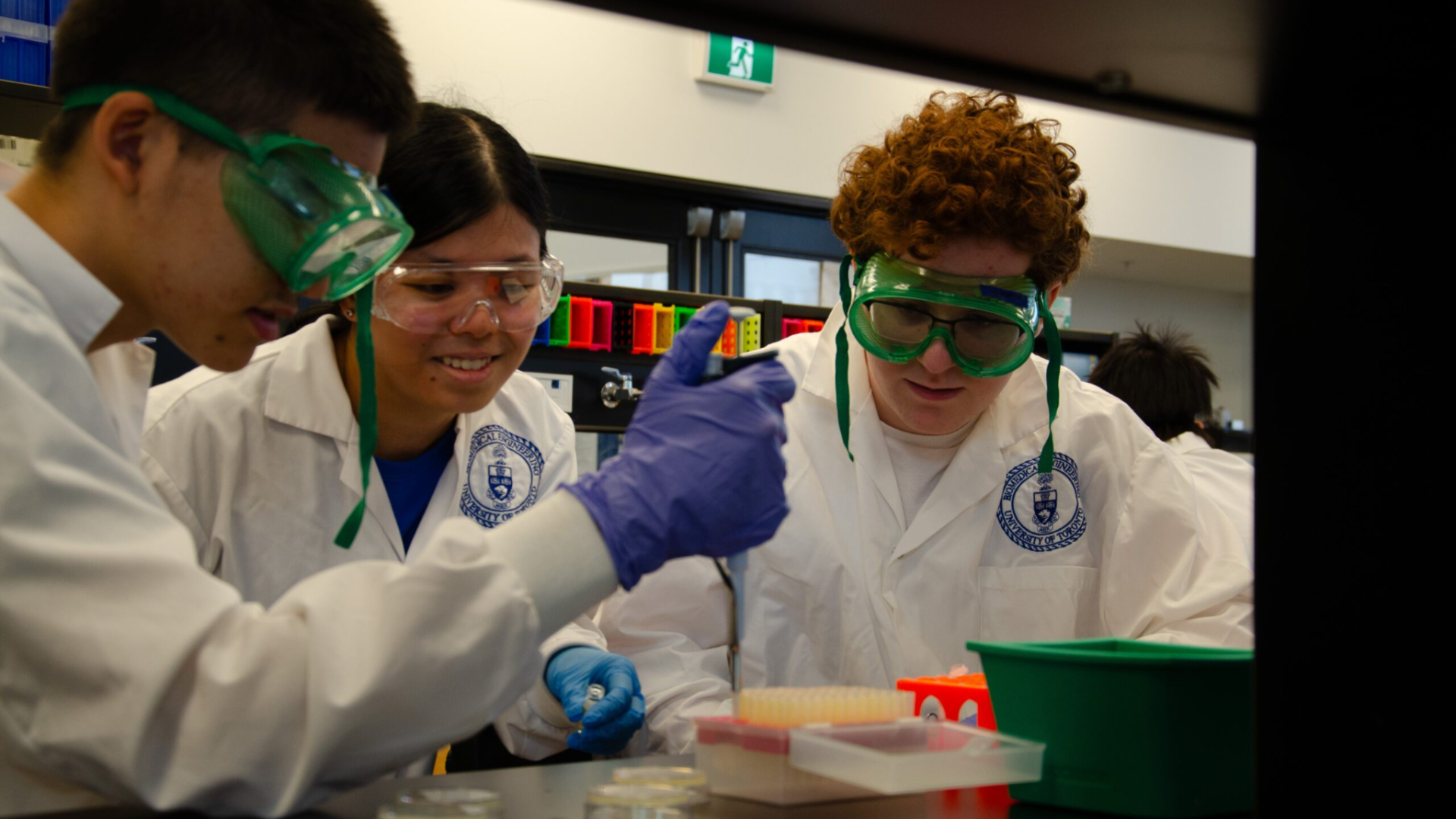
Location: University of Toronto, St. George Campus, Toronto, Canada
Cost/Stipend: Application fee: CAD $50–60; Course fee: CAD $732/week (domestic), CAD $1,111/week (international)
Acceptance rate/cohort size: Selective; cohort size dependent on course capacity
Dates: Weekly sessions between July 6th and August 21stApplication Deadline: Rolling basis
Eligibility: Students in grades 9–12; must have completed at least one year of high school and the required math/science courses for their grade level; open to international students
CREATE: Engineering Design Challenges is a week-long summer program that introduces you to engineering through project-based learning and real-world design challenges. You'll work through the engineering design cycle by completing hands-on activities, laboratory experiments, and site visits while exploring different engineering disciplines with guidance from current undergraduate and graduate students.
After being accepted into the program, you can register for up to six one-week courses, allowing you to customize your summer experience based on your interests. The collaborative learning environment encourages you to ask questions, experiment with new ideas, and develop technical and problem-solving skills alongside other students interested in STEM.
Why it stands out: Its flexible format lets you combine multiple week-long engineering courses while learning directly from University of Toronto undergraduate and graduate student mentors through hands-on design challenges.
13. University of Toronto – Aerial Robotics Club (ARC)
Location: Online and University of Toronto, Toronto, Canada
Cost/Stipend: None
Acceptance rate/cohort size: Highly selective; cohort size not specified
Dates: Weekly online meetings from May to August, with in-person research sessions in August
Application Deadline: April 15th
Eligibility: Students in grades 10–12 who are proficient in English and have an internet connection; expected to provide evidence of academic proficiency and basic STEM knowledge (such as previous experience in robotics, programming, math, or science clubs); open to international students
The University of Toronto Aerial Robotics Club (ARC) introduces you to research in aerospace engineering through collaborative projects focused on aerial robotics. You'll work with Professor Hugh Liu, university students, and fellow participants to investigate real-world engineering problems while learning how research projects are developed from concept to implementation.
Throughout the program, you'll read scientific literature, formulate research questions and hypotheses, and contribute to the design and development of aerial robotics projects. Most of the program takes place through weekly online meetings, followed by in-person research sessions for eligible students during August. By the end of the program, you'll have gained experience with the research process and a deeper understanding of aerospace engineering and robotics.
Why it stands out: It allows high school students to contribute to university-led aerial robotics research while learning directly from faculty members and student researchers.
14. University of Toronto Department of Psychology – Summer Psychology Research Initiative (SPRINT)
Location: University of Toronto, Toronto, ON
Cost: None
Acceptance rate/cohort size: Highly competitive; ~60 students
Dates: July 20–31
Application Deadline: May 1st
Eligibility: High school students in Ontario; Indigenous, Black, and racialized (IBR) students entering grades 11 and 12 are given preference; not open to international students
The University of Toronto’s Summer Psychology Research Initiative (SPRINT) is a free program that immerses you in diverse psychology disciplines, research methods, and statistics. Over two intensive weeks, you will actively participate in university-level lectures, interactive panels, and live laboratory demonstrations. Collaborating closely with graduate and undergraduate mentors, you will also apply your learning to co-create a novel group research proposal.
A unique feature of SPRINT is its core mission as an anti-racist initiative that prioritizes historically underrepresented students, including BIPOC, gender-minority, and first-generation individuals. Through these hands-on activities, you will develop essential skills in experimental design, statistical analysis, and academic presentation.
Why it stands out: Unlike many costly pre-college summer camps, SPRINT is entirely free and trainee-led, purposefully breaking down systemic barriers to ensure underrepresented students gain genuine, high-level research experience.
15. University of Toronto – Designing Mitochondria for the Future Summer Program
Location: University of Toronto, St. George Campus, Toronto, Canada
Cost: None
Acceptance rate/cohort size: Highly selective; ~28 students
Dates: July 13–14
Application Deadline: April 30th
Eligibility: Students in grades 11–12; open to international students
The Designing Mitochondria for the Future Summer Program introduces you to biomedical research through a two-day experience focused on innovation and the future of medicine. You'll participate in hands-on activities, interactive lectures, laboratory tours, and presentations that explore how scientists, engineers, clinicians, and innovators work together to advance medical research.
Sessions are led by researchers, graduate students, healthcare practitioners, and undergraduate mentors, allowing you to learn from professionals involved in interdisciplinary research. Throughout the program, you'll explore real-world applications of mitochondrial research and gain insight into collaborative scientific problem-solving. Students who complete the program receive a Certificate of Completion recognizing their participation in a university-led research and innovation experience.
Why it stands out: It introduces students to interdisciplinary biomedical research by combining hands-on learning with mentorship from researchers and healthcare professionals, all in a free university-led program.
Frequently asked questions: Science Summer Programs in Toronto for High School Students
Are there free science summer programs in Toronto for high school students?
Yes, several programs on this list carry no cost, though many restrict eligibility. The University of Toronto's Summer Mentorship Program and STEAM-Design Program are both free and pay a $1,600 CAD stipend, but they're limited to Ontario residents who identify as Indigenous or Black. SPRINT and the Designing Mitochondria for the Future Summer Program are also free, with SPRINT prioritizing Indigenous, Black, and racialized students. Blueprint is a fully funded four-week engineering program open only to Black students in grades 10 or 11. Free options tend to carry the narrowest eligibility criteria.
Can international students apply to science summer programs in Toronto?
It depends on the program, since several free and stipend-based options are restricted to Canadian citizens or Ontario residents. Programs like Blueprint, the Summer Mentorship Program, STEAM-Design, ARC's in-person component, and SPRINT are not open to international applicants. Paid programs tend to have fewer restrictions: Science Unlimited, York University's Spark Lab, DEEP Summer Academy, and Sciences Across the Spectrum all accept students from outside Canada. If you're applying from abroad, check each program's eligibility line closely, since restrictions often hinge on citizenship or residency rather than academic ability.
What grade level do you need to be in to apply?
Most programs on this list accept students in grades 9 through 12, though several narrow that range further. York University's Spark Lab and CREATE: Engineering Design Challenges are open across grades 9 to 12, while others like Science Unlimited require you to have completed grade 10 or 11 specifically. A few programs use age rather than grade as the cutoff. Immerse Education's Toronto Summer School, for example, accepts students aged approximately 15 to 18 currently enrolled in middle or high school, rather than tying eligibility to a specific grade completed.
How much do these programs typically cost?
Costs range widely, from fully free programs to several thousand dollars for multi-week residential options. York University's Spark Lab runs $435 to $495 CAD for a single week, while Science Unlimited costs $300 CAD with bursaries available. Sciences Across the Spectrum, a three-week course, runs $4,850 to $6,275 CAD depending on citizenship status. Some programs pay you instead: the Summer Mentorship Program and STEAM-Design Program both offer a $1,600 CAD stipend on completion. Check each listing's cost line closely, since domestic and international pricing frequently differ.
Do any of these programs involve real research work?
Yes, several go beyond structured coursework into contributing to active research projects. The Aerial Robotics Club has you formulate research questions and contribute to aerial robotics projects alongside Professor Hugh Liu and university students. SPRINT has you co-create a group research proposal with graduate and undergraduate mentors, while STEAM-Design has you complete a full Research Design Project with a university mentor. The AI in Healthcare Bootcamp has you build and present a machine learning model for a real clinical problem, giving you hands-on exposure to how research actually gets done.
When should you apply for science summer programs in Toronto?
Application timing varies significantly, so it's worth checking each program individually well before summer. Several programs use fixed deadlines months in advance, such as the Summer Mentorship Program's March 29 cutoff or Blueprint's April 12 deadline. Others run rolling admissions, meaning applications are reviewed as they arrive until spots fill. Immerse Education's Toronto Summer School follows rolling admissions across multiple two-week sessions throughout the summer, so earlier applications generally have a wider choice of dates.
Start your study abroad journey in science
Across this list of science summer programs in Toronto for high school students, you'll find laboratories, hospitals, and research teams ready to welcome you.
Whether you're drawn to fusion energy, pharmacy, or machine learning in healthcare, a program here matches your specific interests and grade level.
Spending a week or a month on a Toronto campus gives you real lab time, mentorship from researchers, and a genuine sense of university life.
If you're ready to plan a science-focused summer overseas, explore more Study Abroad blogs to help you choose the right program for you.







Unlock Inspiring Opportunities with the Immerse Education Newsletter
Join our newsletter to stay ahead with exclusive updates, exciting programme highlights, and expert insights from the world of immersive education.
Learn how Immerse can transform your life
An in-depth overview of our university and career preparation programmes
Get a glimpse into the life of an Immerse participant
Find the right programme for you with sample timetables, location showcases, and more