15 Winter Programs for High School Students

TL;DR
This list covers winter programs across science, business, coding, and the arts, with both online courses and in-person university experiences to choose from. Costs vary widely, from free research internships to fashion intensives costing thousands, and most programs welcome you if you're in grades 9 through 12. UMBC's Winter Session alone offers 112 courses, from neuroanatomy to macroeconomics, showing how much ground these programs cover. Immerse Education's Online Research also fits here, pairing you with Oxbridge and Ivy League tutors for a remote research project if you're aged 13 to 18.
Winter break can give you enough time to explore a subject in greater depth, especially if there is something you have been curious about but never had room to study during the school year. A winter program can turn that spare time into a focused academic experience, allowing you to develop new skills, investigate a potential area of study, and continue building your academic profile.
The range of subjects available is broader than you might expect. High school students can find winter programs covering areas such as computer science, AI, medicine, business, science, entrepreneurship, writing, and the humanities. Some programs introduce university-level concepts, while others are built around research projects, workshops, or collaborative challenges. The format can change considerably depending on what you choose.
What kinds of winter programs are available for high school students?
There is no single format that defines a winter program. Some are short and intensive, while others run over several weeks with a combination of classes, assignments, and projects. You can find online courses that let you study from home, as well as in-person experiences that place you in a university or research environment. Programs may also differ in how much independent work, mentoring, and group discussion they include.
Your choice should depend on what you want to get from the experience. If you are trying to understand a potential college subject, look for a program with substantial academic content. If you want to practise a particular skill, look for project-based work that gives you something to build or produce. It is also worth checking the age requirements, dates, workload, fees, and whether the program expects any previous knowledge.
For adjacent opportunities, consider winter research programs for high school students.
To help you choose, I've drawn up a list of 15 winter programs for high school students.
15 Winter Programs for High School Students
1. Immersion Science Program, Fox Chase Cancer Center
Location: Fox Chase Cancer Center, Philadelphia, PA
Cost: Free
Program Dates: 11 weeks for winter session (January through mid-March)
Deadline: Early November
Eligibility: Participants must be at least 16 years of age and will have completed both biology and chemistry; students must be located in the Philadelphia-Tri-State area.
The Immersion Science Program at Fox Chase Cancer Center immerses you in research training focused on understanding how diet influences cancer signaling. Throughout the program, you'll work with professional scientists, gaining insights into current cancer research. You will learn how to develop your own research project while applying hands-on techniques in a laboratory setting.
This environment promotes a practical understanding of scientific protocols and the significance of research ethics. You will contribute to meaningful work while honing your analytical skills and creativity in problem-solving. By the end of the program, you'll develop critical thinking, research methodology, and effective communication skills.
Why it stands out: What sets the Immersion Science Program at Fox Chase Cancer Center apart is its 30-hour laboratory research training course, where participants engage in authentic research focused on the impact of diet on cancer signaling.
2. Immerse Education’s Online Research

Location: Fully remote
Cost: Varies; summer school scholarship available through our bursary programme
Acceptance rate/cohort size: Selective; 1:1 learning
Application Deadline: Rolling admissions; multiple dates throughout the year
Program Dates: Flexible; multiple cohorts in a year.
Eligibility: Students around the world aged 13-18 (accredited options require age 14+)
The Online Research offers high school students the opportunity to conduct rigorous research with tutors from Oxford, Cambridge, and Ivy League universities. You will work with your tutor to explore a subject of your choice in depth and write an academic research paper. The program is offered in 1:1 and small group formats, and you can choose to receive college credit from universities in the US and the UK.
The virtual research program is offered in over 20 subjects, including artificial intelligence, chemistry, psychology, economics, computer science, creative writing, philosophy, and more. At the end of the program, you’ll receive a written evaluation from your tutor, an opportunity to publish your research, and an invitation to present at the Immerse Online Symposium. You can find examples of papers Immerse students have worked on here. You can find more details about the application here.
Why it stands out: You’ll get access to 1:1 Oxbridge- or Ivy-style research supervision culminating in a publishable academic paper.
3. Marine Science Program (UC San Diego)
Location: UC San Diego, La Jolla, CA, USA
Cost: Tuition varies based on the course
Program Dates: Dates vary based on courses
Deadline: September 10th
Eligibility: High school students (9th-12th grade); international students not mentioned.
At UC San Diego, the Marine Science Program immerses you in interdisciplinary, experiential learning centered on marine science. You will progress through a sequence of courses designed to enhance your understanding and engagement with various marine issues. Hands-on opportunities will allow you to participate in advanced research experiences, applying classroom knowledge to real-world challenges.
The program promotes networking with peers and established professionals in the field, assisting in the cultivation of valuable competencies. You will also engage in projects that solidify your research capabilities and leadership skills. By the end of the program, you'll develop problem-solving, communication, and leadership skills.
Why it stands out: The Marine Science Program at UC San Diego distinguishes itself by allowing students to publish their research in the program's own research journal, enhancing their academic credentials.
4. Pratt Institute PreCollege Program
Location: Pratt Institute, Brooklyn, NY, USA
Cost: Varies based on programs
Program Dates: January 17‑19
Deadline: Typically in October
Eligibility: High school students in grades 9–12 (ages 14–18); open to international students.
Pratt Institute’s PreCollege Program gives you an introduction to college-level study in art and design. You will take studio courses taught by Pratt faculty and work on hands-on projects based on undergraduate areas of study.
Your assignments will help you develop technical and conceptual skills while building portfolio-ready work. You will also take part in critiques, discuss your work with other students, and receive feedback from instructors. Credit-bearing courses can earn you college credit and a Pratt transcript upon completion.
Why it stands out: Students in the program earn college credit and receive an official Pratt transcript upon successful completion of credit-bearing classes, distinguishing it from many other precollege offerings.
5. UMBC Winter Session (University of Maryland)
Location: University of Maryland, Baltimore County, Baltimore, Maryland, USA
Cost: Varies based on the course
Program Dates: January 5–23
Deadline: December 15th
Eligibility: Academically strong high school juniors or seniors who meet the high school concurrent enrollment requirements; open to international students
UMBC Winter Session lets you take college courses in subjects ranging from mathematics and science to psychology, economics, history, and the humanities. The current course list includes subjects such as Abnormal Psychology, Concepts of Biology, Introductory Physics I: Mechanics, Linear Algebra, Neuroanatomy, Criminology and Penology, and Principles of Macroeconomics.
You can also find courses such as Experimental Biology Laboratory, Microscopy and Imaging Techniques, Probability and Statistics, and Mathematical Software Packages: MATLAB. Courses are offered online, hybrid, and in person, depending on the subject. You will complete the coursework for your chosen class and earn college credit during the winter session.
Why it stands out: The UMBC Winter Session boasts an impressive selection of 112 winter courses offered, providing high school students with numerous academic options to choose from for their educational advancement.


6. Construction + Community (Girls Garage)
Location: Girls Garage, Berkeley, CA
Cost: Free
Program Dates: 22 September – 11/10
Deadline: December 1st
Eligibility: 9th-12th grade; open to international students
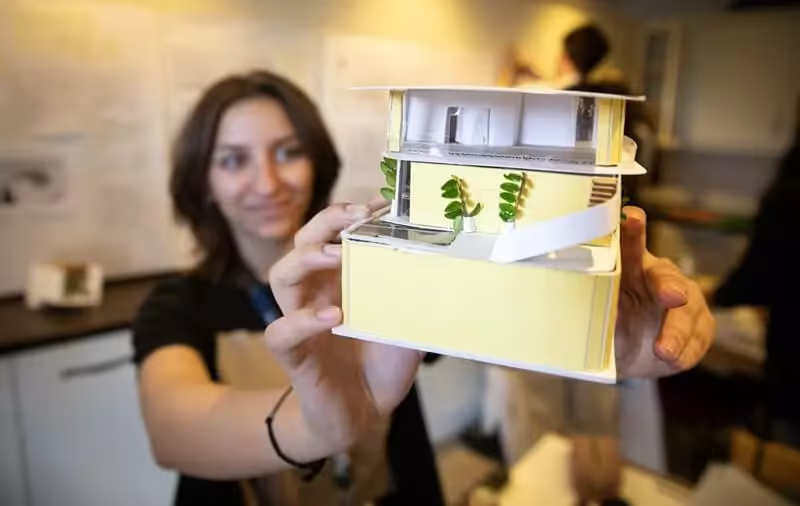
Girls Garage’s Construction + Community is a school-year program where you will learn construction skills while working on projects for local nonprofit organizations. You will practise carpentry and use hand and power tools to build community projects, with past projects including benches, planter boxes, picnic tables, and other structures.
The program connects construction with architecture, design, and engineering as you work through a project from planning to completion. You will also discuss collaboration, equity, inclusion, and how construction skills can serve community needs. The program includes three community-based construction projects across the school year, giving you experience building something that will be used by a real community client.
Why it stands out: What sets the Construction + Community program apart is its unique combination of hands-on construction training and community service projects, all offered free of charge to high school girls.
7. Vogue Winter Break (Vogue College of Fashion)
Location: Vogue College of Fashion, New York, USA
Cost: Residential: $3,815 / Day: $2,870
Program Dates: January 3 - 8
Deadline: September 14th
Eligibility: Grades 10-12; Age 15-18; open to international students with a necessary visa
The Vogue Winter Break program is a five-day fashion business intensive held at the Vogue College of Fashion in New York City. In this immersive experience, you'll engage in hands-on projects that focus on various aspects of the fashion industry, including marketing and branding.
The curriculum includes expert-led discussions and site visits to designer studios and exhibitions to deepen your understanding of real-world fashion practices. You'll interact with industry professionals, gaining insights into potential career paths. The environment encourages networking and collaboration among peers who share similar passions.
Why it stands out: The Vogue Winter Break program uniquely offers students the exclusive opportunity to visit the Vogue headquarters, along with other iconic fashion locations in New York City, enhancing their industry insight.
8. Ithaca College Winter Session
Location: Ithaca College, Ithaca, NY, USA
Cost: $700 per credit
Program Dates: December 18th – January 16th
Deadline: December 5th
Eligibility: High school students; open to international students
Ithaca College Winter Session lets you take an undergraduate course during a condensed winter term, with most courses offered online. The latest offerings included courses such as History of Life on Earth, Chemistry and Human Experience, Anthropology of the World, Introduction to Poetry, Motivation, Global Health, Critical Health Issues, and Sociology of Sexualities.
Other options included Hollywood and American Film, Fiction Film Theory, Religion & Rhetoric in America, and Race, Language, Literature. Online classes may be asynchronous or include scheduled Zoom sessions, depending on the course. As a high school student, you can register as a non-degree student and earn college credit for the course you complete.
Why it stands out: High school students can register as non-degree students to earn undergraduate college credit during a condensed timeframe, allowing them to preview the rigors of university academia.
9. Research Scholars Program (UC San Diego)
Location: UC San Diego, La Jolla, CA, USA
Cost: Tuition varies based on the course
Program Dates: January - March (exact dates depend on courses)
Deadline: December (exact date depends on course)
Eligibility: High school students; open to international students
UC San Diego’s Research Scholars Program lets you explore university-level research through subject-specific courses and research projects. Depending on the program, you can study bioengineering, life sciences, marine science, sports medicine, neuroscience, business research, or bioinformatics. Bioengineering students can work with cell culture, bioimaging, 3D printing, and biomedical research, while life sciences students may combine wet-lab experiments, fieldwork, bioinformatics, and statistical analysis.
Other courses cover topics such as genomic databases, RNA sequencing, phylogenetics, and data visualisation using R. Sports medicine students can explore musculoskeletal anatomy, injury evaluation, injury prevention, and clinical care through case studies and hands-on activities. Research Scholars courses are offered in online, hybrid, and in-person formats, depending on the program.
Why it stands out: Participants in the Research Scholars Program at UC San Diego collaborate closely with faculty mentors, providing a unique opportunity to engage directly in authentic research environments.
10. Partnership for Scientific Inquiry (PSI) program, Oregon Health & Science University (OHSU)
Location: Oregon Health & Science University, Portland, Oregon
Cost: Free
Program Dates: January to May
Deadline: December 1st
Eligibility: Sophomore, Junior, and Senior high school students; international students not allowed
The Partnership for Scientific Inquiry (PSI) at OHSU introduces you to biomedical research through a 16-week course led by researchers and scientific mentors. You will learn how to read scientific papers, use research databases, and examine different scientific, translational, and clinical research approaches. With help from your mentor, you will present a published research article in a journal-club format and develop your own research proposal. The program also includes lectures on ongoing research at OHSU and assignments that require you to investigate scientific questions in greater depth.
Students who are eligible and matched with a summer mentor can continue into an optional research internship in an OHSU or partner laboratory, where they may take part in wet-lab, computational, or clinical research. The experience concludes with the PSI Poster Conference, where you will present your research or a literature review.
Why it stands out: What sets the Partnership for Scientific Inquiry (PSI) program apart is its unique culmination in a summer internship opportunity, allowing students to work directly alongside research mentors after completing the program.
11. Research Internships and Observation for High School Students (Penn State College of Medicine)
Location: Penn State College of Medicine, Hershey, PA
Cost: Paid internship
Program Dates: Flexible
Deadline: Rolling basis
Eligibility: Must be at least 16 years of age; not open to international students
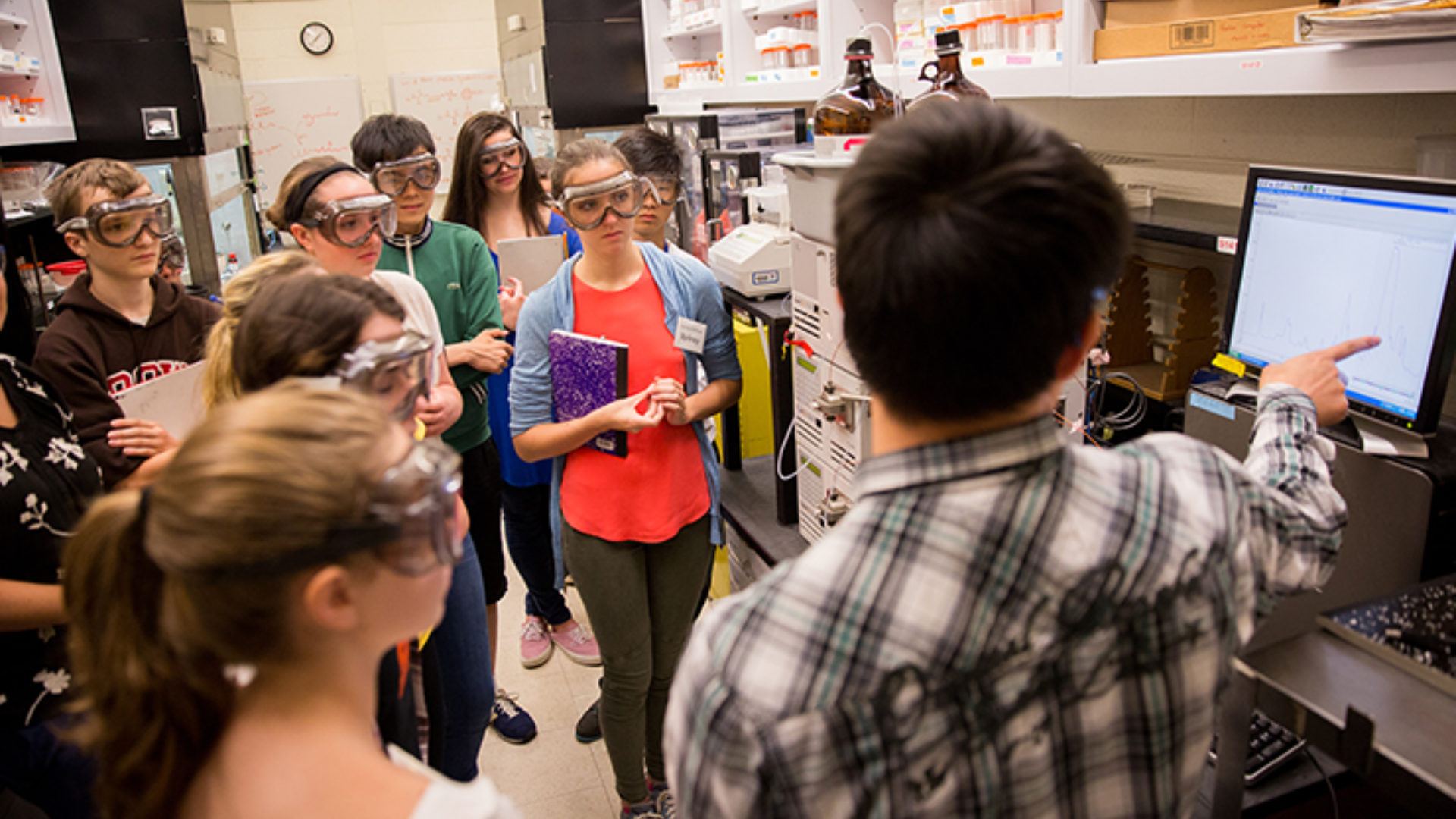
Penn State College of Medicine offers high school students the chance to shadow researchers or join a faculty-supervised laboratory internship. You will identify a faculty member whose research interests match your area of interest and work with them on an approved research experience. Projects can vary because each internship is arranged with an individual laboratory and supervisor. Before starting, you must complete the required safety training and documentation for laboratory work.
The College of Medicine also has specific safety rules covering exposure to chemicals, radioactive materials, infectious agents, and other laboratory hazards. Your experience may last one or two days as research shadowing or extend for weeks or months as an internship, depending on the arrangement with your supervisor.
Why it stands out: What sets the Research Internships and Observation for High School Students program at Penn State College of Medicine apart is the requirement for students to be sponsored by a faculty member, ensuring tailored mentorship and guidance.
Join the Immerse Education 2027 Essay Competition
Follow the instructions to write and submit your best essay for a chance to be awarded a 100% scholarship.
12. UMBC Winter Session Pre-College Program
Location: University of Maryland, Baltimore County, Baltimore, MD, USA
Cost: Varies based on the course
Program Dates: January 5–23
Deadline: December 15th
Eligibility: Rising juniors or seniors in high school; open to international students
UMBC’s Winter Session Pre-College Program lets rising high school juniors and seniors take undergraduate courses and earn college credit. Course options can include subjects such as psychology, biology, chemistry, physics, mathematics, economics, computer science, and criminology. You will attend classes alongside other college students and complete the assignments, exams, and other requirements for your chosen course.
Depending on the class, coursework may be delivered online, in person, or through a combination of formats. The program gives you the chance to complete an actual UMBC course and earn credit that may transfer to another college, subject to that institution’s policies.
Why it stands out: The UMBC Winter Session Pre-College Program uniquely allows rising juniors and seniors in high school to earn college credit, enabling them to get a head start on their higher education journey.
13. Molecular Medicine Workshops
Location: UC Berkeley, UC San Diego, Columbia University, University College London, Alameda (California), Berkeley (California), and Online
Cost: Winter Workshops: $670 (Online), $1,890 (Biomedical Research Commuter)
Program Dates: December 26–31
Deadline: Varies by session
Eligibility: Students aged 14–18; open to international students
The Molecular Medicine Workshops introduce you to biomedical research through university-level lectures, laboratory experiences, and independent research projects. You'll explore topics such as molecular biology, neuroscience, cancer biology, immunology, developmental biology, aging, medicinal chemistry, and bioinformatics while learning how diseases develop at the cellular and molecular level.
Depending on the program, you can choose residential, commuter, or online workshops. Residential sessions are hosted at leading universities including UC Berkeley, UC San Diego, Columbia University, and University College London, where you'll live on campus and participate in a supervised academic environment.
Why it stands out: You will specialize in biomedical research workshops taught by PhD-level instructors at world-renowned universities, with multiple subject tracks, hands-on labs, and an independent research project that mirrors real scientific research.
14. Wolfram Science Winter School
Location: Online
Cost: Free
Program Dates: January 5–16
Deadline: Not specified
Eligibility: Students and researchers interested in physics, mathematics, computer science, or related fields. Prior Wolfram Language experience is helpful but not required; open to international students
The Wolfram Science Winter School is a two-week online program that introduces you to the core concepts of Wolfram Science through lectures, guided readings, discussions, and computational research exercises. You'll explore topics including computational thinking, metamathematics, physics, biology, AI, adaptive systems, and the philosophy of computation while learning how to design computational experiments using Wolfram Language.
Throughout the program, you'll build intuition for complex systems and strengthen your ability to communicate scientific ideas through computational notebooks and visualizations. The program is designed to develop independent research skills while providing a strong foundation for future work in computational science, including potential participation in the Wolfram Summer Research Institute.
Why it stands out: The program offers a rare introduction to Wolfram Science through hands-on computational exploration, culminating in an original computational essay and presentation under the guidance of researchers in foundational science.
15. Girls Who Code Clubs
Location: United States (In-person or Online)
Cost: Free
Program Dates: Year-round (Flexible schedule)
Deadline: Rolling (varies by club)
Eligibility: Students in Grades 3–12 of all coding skill levels; open to international students
Girls Who Code Clubs are free, year-round coding programs that help students build technical skills while becoming part of a supportive community of peers and mentors. You can join a club hosted by a school, library, or community organization, with sessions taking place after school, on weekends, during the summer, or integrated into STEM classes.
Depending on your grade level, you'll explore topics such as block-based coding, web development, cybersecurity, game design, artificial intelligence, and AI literacy through self-paced, project-based learning. Clubs are designed for beginners and experienced coders alike, offering a welcoming environment where you'll learn alongside supportive mentors and develop confidence in computer science regardless of your prior experience.
Why it stands out: Throughout the program, you'll work on real-world projects that combine technology with social impact while strengthening computational thinking, problem-solving, and collaboration skills.
Frequently asked questions: Winter Programs for High School Students
Is there a winter exchange program for 2026?
Yes, several winter exchange and study abroad programs run for high school students in 2026, letting you spend part of your break in another country while earning academic credit or improving language skills. Options range from short cultural immersion trips to multi-week homestay programs in Europe, Asia, and South America. Availability and deadlines vary by provider, so check specific program dates early, since exchange programs typically require more lead time for visas and travel arrangements than a domestic program does.
How long do winter programs for high school students usually last?
Most winter programs run for one to three weeks, though some extend longer depending on the format. Intensive options like a five-day fashion program pack a full curriculum into a short window, while others, such as an eleven-week cancer research immersion, stretch across the entire winter term. Online programs tend to offer more flexibility in pacing than in-person options, since you're not bound by a physical campus schedule. Checking the exact date range against your school's break calendar is worth doing before you apply.
Are international students eligible for winter programs?
Eligibility depends entirely on the specific program, so this is worth confirming before you invest time in an application. Programs like Immerse Education's Online Research welcome students worldwide aged 13 to 18, and many university winter sessions accept international applicants too. Others, including some hospital and lab-based research programs, restrict eligibility to students who live locally or hold U.S. citizenship. Read the eligibility section closely, since restrictions are often tied to lab access or state funding rather than the subject itself.
Do winter programs help with college applications?
Yes, a well-chosen winter program can genuinely strengthen a college application. Admissions officers notice when you've used a shorter break productively, whether that means completing a research project, earning college credit, or building a portfolio outside your regular coursework. Many winter programs run alongside schoolwork and are online, and online programs do help with college applications.
How is a winter program different from a summer program?
The biggest difference is length and intensity. Winter programs typically run for one to a few weeks during your school break, while summer programs often span six to eight weeks with more depth. Winter options work well if you want a focused, lower-commitment way to test an interest before applying to a more selective summer program later. Because winter sessions are shorter, they also tend to draw less competition, which can make some programs more accessible than their summer counterparts.
Which winter programs offer financial aid or stipends?
Several winter programs offer free tuition, stipends, or need-based financial aid to reduce cost as a barrier. Programs based at hospitals or research institutes, such as cancer research immersions, are frequently free and sometimes paid. Immerse Education also offers a bursary programme for its Online Research, making funded places available for eligible students aged 13 to 18. If cost is a concern, checking a program's financial aid page before you apply can save you from ruling out options unnecessarily.
Winter programs as a stepping stone to university
A few focused weeks during your break can do more for your application than an entire semester of unfocused effort.
Whether you choose lab research, college coursework, or a creative intensive, winter programs for high school students turn downtime into direction.
Programs like UMBC's Winter Session or the Molecular Medicine Workshops show admissions officers you pursue depth even outside the school year.
Ready to plan your next step? Explore our University Preparation resources for guidance on turning experiences like these into a stronger application.





Unlock Inspiring Opportunities with the Immerse Education Newsletter
Join our newsletter to stay ahead with exclusive updates, exciting programme highlights, and expert insights from the world of immersive education.
Learn how Immerse can transform your life
An in-depth overview of our university and career preparation programmes
Get a glimpse into the life of an Immerse participant
Find the right programme for you with sample timetables, location showcases, and more