15 Writing Courses for High School Students

TL;DR
This guide covers 15 writing courses where you can build skills in journalism, creative writing, research, or storytelling through structured, expert-led programs. Costs range from fully free options with housing and airfare included to selective courses running over $7,000. Most programs accept you in grades 8 through 12, though a few restrict admission by income, geography, or state residency. You could apply to one highly competitive journalism program admitting just 30 students nationwide each year. Immerse Education's Creative Writing Summer School gives you a two-week option in Oxford and Sydney for students aged 13 to 18, with bursary funding available.
You may not think of English as a subject you'll need after high school, but writing doesn't really disappear when the class does. College essays, research papers, lab reports, presentations, applications, and even emails all depend on being able to put an idea into words clearly. If you want to get better at that while you're still in high school, a writing course gives you a chance to work on it properly.
The interesting part is that writing courses don't all teach the same thing. One might have you build a short story from an idea you've had for months, while another could teach you how to research a topic and turn it into a convincing essay. You might explore journalism, poetry, creative nonfiction, persuasive writing, or literary analysis. You also get more room to rewrite your work, ask why something isn't working, and learn from feedback instead of treating the first draft as the finished product.
Why should I do a writing course in high school?
High school gives you plenty of opportunities to write, but most of that writing has a specific question, word count, and deadline attached to it. A writing course can give you more freedom to explore what kind of writer you are and what kind of writing you actually enjoy. You can learn how to edit your own work, develop a stronger voice, build an argument, or make a piece of writing hold together from the first sentence to the last.
There's also a useful college application angle. If you've completed a writing project, published an article, built a collection of stories, or produced a strong research paper, you have something specific to mention when discussing your academic interests. That can be especially useful if you're applying to study English, journalism, history, political science, or another subject where writing is part of the work.
For related options, consider writing competitions for high school students and 100 essay writing tips for students.
With that in mind, here are 15 writing courses for high school students! If you’re an international student and want to explore English-focused camps in the US and UK, this blog is for you.
15 Writing Courses for High School Students
1. Princeton Summer Journalism Program (PSJP)
Location: Hybrid, online and Princeton University campus, New Jersey
Cost: Free
Dates: Online workshops begin the week of July 1st; residential session runs July 24th – August 3rd
Application Deadline: January 26th
Acceptance Rate: Approximately 40 students selected each year
Eligibility: High school juniors from limited-income backgrounds who possess a minimum 3.5 unweighted GPA
The Princeton Summer Journalism Program introduces you to feature writing, reporting, and multimedia journalism through a year-long combination of virtual learning and an on-campus residential experience. You'll attend online lectures led by professional journalists, complete weekly reporting assignments, and receive one-on-one college counseling while building your writing portfolio.
During the residential session, you'll live on Princeton's campus, participate in intensive writing workshops, visit major newsrooms, and report on real events alongside your peers. The program concludes with the publication of The Princeton Summer Journal, allowing you to contribute to a professional-style student publication.
Why it stands out: The program combines journalism training, mentorship, and college advising while giving you firsthand exposure to professional newsrooms and the opportunity to publish your work.
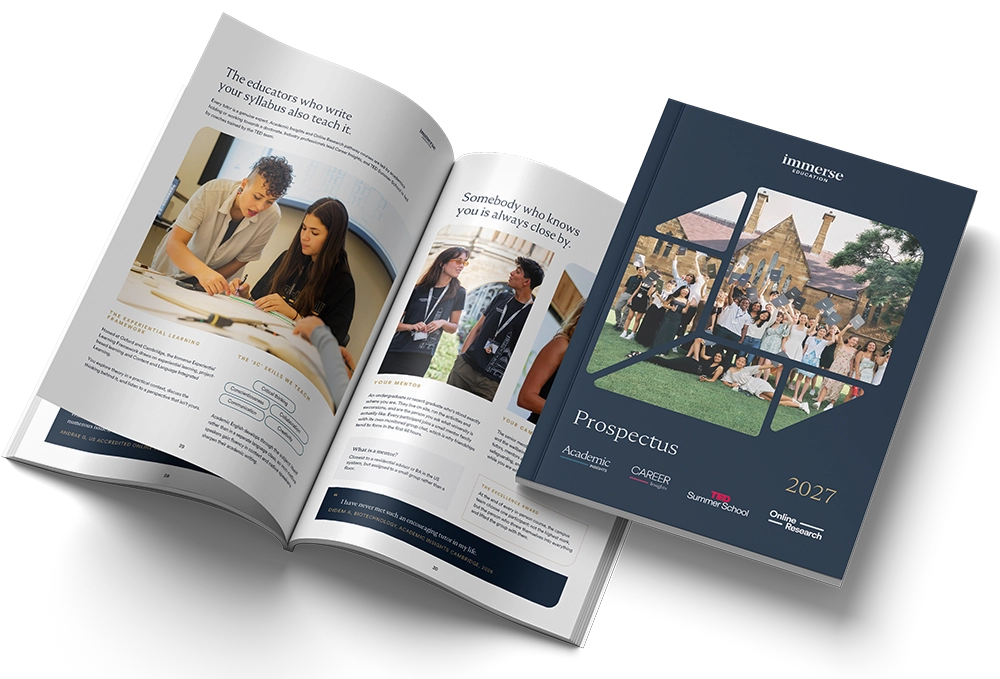
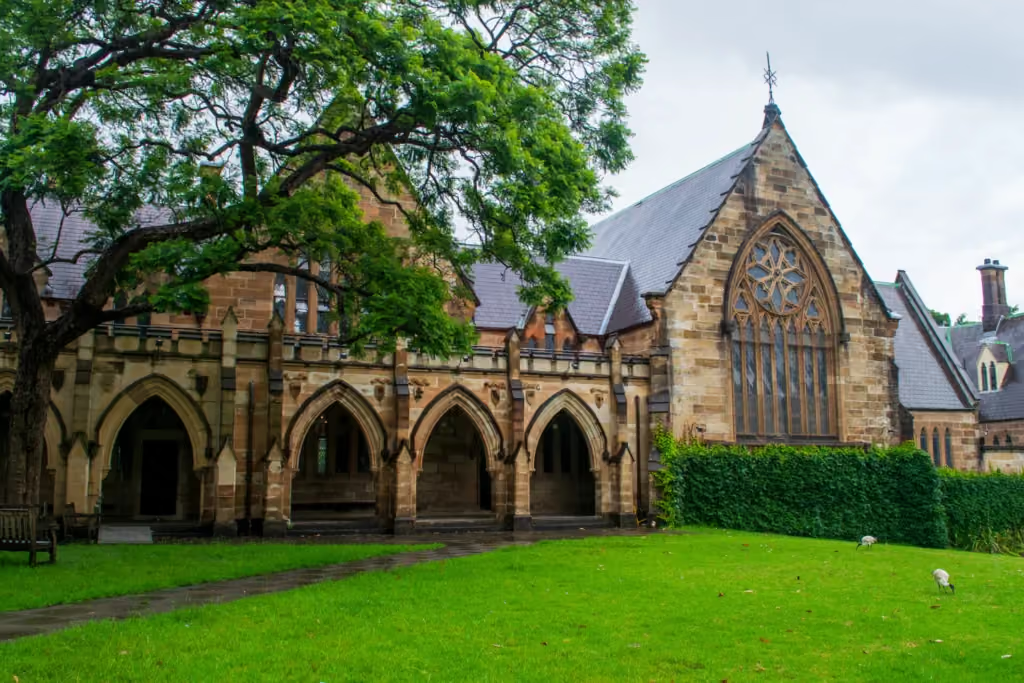
2. Immerse Education’s Creative Writing Summer School

Location: Oxford, Sydney
Cost: Varies; summer school scholarship available through our bursary programme
Acceptance rate/cohort size: Selective; an average of 7 participants per class
Application Deadline: Multiple cohorts with rolling admissions
Program Dates: 2 weeks during the summer
Eligibility: Students worldwide aged 13-18 currently enrolled in middle or high school; open to international students
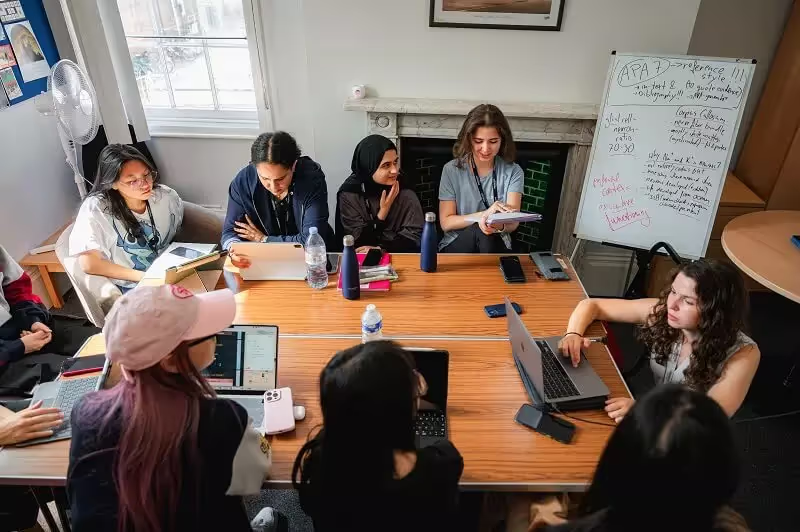
Immerse Education’s Creative Writing Summer School will offer you the opportunity to explore the art of creative writing by building skills in poetry, narratives, and fiction. You’ll participate in workshops, literary analysis, and collaborative projects. You’ll receive personalized guidance from experienced writers and explore different genres and writing styles as you find your unique voice as a writer.
Along with becoming a better writer, the program also gives you the experience of university life through thought-provoking discussions and a chance to make like-minded friendships. If you’re a high school student looking for a writing program that can help you master creative writing, build self-confidence, and earn a recognized certificate, then this one is a good option to consider.
Why it stands out: It immerses you in narrative craft, genre exploration, and editorial feedback, helping you develop stronger storytelling skills and a more compelling creative voice.
3. Telluride Association Summer Seminar (TASS)
Location: Cornell University and the University of Maryland
Cost: Free
Dates: June 21st – July 25th
Application Deadline: December 3rd
Acceptance Rate: Very selective
Eligibility: High school sophomores and juniors (ages 15–18)
The Telluride Association Summer Seminar is a five-week humanities program where you explore topics related to history, society, and social systems through college-level reading, discussion, and writing. You choose between Critical Black Studies and Anti-Oppressive Studies, with both tracks centered around seminars, analytical essays, and collaborative conversations.
You'll spend your days participating in faculty-led discussions, writing regularly, and examining complex social and historical issues from multiple perspectives. Beyond academics, you'll also take part in community self-governance, public speaking workshops, and discussions with guest speakers, making the experience much broader than a traditional summer class.
Why it stands out: TASS combines rigorous writing and discussion with a residential community where students help shape daily life, creating an immersive college-style humanities experience.
4. Annenberg Youth Academy for Media and Civic Engagement
Location: USC University Park and Health Sciences Campuses, Los Angeles, California
Cost: Free (transportation scholarships available)
Dates: June 15th – July 2nd
Application Deadline: April 19th
Acceptance Rate: 26 students
Eligibility: High school students who reside and attend school in specific communities surrounding the USC campus (such as Boyle Heights, Compton, Crenshaw, and Watts)
The Annenberg Youth Academy introduces you to journalism, media, and civic engagement through college-level coursework and hands-on storytelling projects. You'll attend daily academic sessions, meet USC faculty and media professionals, and explore how communication shapes public life.
Throughout the program, you'll strengthen your writing through reporting assignments, multimedia projects, and collaborative storytelling while receiving guidance from experienced mentors. The academy also includes college advising and support with personal statements and application essays, helping you prepare for the college admissions process.
Why it stands out: The program blends journalism, writing, media production, and college preparation in a small cohort led by USC faculty and professionals.
5. JCamp
Location: Varies each year (hosted in a different U.S. city)
Cost: Free (airfare, housing, and meals included)
Dates: Six-day summer program (dates vary each year)
Application Deadline: January 11th
Acceptance Rate: Around 30 students; highly competitive
Eligibility: High school sophomores and juniors nationwide
JCamp is a six-day journalism program where you build practical reporting and writing skills through newsroom simulations, workshops, and field assignments. You'll learn how to interview sources, write news stories, produce multimedia content, and collaborate with other aspiring journalists under the guidance of experienced editors and reporters. The program emphasizes hands-on learning, with small teams producing multiplatform news packages while receiving detailed feedback from industry professionals. Guest speakers, field trips, and networking opportunities also give you insight into careers in journalism and media.
Why it stands out: JCamp offers intensive newsroom-style training while exposing students to a wide range of journalism professionals and perspectives on media diversity.


6. The Adroit Journal Summer Mentorship Program
Location: Online
Cost: $575 tuition; need-based financial aid available
Dates: June 15th – July 27th
Application Deadline: March 1st
Acceptance Rate: Highly selective
Eligibility: High school students (including graduating seniors) and gap year students
The Adroit Journal Summer Mentorship Program pairs you with an experienced writer to develop original work in poetry, fiction, or creative nonfiction over six weeks. Rather than following a traditional classroom format, you'll exchange drafts with your mentor, receive detailed written feedback, and revise your work throughout the program.
The mentorship is highly personalized, allowing you to explore your own creative interests while building consistent writing and revision habits. You'll also participate in peer workshops and discussions that encourage thoughtful feedback and strengthen your understanding of the creative writing process.
Why it stands out: Its one-on-one mentorship model gives you sustained guidance from an experienced writer while providing the flexibility to develop your own creative voice.
7. University of Iowa Young Writers' Studio (2-Week Summer Residential Program)
Location: University of Iowa, Iowa City, Iowa
Cost: $2,500 + $10 application reading fee (need-based financial aid available)
Dates: Session 1: June 14–27; Session 2: July 12–25
Application Deadline: Typically early February
Acceptance Rate: Not specified
Eligibility: High school students
The University of Iowa Young Writers' Studio allows you to spend two weeks immersed in creative writing while living on the University of Iowa campus. You'll choose one core course in fiction, poetry, creative writing, TV writing, or playwriting, all taught by graduates of the Iowa Writers' Workshop and other University of Iowa MFA programs. Throughout the program, you'll share your writing with instructors and peers, receive detailed critiques through workshops and writing exercises, and develop your skills in a supportive creative community.
Alongside your core course, you'll attend readings by published authors, participate in discussions on topics like revision and literary translation, and join collaborative projects with fellow students. The experience also includes open mics, talent shows, and social events that help you connect with other young writers.
Why it stands out: The program combines intensive creative writing instruction with mentorship from writers trained at the renowned Iowa Writers' Workshop while fostering a close-knit residential community centered on the writing process.
8. The School of The New York Times Summer Academy
Location: New York City, New York
Cost: $6,195 (Day Student) or $7,695 (Residential Student); limited need-based scholarships available
Dates: Term 1: June 7–19; Term 2: June 21–July 3; Term 3: July 5–17; Term 4: July 19–31
Application Deadline: Not specified
Acceptance Rate: Not specified
Eligibility: Rising high school students in grades 10–12 and graduating seniors (ages 15–18)
The School of The New York Times Summer Academy lets you explore journalism and storytelling through specialized courses taught by experienced journalists, editors, and media professionals. You can choose from courses such as Reporting and Writing: Journalism Essentials, Narrative Writing, and How to Be an Editor, depending on your interests.
You'll build reporting, interviewing, writing, and editing skills while investigating real-world topics through discussions, field experiences, and practical assignments guided by industry professionals. New York City becomes part of the classroom, giving you opportunities to engage with the people, places, and stories that shape modern journalism. The program offers both academic instruction and a firsthand look at how journalism works beyond the classroom.
Why it stands out: Students learn directly from working journalists while using New York City's media landscape as an extension of the classroom, creating a practical introduction to professional storytelling.
9. Sarah Lawrence College Writers Week
Location: Sarah Lawrence College, Bronxville, New York (on campus) or online
Cost: Virtual: $1,195 | On-campus: $1,950
Dates: Virtual: July 6–10 | On-campus Session 1: July 20–24 | On-campus Session 2: August 3–7
Application Deadline: Not specified
Acceptance Rate: Not specified
Eligibility: Students entering grades 9–12 who are at least 14 years old
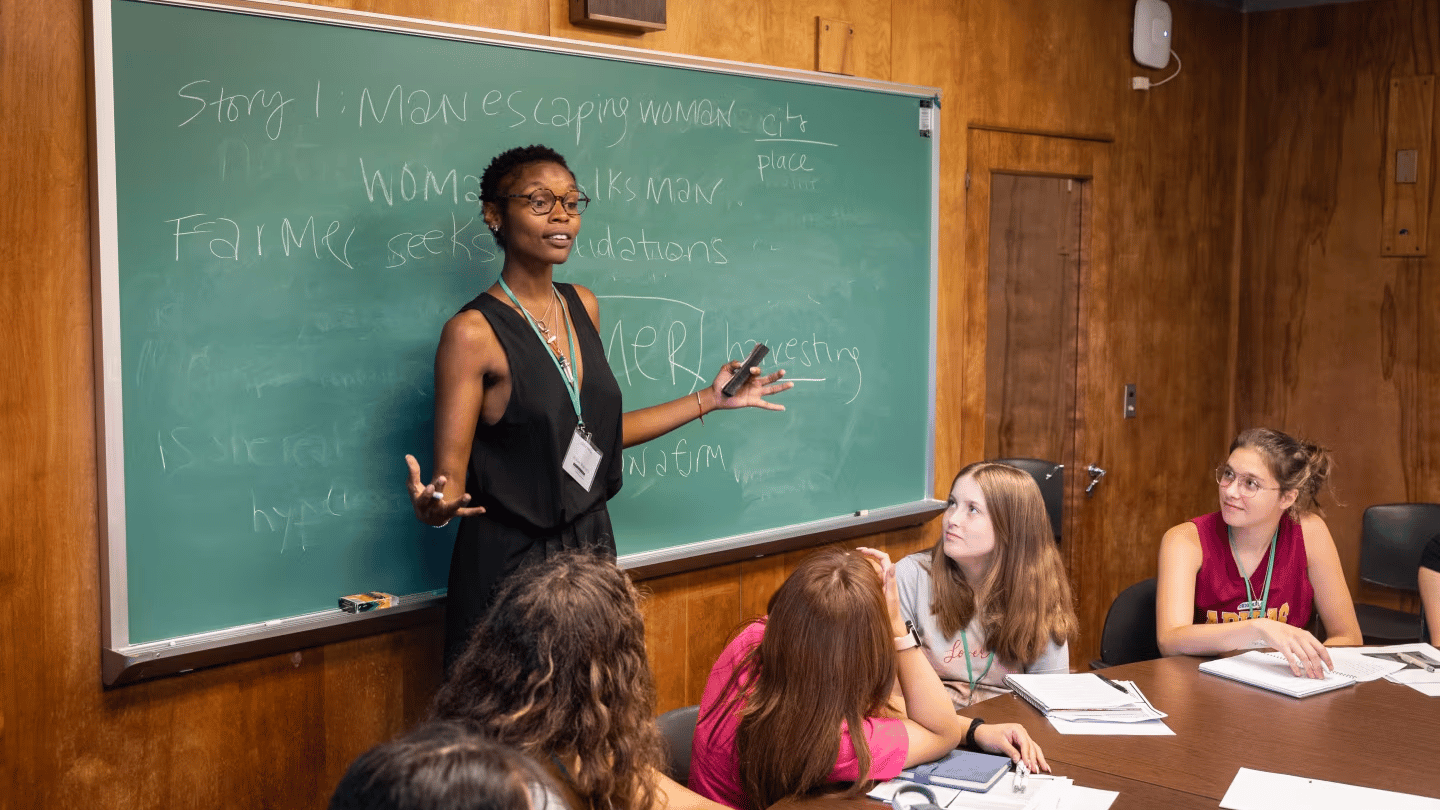
Sarah Lawrence College's Writers Week is a week-long program that combines creative writing with theatre to help you explore storytelling from multiple perspectives. Each day begins with a dedicated writing workshop led by MFA Writing graduate students, where you'll experiment with genres such as poetry, fiction, memoir, fantasy, flash fiction, and romance through writing prompts and collaborative exercises.
You'll work in small workshops of no more than 18 students, receive individualized feedback, share works in progress, and develop your writing through discussions of craft, guest author talks, and close interaction with instructors. In the afternoon, you'll participate in theatre workshops covering areas such as screenwriting, playwriting, comedy sketch writing, improvisation, or musical songwriting, before ending the week with faculty readings and a celebration of student work. Students who complete the program are also eligible to earn one college credit.
Why it stands out: The program uniquely combines creative writing with theatre workshops, allowing students to strengthen storytelling skills across multiple creative disciplines while earning transferable college credit.
10. Kenyon Review Young Writers Workshop
Location: Kenyon College, Gambier, Ohio, or online
Cost: Virtual: $995 | Residential: $2,575
Dates: Online: June 14–19 | Residential: Session 1: June 21st – July 4th; Session 2: July 12–25
Application Deadline: Not specified
Acceptance Rate: Not specified
Eligibility: Students ages 16–18
The Kenyon Review Young Writers Workshop is a one-week creative writing program where you work closely with an instructor and a small group of peers while exploring fiction, poetry, or nonfiction. You'll write every day, read published works, and participate in workshop discussions that focus on revision and craft rather than grades.
Through daily writing exercises, peer workshops, and one-on-one meetings with your instructor, you'll receive thoughtful feedback that helps you strengthen your writing and develop your creative voice. The program also features author readings, craft talks, and open mic events that introduce you to a supportive community of young writers.
Why it stands out: The workshop emphasizes small-group mentorship and revision, allowing students to develop their writing in a collaborative, low-pressure environment.
11. Yale Young Writers' Workshop
Location: Yale University, New Haven, Connecticut, or online
Cost: On campus (with housing): $3,085 | On campus (without housing): $2,660
Dates: June 21–26
Application Deadline: April 1st
Acceptance Rate: Not specified
Eligibility: Rising high school seniors ages 16–18
The Yale Young Writers' Workshop is a week-long program where you study fiction, nonfiction, poetry, or graphic storytelling in a small, discussion-based workshop. Each day combines close reading, writing exercises, peer critique, and instructor feedback to help you develop both your creative process and revision skills.
You'll analyze published works alongside your own writing, learning how authors make stylistic choices while applying those techniques to your own pieces. The program also includes experiential writing activities, such as museum-based exercises, that encourage you to generate new ideas and experiment with different forms of storytelling.
Why it stands out: The workshop combines intensive writing instruction with close mentorship in small groups, offering students a focused introduction to college-level creative writing.
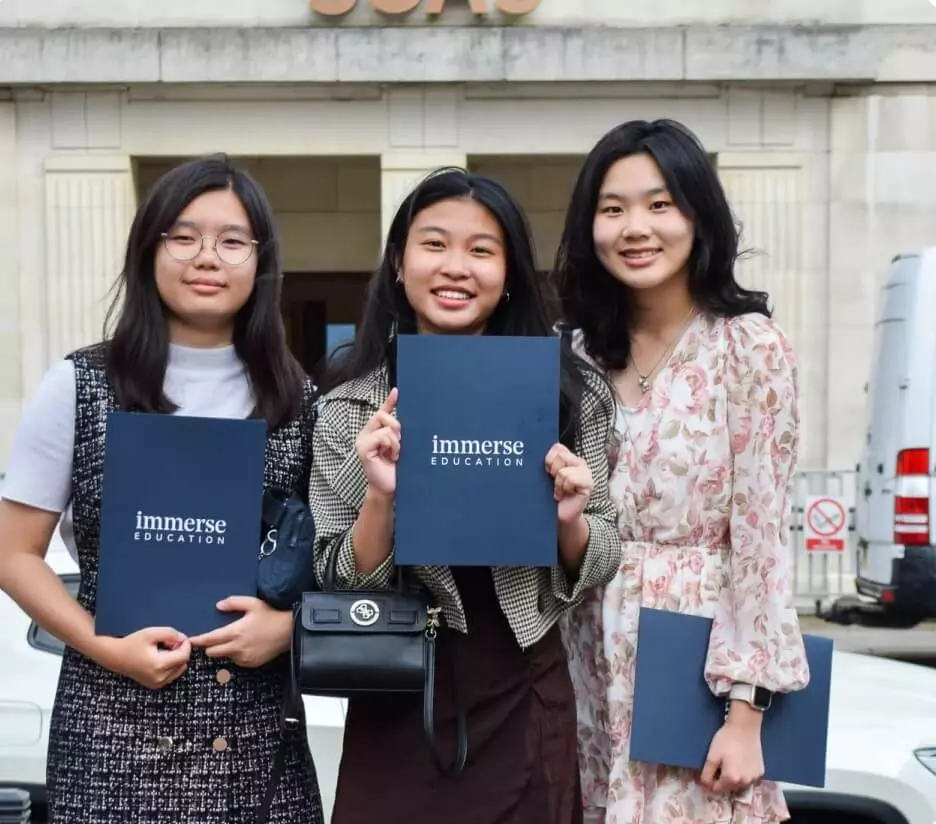
Join the Immerse Education 2027 Essay Competition
Follow the instructions to write and submit your best essay for a chance to be awarded a 100% scholarship.
12. Columbia Scholastic Press Association Summer Journalism Workshop
Location: Columbia University, New York, New York, and online
Cost: Resident: $3,000 per session | Commuter: $1,700 per week | Virtual: $1,100 per session
Dates: Residential and commuter: June 21–26 and June 28th – July 3rd | Virtual: July 6–10, July 13–17, or July 20–24
Application Deadline: Residential and Commuter: June 5th | Virtual: June 30th
Acceptance Rate: Not specified
Eligibility: Students in grades 9–12 (or rising college freshmen) from U.S. and international schools following the American curriculum
The Columbia Scholastic Press Association Summer Journalism Workshop introduces you to journalism through specialized tracks that include reporting, writing, editorial leadership, digital media, broadcast journalism, and publication design. You'll learn from Columbia instructors and experienced journalism professionals while completing practical newsroom-style assignments.
The program combines classroom instruction with hands-on reporting and editing projects, giving you experience producing work across multiple media formats. Students attending in person also participate in campus activities and media-related experiences that complement the academic curriculum.
Why it stands out: The workshop offers multiple journalism tracks taught by experienced educators and media professionals, allowing students to explore different areas of student journalism in one program.
13. Medill-Northwestern Journalism Institute (Cherubs)
Location: Northwestern University, Evanston, Illinois
Cost: $50 application fee + $5,000 program fee (financial aid available)
Dates: June 29th – July 25th
Application Deadline: March 6th
Acceptance Rate: Not specified
Eligibility: Rising high school seniors
The Medill-Northwestern Journalism Institute, commonly known as "Cherubs," is a four-week residential program where you study reporting, writing, editing, and multimedia journalism on Northwestern University's campus. You'll learn from Medill faculty and working journalists while completing assignments in print, digital, audio, and broadcast storytelling.
Through an intensive schedule of classes, workshops, and newsroom exercises, you'll develop practical reporting skills while receiving regular critiques that strengthen your writing, accuracy, and storytelling. The program also includes field trips, portfolio development, and more than 50 instructional sessions designed to introduce you to college-level journalism.
Why it stands out: The institute offers an intensive residential journalism experience led by Medill faculty and professional journalists while helping students build a substantial portfolio of published work.
14. NYU Urban Journalism Workshop

Location: New York University, New York, New York
Cost: Free (meals and housing included)
Dates: July 13–19
Application Deadline: February 15th
Acceptance Rate: Not specified
Eligibility: High school students ages 16 and older from New York, New Jersey, and Connecticut
The NYU Urban Journalism Workshop is a residential journalism program where you learn reporting, interviewing, writing, and digital storytelling while living on NYU's campus. You'll attend classes taught by NYU faculty and media professionals before applying those skills through reporting assignments based across New York City.
Throughout the program, you'll conduct field reporting, interview sources, and produce multimedia stories that are published on the workshop's student news platform, The Spectrum. The experience also includes visits to major news organizations, giving you a closer look at how professional newsrooms operate while connecting classroom learning with real-world journalism.
Why it stands out: The program combines hands-on field reporting with residential learning in New York City, allowing students to experience journalism in one of the world's leading media centers.
15. Stanford Pre-Collegiate Summer Institutes: Creative Writing: Creative Nonfiction, Fiction, and Poetry
Location: Online
Cost: $3,200; financial aid available
Dates: Session 1: June 15–26; Session 2: July 6–17
Application Deadline: March 13th
Acceptance Rate: Not specified; selective admissions
Eligibility: Students in grades 8–11
Stanford’s Creative Writing course brings fiction, poetry, and creative nonfiction into the same classroom, with each form giving you a different way to work with language. You’ll read poems, essays, and short stories by established writers and look closely at how each piece creates its own rules for voice, structure, detail, and form.
Class discussions and writing exercises will have you switch between reading as a writer and writing as a reader. You’ll also take part in workshops where you can test your own drafts and rethink how a piece is working on the page. You’ll finish with a portfolio of your own creative writing.
Why it stands out: The course covers three major forms of creative writing and combines reading, discussion, workshops, and portfolio development in a Stanford-run pre-college course.
Frequently asked questions: Writing Courses for High School Students
Are there online writing courses for high school students?
Yes, several writing courses run partly or fully online, giving you flexibility if a residential program doesn't fit your schedule or location. Stanford's Pre-Collegiate Creative Writing course runs entirely online, pairing reading and workshop discussion with portfolio-building. The Adroit Journal Summer Mentorship Program also runs online, pairing you one-on-one with a professional writer for six weeks of drafts and feedback. Sarah Lawrence's Writers Week and the Kenyon Review Young Writers Workshop both offer virtual tracks alongside their in-person sessions, usually at a lower cost than the residential option.
Are there free writing courses for high school students?
Yes, several journalism-focused courses are fully funded, covering tuition, and sometimes housing and travel as well. The Princeton Summer Journalism Program, Telluride Association Summer Seminar, Annenberg Youth Academy, and JCamp are all free to attend, though most are highly competitive and reserve limited spots. The NYU Urban Journalism Workshop is also free and includes meals and housing for its residential session. If cost is your main barrier, look closely at each program's eligibility requirements, since many of these free courses restrict admission by income, location, or state residency.
What creative writing activities do these courses typically include?
Most creative writing courses center on daily workshops where you draft new material, share it with peers, and revise based on feedback. You'll often work from writing prompts, analyze published poems, essays, or short stories, and experiment with different forms like flash fiction or persuasive writing. Programs such as Stanford's Creative Writing course and the Iowa Young Writers' Studio also include one-on-one instructor meetings to discuss your drafts in depth. Some courses add extras like open mics, author readings, or theatre-adjacent workshops, so ask what a typical day looks like before applying.
Can you earn college credit through a high school writing course?
Yes, though it depends on the specific program you choose. Sarah Lawrence College's Writers Week awards one college credit to students who complete the course, alongside its creative writing and theatre workshop tracks. Most other courses on this list don't offer transferable credit, focusing instead on skill-building, mentorship, and portfolio development rather than formal academic credit. If earning credit matters to you, confirm directly with the program whether credit is issued and whether your school will accept it before you enroll.
Do you need to submit a writing sample to apply?
It depends on the program, and requirements range from no writing sample at all to a full competitive portfolio review. Highly selective options like the Telluride Association Summer Seminar and JCamp expect a strong application, often including past writing, while need-based programs like the Princeton Summer Journalism Program weigh GPA and background alongside your writing. Less selective or paid courses, such as the Adroit Journal Summer Mentorship Program, focus more on your interest and commitment than a polished sample. Always check the specific application requirements before you start preparing materials.
Are there writing courses for high school students outside the United States?
Yes, though most courses on a typical list run at US universities, some options take place internationally. Immerse Education's Creative Writing Summer School runs at Oxford and Sydney campuses for students worldwide aged 13 to 18, with scholarship funding available through its bursary programme. An international location can add a study-abroad element to your summer while still giving you structured workshop time and instructor feedback. Check each program's specific eligibility requirements, since international options sometimes set different age or grade cutoffs than their US counterparts.
Turn a writing course into application strength
Working directly with journalists, novelists, or MFA instructors gives your writing a level of feedback that classroom assignments during the school year rarely provide.
Among writing courses for high school students, the strongest options pair structured feedback with a finished piece you can submit alongside applications.
You'll often leave with a finished portfolio, published article, or completed research paper that gives admissions readers something concrete to discuss.
Explore more University Preparation blogs to keep building the writing skills, portfolio pieces, and application materials that set you apart this year.







Unlock Inspiring Opportunities with the Immerse Education Newsletter
Join our newsletter to stay ahead with exclusive updates, exciting programme highlights, and expert insights from the world of immersive education.
Learn how Immerse can transform your life
An in-depth overview of our university and career preparation programmes
Get a glimpse into the life of an Immerse participant
Find the right programme for you with sample timetables, location showcases, and more