15 Biology Camps in Europe for High School Students

TL;DR
You’ll find 15 biology and life-sciences programmes here, mostly in the UK, plus Karolinska Institutet’s research school in Sweden. The key difference is access, since free options like UNIQ, the Sutton Trust, and STEM Learning placements are limited to UK state-school students, while paid courses at Imperial, King’s, Edinburgh, and St Andrews welcome international applicants. Most suit students aged 16 to 18, and fees range from free to £7,695. Immerse Education’s Academic Insights pathway offers two-week Biology and Natural Sciences courses in Cambridge and Oxford for students aged 13 to 18.
If you love biology, a summer programme in Europe can take you beyond the textbook and into university labs, lecture theatres, and even working hospitals. Depending on the programme, you might run lab practicals, gain clinical skills, or spend five weeks on a research project in a professional lab. It’s also a chance to see which of the many careers in biology might suit you.
Most of these programmes are hosted by UK universities, with one in Sweden, and they range from free access schemes to fee-paying residential courses. Living on campus for a week or more gives you a feel for student life in a new city and country.
What are biology camps in Europe for high school students?
Biology camps in Europe for high school students are short programmes, usually run by universities or research institutes, that let you study the life sciences at university level. Most last between one and three weeks, though a few research placements and pathway schemes run for longer.
Eligibility varies a lot. Many free programmes are only open to UK state-school students, while paid summer schools often welcome applicants from around the world. Before you apply, check the age range, fees, and whether international students are eligible.
With that in mind, here are 15 biology camps in Europe for high school students!
15 Biology Camps in Europe for High School Students
1. University of Oxford UNIQ
Location: University of Oxford, Oxford, UK
Cost: Free
Acceptance rate/cohort size: Competitive; over a thousand students take part in a residential each year
Dates: Short residentials, mostly in July, plus a sustained contact programme from spring to autumn
Application Deadline: Applications open in mid-December; the 2025 portal closed on 23rd January
Eligibility: UK state-school students in Year 12 (Year 13 in Northern Ireland, S5 in Scotland), prioritising backgrounds under-represented at Oxford | Not open to international students
UNIQ is Oxford’s free access programme for UK state-school students with strong academic potential, combining a summer residential with ongoing support. You stay in an Oxford college, experience Oxford teaching and tuition in your chosen subject, and get an introduction to life as an Oxford student.
Alongside the academic sessions, UNIQ’s sustained contact programme gives you extra advice and guidance on preparing for university. That support continues beyond the residential, helping you plan a strong application.
Why it stands out: You combine subject teaching at Oxford with ongoing application support, at no cost to you.
2. Immerse Education's Biology Summer School

Location: Cambridge and Oxford
Cost: Varies; summer school scholarship available through our bursary programme
Acceptance rate/cohort size: Selective; an average of 7 participants per class
Application Deadline: Multiple cohorts with rolling admissions
Program Dates: 2 weeks during the summer
Eligibility: Students worldwide aged 16-18; open to international students
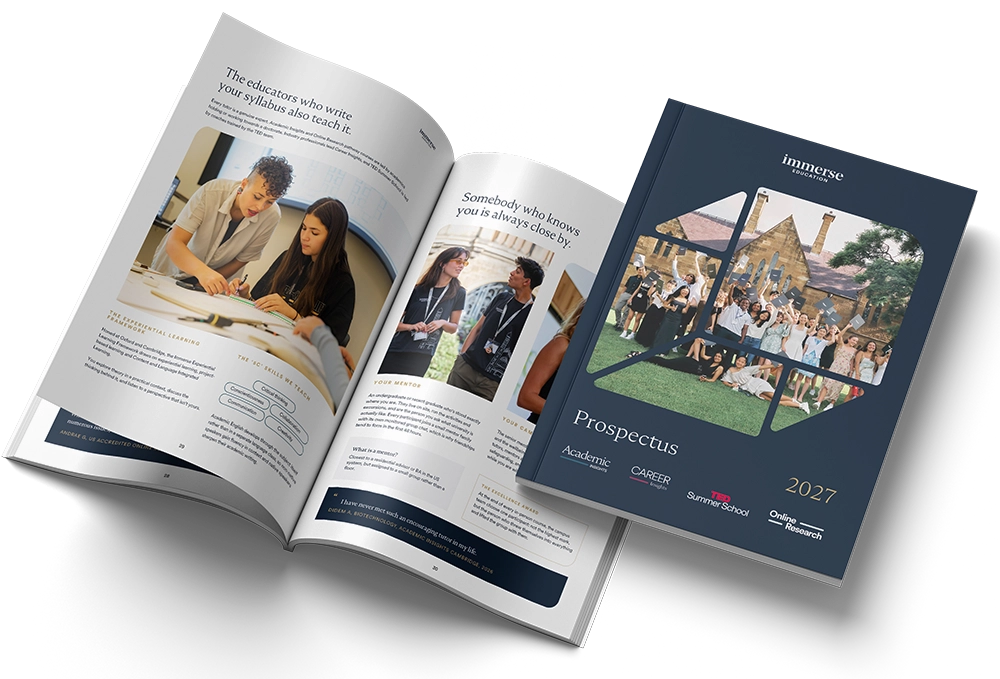
Immerse Education's Academic Insights pathway lets high school students experience university life firsthand. You can live on campus or join as a commuter, study in small seminar groups averaging 7 students, and learn from tutors from eminent top universities like Oxford and Cambridge. If you join the Biology Track, you'll step into a university-style learning environment where you'll study cellular biology, genetics, ecology, and more, exactly as undergraduates would.
The course is experiential and focuses on hands-on learning. You'll also get to design and carry out your own mini research project on a biology topic that fascinates you, giving a taste of real-world scientific work. By the end of the program, you'll receive written feedback and a certificate of completion. You can find more details about the application and specific program details here.
Why it stands out: It pairs you with university-level tutors in focused small groups, helping you deepen subject knowledge and gain rigorous academic mentorship.
3. Brown Experiential Education: Oxford
Location: Oxford, UK
Cost: Approximately £6,227 ($8,270); financial aid is available
Dates: July 6-17
Application Deadline: May 8th
Eligibility: Students completing grades 10-12 who are ages 16-18 by June 14th
In this program, you will be part of the field of biotechnology by exploring how foundational biology translates into real-world medical advances. Throughout the course, you will explore topics including DNA, proteins, CRISPR gene editing, cancer immunotherapy, artificial intelligence in medicine, and brain-computer interfaces.
You will be part of site visits, explore the Bodleian Library's history of science, observe disease study at the Big Data Institute, and punt on the River Cherwell. Ultimately, you will develop strong scientific literacy, master the ability to analyse biotech innovations, and learn to communicate complex scientific ideas effectively through collaboration.
Why it stands out: It removes you from a standard classroom setting to directly trace how biological discoveries evolve from historic university research centres into modern clinical care and commercial biotech startups.
4. Sutton Trust Summer Schools
Location: 13 partner universities across the UK, including Cambridge, Imperial College London, and UCL
Cost: Free
Acceptance rate: Competitive
Dates: 1 week in the summer; exact dates vary by university
Application Deadline: 2026 applications are closed; sign up for updates on the next programme
Eligibility: Year 12 (England and Wales), Year 13 (Northern Ireland), or S5 (Scotland) students who have always attended state-funded schools, ideally with five GCSEs at grades 9 to 6 including English and Maths | Not open to international students
The Sutton Trust’s UK Summer Schools give you a week at a leading university, with over 40 subject areas to choose from, ranging from Archaeology and Anthropology to Veterinary Medicine. You get more than 15 hours of undergraduate-level teaching in your chosen subject, which also gives you material for your personal statement.
Workshops cover UCAS, personal statements, student finance, and managing money at university, and social activities help you make friends. Priority goes to students who meet criteria such as being the first in their family to attend university or having received Free School Meals.
Why it stands out: You spend a fully funded week at a top UK university with dedicated application support.
5. Karolinska Institutet Summer Research School
Location: Karolinska Institutet, Stockholm, Sweden
Cost: Not specified on the English programme page
Acceptance rate/cohort size: Highly selective; around 100 students apply each year and up to 20 are accepted
Dates: 2026 ran 15th June to 31st July, with an introductory week, a five-week research project, and a presentation week (2027 dates not yet posted)
Application Deadline: Listed on the Swedish-language application page
Eligibility: Swedish high school students with excellent grades in the natural and technical sciences | International eligibility not specified; the programme is designed for Swedish students
Karolinska Institutet’s summer research school introduces Swedish high school students to research and what it’s like to be a researcher. After an introductory week, you spend five weeks on a project in a Karolinska lab, supervised by an active researcher such as a PhD student, postdoc, or senior scientist. Projects can involve techniques like PCR, Western blots, and phenotypic screens.
The final week is set aside for presenting your project, including its background, methods, and results. Selection is based on your science grades, recommendation letters from your teachers, and a personal letter showing your interest in science. A separate summer research school in computational biology and bioinformatics is also available.
Why it stands out: You carry out a five-week laboratory research project at one of Europe’s leading medical universities.


6. STEM Learning: STEM Research Placements
Location: Universities, research institutes, and organisations across the UK
Cost: Free
Cohort size: Over 1,000 Year 12 students each year
Dates: 2 weeks in July or August
Application Deadline: 2027 application dates not yet posted
Eligibility: Students aged 16+ in Year 12 (or S5) at a UK state-maintained school or college, studying STEM subjects and meeting widening participation criteria such as Free School Meals eligibility or being first in their family to apply to university | Not open to international students
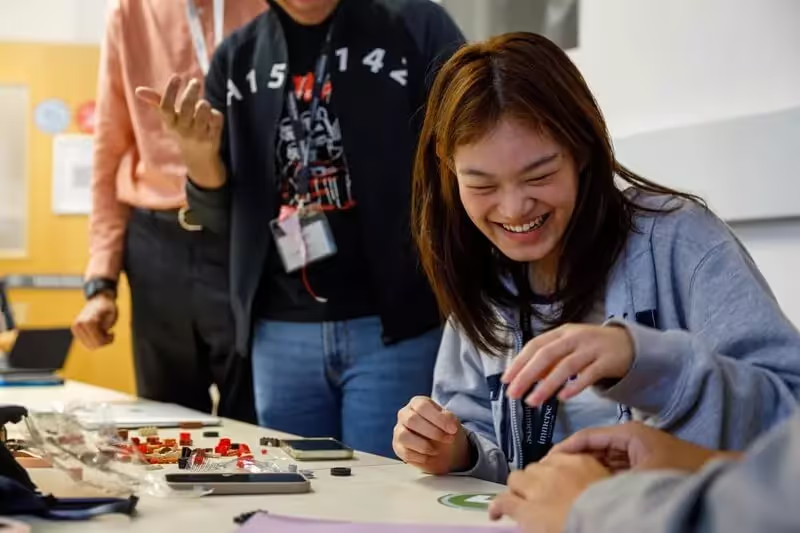
STEM Learning Research Placements, funded by the Nuffield Foundation and other partners, give you two weeks on a supervised but independent project addressing a live research question. You produce a scientific research report or presentation and a poster based on your work.
Projects may be based in laboratories, in the field, or in offices, so biology placements can range from lab experiments to data analysis. If you’d prefer a shorter introduction, the scheme also offers five-day Experience Placements with industry experts.
Why it stands out: You work on a live research question alongside STEM professionals, with a report and poster to show for it.
7. In2scienceUK: In2STEM
Location: In-person placements across the UK, within commuting distance of where you live
Cost: Free, with a bursary for travel and lunch
Acceptance rate: Competitive
Dates: 1 to 2 weeks in the summer
Application Deadline: Applications generally open December to April; the 2026 deadline was 5th April
Eligibility: Students aged 16+ in Year 12 (S5 or S6 in Scotland) from low socioeconomic backgrounds | Not open to international students
In2STEM gives you a one- to two-week in-person work experience placement with a STEM professional near where you live, with hosts including universities such as Leeds. Alongside your placement, you join live online workshops on skills, employability, and careers.
You can also enter public engagement competitions with prizes, showcasing what you learned on your placement. In2scienceUK provides a bursary to cover your travel and lunch costs, removing a common barrier to work experience.
Why it stands out: It opens up a first lab or STEM workplace experience for students who might not otherwise get access, at no cost.
8. Imperial College London Global Summer School

Location: Imperial College London, South Kensington Campus, London, UK
Cost: £7,695 (2026)
Acceptance rate/cohort size: Not specified
Dates: 2026 sessions ran 29th June to 10th July and 3 to 14th August (2027 dates not yet posted)
Application Deadline: 2026 applications are closed; register your interest for 2027
Eligibility: Students aged 16 or 17 with excellent academic ability and strong English | Open to international students
Imperial’s Global Summer School is a two-week residential STEM programme, and its Medicine and Life Sciences stream introduces you to medical science and research. You learn innovative techniques and gain clinical skills from health professionals in practical workshops at St Mary’s Hospital, an Imperial-affiliated institution.
In week two, you join students from other subjects in an Innovation Challenge led by the Imperial Enterprise Lab. You stay in Prince’s Gardens on the South Kensington Campus and receive guidance on applying to UK universities.
Why it stands out: You combine life-sciences teaching with clinical-skills workshops at a top-ranked science university in central London.
9. King’s College London Pre-University Summer School
Location: King’s College London, Central London, UK
Cost: £3,295 per one-week course (£3,195 if you apply by 29th January 2027); residential package from £4,095; £65 application fee
Cohort size: Not specified
Dates: Four one-week sessions from 5 to 30th July 2027
Application Deadline: Applications open in early November; multi-course discounts apply until 9th April 2027
Eligibility: Students aged 16 or 17 in their final three years of high school, with English at B2 level | Open to international students
King’s Pre-University Summer School offers one-week courses, and you can combine two or three for a longer stay. Medical Science runs in three sessions and Neuroscience in two, with classes mixing lectures, seminars, and interactive learning such as discussion groups and simulation games.
Assignments mirror university-level assessment, and tutor feedback shows you where you can improve. Residential students stay in single en-suite rooms at Stamford Street Apartments in central London, with 24-hour support.
Why it stands out: You can sample medical science or neuroscience in flexible one-week blocks at a leading London university.
10. University of Edinburgh Pre-University: Life Sciences
Location: University of Edinburgh, Holyrood Campus, Edinburgh, Scotland
Cost: £5,250
Acceptance rate/cohort size: Not specified
Dates: 29th June to 10th July 2026 (2027 dates not yet posted)
Application Deadline: 19th May 2026 (2027 deadline not yet posted)
Eligibility: Students aged 16 to 18 in their penultimate or final year of school who have studied general science, biology, or chemistry to GCSE level or equivalent, with English at IELTS 6.5 | Open to international students
This two-week course is designed for students considering a life sciences degree, covering Biology, Chemistry, Genetics, and Immunology. Classes combine mini-lectures, tutorial discussions, workshops, and laboratory practicals across Biochemistry, Molecular and Cellular Biology, and Biodiversity and One Health.
You’ll design and carry out scientific investigations, analyse data, and visit other science organisations. You also meet scientists at the University of Edinburgh and get advice from the admissions team on applying to UK universities.
Why it stands out: It is a focused, two-week life sciences programme designed around the move into an undergraduate science degree.
11. Royal Veterinary College Pre-Vet Summer School
Location: Royal Veterinary College, Hawkshead Campus (Hertfordshire) and Camden Campus (London), UK
Cost: £3,365 in 2025, including accommodation and catering but not travel; three full fee-waiver scholarships available
Cohort size: Around 50 places
Dates: 13 days in August; 2025 ran 3 to 15th August (newer dates not yet posted)
Application Deadline: The 2025 window ran from 30th January to 22nd April
Eligibility: Students aged 16+ on track to meet RVC veterinary entry requirements, with English at IELTS 6.5 if needed | Open to international students
The Pre-Vet Summer School is a 13-day residential programme for students aspiring to study veterinary medicine. You gain 25 to 30 hours of work experience in settings such as the Queen Mother Hospital for Animals, the Equine Referral Hospital, and Boltons Park Farm.
Alongside placements, you attend lectures from RVC academics, carry out a research project, practise clinical skills, and try to solve a veterinary case. A Student Ambassador mentors you throughout, and RVC staff run sessions on the application process.
Why it stands out: You build veterinary work experience hours that can support a future application, at the UK’s specialist veterinary college.
Join the Immerse Education 2027 Essay Competition
Follow the instructions to write and submit your best essay for a chance to be awarded a 100% scholarship.
12. University of Warwick Pre-University Summer School: A Taste of Health, Medical and Life Sciences

Location: University of Warwick, Coventry, UK
Cost: 2027 fees not yet posted
Acceptance rate/cohort size: Not specified
Dates: 20 to 30th July 2027
Application Deadline: Summer 2027 applications opening soon; decisions usually within 3 to 5 working days
Eligibility: Students aged 16 or 17 | Open to international students
Warwick’s A Taste of Health, Medical and Life Sciences course introduces Psychology, Biomedical Sciences, Biochemistry, Health, and Natural Science at university level. Each course packs in 29 hours of lectures, seminars, and skills workshops, plus a guest lecture from an eminent speaker.
You spend ten nights on campus with current Warwick students as ambassadors, along with a day in Oxford and a trip to Warwick Castle. Two sessions on applying to UK universities and a personal statement workshop help you plan your next steps.
Why it stands out: You get a broad life sciences taster and practical application support at a highly ranked UK university.
13. University of St Andrews: Summer Academic Experience Courses (SAEC)
Location: University of St Andrews, St Andrews, Scotland
Cost: £6,950 all-inclusive (2027), covering tuition, accommodation, meals, airport transfers, and trips
Acceptance rate/cohort size: Not specified
Dates: 24th July to 14th August 2027
Application Deadline: Applications for 2027 are open now
Eligibility: Students aged 16 to 18 on arrival with strong GCSE grades, A grades, or a minimum 3.2 GPA, and English at B2 level | Open to international students
St Andrews’ Summer Academic Experience Courses are three-week residential programmes taught by university staff, bringing together students from around the world. For the life sciences, you can choose between the Medicine course and Psychology and Neuroscience.
You stay in your own room in Andrew Melville Hall, near science buildings and the sports centre, with access to the university library. Excursions include a full day in Edinburgh, alongside evening activities such as debate nights and a ceilidh.
Why it stands out: You get three weeks of university-level study taught by St Andrews academics in a small coastal university town.
14. Queen’s University Belfast Pathway Opportunity Programme
Location: Queen’s University Belfast, Belfast, Northern Ireland
Cost: Free
Cohort size: Limited places; over 2,000 students have completed a Pathway since 2017
Dates: Runs across your post-16 studies, including a Pathway Summer School on campus
Application Deadline: See the programme’s Key Dates page
Eligibility: Students aged 16 to 19 from backgrounds under-represented in higher education | International eligibility not specified
The Pathway Opportunity Programme is Queen’s widening access scheme, led by academics who specialise in the Pathway subject you choose. You explore your subject in depth on campus and experience undergraduate life through the Pathway Summer School. The programme also introduces you to the support services available to Pathway students.
Completing a Pathway can bring real benefits when you apply to Queen’s. You can earn a guaranteed conditional offer or interview, up to a two-grade reduction on standard A-level entry requirements, and a guaranteed £1,000 Kilwaughter Foundation Bursary.
Why it stands out: It is a free, sustained route into university study at Queen’s, with concrete admissions benefits built in.
15. University of Nottingham Pathways to Medicine
Location: University of Nottingham, Nottingham, UK
Cost: Free
Cohort size: Limited places
Dates: Across Years 12 and 13
Application Deadline: Applications for the 2026 to 2028 cohort are open through the Sutton Trust
Eligibility: Year 12 students who have always attended state-funded schools, live within a reasonable commute of Nottingham, and study three or more A-levels including Biology and Chemistry | Not open to international students
Pathways to Medicine is a free University of Nottingham programme for Year 12 and 13 students interested in a medical career. Over two years, you attend medicine-related masterclasses along with information, advice, and guidance sessions.
Priority goes to students who meet criteria such as being the first in their family to attend university or having received Free School Meals. The programme is designed to help you build a stronger application to study medicine.
Why it stands out: It is a free, two-year, university-run route toward medicine for students with a biology and chemistry background.
Frequently asked questions: Biology Camps in Europe for High School Students
Are there free biology summer programmes in Europe for high school students?
Yes, several free options exist, but most are limited to UK state-school students. UNIQ, the Sutton Trust Summer Schools, STEM Learning Research Placements, and In2STEM are all free for eligible Year 12 students, and In2STEM adds a bursary for travel and lunch. Queen’s University Belfast’s Pathway Opportunity Programme and Nottingham’s Pathways to Medicine are free too. For more UK options, browse these biology summer schools in the UK.
Can international students attend biology camps in Europe?
Yes, though usually through fee-paying programmes rather than free access schemes. Imperial’s Global Summer School, King’s Pre-University Summer School, Edinburgh’s Life Sciences course, Warwick, St Andrews, and the Royal Veterinary College all accept international applicants who meet their English requirements. The Royal Veterinary College also offers two full fee-waiver scholarships specifically for international students. Check visa requirements early, since some programmes ask offer holders to arrange one.
What age do you need to be for biology summer schools in Europe?
Most programmes on this list are designed for students aged 16 to 18. Imperial, King’s, and Warwick accept 16- and 17-year-olds, Edinburgh and St Andrews take students aged 16 to 18, and the Royal Veterinary College requires you to be at least 16. If you’re younger, Immerse Education’s Academic Insights pathway offers Natural Sciences in Cambridge for ages 13 to 15, while its Biology course welcomes students aged 16 to 18 from around the world, with a bursary programme available.
How much do biology summer schools in the UK cost?
Costs range from free to several thousand pounds. A one-week King’s course costs £3,295 for 2027, the Royal Veterinary College’s Pre-Vet Summer School cost £3,365 in 2025, and Edinburgh’s two-week Life Sciences course costs £5,250. St Andrews charges £6,950 for three weeks in 2027, and Imperial’s Global Summer School cost £7,695 in 2026. Check what each fee includes, since some cover accommodation and meals while others don’t.
When should you apply for biology summer schools in Europe?
Start looking in the autumn, since many applications open between November and January. King’s opens applications in early November, UNIQ opens in mid-December, and St Andrews is already accepting 2027 applications. Deadlines then vary widely: In2STEM closed on 5th April in 2026, and Edinburgh’s 2026 deadline was 19th May. Applying early can also save money, like King’s lower fee for applications made by 29th January 2027.
Can high school students do biology research in Europe?
Yes, a few programmes place you on supervised research projects. Karolinska Institutet’s summer research school gives Swedish high school students five weeks in a research lab, and STEM Learning Research Placements let UK Year 12 students spend two weeks on a live research question. Both ask you to present your findings at the end. If you’re not eligible for either, these biology research opportunities for high school students are worth exploring.
Explore life sciences on a European campus
Whether you’re running lab practicals in Edinburgh or working in a Stockholm research group, a summer abroad shows you how biology is studied at university.
Many biology camps in Europe for high school students are free for UK state-school students, while paid courses open their doors to applicants worldwide.
Before you apply, compare fees, age limits, and English requirements, and note deadlines early, since several applications open months before summer.
For more advice on choosing a country, preparing to travel, and studying overseas, explore our Study Abroad blogs whenever you’re ready.






Unlock Inspiring Opportunities with the Immerse Education Newsletter
Join our newsletter to stay ahead with exclusive updates, exciting programme highlights, and expert insights from the world of immersive education.
Learn how Immerse can transform your life
An in-depth overview of our university and career preparation programmes
Get a glimpse into the life of an Immerse participant
Find the right programme for you with sample timetables, location showcases, and more