15 Biology Research Opportunities for High School Students
If you’re a high school student interested in biology, it can feel like an enormous and complex field. You might excel in your biology classes, but still wonder what real biological research actually looks like beyond textbooks and diagrams. After all, biology isn’t just theory: it’s experiments, data analysis, fieldwork, and problem-solving. One of the best ways to explore and deepen your interest in biology is through dedicated biology research opportunities.
Imagine designing experiments in a university lab, analyzing genetic data, studying ecosystems in the field, or working alongside researchers who are actively contributing to scientific discovery. These programs blend academic rigor with hands-on learning, offering a realistic glimpse into life as a biology student or researcher.
Biology research programs can help you push yourself, helping you see the subject through a new lens. You will get the experience of asking original scientific questions, testing hypotheses, and contributing to ongoing research projects.
How do you choose biology research opportunities for high school students?
We can see how it can be difficult to identify useful biology research opportunities. Some may be expensive, overly basic, or disconnected from real scientific work. That’s why knowing what to look for matters, because not all research opportunities are created equal.
Across universities, research institutes, and science organizations, you’ll find biology research opportunities covering areas such as molecular biology, neuroscience, genetics, ecology, bioinformatics, and biomedical science. Under the mentorship of experienced researchers, you may learn lab techniques, conduct experiments, analyze data, and present your findings.
Some programs are designed for students just beginning their research journey, while others are suited for those ready to take on more advanced challenges. Therefore, you’ll find programs suitable for you, no matter what your experience level with biology is.
No matter your starting point, these experiences require dedication and curiosity. To make the search easier, we’ve curated a list of 15 Biology Research Opportunities for High School Students. They’ve been selected for their academic rigor, mentorship quality, and meaningful exposure to real scientific research.


15 Biology Research Opportunities for High School Students
1. Stanford Institutes of Medicine Summer Research (SIMR) Program
Location: Stanford School of Medicine, Stanford, CA
Cost: All students receive a minimum stipend of $500; students from underrepresented groups will receive at least $1,500
Dates: June 8th – July 30th
Application Deadline: February 21st
Eligibility: High school juniors and seniors at least 16 years old, who are U.S. citizens or permanent residents
During this program, you’ll spend eight weeks at SIMR participating in hands-on experience at a cutting-edge research lab. You’ll see firsthand how biomedical scientists come up with experiments, handle their data, and figure out how their discoveries can help patients. Graduate students and postdoctoral fellows will be your colleagues and mentors during this time, so you really get to know how a research team at a big academic medical centre works.
Depending on your lab placement, you could study stem cell biology, cancer genetics, immunology, neurobiology, or bioengineering techniques for medicine. In addition, you’ll participate in weekly faculty lectures and professional development sessions that familiarize you with career options in academic medicine and translational research.
Why it stands out: Its deep connections to Silicon Valley make it easier to transition to interdisciplinary courses such as biomedical entrepreneurship or AI-driven health research.
2. Immerse Education’s Biology Summer School
Location: Oxford, Cambridge, and Online
Cost: Varies; summer school scholarship available through our bursary programme
Application Deadline: Multiple cohorts with rolling admissions.
Program Dates: 2 weeks during the summer
Eligibility: Students around the world aged 13-18 currently enrolled in middle or high school
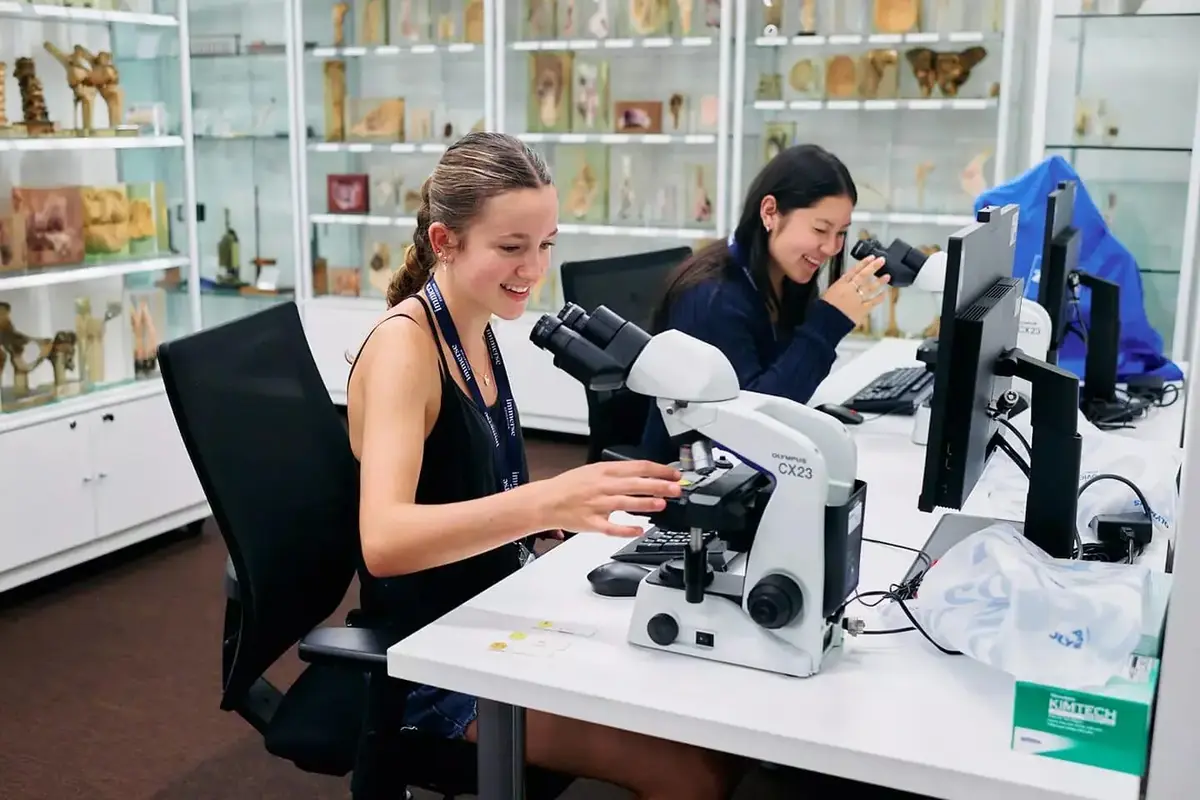
Immerse Education’s Biology Summer School is a two-week, in-person academic programme and one of the most immersive biology research opportunities for high school students, introducing you to university-level biology through small-group teaching and tutor-led discussions. You explore core topics such as genetics, human biology, and ecology while learning how biologists approach problem-solving and scientific reasoning.
Classes are designed to mirror undergraduate tutorials, encouraging active participation, critical thinking, and clear scientific communication. You also apply concepts through case-based discussions that connect biological theory to real-world questions. By the end of the programme, you will complete a personal academic project, receive detailed feedback, and gain a clearer understanding of what studying biology at a top university involves.
Why it stands out: It pairs you with university-level tutors in focused small groups, helping you deepen subject knowledge and gain rigorous academic mentorship.
3. Research Science Institute (RSI)
Location: Massachusetts Institute of Technology, Cambridge, MA
Cost: Free
Dates: June 28 – August 8, details here
Application Deadline: December 10th
Eligibility: Rising high school juniors worldwide with exceptional academic and research potential in STEM fields
The Research Science Institute (RSI) is widely recognized as one of the most competitive summer research programs for high school students. RSI combines on-campus coursework in scientific theory with mentored research conducted under the supervision of scientists and professors. You take the lead on research projects that span different areas such as physics, computer science, and molecular biology, culminating in a written paper and presentation.
The program mirrors the research experience of university graduate students, integrating seminars, lectures, and collaborative discussions. RSI offers high schoolers a realistic understanding of academic research culture and provides skills essential for success in future STEM programs.
Why it stands out: You’ll have the opportunity to complete actual research projects at RSI’s cutting-edge labs that are ordinarily inaccessible to high school students.
4. Stanford Medical Youth Science Program
Location: Stanford Campus, Northern California, CA
Cost: None
Dates: June 22nd – July 26th
Application Deadline: March 17th
Eligibility: Open to low-income, first-generation high school juniors from Northern California
SMYSP offers an immersive academic and research experience for students interested in understanding health disparities, community-based research, and clinical science. You’ll take part in hands-on health modules, shadow healthcare professionals, and explore research topics related to public health and medicine.
Faculty and peer mentors will guide you to conduct workshops on scientific thinking, data analysis, and college preparation. You’ll also complete a capstone project that introduces you to the structure of research inquiry and the challenges of addressing real-world medical issues. By the end of the program, you will have gained insight into how medicine, research, and community engagement intersect.
Why it stands out: It exposes you to both community health issues and medical research, providing a broader view of how medicine operates beyond the hospital.
5. Magee-Womens Research Institute: High School Summer Internship Program
Location: MWRI or Magee-Womens Hospital, Pittsburgh, PA
Cost: None, $1,800 stipend
Dates: June 15th – July 24th
Application Deadline: February 9th
Eligibility: Current high school sophomores or juniors; over 16 years old by program start; have primary residence in the local southwest Pennsylvania region (Counties: Greene, Fayette, Somerset, Westmoreland, Allegheny, Washington, Beaver, Lawrence, Mercer, Butler, Armstrong, Indiana, and Cambria)
Through this program, you’ll get acquainted with studies about female health, reproductive biology, and fetal development. You’ll follow the steps of researchers, get involved in lab activities, and see how groups study the biological processes that influence maternal and infant health. Your understanding becomes more comprehensive through seminars and discussions, where you’ll learn how research outcomes inform clinical practices and public health measures.
Ultimately, this program will help you think more widely about the direct connection of biomedical research to patient care. You also gain experience with scientific reading and data interpretation while learning from mentors committed to advancing women’s health research.
Why it stands out: You’ll work on women’s health research projects, strengthening your understanding of fields like reproductive biology and maternal-fetal medicine.
6. Simons Summer Research Program
Location: Stony Brook University, Long Island, New York
Cost: None
Dates: June 29th – August 7th
Application Deadline: February 7th
Eligibility: Open to high school students; must be US citizens and/or permanent residents
This program pairs you with faculty mentors at partner universities, where you contribute to research in biology, neuroscience, chemistry, or related fields. You’ll participate in lab meetings, practice experimental techniques, and complete readings to understand the scientific foundations of your project.
The program is focused on independent thinking, and it is very open to you coming up with your own research questions and then developing and refining them. Ultimately, you present your work to peers and faculty, gaining valuable experience in formal scientific communication. Through this mentorship-based structure, you get to understand the flow of academic research.
Why it stands out: Its labs are connected to national research centers, and you’ll contribute to cutting-edge computational and applied math projects.
7. Summer Internship Program – National Heart, Lung, and Blood Institute
Location: Bethesda, Maryland, and Framingham, MA
Cost: None. A stipend of $5,400 is paid in two installments
Dates: May – August
Application Deadline: February 19th
Eligibility: Open to U.S. high school students
This internship places you in a National Institutes of Health (NIH) laboratory, where you contribute to investigations in cardiovascular, pulmonary, or blood-related biology. You’ll collaborate with scientists who acquaint you with experimental design, molecular techniques, and data interpretation. Seminars and poster sessions assist you in practising the communication of scientific ideas in a clear and professional manner.
Furthermore, you get guidance that explains graduate paths and the organization of research careers at the NIH. Through daily lab activities, you gain familiarity with the pace and precision required in biomedical science and learn how large research institutes approach major health challenges.
Why it stands out: It lets you work alongside federal researchers on meaningful biomedical projects, helping you gain lab experience that stands out on applications.
8. Summer Student Program – Memorial Sloan Kettering Cancer Center
Location: Memorial Sloan Kettering Cancer Centre, NY
Cost: None
Dates: June 29th – August 21st
Application Deadline: February 6th
Eligibility: High school juniors who are 14 years or older by June, have a 3.5 grade point average in science subjects, are legally authorized to work in the U.S., and live within 25 miles of the main campus
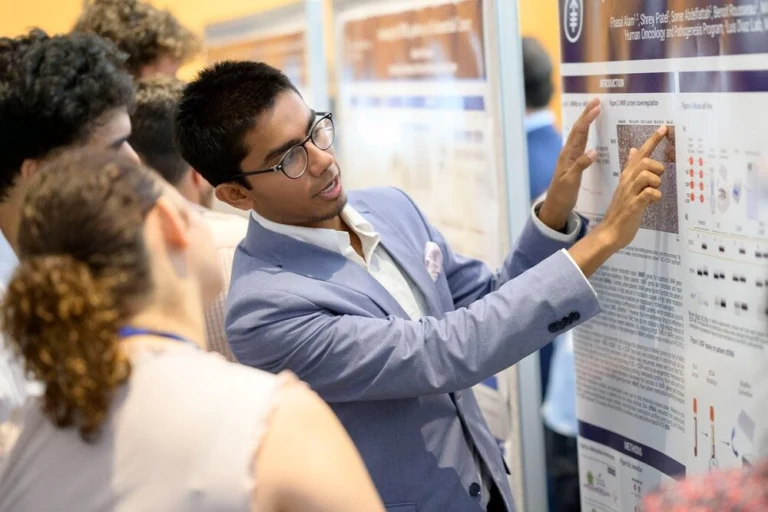
In this program, you’ll spend several weeks working alongside researchers in one of the most research-intensive biology research opportunities for high school students, learning how scientists study tumor biology, genetics, immunology, and treatment development. You’ll participate in observing experiments, assisting with data collection or analysis, and attending presentations that explain how individual projects fit into broader cancer-research goals.
Mentors guide you through reading scientific papers, understanding research questions, and communicating findings, helping you build the skills expected in university-level biomedical research. Eventually, you get to know more about lab operations, scientific thinking, and you can also decide if further studying biomedical sciences or oncology will be a good fit for your interests and abilities.
Why it stands out: It immerses you in cancer research under active faculty mentorship, helping you gain lab skills rarely available to high schoolers.
9. Biotech Summer Experience at the Lawrence Livermore National Laboratory (LLNL)
Location: Lawrence Livermore National Laboratory (LLNL) Discovery Center, Livermore, CA
Cost: None
Dates: July 15-26
Application Deadline: April 12th
Eligibility: Students attending a Northern California high school who are 16 years or older by the start of the workshop, with a cumulative GPA of 3.3 or higher, may apply
This two-week program introduces you to molecular biology and bioinformatics through the genetic study of Landoltia punctata (duckweed), a freshwater aquatic plant used in environmental and genomic research. While being supervised by LLNL scientists, you master essential laboratory methods through hands-on operations. In addition, throughout the program, mentors guide you through the logic of science behind each step, from the preparation of assays to the understanding of sequence data.
You’ll submit your annotated DNA sequences to GenBank, giving you the rare opportunity to contribute to a global scientific database. By the end of the two weeks, you’ll gain a clearer understanding of how modern biological research is conducted in a national laboratory environment.
Why it stands out: It places you in a national lab setting, working with cutting-edge biotech tools, helping you understand how advanced biological research is conducted in high-impact environments.
10. Broad Summer Scholars Program (BSSP)
Location: Broad Institute of MIT and Harvard, Cambridge, MA
Cost: $3,600 stipend
Dates: June 29th – August 7th
Application Deadline: January 21st
Eligibility: Rising high school seniors attending schools in Massachusetts within commuting distance of the Broad Institute
At the Broad Institute, you join a computational or experimental biology project within a genomics research environment. You’ll use high-throughput data, molecular tools, and computational methods to study complex biological systems. Coding skills, data interpretation, and research communication are some of the things that the workshops teach you.
Mentors will assist you with daily lab workflows. Additionally, the program features talks from renowned scientists that introduce innovative strategies for human health and disease. Through these experiences, you gain insight into how large-scale biomedical research is conducted and how genomics influences modern medicine.
Why it stands out: You’ll join cutting-edge genomics projects, giving you access to computational tools, lab technologies, and mentorship from world-class scientists.
11. Carnegie Mellon University – Pre-College Program in Computational Biology
Location: Carnegie Mellon University campus, Pittsburgh, PA
Cost: $10,750 (residential) or $8,041 (commuter) for the 4-week program, plus a $50 non-refundable application fee and an $800 non-refundable enrollment deposit
Dates: June 20th – July 18th (four weeks)
Application Deadline: Early deadline for scholarships; final deadline April 15th (fixed admissions)
Eligibility: High school sophomores and juniors from around the world, and must be 16+ by program start
Carnegie Mellon’s Pre-College Program in Computational Biology introduces you to how computation and biology intersect in modern research, making it one of the most specialised biology research opportunities for high school students. Over four weeks, you combine laboratory work with coding and data analysis to explore how biological questions can be addressed using computational tools.
You learn how to process and interpret real biological datasets while developing foundational skills in programming and algorithmic thinking. Faculty and mentors guide you through research-inspired problems that reflect how interdisciplinary teams work in genomics and bioinformatics. By the end of the program, you will have gained a clearer understanding of data-driven biology and whether computational life sciences align with your academic interests.
Why it stands out: It introduces you to the intersection of computing and life sciences, helping you build analytical and bioinformatics skills early.
12. Fred Hutch Summer High School Internship Program
Location: Fred Hutchinson Cancer Center, Seattle, WA
Cost: Free; students will receive a stipend at the end of the program
Dates: June 22nd – August 14th
Application Deadline: March 13th
Eligibility: Domestic high school students entering their senior year
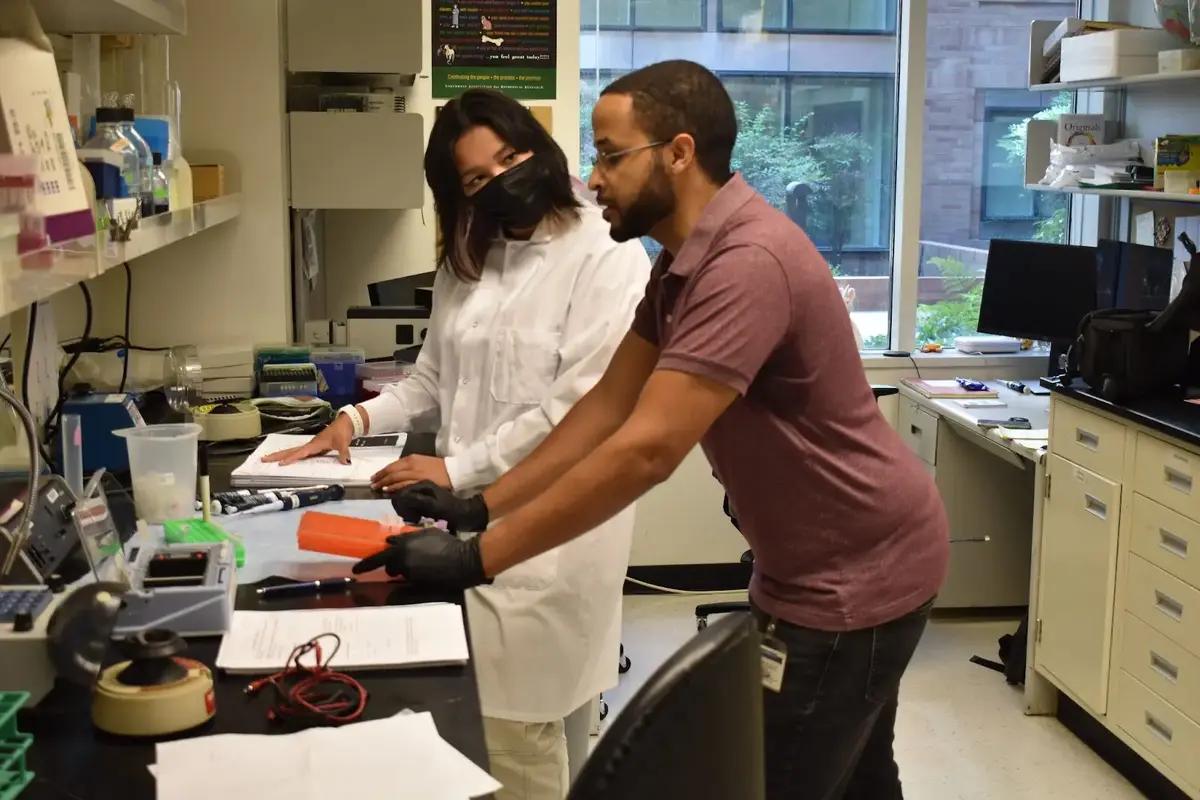
This internship places you in a research group investigating cancer biology, immunotherapy, infectious disease, or computational biology. In addition to learning essential laboratory techniques, you get to see how interdisciplinary teams collaborate to solve large scientific problems. Every week, seminars are held which give you the opportunity to relate your experimental work to the wider topics of biomedical research, such as research ethics, patient benefits, and drug discovery.
Furthermore, you get guidance that is aimed at deepening your knowledge of scientific vocations and educational routes. By working in a leading research institute, you gain early exposure to rigorous experimental science and collaborative problem-solving.
Why it stands out: It immerses you in cancer and infectious disease research, helping you build technical skills while learning how large research centers operate.
13. Monell Science Apprenticeship Program
Location: Monell Chemical Senses Centre, Philadelphia, PA
Cost: Stipend is provided
Dates: June 15th – July 31st
Application Deadline: January 9th
Eligibility: High‑school students from the greater Philadelphia area; strong interest in science and ability to work in the U.S., underrepresented groups strongly encouraged to apply
The Monell Chemical Senses Center apprenticeship allows you to investigate how the science of taste and smell contributes to fields such as health, nutrition, and human behavior. Over seven weeks, you work alongside Monell researchers to conduct experiments, analyse data, and observe how sensory science studies are designed. As part of the learning process, you go to seminars and safety workshops, which familiarize you with the laboratory standards and give you an idea of the wider applications of chemosensory research.
The program also includes sessions on college pathways and STEM careers, giving you a clearer picture of the academic preparation needed for research. You conclude the summer by presenting your project to the Monell community, gaining experience in scientific communication and public presentation.
Why it stands out: It gives you hands-on mentorship in chemosensory science, helping you explore how smell and taste research connect to neuroscience and human behavior.
14. Science & Nutrition Summer Research Program
Location: City of Hope Medical Centre, Duarte, CA
Cost: None
Dates: Four one‑week sessions; July 8-10, July 15-17, July 22-24, July 29-31
Application Deadline: March 23rd
Eligibility: High‑school students (grades 9-12)
City of Hope’s program introduces you to the scientific and medical basis of nutrition, with an emphasis on the interplay of diet, metabolism, and genetics to determine health in the future. In four weekly sessions, you delve into research on lifestyle-related diseases and learn to interpret scientific data.
Faculty-led lectures and small-group discussions help you link molecular processes to real-world health outcomes. Additionally, you collaborate with colleagues in understanding scientific literature and creating a brief project concerning human nutrition or metabolic biology. This program is suitable for students interested in understanding how biology, lifestyle, and health intersect.
It immerses you in integrative research at a premier cancer and diabetes center, helping you see how scientific inquiry informs real-world health outcomes.
15. Wake Forest University — Biology Research Institute
Location: Wake Forest University, Winston-Salem, NC
Cost: $3,500
Dates: July 5-10 and 19-24
Application Deadline: Rolling admissions
Eligibility: High school students around the world in grades 9-12
Wake Forest University’s Biology Research Institute offers an on-campus introduction to biological research through hands-on laboratory work and faculty mentorship. You carry out experiments and data analysis as you learn how scientists set up studies and draw conclusions.
Seminars and group discussions provide you with the opportunity to bridge the gap between lab work and general biological concepts. Eventually, you acquire hands-on research experience and a more definite idea of what the next level of biology at the university entails.
Why it stands out: It immerses you in hands-on biological investigation, helping you understand how scientific inquiry works in real lab environments.
Join the Immerse Education 2027 Essay Competition
Follow the instructions to write and submit your best essay for a chance to be awarded a 100% scholarship.
Foundations for Future Biology Study
Stepping into real research changes how biology feels, turning lessons into questions you can test, debate, and refine through hands-on discovery.
Through these biology research opportunities for high school students, you build independence, technical confidence, and an understanding of how universities expect young scientists to think.
Exposure to different fields, from genetics to ecology, helps clarify interests and shows whether advanced biological study suits your curiosity and ambitions.
To keep building momentum, explore our University Preparation blogs for practical advice, guidance, and reassurance as you plan confidently for studying biology at university and prepare for what comes next academically and personally.







Unlock Inspiring Opportunities with the Immerse Education Newsletter
Join our newsletter to stay ahead with exclusive updates, exciting programme highlights, and expert insights from the world of immersive education.
Learn how Immerse can transform your life
An in-depth overview of our university and career preparation programmes
Get a glimpse into the life of an Immerse participant
Find the right programme for you with sample timetables, location showcases, and more