15 Computer Science Camps for High School Students

TL;DR
You’ll find 15 computer science camps here, from fully funded four-week programs at Carnegie Mellon to one-week coding camps at Rice and Austin Peay. The biggest difference is access, since CMU’s CS Scholars and AI Scholars are free but limited to U.S. citizens and permanent residents, while Berkeley’s academy cost $5,197 in 2026 and welcomes international students. Most camps suit 9th to 12th graders, and several, including Berkeley and CMU, need no prior coding. Immerse Education’s Academic Insights pathway in Computer Science runs for two weeks in Cambridge and Oxford for students aged 13 to 18.
If you’ve already written a few lines of code, you’ve probably noticed that computer science goes much deeper than syntax. Behind every app, game, and AI tool are ideas like algorithms, data structures, and computational thinking, and computer science camps for high school students let you work with them directly. A camp can also help you picture the careers in computer science these skills can lead to.
Computer science camps range from half-day coding sessions to fully funded four-week residential programs. Depending on the camp, you might train a machine learning model at UT Austin, build a 2D game in Unity at NYU, or present a group project at Carnegie Mellon’s final symposium. Many also include faculty lectures, college prep workshops, and visits to tech companies.
What are computer science camps for high school students?
Computer science camps for high school students are summer programs, usually run by universities, where you learn programming and computing concepts and apply them to projects. Most last between four days and four weeks, and many end with a showcase, symposium, or portfolio piece.
Programs differ a lot in who they’re built for. Berkeley’s academy is designed for students with little coding experience, while Tufts’ AI program and NYU’s game design course expect you to know the basics already. Before you apply, check citizenship and residency rules, coding prerequisites, and whether housing is included. Costs range from free programs at Carnegie Mellon, NYU, and UT Austin to Berkeley’s $5,197 academy.
To help you compare your options, we’ve put together a list of 15 computer science camps for high school students!
15 Computer Science Camps for High School Students
1. NYU Cyber Security for Computer Science (CS4CS)
Location: NYU Tandon School of Engineering, Brooklyn, NY
Cost: Free (full scholarship supported by DTCC)
Acceptance rate/cohort size: Not specified
Dates: July 13th - August 7th, 2026, Monday to Friday, 10 a.m. - 4 p.m. (2027 dates not yet posted)
Application Deadline: May 15th, 2026; applications typically open in January
Eligibility: Current 10th and 11th graders living in eligible areas of New York City, Long Island, New Jersey, Rockland, and Westchester | Not open to international students
NYU’s CS4CS is a four-week program that introduces you to cybersecurity through a mix of practical challenges and academic learning. You’ll take part in Capture The Flag competitions and explore security-focused scripting, cryptography, and digital forensics. The program also includes research projects, and you can present your findings at conferences.
By working with industry professionals and mentors, you’ll build a portfolio of cybersecurity work while learning about academic and career pathways in the field. Theater-based communication workshops and case-driven security lessons round out the experience.
Why it stands out: You combine Capture The Flag competitions, research, and mentorship on a full scholarship at NYU Tandon.
2. Immerse Education's Computer Science Summer School

Location: Cambridge and Oxford
Cost: Varies; summer school scholarship available through our bursary programme
Acceptance rate/cohort size: Selective; an average of 7 participants per class
Application Deadline: Multiple cohorts with rolling admissions
Program Dates: 2 weeks during the summer
Eligibility: Students worldwide aged 13-18 currently enrolled in middle or high school; open to international students
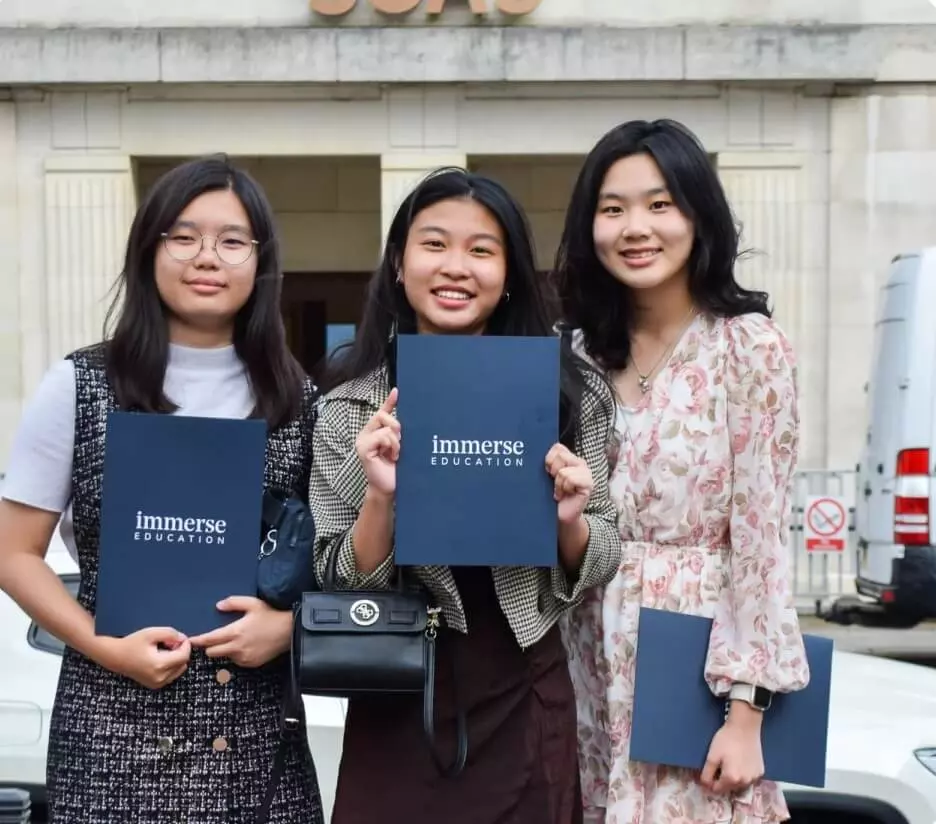
Immerse Education's Academic Insights pathway in Computer Science places you in an academically structured environment where you study foundational and advanced computing concepts with expert tutors from leading universities. You cover important topics like algorithms, data structures, programming languages, and software engineering principles, as well as applications like machine learning and artificial intelligence.
Small classes let you get personalized feedback and talk to tutors and classmates from all over the world on a regular basis. When you go to a place like Cambridge or Oxford in person, you also get to experience campus life and structured activities that are similar to how you would study at a university. By completing this summer school, you gain clearer insight into how computer science is studied at the tertiary level and develop technical skills that support future academic and career decisions in computing fields. You can find more details about the application here.
Why it stands out: You'll be taught by top faculty, work on an independent project, and live on campus, giving you a complete experience of future university life.
3. Veritas AI
Location: Virtual
Cost: Varies depending on program type. Full financial aid available.
Program dates: Multiple 12-15-week cohorts throughout the year, including spring, summer, fall, and winter.
Application deadline: Rolling. Spring (January), Summer (May), Fall (September), and Winter (November). You can apply to the program here.
Eligibility: High school students. AI Fellowship applicants should either have completed the AI Scholars program or exhibit experience with AI concepts or Python.
Veritas AI, founded and run by Harvard graduate students, offers programs for high school students who are passionate about artificial intelligence. Students who are looking to get started with AI, ML, and data science would benefit from the AI Scholars program. Through this 10-session boot camp, students are introduced to the fundamentals of AI & data science and get a chance to work on real-world projects.
Another option for more advanced students is the AI Fellowship with Publication & Showcase. Through this program, students get a chance to work 1:1 with mentors from top universities on a unique, individual project. A bonus of this program is that students have access to the in-house publication team to help them secure publications in high school research journals. You can also check out some examples of past projects here and read about a student’s experience in the program here.
Why it stands out: You get 1-1 mentorship with a Ph.D. mentor and produce an independent research project by the end.
4. Carnegie Mellon: AI Scholars
Location: Carnegie Mellon University, Pittsburgh, PA
Cost: Free; tuition, housing, meal plans, and select field trips are covered | Limited travel assistance available
Acceptance rate/cohort size: Not specified
Dates: June 26th - July 24th, 2027
Application Deadline: February 1st, 2027 (decisions released April 1st, 2027)
Eligibility: Current 11th graders who are 16+ by June 26th, 2027, with documented financial need | U.S. citizens or permanent residents only, so not open to international students
Carnegie Mellon’s AI Scholars is a fully funded, four-week residential program for rising seniors who want to explore artificial intelligence. About a month before you arrive, you take a virtual Python course, so you don’t need any prior coding experience to apply. On campus, CMU faculty teach a core curriculum in computing and AI, and you apply it to a group project led by faculty, graduate students, or postdoctoral researchers.
You’ll also visit leading tech companies and get an introduction to ongoing CMU research. A writing workshop sends you home with a completed college application essay, and you present your group project publicly at the closing symposium.
Why it stands out: You get college-level AI coursework, industry visits, and a finished college essay in one fully funded program at a top computer science school.
5. UT Computer Science Summer Academy for All
Location: UT Austin, Austin, TX
Cost: Free, including housing and meals | Travel scholarships of up to $500 available
Acceptance rate/cohort size: 10:1 student-to-mentor ratio
Dates: One-week residential session in summer 2026 (2027 dates not yet posted)
Application Deadline: December 22nd, 2025 for the 2026 cycle
Eligibility: Students entering 10th - 12th grade | All skill levels welcome | Open only to U.S.-based students, so not open to international students
UT Austin’s Academy for All gives you a week on campus learning programming in the Gates Dell Complex, the home of UT Computer Science. You can choose the Standard Edition, where you code an Arduino microcontroller in C++ to put on an LED light show, or the Machine Learning Edition, where you write Python code to train your own machine learning model.
Faculty-led workshops, guest speakers, and team projects fill your days in the lab. You’ll also explore internship and career opportunities and get tips on a standout UT application from UT admissions. Outside class, you stay in a residence hall, meet current UT students, and may visit a local tech company.
Why it stands out: You get a free week of residential college life with two coding tracks, admissions advice, and exposure to tech careers.


6. Carnegie Mellon: CS Scholars
Location: Carnegie Mellon University, Pittsburgh, PA
Cost: Free; tuition, housing, meal plans, and select field trips are covered | Limited travel assistance available
Acceptance rate/cohort size: Not specified
Dates: June 26th - July 24th, 2027
Application Deadline: February 1st, 2027 (decisions released April 1st, 2027)
Eligibility: Current 10th graders who are 16+ by June 26th, 2027, with documented financial need | U.S. citizens or permanent residents only, so not open to international students
Carnegie Mellon’s CS Scholars takes rising juniors on a four-week, fully funded introduction to computer science. In the programming course, you learn Python fundamentals like variables, functions, loops, lists, and dictionaries, along with algorithmic thinking, testing, and debugging.
A mathematics course builds the computational skills programming relies on, and group research projects let you apply both. You’ll also join field trips to tech companies and a writing workshop where you craft a personal statement with feedback from instructors and peers. Scholars who complete the program may be invited back the following summer for AI Scholars.
Why it stands out: You get a fully funded start in computer science at CMU, with a possible pathway into AI Scholars the next year.
7. Discovery Partners Institute (DPI): Digital Scholars Program
Location: Discovery Partners Institute, Chicago, IL
Cost: Free
Acceptance rate/cohort size: Not specified
Dates: Six weeks during the summer, daily from 9 a.m. to 1 p.m.
Application Deadline: Apply online, then schedule an interview; 2027 deadline not yet posted
Eligibility: Rising 11th and 12th graders, plus incoming first-year college students at City Colleges of Chicago and Illinois institutions | International eligibility not specified
The Digital Scholars Program helps high school and first-year college students build technical and professional skills through a college-level computing course. You choose one of five tracks: data science, electrical and computer engineering, computer science and coding, iOS app design, or Swift programming.
Depending on your track, you’ll work with data sets, circuits, Java or Kotlin, or Swift and Xcode, and iOS students can showcase their apps at the Apple Store on Michigan Avenue. Daily talks with Chicago tech entrepreneurs, technologists, and civic leaders give you a direct line into the city’s tech community. Weekly workshops also cover artificial intelligence, machine learning, entrepreneurship, and data science.
Why it stands out: You pair a free college-level computing course with daily access to Chicago’s technology community.
8. Stanford AI4ALL
Location: Stanford University, Stanford, CA, or online
Cost: Online: $4,120 | Residential: $9,800 (2026)
Acceptance rate/cohort size: Not specified
Dates: Two-week online and residential sessions during the summer (2027 dates not yet posted)
Application Deadline: February 6th, 2026 (2027 deadline not yet posted)
Eligibility: Current 9th graders aged 14-16 | Open to international students
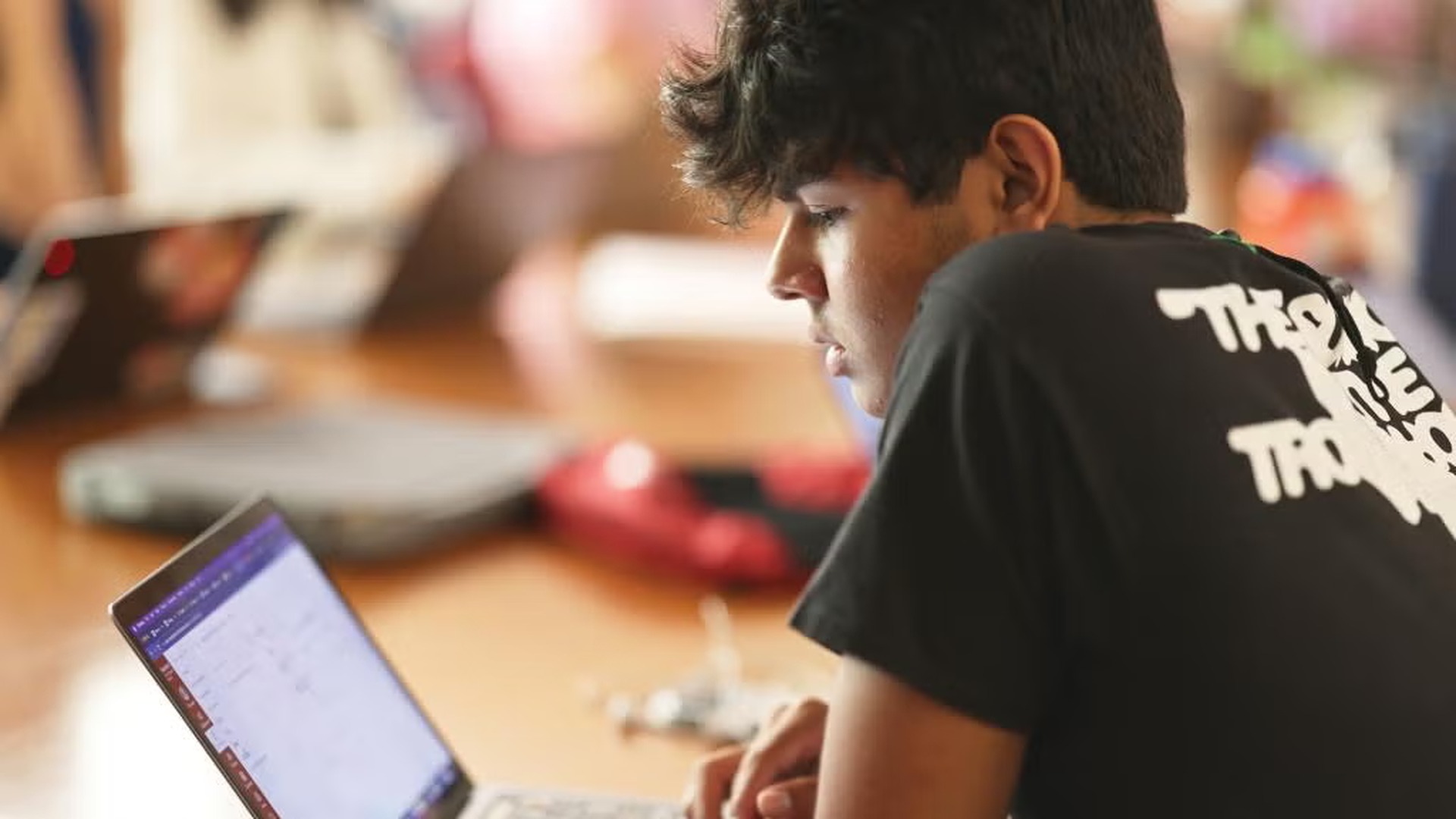
Stanford AI4ALL introduces you to artificial intelligence through research, faculty instruction, and mentorship from Stanford researchers and industry professionals. You explore the foundations of AI and its impact on society through lectures, live demonstrations, career workshops, and collaborative research projects.
You’ll join a research group in an area such as computer vision, medical AI, natural language processing, or robotics, working in a small team guided by graduate students and postdoctoral researchers. Past projects have tackled topics like satellite-image analysis for poverty mapping and medical image analysis. The program ends with you presenting your research.
Why it stands out: You do research in a specialized AI field with mentorship from Stanford researchers, all before you finish 9th grade.
9. Berkeley Summer Computer Science Academy
Location: University of California, Berkeley, CA
Cost: $5,197 + $25 application fee (2026), including housing, meals, and activities | NSHSS scholarship covering tuition and room and board available
Acceptance rate/cohort size: Not specified
Dates: June 21st - July 3rd, 2026 (2027 dates not yet posted)
Application Deadline: February 2nd - March 17th, 2026, reviewed on a rolling basis
Eligibility: Students who have completed 10th or 11th grade, are 16 by the program start, and have a B average | Designed for students with little to no coding experience | Open to international students who meet English requirements, though no student visa is issued
The Berkeley Summer Computer Science Academy is a two-week residential program built on The Beauty and Joy of Computing, the introductory computer science course Berkeley undergraduates take. Every day, you work through coding challenges in Snap!, a visual programming language, covering ideas like abstraction, algorithms, recursion, and the social implications of computing.
You’ll also get an introduction to AI, including supervised machine learning, reinforcement learning, generative AI, and AI ethics. The academy ends with a Code Celebration, where Berkeley computer science faculty and instructors review your final project and ask about your work. You live in Bowles Hall and join college exploration workshops alongside other Pre-College Scholars.
Why it stands out: You learn from Berkeley’s own undergraduate curriculum in a format designed for beginners, with faculty feedback on your final project.
10. Rice ELITE Tech Camp
Location: Rice University, Houston, TX
Cost: Commuter: $1,899 | Residential: $3,999 (2027)
Acceptance rate/cohort size: Not specified
Dates: One-week camps in summer 2027: June 20-26, June 27th - July 3rd, July 11-17, and July 18-24 (residential); June 21-25, June 28th - July 2nd, July 12-16, and July 19-23 (commuter)
Application Deadline: Enrollment for summer 2027 is open now
Eligibility: High school students | International eligibility not specified
Rice ELITE Tech Camp is a pre-college engineering program created by faculty from the Rice University School of Engineering and the Rice Center for Engineering Leadership. You choose one morning and one afternoon course from options like Deep Learning for smart cities, Python for engineering problems, C++ for human spaceflight engineering, and Trifecta Tech, which combines the Internet of Things, machine learning, and Python.
Each course is designed by a Rice faculty member, PhD student, or engineering professional and taught by Rice engineering students. Daily Engineering Leadership Workshops build your communication, project management, and leadership skills alongside the technical work. Student panels and mentoring conversations also give you a look at life as a Rice engineering student.
Why it stands out: You pair two focused tech courses with daily leadership training in a single week at Rice.
11. St. Mary’s University Summer Tech Camps
Location: St. Mary’s University, San Antonio, TX
Cost: $50 (non-refundable), with lunch provided
Acceptance rate/cohort size: Typically limited to 18 students per camp
Dates: The 2026 Game Development camp ran June 8-12 (2027 dates not yet posted)
Application Deadline: The 2026 camp is full; contact the camp coordinator to join the waitlist
Eligibility: Students in 9th - 12th grade during the 2026-2027 school year | International eligibility not specified
St. Mary’s Summer Tech Camps are one-week day camps taught by St. Mary’s faculty, running from 9 a.m. to 4:30 p.m. In the 2026 Game Development camp, you learn game development tools and design and create your own computer game.
Mini field trips take you to campus labs and demonstrations, including 3D printing, robotics, drone, cybersecurity, and manufacturing spaces. Each camp builds toward a student project that you show to family and friends on the final afternoon. The topics offered can change from summer to summer, so check the camp page for the 2027 lineup.
Why it stands out: You get a full week of faculty-led coding and a finished game project for just $50.
Join the Immerse Education 2027 Essay Competition
Follow the instructions to write and submit your best essay for a chance to be awarded a 100% scholarship.
12. Tufts University Engineering with Artificial Intelligence
Location: Tufts University, Medford/Somerville Campus, Medford, MA
Cost: Commuter: $4,425 | Residential: $5,950 (2027) | Limited need-based scholarships for U.S. students
Acceptance rate/cohort size: Not specified
Dates: Two-week sessions; summer 2027 dates coming soon
Application Deadline: Applications open December 14th, 2026 | May 1st, 2027 (all materials), with rolling admissions
Eligibility: Students entering grades 10-12 or 2027 high school graduates, with prior programming experience | Open to international students, though Tufts can’t sponsor visas
Tufts’ Engineering with Artificial Intelligence program explores AI and machine learning through classroom sessions, labs, and daily challenges. In the first week, you study the history and impact of AI, write Python code, and use tools and algorithms from across the field’s subfields.
Guest speakers from Tufts faculty and industry partners share their research and careers every day. In the second week, you work in a small group to design, prototype, and test an AI-powered solution, then present it in a video at the closing Project Showcase. Debates about the ethics of AI and the responsibilities of developers run throughout the program.
Why it stands out: You build your own AI application while debating the ethical questions that come with developing it.
13. Austin Peay State University Coding Camps
Location: Austin Peay State University, Clarksville, TN
Cost: $159-$169, including snacks, drinks, and a T-shirt
Acceptance rate/cohort size: Not specified
Dates: Four- and five-day half-day camps from June 7th to July 23rd, 2027
Application Deadline: About one week before each camp starts
Eligibility: Rising 3rd - 12th graders and first-year college students, depending on the camp; high school options cover rising grades 6-12 or 5-11 | International eligibility not specified
Austin Peay’s coding camps are beginner-friendly, half-day sessions held in the university’s computer labs. High schoolers can code Roblox games, learn programming with Minecraft, build websites with HTML, CSS, and JavaScript, or make 3D games with the Godot engine and GDScript.
Other camps include Minecraft modding and a team-based Minecraft survival challenge that tests your problem-solving and communication skills. All camps are led by APSU computer science and IT students using curriculum created by university professors. No prior experience is required.
Why it stands out: You can try several game development and web platforms in affordable half-day camps taught on a university campus.
14. NYU Coding for Game Design
Location: NYU Downtown Brooklyn Campus, Brooklyn, NY
Cost: $3,245 in tuition and fees + $50 application fee | Need-based tuition scholarships for New York-based commuter students
Acceptance rate/cohort size: Not specified
Dates: June 21st - July 2nd, 2027 (Session 1) | July 12-23, 2027 (Session 2)
Application Deadline: Applications open in early January 2027 | May 31st, 2027 (scholarship applications)
Eligibility: Students entering 10th, 11th, or 12th grade in fall 2027 with intermediate coding skills, ideally including one formal coding class with a B+ or higher | Open to international students
NYU’s Coding for Game Design is a two-week program run by the CREATE Lab, where you learn game design principles alongside C# and Unity scripting. In the first week, morning lessons cover mechanics, dynamics, aesthetics, level design, and audio design, followed by coding lessons each afternoon.
Since 2026, workshops have also shown you how to use generative AI effectively and ethically in game development. In the second week, you work in a team to produce a 2D Unity game, then present it at a showcase that ends with a commencement ceremony and awards. Optional on-campus housing is available for students aged 15 and older.
Why it stands out: You build a team game in Unity with experienced designers and developers in a studio-style setting.
15. MSOE Women in Technology Program
Location: Milwaukee School of Engineering, Milwaukee, WI
Cost: $1,100
Acceptance rate/cohort size: Not specified
Dates: July 19-24, 2026 (2027 dates not yet posted)
Application Deadline: Not specified; register online to reserve a seat
Eligibility: Young women entering grades 10-12 | International eligibility not specified
MSOE’s Women in Technology is a week-long residential camp where you explore several engineering disciplines, including computer and software engineering. MSOE faculty teach the academic activities with help from female engineering students, giving you role models who are a few steps ahead of you.
You’ll also explore biomedical, civil, electrical, mechanical, and architectural engineering, and take industry tours to see engineering in action. Evenings bring activities like interactive comedy shows, bowling, Milwaukee tours, and game nights.
Why it stands out: You sample computer and software engineering alongside other disciplines with mentorship from women studying engineering.
Frequently asked questions: Computer Science Camps for High School Students
What do you do at a computer science camp?
At a computer science camp, you learn programming concepts and then use them to build a project you present at the end. CMU’s CS Scholars teaches Python and math before a final symposium, while Berkeley’s academy ends with a Code Celebration where faculty review your work. Other camps specialize, as CS4CS focuses on cryptography and digital forensics and NYU’s Coding for Game Design has you build a 2D game in Unity. If you want to see where these skills lead, read about what computer scientists do.
Do you need coding experience for a computer science camp?
No, many computer science camps welcome complete beginners. Berkeley’s Summer Computer Science Academy is designed for students with little to no coding experience, and CMU’s AI Scholars starts with a virtual Python course that requires no prior coding. Some camps do expect experience, since Tufts’ Engineering with Artificial Intelligence requires programming basics and NYU’s game design program asks for intermediate skills. Immerse Education’s Academic Insights pathway in Computer Science needs no prior experience, just an interest in the subject, for students aged 13 to 18.
What are some good computer science projects for high school students?
Good computer science projects solve a problem you care about and show off a skill you’ve practiced. You could build a simple game, a website, a chatbot, or a data analysis tool using a public dataset. Camps can give you a head start, like Tufts’ AI program, where you design and test your own AI-powered solution, or Austin Peay’s Godot camp, where you make a 3D game. For more inspiration, browse these research project ideas in computer science.
What should you do in high school for computer science?
You should take the most challenging math and computer science classes your school offers, then build projects outside class to show your interest. Summer camps help fill the gaps if your school has few options, and programs like CMU’s CS Scholars add college prep seminars and a personal statement workshop. Clubs, competitions, and personal coding projects round out your profile. Once you have some skills, look into these computer science internships for high school students to see the field from the inside.
Are free computer science camps hard to get into?
Yes, free computer science camps are usually selective, and many limit who can apply. CMU’s CS Scholars and AI Scholars cover tuition, housing, and meals, but you must be a U.S. citizen or permanent resident and document financial need. CS4CS only accepts students from eligible New York and New Jersey areas, and Academy for All is open to U.S.-based students. If those rules leave you out, low-cost options like St. Mary’s $50 tech camps or Austin Peay’s camps under $170 are worth a look.
Can international students attend computer science camps in the US?
Yes, several US computer science camps accept international students, though visa support varies. Berkeley’s academy welcomes international students who meet its English requirements but doesn’t issue a student visa, and Tufts accepts international applicants without visa sponsorship. NYU’s Coding for Game Design accepts international students and provides visa documentation through its Office of Global Services. If you’d rather study in the UK, Immerse Education’s Academic Insights pathway in Computer Science runs in Cambridge and Oxford, and you can compare the best UK universities for computer science before you apply.
Your next step after a computer science camp
A computer science camp can show you which corner of computing excites you most, whether that’s artificial intelligence, cybersecurity, game design, or software engineering.
Before you choose between computer science camps for high school students, check citizenship rules, coding prerequisites, and whether housing is included in the price.
Several deadlines, including Carnegie Mellon’s February 1st cutoff, arrive early in the year, so start gathering transcripts, essays, and recommendations this winter.
When you’re ready to turn summer coding into a stronger college application, explore our University Preparation blogs for guides on majors, applications, and admissions.







Unlock Inspiring Opportunities with the Immerse Education Newsletter
Join our newsletter to stay ahead with exclusive updates, exciting programme highlights, and expert insights from the world of immersive education.
Learn how Immerse can transform your life
An in-depth overview of our university and career preparation programmes
Get a glimpse into the life of an Immerse participant
Find the right programme for you with sample timetables, location showcases, and more