15 Economics Summer Schools for Year 13 Students

Summary
Here you’ll find 15 economics summer programs, from a free research placement and a government internship to paid courses at Harvard, Yale, and King’s College London. The biggest split is eligibility: several programs only accept students below their final school year, while others welcome Year 13 students and recent school leavers. Most suit you if you’re 16 to 18, though a few accept younger students. Dauphine’s London Pre-Uni Camp, for example, explicitly welcomes Year 13 and gap year students for £275. Immerse Education’s Academic Insights pathway also runs two-week economics courses for ages 16 to 18 in Cambridge, Oxford, and Singapore.
The summer before university is your last chance to explore economics outside the exam hall before your degree begins. A-levels or the IB give you strong foundations, but they only show you part of how economists study markets, policy, and human behaviour. One of the best ways to explore that curiosity is by joining an economics summer school.
Imagine spending your summer running economic experiments, building a policy poster in Washington, D.C., or pitching a start-up idea in Amsterdam. An economics summer school can introduce you to university-style seminars, help you build skills in analysis and debate, and give you a clearer sense of which areas of economics you want to focus on.
How do you choose the right economics summer school for Year 13 students?
Choosing a program can be tricky when options differ so much in focus, length, cost, and eligibility. As a Year 13 student, you need to check age and grade limits carefully, since many summer programs only accept students who haven’t yet reached their final year.
Universities, government departments, and education organisations all run economics programs for school students. Depending on the program, you might study behavioural economics through lab experiments, analyse business cases, or complete a research project with a faculty mentor. Some are free but limited to UK state school or U.S. students, while others charge tuition and welcome applicants worldwide. For a wider range of options, you can also browse these economics programs in the UK for high school students.
Timing matters too, since some deadlines fall as early as October or January. To make your search easier, here is a list of 15 economics summer schools for Year 13 students. 15 Economics Summer Schools for Year 13 Students
1. Wharton Global Youth Program: Strategy and International Management
Location: Cambridge, UK
Cost: 2027 fees not yet published; Wharton notes that financial aid is generally not available to international students
Dates: The 2026 session ran July 4th to 17th; 2027 dates have not been posted yet
Application Deadline: January 27th, 2027 (priority) and March 17th, 2027 (final)
Acceptance Rate: Selective; about 80 students per program
Eligibility: High school students currently in grades 9 to 11; an understanding of economics or business is preferred but not required | Open to international students
Wharton’s Strategy and International Management program looks at how companies compete and grow when they expand across borders. You’ll explore topics like creating value, analysing industries, assessing international expansion, and evaluating ESG risks through lectures, guest speakers, and simulations led by Wharton faculty. Throughout the program, you prepare university-level business cases and work in teams to propose solutions to companies’ management challenges.
Classes take place in Cambridge University classrooms, with UK-based professionals sharing insights into international business careers. The program ends with a capstone case competition, where your team presents its strategy to a panel of expert judges. This could suit you if your interest in economics leans toward business, management, or international markets.
Why it stands out: You practise business case analysis with Wharton faculty and finish by competing in a capstone case competition.
2. Immerse Education's Economics Summer School
Location: Cambridge, London, Oxford, and Singapore
Cost/Stipend: Varies; summer school scholarship available through our bursary programme
Acceptance rate/cohort size: Selective; an average of 7 participants per class
Dates: 2 weeks during the summer
Application Deadline: Multiple cohorts with rolling admissions
Eligibility: Students from all around the world aged 13-18 currently enrolled in middle or high school; open to international students
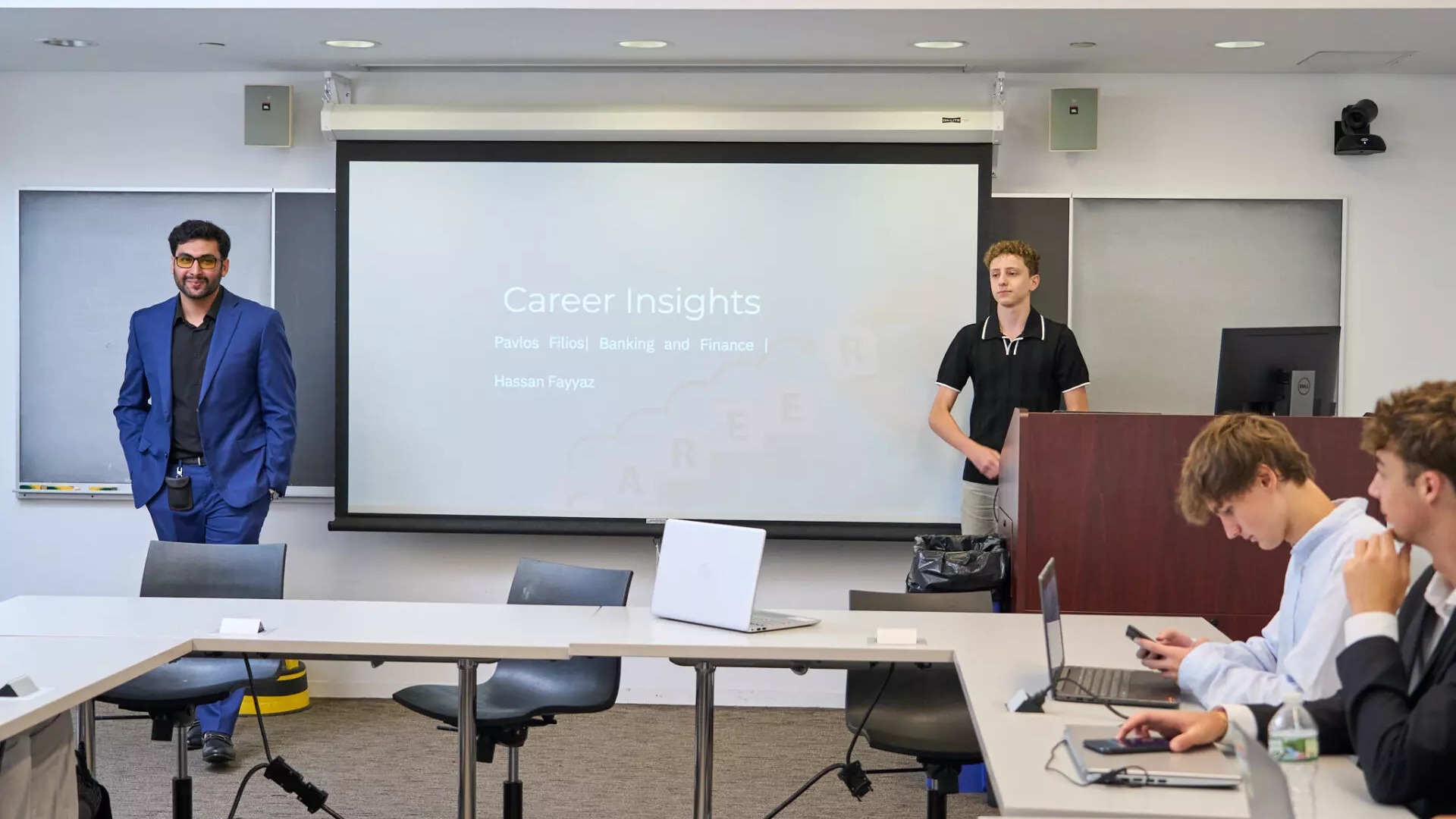
Immerse Education's Academic Insights pathway in Economics gives you a focused, two-week immersion into economic theory and real-world applications, taught by expert tutors associated with top universities and academic institutions. The program aims to deepen your understanding of fundamental economic principles, global markets, and policy-making. Across lively seminars, workshops, and discussions, you'll explore core concepts such as market behaviour, inflation, trade, inequality, fiscal and monetary policy, and how these forces shape global economies.
Beyond the classroom, excursions and cultural activities help you connect lessons to the world around you, while living and studying alongside peers from around the globe adds an international perspective. Completion earns you a certificate of achievement and, in some cases, optional UCAS points if you're looking toward UK university applications. You can find more details about the application here.
Why it stands out: It blends concentrated academic development with an immersive international summer experience, helping you deepen your economics knowledge while engaging with peers in diverse cities worldwide.
3. Lumiere Research Scholar Program
Location: Remote, you can participate in this program from anywhere in the world!
Cost: Varies depending on program type. Full financial aid available.
Application Deadline: Varies by cohort.
Program Dates: Varies by cohort: summer, fall, winter, or spring. Options range from 12 weeks to 1 year.
Eligibility: You must be currently enrolled in high school and demonstrate a high level of academic achievement.
The Lumiere Research Scholar Program is a rigorous research program tailored for high school students. The program offers extensive 1-on-1 research opportunities for high school students across a broad range of subject areas. The program pairs high school students with Ph.D. mentors to work 1-on-1 on an independent research project. At the end of the 12-week program, you’ll have developed an independent research paper!
You can choose research topics from subjects such as psychology, physics, economics, data science, computer science, engineering, chemistry, international relations, and more. You can find more details about the application here, and check out students’ reviews of the program here and here.
Why it stands out: You get 1-1 mentorship with a Ph.D. mentor and produce an independent research project by the end.
4. Harvard Pre-College Program: Economics Track

Location: Harvard University, Cambridge, MA
Cost: $6,250 plus a $75 application fee for 2027; limited need-based scholarships available
Dates: June 21st to July 2nd, July 12th to 23rd, or July 26th to August 6th, 2027
Application Deadline: January 13th, 2027 (early and priority financial aid), February 10th, 2027 (regular), and March 31st, 2027 (late)
Acceptance Rate: Selective; average class size of 15
Eligibility: Rising juniors and seniors graduating from high school in 2028 or 2029, aged at least 16 by June 13th, 2027 | International eligibility not specified on the program page
Harvard’s Pre-College Program is a two-week, non-credit residential program where you take one college-level course while living on Harvard’s campus. Economics is one of nearly 30 subject options each session, alongside fields like government, management, and statistics. Each day includes three hours of class and two to four hours of homework, so you get a realistic sense of a university workload.
Outside class, you can join college readiness workshops on admissions essays and financial aid, plus panels with admissions officers. Classes are non-credit, so you can explore a subject without the pressure of letter grades.
Why it stands out: You get a residential introduction to Harvard with an average class size of 15 and built-in support for the college admissions process.
5. U.S. Department of the Treasury: Headquarters Student Internship
Location: Washington, D.C., Departmental Offices
Cost: Unpaid
Dates: Summer internships run May to August; spring and fall internships are also offered
Application Deadline: Apply in December for summer placements; openings are posted on USAJOBS
Acceptance Rate: Selective
Eligibility: U.S. citizens enrolled at an accredited institution, including high school students | Not open to international students
The U.S. Department of the Treasury’s Headquarters Student Internship lets you work inside a federal department responsible for economic and financial policy. Depending on your placement, you may collect and analyse data, summarise academic literature, or draft talking points and briefing materials for Treasury leaders. You apply to up to three offices, such as Economic Policy, Tax Policy, or International Affairs, so your day-to-day work depends on where you’re placed.
If you’re finishing school, you’ll need proof of future enrollment at a university to continue past your graduation date. This option is particularly relevant if you want to see how economic policy operates within government rather than study it only in a classroom.
Why it stands out: It provides direct workplace exposure to a U.S. federal department responsible for national economic and financial policy.




6. Sutton Trust Summer School at Imperial College London: Economics, Finance and Data Science
Location: Imperial College London, South Kensington, London, UK
Cost: Free; course fees, accommodation, three meals a day, and trips are covered, and public transport costs are reimbursed
Dates: The Economics, Finance and Data Science stream ran 14 to 17th July 2026; 2027 dates have not been posted yet
Application Deadline: 5th March 2026 for the 2026 programme; 2027 applications are not yet open
Acceptance Rate: Highly selective; many streams are oversubscribed
Eligibility: Students in Year 12 in England or Wales, Year 13 in Northern Ireland, or S5 in Scotland who are under 18 and have always attended a UK state school; academic requirements apply, including A-level Mathematics | Not open to international students
The Sutton Trust Summer School at Imperial is a four-day, three-night residential that gives you a taste of studying at Imperial Business School. Before arriving, you join two online webinars that introduce the summer school and prepare you for your time on campus. On campus, you’ll take part in workshops, case studies, and practical activities exploring how economics, finance, and data science inform decisions and policy. You’ll also attend information sessions on student finance and student life.
After the summer school, you can get your personal statement reviewed, join a Year 13 progression webinar, and request a mock interview if Imperial invites you to interview. Since eligibility is tied to specific UK school and academic requirements, check those conditions carefully before applying.
Why it stands out: It’s fully funded and continues to support you through your university application after the summer school ends.
7. University of Amsterdam: Business Innovation & Entrepreneurship
Location: University of Amsterdam, Amsterdam, Netherlands
Cost: €1,675 tuition plus a mandatory €800 housing fee
Dates: 15 to 24th June 2027 (provisional)
Application Deadline: 24th January 2027
Acceptance Rate: Not specified
Eligibility: Current high school students aged 16 and older | Open to international students
The University of Amsterdam’s Business Innovation & Entrepreneurship program explores the dynamics of innovation and how companies craft and carry out a strategic direction. You’ll take part in lectures and discussions based on key texts in the field, along with guest lectures on start-ups and business incubators in Amsterdam. You’ll develop your own start-up idea over the two weeks and pitch it by the end of the course.
All teaching and materials are in English, and you’ll study alongside high school students from around the world. The program is designed for students interested in business, entrepreneurship, economics, and the social and behavioural sciences. It could be relevant if your interest in economics is connected to entrepreneurship or business development.
Why it stands out: You apply business and economic concepts to your own start-up idea rather than only studying established companies.
8. King’s College London Pre-University Summer School: Business Management Track
Location: King’s College London, London, UK
Cost: 2027 fees not yet published
Dates: One-week sessions on 5 to 9, 12 to 16, 19 to 23, and 26 to 30th July 2027
Application Deadline: Applications open in early November; check King’s site for the closing date
Acceptance Rate: Selective; applications require recent grades, a personal statement, and evidence of English proficiency
Eligibility: Students aged 16 or 17 who are in, or about to start, their final three years of high school | Open to international students
The Business Management module at King’s College London is a one-week course that introduces you to how organisations make decisions. Each module lasts a week, so you can take one or combine several, for example pairing Business Management with Accounting and Finance from King’s Business School.
Classes mix lectures and seminars, and you’ll work collaboratively in groups to produce a presentation. King’s Summer Programmes bring together students from more than 70 nationalities, adding an international element to the classroom. Residential students stay in single en-suite rooms at Stamford Street Apartments in central London.
Why it stands out: Its modular structure lets you build a summer that combines economics-related business topics at a London university.
9. Georgetown University: Economics Policy Academy
Location: Georgetown University, Washington, D.C.
Cost: $9,795 residential (tuition and meals) or $7,468 commuter
Dates: June 27th to July 16th, 2027
Application Deadline: Rolling; applications for 2027 are open
Acceptance Rate: Not specified
Eligibility: High school students | Open to international students
Georgetown’s Economics Policy Academy explores how governments interact with markets through both economics and political science. You’ll study areas such as globalization, poverty and inequality, development economics, behavioural economics and public policy, fiscal and monetary policy, and foreign aid.
Days combine lectures, guest speakers, workshops, group discussions, and visits to local economic policy organizations. During the program, you’ll create a research-based poster on a theme from the course. You receive a Certificate of Participation when you complete the program.
Why it stands out: The program combines classroom economics with visits to policy organizations in Washington, D.C.
10. Dauphine PSL London Pre-Uni Camp: Economics Track
Location: Dauphine-PSL London campus, London, UK (non-residential)
Cost: £275, with a discount for students from partner schools
Dates: 6 to 8th July 2027
Application Deadline: Registration is open; places are limited
Acceptance Rate: Limited to 40 students per camp
Eligibility: Year 11, 12, and 13 students aged 16 and above, IB students entering their last two years, and students on a gap year | International eligibility not specified
The Dauphine PSL London Pre-Uni Camp gives you a three-day introduction to studying economics and management at university level. You’ll cover microeconomics, macroeconomics, and the economic aspects of globalisation, along with an introduction to management, accounting, and the history of management.
You’ll also build public speaking and debating skills and work with programs like Excel. During the summer camp, students from Dauphine’s Finance Summer School help you learn the basics of finance and marketing. Its short, non-residential format makes it a practical option if you want to explore economics without committing to a multi-week program.
Why it stands out: It explicitly welcomes Year 13 and gap year students, which many programs on this list do not.
11. University of Toronto: World Economics

Location: New College, University of Toronto, Toronto, Canada
Cost: CAD $6,625 all-inclusive for one morning and one afternoon course; CAD $4,995 for Canadian citizens and permanent residents
Dates: Three-week sessions from June 13th to July 3rd, July 4th to 24th, or July 25th to August 14th, 2027
Application Deadline: Rolling; final payment is due May 16th, June 6th, or June 27th, 2027, depending on your session
Acceptance Rate: Not specified
Eligibility: Students aged 15 to 18 with Advanced+ English proficiency | Open to international students
The University of Toronto’s World Economics course applies concepts like scarcity, wealth, productivity, trade-offs, and markets to a globalized, interconnected world. You’ll research how these ideas are understood in your own country and share your perspective with classmates from around the world.
Classes run for 15 hours a week through lectures, texts, and activities. The course builds toward a final project that applies what you’ve learned. As the program is all-inclusive, you pair it with an afternoon course, such as Applied Mathematics in Statistics, and stay in residence with meals, activities, and weekend excursions included.
Why it stands out: Its international focus lets you compare economic ideas across countries while working toward a final project.
Join the Immerse Education 2027 Essay Competition
Follow the instructions to write and submit your best essay for a chance to be awarded a 100% scholarship.
12. Anson L. Clark Scholar Program: Economics, Business, Finance, Marketing
Location: Texas Tech University, Lubbock, TX
Cost: No program fees; on-campus room, board, and meals are covered; $25 application fee; $750 stipend after completing a successful research report
Dates: June 20th to August 5th, 2027
Application Deadline: See the program’s application page for the 2027 deadline
Acceptance Rate: Highly competitive; limited to 12 scholars
Eligibility: Rising high school seniors and recent high school graduates who are at least 17 by the program start date; U.S. citizens or permanent residents only | Not open to international students
The Anson L. Clark Scholar Program is an intensive seven-week research program where you work with an experienced Texas Tech faculty member on a research project. You’ll investigate a research question with faculty guidance, making this substantially more research-focused than a typical summer course.
Weekly seminars and social activities run alongside your research throughout the program. Research areas change each year, so check whether an economics, business, or finance project is offered before you apply. With only 12 places available, this is particularly suited to students who already have a strong interest in research.
Why it stands out: It is free to attend, pays a $750 stipend, and limits the cohort to 12 students working with faculty mentors.
13. Fordham University’s Finance Institute: Wall Street in the Classroom
Location: Fordham University Gabelli School of Business, Rose Hill Campus, Bronx, NY, or remote (hybrid format)
Cost: Check the program page for current fees
Dates: One-week sessions in June and July; 2026 sessions ran June 15th to 19th, June 22nd to 26th, July 20th to 24th, and July 27th to 31
Application Deadline: Registrations received before April 1st receive priority
Acceptance Rate: Not specified
Eligibility: Any high school student interested in finance | International eligibility not specified on the program page
Fordham’s Finance Institute introduces you to financial markets and investing through a one-week program at the Gabelli School of Business. You’ll start with economic basics, the time value of money, and an introduction to financial markets, taught by a former Wall Street global equity trader.
Guest speakers from finance companies and recent Gabelli alumni visit the classroom to share how these concepts are used in practice. The hybrid format lets you choose to attend in person or remotely when you apply. If your interest in economics leans toward finance, investing, or markets, the focused curriculum may be particularly relevant.
Why it stands out: You learn finance from a former Wall Street trader and can attend in person or remotely.
14. University of Chicago: Economics from an Experimental Perspective
Location: University of Chicago, Chicago, IL (residential)
Cost: $9,300, with need-based financial aid available
Dates: The 2026 course ran June 15th to July 2nd; 2027 dates have not been posted yet
Application Deadline: The 2026 course is full; check for 2027 applications
Acceptance Rate: Not specified
Eligibility: High school students in grades 9 to 11 | International eligibility not specified
The University of Chicago’s Economics from an Experimental Perspective introduces you to experimental economics, a field in which UChicago has been a leader. You’ll take part in laboratory experiments and discuss the results, learning the economic principles and questions each experiment was designed to address.
Topics range from how markets and exchange systems work to what motivates people to conserve resources or donate to charity. You’ll also solve specific economic problems individually and in groups. This program suits you if you want to investigate why people make the economic choices they do.
Why it stands out: You take part in and analyse economic experiments, giving you direct exposure to research methods in economics.
15. Yale Young Global Scholars (YYGS)
Location: Yale University, New Haven, Connecticut
Cost: Tuition varies by session; need-based financial aid covering up to 100% of tuition is available to students from all countries
Dates: Two-week residential sessions in summer 2027; Session III starts July 18th, 2027
Application Deadline: October 15th, 2026 (Early Action, now closed) or January 6th, 2027 (Regular Decision)
Acceptance Rate: Nearly 2,000 students served each year from 150+ countries and all 50 U.S. states; acceptance rate not specified
Eligibility: Students aged 16 to 18 by July 18th, 2027, who are current high school sophomores or juniors graduating in 2028 or 2029 (Northern Hemisphere) and are first-time YYGS participants | Open to international students
Yale Young Global Scholars is a two-week academic summer program where you study in a STEM, social sciences, or cross-disciplinary track. The curriculum is highly collaborative, with student discussions shaped by perspectives from around the world. You’ll join a cohort of students from more than 150 countries and all 50 U.S. states, giving the program a distinctly international academic environment.
YYGS distributes over $3.5 million in need-based financial aid each year to both domestic and international students. You’ll need to plan around the program’s age, grade-level, graduation-date, and first-time participation requirements before applying.
Why it stands out: You learn alongside students from 150+ countries, with need-based aid open to applicants from every country.
Frequently asked questions: Economics Summer Schools for Year 13 Students
Can Year 13 students attend economics summer schools?
Yes, but you need to check eligibility closely, since many programs only accept students below their final year. Harvard’s Pre-College Program and Yale Young Global Scholars require you to graduate in 2028 or later, and King’s College London only accepts students aged 16 or 17. Dauphine’s London Pre-Uni Camp welcomes Year 13 and gap year students, and the Clark Scholar Program accepts recent high school graduates who are U.S. citizens or permanent residents. If you turn 18 before the summer, look for programs with an upper age limit of 18 or above.
Are economics summer schools worth it before starting university?
They can be, especially if you want to test your interest in a specific area of economics before your degree begins. Programs like UvA’s Business Innovation & Entrepreneurship course or Georgetown’s Economics Policy Academy let you explore applied topics that A-level and IB syllabuses only touch on. Research-based options give you practice in the independent work you’ll do at university. For more research-focused options, explore these economics research programs for high school students.
Are there free economics summer schools for Year 13 students?
A few free options exist, though most come with strict eligibility rules. The Clark Scholar Program has no participation fees and pays a $750 stipend after you complete your research report, but it’s limited to U.S. citizens and permanent residents. The Sutton Trust Summer School at Imperial is fully funded for UK state school students in Year 12, or Year 13 in Northern Ireland. The U.S. Treasury internship costs nothing to join, though it’s unpaid.
How much do economics summer schools cost?
Costs range from free to almost $10,000. Dauphine’s three-day London Pre-Uni Camp costs £275, while UvA charges €1,675 in tuition plus an €800 housing fee. Longer residential programs cost more: Harvard’s two-week Pre-College Program costs $6,250 for 2027, and Georgetown’s three-week Economics Policy Academy costs $9,795 for residential students. When you compare fees, check whether housing, meals, and excursions are included.
Can international students attend economics summer schools?
Yes, many economics summer schools welcome international students, though some government-funded options don’t. UvA, the University of Toronto, and Yale Young Global Scholars all accept applicants from abroad, and YYGS offers need-based aid to students from every country. Immerse Education’s Academic Insights pathway welcomes students from around the world, with economics courses for ages 16 to 18 in Cambridge, Oxford, and Singapore and an average of 7 students per class. Programs like the Treasury internship and the Sutton Trust Summer School are limited to U.S. or UK students.
Can you study economics online over the summer?
Yes, online options let you explore economics from home if travel isn’t possible. Immerse Education’s Online Research pathway in Economics pairs you with a tutor from Oxford, Cambridge, or an Ivy League institution for 10 to 15 hours of 1:1 tutorials, ending in a research paper. Fordham’s Finance Institute also offers a remote option alongside its in-person sessions. You can compare more options in these online economics courses for high school students.
Starting your economics degree a step ahead
Running an experiment, debating trade policy, or pitching a start-up can make your first university economics seminar feel far less daunting.
Before you apply, check each program’s age and grade rules, since you’ll be finishing school while many programs are built for younger students.
The best economics summer schools for Year 13 students give you skills you can use straight away in lectures, problem sets, and seminar debates.
To keep preparing for your degree, explore our University Preparation blogs on study skills, reading lists, and settling into university life with confidence.







Unlock Inspiring Opportunities with the Immerse Education Newsletter
Join our newsletter to stay ahead with exclusive updates, exciting programme highlights, and expert insights from the world of immersive education.
Learn how Immerse can transform your life
An in-depth overview of our university and career preparation programmes
Get a glimpse into the life of an Immerse participant
Find the right programme for you with sample timetables, location showcases, and more