15 Engineering Summer Schools for Year 11 Students

TL;DR
You’ll find 15 engineering summer schools here, from free UK access schemes at Imperial, Cambridge, and Oxford to selective US programmes like RSI and Carnegie Mellon’s SAMS. The key difference is timing, since most free UK options open in Year 12 and many only accept UK state-school students. If you’re in Year 11 now, you can plan ahead and apply to STFC’s free work experience, which accepts students from Year 10. Immerse Education’s Academic Insights pathway in Engineering runs for two weeks in six cities for students aged 13 to 18.
If you’re in Year 11 and enjoy maths, physics, or building things, an engineering summer school can show you what the subject looks like at university long before you choose a degree. Instead of only solving textbook problems, you test ideas in university labs, work on team projects, and hear from engineers about their research. That kind of experience can help you work out which of the many careers in engineering might suit you.
Engineering summer schools come in several shapes, from free residential access schemes at top UK universities to research programmes, work experience placements, and week-long camps in the US. Depending on the programme, you might design products, run lab experiments, or join a project team at a national laboratory.
What are engineering summer schools for Year 11 students?
Engineering summer schools for Year 11 students are short programmes, usually run by universities or research organisations, that introduce you to engineering disciplines and university-style learning. Most last from a few days to six weeks and combine lectures, lab sessions, and team projects.
Timing matters more than you might expect. Several of the best-known free UK programmes, including UNIQ and the Sutton Trust summer schools, are open to Year 12 students, so Year 11 is when you can research options and choose A-levels that meet their entry requirements. Before you apply, check the year group, residency rules, and subject requirements for each programme.
To help you compare your options, we’ve put together a list of 15 engineering summer schools for Year 11 students!
15 Engineering Summer Schools for Year 11 Students
1. Immerse Education's Engineering Summer School

Location: Cambridge, London, Oxford, Singapore, Sydney, and Toronto
Cost: Varies; summer school scholarship available through our bursary programme
Acceptance rate/cohort size: Selective; an average of 7 participants per class
Application Deadline: Multiple cohorts with rolling admissions
Program Dates: 2 weeks during the summer
Eligibility: Students around the world aged 13-18 currently enrolled in middle or high school; open to international students
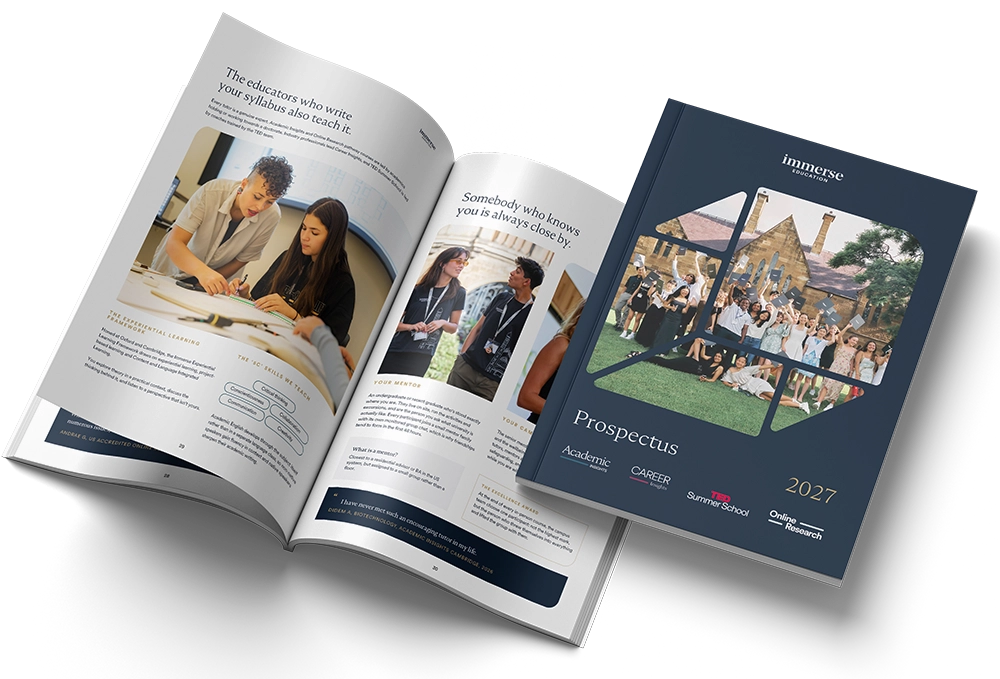
Immerse Education's Academic Insights pathway in Engineering offers a structured introduction to university-level engineering, taught by expert academics from institutions such as Oxford and Cambridge. Delivered in small classes with an average of 7 participants per class, the programme blends theory with applied learning.
Students complete more independent projects and analyse real engineering challenges, developing reasoning expected at undergraduate level. Across all ages, learning includes university-style lectures, problem-solving sessions, weekly 1:1 tutorials, and a personal engineering project, ending with written feedback and a certificate.
Why it stands out: Age-specific syllabi tailored to students' academic stages, expert tutors from leading universities, small-group teaching that encourages discussion, and personalised feedback that supports meaningful academic growth and university readiness.
2. Imperial College London Year 12 Sutton Trust Summer School
Location: Imperial College London, South Kensington, London, UK
Cost/Stipend: Free; covers course fees, materials, accommodation, three meals a day, and trips, with public transport costs reimbursed
Acceptance rate/cohort size: Highly competitive; many subject streams are oversubscribed
Dates: Four days; 2026 ran 14 to 17th July or 21 to 24th July (2027 dates not yet posted)
Application Deadline: 5th March 2026 for the 2026 programme, with applications opening on 12th January (2027 dates not yet posted)
Eligibility: Year 12 students (Year 13 in Northern Ireland, S5 in Scotland) under 18 who have always attended UK state schools, with at least five GCSEs at grades 7 to 9 including maths and sciences | Not open to international students
Imperial’s Year 12 Sutton Trust Summer School is a four-day, three-night residential that places you in the academic department of your choice. Engineering streams include Biomedical, Design, Electrical and Electronic, Materials Science, Chemical, and Aeronautics with Mechanical Engineering, with lectures and lab sessions that give you an insight into first-year undergraduate study. Sessions are led by academics, PhD students, and admissions tutors.
Evenings include team-building activities, an off-site trip, and a celebratory meal, and you stay in student accommodation with undergraduate mentors. After the programme, you can get feedback on your personal statement and, if Imperial invites you to interview, a mock interview. If you’re in Year 11, use this year to check each stream’s A-level requirements before applications open in January.
Why it stands out: You get a free taste of Imperial engineering, plus application support that continues into Year 13.
3. Lumiere Research Scholar Program
Location: Remote, you can participate in this program from anywhere in the world!
Cost: Varies depending on program type. Full financial aid available.
Application Deadline: Varies by cohort.
Program Dates: Varies by cohort: summer, fall, winter, or spring. Options range from 12 weeks to 1 year.
Eligibility: You must be currently enrolled in high school and demonstrate a high level of academic achievement.
The Lumiere Research Scholar Program is a rigorous research program tailored for high school students. The program offers extensive 1-on-1 research opportunities for high school students across a broad range of subject areas. The program pairs high school students with Ph.D. mentors to work 1-on-1 on an independent research project. At the end of the 12-week program, you’ll have developed an independent research paper!
You can choose research topics from subjects such as psychology, physics, economics, data science, computer science, engineering, chemistry, international relations, and more. You can find more details about the application here, and check out students’ reviews of the program here and here.
Why it stands out: You get 1-1 mentorship with a Ph.D. mentor and produce an independent research project by the end.
4. University of Cambridge Sutton Trust Summer School
Location: University of Cambridge, Cambridge, UK
Cost/Stipend: Free
Acceptance rate/cohort size: Extremely competitive; 400 students across 25 subject streams
Dates: Five days; 2026 ran 17 to 21st August (2027 dates not yet posted)
Application Deadline: Information about 2027 summer schools will be posted in January 2027
Eligibility: Year 12 students at UK state-maintained schools, with priority for students from under-represented backgrounds | Not open to international students
Cambridge’s Sutton Trust Summer School is a free, five-day residential in your chosen subject, and the Department of Engineering runs one of its summer schools as part of this programme. During the day, you’re taught by world-leading experts and might complete your own research project, attend lectures, or try Cambridge’s small-group supervisions. Online guidance runs before and after the residential week.
Evenings bring activities such as a punt tour, meeting current students and alumni, and a Formal Hall dinner. You’re more likely to get a place if you meet criteria such as being care experienced or eligible for Free School Meals at any time in the past six years. You must attend the full week to take part.
Why it stands out: You experience Cambridge-style supervisions and college life for free while exploring engineering at a world-leading university.
5. Research Science Institute (RSI)
Location: MIT, Cambridge, MA, USA, expanding to Stanford University from 2027
Cost/Stipend: Free
Acceptance rate/cohort size: Highly selective; about 100 students at MIT, with 50 more at Stanford from 2027
Dates: Six weeks in the summer; RSI 2025 ran June 22nd to August 2nd (2027 dates not yet posted)
Application Deadline: US applicants usually apply in December (the RSI 2025 deadline was December 11th, 2024); international applicants follow their own country’s selection schedule
Eligibility: Students who have completed the equivalent of three years of high school; seniors can’t apply | Open to international students through each participating country’s selection procedure
The Research Science Institute, sponsored by the Center for Excellence in Education with MIT, brings top US and international students together for six weeks of original STEM research. The first week is intensive STEM classes with accomplished professors, followed by a five-week research internship on an individual project mentored by scientists and researchers. You experience the full research cycle from start to finish.
From 2027, RSI expands to Stanford University, which will mirror the MIT programme and also be free to attend. US students usually apply in the middle of their junior year, which matches Year 12 in the UK, so Year 11 is a good time to strengthen your maths and science record.
Why it stands out: You carry out original research for free alongside some of the strongest STEM students worldwide.



6. University of Oxford UNIQ
Location: University of Oxford, Oxford, UK
Cost/Stipend: Free
Acceptance rate/cohort size: Competitive; over a thousand participants take part in a residential, and 57 students joined the Engineering Science groups in 2026
Dates: Short residentials, mostly in July, plus a sustained contact programme from spring to autumn
Application Deadline: Applications open in mid-December; the 2025 portal closed on 23rd January 2025
Eligibility: UK state-school students in Year 12 (Year 13 in Northern Ireland, S5 in Scotland), prioritising backgrounds under-represented at Oxford | Not open to international students
UNIQ is Oxford’s free access programme, combining a summer residential with ongoing advice on preparing for university. In July 2026, Oxford’s Department of Engineering Science welcomed 57 UNIQ students, who spent much of their time on practical engineering challenges in the department’s laboratories. Participants also heard from a graduate researcher about their research journey and the opportunities within Engineering Science.
You stay in an Oxford college and experience Oxford teaching and tuition during the residential. Alongside academic sessions, you get admissions guidance designed to help you make the strongest possible application to Oxford.
Why it stands out: You tackle engineering challenges in Oxford’s labs while getting expert support on applying to Oxford.
7. National Summer Transportation Institute (NSTI) at Morgan State University
Location: Morgan State University, Baltimore, MD, USA
Cost/Stipend: Free; a full scholarship covers the cost of attending, and you receive a stipend on completion
Acceptance rate/cohort size: Selective; you apply with a transcript and essay
Dates: 2026 ran June 29th to July 31st, 8:30 a.m. to 4 p.m. (2027 dates not yet posted)
Application Deadline: Not specified on the programme page
Eligibility: High school students entering 10th, 11th, or 12th grade with at least a 2.5 GPA, plus a separate middle school track | International eligibility not specified
Morgan State University’s National Transportation Center runs NSTI, a STEM programme that encourages middle and high school students to pursue careers in transportation. You take part in practical activities, field trips, and talks from speakers, alongside SAT prep and sessions that build self-awareness. The programme also introduces you to a university campus, lab work, and lectures from faculty.
To apply, you upload an official transcript and a 500 to 700-word essay about your career goals, your interest in transportation, and how NSTI can help you. The programme is funded by the National Transportation Center, the Federal Highway Administration’s Office of Civil Rights, the Maryland State Highway Administration, and the Federal Motor Carrier Safety Administration.
Why it stands out: You explore transportation engineering at no cost and get paid a stipend for completing the programme.
8. Michigan Tech Summer Youth Programs
Location: Michigan Technological University, Houghton, MI, USA
Cost/Stipend: Varies by programme; some Pathway Programs are free, and need-based scholarships are available
Acceptance rate/cohort size: Open registration for most sessions; Pathway Programs are selective
Dates: One-week sessions in June and July, such as June 14th to 19th, 2026
Application Deadline: Summer Youth Programs scholarship applications were due on March 1st, 2026; classes tend to fill quickly
Eligibility: Middle and high school students in grades 6 to 11 | International eligibility not specified
Michigan Tech’s Summer Youth Programs offer week-long sessions where you explore careers and develop skills through laboratory, classroom, and field experiences. Engineering options have included autonomous robotics, Women in Engineering, and the Engineering Scholars Program. You can attend as a live-in or commuter student.
Selective Pathway Programs let you work with Michigan Tech faculty and industry professionals, and some are offered at no cost. Several scholarships cover live-in places for students from specific areas, so check the list early if cost is a concern.
Why it stands out: You can choose from a wide range of week-long engineering sessions at a dedicated technological university.
9. STFC Summer Work Experience Program
Location: Rutherford Appleton Laboratory (Oxfordshire), Daresbury Laboratory, Royal Observatory Edinburgh, or online
Cost/Stipend: Free (unpaid placement)
Acceptance rate/cohort size: Selective; 23 students joined one Rutherford Appleton Laboratory department in 2026
Dates: 1 to 2 weeks in the summer; the 2026 online week ran 22 to 26th June
Application Deadline: Applications for 2027 open in January; deadlines vary by placement
Eligibility: Students living in the UK and in full-time education in Years 10 to 13 (S4 to S6 in Scotland, Years 11 to 14 in Northern Ireland); some placements have distance requirements | Not open to international students
The Science and Technology Facilities Council runs in-person work experience at three national lab sites, plus an online week. During a one- to two-week placement, you work individually or in a small group with supervisors on a project rooted in STFC science and technology.
Projects change each year depending on the teams hosting students. In 2026, students at Rutherford Appleton Laboratory worked on projects ranging from testing 3D-printed radiation shielding materials to designing and testing a cryocooler for the ARIEL space mission. The online option suits you if you live more than an hour’s drive from a participating lab site.
Why it stands out: You contribute to real projects at a national research facility, and you can apply while you’re still in Year 10 or 11.
10. Purdue University Seminar for Top Engineering Prospects (STEP)
Location: Purdue University, West Lafayette, IN, USA
Cost/Stipend: Not specified on the programme page; you cover your own travel to and from Purdue
Acceptance rate/cohort size: Selective
Dates: One-week residential sessions in July (2027 dates not yet posted)
Application Deadline: Applications open in January
Eligibility: Rising high school seniors, ideally with three years of high school maths and one year of chemistry or physics completed | International eligibility not specified
Since 1985, Purdue’s Seminar for Top Engineering Prospects has offered a week-long residential programme for rising high school seniors from across the US. You work on team projects with expert guidance from staff and current engineering honors students. The programme introduces you to engineering as a mix of teamwork, creativity, and problem-solving.
You eat in Purdue’s dining courts, and residential staff interns support you throughout the week. STEP is designed for the summer before your final year, so if you’re in Year 11, you can use the time ahead to complete the recommended maths and science courses.
Why it stands out: You spend a week learning engineering alongside Purdue’s engineering honors students at one of the best-known US engineering schools.
11. Carnegie Mellon University Summer Academy for Math and Science (SAMS)
Location: Carnegie Mellon University, Pittsburgh, PA, USA
Cost/Stipend: Free
Acceptance rate/cohort size: Highly competitive; merit-based
Dates: Six weeks; 2026 ran June 20th to August 1st (2027 dates not yet posted)
Application Deadline: February 1st, 2026 for the 2026 programme (2027 deadline not yet posted)
Eligibility: US citizens or permanent residents in 11th grade at the time of application who are at least 16 by the start date | Not open to international students
SAMS is a fully funded, six-week pre-college programme at Carnegie Mellon for rising high school seniors who are underrepresented in STEM fields. You build a deeper understanding of STEM through classroom instruction and projects with faculty and staff mentors. You also meet peers from across the country.
Unlike most of Carnegie Mellon’s pre-college programmes, SAMS asks for standardised test scores, and you also submit financial documentation. Decisions for 2026 were released on April 15th, so you’ll know your plans well before the summer begins.
Why it stands out: You spend six fully funded weeks building advanced STEM skills at a leading US research university.
Join the Immerse Education 2027 Essay Competition
Follow the instructions to write and submit your best essay for a chance to be awarded a 100% scholarship.
12. Stanford University Summer Session: Ordinary Differential Equations for Engineers

Location: Stanford University, Stanford, California, USA
Cost: $7,525
Program Dates: June 22nd - August 13th
Deadline: March 2nd
Eligibility: High school students; open to international students
Ordinary differential equations show up whenever engineers need to describe how something changes over time. In this Stanford course, you’ll learn how to set up and solve differential equations and see how they can be used to model engineering systems. Classes combine lectures with problem-solving, giving you plenty of time to work through equations and understand what each step is actually doing.
You’ll also apply mathematics to engineering problems, connecting things like rates of change and mathematical models to situations engineers deal with. It’s a demanding course, so expect to spend a good amount of time wrestling with equations.
Why it stands out: The course takes differential equations out of pure mathematics and puts them into an engineering context, showing you how engineers use them to model changing systems.
13. Principles of Engineering Design (Johns Hopkins Center for Talented Youth)
Location: Johns Hopkins Center for Talented Youth, Baltimore, Maryland
Cost: Joining fee $55; In-Person registration fee $75; Online Registration Fee $20
Program Dates: Various sessions across the year
Deadline: Varies by the session
Eligibility: Grades 7-11; open to international students
This course lets you get your hands dirty with the actual engineering design process. You’ll design, build, and test models of projects such as vehicles and bridges, then figure out what needs fixing when your first design inevitably has some problems. You’ll use mathematics and scientific reasoning to make design decisions and work with other students as you develop and test your ideas.
The course also includes technical report writing, so you’ll have to explain how your design works and why you made certain choices. With classes typically limited to 18-20 students, there’s room for plenty of hands-on work and discussion.
Why it stands out: You’ll go through the full cycle of designing, building, testing, and explaining an engineering project, with small classes keeping the work fairly hands-on.
14. Laboratory Learning Program at Princeton University
Location: Princeton, NJ, USA
Cost: Free
Program Dates: February 15th - March 15th
Deadline: March 15th
Eligibility: Students must be 16 years of age or older by June 15th; Enrolled in a local NJ high school; US citizens currently attending a local NJ high school
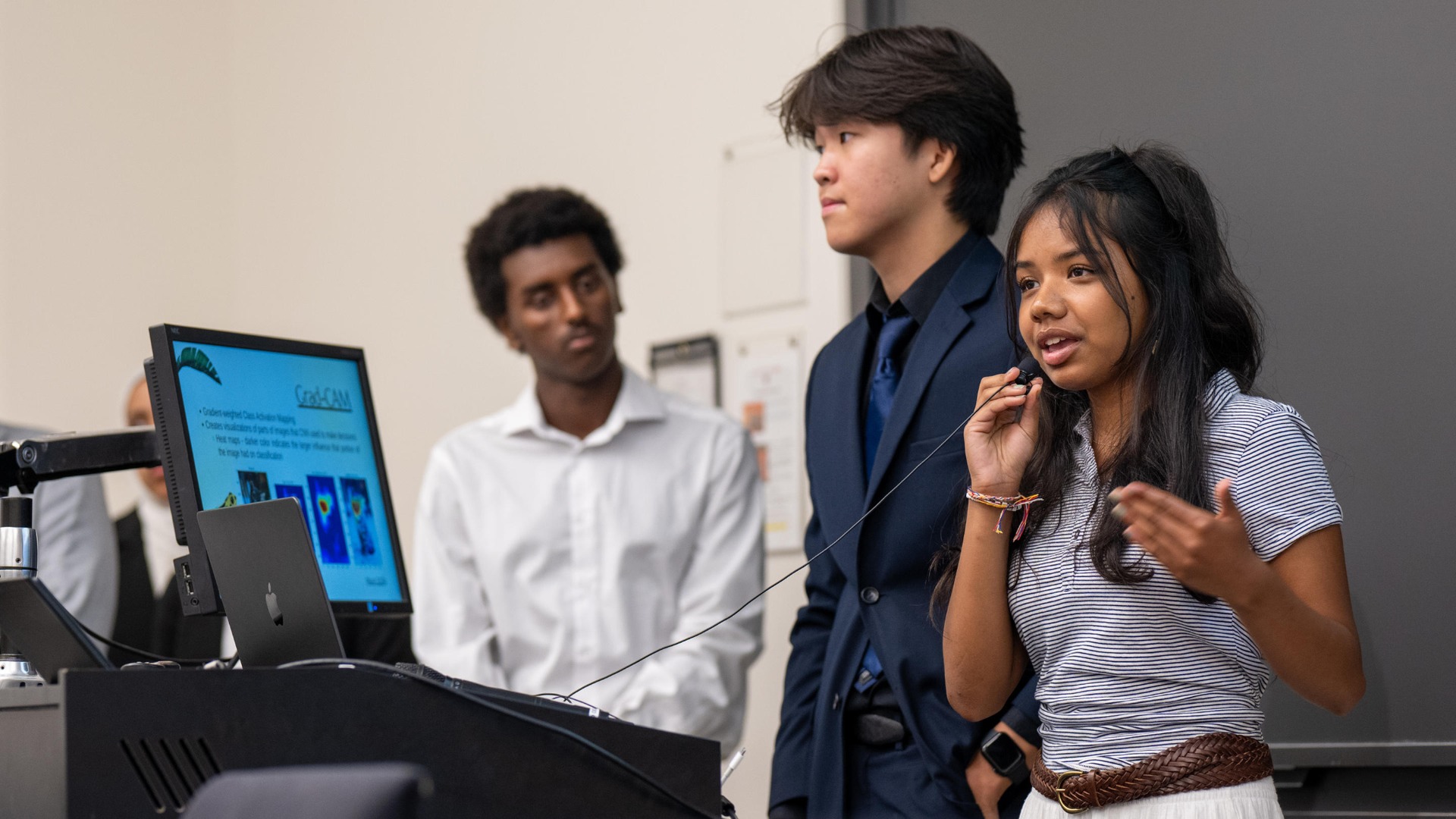
The Laboratory Learning Program gives you a full-time research placement in a Princeton science or engineering laboratory. You’ll work with faculty and research staff on an actual research project, spending your time conducting experiments, collecting information, and analyzing what you find.
Your project will depend on the laboratory where you are placed, so the experience can look quite different from one student to another. You’ll also have to turn your work into a two-page research summary, which means figuring out how to explain months of research without writing a 40-page monster. The programme gives you a close look at how research works inside a university laboratory.
Why it stands out: You spend the programme working full-time on a Princeton research project and finish by turning your findings into a formal two-page research summary.
15. Tufts University Biomedical Engineering Research Scholars (TUBERS)
Location: Tufts University, Medford, MA
Cost/Stipend: Free; stipend of $17/hour
Dates: July 6th - August 14th
Application deadline: April 17th
Eligibility: High school students and recent graduates who are at least 16 and are from select schools within Massachusetts
TUBERS is a six-week biomedical engineering research experience for high school students. You will work on biomedical research, investigate questions, and help develop new techniques for studying organs, cells, and tissues. You will learn about experimental protocols, testing hypotheses, and making predictions.
The program also encourages you to share your research findings with family, peers, and professionals through presentations. You can also submit your work to local and national-level competitions such as the Intel Science Talent Search. Massachusetts State and Engineering Fair, and Siemens Competition in Math, Science, and Technology at the end of the program.
Why it stands out: It focuses on introducing you to the intersection of engineering and biomedicine through hands-on lab work on a university campus and prepares you to submit your work to science competitions.
Frequently asked questions: Engineering Summer Schools for Year 11 Students
Are there free engineering summer schools for Year 11 students?
Yes, several programmes on this list are free, though many open once you reach Year 12. Imperial’s Sutton Trust Summer School covers your fees, accommodation, meals, and trips, and both UNIQ and Cambridge’s Sutton Trust Summer School are free for UK state-school students. STFC’s work experience is free and open from Year 10. In the US, RSI, SAMS, and Morgan State’s NSTI cost nothing, and NSTI pays a stipend. For more options, browse these engineering summer schools in the UK.
When should you apply for engineering summer schools?
Start researching in the autumn, since most deadlines fall in winter or early spring. UNIQ applications open in mid-December, Imperial’s Sutton Trust portal ran from 12th January to 5th March in 2026, and STFC opens its placements each January. In the US, SAMS closed on 1st February 2026, while RSI’s US deadline usually falls in December. Set reminders as soon as new dates are posted so you don’t miss a cycle.
What A-levels do you need for an engineering summer school?
Requirements vary, but maths is the most common. For Imperial’s Sutton Trust engineering streams, you need to be studying at least three A-levels, with Maths and Physics required for Biomedical, Electrical and Electronic, and Aeronautics with Mechanical Engineering. Imperial also asks for at least five GCSEs at grades 7 to 9. If you’re deciding now, this guide on what classes to take for an engineering degree can help you plan.
Can international students attend engineering summer schools for Year 11 students?
Some can, but many free programmes are limited to UK or US students. Imperial’s and Cambridge’s Sutton Trust summer schools and UNIQ only accept UK state-school students, STFC requires you to live in the UK, and SAMS is open only to US citizens and permanent residents. RSI admits international students through each participating country’s own selection process. Immerse Education’s Academic Insights pathway in Engineering welcomes students aged 13 to 18 from around the world, in cities including London, Singapore, and Toronto.
Do engineering summer schools help with university applications?
They can, especially when they include admissions support. Imperial’s Sutton Trust Summer School offers personal statement feedback, a Year 13 progression webinar, and mock interviews if you’re invited to interview at Imperial. UNIQ includes admissions guidance alongside its engineering sessions, and Cambridge’s programme adds online guidance before and after the residential. When it’s time to apply, these tips on writing an engineering personal statement can help you show what you learned.
What can you do in Year 11 if most programmes are for Year 12?
You can still build experience through programmes that accept younger students. STFC’s work experience is open from Year 10, and Michigan Tech’s Summer Youth Programs welcome students in grades 6 to 11. You can also explore engineering research opportunities for high school students to work on a project independently. Immerse Education’s Academic Insights pathway in Cambridge and Oxford accepts students from age 13, with a bursary programme available.
Find the engineering summer school for you
An engineering summer school gives you a chance to test prototypes, work in university labs, and see whether the subject suits you.
Many engineering summer schools for Year 11 students open applications once you reach Year 12, so use this year to research programmes and deadlines.
Check residency rules and subject requirements carefully, since several free programmes only accept UK state-school students who take specific A-levels.
For more help choosing subjects, planning applications, and preparing for an engineering degree, explore our University Preparation blogs whenever you’re ready.






Unlock Inspiring Opportunities with the Immerse Education Newsletter
Join our newsletter to stay ahead with exclusive updates, exciting programme highlights, and expert insights from the world of immersive education.
Learn how Immerse can transform your life
An in-depth overview of our university and career preparation programmes
Get a glimpse into the life of an Immerse participant
Find the right programme for you with sample timetables, location showcases, and more