15 Enrichment Courses for High School Students

TL;DR
You'll find 15 courses here spanning STEM, humanities, quantum computing, and language immersion, with formats ranging from a free week at Carleton College to a fully funded six-week residency at MIT. Many run without grades or academic credit, letting you explore a subject purely out of curiosity, while others award transcripted college credit alongside current undergraduates. Eligibility varies widely, with several free, highly competitive programs restricted to US citizens and others open internationally. MITES Summer stands out with an acceptance rate estimated between 1.5 and 4 percent, built specifically to open selective STEM colleges to overlooked students. Immerse Education's Pre-University Summer School is among the internationally accessible picks, a two-week residential program across six global locations for students aged 13 to 18.
Broad learning options outside the usual classroom shape your future path, no matter what you plan to study later on. If you look at areas like public speaking, economics, creative writing, engineering, history, or environmental science, independent thinking strongly influences how these fields address major issues. Getting a head start on these unique topics gives you a massive advantage long before you fill out college applications. If you want to create that broad knowledge during your holidays, specialized enrichment courses are a fantastic place to start.
Envision spending a few weeks studying how world economies function, writing short stories, or working on engineering tasks alongside other motivated teenagers. You will join unique project groups, complete real-world assignments, and see exactly how teams coordinate their daily plans. This interactive setting feels completely separate from just reading a schoolbook by yourself or sitting at home.
What kinds of enrichment courses are available for high school students?
Your choice of an enrichment course will depend mostly on what specific subjects you want to explore. Some programs focus heavily on science, technology, and math logic, which suits individuals who love technical analysis and data. Other programs center on the arts, languages, and writing, allowing you to develop your communication and presentation skills.
Dedicating your free weeks to an advanced topic helps your university application stand out because it proves you have real academic curiosity. These programs also offer great practice with independent learning habits and ideas that you are likely to face throughout your university years and future jobs.
For related options, consider accredited high school programs and college programs for high school students.
To help you find the right fit, we've curated a list of 15 enrichment courses for high school students worth exploring!
15 Enrichment Courses for High School Students
1. Harvard Summer School, Harvard University – Secondary School Program
Location: Virtual or on-campus at Harvard University, Cambridge, MA
Cost: $4,180 – $15,735 + $75 application fee; financial aid is available
Acceptance rate/cohort size: Competitive; over 2,800 high school students globally across all program formats
Dates: 4-Week: July 12th – August 8th; 7-Week: June 20th – August 8th
Application Deadline: April 1st
Eligibility: High school freshmen, sophomores, and juniors who graduate high school in the program year or next two years; ages 16–18; open to international students
The Harvard Summer School Secondary School Program immerses you in an academic environment where you can earn college credit alongside current undergraduates. During this experience, you will explore disciplines such as STEM, humanities, social sciences, computer science, and the creative arts.
Outside the classroom, you will attend college admissions panels, participate in off-campus university tours, join intramural sports, and participate in student-led clubs. The program's unique flexibility lets you choose between commuting, living on the historic Harvard campus, or studying online for four or seven weeks. Ultimately, you will develop collegiate skills such as critical thinking, time management, advanced research, and personal independence.
Why it stands out: It provides a preview of university life by allowing you to take real, credit-bearing courses alongside actual college students while offering unmatched formatting flexibility.
2. Immerse Education’s Pre-University Summer School
Location: Cambridge, London, Oxford, Singapore, Sydney, and Toronto
Cost: Varies; summer school scholarship available through our bursary programme
Acceptance rate/cohort size: Selective; an average of 7 participants per class
Dates: 2 weeks during the summer
Application Deadline: Multiple cohorts with rolling admissions
Eligibility: Students across the globe aged 13-18 currently enrolled in middle or high school; open to international students
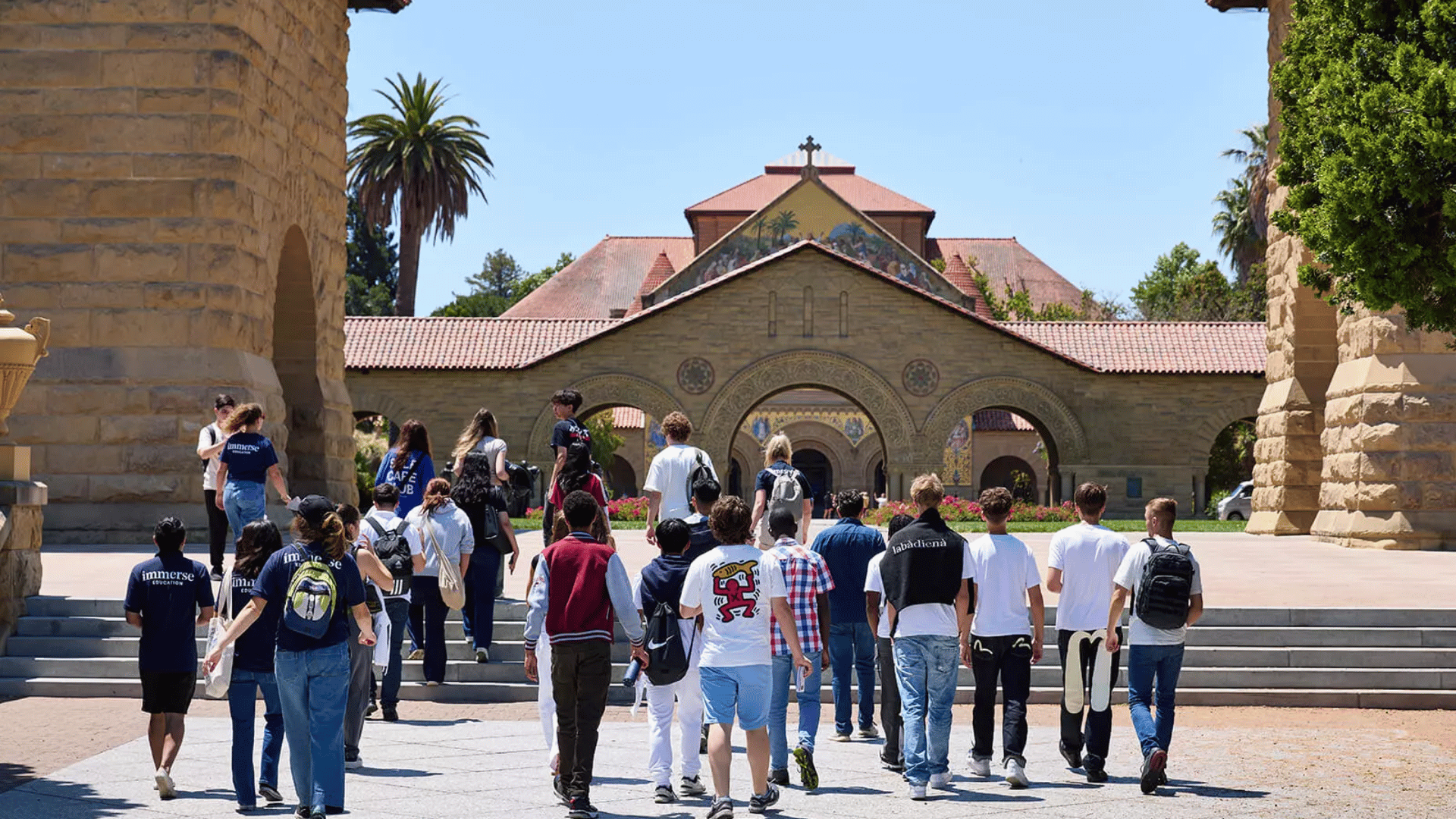
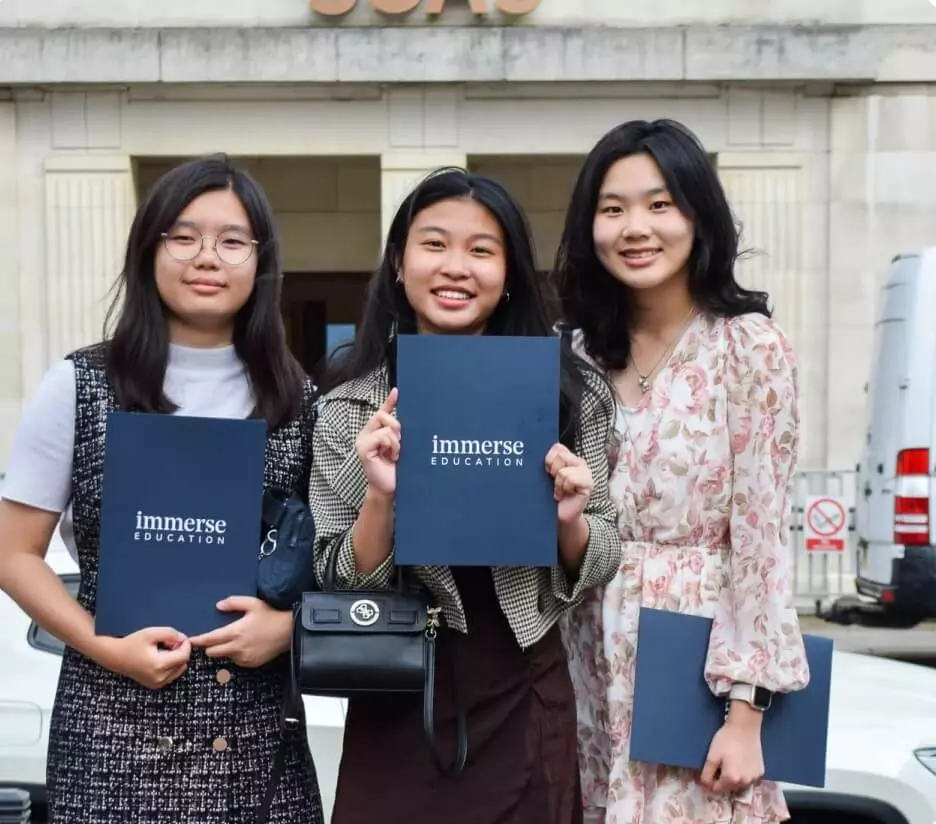
The Pre-University Summer School lets high school students experience university life firsthand. You will live on campus and study in small groups of 7-10, and learn from tutors from eminent top universities like Oxford and Cambridge. You can explore a wide range of subjects, spanning over 20 options, including Architecture, AI, Business Management, Computer Science, Economics, Medicine, Philosophy, and more.
The courses are experiential and focus on hands-on learning. You may find yourself conducting dissections in medicine, designing a robotic arm in engineering, participating in a moot court for law, or building creative writing portfolios and business case studies. By the end of the program, you’ll complete a personal project, receive written feedback, and receive a certificate of completion. You can find more details about the application here.
Why it stands out: You’ll get an early start at university life and academics because the program includes an independent project, discussion-based classes, and living at a college campus.
3. Yale University – Yale Young Global Scholars (YYGS)
Location: New Haven, CT
Cost: $7,000; need-based financial aid is available
Acceptance rate/cohort size: Highly competitive; approximately 1,800–1,900 students overall
Dates: Session I: June 21st – July 3rd; Session II: July 5–17; Session III: July 19–31
Application Deadline: January 7th
Eligibility: Current high school sophomores and juniors; must be between 16 and 18 years old by the first day of Session III; graduating in +1/+2 years; first-time participants; open to international students
At Yale Young Global Scholars (YYGS), you spend two residential weeks at Yale exploring one of three interdisciplinary tracks: Innovations in Science & Technology, Politics of Law & Economics, or Solving Global Challenges. Depending on your track, you explore STEM, government and economic systems, law and human rights, or challenges involving public health, poverty, gender equality, and environmental sustainability.
You attend faculty lectures, choose seminars, join breakout discussions, and develop a collaborative capstone project. You learn without grades or course credit, encouraging exploration rather than competition. You also learn alongside peers from more than 150 countries. Through the program, you strengthen critical thinking, analysis, teamwork, creative problem-solving, and cross-cultural understanding.
Why it stands out: You experience university-style learning on Yale’s campus in a highly international community, without grades or academic credit shaping what you choose to explore.
4. MITES Summer
Location: In-person and residential on the MIT campus, Cambridge, Massachusetts
Cost: None
Acceptance rate/cohort size: Estimated 1.5–4%; approximately 275–300 students
Dates: June 20th – July 31st
Application Deadline: February 1st
Eligibility: High school juniors who are U.S. citizens or permanent residents; not open to international students
In this program, you live on MIT's campus for six weeks and carry a full college-level course load, taking classes such as physics, calculus, genomics, machine learning, and science writing, with problem sets and labs graded the way MIT grades its own students.
You work in teams, get to know MIT faculty and near-peer mentors, and start seeing yourself as someone who belongs in a place like this. The academics are demanding on purpose, because the program exists to prepare you for the most selective STEM colleges. You prove to yourself that you can handle MIT-level coursework, and you finish with the confidence and mentor network to apply to top engineering and science programs.
Why it stands out: You get a rigorous, fully funded MIT summer built specifically to open top STEM colleges to students they too often overlook.
5. Brown University Pre-College Programs – Summer@Brown
Location: Brown University campus, Providence, Rhode Island (with online and hybrid options)
Cost: $3,096–$10,858 depending on course length and format; need-based Sibley Scholarships and other scholarship opportunities available
Acceptance rate/cohort size: Selective; cohort size not published
Dates: June 15th – July 25th
Application Deadline: May 15th
Eligibility: Students completing grades 9–12; ages 14–18 by June 14th; strong English proficiency, with TOEFL or Duolingo required for non-native speakers; open to international students
In Summer@Brown, you choose from more than 230 non-credit, college-level courses spanning biological and natural sciences; business, economics and legal studies; engineering and technology; medical and health sciences; physical sciences and math; literature, writing and communications; political science, philosophy and history; psychology and social sciences; and visual, creative and performing arts. You take part in class discussions, group work, individual study and workshops or other activities outside class.
Some courses also let you conduct independent research. You build inquiry, collaboration, time-management and independent-learning skills while working alongside students from varied backgrounds. Most distinctively, you experience Brown’s student-centered Open Curriculum approach without the pressure of formal grades or academic credit.
Why it stands out: You get to explore a subject you genuinely choose at a first-year college level while experiencing Brown’s academic environment without grades determining how well you perform.


6. Cornell University – Pre-College Studies
Location: Cornell University, Ithaca, NY
Cost: $1,940 per credit + $75 application fee; financial aid is available for eligible students
Acceptance rate/cohort size: Selective enrollment; class sizes vary by course
Dates: Multiple summer sessions available; dates vary by selected course
Application Deadline: May 14th
Eligibility: Students aged 16–18 who have completed their sophomore year of high school; open to international students
In Cornell University Precollege Studies, you choose a regular Cornell undergraduate course rather than follow one fixed enrichment syllabus. You can explore subjects spanning architecture and the arts, business and hotel management, health and the humanities, international relations, science and technology, social change, veterinary medicine, and related fields.
You may attend lectures, complete readings and homework, take part in labs or small-group discussions, and work on team projects. You study alongside Cornell undergraduates, meet the same academic standards, and can earn Cornell credit recorded on an official transcript. Along the way, you strengthen critical thinking, reading, writing, and college-level study skills. You can participate on campus in summer or online in summer or winter.
Why it stands out: You experience genuine Cornell undergraduate academics as a high school student while earning credits that may later be transferable toward a college degree.
7. NASA Glenn Research Center, Cleveland – NASA Glenn High School Engineering Institute
Location: Cleveland, Ohio
Cost: None
Acceptance rate/cohort size: Selective; 20 per session
Dates: Session 1: July 13–17; Session 2: July 20–24; Session 3: July 27–31
Application Deadline: May 1st
Eligibility: Students entering 11th or 12th grade; minimum 3.2 GPA; age 16+ by July 13; U.S. citizens or Lawful Permanent Residents; not open to international students
In this program, you explore engineering and technology through authentic NASA mission challenges connected to aerospace careers. You use the engineering design process to develop and test prototypes while working with NASA Glenn technical experts. You design acoustic liners to reduce jet-engine noise, build a smart solar-and-battery power system, and fabricate a noninflatable wheel for simulated lunar terrain.
These projects involve additive manufacturing, microprocessors, acoustic testing, power management, traction, and iterative design. You strengthen problem-solving, prototyping, testing, and career-readiness skills through a five-day, work-based learning experience grounded in NASA research and development.
Why it stands out: It gives you hands-on experience with NASA mission-based engineering challenges and technical guidance from Glenn experts in a focused five-day institute.
8. UC Berkeley Pre-College Scholars
Location: UC Berkeley, Berkeley, California
Cost: Session C: $15,987; Session D: $14,687; the Residential track offers one highly competitive media scholarship covering full tuition, room, and board
Acceptance rate/cohort size: Highly competitive; over 300 high school scholars
Dates: Session C: June 22nd – August 14th; Session D: July 6th – August 14th
Application Deadline: March 17th
Eligibility: Domestic and international students who have completed 10th or 11th grade, maintain a minimum 3.0 GPA, and are at least 16 years old by June 21st; open to international students
UC Berkeley Pre-College Scholars lets you explore university-level academics while getting a structured introduction to college life. You can choose lower-division Berkeley courses in Arts and Humanities, Social Sciences, and STEM on credit-bearing tracks, while the non-credit track focuses on introductory computer science and AI. You attend classes, complete assignments or coding projects, join college-exploration workshops, and take part in community activities or excursions.
You also learn about academic success, integrity, wellness, campus resources, and college admissions. Depending on your track, you can live on campus, commute, or learn virtually. You build college readiness and confidence; the virtual track develops online-learning skills, while the CS Academy emphasizes collaborative programming and problem-solving.
Why it stands out: its credit-bearing tracks let you study in actual UC Berkeley Summer Sessions courses alongside Berkeley and visiting students while still providing structured pre-college workshops and support.
9. Columbia Engineering, Columbia University – SHAPE — Summer High School Academic Program for Engineers
Location: New York, New York
Cost: $6,241 commuter or $11,492 residential per session; $50 application fee after priority deadline; full need-based scholarships are available to domestic students
Acceptance rate/cohort size: Selective; cohort size not stated
Dates: Session 1: July 6–24; Session 2: July 27th – August 14th
Application Deadline: March 2nd
Eligibility: Current high school students, freshmen through seniors; residential option age 16+; open to international students
In this program, you spend three weeks studying one college-level, project-based engineering subject taught by Columbia faculty. You can choose areas such as robotics, biomedical engineering, computer science, AI, data science, sustainable engineering, or operations research, depending on the session.
Alongside your main course, you take part in lab and project work, an elective, college-preparation sessions, and professional-development workshops. You also visit Columbia’s Makerspace, where you encounter 3D printers, laser cutters, and CNC tools and may build prototypes in applicable courses. Through these experiences, you strengthen technical literacy, engineering problem-solving, teamwork, public speaking, and presentation skills. The program also provides support from Columbia students and opportunities for company visits.
Why it stands out: It combines faculty-taught college-level engineering with project work, electives, professional-development workshops, college preparation, and access to Columbia’s Makerspace.
10. Carleton College – Carleton Liberal Arts Experience (CLAE)
Location: In-person and residential at Carleton College, Northfield, Minnesota
Cost: None
Acceptance rate/cohort size: Selective; 40 scholars each year
Dates: July 5–11
Application Deadline: May 1st
Eligibility: Current high school juniors who are U.S. citizens, permanent residents, or undocumented and DACA students living in the US; centered on African American history and culture; not open to international students
In this program, you spend a week living on Carleton's campus, tasting the liberal arts through interdisciplinary seminars and hands-on classes taught by college faculty, all framed around African American history and culture. You move between subjects rather than drilling one, so you might spend a morning on a humanities seminar and an afternoon on a science or arts workshop, seeing how a liberal-arts college actually teaches.
Alongside the academics, you get an honest look at the college search, financial aid, and what residential college life is like. You experience a real liberal arts college from the inside for a week, at no cost, and leave with a clearer sense of whether this kind of education fits you.
Why it stands out: You get a free, faculty-taught week at a top liberal arts college, built to open that path to students who rarely get to see it.
11. NASA GeneLab for High Schools (GL4HS)
Location: Fully online and asynchronous, run by NASA's Ames Research Center; the program itself is remote rather than on-site
Cost: None
Acceptance rate/cohort size: Highly competitive (traditionally ~3-10%0; 800–1,000 students
Dates: June 1st – August 28th
Application Deadline: March 15th, or until 1,000 are received
Eligibility: Rising juniors and seniors who are U.S. citizens or permanent residents; have completed at least one biology course; hold a 3.0 GPA; not open to international students
In this program, you learn space biology from wherever you are, studying how living systems respond to spaceflight through recorded lectures and JupyterLab notebooks that you work on at your own pace. You move through omics research, bioinformatics, and computational biology, with weekly office hours whenever you want to ask a person, and you earn a completion certificate at the end.
An optional capstone puts you on a team of four analyzing real datasets from NASA's Open Science Data Repository, and the top three teams could win an all-expenses-paid trip to a scientific conference. You analyze genuine NASA spaceflight data with real bioinformatics tools and can present your own research proposal at a national symposium.
Why it stands out: You work with actual NASA space biology data as a high schooler, and a strong capstone team could end up presenting at a professional conference.
Join the Immerse Education 2027 Essay Competition
Follow the instructions to write and submit your best essay for a chance to be awarded a 100% scholarship.
12. University of Toronto Summer Psychology Research Initiative (SPRINT)
Location: In person at the University of Toronto's St. George campus, Toronto, Ontario, with virtual accommodations in certain cases
Cost: None
Acceptance rate/cohort size: Highly competitive; 50–60 high school students
Dates: July 20–31
Application Deadline: May 1st
Eligibility: High school students studying in Ontario, with priority to those entering grades 11 and 12 and to Black, Indigenous, and other underrepresented students; not open to international students
In this program, you spend two weeks getting a real taste of academic psychology, sitting in on lectures, interactive panels, and live demonstrations across social, cognitive, and developmental psychology, much like an undergraduate would.
In the second week, you move into a small group and, guided by undergraduate and graduate mentors, develop your own novel research proposal on a question that interests you, from social anxiety in adolescents to memory and learning. On the final day, you present that proposal to fellow students, faculty, and families. You learn what psychology research actually is and produce a genuine research proposal of your own, mentored by real University of Toronto researchers, entirely free.
Why it stands out: You get a free, university-run entry into psychology research created to reach students that universities too often miss.
13. University of Waterloo – Quantum School for Young Students (QSYS)
Location: Online, hosted by the Institute for Quantum Computing at the University of Waterloo, with an optional in-person lab day on campus for Waterloo-region students
Cost: None
Acceptance rate/cohort size: Competitive; ~200 students
Dates: August 4–13
Application Deadline: May 15th
Eligibility: Students in Grade 11, Grade 12, or CÉGEP who are fluent in English and have completed Grade 11 math; not open to international students
In this program, you spend a week and a half exploring quantum information science, guided through superposition, entanglement, and quantum cryptography by world-leading researchers at one of the top quantum institutes anywhere. You do not need any quantum physics behind you, just curiosity, and the school gives you the mathematical tools, especially linear algebra, to actually follow the ideas rather than just hear about them.
Sessions mix expert lectures with small-group discussion, problem-solving, and mentoring, and if you are near Waterloo, you can spend a day in the lab with entangled-photon sources and spin qubits. You get a genuine grounding in the science behind quantum computing from active researchers, reaching real quantum concepts most people never touch before university.
Why it stands out: You learn quantum information from one of the world's leading quantum institutes, free, with a shot at hands-on time with real quantum hardware.
14. U.S. Department of State – NSLI-Y Summer Abroad
Location: Varies by language (e.g., Morocco, Jordan, Taiwan, South Korea, India, Turkey, Indonesia, Tajikistan, Latvia, Kazakhstan, Kyrgyzstan)
Cost: None
Acceptance rate/cohort size: Highly competitive; cohort size varies by target language
Dates: 6–7 weeks, usually departing mid-to-late June, with exact dates varying by country and language
Application Deadline: November 12th
Eligibility: For U.S. citizens aged 15–18 in grades 9–12 with at least a 2.5 GPA; not open to international students
In this program, you spend your summer living with a host family in another country, studying a language critical to global affairs- Arabic, Chinese, Korean, or Russian- for three to four hours of class a day. Beyond the classroom, you use the language everywhere, in the market, at the dinner table, on cultural excursions, so you improve faster than any textbook could manage.
The whole thing is paid for by a State Department scholarship, and you go as one of a group with a structured schedule, an in-country support team, and no prior study of the language required. You reach a genuine foothold in a challenging, high-value language through total immersion abroad, fully funded; an experience that completely reshapes what you think you are capable of.
Why it stands out: You get a fully funded summer abroad learning a critical language by living it, one of the most prestigious opportunities the US government offers to teenagers.
15. University of Michigan, College of Literature, Science, and the Arts – Michigan Math and Science Scholars (MMSS)
Location: Ann Arbor, Michigan
Cost: $1,400; $1,100 residential stay + $100 application fee; limited need-based financial aid is available
Acceptance rate/cohort size: Moderately competitive; cohort size not stated
Dates: Session 1: June 21st – July 3rd; Session 2: July 5–17; Session 3: July 19–31
Application Deadline: Rolling basis
Eligibility: Rising high school sophomores, juniors, or seniors; completed at least one year of high school but not senior year; open to international students
In this program, you spend two weeks exploring current mathematics and science research through one intensive course at the University of Michigan. You can choose from subjects such as mathematics, physics, chemistry, biology, astronomy, psychology, computer science, and earth and environmental sciences.
You attend full-day classes, tackle problem-solving and computer projects, conduct laboratory research, and take part in field-based learning where your chosen course includes it. Classes are kept to about 15 students and are taught by University of Michigan faculty, giving you sustained, focused interaction within a single subject. You strengthen scientific reasoning, analytical thinking, collaboration, and research skills. You may attend one, two, or all three two-week sessions.
Why it stands out: It combines small, faculty-taught classes with concentrated two-week study and hands-on enrichment spanning laboratory research, problem-solving, computer work, and field experiences.
Frequently asked questions: Enrichment Courses for High School Students
Do enrichment courses affect your GPA or transcript?
It depends on the specific program, since several deliberately skip grades and credit. Yale Young Global Scholars and Brown's Summer@Brown both explicitly run without grades or academic credit, letting you explore a subject purely out of curiosity rather than for a transcript line. Others, like Harvard's Secondary School Program and Cornell's Pre-College Studies, award real transcripted college credit alongside current undergraduates. Immerse Education's Pre-University Summer School also skips formal grading, instead giving you a personal project, written feedback, and a certificate of completion at the end.
Are there free enrichment courses for high school students?
Yes, several highly regarded programs on this list carry no cost at all. MITES Summer at MIT is fully funded, as are NASA's Glenn High School Engineering Institute, Carleton's Liberal Arts Experience, and the University of Waterloo's Quantum School for Young Students. Free programs tend to be more competitive, though: MITES accepts an estimated 1.5 to 4 percent of applicants. For more information, have a look at fully funded programs for high school students.
Do you need to be a certain grade level to apply?
Most programs target rising juniors and seniors, though a few accept a broader range. NASA's Glenn Engineering Institute and MITES both require you to be entering 11th or 12th grade specifically. Others are more flexible: Brown's Summer@Brown accepts students completing grades 9 through 12, and Michigan Math and Science Scholars accepts rising sophomores through seniors. Age requirements sometimes apply on top of grade level, so check both criteria closely before applying to your top choice.
Are international students eligible for these enrichment courses?
Many are, though several free or government-funded programs restrict eligibility to US citizens or permanent residents. MITES, NASA's Glenn Institute, Carleton's CLAE, and the NSLI-Y Summer Abroad program are all closed to international applicants. Others welcome them broadly: Harvard's Secondary School Program, Yale Young Global Scholars, and UC Berkeley's Pre-College Scholars are all open internationally. Immerse Education's Pre-University Summer School is also globally accessible, drawing students aged 13 to 18 from around the world to its six international locations.
Which enrichment courses focus on research rather than coursework?
A few place you directly into research work instead of a structured syllabus. NASA's GeneLab for High Schools has you analyze real spaceflight datasets with an optional capstone team project. The University of Toronto's SPRINT has you develop and present your own psychology research proposal under graduate mentorship. Columbia's SHAPE program blends faculty-taught coursework with project work across fields like robotics and data science, giving you a middle ground between a pure lecture course and independent research.
How selective are enrichment courses for high school students?
Selectivity ranges enormously across this list, from open enrollment to extremely competitive. MITES and NASA's GeneLab program are both highly competitive, with GeneLab accepting roughly 3 to 10 percent of applicants for its 800 to 1,000 spots. UC Berkeley's Pre-College Scholars and Columbia's SHAPE are also selective but accept larger cohorts. Less competitive options exist too, including Cornell's Pre-College Studies and Michigan's Math and Science Scholars, which use moderate rather than highly competitive review.
Get ahead on university prep this year
Curiosity pursued without grades attached often produces the strongest evidence of who you actually are as a student.
Working through these enrichment courses for high school students builds exactly the kind of intellectual depth that generic activity lists rarely capture.
Faculty mentorship, real coursework, and honest exposure to campus life give you something concrete to draw on when application essays ask who you really are.
Ready to turn that momentum into a plan, explore more University Preparation blogs and start building your case well before deadlines arrive.







Unlock Inspiring Opportunities with the Immerse Education Newsletter
Join our newsletter to stay ahead with exclusive updates, exciting programme highlights, and expert insights from the world of immersive education.
Learn how Immerse can transform your life
An in-depth overview of our university and career preparation programmes
Get a glimpse into the life of an Immerse participant
Find the right programme for you with sample timetables, location showcases, and more