
 Русский (RU)
 Українська (UK)
 Türkçe (TR)
 Italiano (IT)
 Français (FR)
 Português (PT)
 中文 (中国) (ZH)
 Español (ES)
 日本語 (JA)
 ไทย (TH)
 Deutsch (DE)
 Ελληνικά (EL)
 Polski (PL)
 Bahasa Indonesia (ID)
 Nederlands (NL)
 العربية (AR)
 한국어 (KO)

Most high schoolers do not get a real sense of what university-level academics feel like until they are already in the middle of it. College credit courses for high school students change that by placing you inside genuine higher education work before university begins. You attend lectures, complete assignments, and engage with material at a depth and pace that goes well beyond what a standard school curriculum typically reaches.
Imagine spending your time attending lectures taught by university instructors, participating in discussions with motivated students, or working through assignments that feel much closer to actual college coursework. You might study subjects like psychology, economics, engineering, creative writing, computer science, or political science while earning credits that could potentially count toward future university requirements.
How do you choose the right college credit courses for high school students?
With so many courses available online and in person, it’s important to choose programs based on both your academic interests and the kind of learning experience you want. Some courses are heavily lecture-based and theoretical, while others focus more on discussion, research, labs, writing, or project-based learning.
Many college credit programs are offered through universities, pre-college academies, or dual-enrollment partnerships. Depending on the course, students may complete research projects, presentations, essays, coding assignments, labs, or collaborative discussions alongside peers from different backgrounds.
One of the biggest advantages is the confidence students gain academically. You begin learning how to manage more independent coursework, communicate in higher-level academic settings, and handle responsibilities that feel much closer to university life itself.
To help you get started, we’ve curated a list of 15 college credit courses for high school students!
For adjacent opportunities, consider online credit courses.
15 College Credit Courses for High School Students
1. New York University – Pre-College
Location: New York University, New York, NY
Cost: Tuition varies by credit load; approximately $4,000+ for selected course formats, excluding housing and additional university fees; financial aid opportunities may be available for eligible students
Acceptance rate/cohort size: Selective enrollment; class sizes vary by course
Dates: Summer sessions typically run between July and August
Application Deadline: Applications generally close during the spring and early summer cycle
Eligibility: High school students entering grades 11-12; international students can apply if they meet English language and program requirements
NYU’s Pre-College program lets you take actual undergraduate courses while still in high school and earn official university credit through NYU coursework. You can choose from more than 30 subject areas, including journalism, business, psychology, engineering, computer science, and the humanities, depending on summer availability. Classes follow real university expectations, so you work through readings, seminars, assignments, discussions, and independent coursework at the pace of college academics.
You also gain access to NYU libraries, campus resources, and student services while learning how to manage the structure of university study in New York City. Since you study alongside other motivated students and sometimes NYU undergraduates, the environment feels much closer to real college life than a typical enrichment program.
Why it stands out: You’ll be taking classes alongside NYU undergraduates, so you’ll have the opportunity to build a useful network.
2. Immerse Education’s Pre-University Summer School

Location: Cambridge, London, Oxford, Singapore, Sydney, Tokyo, and Toronto
Cost: Varies; summer school scholarship available through our bursary programme
Application Deadline: Multiple summer cohorts; rolling admissions
Program Dates: 2 weeks during the summer
Eligibility: Students worldwide aged 13-18 currently enrolled in middle or high school
The Academic Insights Program lets high school students experience university life firsthand. You will live on campus and study in small groups of 7–10, learning from tutors from top universities like Oxford and Cambridge. Participants can explore over 20 subjects, including Architecture, AI, Business Management, Computer Science, Economics, Medicine, Philosophy, and more.
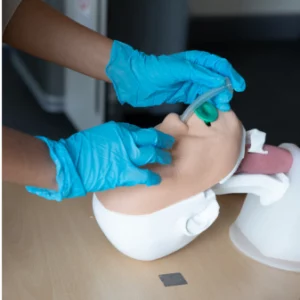
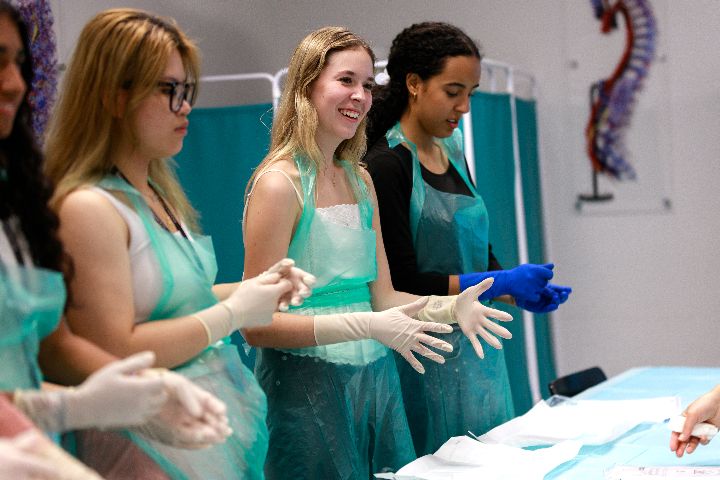
The courses are experiential and hands-on: you may find yourself conducting dissections in medicine, designing a robotic arm in engineering, participating in a moot court for law, or building creative writing portfolios and business case studies. By the end of the program, you’ll complete a personal project, receive written feedback, and receive a certificate of completion. You can find more details about the application here.
Why it stands out: You’ll study under expert academics, be guided daily by a university student mentor, complete a project you can show in future applications, and experience genuine university college life, with other campuses worldwide as alternatives.
3. Harvard Secondary School Program – Harvard Summer School
Location: Harvard University, Cambridge, MA (residential, commuting, and online options available)
Cost: Tuition varies by course load and format; need-based financial aid is available for eligible students
Acceptance rate/cohort size: Selective enrollment; class sizes vary by course
Dates: Multiple summer sessions, typically running between June and August
Application Deadline: Applications generally close during the spring admissions cycle
Eligibility: High school students who are at least 16 years old by the start of the program and will not graduate before the summer session; international students can apply if they meet program requirements
Harvard’s Secondary School Program is one of the most competitive college credit courses for high school students, allowing you to enroll directly in Harvard Summer School courses and earn college credit while still in high school. You can study subjects ranging from economics and psychology to STEM, literature, history, and computer science while taking part in lectures, labs, discussions, and university-level assignments.
The coursework follows actual Harvard academic expectations, so you are expected to manage readings, writing, and independent study at a serious pace. Residential students also experience campus life in Cambridge while studying alongside students from around the world. Students who complete eligible coursework successfully receive official Harvard transcripts documenting their academic work.
Why it stands out: It places high school students directly into Harvard Summer School courses, offering the opportunity to earn college credit while experiencing the academic structure and environment of a leading research university.
4. Cornell University – Pre-College Studies
Location: Cornell University, Ithaca, NY
Cost: Tuition varies by course; approximately $1,840 per credit; financial aid is available for eligible students
Acceptance rate/cohort size: Selective enrollment; class sizes vary by course
Dates: Multiple summer sessions available; dates vary by selected course
Application Deadline: Applications generally close around May
Eligibility: Students aged 16-18 who have completed their sophomore year of high school; international students can apply if they meet program requirements
Cornell’s Pre-College Studies program allows you to enroll in real Cornell undergraduate courses and earn official university credit while still in high school. You can choose from subjects across engineering, business, humanities, life sciences, architecture, veterinary science, and social sciences, depending on course availability.
Rather than participating in a simplified high school curriculum, you complete coursework that follows university expectations through lectures, assignments, discussions, and independent study. Residential students also gain access to campus resources, libraries, labs, and student programming that mirror undergraduate life. Students who complete coursework receive an official Cornell transcript documenting their academic work.
Why it stands out: It provides a unique opportunity to take undergraduate courses and earn official Cornell credits.
5. University of Pennsylvania – Pre-College Residential Program
Location: University of Pennsylvania, Philadelphia, PA
Cost: Approximately $9,100 for one course unit; costs increase for larger course loads; financial aid opportunities may be available for eligible students
Acceptance rate/cohort size: Selective enrollment; class sizes vary by course
Dates: June 30th – August 8th
Application Deadline: Applications open in December and follow a rolling admissions process
Eligibility: High school students, approximately ages 16-18; domestic and international students may apply
Penn’s Pre-College Residential Program places you directly on campus while you take undergraduate-level courses and earn university credit during the summer. You attend lectures, seminars, and discussion-based classes across different academic subjects while adapting to the pace and independence expected in college coursework. Residential students live in university housing and gain access to Penn’s academic resources, libraries, and student activities throughout the program.
Since the university is closely connected to schools like Wharton and Perelman, the environment is especially strong for students interested in business, finance, economics, or healthcare-related subjects. The experience also helps you understand how university academics and residential life function together day to day.
Why it stands out: It’s tied to the Wharton School and Perelman School, so it’s especially useful if you’re planning to study medicine, business, or finance.
6. College Now Summer Architect Immersion Program
Location: City Tech Campus, Brooklyn, NY
Cost: Free
Acceptance rate/cohort size: Limited enrollment; cohort size is not publicly available
Dates: June 30th – July 28th (tentative)
Application Deadline: To be announced
Eligibility: New York City public high school students in grades 10-11; students must meet College Now participation requirements
This City Tech program introduces you to architecture and urban design while allowing you to earn college credit through New York’s College Now initiative. During the course, you work on drafting, freehand drawing, architectural representation, 2D and 3D composition, and technical drawing interpretation while using New York City itself as a learning environment.
The curriculum also explores how architecture connects with history, politics, and urban culture rather than focusing only on technical design. You regularly communicate ideas visually and verbally through studio-style assignments and design discussions. Students who complete the course successfully earn two college credits connected to architecture and design studies.
Why it stands out: It provides a solid foundation for architectural design and construction, helping you build a competitive design portfolio.
7. Fordham University Summer Leaders Academy
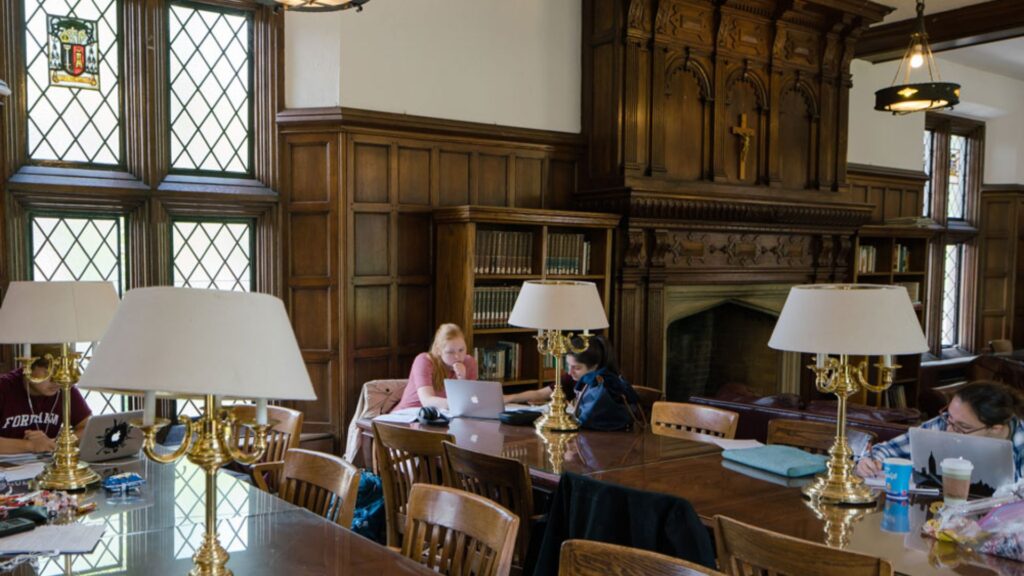
Location: Fordham University (Rose Hill and Lincoln Center campuses), New York, NY
Cost: Tuition varies by selected program and format
Acceptance rate/cohort size: Selective enrollment; cohort size varies by track
Dates: Multiple one-week and two-week sessions offered during the summer
Application Deadline: April 30th
Eligibility: Rising high school juniors and seniors entering grades 11-12; international students may apply if they meet program requirements
Fordham’s Summer Leaders Academy introduces you to subjects like finance, global business, pre-law, and pre-health through seminar-style university classes and collaborative projects across its New York campuses. Depending on the track you choose, you participate in presentations, discussions, workshops, and professional development activities connected to that field. Some tracks also include credit-bearing options, giving you the chance to earn university credit while exploring possible majors.
Beyond academics, the program includes career sessions, college guidance workshops, and community activities that help you understand university life more broadly. Since classes are discussion-heavy and professionally oriented, the atmosphere feels closer to an introductory university seminar than a summer camp.
Why it stands out: It’s focused on university-style classes and professional skills, so you’ll get a glimpse into university life.
8. Summer College Immersion Program – UCLA Summer Sessions
Location: University of California, Los Angeles (residential, commuter, and online options available)
Cost: Tuition varies by course and housing option; scholarships and financial assistance may be available for eligible students
Acceptance rate/cohort size: Selective enrollment; class sizes vary depending on the selected course
Dates: Multiple sessions typically offered between June and August
Application Deadline: Applications generally close during the spring cycle; admissions may continue on a rolling basis if space remains
Eligibility: High school students in grades 9-11; international students can apply if they meet English language and program requirements
UCLA’s Summer College Immersion Program allows you to take university-level classes while studying on one of the country’s largest public research university campuses. You can choose subjects across psychology, engineering, business, political science, media studies, life sciences, and the arts while completing projects, assignments, lectures, and discussions built around undergraduate coursework.
The curriculum is not simplified for high school students, so the pace and expectations resemble real university classes. Students also interact with faculty and peers from different backgrounds while learning how research university academics function day to day. Eligible students who complete coursework successfully can receive official UCLA credit and transcripts.
Why it stands out: It combines college credit opportunities with direct exposure to UCLA’s academic environment, helping students experience university coursework across a broad range of disciplines.
9. College Edge Summer – Columbia University School of Professional Studies
Location: Columbia University, New York, NY (residential and commuter options available)
Cost: Tuition varies based on course selection and program fees; financial aid opportunities may be available for eligible students
Acceptance rate/cohort size: Selective enrollment; class sizes vary by course
Dates: Multiple summer sessions typically run between June and August
Application Deadline: Applications generally close during the spring cycle; some admissions may continue on a rolling basis if space remains
Eligibility: Students currently in grades 11-12 or equivalent secondary education levels; international students can apply if they meet English language requirements
Columbia’s College Edge Summer program places you directly into undergraduate Columbia courses while allowing you to earn official university credit during high school. You can study subjects across the humanities, STEM, social sciences, and business while completing lectures, assignments, discussions, and independent coursework structured around Columbia’s academic expectations.
Since you are joining actual university classes rather than high school-specific sections, the pace and workload feel much closer to undergraduate academics in New York City. Residential students also experience Columbia’s campus culture and student environment throughout the summer. Students who complete courses successfully receive official Columbia credit and transcripts.
Why it stands out: It places high school students directly into Columbia undergraduate coursework, allowing them to earn college credit while experiencing university academics and campus life in New York City.
10. Pre-Baccalaureate Program – Brown University Pre-College Programs
Location: Brown University, Providence, RI (residential, commuter, and online options available depending on the course)
Cost: Tuition varies by course format and credit load; financial aid is available for eligible students
Acceptance rate/cohort size: Selective enrollment; class sizes vary by course
Dates: Multiple summer sessions typically run between June and August
Application Deadline: Applications generally close during the spring admissions cycle
Eligibility: High school students who meet Brown Pre-College requirements; international students can apply if they meet English language requirements
Brown’s Pre-Baccalaureate Program allows you to enroll in credit-bearing university courses while exploring Brown’s open and discussion-focused academic environment. You can choose from humanities, STEM, writing, interdisciplinary studies, and social sciences while participating in readings, projects, discussions, and university-level assignments.
The coursework mirrors Brown’s undergraduate classroom style, where discussion and independent thinking play a major role in the learning process. Depending on the course format, students can attend residential, commuter, or online sessions during the summer. Eligible students who complete coursework successfully may earn university credit and official transcripts.
Why it stands out: It combines college-credit opportunities with direct exposure to Brown’s open and discussion-based academic environment, helping students experience university learning before applying to college.
11. Duke Summer Session – Credit Course Options
Location: Duke University, Durham, NC (in-person and online options available depending on the course)
Cost: Tuition varies based on the number of credits and course selection; financial assistance may be available for eligible students
Acceptance rate/cohort size: Selective enrollment; class sizes vary by course
Dates: Summer sessions typically run between May and August, with multiple session formats available
Application Deadline: Applications generally close during the spring admissions cycle
Eligibility: High school students meeting Duke Summer Session requirements; international students can apply if they meet program and English language requirements
Duke’s Summer Session allows high school students to take real university classes and earn official Duke credit during the summer. You can study subjects like economics, psychology, global health, literature, STEM, and public policy while completing lectures, readings, projects, and written coursework structured around college expectations.
Rather than a separate high school curriculum, the program follows the pace and workload of university academics inside a research university environment. Students also develop experience with academic writing, collaboration, and independent study while adjusting to the structure of college coursework. Eligible students receive official Duke transcripts after successful course completion.
Why it stands out: It places students into real Duke University courses and combines credit-bearing academics with firsthand exposure to university expectations and learning environments.
12. The New School: Parsons Summer Intensive Studies

Location: The New School, New York, NY
Cost: Tuition and fees approximately $5,610
Acceptance rate/cohort size: Selective enrollment; class sizes vary by studio
Dates: Session 1: June 8th – June 26th; Session 2: July 6th – July 24th
Application Deadline: Session 1: May 8th; Session 2: June 1st
Eligibility: Rising grade 11-12 students aged 16 or older; international students may apply if they meet program requirements
Parsons Summer Intensive Studies is a credit-bearing pre-college design program focused on areas like fashion, architecture, photography, and graphic design. During the summer, you work through studio projects, workshops, critiques, and design assignments guided by Parsons faculty and industry professionals in New York City.
The curriculum emphasizes visual communication, creative problem solving, and portfolio development while exposing you to the structure of university-level studio education. Students also take part in field experiences and design-related activities across New York while building projects that can later support college portfolios. Students who complete the program successfully earn three college credits.
Why it stands out: You’ll work with Parsons faculty and industry professionals, helping you build a foundation in design and a valuable network.
13. University of Washington – Summer Sessions
Location: University of Washington, Seattle, WA
Cost: Tuition is charged per credit; Washington residents typically pay approximately $354 per credit hour, and non-residents approximately $1,029 per credit hour
Acceptance rate/cohort size: Open enrollment for many courses; class sizes vary
Dates: Summer sessions typically run June 17th – August 16th
Application Deadline: Varies by session and course
Eligibility: High school students who have completed grade 8 and are at least 15 years old; international students can apply if program requirements are met
The University of Washington Summer Sessions lets you enroll in undergraduate courses and earn university credit while still in high school. You attend 100-level university classes alongside college students across a wide range of disciplines while participating in lectures, projects, discussions, and coursework built around university standards. The experience gives you direct exposure to the pace and independence expected in a large research university environment in Seattle.
Since many courses are open enrollment, students can explore different academic interests while strengthening skills in communication, independent study, and time management. Students who complete courses successfully receive official university credit and transcripts.
Why it stands out: You’ll take undergraduate-level courses and familiarize yourself with the academic rigor of university studies at a campus connected to industry and innovation.
14. University of Mississippi – Summer College for High School Students
Location: University of Mississippi, Oxford, MS
Cost: Approximately $3,250-$3,850
Acceptance rate/cohort size: Selective enrollment; cohort size varies
Dates: Varies by session
Application Deadline: Applications generally close in April
Eligibility: Rising high school juniors and seniors with a minimum 3.0 GPA; international students may apply if program requirements are met
Ole Miss Summer College gives you the chance to live on campus while taking university-level courses and earning dual credit before graduation. During the program, you attend classes alongside undergraduate students while completing assignments, lectures, and coursework that follow standard university expectations. Residential life, mentoring, and academic support are also built into the experience, helping students adjust to college-style academics and independent living.
The program is especially useful if you want early exposure to both classroom learning and day-to-day campus life before applying to colleges. Students who complete coursework successfully receive university credit that may count toward future degree programs.
Why it stands out: It provides you with the experience of university life and the chance to earn college credit.
15. Georgetown University – Hoya Summer High School Sessions
Location: Georgetown University, Washington, DC
Cost: Approximately $10,039, depending on the selected session and format
Acceptance rate/cohort size: Selective enrollment; class sizes vary by program
Dates: June 1st – July 3rd; July 6th – August 8th
Application Deadline: April 30th
Eligibility: High school students entering grades 9-12 with a minimum GPA of 3.0; international students may apply if they meet program requirements
Georgetown’s Hoya Summer Sessions combine accelerated academies and credit-bearing coursework across subjects like international relations, business, AI, medicine, public policy, and forensics. During the summer, you attend seminars, workshops, lectures, and structured academic sessions led by faculty and guest speakers while living on Georgetown’s campus in Washington, D.C.
The curriculum is strongly discussion-based and policy-oriented, especially in programs tied to government, international affairs, and global issues. Beyond academics, students also participate in campus activities and workshops connected to future academic planning and university life. Depending on the selected track, students may earn college credit or receive certificates after successful completion.
Why it stands out: Its curriculum is well-recognised in global policy networks, so it’ll be especially useful if you plan to study international affairs, politics, or public service.
Turn College Credit Into University Confidence
College credit can help you understand university expectations before applications, lectures, deadlines, and independent study feel completely new.
The college credit courses for high school students listed here offer real academic experience through university classes, transcripts, projects, seminars, and campus learning.
From Harvard and Cornell to Brown, Duke, Columbia, UCLA, and Georgetown, these options can strengthen confidence, subject knowledge, time management, and application-ready evidence.
Want to make that early college experience count beyond the course? Explore our University Preparation blogs for guidance on applications, personal statements, academic choices, interviews, and preparing for university with stronger clarity as your next step today.