15 Winter Schools for High School Students

TL;DR
You’ll find 15 ways to use your winter break here, from university credit courses and research training to paid internships and free district academies. Some options cost nothing or even pay you, while university courses such as Cornell’s and UMBC’s charge tuition. Most programs suit students in grades 9 to 12, and some are highly selective, with Fox Chase’s Immersion Science Program offering just 16 seats each winter. Immerse Education’s Online Research pathway is open to students aged 13 to 18 worldwide with bursary support available.
As a high school student, winter break can be more than a pause between semesters. It can give you the time to explore a subject you are curious about without the pressure of a full school timetable. Winter schools hosted by universities can introduce you to fields ranging from science, engineering, and medicine to business, law, humanities, and the social sciences through lectures, workshops, practical projects, and collaborative learning.
Picture yourself discussing a case study in a university classroom, conducting an experiment in a laboratory, working with other students on a research problem, or presenting a project to academics. By attending a winter school, you can develop skills such as critical thinking, academic research, problem-solving, communication, teamwork, and independent learning while experiencing the pace and expectations of university-level study.
So, how do you choose the right winter school for high school students?
Winter schools can act as a foundation for your college journey, giving you a taste of what university life is like at a top institution, in person. They can also help you test an academic interest before committing to a degree and understand how subjects you encounter at school develop at university level.
To help you choose, we’ve put together a list of 15 Winter Schools for High School Students. We have prioritised university and government-hosted programmes that offer structured academic learning, practical exposure, and opportunities to experience higher education beyond the classroom.
15 Winter Schools for High School Students
1. LAUSD Winter Academy
Location: Participating Los Angeles Unified School District sites across Los Angeles, CA
Cost/Stipend: Free; meals are provided
Acceptance rate/cohort size: Open to enrolled LAUSD students; cohort size not specified
Dates: The 2026 Winter Academy ran January 5-9, 2026; 2027 dates not yet posted
Application Deadline: For the 2026 session, online registration ran from October 15th to December 2nd, 2025, with paper applications available at school sites
Eligibility: TK - 12 students in Los Angeles Unified; international students are not eligible unless they are enrolled in LAUSD
LAUSD Winter Academy is a five-day programme designed to combine academic support with enrichment during the winter break. You receive small-group or one-on-one instruction in literacy, mathematics, and STEAM with the support of a teacher.
Enrichment activities vary by site and can include social-emotional learning, writing, art, and career preparation. Meals are provided, and bus transportation was available to students who registered by the December deadline. The programme is most useful if you want structured academic support while continuing to explore broader interests during the break.
Why it stands out: You can combine free academic support with enrichment activities such as STEAM and career preparation within your local school district.
2. Immerse Education's Online Summer School

Location: Fully remote
Cost: Varies; summer school scholarship available through our bursary programme
Acceptance rate/cohort size: Selective; 1:1 learning
Application Deadline: Rolling admissions; multiple dates throughout the year
Program Dates: Start any time; 10-15 hours of 1:1 tutorials over 2-3 weeks
Eligibility: Students around the world aged 13-18 (accredited options require age 14+)
Immerse Education's Online Research pathway offers high school students the opportunity to conduct rigorous research with tutors from Oxford, Cambridge, and Ivy League universities. You will work with your tutor to explore a subject of your choice in depth and write an academic research paper. The programme is taught 1:1, and on the Accredited option (ages 14+) you can earn 8 UCAS points or 3 US college credits.
The virtual research program is offered in over 20 subjects, including artificial intelligence, chemistry, psychology, economics, computer science, creative writing, philosophy, and more. At the end of the program, you'll receive a written evaluation from your tutor and an opportunity to publish your research, with guaranteed submission to a high-school research journal on the Publication option (acceptance is at the journal's discretion) and, on the Accredited and Publication options, an invitation to present at the Immerse Online Symposium. You can find examples of papers Immerse students have worked on here. You can find more details about the application here.
Why it stands out: You'll get access to 1:1 Oxbridge- or Ivy-style research supervision culminating in a publishable academic paper.
3. Lumiere Research Scholar Program
Location: Remote , you can participate in this program from anywhere in the world!
Cost: Varies depending on program type. Full financial aid available.
Application Deadline: Varies by cohort.
Program Dates: Varies by cohort: summer, fall, winter, or spring. Options range from 12 weeks to 1 year.
Eligibility: You must be currently enrolled in high school and demonstrate a high level of academic achievement.
The Lumiere Research Scholar Program is a rigorous research program tailored for high school students. The program offers extensive 1-on-1 research opportunities for high school students across a broad range of subject areas. The program pairs high school students with Ph.D. mentors to work 1-on-1 on an independent research project. At the end of the 12-week program, you’ll have developed an independent research paper!
You can choose research topics from subjects such as psychology, physics, economics, data science, computer science, engineering, chemistry, international relations, and more. You can find more details about the application here, and check out students’ reviews of the program here and here.
Why it stands out: You get 1-1 mentorship with a Ph.D. mentor and produce an independent research project by the end.
4. Partnership for Scientific Inquiry (PSI)
Location: Oregon Health & Science University, Portland, OR; the didactic course meets virtually
Cost/Stipend: No program fee listed; limited need-based scholarships are available for the summer internship
Acceptance rate/cohort size: Selective; acceptance rate and cohort size are not publicly available
Dates: January 13th - May 26th, 2027 for the 16-week course, which meets on Wednesdays from 6-8pm PT; optional internships run June - August 2027
Application Deadline: November 23rd, 2026, including your letter of recommendation
Eligibility: High school sophomores, juniors, and seniors who live in Oregon, the Portland metro area, or select Washington counties; not open to international students
PSI introduces you to biomedical research through a 16-week course focused on the scientific process, research literacy, and experimental thinking. You learn how to read scientific literature, assess research questions, understand study design, and communicate scientific ideas with guidance from the OHSU research community. Each participant is matched one-on-one with a didactic mentor, who may be a graduate student, medical student, laboratory technician, or postdoctoral researcher.
Along the way, you complete a DNA Day essay, a journal club presentation, and a research proposal. If you’re at least 16, you can also join an optional summer internship involving laboratory or clinical research, though placements aren’t guaranteed. The programme is especially useful if you want to understand how biomedical research works before pursuing medicine, biology, or another health-related subject at university. If research is your main goal, you can also explore these winter research programs for high school students.
Why it stands out: You move from reading scientific literature to writing your own research proposal with one-to-one mentorship from members of the OHSU research community.
5. Penn State College of Medicine High School Research Internship / Shadowing
Location: Penn State College of Medicine, Hershey, PA
Cost/Stipend: No programme fee is listed; you cover the cost of any required immunizations
Acceptance rate/cohort size: Not a centralised cohort programme; availability depends on securing a faculty laboratory supervisor
Dates: Short-term research shadowing lasts one to two days, while internships can run for several weeks or months
Application Deadline: No fixed annual deadline; applications are reviewed in about one week once you have secured a faculty supervisor
Eligibility: High school students aged 16 or older who live in the United States and secure supervision from a Penn State College of Medicine faculty member; international students living outside the U.S. are not eligible
Penn State College of Medicine allows eligible high school students to pursue either short-term research observation or a longer laboratory internship. You must first identify a faculty member willing to supervise you before submitting the formal application. Depending on your placement, you may observe laboratory procedures, contribute to supervised research tasks, and learn how biomedical research teams organise experiments and analyse evidence.
The programme requires safety training, parental consent where appropriate, insurance documentation, and close adult supervision at all times. Placements are arranged individually, so your experience depends heavily on the laboratory, research topic, and mentor you secure. This option is best suited to you if you are proactive enough to contact researchers independently and want direct exposure to a working biomedical laboratory.
Why it stands out: You can arrange an individual research or shadowing placement within a Penn State College of Medicine laboratory rather than following a standard classroom curriculum.



6. Careers in Science (CiS) Intern Program - Winter Participation
Location: California Academy of Sciences, San Francisco, CA
Cost/Stipend: Free to participate; interns are paid above minimum wage
Acceptance rate/cohort size: Selective; acceptance rate and cohort size are not publicly available
Dates: Multi-year, year-round programme with after-school and Saturday work during the school year and weekday participation during the summer; new interns start in June
Application Deadline: Applications are currently closed; the next application cycle opens in February 2027
Eligibility: Students must be enrolled full-time in Grade 9 or 10 at an SFUSD school, maintain at least a 2.5 GPA and a C or higher in science and mathematics, be able to obtain a valid U.S. work permit, and commit through high school graduation. International students are not eligible unless they independently meet the SFUSD enrolment and U.S. work-authorisation requirements.
Careers in Science is a paid, multi-year STEM internship and youth development programme for San Francisco high school students. You begin in June as a rising sophomore or junior and continue working with the Academy through high school graduation. During the programme, you conduct fieldwork outdoors and lead learning experiences for visitors on the Academy floor.
You also attend trainings twice a month on science communication, STEM careers, financial literacy, and the college application process, along with college tours and STEM conferences. As you advance, you may join research or environmental-action project groups, serve on the CiS Leadership Council, and become eligible for individual mentoring with Academy experts. The programme is particularly useful if you want sustained exposure to how scientists research, communicate, and apply scientific knowledge outside school.
Why it stands out: You are paid to do science, communicate it to the public, and build progressively greater research and leadership responsibilities over several years.
7. Discover Architecture
Location: Center for Architecture and partner architecture firms, New York, NY
Cost/Stipend: Not specified
Acceptance rate/cohort size: Selective; cohort size not specified, with priority given to students attending NYC public schools
Dates: February 16-19, 2027, from 10am - 3pm daily during the NYC public school mid-winter break
Application Deadline: December 15th, 2026
Eligibility: High school sophomores and juniors who live and attend school within New York City’s five boroughs; not open to international students
Discover Architecture is a career exploration programme for New York City high school students, offered by the Center for Architecture and the American Institute of Architects New York. You spend three days in an externship at a local architecture firm, gaining first-hand experience of the work practicing architects do.
On the final day, you share what you learned at a concluding event at the Center for Architecture. Recent host firms have included Gensler, Skidmore, Owings & Merrill (SOM), and DLR Group. No prior experience is necessary, so the programme suits you if you are curious about architecture but haven’t explored it yet. It can help you decide whether architecture and design suit your future academic interests.
Why it stands out: You spend your mid-winter break inside a working architecture firm, seeing how architects turn ideas into real projects.
8. Immersion Science Program (ISP)
Location: Fox Chase Cancer Center, Philadelphia, PA
Cost/Stipend: Nearly all programming is offered free to participants
Acceptance rate/cohort size: Highly selective; 16 seats are offered for each winter session, with eight students in each section
Dates: 11 consecutive Saturdays from early January to mid-March, in morning or afternoon sections of about three hours
Application Deadline: Applications typically open for about three and a half weeks, from mid-October to early November
Eligibility: Students aged 16 or older who have completed both high school biology and chemistry and can attend in person from the Philadelphia Tri-State area; not open to international students outside the region
Fox Chase Cancer Center’s Immersion Science Program gives you intensive laboratory training in cancer biology and experimental research. You investigate how nutrients influence cancer-related signalling pathways using Drosophila as a research model while learning core laboratory techniques. Short lectures introduce the cellular basis of cancer before you move into experimental design, data analysis, and increasingly independent research questions.
You work alongside professional scientists and educators in the Fox Chase teaching laboratory rather than following a conventional classroom-only course. The final session is dedicated to student presentations, where you communicate your work and findings. Select students who complete the training may later become eligible for Fox Chase’s Summer Fellows Program.
Why it stands out: You conduct cancer-related laboratory research over 11 weeks and contribute ideas and data to Fox Chase’s ongoing work on how diet affects cancer signalling.
9. UMBC Winter Session for Pre-College Students
Location: University of Maryland, Baltimore County, Baltimore, MD; course formats vary by class
Cost/Stipend: Tuition is charged per credit, plus winter session fees; check UMBC’s winter tuition page for current rates
Acceptance rate/cohort size: Admission is based on UMBC’s high school concurrent-enrolment requirements; class size varies by course
Dates: January 4-22, 2027
Application Deadline: You apply through UMBC’s concurrent enrolment process; winter visiting-student applications close on December 16th, 2026
Eligibility: Academically strong rising high school juniors and seniors who meet UMBC’s concurrent-enrolment requirements; international eligibility for pre-college students not specified
UMBC Winter Session allows you to enrol in an actual university course and earn college credit before finishing high school. You choose from the winter course schedule, which includes subjects across the sciences, social sciences, humanities, and other university departments. Course formats vary, so check the winter schedule carefully before you register.
You join regular university coursework, so you are responsible for completing the same readings, assessments, and academic requirements attached to your selected class. Most credits can be applied to UMBC degree programmes or transferred to other colleges and universities. The programme is best suited to you if you already have the academic maturity to manage an accelerated three-week college course. You can find more options like this among these college credit courses for high school students.
Why it stands out: You can earn university credit through a regular UMBC winter course while you are still in high school.
10. Cornell Online Precollege Programs
Location: Online
Cost/Stipend: Tuition-based; financial assistance information is available on Cornell’s precollege site
Acceptance rate/cohort size: Admission is based on your application materials; cohort size depends on the selected undergraduate course
Dates: January 4-22, 2027
Application Deadline: Winter 2027 deadlines are not yet posted; the last winter cycle opened on October 15th and required application forms by November 24th, 2025
Eligibility: Students must have completed Grade 10 or the international equivalent and be aged 15-19 when the course begins; international students may participate online, subject to U.S. export control rules
Cornell’s Online Precollege Winter Session allows you to enrol in regular undergraduate courses alongside Cornell undergraduates. You can choose from dozens of courses in areas such as architecture and the arts, business and hotel management, health and humanities, international relations, science and technology, and veterinary medicine.
Classes may be synchronous or asynchronous, but all require you to meet Cornell’s undergraduate academic standards. You earn credits and an official Cornell transcript for the course you complete. The winter term lasts only three weeks, so you complete 15 weeks of college coursework in 15 days. International students can participate remotely without needing to relocate to Ithaca.
Why it stands out: You take a real Cornell undergraduate course for credit online during a concentrated winter term.
11. Savannah College of Art and Design (SCAD) Joint Enrollment Program
Location: Online through SCADnow
Cost/Stipend: $100 application fee; tuition is not listed on the joint enrollment page
Acceptance rate/cohort size: Course enrolment is subject to availability; acceptance rate and cohort size are not publicly available
Dates: 10-week quarters; the 2026 winter quarter ran January 5th - March 12th, and 2027 dates are not yet posted
Application Deadline: No single winter deadline is publicly stated
Eligibility: High school juniors or seniors aged 16 or older; applicants submit an online application, a transcript, and one letter of recommendation. You don’t need to live in Georgia, and international eligibility is not specified.
SCAD Joint Enrollment allows you to begin college-level creative coursework online while you are still in high school. You can take up to two courses per quarter, with each successfully completed course carrying five credit hours. Available subjects span areas such as drawing, advertising, psychology, politics, anatomy, digital communication, and other art and design disciplines, although offerings vary by term.
You get virtual instruction from SCAD professors, Zoom hangouts with your classmates, and access to SCAD’s academic resources. Credits may later be applied towards a SCAD degree, although they do not count towards high school graduation requirements.
Why it stands out: You can earn SCAD college credit online during the winter while beginning university-level creative study before graduating from high school.
Join the Immerse Education 2027 Essay Competition
Follow the instructions to write and submit your best essay for a chance to be awarded a 100% scholarship.
12. MIT THINK Scholars Program
Location: Primarily remote; selected finalists may be invited to MIT in Cambridge, MA
Cost/Stipend: No application fee listed; selected finalists receive up to $1,000 in project funding, and the MIT visit is all-expenses-paid when offered
Acceptance rate/cohort size: Highly selective; finalist numbers vary by cycle
Dates: Finalists carry out their projects during the spring semester
Application Deadline: Varies by annual competition cycle; check the THINK website for the current deadline
Eligibility: Full-time high school students with permanent residence in the U.S. who submit a detailed STEM research or innovation proposal, individually or in pairs; not open to students living outside the U.S.
THINK is a research and innovation programme organised by MIT undergraduates for high school students who have a strong project idea but have not yet completed the research. You submit a proposal explaining the scientific background, problem, methods, goals, and resources needed to carry out your project. Selected finalists receive technical mentorship from the THINK team and up to $1,000 to turn their proposal into an actual research or engineering project.
Weekly meetings help you troubleshoot problems, refine your methodology, and document your progress over the course of the programme. When circumstances permit, finalists are also invited to MIT for a four-day visit that includes laboratory tours and opportunities to present their work. The programme is particularly useful if you already have an original STEM idea that can be completed in one semester and want structured support to move from planning into execution.
Why it stands out: Instead of requiring completed research, THINK funds and mentors you while you turn a carefully developed STEM proposal into a real project.
13. MITES Semester
Location: Online
Cost/Stipend: Free; all programme-related costs are covered
Acceptance rate/cohort size: Highly selective; current cohort size is not publicly stated
Dates: June - December
Application Deadline: Applications are submitted online during the fall semester of your junior year
Eligibility: Current high school juniors who are U.S. citizens or permanent residents; students may not reside or travel outside the U.S. and its territories while participating. International students are not eligible.
MITES Semester is a six-month online STEM and college-preparation programme for students entering their senior year. During the summer, you complete two rigorous courses: one project-based STEM course and one core course in calculus, physics, computer science, or science writing and communication. Classes are live and online in the evenings, and your team presents a final project at the MITES Semester Symposium.
When the school year begins, the workload shifts towards weekly webinars, networking with STEM professionals, and ongoing undergraduate mentorship. You also receive college admissions counselling, essay reviews, and mock interviews to help you select universities that fit your goals. The programme provides sustained academic and college-planning support rather than a short standalone winter course.
Why it stands out: You receive six months of free STEM coursework, mentorship, and detailed college-application support while participating entirely online.
14. Stanford Pre-Collegiate University-Level Online Immersive (ULO-I)
Location: Online
Cost/Stipend: Tuition-based; no stipend
Acceptance rate/cohort size: Cohort size is not publicly available
Dates: Spring academic term, from late January to May; 2027 dates are not yet posted
Application Deadline: Not yet posted for 2027; check the programme page for the current deadline
Eligibility: Students in Grades 9-12 who meet the course prerequisites; students from around the world may participate online
Stanford Pre-Collegiate University-Level Online Immersive offers Multivariable Calculus and Linear Algebra, a challenging online course based on a recently developed curriculum for first-year Stanford students. You earn 5 units of Stanford Continuing Studies credit, which appear on a transcript.
The course prepares you for further study in engineering, computer science, data science, the natural sciences, and theoretical mathematics. Immersive courses are designed to be more rigorous than Stanford’s other University-Level Online courses, which are asynchronous and self-paced. It can be a useful option if you want to demonstrate sustained engagement with advanced mathematics before applying to university.
Why it stands out: You can earn Stanford Continuing Studies credit for university-level mathematics while studying entirely online.
15. Sandia National Laboratories Year-Round Internship (Winter Term)
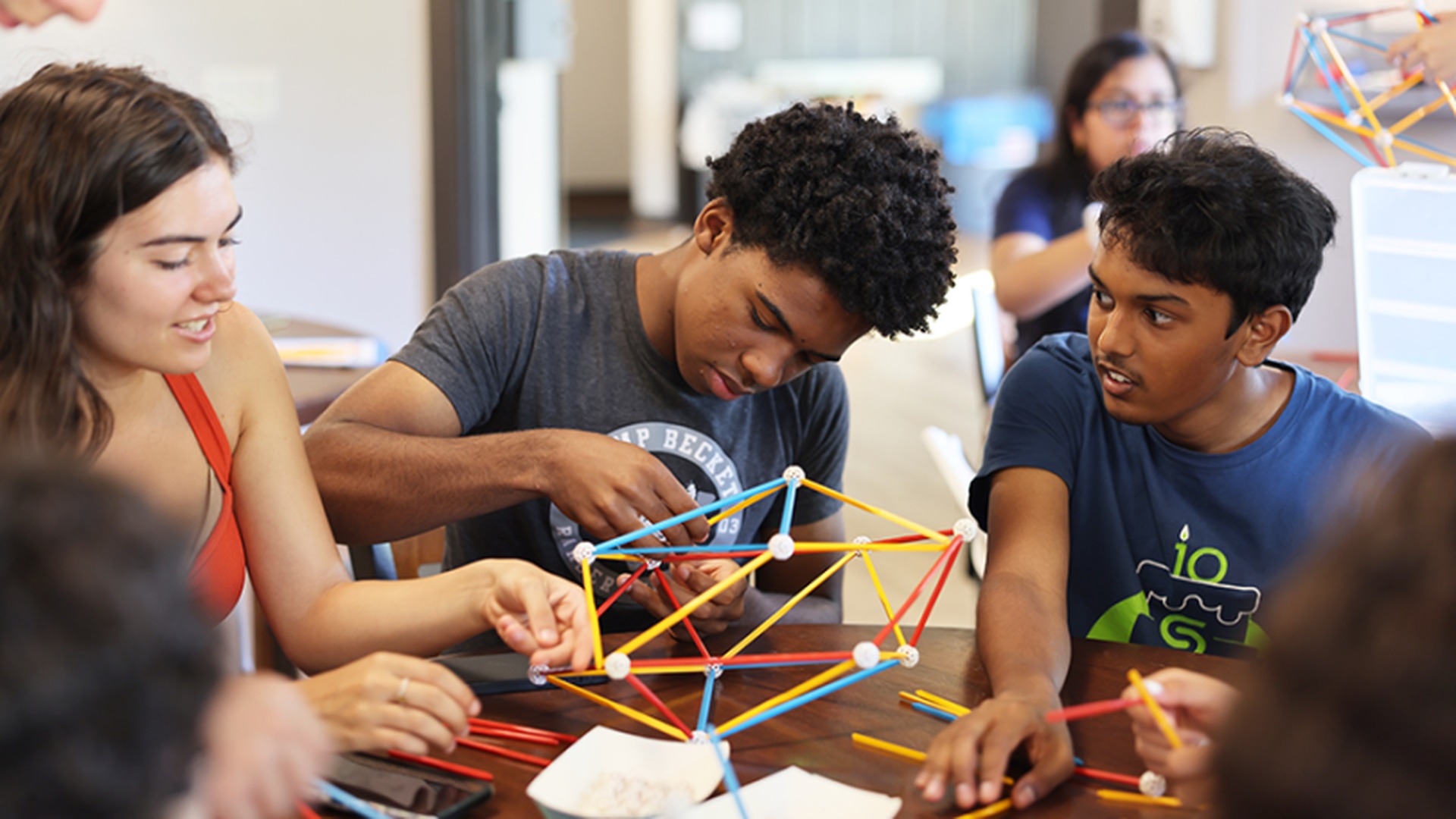
A group of students working together on a mathematical model
Location: Sandia National Laboratories sites, primarily Albuquerque, NM and Livermore, CA; year-round internships are for students attending local schools
Cost/Stipend: Paid; high school interns typically receive a consistent hourly rate set by Sandia’s intern pay structure
Acceptance rate/cohort size: Selective; varies by individual job posting
Dates: Year-round; high school interns may work up to 25 hours per week during the academic term and up to 40 hours during school breaks
Application Deadline: Varies by individual internship posting
Eligibility: Students must be at least 16, enrolled full-time at an accredited high school, and hold a minimum 3.0 GPA for R&D, technical, or business roles (2.5 for clerical or laborer roles). U.S. citizenship is required for positions needing a security clearance or as stated in the job posting.
Sandia’s year-round internship programme allows eligible high school students to work on projects connected to a U.S. national laboratory while continuing their studies. Your responsibilities depend on the individual position and may involve engineering, computing, laboratory work, technical support, data analysis, or other mission-related activities. Many internships run through Sandia’s Intern Institute Program, where a dedicated team guides and mentors you on projects aligned with your interests.
High school interns may work part-time during the academic year and increase their hours during official school breaks. Positions are actual paid jobs rather than a standardised class, so each posting has its own technical skills, citizenship requirements, and work location. The experience is best suited to you if you are ready for sustained workplace responsibilities alongside your regular school commitments.
Why it stands out: You can gain paid, year-round experience on real technical projects at a U.S. national laboratory while still enrolled in high school.
Frequently asked questions: Winter School for High School Students
What is a winter school for high school students?
A winter school is a short academic program you can join during your winter break or the months around it. Some, like UMBC’s Winter Session and Cornell’s online Winter Session, let you take real university courses for credit in about three weeks. Others focus on research training, such as Fox Chase’s Immersion Science Program, or on career exploration, like Discover Architecture’s three-day externship at a New York firm. Each option gives you a taste of university-level work without a full semester commitment.
Are winter programs worth it for high school students?
They can be, especially if you want to test a subject before choosing a major. A winter program lets you use your break to pursue an interest, and many give you something concrete to point to, like a research proposal, a transcript, or a final presentation. PSI students, for instance, finish the course with a journal club presentation and a written research proposal. The value depends on fit, so pick a program that matches your goals rather than the most famous name.
Can you earn college credit over winter break in high school?
Yes, several university programs let you earn credit during winter. Cornell’s online Winter Session runs January 4-22, 2027, and gives you credits on an official Cornell transcript. UMBC’s Winter Session runs on the same dates for academically strong rising juniors and seniors, and SCAD’s joint enrollment awards five credit hours for each completed course. If credit is your main goal, you can browse more winter college programs for high school students.
Are there free winter programs for high school students?
Yes, though most free options are tied to where you live or go to school. LAUSD Winter Academy is free for Los Angeles Unified students, and Fox Chase’s Immersion Science Program offers nearly all of its programming at no cost to students in the Philadelphia area. MITES Semester covers all program costs for U.S. juniors, and Careers in Science pays its San Francisco interns above minimum wage. Check eligibility early, since local residency rules often decide whether you can apply.
When should you apply for winter programs?
Start looking in early fall, since many winter deadlines fall between October and December. PSI’s application closes on November 23rd, 2026, Discover Architecture’s deadline is December 15th, 2026, and UMBC’s winter visiting-student deadline is December 16th, 2026. Fox Chase’s Immersion Science Program usually keeps its application open for only about three and a half weeks from mid-October. Some programs, like Careers in Science, open their next cycle in February, so check each page for current dates.
How are winter programs different from summer programs?
Winter programs are usually shorter or spread across weekends, so you can fit them around school, while summer programs give you more time to focus on one subject. Fox Chase’s program, for example, meets on 11 Saturdays, and UMBC’s session lasts three weeks. Summer is often when you can study in person for a longer stretch. Immerse Education’s Academic Insights pathway, for instance, offers two weeks of seminars averaging 7 participants per class in cities such as Oxford and Cambridge.
Find the winter school that fits your goals
Winter break is short, but the right program can turn a few quiet weeks into real progress toward the subject you hope to study.
Choosing a winter school for high school students starts with your goal, whether that’s earning college credit, trying research, or exploring a possible career.
From there, compare costs, eligibility rules, and deadlines carefully, because several programs only accept local students and many applications close before December ends.
If you want more advice on choosing courses and building a strong academic profile, explore our University Preparation blogs and plan your next move.






Unlock Inspiring Opportunities with the Immerse Education Newsletter
Join our newsletter to stay ahead with exclusive updates, exciting programme highlights, and expert insights from the world of immersive education.
Learn how Immerse can transform your life
An in-depth overview of our university and career preparation programmes
Get a glimpse into the life of an Immerse participant
Find the right programme for you with sample timetables, location showcases, and more