15 Computer Camps for High School Students

TL;DR
You’ll find 15 computer camps here, from free one-week programs at Argonne National Laboratory and UT Austin to multi-week courses at Penn, MIT, and Harvard. The biggest difference is access, since free camps like CS4CS and Academy for All limit applicants by location, while NYU’s CE4G costs $4,620 in 2026 and welcomes international students. Most camps suit students in 9th to 12th grade, and several, including Kode With Klossy and Coding for Science, welcome complete beginners. Immerse Education’s Academic Insights pathway in Computer Science and Artificial Intelligence runs for two weeks in Cambridge, Oxford, and other cities for students aged 13 to 18.
If you like writing code, building apps, or figuring out how AI works, computer camps for high school students let you test that interest well beyond a school computer lab. Instead of following along with tutorials, you build working projects, from internet-connected devices to machine learning models and cybersecurity challenges. A camp can also help you decide which coding language to learn first and which corner of computer science suits you best.
Computer camps come in several formats, from free one-week workshops at national laboratories to seven-week college courses for credit. Depending on the camp, you might program an Arduino light show at UT Austin, compete in Capture The Flag challenges at NYU, or build a weather station at the University of Illinois.
What are computer camps for high school students?
Computer camps for high school students are summer programs, often run by universities and national laboratories, where you learn to code and build projects in fields like AI, cybersecurity, and electronics. Most last between five days and seven weeks, and many end with a team project or presentation you can talk about in college applications.
Programs vary more than their names suggest. Some, like Argonne’s Coding for Science Camp, are built for complete beginners, while Harvard’s Secondary School Program offers college courses for credit. Before you apply, check where you need to live, whether housing is included, and how much coding experience the course expects. Costs range from free camps at Argonne, NYU, and UT Austin to Penn’s ESAP, which charged $9,250 in 2026.
To help you compare your options, we’ve put together a list of 15 computer camps for high school students!
15 Computer Camps for High School Students
1. Computer Engineering for Good (CE4G)
Location: NYU Tandon School of Engineering, Brooklyn, NY
Cost: $4,620 (2026), including tuition, materials, events, and fees | Optional housing ($981) and meal plan for students aged 15+
Acceptance rate/cohort size: Not specified
Dates: 2026 sessions ran June 15th - July 2nd and July 6-24 (2027 dates not yet posted)
Application Deadline: April 17th, 2026 (Session 1) | May 1st, 2026 (Session 2), reviewed on a rolling basis; applications typically open in January
Eligibility: Students in grades 9-12, with a preference for completion of Precalculus or Algebra 2 | Open to international students who need a student visa
During CE4G, you learn how computer and electrical engineering can address challenges in sustainability and public health. You analyze problems using developing-world technologies, then use your engineering skills to build a solution designed to last.
You’ll work with embedded systems and build internet-connected devices using platforms such as Arduino and Raspberry Pi. Professor Matthew Campisi of NYU Tandon’s Electrical and Computer Engineering department designed the program, drawing on his undergraduate course in embedded systems and his work on low-cost medical devices.
Why it stands out: You combine coding, embedded systems, and engineering to build technology aimed at social and public health challenges.
2. Immerse Education's Computer Science Summer School

Location: Cambridge and Oxford
Cost: Varies; summer school scholarship available through our bursary programme
Acceptance rate/cohort size: Selective; an average of 7 participants per class
Application Deadline: Multiple cohorts with rolling admissions
Program Dates: 2 weeks during the summer
Eligibility: Students worldwide aged 13-18 currently enrolled in middle or high school; open to international students
Immerse Education's Academic Insights pathway in Computer Science places you in an academically structured environment where you study foundational and advanced computing concepts with expert tutors from leading universities. You cover important topics like algorithms, data structures, programming languages, and software engineering principles, as well as applications like machine learning and artificial intelligence.
Small classes let you get personalized feedback and talk to tutors and classmates from all over the world on a regular basis. When you go to a place like Cambridge or Oxford in person, you also get to experience campus life and structured activities that are similar to how you would study at a university. By completing this summer school, you gain clearer insight into how computer science is studied at the tertiary level and develop technical skills that support future academic and career decisions in computing fields. You can find more details about the application here.
Why it stands out: You'll be taught by top faculty, work on an independent project, and live on campus, giving you a complete experience of future university life.
3. Veritas AI
Location: Virtual
Cost: Varies depending on program type. Full financial aid available.
Program dates: Multiple 12-15-week cohorts throughout the year, including spring, summer, fall, and winter.
Application deadline: Rolling. Spring (January), Summer (May), Fall (September), and Winter (November). You can apply to the program here.
Eligibility: High school students. AI Fellowship applicants should either have completed the AI Scholars program or exhibit experience with AI concepts or Python.
Veritas AI, founded and run by Harvard graduate students, offers programs for high school students who are passionate about artificial intelligence. Students who are looking to get started with AI, ML, and data science would benefit from the AI Scholars program. Through this 10-session boot camp, students are introduced to the fundamentals of AI & data science and get a chance to work on real-world projects.
Another option for more advanced students is the AI Fellowship with Publication & Showcase. Through this program, students get a chance to work 1:1 with mentors from top universities on a unique, individual project. A bonus of this program is that students have access to the in-house publication team to help them secure publications in high school research journals. You can also check out some examples of past projects here and read about a student’s experience in the program here.
Why it stands out: You get 1-1 mentorship with a Ph.D. mentor and produce an independent research project by the end.
4. AI Scholars (Carnegie Mellon University)
Location: Carnegie Mellon University, Pittsburgh, PA
Cost/Stipend: Fully funded, covering tuition, housing, meal plans, and select field trips; limited travel assistance available
Program Dates: June 26th to July 24th, 2027 (four-week residential)
Deadline: February 1st, 2027; decisions released April 1st, 2027
Eligibility: Students in 11th grade at the time of application who will be at least 16 by the program start, with documented financial need | US citizens and permanent residents only
AI Scholars is a fully funded, merit-based program for rising seniors that introduces foundational computing and AI concepts through a core curriculum taught by CMU faculty. A virtual Python course before arrival means you don’t need any prior coding experience to apply. You also get an in-depth introduction to research projects led by CMU faculty and graduate students.
Group projects let you apply what you learn, and field trips take you to leading tech companies. You present your project at a final symposium and leave with a college application essay workshopped by your instructor and peers.
Why it stands out: All costs are covered, so you get a month of college-level AI study at Carnegie Mellon at no cost.
5. Coding for Science Camp
Location: Argonne National Laboratory, Lemont, IL
Cost: Free
Cohort size: 30 students
Dates: Five consecutive days during the summer
Application Deadline: Mid-April, with decisions in early May; the 2026 application has closed
Eligibility: Rising high school sophomores or juniors who are new to coding | You must provide your own transportation | International eligibility not specified
At Argonne’s Coding for Science Camp, you learn Python while discovering how computing helps solve problems in science. The workshop is designed for students who are new to coding, so you don’t need any programming experience to apply.
Through group activities, you build problem-solving and teamwork skills and explore the career paths that coding can open up. You’ll also meet Argonne staff working at the forefront of high-performance computing and visualization.
Why it stands out: You learn to code from scratch at a national laboratory while seeing how programming drives scientific research.


6. CS4CS (Cyber Security for Computer Science)
Location: NYU Tandon School of Engineering, Brooklyn, NY
Cost: Free (full scholarship supported by DTCC)
Acceptance rate/cohort size: Not specified
Dates: July 13th - August 7th, 2026, Monday to Friday, 10 a.m. - 4 p.m. (2027 dates not yet posted)
Application Deadline: May 15th, 2026; applications typically open in January
Eligibility: Current 10th and 11th graders living in eligible areas of New York City, Long Island, New Jersey, Rockland, and Westchester | Not open to international students
CS4CS gives you an introduction to cybersecurity through a mix of practical challenges and academic learning. You’ll take part in Capture The Flag competitions, work through security challenges, and explore security-focused scripting, cryptography, and digital forensics.
The program also includes research projects, and you can present your findings at conferences. You’ll learn from industry professionals while building a portfolio of cybersecurity work. Theater-based communication workshops and case-driven security learning round out the experience.
Why it stands out: You combine cybersecurity challenges with research and mentorship on a full scholarship at NYU Tandon.
7. Engineering Summer Academy at Penn (ESAP)
Location: University of Pennsylvania, Philadelphia, PA
Cost: $9,250 (2026) | $90 non-refundable application fee | Financial aid offered only to U.S. applicants
Acceptance rate/cohort size: Not specified
Dates: July 12-31, 2026 (2027 dates not yet posted)
Application Deadline: January 31st, 2026 (priority and international) | February 28th, 2026 (final)
Eligibility: Rising sophomores to rising seniors aged 15+ with a minimum 3.0 GPA | Open to international students
The Engineering Summer Academy at Penn is a rigorous three-week program in which you explore engineering at the college level. If you choose the Computer Science course, you’ll learn how to turn complex problems into computing solutions by creating data models and thinking algorithmically.
You’ll also get an introduction to practical programming alongside the foundations of computer science. Across ESAP, courses combine theory with experience in current technologies and let you work with Penn faculty.
Why it stands out: You study college-level computer science with Penn faculty while living on an Ivy League campus for three weeks.
8. Kode With Klossy Summer Camps
Location: Chicago, Dallas, New York, Oakland, San Francisco, Seattle, St. Louis, Washington DC, and London, plus virtual options
Cost: Free
Acceptance rate/cohort size: Not specified
Dates: Two-week camps in June, July, and August 2027
Application Deadline: Applications for summer 2027 open in February 2027
Eligibility: Young women and gender-expansive students aged 13-18 | No prior coding experience required | International eligibility not specified
Kode With Klossy’s camp is a two-week intensive where you focus on one of three curricula: web development, AI and machine learning, or data science. Over 10 business days, you master the fundamentals of your chosen technology and build a passion project.
New scholars learn alongside returning community members, and no prior coding experience is required. Once you finish, you join the KWK community, which offers ongoing coaching, peer learning, and connections to partner companies.
Why it stands out: You can learn to code for free in nine cities or online, then stay connected through KWK’s community after camp ends.
9. Grainger Engineering Summer Camps: Learning Electronics, AI, and Programming (LEAP) Camp
Location: University of Illinois Urbana-Champaign, Urbana, IL
Cost: Residential: $1,500 | Commuter: $750 | Scholarships available
Acceptance rate/cohort size: Not specified
Dates: July 19-25, 2026 (2027 dates not yet posted)
Application Deadline: The 2026 camp is full; 2027 registration not yet posted
Eligibility: Students in grades 10-12 | International eligibility not specified
During the LEAP camp, you explore electrical engineering and computer science by building your own portable weather station. You’ll learn introductory programming concepts, such as loops, conditionals, and variables, while working with sensors and simple circuits.
The experience also introduces you to soldering, printed circuit boards, and hardware assembly as you put the system together. You’ll then learn how embedded systems communicate with cloud computers and use artificial intelligence algorithms to analyze the data you collect.
Why it stands out: You bring programming, electronics, cloud computing, and AI together in one project that produces a working personal weather station.
10. Academy for All
Location: UT Austin, Austin, TX
Cost: Free, including housing and meals | Travel scholarships of up to $500 available
Cohort size: 10:1 student-to-mentor ratio
Dates: One-week residential session in summer 2026 (2027 dates not yet posted)
Application Deadline: December 22nd, 2025 for the 2026 cycle
Eligibility: Students entering 10th - 12th grade | All skill levels welcome | Open only to U.S.-based students, so not open to international students
During Academy for All, you spend a week on the UT Austin campus building programming and teamwork skills through group projects. In the Standard Edition, you’ll code an Arduino microcontroller in C++ to put on an LED light show. The Machine Learning Edition instead teaches Python, and you write code to train your own machine learning model while exploring its social impacts.
You’ll also hear from professors and industry representatives, explore career possibilities, and get advice on a standout UT application from UT admissions. Outside the lab, you stay in a residence hall, meet current UT students, and may visit a local tech company.
Why it stands out: You get a free week of residential college life with coding projects, admissions advice, and exposure to tech careers.
11. Beaver Works Summer Institute (BWSI)
Location: Massachusetts Institute of Technology, Cambridge, MA, or virtual, depending on your course
Cost: Free for families with income and assets below $200,000 | $3,000 for families above that threshold
Acceptance rate/cohort size: Not specified
Dates: July 5th - August 1st, 2027
Application Deadline: Listed on the BWSI summer program application page
Eligibility: High school students living in the U.S. | Not open to international students
The Beaver Works Summer Institute gives you an intensive introduction to advanced STEM through project-based courses. You can choose from 14 summer courses covering areas such as machine learning, cyber operations, autonomous vehicles, quantum software, microelectronics, and game development with AI.
Depending on your course, you’ll either work virtually through Zoom or join an in-person program at MIT, where housing isn’t provided. The program is team-based, with lectures and labs built into the schedule. You’ll finish by applying what you’ve learned to a substantial project or challenge with your team.
Why it stands out: You can choose from a broad range of advanced computing courses while learning through MIT-affiliated, project-based instruction.
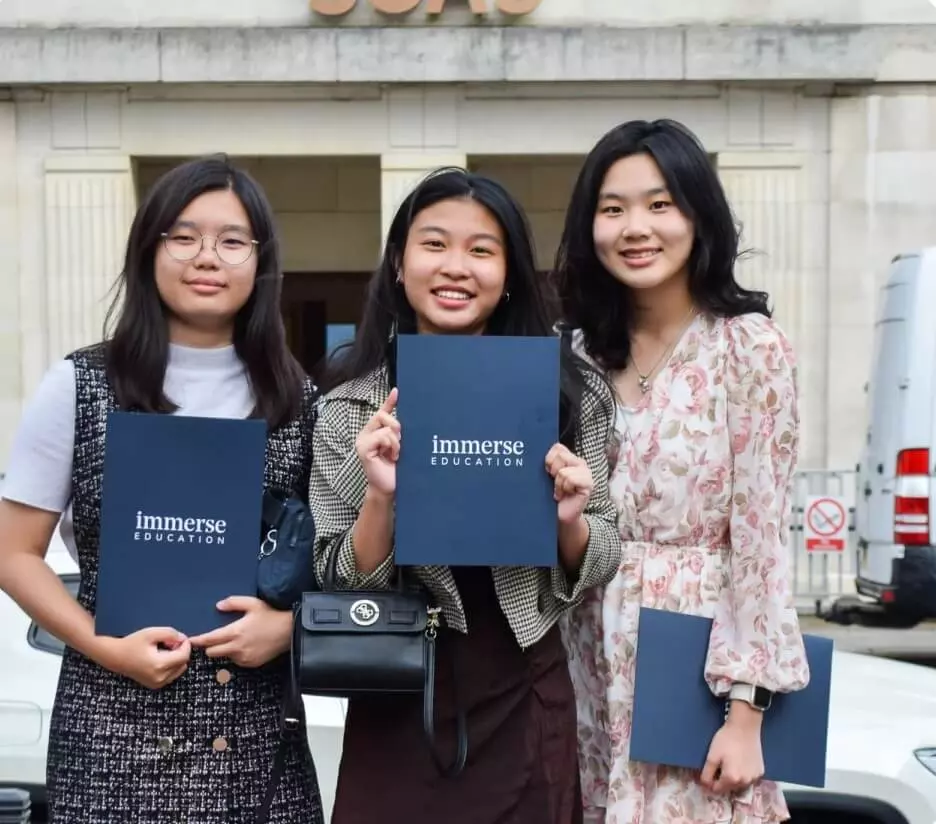
Join the Immerse Education 2027 Essay Competition
Follow the instructions to write and submit your best essay for a chance to be awarded a 100% scholarship.
12. Digital Scholars Program
Location: Discovery Partners Institute, Chicago, IL
Cost: Free
Cohort size: Not specified
Dates: Six weeks during the summer, daily from 9 a.m. to 1 p.m.
Application Deadline: Apply online, then schedule an interview; 2027 deadline not yet posted
Eligibility: Rising 11th and 12th graders, plus incoming first-year college students at City Colleges of Chicago and Illinois institutions | International eligibility not specified
In the Digital Scholars Program, you spend six weeks building computing skills through one of five courses. You’ll choose from data science, electrical and computer engineering, computer science and coding, iOS app design, or programming in Swift.
Depending on your track, you’ll work with data sets, circuits, Java or Kotlin, or Swift and Xcode, and iOS students can showcase their apps at the Apple Store on Michigan Avenue. The program also brings you into conversations with Chicago tech entrepreneurs, technologists, business strategists, and civic leaders through daily talks. Weekly workshops cover topics such as artificial intelligence, entrepreneurship, and data science.
Why it stands out: You can choose from five computing tracks while gaining direct exposure to Chicago’s technology community and building college and career skills.
13. Harvard Secondary School Program: Computer Science and Engineering

Location: Harvard University, Cambridge, MA, or online
Cost: Varies by program length and format | $75 nonrefundable application fee | Need-based financial aid for U.S. citizens, permanent residents, and DACA recipients
Acceptance rate/cohort size: Not specified
Dates: 4-week and 7-week sessions in summer 2027
Application Deadline: January 13th, 2027 (early, opens December 1st, 2026) | February 10th, 2027 (regular and international) | March 31st, 2027 (late)
Eligibility: Students graduating high school in 2027, 2028, or 2029 who are at least 16 by June 13th, 2027, and won’t turn 19 before July 31st, 2027 | Open to international students, with English proficiency scores for non-native speakers
Harvard’s Computer Science and Engineering pathway lets you build your own summer schedule around college-level computing courses. You can choose from courses such as Introduction to Computer Science with Python, Intensive Introduction to Computer Science, Introduction to Artificial Intelligence with Python, and Data Structures.
In the seven-week program, you can take two courses and earn college credit while studying on campus, commuting, or learning online. Four-credit courses meet two days a week and eight-credit courses meet five days a week, with three hours of class on each class day.
Why it stands out: You can earn Harvard Summer School credit while shaping a computer science-focused summer around your own interests.
14. Tufts Engineering and Computer Science Summer Programs
Location: Tufts University, Medford/Somerville, MA
Cost: Varies by program
Acceptance rate/cohort size: Not specified
Dates: Two- to three-week intensives; summer 2027 dates coming soon
Application Deadline: Summer 2027 applications open December 14th, 2026
Eligibility: High school students, with requirements varying by program | Open to international students
Tufts offers several summer intensives where you can explore computer science and engineering through design and building. In the Engineering with Artificial Intelligence intensive, you investigate AI alongside motivated high schoolers from around the world. You’ll have access to Tufts faculty and mentors, as well as the School of Engineering’s labs and fabrication spaces.
Every option ends with a project, such as a coded game or a prototype device, that you can add to your portfolio. Other intensives include Engineering Design Lab, Engineering Investigations, and Engineering of Music, and you can live on campus or commute.
Why it stands out: You can choose among several engineering and computer science intensives and leave with a finished project for your portfolio.
15. GenCyber Camps
Location: Host universities and academic institutions across the U.S.
Cost: Free (funded by the NSA and the National Science Foundation)
Acceptance rate/cohort size: Not specified
Dates: Summer 2027, with dates set by each host institution
Application Deadline: Set by each host institution
Eligibility: Middle and high school students, with requirements set by each host program | International eligibility not specified
GenCyber is a national cybersecurity education program that funds free summer camps hosted by academic institutions across the United States. You can find camps that introduce you to cybersecurity concepts and careers, with each host setting its own curriculum and participant requirements.
Several hosts didn’t run camps in 2026, but the program awarded new grants for summer 2027 student camps. Check your nearest host’s page for dates and eligibility, since your experience can vary considerably from one camp to another.
Why it stands out: You can choose from a nationwide network of free, university-hosted cybersecurity camps rather than one fixed curriculum or location.
Frequently asked questions: Computer Camps for High School Students
What do you learn at a computer camp?
At most computer camps, you learn to code in languages like Python, C++, or Java, then apply those skills to a project. UT Austin’s Academy for All has you program an Arduino LED light show, and Illinois’s LEAP camp builds a weather station that sends data to the cloud. Other camps specialize, as CS4CS covers cryptography and digital forensics and MIT’s BWSI offers courses in quantum software and autonomous vehicles. If security interests you most, explore these cybersecurity camps for high school students.
Can a high schooler learn coding with no experience?
Yes, you can learn to code in high school with no prior experience, and many camps are built for beginners. Argonne’s Coding for Science Camp is designed for students new to coding, and Kode With Klossy requires no prior experience for its free two-week camps. UT Austin’s Academy for All welcomes all skill levels, and Tufts offers beginner-friendly courses alongside more advanced options. Programs like Penn’s ESAP or Harvard’s Data Structures course suit you better once you have the basics.
How do high school students learn to code outside school?
You can learn to code outside school through summer camps, online courses, and independent projects. Free options include Kode With Klossy’s virtual camps and BWSI’s online courses on Zoom, while Harvard’s Secondary School Program offers college-credit computer science courses online. Building a small app or game on your own also helps the concepts stick. For flexible options you can fit around school, compare these online coding programs for high school students.
Should you take coding in high school?
Yes, taking coding in high school is worth it if you’re considering computer science, engineering, or data science in college. Early classes show you whether you enjoy problem-solving with code before you commit to a major. If your school offers few options, a summer camp can fill the gap, and Harvard’s program even lets you earn college credit. It also helps to research universities for computer science across five regions so you know what top programs expect.
Can international students attend computer camps in the US?
Yes, several US computer camps accept international students, though you’ll usually need a visa. NYU’s CE4G asks visa applicants to apply at least eight weeks before their session, and Harvard sets a February 10th, 2027 deadline for international students in its Secondary School Program. Free camps such as CS4CS, Academy for All, and BWSI are limited to US residents. If you’d rather study outside the US, Immerse Education’s Academic Insights pathway in Computer Science welcomes students aged 13 to 18 in Cambridge and Oxford.
Do computer camps help with college applications?
Yes, computer camps can strengthen your college applications by showing sustained interest and giving you projects to discuss. CS4CS helps you build a portfolio of cybersecurity work, and Harvard’s courses appear on a transcript with college credits. A research project shows even more initiative, so browse these research project ideas in computer science for inspiration. Immerse Education’s Academic Insights courses in Computer Science and AI end with a personal project, and from age 14 you can opt into an accredited route worth 8 UCAS points.
Make your coding summer count for college
A summer spent coding at a national lab, university campus, or virtual classroom can show you whether computer science belongs in your plans for college.
When you compare computer camps for high school students, weigh cost, residency rules, and course length alongside the languages and tools each one teaches.
Many deadlines fall between December and March, so start shortlisting programs early this fall and gather transcripts, essays, and recommendations before winter break arrives.
To plan the steps between summer coding and a computer science degree, explore our University Preparation blogs for detailed guides on applications, majors, and admissions.







Unlock Inspiring Opportunities with the Immerse Education Newsletter
Join our newsletter to stay ahead with exclusive updates, exciting programme highlights, and expert insights from the world of immersive education.
Learn how Immerse can transform your life
An in-depth overview of our university and career preparation programmes
Get a glimpse into the life of an Immerse participant
Find the right programme for you with sample timetables, location showcases, and more