

 Русский (RU)
 Українська (UK)
 Türkçe (TR)
 Italiano (IT)
 Français (FR)
 Português (PT)
 中文 (中国) (ZH)
 Español (ES)
 日本語 (JA)
 ไทย (TH)
 Deutsch (DE)
 Ελληνικά (EL)
 Polski (PL)
 Bahasa Indonesia (ID)
 Nederlands (NL)
 العربية (AR)
 한국어 (KO)
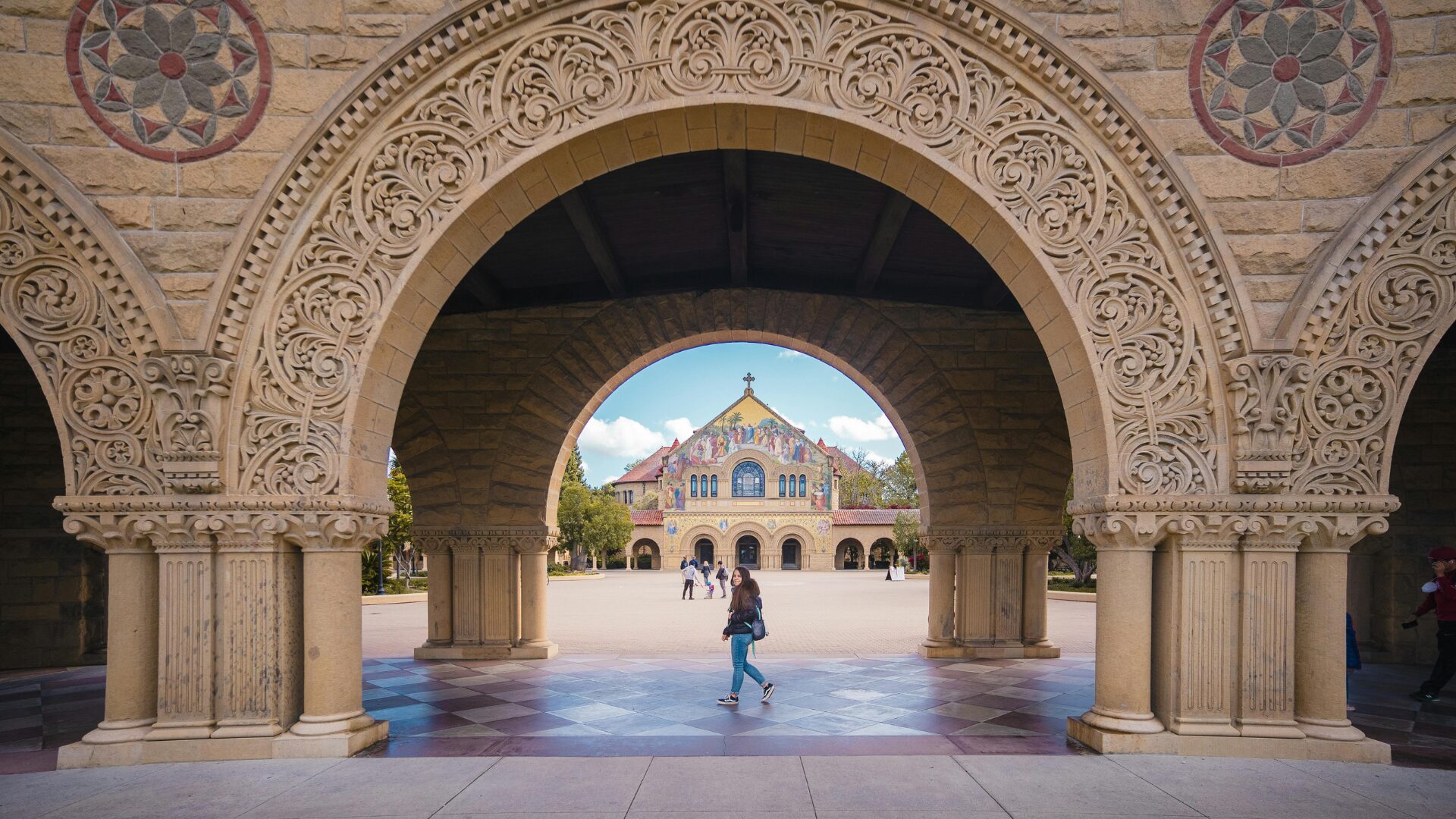
Stanford Summer Session gives ambitious high-school students the opportunity to earn official Stanford credit while experiencing life at one of the world’s leading universities.
For eight weeks, participants join Stanford undergraduates, graduates, and visiting students in California’s Bay Area.
They enrol in real university courses, live in undergraduate residences or commute from home, and gain access to academic, social, and cultural resources across the campus.
Here’s a comprehensive guide to the Stanford Summer Session (High School).
Course Breakdown
| Programme Option | Who’s it for? | Duration | Subjects Covered | Outcomes | Cost (2026) |
| Residential (16–19) | High-school students ready to live on campus and handle university independence | 8 weeks (20 June – 16 August 2026) | Wide catalogue of undergraduate courses (STEM, humanities, social sciences, arts) | Earn official Stanford transcript credit; live in halls; access to advising and tutoring; structured residential support | From $18,771 |
| Commuter (16–19) | Students based near Stanford or able to arrange local housing | 8 weeks (20 June – 16 August 2026) | Same catalogue of undergraduate courses | Earn credit; access academic resources and student events without on-campus housing | From $8,226 |
Note: Check their official website for their current pricing.
Why Choose Stanford Summer Session?
Stanford Summer Session gives high-school students an authentic taste of university life in the United States.
Participants enrol in real Stanford undergraduate courses, studying alongside university students, completing the same assignments, and earning official credit on a Stanford transcript. This makes the programme more rigorous than most pre-university options and a strong addition to future applications.
Residential participants must take at least eight units, while commuters need five. The academic load mirrors true university study, requiring independence and strong time management.
Beyond classes, students access Stanford’s libraries, labs, and athletic centres, as well as academic support through advising and tutoring. Residential halls are supervised by trained Summer Resident Assistants, and both residential and commuter participants enjoy community events, speaker series, and social activities.
Stanford’s distinction lies in its credit-bearing, eight-week structure. By contrast, Immerse Education offers a more flexible and affordable alternative that still matches the value placed on academic excellence.
Our two-week programmes allow students to experience world-leading universities without the intensity of a full quarter. With smaller tutorial groups, Oxbridge-style teaching, and personalised mentorship, participants receive close academic guidance and feedback that supports their growth.
We also provide flexible online pathways, making it possible to join from anywhere, and welcome younger learners aged 13–18 who are eager to begin their academic journey early.
Key Features of Stanford Summer Session
Stanford Summer Session runs as a full eight-week quarter, mirroring the intensity and independence of university study.
High-school participants enrol in genuine Stanford undergraduate courses across subjects such as computer science, engineering, humanities, social sciences, and the arts.
Teaching formats include lectures, seminars, labs, and project work, and students complete the same assignments and assessments as undergraduates.
Every participant receives an official Stanford transcript, providing recognition that strengthens future university applications. Academic support is offered through the Summer Academic Resource Center, which provides advising, tutoring, and study skills workshops.
The programme welcomes both residential and commuter participants. Residential halls are supervised by trained Summer Resident Assistants, while commuters travel daily but share full access to academic, cultural, and social opportunities.
Beyond the classroom, students enjoy Welcome Weekend, speaker series, talent showcases, and access to Stanford’s libraries, athletic facilities, and wellness services, creating a rich and well-rounded summer experience.
Advantages
- Authentic university experience: Participants take real Stanford undergraduate courses alongside degree-seeking students, completing the same work and earning official transcripted credit.
- Prestigious institution: As one of the world’s top universities, Stanford provides unparalleled academic resources, facilities, and reputation.
- Comprehensive course catalogue: Students choose from hundreds of courses across disciplines, from engineering and AI to humanities and creative writing.
- Academic independence: The eight-week format develops time management and self-directed learning skills that prepare participants for university study.
- California setting: The campus in Palo Alto offers access to Silicon Valley, San Francisco, and a diverse cultural environment.
Disadvantages
- High cost: With residential fees starting at $18,771 and commuter options from $8,226, this is one of the most expensive pre-university programmes, and financial aid for high-school participants is very limited.
- Extended commitment: The eight-week quarter takes up most of the summer, leaving little time for other academic, work, or family opportunities.
- Academic intensity: Minimum unit loads and full undergraduate-level coursework demand strong preparation and resilience. Students who struggle may find limited flexibility within the compressed schedule.
- Age restrictions: Only students aged 16–19 are eligible, with no exceptions.
- Limited personalisation: Teaching mirrors the standard undergraduate experience, with less tailored guidance for high-school learners compared to smaller, pre-university-specific programmes.
Stanford Summer Session vs Immerse Education
Immerse Education offers three core pathways: Academic Insights, Career Insights, and the Online Research Programme (ORP), combining university-style learning, real-world experience, and one-to-one research mentorship across global locations.
| Feature | Stanford Summer Session | Immerse Education |
| Age Range & Audience | Ages 16–19; participants ready for university-level coursework and extended independent study. | Ages 13–18; pre-university participants seeking academic enrichment and preparation. |
| Admissions | Competitive application with transcripts and two short essays (plus English proficiency if required); holistic review. | Online application; places offered based on fit, curiosity, readiness, and B2+ English. |
| Teaching & Mentorship | Standard undergraduate teaching; advising and tutoring available but participants navigate independently. | Expert tutors from Oxford, Cambridge, and Ivy League; small tutorials with close mentorship. |
| Class Size | Regular undergraduate class sizes, varying by course. | Small tutorials (average of 7 participants). |
| Academic Depth | Full university courses with assessment; substantial reading and coursework expectations. | Intensive subject immersion beyond the school curriculum, with around 40 hours of learning across 2 weeks and tutorial-style teaching with assessed outputs. |
| Career Pathways & Outcomes | Transcripted university credit; independent exploration of subjects. | Academic enrichment plus potential letters of recommendation; Career Insights pathways with industry exposure. |
| Credit / Recognition | Official Stanford transcript with earned grades. | Certificate of Achievement with 8 UCAS points, 3 U.S. college credits for ORP, research outputs for applications, plus potential publications. |
| Deliverables | University-level assessments (essays, exams, projects) graded by course instructors. | Essays, presentations, or research projects with written evaluation. |
| Learning Environment | Residential or commuter on Stanford campus; eight-week commitment. | Residential in Cambridge, Oxford, London, Boston, New York, San Francisco, Toronto, Singapore, Sydney, and Tokyo, plus Online Research option; two-week or flexible formats. |
| Cultural & Industry Exposure | Access to Bay Area; speaker series; participant-led exploration. | Structured excursions, socials, guest speakers; dedicated industry visits in Career Insights. |
| Online Options | None; all courses delivered in person. | Dedicated Online Research Programme with 1:1 PhD mentorship and group research programmes. |
| Best For | Participants ready for genuine university coursework who want official credit and can commit eight weeks. | Participants seeking subject depth with personalised mentorship and flexible pathways (residential or online). |
Is Stanford Summer Session Worth It?
For advanced students ready for university-level study, Stanford Summer Session offers an experience few programmes can match.
Participants take genuine undergraduate courses, complete the same assessments as degree-seeking students, and earn credit on an official Stanford transcript. The eight-week immersion provides a powerful introduction to American university life, fostering independence and resilience.
The opportunity, however, comes with challenges. Costs start at over $18,771 for residential participants and $8,226 for commuters, making it one of the most expensive pre-university options.
Financial assistance is limited, and families must also budget for travel, insurance, and other expenses. The long duration can be demanding, taking up most of the summer and leaving less time for other activities.
Stanford Summer Session is best suited to students who thrive with substantial autonomy and are motivated to prove their readiness for university study. By contrast, Immerse Education provides a more structured and affordable alternative.
With smaller tutorial groups, Oxbridge-style teaching, and personalised mentorship, participants benefit from focused guidance, shorter two-week residential options, and flexible online pathways.
Immerse also caters to younger learners, ensuring academic depth and enrichment are accessible earlier.
Alternatives to Stanford Summer Session
- Immerse Education – Academic Summer School: Small-group tutorials in Oxford, Cambridge, and Sydney, taught by top university tutors.
- Immerse Education – Career Insights: Hands-on, project-based programmes in London, Singapore, and Boston with industry exposure.
- Immerse Education – Online Research Programme: One-to-one research projects with PhD supervisors, producing original academic work.
- Harvard Secondary School Program (ages 15–18): Similar university credit model over seven weeks in Cambridge, Massachusetts, with Harvard undergraduate courses.
- UC Berkeley Pre-College Scholars (ages 16–18): Six-week credit-bearing summer courses with commuter and residential options.
How to Apply for Stanford Summer Session
- Choose Format & Courses – Decide between residential (min. 8 units) or commuter (min. 5 units) and browse Stanford’s summer course catalogue.
- Start Your Application – Create an account in the Summer Session portal and fill in personal and eligibility details.
- Submit Documents – Provide transcripts and two short essays (plus English proficiency if required). International students may need English proficiency evidence.
- Receive Decision & Confirm – Stanford reviews applications holistically. If admitted, accept your offer, pay fees, and complete required forms.
- Prepare & Attend – Finalise course registration, arrange housing or commuting, complete medical forms, then join Welcome Weekend and begin your studies.
Final Thoughts
Stanford Summer Session offers ambitious students an authentic university experience with real undergraduate courses, official transcript credit, and eight weeks of intensive study at a world-leading institution.
It rewards maturity, independence, and resilience but comes with high costs, a long commitment, and limited support tailored to pre-university learners.
Immerse Education provides a strong alternative for UK families. With smaller tutorials, Oxbridge mentorship, and programmes designed for ages 13–18, it offers rigorous academic enrichment with personalised guidance.
Whether through two-week residential programmes in world-class cities or flexible online research mentorship, Immerse helps participants gain subject depth, confidence, and skills for future success.