


 Русский (RU)
 Українська (UK)
 Türkçe (TR)
 Italiano (IT)
 Français (FR)
 Português (PT)
 中文 (中国) (ZH)
 Español (ES)
 日本語 (JA)
 ไทย (TH)
 Deutsch (DE)
 Ελληνικά (EL)
 Polski (PL)
 Bahasa Indonesia (ID)
 Nederlands (NL)
 العربية (AR)
 한국어 (KO)

When you’re in high school, summer often feels like a break from classes, homework, and exams. But it can also be a valuable opportunity to step into the working world, learn new skills, and gain experiences that extend far beyond the classroom. Summer work programs for high school students offer a structured way to make the most of your time off while preparing for future academic and career goals.
Imagine spending your summer supporting a local business, working with a nonprofit, assisting in a research or office setting, or participating in a structured employment program designed specifically for students. These experiences help you understand what it means to be accountable, professional, and proactive.
Even if you’ve never had a formal job before, summer work programs provide guidance and mentorship to help you build confidence. You’ll learn how to manage schedules, collaborate with supervisors and peers, and navigate expectations in a professional environment.
What kinds of summer work programs for high school students are available?
We understand that some programs offer little structure or limited learning value, while others may feel like routine jobs without broader development. That’s why thoughtful research is important. The most impactful summer work programs balance real responsibilities with skill-building, mentorship, and reflection.
Across communities, organizations, and institutions, there are summer work programs that place students in roles related to business, healthcare, education, technology, public service, and more. Whether you’re exploring career interests or simply gaining your first work experience, these programs help you grow both personally and professionally.
You’ll be expected to show up, take initiative, and work hard once the programs start. But, to help you get started, we’ve come up with a list of 15 Summer Work Programs for High School Students. They’ve been picked for their structure, learning opportunities, and ability to make your summer both productive and rewarding.
15 Summer Work Programs for High School Students
1. Duke’s STAR Program
Location: Duke Clinical Research Institute, Durham, NC
Cost/Stipend: A stipend of $4,000 for high school students
Acceptance rate/cohort size: 20-30 students
Dates: June 22nd – July 24th
Application Deadline: November 17th – January 2nd
Eligibility: High school students, undergraduate students, and medical students who are US citizens or permanent residents
The Summer Training in Academic Research program allows high school students to gain experience in medical research. During the five weeks of your participation, you will join a team to conduct research based on a hypothesis and co-author an academic paper that reflects your team’s findings. In the process, you will learn different research methodologies and how to write a scientific paper.
Moreover, you will meet with medical writers from whom you will learn to write medical manuscripts and statisticians who will teach you to analyze data. You will also learn about topics like neonatology, antimicrobial therapy, and pharmacoepidemiology through lectures.
Why it stands out: It gives you exposure to clinical research projects, helping you understand how data, trials, and patient outcomes connect in medical science.
2. Immerse Education’s Career Insights Summer School

Location: Cambridge, London, New York, San Francisco, Singapore, Sydney, and Tokyo
Cost/Stipend: Varies; summer school scholarship available through their bursary programme
Acceptance rate/cohort size: An average of 7 participants per class
Dates: 2 weeks during the summer
Application Deadline: Multiple summer cohorts with rolling admissions
Eligibility: High school students worldwide aged 15-18
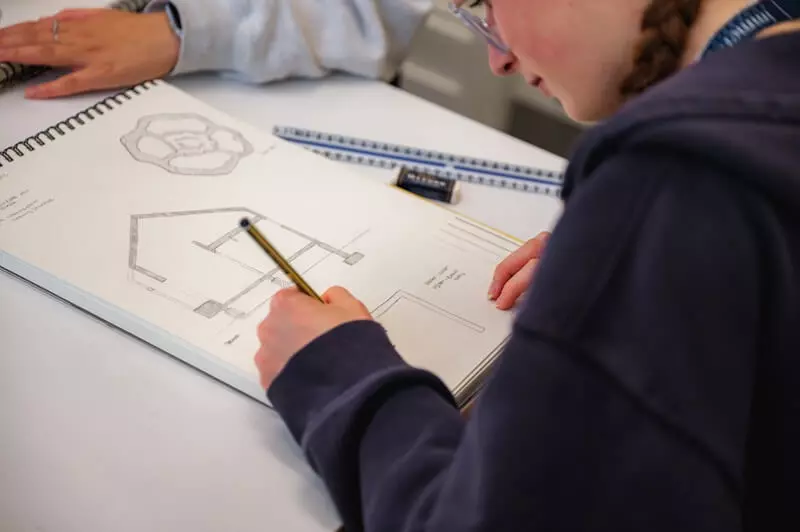
In the Career Insights Pathway, you will take part in projects and workshops that reflect the structure and expectations of real workplaces, making it one of the most immersive summer work programs for high school students. You can choose from more than ten subject areas, including architecture and design, film studies, law, media and journalism, allowing you to explore how different professional fields operate in practice.
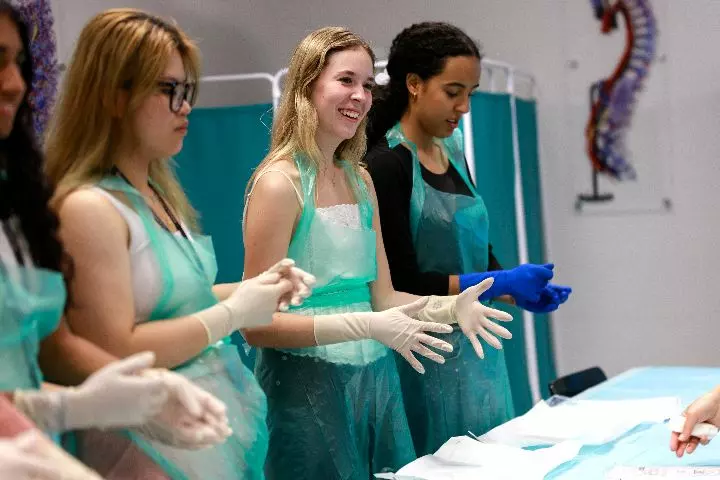
Depending on your choice, you will meet with industry experts who will train you and give you tips that will help you succeed in a career in the field. You will also participate in practical sessions, such as dissection in the medicine track, mock trials if you choose law, and more, which give you an insight into your chosen field. Another major aspect of the program is the one-on-one mentorship from a career coach who ensures your professional development.
Why it stands out: It lets you explore practical, real-world applications of academic subjects and career fields, helping you see how professional pathways operate beyond the classroom.
3. Memorial Sloan Kettering Cancer Center Summer Student Program
Location: Memorial Sloan Kettering Cancer Center, New York City, NY
Cost/Stipend: A stipend of $1,200
Acceptance rate/cohort size: 2% acceptance rate with only 20 interns selected from 1000+ applicants
Dates: June 29th – August 21st
Application Deadline: December 1st – February 6th
Eligibility: 11th graders who will be at least 14 years old by June, have the legal right to work in the US, have an average grade point of 3.5 in science subjects, and live in New York, New Jersey, or Connecticut within 25 miles of the Main Campus of Memorial Sloan Kettering Cancer Center on the Upper East Side in Manhattan
Aimed at high school students who plan to choose a biomedical profession, the Memorial Sloan Kettering Cancer Center offers two primary components in this program: research experience plus professional and personal development. You will intern at a biomedical or computational lab for eight weeks while being trained by a mentor who will equip you with some technical skills.
Your primary task at the lab will be to complete an independent project that aligns with the principal investigator’s overall research objectives. Apart from research, you will also participate in other events that prepare you for a career in translational medicine and research.
Why it stands out: It immerses you in cancer research under active faculty mentorship helping you gain lab skills rarely available to high schoolers.
4. SpHERES High School Research Program
Location: University of Illinois Urbana-Champaign, Champaign County, IL
Cost/Stipend: A stipend of $2,400
Acceptance rate/cohort size: Highly selective; only 30 lab spots are available in all the Young Scholars Summer STEMM Research Programs combined
Dates: June 20th – August 1st; orientation on June 17th and 18th
Application Deadline: Opens in February
Eligibility: Rising 10th – 12th graders from Illinois, Indiana, Kentucky, Michigan, Missouri, Iowa, and Wisconsin
SpHERES stands for Sparking High Schoolers’ Excitement for Research in Engineering & Science and is part of the Young Scholars Summer STEMM Research Programs. The program aims to help you understand the link between medicine, science, and engineering. As a participant, you will work alongside the university’s faculty on research projects that address different clinical topics.
You will also be offered the chance to learn about clinical skills, healthcare entrepreneurship, holistic, inclusive care, and more. Moreover, SpHERES also connects you with professors and medical students who will mentor you and offer their insights so you can succeed in medical school.
Why it stands out: It introduces you to lab research within a medical college, helping you build hands-on science skills and academic confidence.
5. Chicago EYES (Educators and Youth Enjoy Science)
Location: The University of Chicago Medicine Comprehensive Cancer Center, Chicago, IL
Cost/Stipend: Taxable stipend of $5,000 per year
Acceptance rate/cohort size: 24 student trainees (12 new and 12 returning)
Dates: June 15th – August 7th
Application Deadline: December 1st
Eligibility: 10th to 12th graders who will be at least 16 on the first day of the program; they should be residents of Cook, Lake, Will, or DuPage counties in Illinois or Lake County in Indiana.
Chicago EYES is another Illinois-based program that would be suitable for students who are interested in pursuing a career in biomedical sciences. In this program, selected students are required to participate for two consecutive summers. You will primarily conduct research on cancer by being placed in the university’s labs, where the team’s research focus is cancer.
The program gives you the opportunity to present your work at a symposium. In addition to working on research projects, Chicago EYES ensures that you gain in-depth knowledge of cancer topics through lectures. Additionally, the program hosts career development and skill-building workshops on weekends or after school via Zoom during the academic year.
Why it stands out: It focuses on experiential learning in medicine, helping you gain early insights into medical careers and patient interaction.
6. The Lawrence Hall of Science Teen Internship Program
Location: The Lawrence Hall of Science, Berkeley, CA
Cost/Stipend: A stipend of $3500 ($72 will be deducted for every day you miss)
Acceptance rate/cohort size: Not publicly available
Dates: June 1st – August 7th (workshops are conducted in May)
Application Deadline: December 17th – January 15th
Eligibility: Rising domestic 11th and 12th graders who can commit to the entire program, plus the workshop trainings in May and the summer trainings before the program
If you are a high school student whose favorite subject in school is science and sees yourself teaching it to others, this internship would be a nice match for you. Your responsibilities will be to assist the staff with their lesson plan and help them achieve the program’s ultimate goal of getting more children excited about studying science.
As a result, you will gain experience in different teaching methods and master some techniques to make your teaching sessions fun and engaging for your future students. You will also develop your skills in communication, leadership, and classroom management. You are required to participate in workshop training and summer placement workshops prior to the internship.
Why it stands out: It places you in science education outreach or research projects, helping you gain real museum-science and public engagement experience.
7. Samuels Family LA-HIP High School Internship Program
Location: The Saban Research Institute of Children’s Hospital Los Angeles, Los Angeles, CA
Cost/Stipend: Stipends provided
Acceptance rate/cohort size: Approximately 24 students
Dates: In-lab internships taking place June 16th – August 1st
Application Deadline: November 3rd – February 1st
Eligibility: 11th graders who attend a public high school in Los Angeles County and have the legal documentation to work in California
The Samuels Family LA-HIP programme is one of the more intensive summer work programs for high school students, combining a supervised biomedical research internship during the summer with structured college counselling throughout the academic year to support long-term career development. During your summer internship at the lab, you will mostly work on projects related to pediatric health and diseases.
Scientists from the Saban Research Institute of Children’s Hospital, Los Angeles, will guide you in completing your scientific experiments. In the process, you will also learn how to maintain lab notebooks, communicate with other scientists, and share your results during lab meetings.
Why it stands out: It offers hospital and research exposure, helping you see how pediatric care and clinical investigation work together.
8. High School Student Internship Program in Integrated Mathematical Oncology (HIP IMO)
Location: Moffitt Cancer Center at the University of South Florida, Tampa, FL
Cost/Stipend: A scholarship amount of $1,000
Acceptance rate/cohort size: Not publicly available
Dates: June 8th – July 31st
Application Deadline: February 1st
Eligibility: High school students who are 16 years or older and are enrolled in 11th grade or below; students with H4 visas do not qualify for the program
HIP IMO is an interdisciplinary internship that combines mathematical and oncology research. You will have professors and scientists from the Integrated Mathematical Oncology (IMO) Department to mentor you during the program.
They will not only prepare you for careers in interdisciplinary cancer research but also equip you with research skills that you can implement in any other scientific discipline. During the eight weeks, you will be involved in lab meetings and learn to maintain lab notes, write a scientific report based on your research, and more.
Why it stands out: It immerses you in cancer research and lab training, helping you build foundational biomedical techniques and professional insight.
9. Florida International University’s Summer Research Internship Program

Location: Florida International University, Miami, FL
Cost/Stipend: Merit-based scholarship is typically provided
Acceptance rate/cohort size: Highly selective
Dates: June 12th – August 7th
Application Deadline: Opens in Spring
Eligibility: Students from South Florida High Schools who are 16 years or older and have an unweighted GPA of 3.0
As a participant in this eight-week internship program, you will conduct research related to cardiovascular health. You are expected to contribute at least 15 hours of your time per week to the research work. The program recommends that you consult a faculty supervisor to help plan your schedule, ensuring you have enough time to participate in the program’s curriculum.
This will be held regularly on Mondays, Wednesdays, and Fridays and includes enriching activities like reading case studies, participating in journal clubs, and workshops. By the end of the program, you will become confident in forming your own experimental design and research methodologies.
Why it stands out: It gives you hands-on experience in faculty-led research, helping you explore scientific investigation before college.
10. Pediatrics Internship Program at Stanford (PIPS)
Location: Stanford University, Stanford, CA
Cost/Stipend: A stipend of $3,000 is provided for students who demonstrate financial need
Acceptance rate/cohort size: 35-40 students
Dates: June 8th – July 24th
Application Deadline: January 7th – February 23rd
Eligibility: Rising 11th and 12th-graders who live in the Bay Area
Stanford’s PIPS program introduces rising high school juniors and seniors to the science, medicine, and research fields. It is particularly targeted at students who do not have prior research experience. During the seven-week internship, you will join the university’s professors, students, and researchers to complete a research project with them.
You will simultaneously learn how scientific research is conducted. The program aims to get you excited about having a research career. It also prepares you for careers in medicine and the sciences, especially in maternal and child health, plus pediatrics.
Why it stands out: It lets you observe pediatric clinical work and research, helping you understand child health careers and scientific study.
11. Science and Health Education Partnership’s High School Intern Program
Location: University of California, San Francisco, San Francisco, CA
Cost/Stipend: A stipend of $4,500
Acceptance rate/cohort size: 25 interns
Dates: June 8th – July 31st
Application Deadline: January – February 8th
Eligibility: Rising 12th graders from an SFUSD high school or SF charter schools
This summer internship program at UCSF teaches high school students like you to conduct research in the field of biomedical sciences. When selected for this eight-week internship, the university will pair you with a scientist mentor who will teach you different science concepts and skills that will come in handy while working on your research projects.
Your mentor will also guide you in completing an original research project. The program also provides you with college counseling. UCSF’s HIP ultimately boosts your confidence in joining a degree program and having a career in biomedical sciences.
Why it stands out: It places you in biomedical or clinical lab settings, helping you gain early exposure to medical research environments.
12. Science & Engineering Apprenticeship Program (SEAP)
Location: Various Department of the Navy laboratories
Cost/Stipend: $4,000 for new participants; $4,500 for returning participants
Acceptance rate/cohort size: 300 students across more than 38 laboratories
Dates: Eight weeks in the summer (exact dates vary by individual lab)
Application Deadline: August 1st – November 1st
Eligibility: High school students who have completed grade 9, are at least 16, and have U.S. citizenship; graduating high school seniors are also eligible.
For high school students who would like to work on STEM projects during the summer, the SEAP gives you the opportunity to conduct research in the Department of the Navy (DoN) laboratories. You will spend the eight weeks of the internship contributing to ongoing Naval research projects while simultaneously learning physics applications, materials sciences, engineering concepts, and more.
While working in the lab, you will also get to collaborate and network with professional engineers and scientists. The program also hosts professional development activities like shadowing opportunities, seminars, and workshops that will help you build technical skills and explore the role science and technology play in national defense.
Why it stands out: It offers hands-on experience in naval and marine engineering/science, helping you get a sense of defense-sector research and applied STEM work.
13. School Construction Authority High School Summer Internship Program

Location: Various SCA departments and business partner companies across New York
Cost/Stipend: $17 per hour
Acceptance rate/cohort size: Varies by SCA department or host company
Dates: July 6th – August 14th
Application Deadline: January 2nd – March 6th
Eligibility: High school students who are enrolled in a New York City public high school and are legally authorized to work in the US
Through this internship, the School Construction Authority offers one of the most practical summer work programs for high school students in New York, allowing participants to gain hands-on experience across fields such as architecture, engineering, construction management, business, and public administration while working within real city departments. Some of the departments that offer internships within SCA include Building Code Compliance, Construction Management, and Labor Law Compliance.
You may also be placed in SCA business partner companies like LANGAN, The McCloud Group, CTA Architects, and more. Every week, you will intern at your selected department or host company for four days and get to participate in educational activities on the fifth day. As a participant, you will also receive mentorship that helps with your career growth.
Why it stands out: It offers construction and infrastructure project experience, helping you build practical skills in engineering and project planning.
14. Cancer Health Engagement Summer Scholars (CHESS)
Location: University of Illinois Cancer Center, Chicago, IL
Cost/Stipend: A stipend of $3,000
Acceptance rate/cohort size: Highly selective; 17-20 students
Dates: June 15th – August 7th
Application Deadline: January 19th
Eligibility: 10th to 12th graders who reside in Cook County and are at least 16 years old on the first day of the program
The CHESS program trains you and gives you the mentorship required to succeed in careers related to cancer research. While participating in the eight-week program, you will have the opportunity to work on an individual research project. Your research will be focused on molecular biology, computation, biostatistics, or other cancer research fields.
You will be required to spend 35–40 hours per week working on your research project at a lab that will be assigned to you based on your research topic. The program, which is particularly aimed at underrepresented high school students, also helps you build academic and professional skills.
Why it stands out: It provides structured cancer research training, helping you connect scientific questions with cutting-edge lab practice.
15. Pre-College Research Internship for Scholarship and Mentoring (PRISM)
Location: UAB School of Medicine, Birmingham, AL
Cost/Stipend: A stipend of $1,000 is provided after completion
Acceptance rate/cohort size: 5 students
Dates: June 8th – July 31st
Application Deadline: November 17th – January 19th
Eligibility: 11th graders who are US citizens or permanent residents; participants should be the first in their family to attend college or come from disadvantaged backgrounds as defined in the Notice of NIH’s Interest in Diversity.
The University of Alabama Medicine’s department of surgery hosts the PRISM program that readies you for careers in medicine. The internship program will be especially suited for you if you wish to become a surgeon. You will work on research projects under the guidance of a surgeon.
While working on your research, you will also form an understanding of the impact your research or research in general can have on patient care. The program also offers other enriching activities like seminars, workshops, and clinical shadowing sessions.
Why it stands out: It places you in cutting-edge physics and engineering research environments, helping you gain hands-on experience with real experiments and advanced instrumentation.
From First Roles to Long-Term Pathways
A first job introduces expectations that school alone cannot teach. Time management, accountability, and communication quickly become real-world skills.
Through summer work programs for high school students, short-term roles turn into meaningful learning experiences that strengthen both applications and self-awareness.
Working alongside professionals helps clarify interests, highlight strengths, and identify areas worth developing further.
If you’re ready to build on that momentum, explore our Career Exploration blogs for practical advice, career insights, and support in planning what comes next with purpose.