
 Русский (RU)
 Українська (UK)
 Türkçe (TR)
 Italiano (IT)
 Français (FR)
 Português (PT)
 中文 (中国) (ZH)
 Español (ES)
 日本語 (JA)
 ไทย (TH)
 Deutsch (DE)
 Ελληνικά (EL)
 Polski (PL)
 Bahasa Indonesia (ID)
 Nederlands (NL)
 العربية (AR)
 한국어 (KO)

If you are looking to dive deeply into a technical subject, enrolling in an engineering summer school in Boston can be a solid opportunity to explore your interests in a world-class academic hub. Compared to long-running academic-year programs, these are shorter, structured sessions that teach you advanced topics and equip you with practical, high-level skills. As a participant, you will typically engage in hands-on projects, research, and lectures to explore how engineering disciplines function in real-world professional settings.
Enrolling in such a program can help you build a strong foundation for your future education and career in STEM. A typical curriculum allows you to learn through intensive lab sessions, design challenges, and project-based activities. This is also a rare chance to immerse yourself in a university setting, learn in elite college classrooms, and connect with peers, current students, and professors! Within a short period, these experiences will help you gain the technical understanding and clarity needed to decide if engineering is the right path for you.
Why should you attend an engineering summer school in Boston?
Boston is one of the most exciting places to explore engineering as a high school student. The city has some of the most recognized universities, cutting-edge research centers, and educational institutions in the world. As a result, you will be surrounded by experts, university resources, and advanced labs. The short academic experience will also give you valuable insight into both college life and engineering careers.
Boston offers various engineering programs, including college immersions, internships, and research mentorship. Some programs will focus on specialized fields such as AI and bioengineering, while others will offer a broader curriculum. covering multiple engineering disciplines. You will have the opportunity to build prototypes, work in research labs, and learn from university professors.
With a variety of options to consider, choosing the right fit for you is important for diving into the kind of experiences that align with your goals, whether that’s research, college-level coursework, or hands-on design challenges! To help you get started, we have come up with 15 engineering summer schools in Boston for high school students.
For more options, you can consider online engineering programs. To apply your skills in a professional setting, you can also pursue summer engineering internships.
15 Engineering Summer Schools in Boston for High School Students
1. Immerse Education’s Engineering Summer School

Location: Cambridge, Singapore, Toronto, Oxford, Sydney, London, and Tokyo
Cost: Varies; summer school scholarship available through our bursary programme
Acceptance rate/cohort size: Selective; an average of 7 participants per class
Dates: Two weeks during the summer
Application deadline: Multiple summer cohorts with rolling admissions
Eligibility: High school students worldwide aged 13-18
Immerse Education’s summer schools allow high school students to experience university life firsthand. You will live on campus and study in small groups of 7 to 10 students, and learn from tutors from top universities. The engineering track offers two options, one that focuses on basic concepts and the other featuring a more advanced syllabus consisting of mechanics, electronics, and civil engineering. Both academic tracks ensure that you are prepared to step into an engineering degree program with confidence.
During the two-week program, you will explore engineering through project-based learning, career skills development, workshops with experts, a personal project, one-on-one coaching, and industry visits. At the end of the program, you will complete your project and receive written feedback along with a certificate of completion. You can find more details about the application here.
Why it stands out: It combines university-style learning with the experience of living in a student city, creating a summer that is engaging and educational.
2. Northeastern University Young Scholars Program
Location: Northeastern University, Boston, MA
Cost/Stipend: Free
Acceptance rate/cohort size: Highly selective; small cohort size
Dates: June 22nd – July 30th
Application deadline: March 2nd; applications open on December 15th.
Eligibility: Rising high school seniors who live within commuting distance of Northeastern University and are U.S. citizens/permanent residents
The Young Scholars Program serves as a premier engineering summer school in Boston, offering high school juniors hands-on laboratory research experiences in engineering and health sciences. You will spend six weeks in campus labs, learning about college-level expectations while conducting high-level research alongside university faculty.
You will also attend the Introduction to Engineering covering a range of engineering concepts, including radar, environmental issues, superconductivity, lasers, microwave materials, biotechnology, chemical analysis, robotics, and others. YSP’s schedule also consists of education and career counseling sessions and field trips. At the end of YSP, you will present your work at a final showcase, sharing your experience with peers.
Why it stands out: It allows you to work alongside Northeastern University professors on their experiments while also learning about engineering and making meaningful contributions in laboratories.
3. MIT Research Science Institute (RSI)
Location: Massachusetts Institute of Technology, Cambridge (Greater Boston area), MA
Cost/Stipend: None
Acceptance rate/cohort size: ~3-5%; 100 students/year
Dates: June 28th – August 8th
Application deadline: December 10th
Eligibility: High school juniors who meet the RSI academic prerequisites
RSI is a globally recognized engineering summer school in Boston and an elite STEM-based program that allows high school students to engage in scientific research at MIT. Hosted by the Center for Excellence in Education, RSI invites about 100 students every year to work on a research project under the guidance of MIT professors and scientists.
You will begin the program with one week of seminars covering research topics in engineering, other STEM fields, and the humanities. For the next five weeks, you will work on your chosen research project, which can focus on an engineering topic. In the final week, you will deliver an oral and written presentation discussing your findings with peers and a panel of experts.
Why it stands out: This is an opportunity to conduct actual research at MIT labs that are usually inaccessible to high school students.
4. MSLC’s High School Apprenticeship Challenge
Location: Various companies across Massachusetts
Stipend: Up to ~$4,080 available
Acceptance rate/cohort size: 150+ students/year
Dates: Internships window: May 1st – April 30th; exact dates vary by host company and role
Application deadline: Accepted on a rolling basis
Eligibility: High school students and recent high school graduates who are at least 16 years old by the start of the internship and attend a Massachusetts high school that meets the requirements of the program
This program, which was started and run by the Massachusetts Life Sciences Center, helps high school students secure internships in STEM disciplines like biomedical engineering and biological engineering. You will join a research institution or a small life science company as an intern, engaging in various tasks throughout the summer.
Prior to the internship, you will participate in a training program that equips you with the workplace skills that make you a successful intern. You will also have access to biotechnology/biomedical and professional skills development opportunities. The program can also be an opportunity to receive lab training and exposure for future STEM opportunities.
Why it stands out: This summer program offers you work experience along with insights to help you enhance your knowledge in engineering or related tracks.
5. Boston University’s Research in Science & Engineering (RISE) Internship Track
Location: Boston University, Boston, MA
Cost: $75 non-refundable application fee + $5,930 tuition + $485 service fee; additional $3,978 housing and meal fee (14 meals/week) or $4,320 (19 meals/week). Limited financial aid is available.
Acceptance rate/cohort size: 190 students/year (RISE Practicum and Internship tracks combined)
Dates: June 29th – August 7th (residential participants need to join a day early)
Application deadline: February 4th; applications open on December 15th.
Eligibility: Rising 12th graders who are U.S. citizens/permanent residents
This intensive engineering summer school in Boston allows you to engage in research activities for 40 hours per week alongside a faculty member, postdoctoral fellow, or graduate student mentor. During the program, you will conduct hands-on research in an engineering field of choice, such as biomedical engineering, electrical and computer engineering, or mechanical engineering. You will build technical and analytical skills and find opportunities to discuss your research and learn about key aspects of a scientific career outside the lab.
You will attend weekly workshops covering topics like the scientific process, research ethics, reading a research paper, making a poster, and networking in the scientific community. Social activities on campus and activities around Boston are also part of the experience, offering you a look at the academic and cultural environment of the city.
Why it stands out: The program offers exposure to the complete research process, giving you an idea of how research is conducted at universities and professional settings.
6. Massachusetts Institute of Technology’s Women’s Technology Program (WTP): Mechanical Engineering
Location: MIT, Cambridge, MA (within the Greater Boston metropolitan area)
Cost: Free for students with a family income of less than $120,000; tiered pricing starts at $2,000 for others. Check details here.
Acceptance rate/cohort size: Selective; ~20 students/year
Dates: June 27th – July 25th
Application deadline: December 15th
Eligibility: Rising high school seniors with strong math/science ability, little to no prior engineering experience; women and underrepresented students in STEM are encouraged to apply.
The MIT Women’s Technology Program (WTP): Mechanical Engineering track is a selective, month-long summer program designed primarily for female students looking for exposure to engineering. You will spend four weeks exploring mechanical engineering through lab-based exercises, lectures, and group projects, while living on campus at MIT. You will study concepts like static torque, motors, energy and momentum, kinematics, materials and structures, and rotational motion.
The curriculum includes activities like working with CAD tools, constructing a crane, building a simple circuit, and computer programming. You will additionally attend workshops to engage in engineering activities like woodworking, wire bending, and building a foam cutter.
Why it stands out: It allows you to learn directly from MIT graduate students and follow a college-level curriculum specifically designed for young women with no prior engineering background.
7. Wentworth Institute of Technology’s ImpactLab
Location: Wentworth Institute of Technology, Boston, MA
Cost: $3,995/two-week session | $6,990 for both sessions; partial tuition assistance available
Acceptance rate/cohort size: Not specified
Dates: Session One: July 5-17 | Session Two: July 19-31
Application deadline: Priority deadline: March 13th; Final deadline: May 15th
Eligibility: Rising 11th and 12th graders (domestic and international students)
ImpactLab is a two-week residential pre-college program that allows high schoolers to explore STEM and design disciplines through project-based courses at Wentworth’s academic schools. You will explore concepts in engineering, design, and tech in university classrooms and labs while connecting with peers and learning from undergraduate mentors and faculty.
Coursework focuses on engineering and allied disciplines, allowing you to explore rapid prototyping, problem-solving, and experimentation. Each course includes lab modules, short lectures, and project time, culminating in a final build or demonstration that reflects your understanding and personal design process. The residential format also offers you a taste of campus life in Boston.
Why it stands out: It allows you to explore what it is like to study engineering or related fields in college and gain problem-solving experiences while living on campus.
8. Tufts University Engineering with Artificial Intelligence
Location: Tufts University, Medford/Somerville (less than 15 minutes away from Boston), MA
Cost: $4,425 (commuter) | $5,950 (residential); financial aid available
Acceptance rate/cohort size: Not specified
Dates: Session 1: July 5-17 | Session 2: July 19-31
Application deadline: May 1st
Eligibility: Students worldwide, ages 15 and up, entering grades 10-12 and graduating seniors with prior programming experience
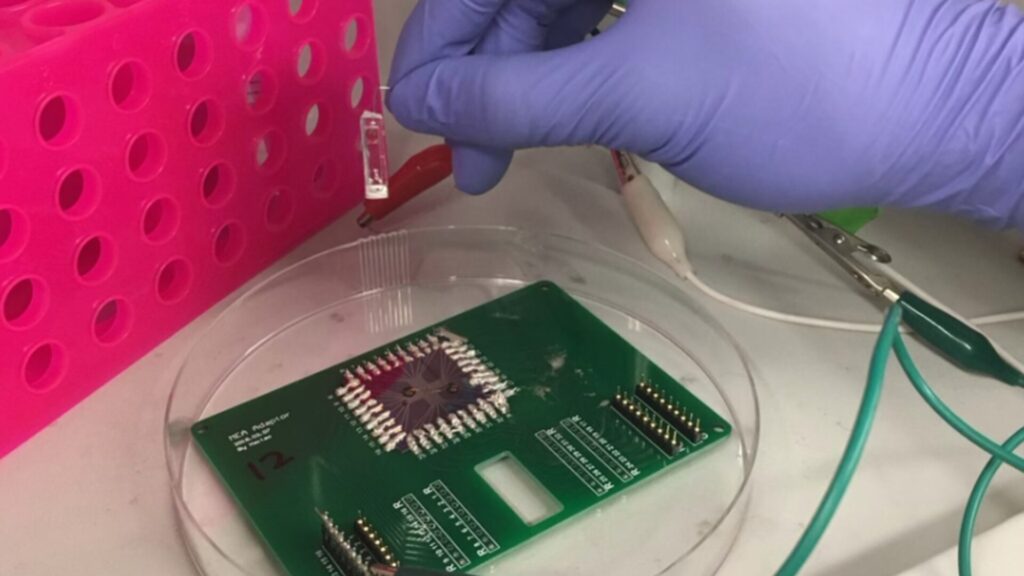
This two-week program at Tufts University is designed to introduce you to artificial intelligence and machine learning through lectures, coding sessions, and instruction led by Tufts faculty and industry speakers. The first week focuses on building foundational knowledge, covering AI history, math, Python-based machine learning tools, and an overview of different AI subfields.
The second week focuses on a group engineering design project, where you, along with a group of peers, will identify a real-world problem and build an AI-based solution. The program also covers career paths, engineering education, research, and real-world issues that connect to data science, machine learning, and artificial intelligence. You will present your AI solution to peers and faculty at the end of two weeks.
Why it stands out: You will be studying and working in Tufts University classrooms and labs, getting a taste of life as an engineering student.
9. STEAM Ahead Research Internship Program
Location: Boston College School of Engineering, Chestnut Hill, MA
Cost/Stipend: Free; stipend of $1,500
Acceptance rate/cohort size: Not publicly available
Dates: July 8th – August 7th
Application deadline: June 18th
Eligibility: 10th to 12th graders around the world
This internship program in the Boston metropolitan area allows you to conduct research in engineering within university labs. You will work closely with professors, research assistants, and undergraduate mentors on engineering research projects centered on pressing issues in the world. Themes often include clean water, wireless communication, and environmental science.
Apart from the research activities, the program will feature professional development workshops and expose you to career opportunities in engineering. You will present your research at the end of the internship.
Why it stands out: It is a paid internship that also offers you the opportunity to network with industry experts through social events and gain insights into what working in engineering is like.
10. Wentworth Institute of Technology’s Momentum
Location: Wentworth Institute of Technology, Boston, MA
Cost: $699 (commuter) | $1,699 (residential)
Acceptance rate/cohort size: ~20 students/course
Dates: August 3-7
Application deadline: May 15th
Eligibility: Students around the world entering grades 9 and 10
Momentum is a one-week pre-college experience that allows you to explore STEM and design fields through activities conducted at Wentworth Institute of Technology. You can choose an interdisciplinary course that combines subjects such as engineering, business, computing, design, and health technology. During the weeklong program, you will work on projects, engage in lab activities, and learn from Wentworth faculty while connecting with other high school students.
In the process, you will learn product development, computing pathways, engineering solutions, and tech in healthcare. The program is designed to help you explore how different STEM disciplines connect and how they help solve problems.
Why it stands out: Due to the interdisciplinary approach of the program, you will be able to test out different majors in a short period and explore different career pathways.
11. Tufts University’s Engineering Investigations
Location: Tufts University, Medford/Somerville, MA
Cost: $4,425 (commuter) | $5,950 (residential); scholarships available
Acceptance rate/cohort size: Not specified
Dates: Session 1: July 5-17 | Session 2: July 19-31
Application deadline: May 1st
Eligibility: Students around the world, ages 15 and up, who are entering grades 10-12 or are graduating seniors
This comprehensive engineering summer school in Boston at Tufts University offers an introduction to various engineering disciplines, including civil, environmental, mechanical, biomedical, and electrical engineering. Classes combine activities, lectures, discussions, and sessions led by guest speakers from Tufts and the industry.
For the first week and a half, you will engage in activities covering different engineering fields and aspects like design processes, engineering ethics, and fabrication. In the final few days, you will join a small group to pick an engineering area of interest and develop a project or presentation. You will present your work at a public Project Showcase on the last day of the session.
Why it stands out: It offers a comprehensive engineering exposure in a university setting, allowing you to get a taste of future engineering academics.
12. Boston University Summer Challenge
Location: Boston University, Boston, MA
Cost: $75 application fee + $3,730 tuition + $1,440 (optional) housing fees; additional fees may apply (check the price table here). Scholarships are available.
Acceptance rate/cohort size: Typically 10-30/seminar
Dates: Session 1: June 15-26 | Session 2: July 6-17 | and Session 3: July 20-31 (residential sessions start a day earlier)
Application deadline: Accepted on a rolling basis
Eligibility: Rising 10th through 12th graders from anywhere in the world
The two-week Summer Challenge program allows you to sign up for two seminars designed to expose you to the rigor of college academics. The program offers seminars across various subject areas, including engineering. During the program, you will attend lectures, participate in discussions, work on individual and group projects, and go on field trips to dive into engineering.
In the electrical engineering track, for instance, you will learn about engineering methods through challenges provided by the Smart Lighting Center. Here, you will also work with tools and tech used in the development of novel LED lighting.
Why it stands out: These focused seminars mimic the college experience and help you make an informed decision about your major in college.
13. Northeastern University Accelerate Pre-College Program: Bioengineering Immersion
Location: Northeastern University, Boston, MA
Cost: $7,095; need-based financial aid available
Acceptance rate/cohort size: 15-30 students/program
Dates: July 12-24 | July 26th – August 7th
Application deadline: Priority deadline: January 15th; regular deadline: February 27th; late deadline: March 15th (application opens in early December)
Eligibility: Rising high school juniors and seniors (domestic and international)
Northeastern University’s Accelerate Pre-College Programs offers high schoolers the opportunity to enroll in college-level courses and explore their interests. The bioengineering track allows you to explore the field through a project-based curriculum, while engaging in lab activities, such as tissue engineering, designing and testing a medical implant, and designing a biomedical circuit. You will dive into the design, analysis, prototyping, and fabrication process for projects in 3D printing, testing of bone implants, and creating circuits to track physiological signals in humans.
Your schedule will include visiting bioengineering professionals and engineering companies to explore the field better. The syllabus also touches on Engineering entrepreneurship, allowing you to learn how to come up with a product idea with its commercial value in mind.
Why it stands out: The interdisciplinary program allows you to explore the link between engineering, tech, and biology, and build a toolbox of technical skills in the process.
14. Wentworth Institute of Technology SummerFAB
Location: Wentworth Institute of Technology, Boston, MA
Cost/Stipend: Not specified; TBA
Acceptance rate/cohort size: Not specified
Dates: July 6-31
Application deadline: TBA in mid-March
Eligibility: Rising 11th and 12th-graders who reside in Boston or attend public schools in the area
SummerFAB is a four-week, commuter summer program at Wentworth Institute of Technology in Boston. The program allows you to explore engineering and problem-solving through three sequential phases: Design, Fabricate, and Build, in which you develop foundational skills in drawing and building sciences.
You will collaborate with Wentworth faculty and current architecture and design students throughout the process. The program ends with an installation of the finished build and a celebration with faculty, friends, and community partners. You will also have the opportunity to build a network of peers from across the Boston area.
Why it stands out: The program allows you to take on a full-scale construction project, giving you a tangible, community-facing result by the end of four weeks.
15. Northeastern University Engineering Innovation & Design
Location: Northeastern University, Boston, MA
Cost: $7,095; need-based financial aid available
Acceptance rate/cohort size: 15 – 30 students/program
Dates: July 12-24 | July 26th – August 7th
Application deadline: Priority deadline: January 15th; regular deadline: February 27th; late deadline: March 15th (application opens in early December)
Eligibility: Rising high school juniors and seniors (domestic and international)
Engineering Innovation & Design (EID) is an intensive, project-based pre-college track at Northeastern University in Boston for high school students interested in engineering. You will explore engineering design, focusing on the use of automatic devices for a sustainable society and real-world challenges like clean water access and solar energy.
Hands-on work is central to the program, so you will build functioning prototypes using 3D printers, laser cutters, Arduino hardware, CNC milling, and other fabrication tools in a Makerspace. You will also learn the basics of C++ programming to create and control Arduino-based autonomous devices. Beyond technical skills, the curriculum emphasizes client-focused problem-solving methods and design thinking inspired by real ecological challenges.
Why it stands out: It allows you to work with professional-grade fabrication tools used in industry, giving you hands-on experience that goes beyond a typical classroom setting.
The Engineer’s Library: Must-Read Books for Innovators
Attending an engineering summer school in Boston is a transformative step that provides high schoolers with elite laboratory access and mentorship from world-class faculty.
These prestigious programs allow you to move beyond classroom theory, challenging you to design real-world prototypes and solve complex problems in a global innovation hub.
Maintaining this academic momentum requires a commitment to continuous learning that extends far beyond the final day of your summer residency at MIT or Northeastern.
Check out our Engineering Top Books Guide to discover the essential reads that will sharpen your mind and give you a massive competitive edge!