When you’re in high school, summer often feels like a pause button where you finally get time to breathe. However, this break can become far more meaningful if you choose to explore subjects that rarely make it into your school syllabus. One of the most impactful ways to build practical skills and challenge your future is by enrolling in specialized nanotechnology summer programs for high school students. These experiences allow you to bridge the gap between classroom theory and elite, real-world scientific application.

Now imagine stepping into the world of nanotechnology, where you explore materials so small they are invisible to the naked eye, yet powerful enough to transform medicine, electronics, and energy. You might find yourself working in a lab, observing nanoparticles under advanced microscopes, or collaborating with other students to design solutions to real-world problems. You actively engage with cutting-edge science and discover how innovation happens at the smallest scale.

What kinds of nanotechnology summer programs for high school students are there?

Finding the right program can feel overwhelming, especially when many options sound similar at first glance. You want something that goes beyond lectures and actually lets you experiment, build, and think critically. The right program should challenge you while also giving you the support to grow.

Nanotechnology summer programs come in a variety of formats. You might attend sessions led by university professors, participate in group research projects, or even present your findings at the end of the program. Many programs also include exposure to college life, networking opportunities, and mentorship from experts in the field. Whether you are exploring nanotechnology for the first time or already have some background knowledge, these programs give you a chance to deepen your understanding and see how this field operates in the real world.

No matter which type you choose, you will be stepping into an environment that pushes you to think differently. To make your search easier, we’ve made a list of 15 nanotechnology summer programs for high school students. we’ve selected them for their academic rigor, hands-on experience, and overall learning value.

For adjacent opportunities, you can explore STEM summer programs; for a more experimental experience, you can consider STEM research programs.

15 Nanotechnology Summer Programs for High School Students

1. Immerse Education’s Nanotechnology Summer School

15 Nanotechnology Summer Programs for High School Students 1

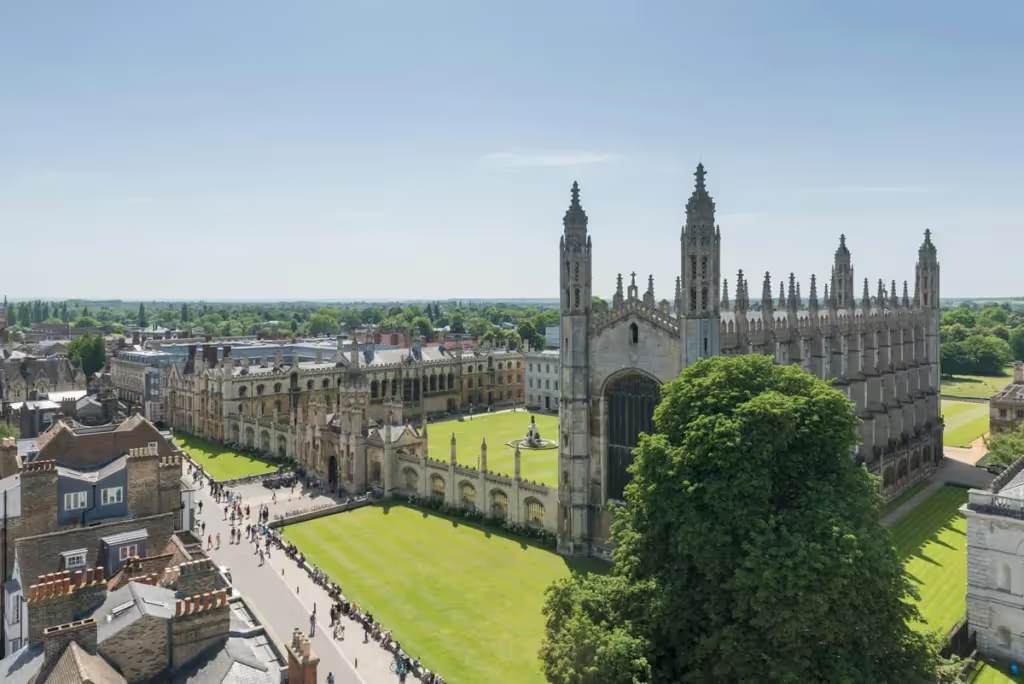
Location: Cambridge, UK
Cost/Stipend: Varies by format; summer school scholarship available through our bursary programme
Acceptance rate/cohort size: Small class sizes; an average of 7 participants per class
Dates: 2 weeks during the summer
Application Deadline: Multiple summer cohorts; rolling admissions
Eligibility: Students aged 16-18; open to international students

Widely considered one of the most prestigious nanotechnology summer programs for high school students, this Immerse Education course provides a structured introduction through small-group learning. You will study advanced topics like molecular engineering and quantum mechanics while working alongside expert tutors. The program emphasizes discussion-based sessions, ensuring you actively engage with cutting-edge concepts rather than passively listening.

You will also complete an individual research-style project that builds your analytical and communication skills. Beyond academics, you experience campus life and collaborate with a global cohort. By the end, you walk away with a certificate and clearer insight into STEM pathways. You can find more details about the application here.

Why it stands out: You get a university-style learning experience in nanotechnology while working closely with expert mentors on your own project.

2. UCLA CNSI Nanoscience Lab Summer Program

Location: University of California, Los Angeles, CA
Cost/Stipend: $2400
Acceptance rate/cohort size: Not specified
Dates: June 22-26; August 3-7
Application Deadline: May 25th or until session is full
Eligibility: High school students in grades 10-12 (age 15+); international students can apply 

If you want a fast-paced introduction to nanotechnology, this one-week lab program lets you learn by doing. You will carry out hands-on experiments designed by UCLA researchers, covering topics like photolithography and energy storage. Each day introduces a new concept, so you build a broad understanding of nanoscale science in a short time.

You will also analyze your results and learn how researchers interpret experimental data. The program includes exposure to real lab instruments and techniques used in current research. By the end, you gain both technical skills and a clearer sense of how nanoscience is applied in the real world.

Why it stands out: You experience daily lab work on cutting-edge nanotech topics, closely mirroring how real research labs operate.

3. NISE Network High School Nanotechnology Summer Camp Framework

Location: Flexible (designed for implementation at schools, museums, or camps; USA-based framework)
Cost/Stipend: Free
Acceptance rate/cohort size: Varies; not a selective program
Dates: Typically designed as a 1-week camp
Application Deadline: Rolling
Eligibility: High school students (ages ~15+); accessibility depends on the hosting institution; no explicit nationality restrictions

If you are looking for a flexible way to explore nanotechnology, this framework introduces you to the field through hands-on and discussion-based activities. You engage with core concepts like nanoscale properties, fabrication, and real-world applications without needing prior experience.

You’ll also attend lab-style activities, group discussions, and project presentations at the end of the camp. You’ll examine ethical and societal questions tied to emerging technologies. By the end, you build a broad understanding of how nanotechnology connects to science and everyday life.

Why it stands out: You can experience a full nanotechnology camp curriculum even outside a formal university program, making it highly adaptable and accessible.

4. UPenn Engineering Summer Academy Program (ESAP) – Nanotechnology

Location: University of Pennsylvania, Philadelphia, PA
Cost/Stipend: $9,250
Acceptance rate/cohort size: ~45 students in nanotechnology track (highly selective)
Dates: July 12th – July 31st
Application Deadline: Priority: January 31st; Final: February 28th
Eligibility: High school students aged 15+ who have completed at least 9th grade; minimum 3.0 GPA; open to international students

If you want a rigorous introduction to nanotechnology, you will study in a fast-paced, college-level environment at Penn Engineering. You will work in the Singh Center cleanroom to fabricate microdevices using tools like photolithography and deposition. You will synthesize quantum dots and analyze them with advanced microscopy techniques.

You will test real nanotech applications such as solar cells and sensors using hands-on setups. You will complete projects that build your problem-solving and analytical thinking skills. You will also collaborate with peers while adapting to an intensive academic schedule.

Why it stands out: You gain rare access to a university cleanroom and fabricate real nanoscale devices using professional-grade equipment.

5. MIT Beaver Works Summer Institute (BWSI)

Location: Cambridge, MA
Cost/Stipend: Varies by family income
Acceptance rate/cohort size: Highly selective
Dates: 4-week program in July
Application Deadline: March 31st
Eligibility: High school juniors (rising seniors) attending school in the U.S.

As one of the most competitive nanotechnology summer programs for high school students, MIT’s Beaver Works Institute pushes you to learn by building real-world systems. Following prerequisite online coursework, you move into an intensive, project-based summer residency. You will work in elite teams on advanced topics such as microelectronics and quantum computing to solve complex engineering challenges.

The program emphasizes problem-solving through challenges and culminates in a final project or competition. You also collaborate closely with mentors and peers who share strong technical interests. By the end, you gain both practical engineering skills and exposure to real-world research.

Why it stands out: You tackle MIT-level engineering challenges and build real, working systems in a highly selective, project-driven environment.

6. UCLA CNSI NanoVation Competition

Location: University of California, Los Angeles, CA
Cost/Stipend: Free; winning teams receive up to $2,000 in classroom supply awards
Acceptance rate/cohort size: 10 finalist teams selected (teams of 4-5 students)
Dates: Kick-off meeting: March 6th; Final presentations: May 22nd
Application Deadline: January 23rd
Eligibility: Middle and high school students from southern California applying as teams with a teacher leader

If you want to explore how nanotechnology connects with real-world innovation, you will work in a team to design a product that solves a meaningful problem. You will apply nanoscience concepts to develop a feasible idea and turn it into a business-style proposal. You will collaborate with UCLA graduate student mentors who guide your research and refine your approach.

You will meet regularly to improve both your technical explanation and your market strategy. You will then pitch your idea to a panel of professors and industry professionals. You will gain experience that blends science, design thinking, and entrepreneurship.

Why it stands out: You combine nanotechnology with entrepreneurship and pitch your idea in a Shark Tank–style setting to real experts.

7. UIC Engineering Summer Camp

Location: University of Illinois Chicago, Chicago, IL
Cost/Stipend: Cost of ~$500
Acceptance rate/cohort size: Maximum of 30 students per group
Dates: July 27-31
Application Deadline: TBD; registration opens in January
Eligibility: Rising 9th to 12th grade students worldwide

If you want to explore engineering fields that connect to nanotechnology, you will rotate through hands-on projects across multiple disciplines. You will work on challenges that involve coding, robotics, materials, and emerging technologies, and collaborate in small teams to design, test, and refine your solutions.

You will also learn how engineering concepts apply to real-world problems such as sustainability and innovation. You will interact with faculty and students who guide you through each activity and leave with a clearer sense of how engineering fields intersect with advanced areas like nanotechnology.

Why it stands out: You get exposure to multiple engineering domains in one week, helping you discover how nanotechnology fits into broader STEM fields.

8. DEEP Summer Academy

15 Nanotechnology Summer Programs for High School Students 2

Location: University of Toronto St. George Campus, Toronto
Cost/Stipend: Fee varies; domestic students: $732/week; international students: $1111/week
Acceptance rate/cohort size: Not specified
Dates: July 6th – July 31st
Application Deadline: Round 1 begins March 3rd; Round 2 ends April 1st
Eligibility: Open to high school students in grades 9 through 12; international applicants are eligible 

If you want to explore nanotechnology through a broader engineering lens, you will choose from advanced, week-long courses taught by graduate researchers. You will study topics that connect to nanoscience, such as materials engineering, optics, and emerging technologies, and engage in hands-on activities and experiments that reflect real research practices.

You will learn directly from master’s and PhD students who share insights from their work. You will collaborate with peers while tackling complex scientific ideas and finally leave with a clearer understanding of how nanotechnology fits into modern engineering.

Why it stands out: You get exposure to graduate-level concepts while learning directly from active researchers in a flexible, multi-course format.

9. Cameron University NanoExplorers Summer Science Academy

Location: Cameron University, Lawton, OK
Cost/Stipend: Free
Acceptance rate/cohort size: 24 students
Dates: June 15-20 and June 22-27
Application Deadline: April 15th
Eligibility: Rising high school freshmen, sophomores, and juniors who are Oklahoma residents; not open to international students 

If you want an early introduction to nanotechnology, this program immerses you in a residential STEM experience. Through hands-on activities, you explore how nanoscale concepts connect to chemistry and physics. Lab-style sessions introduce topics like nanostructures, polymers, and circuit design in an accessible way.

Alongside experiments, you learn about STEM careers and how nanotechnology is applied in real fields. Evenings include collaborative and social activities that build community with peers. By the end, you present your work and reflect on what you have learned.

Why it stands out: You get a fully funded, residential nanotechnology experience designed specifically for early high school students.

10. Stanford Institutes of Medicine Summer Research Program (SIMR)

Location: Stanford School of Medicine, Stanford, CA
Cost/Stipend: Free; stipend provided
Acceptance rate/cohort size: Highly selective
Dates: June 8th – July 30th
Application Deadline: February 21st
Eligibility: High school juniors and seniors (age 16+) who are U.S. citizens or permanent residents studying in the U.S. 

This program places you inside a Stanford lab for the summer. Under the guidance of a mentor, you work on a medically oriented research project in fields like bioengineering, genetics, or neuroscience. Alongside lab work, you attend lectures that introduce advanced scientific concepts and career pathways.

Through daily experimentation, you build practical skills in data analysis and scientific methods. You also collaborate with researchers and peers who share strong interests in STEM. By the end, you present your work at a formal poster session.

Why it stands out: You conduct authentic, mentor-guided research in a Stanford lab and present your findings like a real scientist.

11. UT Dallas NanoExplorers Summer Research Program

Location: University of Texas – Alan G. MacDiarmid NanoTech Institute, Richardson, TX
Cost/Stipend: Varies
Acceptance rate/cohort size: 40 students selected from 200+ applicants
Dates: 8-week summer program (exact dates vary yearly)
Application Deadline: Varies annually
Eligibility: Domestic high school students in grades 10-12

If you want an authentic research experience, this program places you inside a working nanotechnology lab for the summer. You join a faculty mentor’s research group and contribute to ongoing scientific projects rather than completing preset experiments. In the lab, you learn how to design experiments, handle advanced equipment, and analyze real data.

Collaboration becomes central as you work alongside graduate students and researchers. Exposure to seminars and discussions helps you understand how nanotechnology connects to real-world innovation. By the end, you present your findings in a formal research setting.

Why it stands out: You are treated like an actual research team member, contributing to real projects with potential for publications and conference presentations.

12. Imperial College London Girls’ Engineering Summer School

15 Nanotechnology Summer Programs for High School Students 3

Location: South Kensington campus, Imperial College London, London, UK
Cost/Stipend: Free
Acceptance rate/cohort size: Highly competitive; exact numbers not specified
Dates: August 4th – August 7th
Application Deadline: March 18th
Eligibility: Girls in Year 9 at non-fee-paying UK schools 

If you are curious about how nanotechnology connects to broader engineering fields, this program introduces you to multiple disciplines through hands-on sessions. Throughout the week, you explore areas such as materials science and bioengineering that directly relate to nanoscale innovation.

In interactive workshops, you apply scientific concepts to solve practical challenges and understand real-world applications. Group activities encourage collaboration while helping you build confidence in technical discussions. By the end, you create and present a poster that reflects your learning and ideas. 

Why it stands out: You gain early exposure to cutting-edge engineering fields at a top global university in a fully funded, supportive environment.

13. NNCI (National Nanotechnology Coordinated Infrastructure) Education & Outreach Programs

Location: Multiple sites across the USA (16 university-based nanotechnology facilities
Cost/Stipend: Free
Acceptance rate/cohort size: Not specified (varies by site and program)
Dates:  Varies by program
Application Deadline: Varies by specific program/site
Eligibility: Domestic K-12 students, including high school participants; some programs target specific groups (e.g., underserved students)

If you want a flexible entry point into nanotechnology, this network connects you to a wide range of programs across leading research universities. Through camps, workshops, and lab tours, you explore nanoscale science using hands-on activities and real equipment.

In some programs, you interact directly with scientists and learn how nanotechnology is applied in areas like electronics and energy. You also engage in discussions about the societal impact of emerging technologies. Depending on the site, you may participate in short summer camps or longer enrichment experiences. 

Why it stands out: You gain access to a nationwide network of nanotech facilities and programs rather than a single fixed summer experience.

14. University of Sydney International Science School (ISS)

Location: University of Sydney, Sydney, New South Wales, Australia
Cost/Stipend: Free
Acceptance rate/cohort size: 110 students
Dates: July 6-19
Application Deadline: Varies by country
Eligibility: High school students in Years 11 or 12; Australian students apply directly by merit criteria through the University, while international students are selected through ISS partner organisations

If you want exposure to cutting-edge science, this program immerses you in a two-week residential experience with top researchers. Through lectures and lab visits, you explore advanced topics in STEM, including those related to nanotechnology. Hands-on workshops let you experiment beyond the school curriculum while sharpening your analytical skills.

You also engage in discussions on ethics and scientific innovation, helping you think critically about real-world impact. Social events and group activities help you connect with peers from around the world. By the end, you leave with both scientific insight and a global network.

Why it stands out: You experience a fully funded international science immersion while learning directly from world-leading researchers.

15. UCLA CNSI Applications of Nanoscience Summer Program

Location: University of California, Los Angeles, CA
Cost/Stipend: $4,300
Acceptance rate/cohort size: Not specified
Dates: July 6-17 (Session A); July 20-31 (Session B)
Application Deadline: May 25th or until full
Eligibility: High school students aged 15+ with a strong background in chemistry; open to international students

If you want to explore how nanotechnology turns into real-world products, this program guides you through both science and innovation. In the first week, you learn core lab techniques and research methods through hands-on experiments. You then apply these skills by designing your own nanotechnology-based idea with a team.

Along the way, you explore scientific literature, design thinking, and the basics of entrepreneurship. The experience blends lab work with product development, helping you see how ideas move beyond research. By the end, you pitch your concept to simulate a real-world technology launch.

Why it stands out: You combine lab research with entrepreneurship by developing and pitching your own nanotech product idea.

The Quantum Leap: Navigating Your University Science Shift

Securing a spot in nanotechnology summer programs for high school students is a vital strategic investment in your future academic and professional scientific career success.

Beyond just basic learning, these sessions offer a high-level laboratory environment where you can finally test your unique extreme analytical and cognitive science limits.

By exploring the complexities of molecular engineering or cleanroom fabrication, you build the specific technical grit required to thrive at any elite global research university.

Stop guessing your academic future and click our University Preparation blogs to master every secret of elite admissions and high-stakes degree selection today!