
 Русский (RU)
 Українська (UK)
 Türkçe (TR)
 Italiano (IT)
 Français (FR)
 Português (PT)
 中文 (中国) (ZH)
 Español (ES)
 日本語 (JA)
 ไทย (TH)
 Deutsch (DE)
 Ελληνικά (EL)
 Polski (PL)
 Bahasa Indonesia (ID)
 Nederlands (NL)
 العربية (AR)
 한국어 (KO)

Summer can be one of the best times to explore medicine more seriously, especially when school routines slow down and you have space to try something new. For students considering healthcare, pre med summer programs for high school students offer a valuable way to build skills, test your interest, and gain early exposure to the subject. They can also support personal growth and add meaningful depth to your university applications.
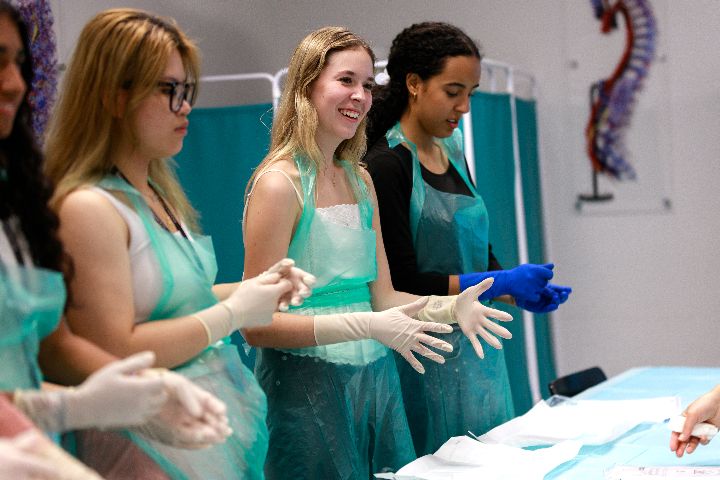
These programs go beyond textbooks by combining academic learning with practical exposure. You might explore topics like neuroscience, public health, or emergency medicine while collaborating with peers who share your ambition to enter the healthcare field. You may practice clinical skills in simulations, conduct research, or discuss ethical dilemmas in medicine.
Some programs even offer opportunities to interact with healthcare professionals, giving you valuable insight into what a future in medicine truly looks like. Even if you already have access to strong science courses at school, a pre-med summer program can broaden your perspective. You’ll meet students from different backgrounds, gain exposure to new ideas, and experience a taste of college-level academics and expectations.
What kinds of pre-med summer programs for high school students are there?
Finding the right pre-med summer program can feel overwhelming. Some programs may be too focused on lectures without offering hands-on experience, while others might lack academic depth. That’s why it’s important to choose a program that balances rigorous learning with real-world application.
Pre-med summer programs are offered by universities, research institutes, and specialized organizations. They cover a wide range of subjects, including biology, chemistry, neuroscience, psychology, and public health. Many programs incorporate lab work, case studies, clinical simulations, and even mentorship from medical professionals.
To help you get started, we’ve curated a list of 15 Pre-Med Summer Programs for High School Students. These programs stand out for their academic rigor, hands-on opportunities, and strong reputations in preparing future healthcare professionals.
In addition to programs, you can also take a look at medical internships for high school students.
15 Pre-Med Summer Programs for High School Students
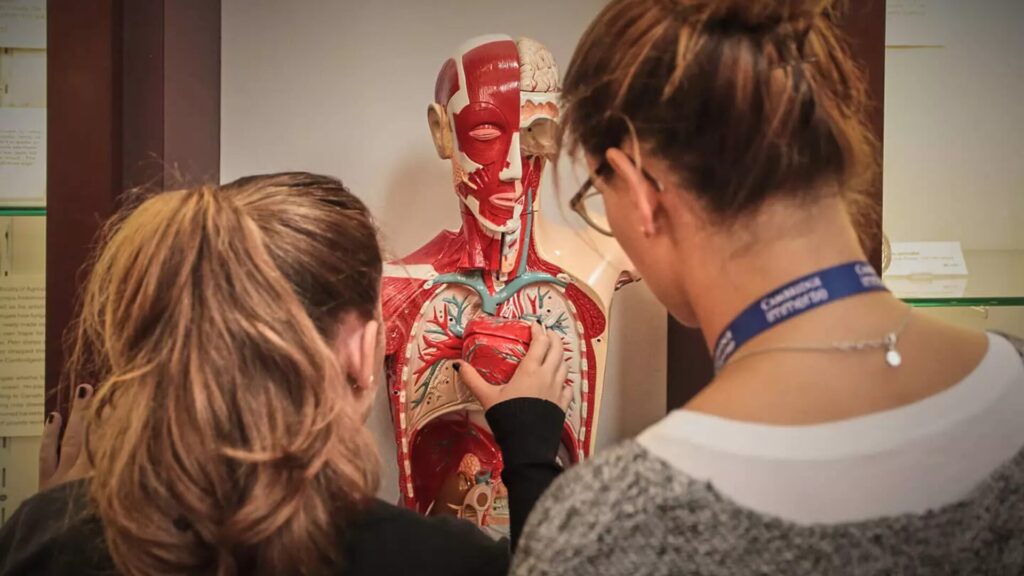
1. Immerse Education’s Medicine Summer School
Location: London, Oxford, New York, Toronto, Cambridge, Singapore, Sydney, and Tokyo
Cost: Varies; summer school scholarship available through our bursary programme
Application Deadline: Multiple summer cohorts; rolling admissions
Dates: 2 weeks during the summer
Eligibility: Students worldwide aged 13-18 currently enrolled in middle or high school
Immerse Education’s pre-med track runs as an academic-style program where you spend your time working through core ideas that sit at the foundation of medical study. You attend sessions that introduce topics like the scientific method, clinical research, and how treatments are tested and evaluated before being used. Much of the work involves case-based discussions, where you look at situations and think through how decisions are made in a medical context.
You also spend time understanding how research connects to patient care, especially when new methods or treatments are involved. The structure feels closer to a university class, where you are expected to follow ideas, question them, and explain your reasoning. You can choose between online or in-person formats, depending on whether you want a classroom setting or a remote setup. You can find more details about the application here.
Why it stands out: It introduces you to both the academic and practical sides of medicine through a structured, discussion-based approach.
2. Stanford Institutes of Medicine Summer Research (SIMR) Program
Location: Stanford School of Medicine, Stanford, CA
Cost: All students receive a minimum stipend of $500; students from underrepresented groups may receive up to $1,500
Application Deadline: February 21st
Dates: June 8th – July 30th
Eligibility: High school juniors and seniors at least 16 years old, who are U.S. citizens or permanent residents
The Stanford Institutes of Medicine Summer Research Program is one of the most research-intensive pre med summer programs for high school students, with an eight-week focus on mentored research in biomedical science. During the program, you are placed in a lab where you learn how researchers design experiments, work with data, and connect scientific findings to medical applications. You work with graduate students and postdoctoral researchers, which gives you a clearer understanding of how research teams function in an academic setting.
Your experience will vary based on your lab placement. Areas of study may include stem cell research, cancer biology, immunology, neuroscience, or bioengineering. Alongside lab work, you attend weekly lectures and sessions that introduce different pathways within medicine and research, including clinical and academic careers.
Why it stands out: The program’s setting provides exposure to interdisciplinary areas, including emerging intersections between medicine, technology, and data science.
3. University of Nottingham Pathways to Medicine
Location: University of Nottingham, Nottingham, UK
Cost: Free
Application Deadline: Not specified
Dates: Five days in July
Eligibility: For students in Year 12 and at a non-paying school; check here for more details
Pathways to Medicine is a summer school program run by the University of Nottingham in partnership with the Sutton Trust. It is designed to give you an introduction to studying medicine while learning directly from practicing clinicians across different specialties. During the program, you stay on campus and attend lectures and sessions that reflect elements of medical school teaching.
You also take part in activities that introduce you to clinical tools and approaches used in healthcare. This structure helps you understand both the academic and practical aspects of medical education.
Why it stands out: It combines academic instruction, campus living, and application guidance in a single, structured experience.
4. University of Alberta’s High School Youth Researcher Summer Program (HYRS)
Location: Most placements are at the University of Alberta North Campus in Edmonton, Canada, with a few placements at other clinics or hospital-based research sites
Cost: Free; students will be paid $15/hour (CAD)
Application Deadline: March 13th
Dates: July 2nd – August 13th (tentative; based on previous years)
Eligibility: Open to Grade 11 students living in or north of Red Deer (those farther south should apply to programs at the University of Calgary or University of Lethbridge). You must be taking or have completed Math 20-1 or 20-2, Biology 20, and another Grade 11 science course, be eligible to work in Canada, and show an interest in health or medical sciences
The University of Alberta’s HYRS (High School Youth Researcher Summer) Program is a six-week, in-person experience for Grade 11 students interested in health and medical sciences. During the program, you are placed in a full-time research role at the university or an affiliated hospital or clinical site. Your work may involve areas such as medicine, public health, dentistry, laboratory science, or data-driven health research, depending on your placement.
In addition to your research responsibilities, you take part in workshops, facility tours, and talks that introduce different careers in healthcare and science. These sessions are designed to help you build practical skills and understand how research connects to real-world medical challenges.
Why it stands out: It offers a structured, full-time research placement with financial support while introducing you to both traditional and emerging areas in healthcare.
5. SAKURA SCIENCE High School Program (SSHP)
Location: Various research institutions and universities in Japan
Cost: Free
Application Deadline: Multiple deadlines. More information here
Dates: 1-week courses (dates vary)
Eligibility: Overseas high school students from over 14 countries who haven’t yet had a long-term stay in Japan
SAKURA Science is a short-term exchange program that introduces high school students to scientific research and academic life in Japan. During the program, you attend lectures, visit universities and research facilities, and take part in structured activities alongside students from different countries.
The program includes classroom sessions on STEM topics, along with guided visits to laboratories where you can observe how research is conducted. Some sessions may be led by experienced researchers, giving you exposure to current scientific work. In addition to the academic component, you participate in cultural activities that help you understand everyday life and traditions in Japan.
Why it stands out: It combines introductory research exposure with opportunities to interact with students from different countries in a structured exchange setting.
6. University of Toronto’s Temerty Faculty of Medicine Summer Mentorship Program
Location: University of Toronto, Temerty Faculty of Medicine at the St. George Campus in downtown Toronto, ON
Cost: Free; participants will receive $1,600 (CAD) upon completing the program
Application Deadline: March 29th
Dates: July 6-31
Eligibility: Open to Ontario students in Grades 10-11 who identify as Indigenous or Black (including African, Caribbean, North American, or multiracial with Black ancestry), with preference for Grade 11. You must be at least 16 and have completed a Grade 10 academic science or a Grade 11 U/M/C science course.
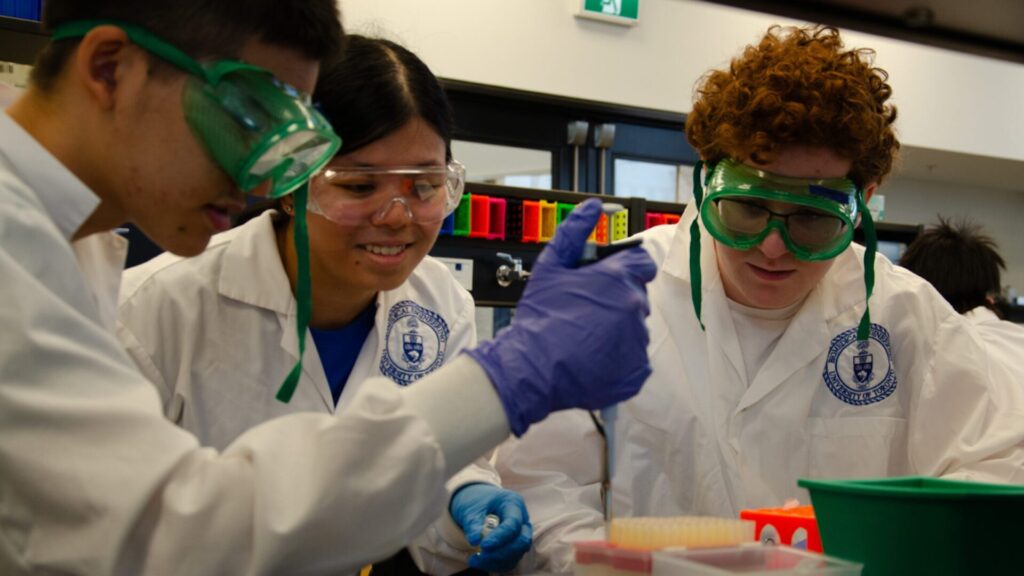
The Temerty Faculty of Medicine Summer Mentorship Program at the University of Toronto is a four-week, in-person program for Indigenous and Black high school students interested in health sciences. During the program, you attend weekday sessions that include hands-on activities, experiments, lectures, and project work led by faculty, healthcare professionals, and university students.
You are paired with a student mentor in a health-related field and take part in a short observership, shadowing a healthcare professional in a hospital or clinical setting. The program introduces you to a range of health science pathways, such as medicine, nursing, pharmacy, public health, and social work, helping you understand academic expectations and potential career options.
Why it stands out: You receive a Grade 12 SNC4M credit and gain guided, in-person experience in healthcare settings while being compensated for your participation.
7. HOPP Summer Student Program
Location: Memorial Sloan Kettering Cancer Center, Manhattan, NY
Cost: No cost / $1,200 stipend
Application Deadline: February 6th
Dates: June 29th – August 21st
Eligibility: High school juniors who are 14 or older by June, are legally authorized to work in the U.S., live within 25 miles of Memorial Sloan Kettering Cancer Center in Manhattan, New Jersey, New York, or Connecticut, and have a 3.5 GPA in science courses
The HOPP Summer Student Program provides high school students with hands-on experience in translational cancer research. You are paired with a principal investigator and placed in either a biomedical or computational lab, where you follow assigned research tasks and contribute to ongoing projects.
The eight-week program combines independent lab work with training sessions, facility tours, and discussions on research methods, allowing you to see how cancer is studied from multiple perspectives. You also participate in group sessions that cover laboratory techniques, data analysis, and scientific best practices in oncology.
Why it stands out: You gain direct experience working in a cancer research lab while learning from professionals about both the scientific and practical aspects of oncology research.
8. NIH Summer Internship Program (SIP)
Location: NIH campuses, primarily the main campus in Bethesda, MD, with select placements at other NIH sites across the country
Cost: Free; stipend provided (amount varies by institute and student level)
Application Deadline: Around February 18th annually; reference letters due approximately one week later
Dates: 8 weeks; typically June through August
Eligibility: Open to high school seniors who are U.S. citizens or permanent residents, are enrolled at least half-time as a senior at the time of application, and will graduate before the internship begins. You must be 18 by September 30th of that year; if you are 17 as of June 1st and reside within 40 miles of an NIH campus, you may still qualify
The NIH Summer Internship Program places you inside a working federal research laboratory at one of the National Institutes of Health’s campuses, where you are matched with an NIH investigator and contribute to that lab’s ongoing projects. The specific work depends on your placement and mentor, but may involve areas such as cancer biology, infectious disease, immunology, neuroscience, genomics, or clinical research.
Whether your role is lab-based, computational, or patient-oriented is determined by the institute you are matched with, so you have the flexibility to express preferences during the application process. Throughout the summer, NIH organizes institute-wide talks, seminars, and orientation sessions covering scientific ethics, career pathways in medicine and research, and how federal health agencies operate.
Why it stands out: You work directly within the U.S. federal research system at agencies like the NCI, NIAID, or NHGRI, the same institutions that fund and direct medical discoveries that shape healthcare policy worldwide.
9. Houston Methodist’s Summer Internship Program
Location: Houston Methodist Hospital, Texas Medical Center, Houston, TX
Cost: None
Application Deadline: January 30th
Dates: June 8th – July 31st
Eligibility: U.S. high school juniors and seniors with a minimum 3.5 GPA who will be at least 16 years old by the start of the program are eligible to apply
The Houston Methodist Summer High School Research Internship offers you a hands-on introduction to medical research. You work alongside faculty and researchers in areas such as immunology, cellular biology, and disease mechanisms, contributing to ongoing laboratory projects.
Throughout the program, you learn research techniques, data analysis, and scientific writing, and you participate in professional development sessions and networking opportunities. At the end of the internship, you present your research findings in a formal symposium, giving you experience in communicating scientific work.
Why it stands out: You gain practical insight into how research conducted in a hospital setting supports patient care and medical advancements.
10. Xavier Pelletier High School Internship Program
Location: BC Cancer Research Centre, Victoria, BC
Cost: Free; participants receive a $5,000 (CAD) bursary toward post-secondary education
Application Deadline: March 16th
Dates: 8 weeks, July – August
Eligibility: Open to Grade 11 students (16+) on Vancouver Island with at least an 85% projected average in Biology 11 or 12 and two other science or math courses. Applicants must be nominated by their school’s Science Department Head, supported by the Principal, and demonstrate interest in lab sciences and public speaking
The Xavier Pelletier High School Internship Program is an eight-week, in-person research opportunity at BC Cancer’s Trev and Joyce Deeley Research Centre in Victoria for Grade 11 students from Vancouver Island. During the program, you work full-time in a cancer research lab, carrying out experiments, analyzing data, and contributing to a supervised research project alongside professional scientists.
The program covers techniques in cancer immunology, research ethics, and collaborative laboratory practices. You also take part in a structured book club on molecular and cell biology and cancer fundamentals.
Why it stands out: You gain hands-on experience completing a supervised cancer research project and receive a post-secondary bursary upon completion.
11. Medical Student Research Internship Program
Location: Scripps Research Translational Institute, La Jolla, CA
Cost: No cost / Stipend paid, amount not specified
Application Deadline: March 30th
Dates: June 1st – August 7th OR June 15th – August 7th
Eligibility: High school students worldwide who are at least 16 by the internship’s start date
This 10-week program provides an introduction to translational science and precision medicine for high school, undergraduate, and graduate students. You participate in sessions covering digital health, clinical genomics, community engagement, and study design and analysis. You also observe aspects of clinical trial development, from initial proposals to data interpretation.
Your specific research tasks depend on your mentor and may include work with genomic or clinical data. The program concludes with a presentation where you explain a scientific concept to your peers. Overall, the focus is on learning methods used in translational and clinical research.
Why it stands out: You gain exposure to the full process of translational research, from study design to data analysis, while developing skills in both research and scientific communication.
12. University of Alberta’s WISEST Summer Research Program
Location: University of Alberta, Edmonton, Alberta
Cost: Free
Application Deadline: April 1st
Dates: July 2nd – August 13th
Eligibility: Open to young women and gender-diverse students entering Grade 12, from Alberta or elsewhere if they meet equivalent criteria. Black and Indigenous students have dedicated participation pathways.
The University of Alberta’s WISEST Summer Research Program offers a six-week, full-time, paid research internship in science, engineering, or technology. You work as part of a university research team in settings such as labs, offices, or field sites, contributing to projects in areas like biochemistry, biological sciences, nutrition, psychology, nursing, or biomedical engineering.
In addition to your research, you participate in weekly Lunch n’ Learns, professional development sessions, and networking activities that introduce you to research skills, STEM careers, and university life. The program concludes with a Celebration of Research, where you present a formal research poster to peers, researchers, and community members.
Why it stands out: You gain hands-on research experience while also engaging in professional development and learning about STEM fields related to health and medicine.
13. Research Start – University of Chicago and Partner Institutions
Location: Chicago and the Urbana-Champaign area
Cost: No cost; $3,000 stipend
Application Deadline: Typically in January
Dates: June 15th – August 7th
Eligibility: High school juniors and seniors who are at least 16 years of age at the start of the program and are residents of Illinois or Lake County, Indiana
ResearchStart provides high school students with hands-on experience in cancer research by placing them in a lab at one of the participating universities. You contribute to projects in areas such as cancer immunology, bioengineering, or therapeutics, following lab protocols under supervision and completing assigned tasks.
The program includes skill-building workshops, lectures, and guidance from faculty and peer mentors to support your learning. You also take part in professional development sessions and presentations on different biomedical science careers. The program concludes with a symposium where you present your research to peers and mentors.
Why it stands out: You gain direct experience in a university lab, working on ongoing cancer research projects while receiving mentorship and learning about biomedical science careers.
14. Imperial Global Summer School at Imperial College London
Location: London, UK
Cost: £7,695
Application Deadline: Rolling admissions till seats are filled
Dates: June 29th – July 10th; August 3rd – August 14th
Eligibility: The program is open to UK and international students aged 16 and 17
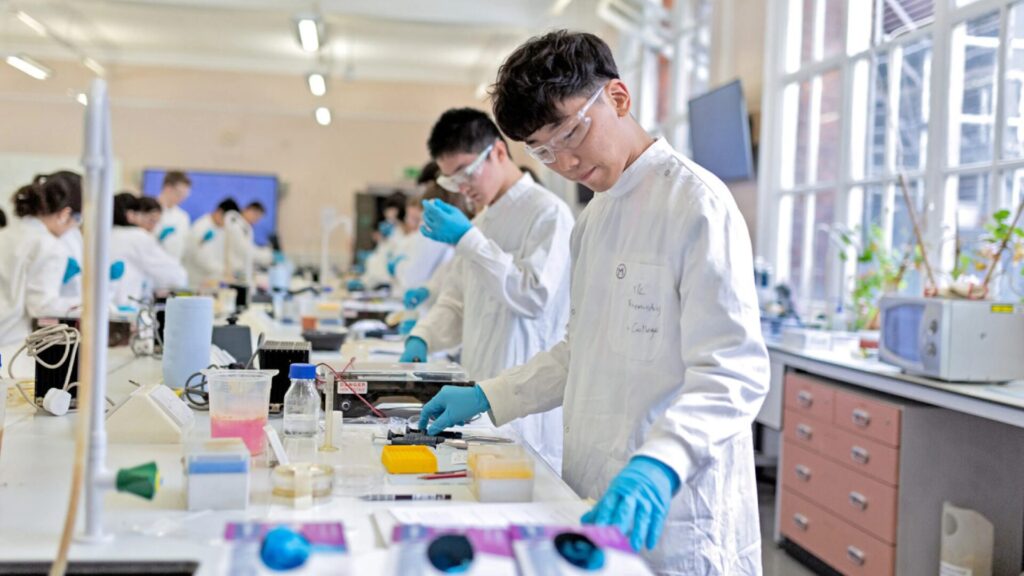
The Global Summer School is one of the more interdisciplinary pre med summer programs for high school students, combining medical learning with collaborative project work. In the first week, you study at St. Mary’s Hospital, where healthcare professionals teach clinical skills such as ABCDE assessment, CPR, measuring blood pressure and glucose, and urine analysis.
You also explore topics in life sciences and genetics and learn approaches to diagnosing common medical conditions. During the second week, you work with students from other disciplines on the Innovation Challenge, guided by industry professionals.
Why it stands out: It offers hands-on medical learning alongside interdisciplinary collaboration with peers and professionals in clinical and STEM fields.
15. King’s College London Pre-University Summer School Medical Science
Location: King’s College London, London, England
Cost: £3195 + £65 application fee
Application Deadline: April 10th
Dates: July 6-10
Eligibility: Must be 16 or 17 years old for the duration of the course; open to both UK and international students.
In one of the more academically rigorous pre med summer programs for high school students, you learn from faculty at King’s College London, following standards typical of UK medical summer programs. You study how anatomy and physiology work together to affect health, covering systems such as cardiovascular, neuroendocrine, and musculoskeletal.
You also explore how the body adapts to different environments, including high altitudes, extreme temperatures, and space. The program introduces research methods used to monitor and improve human performance and well-being. After completing all course requirements and attending sessions, you receive a King’s Certificate of Completion.
Why it stands out: The program connects you with the NHS, hospitals, and researchers, providing insight into London’s healthcare system.
From Pre-Med Experience to Essential Reading
For many students, the first real step towards medicine is not deciding on a degree, but finding experiences that make the subject feel real, demanding, and deeply worth pursuing.
That is where pre med summer programs for high school students can make a lasting difference, offering early insight into scientific thinking, healthcare challenges, and the mindset medicine requires.
Instead of leaving with interest alone, you come away with sharper questions, stronger motivation, and a more grounded understanding of what a future in medicine could ask of you.
To keep building that perspective, explore our Medicine Top Books Guide and discover the titles that can stretch your thinking far beyond the programme itself.