
 Русский (RU)
 Українська (UK)
 Türkçe (TR)
 Italiano (IT)
 Français (FR)
 Português (PT)
 中文 (中国) (ZH)
 Español (ES)
 日本語 (JA)
 ไทย (TH)
 Deutsch (DE)
 Ελληνικά (EL)
 Polski (PL)
 Bahasa Indonesia (ID)
 Nederlands (NL)
 العربية (AR)
 한국어 (KO)

Exploring science and technology in high school can feel both exciting and demanding, especially when your interests stretch far beyond what the classroom usually offers. STEM programs in Japan for high school students can be a powerful way to take that curiosity further, giving you the chance to develop advanced problem-solving skills in a setting shaped by innovation, precision, and real-world application. Instead of only learning through theory, you begin to engage with the kind of technical thinking that future university study and research often require.
Visualize yourself programming advanced robotics systems inside a modern laboratory in Tokyo or designing earthquake-resistant structures in Kyoto. Instead of merely watching internet videos about future gadgets, your schedule will feature designing sustainable energy grids alongside respected Japanese researchers. Plunging into an authentic technical environment lets you establish crucial global connections while grasping the actual demands of university engineering paths.
How to choose the best STEM Programs in Japan for High School Students?
Selecting the perfect overseas STEM program often feels like a massively confusing puzzle. Countless advertised programs function merely as simple sightseeing excursions without delivering any real practical lessons. Expert direction remains absolutely crucial to help you avoid those basic STEM courses and locate opportunities featuring high-quality STEM programs.
Leading Asian institutions organize demanding short courses crafted especially for highly motivated young innovators. Your selected STEM course might feature exploring artificial intelligence, developing aerospace materials, or studying quantum computing theories. Attendees refine their abilities by operating professional machinery, collaborating on hardware prototypes, and presenting their original data.
We have organized a thorough overview highlighting 15 STEM Programs in Japan for high school students. These specific programs earned their spots because they incorporate intense daily projects, superb mentorship from practicing scientists, and a strong global reputation.
For more subject options, you can check out summer programs in Japan.
15 STEM Programs in Japan for High School Students
1. Sakura Science Exchange Program
Location: Various universities and research institutions across Japan
Cost: Free (The Japan Science and Technology Agency pays for airfare, accommodation, and visa fees)
Dates: Varies by host organization (short-term trips generally last between 1 and 3 weeks)
Application deadline: Multiple deadlines occur throughout the year, depending on the specific Japanese host institution
Eligibility: High school students, university scholars, graduate researchers, and young professionals under 40 years old; international students are fully eligible since the initiative specifically invites overseas youth experiencing their first official stay in Japan.
The Japan Science and Technology Agency pays for international youth to travel and visit famous schools across Japan. Invited individuals spend between 1 and 3 weeks interacting closely with top Japanese professors and respected engineers. You listen to specialized science lectures and use complex laboratory equipment to run specific tests.
The schedule includes detailed facility tours and helpful meetings explaining how to earn college degrees in Japan. Visitors join sightseeing trips around the city to understand local customs and daily life much better. After finishing the program, every student joins a worldwide group to stay connected with their new Japanese mentors. You can apply here!
Why it stands out: International participants receive a fully funded trip to Japan to operate advanced scientific machinery alongside prominent Japanese researchers.
2. Immerse Education’s Tokyo Medicine Summer School
Location: Central Tokyo, Japan
Cost: £5,995 (Non-Residential) to £7,495 (Residential). Summer school scholarship available through our bursary programme
Dates: July 5th to July 18th, and July 19th – August 1st
Application deadline: Rolling admissions
Eligibility: Students aged 15 to 18; international students are fully eligible since the administration actively recruits overseas pupils seeking to study medicine in Japan
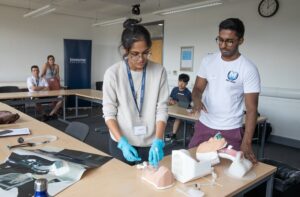
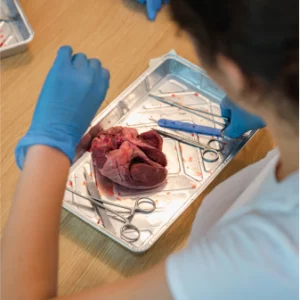
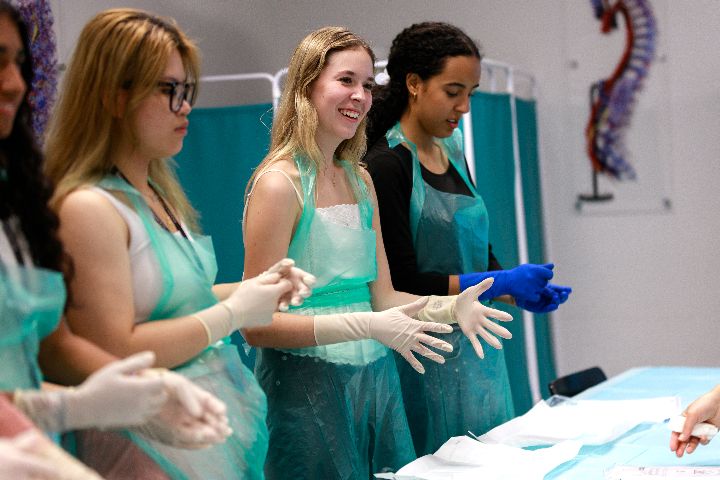
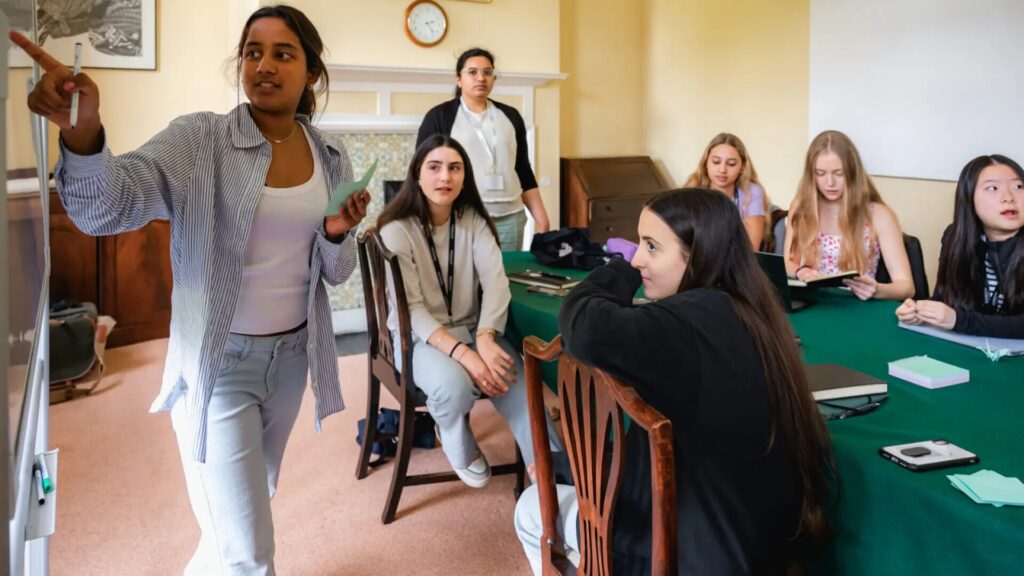
Immerse Education brings teenagers to central Tokyo to study university-level medical science. Participants join small classes containing 7 to 10 students to learn directly from expert tutors holding advanced degrees. Students practice human anatomy, clinical ethics, and diagnostic procedures using simulation-based medical scenarios.
Each scholar completes a personal research project under the direct guidance of a professional mentor. The curriculum involves 40 total hours of teaching and coaching over exactly 2 weeks. At the end of the program, you receive a formal academic certificate and a detailed evaluation report to include in your future university applications. You can apply here!
Why it stands out: Participants receive personalized academic coaching from prestigious university tutors while studying complex medical procedures inside Japan.
3. Global Science Campus (GSC)
Location: Various participating universities across Japan
Cost: Free
Dates: Varies by host university (sessions generally run from April to March)
Application deadline: Varies by participating university (usually between April and June)
Eligibility: High school students residing in Japan who demonstrate exceptional motivation and ability in science; international students living outside Japan are not eligible because the administration explicitly targets teenagers attending local Japanese high schools
The Japan Science and Technology Agency finances specialized academic courses at regional universities to prepare high schoolers for global research careers. Selected teenagers attend advanced college lectures and run independent experiments using professional science facilities. You work closely with veteran academics to formulate your own unique scientific projects over multiple months.
Participating universities often organize overseas exchange trips, allowing you to visit foreign research institutions and meet international scientists. Scholars gather at a national conference at the end of the program to showcase their final research data to scientific experts and fellow peers. You can visit the official website of your region’s participating university to apply.
Why it stands out: Local high schoolers direct their own scientific projects inside active university laboratories while receiving personal mentorship from professional academics.
4. Experts in Information Science Program (Tatsujin Program)
Location: National Institute of Informatics and partner universities, Japan
Cost: Free
Dates: 6 to 12 months (concluding in March)
Application deadline: Late January (Applications are closed now for 2026 cycle)
Eligibility: Middle school, high school, and technical college students residing in Japan; international students living outside Japan are ineligible because the administration specifically recruits local youth attending Japanese schools
The National Institute of Informatics selects exceptionally talented teenagers to participate in advanced computer science and artificial intelligence research. Participants receive direct mentorship from leading young scientists to develop a unique informatics project. You attend specialized lectures covering complex topics like algorithms, machine learning, and hardware architecture.
Mentors guide you through the entire research process from formulating a hypothesis to writing a formal academic paper. The administration provides opportunities for the most outstanding students to conduct collaborative research at famous overseas institutions. Everyone finishes the program by presenting their final research data at a national academic conference in March.
Why it stands out: Highly motivated teenagers execute their own computer science projects while receiving expert guidance from Japan’s top informatics researchers.
5. JAXA Space School For High School Students
Location: JAXA research centers across Japan
Cost: 22,000 JPY – 31,000 JPY (participants pay their own transportation fees)
Dates: Usually in July and August (sessions last 3 or 4 days); various dates for different venues
Application deadline: April 30th
Eligibility: High school students residing in Japan; international students living outside the country are ineligible because the administration strictly limits participation to local teenagers
The JAXA Space School is one of the most exciting STEM programs in Japan for high school students, bringing teenagers together to live and study inside professional space research centers. Participants form small groups to finish practical aeronautics assignments lasting 3 or 4 days. You receive direct instruction from active agency staff during specialized lectures and physical laboratory practices.
The schedule features exclusive facility tours where you observe restricted spacecraft, airplanes, and advanced testing equipment up close. Students collaborate to solve difficult scientific problems using real aerospace testing environments. Everyone concludes the camp by delivering a formal presentation to explain their group’s final results. Application forms will be available starting April 8.
Why it stands out: Teenagers get the experience of space agency facilities while studying real spacecraft alongside active aerospace professionals.
6. RIKEN BDR Hands-On Life Science Workshop
Location: RIKEN Center for Biosystems Dynamics Research (BDR), Kobe Campus, Kobe, Japan
Cost: Free (Participants pay for their own transportation)
Dates: 1 day during the summer (usually in August)
Application deadline: Details not available on the official website
Eligibility: High school students residing in Japan; international students living outside the country are ineligible because the administration requires physical attendance and conducts all activities strictly in Japanese
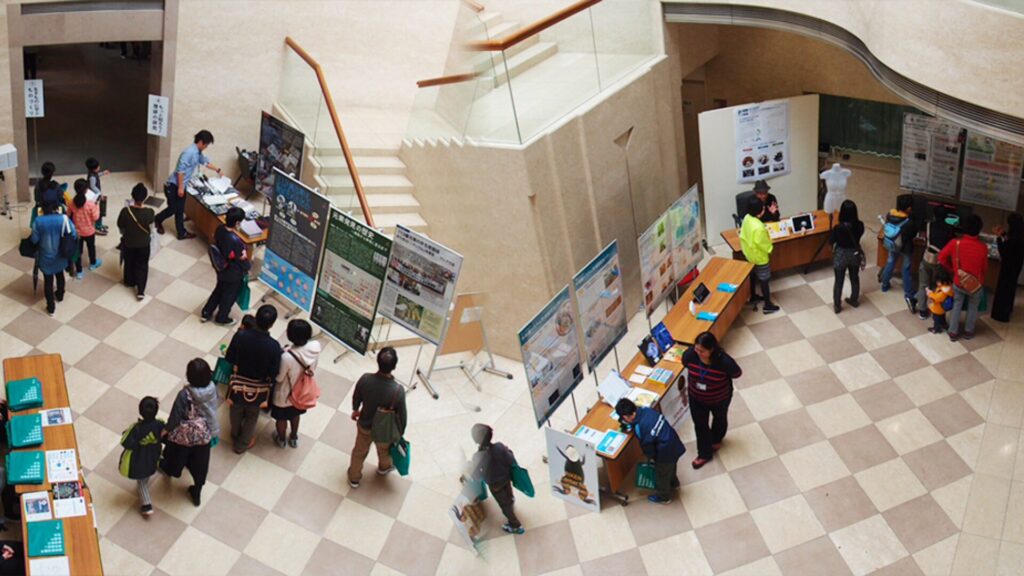
The RIKEN Center for Biosystems Dynamics Research invites teenagers to spend a full day exploring professional life science concepts inside official government laboratories. You extract and analyze your own DNA to decide specific genetic traits, such as your body’s ability to break down alcohol.
You operate complex laboratory equipment like polymerase chain reaction machines and microscopes under the direct supervision of professional biologists. Everyone concludes the workshop by chatting directly with the scientists to evaluate future college majors and potential careers in biology. No details are available on the official website for the application form.
Why it stands out: Local teenagers spend a full day conducting real genetic tests on their own DNA inside an official government biology laboratory.
7. University of Tokyo UTokyoGSC-Next
Location: University of Tokyo, Tokyo, Japan
Cost: Free (Participants pay for their own transportation, though the university offers partial travel subsidies for students living far away)
Dates: July to February (Stage 2); March to March (Stage 3)
Application deadline: May 15th
Eligibility: High school students residing in Japan; international students living outside the country are ineligible because the program rules explicitly require current Japanese residency
The University of Tokyo recruits high schoolers to produce distinct science and engineering projects. Students begin the multi-stage curriculum by attending interactive online workshops explaining complex math and structural concepts. You team up with college professors to outline a specific research proposal using formal design-thinking techniques.
The selection committee picks the top 20 students from the initial class to move into the final experimental phase. These finalists enter an active university laboratory to run physical tests under the direct oversight of academic specialists. Every finalist finishes their designated assignments by showcasing their resulting data at a public research conference. Applications will start from April 1.
Why it stands out: Local teenagers progress through a structured academic pipeline to eventually run independent experiments inside a prestigious university laboratory.
8. Kyoto University ELCAS Program
Location: Kyoto University (Yoshida and Katsura Campuses), Kyoto, Japan (or online via Zoom)
Cost: Free (Participants pay for their own transportation, meals, and accommodation)
Dates: 2 days in late July for online lectures, or 3 days in mid-August for in-person sessions
Application deadline: Usually Mid-June
Eligibility: High school students residing in Japan; international students living outside the country are not eligible since the university requires participants to attend domestic Japanese high schools and comprehend Japanese instruction
Kyoto University runs an intensive summer program to teach teenagers advanced research skills across various academic fields. Applicants choose between participating in a 2-day online lecture series or completing a 3-day in-person laboratory practicum. Professional researchers guide you through specific academic projects, answering your direct questions about the scientific process.
You collect raw data using professional academic machinery and analyze the results with your assigned group members. The entire curriculum provides a realistic preview of university-level academics to help you decide your future career path. Application form filling will begin in May.
Why it stands out: High schoolers engage directly with top Kyoto University professors to run actual experiments inside advanced research facilities.
9. Osaka University SEEDS Program
Location: Osaka University, Osaka, Japan
Cost: Free (Participants pay for their own transportation and meals)
Dates: August through February (Spanning the initial lecture phase and the final research phase)
Application deadline: April to May
Eligibility: High school students residing in Japan; international students living outside the country are ineligible because the university mandates physical attendance and conducts all lectures entirely in Japanese
Osaka University invites high school students to study science and humanities topics directly from active researchers. You start by attending interactive campus lectures to learn how professionals form scientific questions and solve difficult problems. The administration evaluates your early academic performance and selects top students to enter the advanced research phase.
You join a specific university laboratory to run physical experiments alongside college professors and graduate students. You analyze the resulting data and write a formal academic paper explaining your conclusions. Participants finish the program by presenting their final research findings at a public academic conference.
Why it stands out: High schoolers transition from attending basic college lectures to running independent experiments inside official university laboratories.
10. Tsukuba University GFEST Program
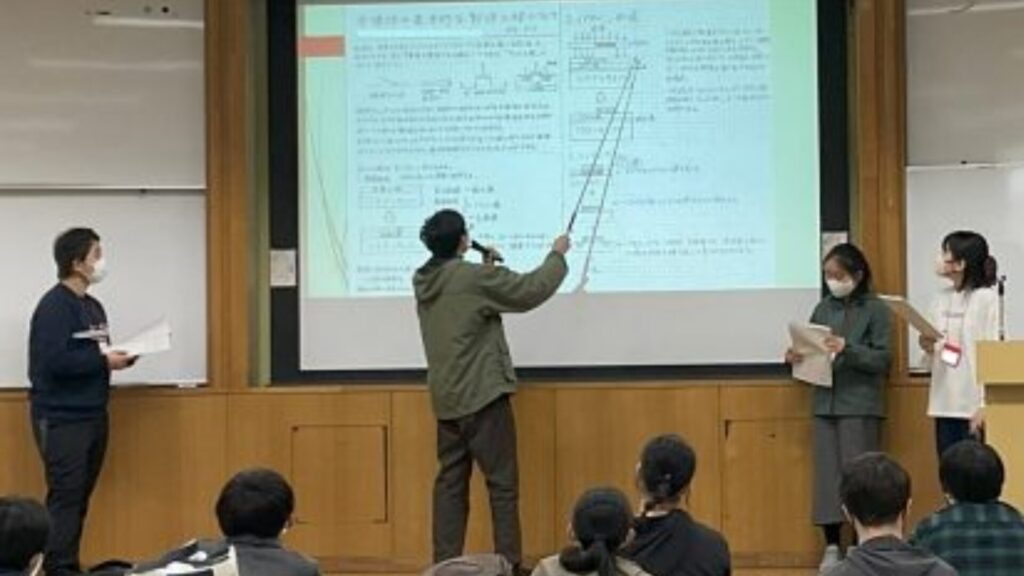
Location: Tsukuba University and local research institutions, Ibaraki, Japan (with online components)
Cost: Free (Participants pay for their own transportation, meals, and overnight accommodation if required)
Dates: July to March (9 months)
Application deadline: Mid-June
Eligibility: High school students and highly motivated 9th graders residing in Japan; international students living outside the country are ineligible because the program requires regular physical attendance at facilities in Tsukuba City and operates entirely in Japanese
Tsukuba University mentors teenagers to cultivate advanced science and technology skills through an intensive 9-month curriculum. You select between 2 distinct tracks based on their academic goals: conducting independent research or deeply exploring specific scientific fields. You attend interactive lectures and collaborative group work sessions focusing on entrepreneurship, societal problem-solving, and cross-cultural communication.
You visit respected research institutions around Tsukuba City to observe professional scientific operations directly. You conclude the experience by presenting their accumulated research data during a formal presentation session. Applications will start from May this year.
Why it stands out: Teenagers interact with international college students and run personalized science experiments under the direct supervision of university professors.
11. Kyushu University QFC-SP (Future Creators in Science Project)
Location: Kyushu University, Fukuoka, Japan
Cost: Free (Participants pay for their own commuting expenses, though the university offers partial travel assistance)
Dates: July to September (for Primary course only)
Application deadline: April to May
Eligibility: High school students attending schools in the Kyushu and Yamaguchi regions; international students living outside Japan are ineligible because the administration requires regular physical commuting to the local Fukuoka campus
Kyushu University invites high schoolers to complete a 14-month science training intensive program. The initial semester features basic classroom instruction where you study various STEM topics directly from active academics. Teachers review the class results and pick the highest achievers to proceed to the practical laboratory stage.
These advanced students spend a full year executing a specialized science project inside a real campus lab. They also draft an academic manuscript detailing their experimental procedures and final outcomes. The cohort finally gathers in March to share their scientific posters with peers and evaluate experts. Applications will begin in April of this year.
Why it stands out: Teenagers undergo a rigorous 20-month academic progression that develops them from basic classroom learners into independent student researchers.
12. Shizuoka University FSS (Future Scientists’ School) Program
Location: Shizuoka University (Shizuoka and Hamamatsu Campuses), Shizuoka, Japan
Cost: Free (The university provides financial assistance to help cover transportation expenses)
Dates: 1 to 2 years (The initial phrase run from July to December, with an optional advanced research track extending an additional year)
Application deadline: Mid-June
Eligibility: High school students in grade 10 or 11, and middle school students in grade 9 residing in Japan; international students living outside the country are ineligible because the program strictly requires participants to commute to the physical campus at least once a month
Shizuoka University invites high schoolers to complete a rigorous scientific training program lasting 1 to 2 years. You start by attending interactive campus lectures covering advanced topics like disaster risk reduction, nuclear fusion, and academic writing. The curriculum requires every student to study scientific ethics and draft formal research proposals.
Top-performing students advance to the experimental phase to formulate concrete projects solving real societal problems. You also operate professional laboratory equipment to run physical tests under the direct guidance of active university professors. You conclude the entire experience by presenting your accumulated research data to evaluating experts at a formal academic conference.
Why it stands out: Local high schoolers receive direct financial assistance to commute to a major Japanese university and run independent scientific experiments alongside professional researchers.
13. KEK TYL School Science Girl Camp
Location: High Energy Accelerator Research Organization (KEK), Tsukuba, Japan
Cost: Free (Participants are responsible for their own transportation to the facility)
Dates: 2 days (April 2nd to April 3rd)
Application deadline: January 26th
Eligibility: Female high school students (1st and 2nd year) residing in Japan
This specialized two-day camp is co-hosted by Ochanomizu University and Nara Women’s University to encourage young women to pursue careers in physics and STEM. You visit the KEK campus in Tsukuba to tour massive particle accelerators and engage in hands-on physics experiments.
The camp features direct interactions with young female researchers and graduate students, providing mentorship, career advice, and a clear picture of what life is like as a professional physicist. Applications for the 2026 admission cycle are closed.
Why it stands out: It specifically targets the gender gap in STEM by providing female high schoolers with strong role models and access to world-class particle physics equipment.
14. Keio University Medical Science Education Project
Location: Keio University School of Medicine (Yokohama/Tokyo Campuses), Japan
Cost: Free
Dates: 1-year program, starting from August
Application deadline: July 31st
Eligibility: High school/Vocational school students aged 15 to 18 residing in Japan
Keio University offers one of the most academically rigorous STEM programs in Japan for high school students, designed to cultivate future medical researchers and science writers. The initial phase involves 50 selected students who attend foundational lectures, lab training, and English paper reading sessions.
A smaller group of 15 students is then chosen to conduct advanced research in Keio’s medical laboratories, aiming to publish English-language papers or present at international conferences. The curriculum includes discussions on global health, big data in medicine, and public health.
Why it stands out: High schoolers gain unprecedented early access to one of Japan’s top private medical schools, learning everything from basic wet-lab skills to complex medical data analysis.
15. Tokyo Metropolitan University STEM Lectures
Location: Tokyo Metropolitan University, Tokyo, Japan
Cost: Free
Dates: Various dates (e.g., March 26th, for the “An Afternoon Where Two Fields of Knowledge Intersect” session)
Application deadline: Varies (depends on event to event)
Eligibility: Junior and Senior high school students worldwide
As part of its high school-university articulation program, Tokyo Metropolitan University offers specialized, intensive seminars diving deep into niche STEM topics. For the 2026 season, courses include data science, biological decision-making, and the psychology of the mind.
The lectures incorporate active learning methodologies and group discussions, giving high schoolers a true taste of the university seminar experience. You interact directly with professors and graduate students, gaining insights into academic research methodologies.
Why it stands out: It introduces high schoolers to highly specialized, interdisciplinary STEM topics (like mathematical biology and clinical psychology) rarely taught in standard secondary education.
Let Japan Shape Your Global Study Path
Choosing where to study is not only about rankings, but also about the kind of ideas, people, and academic culture that will shape you.
For students exploring STEM programs in Japan for high school students, that decision can begin early through experiences that blend technical learning with cultural perspective.
Japan offers more than advanced laboratories and respected universities, giving you insight into how innovation, discipline, and global collaboration come together in practice.
Explore our Study Abroad blogs for expert guidance on destinations, subjects, and applications, and start comparing the global opportunities that could shape your next academic step.