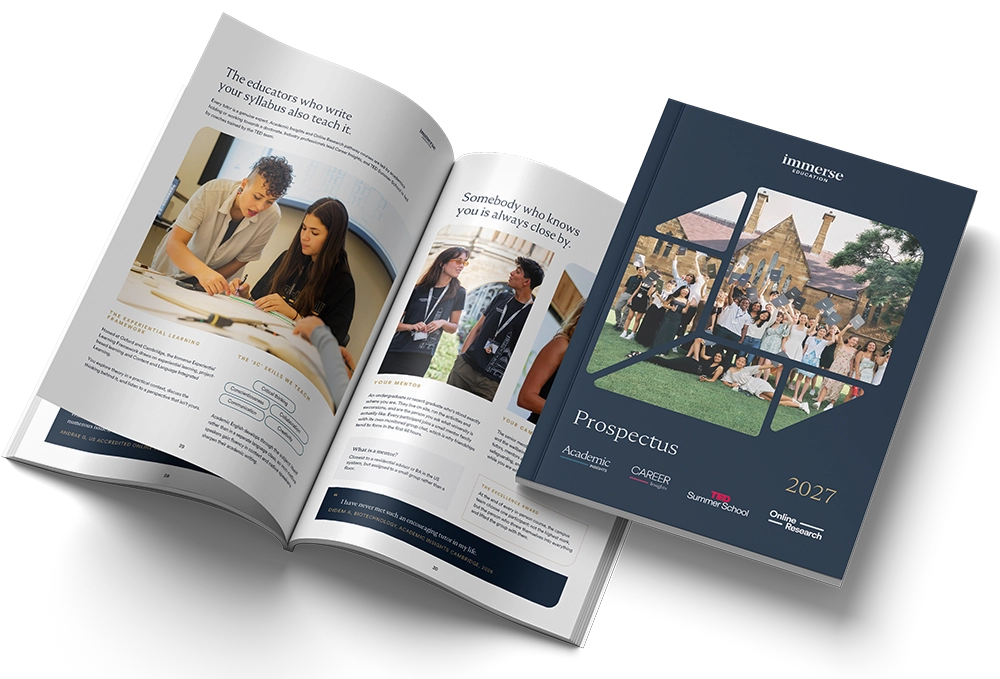
15 Educational Summer Camps for High School Students

If you’re a high school student looking to make the most of your summer while continuing to learn and grow, educational summer camps can be a great option. They offer a unique balance of academics, skill-building, and interactive experiences. Whether you’re interested in STEM, business, the arts, or humanities, these camps provide opportunities to explore your interests in a more engaging and dynamic environment.
Imagine spending your summer attending workshops, participating in hands-on activities, and collaborating with peers who share your curiosity. Picture learning through projects, discussions, and real-world challenges while also enjoying the social and interactive aspects of a camp setting. Educational summer camps for high school students combine structured learning with creativity and exploration.
How do you choose the right educational summer camps for high school students?
With so many options available, it’s important to identify camps that offer meaningful learning experiences rather than just general activities. Some focus on specific subjects like science, coding, or creative writing, while others provide a broader, interdisciplinary approach. Thoughtful research helps ensure you find a program that aligns with your interests and goals.
Educational summer camps may include workshops, group projects, interactive sessions, and experiential learning activities. You might work on a project, participate in discussions, or apply your knowledge to solve real-world problems in a collaborative environment.
You’ll learn from experienced instructors, connect with peers, and build essential skills such as critical thinking, communication, and teamwork. Along the way, you’ll gain confidence, discover new interests, and develop a clearer sense of your academic and career goals.
To help you get started, we’ve curated a list of 15 Educational Summer Camps for High School Students.
For adjacent opportunities, you can consider online summer camps or summer camps abroad.



15 Educational Summer Camps for High School Students
1. Canada/USA Mathcamp
Location: Champlain College in Burlington, VT (varies every year)
Cost: $0 – $7,500 based on family income; financial aid is available
Dates: June 28th – August 2nd
Application Deadline: February 23rd
Eligibility: Students who are 13-18 years old; open to international students
Canada/USA Mathcamp gives mathematically advanced students the chance to work well beyond a standard high school curriculum in a residential setting, making it one of the most rigorous educational summer camps for high school students on this list. You get to shape much of your academic experience by choosing from a wide range of classes in pure and applied mathematics. Topics can extend into areas such as topology, abstract algebra, logic, physics, and quantum computation, giving you exposure to the kind of conceptual work often associated with university study.
The program also includes supervised projects, which may involve research, directed reading, coding, or collaborative problem-solving. Faculty members include researchers, postdocs, and graduate students, so instruction reflects both depth and current academic thinking.
Why it stands out: It gives you freedom to build your own mathematical path, pairing advanced coursework with project work and a peer community centered on deep intellectual curiosity.
2. Immerse Education’s Pre-University Summer Camp
Location: Boston, Cambridge, London, Oxford, Singapore, Sydney, Tokyo, and Toronto
Cost: Varies; summer school scholarship available through our bursary programme
Dates: 2 weeks during the summer
Application Deadline: Multiple summer cohorts; rolling admissions
Eligibility: Students aged 13-18 currently enrolled in middle or high school; open to international students
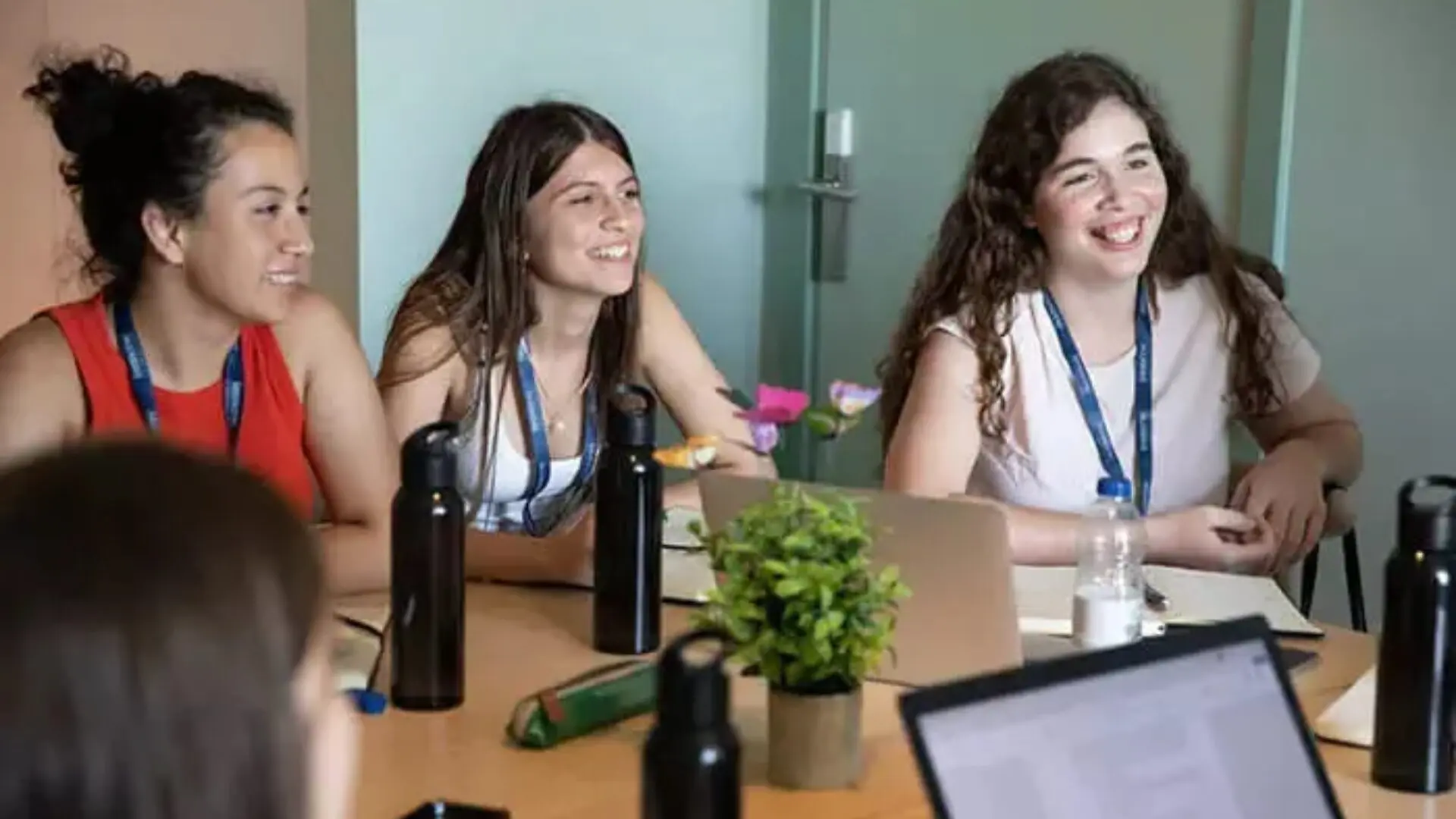
The Academic Insights Program lets high school students experience university life firsthand. You will live on campus and study in small groups of 7–10, learning from tutors from top universities like Oxford and Cambridge. Participants can explore over 20 subjects, including Architecture, AI, Business Management, Computer Science, Economics, Medicine, Philosophy, and more.
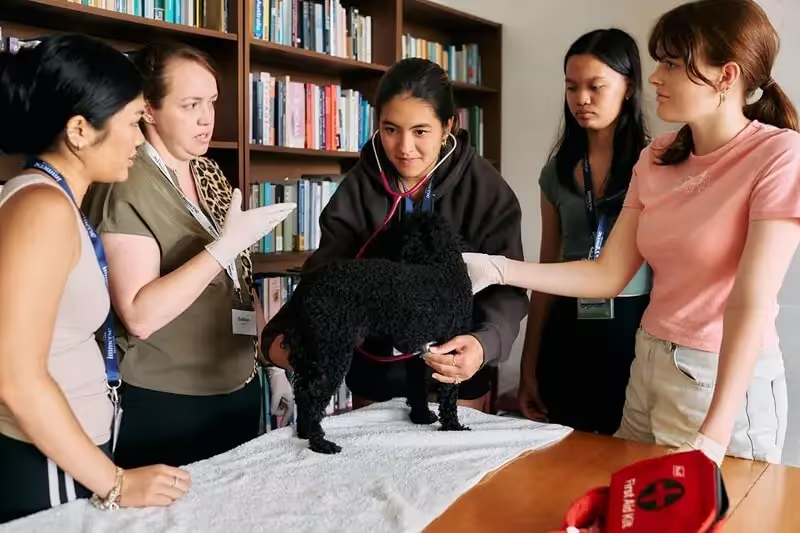
The courses are experiential and hands-on: you may find yourself conducting dissections in medicine, designing a robotic arm in engineering, participating in a moot court for law, or building creative writing portfolios and business case studies. By the end of the program, you’ll complete a personal project, receive written feedback, and receive a certificate of completion. You can find more details about the application here.
Why it stands out: You’ll get an early start at university life and academics because the program includes an independent project, discussion-based classes, and living at a college campus.
3. Tufts University – Entrepreneurship and Innovation Bootcamp
Location: Tufts University – Medford / Somerville campus, MA
Cost: Commuter: $4,225; Residential: $5,750; limited need-based scholarships are available
Dates: July 5-17
Application Deadline: May 1st
Eligibility: High school students who are rising sophomores, juniors, and seniors; open to international students
At Tufts, this bootcamp introduces entrepreneurship as a practical way to respond to real-world problems through structured venture design. You work in teams to develop an idea into a startup, nonprofit, or small business concept while learning how frameworks such as business modeling and go-to-market strategy shape early-stage decision-making. The program emphasizes collaboration, so much of the experience involves refining ideas with peers, dividing responsibilities, and responding to feedback.
Mentorship from Tufts students and alumni helps connect the camp’s project work to broader conversations about innovation and campus entrepreneurship. The program concludes with a Demo Day presentation, where teams communicate their concepts and receive input on their work.
Why it stands out: It connects venture creation with the wider Tufts entrepreneurship ecosystem, giving you both team-based startup experience and insight into how innovation is supported on a college campus.
4. The Marillyn A. Hewson Cybersecurity Summer Camp
Location: University of Alabama, Tuscaloosa, AL
Cost: None
Dates: Camp 1: June 1-5; Camp 2: June 8-12
Application Deadline: Rolling until full; typically late May for Camp 1 and early June for Camp 2
Eligibility: High school students in the Tuscaloosa area; not open to international students
This cybersecurity camp introduces students to digital security through a mix of foundational instruction and applied technical work. Depending on your experience level, you can begin with core concepts such as web systems and network security or move into more advanced material. A major part of the program is its use of CyberPatriot-style exercises, which place you in simulated environments where you identify vulnerabilities and defend virtual systems.
The curriculum also draws on university expertise to connect cybersecurity with broader topics such as data analysis, research, and practical risk management. The work is hands-on, meaning you not only get to learn terminology but also explore how cyber defense operates in realistic scenarios.
Why it stands out: It offers a clear progression from foundational cybersecurity concepts to applied defense challenges, giving you early exposure to the kinds of technical problem-solving used in the field.
5. University of Minnesota’s IMA-MathCEP Math Modeling Camp
Location: University of Minnesota, Minneapolis, MN
Cost: $200
Dates: June 22-26
Application Deadline: May 31st
Eligibility: High school students who have completed a one-year course in single variable calculus; open to international students
The IMA-MathCEP Math Modeling Camp focuses on how mathematics can be used to study complex systems and public-facing problems. The program asks you to work in teams on applied questions involving areas such as disease spread, traffic patterns, climate effects, or infrastructure planning.
Faculty mentors guide you through the process of building, testing, and revising models, which helps you understand how mathematical assumptions shape real conclusions. The collaborative format also develops your ability to explain technical reasoning clearly within a group. The program ends with a presentation of your findings, reinforcing the communication side of quantitative work.
Why it stands out: It shows you how mathematics functions beyond the classroom by linking modeling to practical questions in science, infrastructure, and public systems.
6. NC State Summer Engineering Residential Camps
Location: NC State University, Raleigh, North Carolina
Cost: $1,550; need-based aid is available for qualifying families with limited funds
Dates: Week 1: June 14-19; Week 2: June 21-26; Week 3: July 5-10; Week 4: July 12-17, 2026
Application Deadline: February 27th
Eligibility: Rising 11th and 12th-grade high school students; open to international students
In this camp, you will spend a week at NC State exploring aerospace, agricultural, biomedical, chemical, civil, computer science, electrical, environmental, industrial, materials, mechanical, nuclear, paper, and textile engineering. Through hands-on activities, you will build bridge prototypes, program autonomous robots, and conduct laboratory experiments to solve complex problems.
You live on the Centennial Campus while receiving direct mentorship from university faculty and current students. By participating in interactive design challenges and research facility tours, you develop technical design, collaborative problem-solving, and communication skills.
Why it stands out: It offers an authentic preview of university life combined with direct access to specialized research facilities that aren’t typically accessible to high schoolers.
7. Stanford University Mathematics Camp (SUMaC)
Location: Virtual or residential at Stanford University, Stanford, CA
Cost: Online: $3,750; Residential: $8,950; need-based financial aid available
Dates: Online Session One: June 15th – July 3rd; Online Session Two: July 6-24; Residential: June 21st – July 17th
Application Deadline: February 2nd
Eligibility: Rising high school juniors and seniors; students 18+ are eligible only for the online program; open to international students
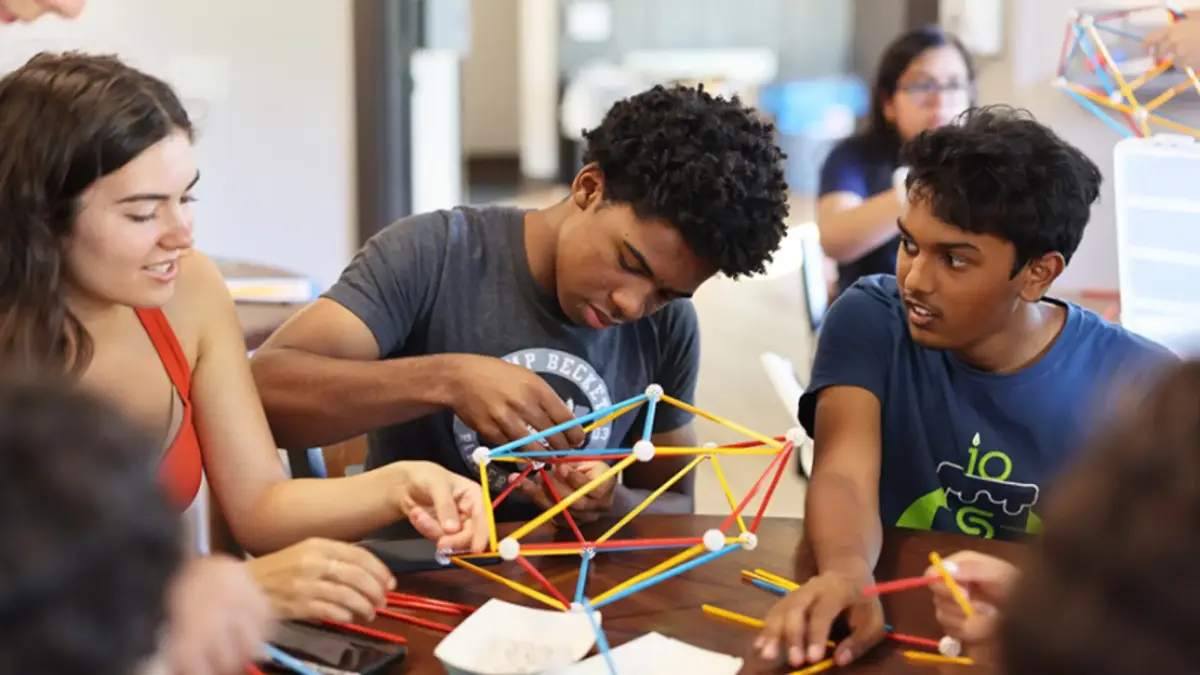
SUMaC is designed for students who want to engage with mathematics at a more theoretical and proof-oriented level than most high school programs provide. Through daily lectures, problem sessions, and independent assignments, you work with advanced concepts that require abstract reasoning and sustained attention to formal argument.
The emphasis is not just on solving problems, but on understanding the structure behind them and communicating that reasoning clearly. Teaching assistants and instructors support that process through discussion-based learning. The experience concludes with a research-style presentation, giving you practice articulating complex ideas in a clear and rigorous way.
Why it stands out: It offers unusually early exposure to proof-based mathematics, helping you experience the kind of conceptual rigor associated with advanced university study.
8. RxPLORE Camp at the University of Pittsburgh
Location: University of Pittsburgh, PA
Cost: None
Dates: July 23-25
Application Deadline: July 1st
Eligibility: Rising high school juniors and seniors; open to international students
RxPLORE introduces pharmacy through a structured look at how the profession operates across community, hospital, and industry settings and stands out as one of the most career-focused educational summer camps for high school students. Each day centers on a different branch of the field, allowing you to compare career pathways while participating in hands-on activities such as compounding, patient-care simulations, and lab-based exercises.
The program also brings you into contact with pharmacy faculty and current students, which helps place the field in a university and professional context. Campus and school tours add to that experience by showing how pharmacy education fits into a broader college environment. The sessions are practical, offering a more concrete understanding of what pharmacists do rather than only hearing about the profession in abstract terms.
Why it stands out: It breaks pharmacy into distinct practice settings, helping you understand the range of roles within the profession while also experiencing a health-focused university environment.
9. WNE-MHC Golden Bear Summer Camp
Location: Western New England University, Center for Sciences and Pharmacy, Springfield, MA
Cost: None
Dates: June 22-26
Application Deadline: April 1st (first 35 registering students are accepted)
Eligibility: High school students ages 13-18; not open to international students
The Golden Bear Summer Camp introduces several healthcare and health science fields through a combination of demonstrations, labs, and career-focused sessions. The program exposes you to pharmacy, pharmaceutical sciences, occupational therapy, and neuroscience, which makes it useful if you are still exploring your direction. Activities such as medication compounding and DNA extraction help connect classroom science with applied healthcare work.
Sessions in occupational therapy and neuroscience broaden the scope further by showing how different disciplines approach patient care, rehabilitation, and research on the nervous system. The program also includes guidance related to college preparation, which helps place these fields within a longer-term academic path.
Why it stands out: It gives you a wider view of health-related college pathways by combining multiple disciplines in one program rather than focusing on a single career track.
10. PNW GenCyber Summer Camp
Location: Purdue University Northwest, Hammond, IN
Cost: None
Dates: June 9-13
Application Deadline: Late April/Early May
Eligibility: All high school students; not open to international students
The PNW GenCyber Summer Camp introduces cybersecurity through a week of applied labs, team activities, and interactive technical challenges. Its curriculum is organized around the GenCyber Six concepts, so students are not only exposed to tools but also to the foundational principles that structure cybersecurity education. Camp activities move across several subfields, including wireless network security, cryptography, ethical hacking, and digital forensics.
The program’s use of gameplay, scavenger hunts, and robot-based challenges adds variety while still keeping the work grounded in core cyber ideas. Later exercises ask you to solve more complex problems as part of a team, which helps build both technical reasoning and collaborative skills.
Why it stands out: It introduces several branches of cybersecurity in a single week, using hands-on challenges to help you see how the field extends beyond coding alone.
11. FAU’s Criminal Justice Summer Camp
Location: FAU Campus, Boca Raton, FL
Cost: $950
Dates: Session 1: June 9-14; Session 2: July 12-17
Application Deadline: Rolling registration
Eligibility: Students entering grades 9 to 12 in the coming fall; open to international students
Florida Atlantic University’s Criminal Justice Summer Camp provides students with direct exposure to how several parts of the justice system operate in practice. The program combines lectures with field visits and live demonstrations, allowing you to examine investigation procedures, forensic methods, and specialized law enforcement roles concretely.
You learn how evidence is handled, how crime scenes are approached, and how agencies coordinate across different forms of criminal justice work. Topics such as Death Row cases and the FBI’s Most Wanted provide a broader legal and institutional context for the hands-on activities.
Why it stands out: It combines campus learning with field-based exposure, helping you understand criminal justice as a system that connects investigation, forensics, and law enforcement practice.
12. University of Cincinnati Summer Engineering Camps
Location: University of Cincinnati campus, OH
Cost: $125-$275; limited scholarships are available
Dates: Multiple one-week camps between June 1st and July 31st
Application Deadline: March 31st
Eligibility: Rising high school freshmen through seniors; not open to international students
The University of Cincinnati’s summer engineering camps introduce students to engineering through project-based work, mentorship, and discipline-specific exploration. Depending on the camp, you may focus on the engineering design process more broadly or engage with particular subfields through labs, experiments, and small-group activities.
Programs such as GE Next Engineers also incorporate mentorship from industry professionals, which helps connect technical challenges with real engineering pathways. Throughout the week, you work through design problems collaboratively and develop solutions that reflect both creativity and analytical thinking.
Why it stands out: It links engineering design with both industry mentorship and campus-based learning, giving you a clearer sense of how engineering study translates into real projects and future pathways
13. Camp SOAR (Summer Opportunities in Aerospace Research)
Location: Texas A&M University, College Station, TX
Cost: Not explicitly stated; $35 application fee; need-based scholarships are available
Dates: July 12-17
Application Deadline: February 27th
Eligibility: High school juniors and seniors (as of fall); open to international students
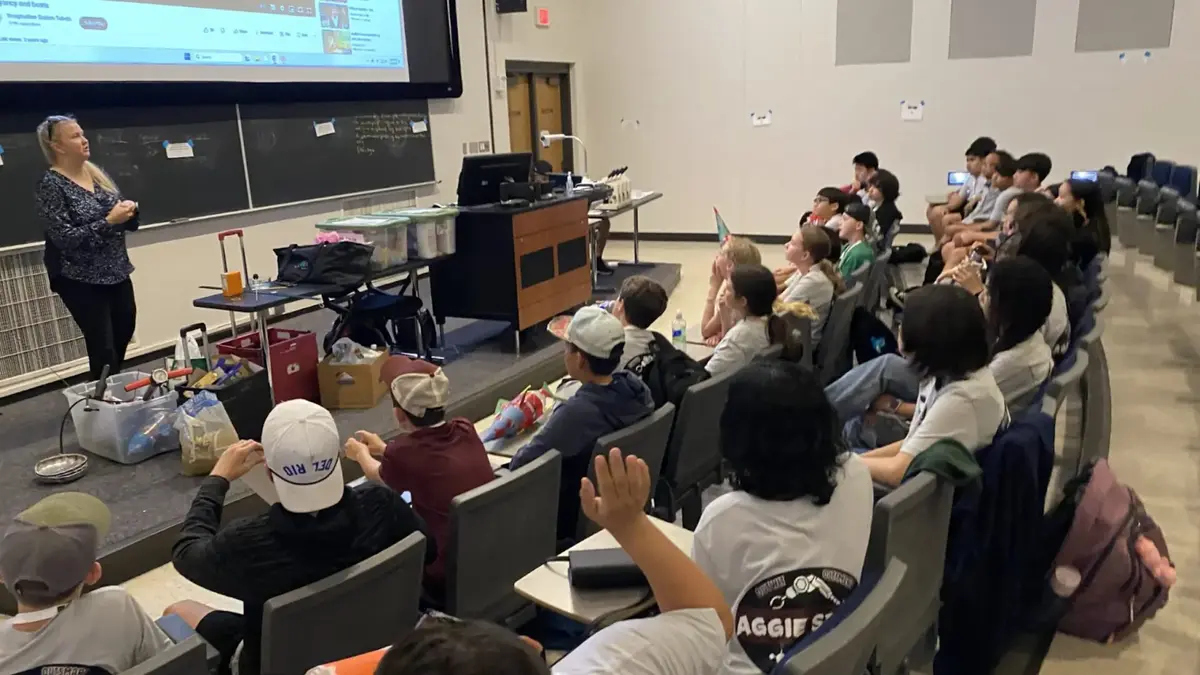
Camp SOAR introduces aerospace engineering through a combination of technical instruction, design work, and exposure to active research environments. You select a track such as aircraft, rotorcraft, space mission design, or space robotics, then apply ideas from faculty lectures to a project within that area. The program emphasizes the engineering design process, so building, testing, and refining are central to the experience. Research facility visits add important context by showing how aerospace work is carried out in university labs and specialized technical spaces. Conversations with faculty and current students also help clarify what studying aerospace engineering in college can look like.
Why it stands out: It combines track-specific design work with direct access to aerospace research facilities, giving you an early look at both the discipline itself and the college environment surrounding it.
14. CJ Summer Camp
Location: College of Criminal Justice, Sam Houston State University, Huntsville, TX
Cost: $725
Dates: Session 1: June 14-18; Session 2: July 5-9
Application Deadline: April 15th
Eligibility: High school students ages 15-17; not open to international students
Sam Houston State University’s Criminal Justice Summer Camp introduces you to the different branches of the criminal justice system through hands-on activities and direct interaction with professionals. You take part in exercises such as mock crime scene investigations and forensic analysis, which help translate theory into practical application. Sessions also explore areas like policing strategies, public safety, and investigative techniques, giving you a broader understanding of how different roles connect.
Guest speakers from agencies such as the FBI, DEA, and U.S. Marshals Service provide insight into career pathways and training expectations. You also engage with university faculty and current students, which adds perspective on studying criminal justice at the college level.
Why it stands out: It brings together hands-on forensic work and direct exposure to professionals from major law enforcement agencies, helping you understand both the academic and practical sides of criminal justice.
15. USF Summer Camps: JGHC: Mock Trial Intensive
Location: USF St. Petersburg, Tampa, FL
Cost: $695
Dates: July 6-10
Application Deadline: Rolling basis
Eligibility: Students entering grades 10-12; open to international students
The JGHC Mock Trial Intensive at the University of South Florida focuses on building legal reasoning and courtroom communication skills through structured practice. You work with a case file throughout the week, learning how to analyze evidence, develop arguments, and construct a clear legal strategy.
Instruction covers core components of trial advocacy, including opening statements, witness examination, and closing arguments, with guidance from legal educators and collegiate mock trial coaches. The experience concludes with a full mock trial in a professional courtroom setting, where you apply what you’ve learned in a realistic environment.
Why it stands out: It combines comprehensive legal training with a final courtroom simulation, giving you direct experience with trial procedures and the expectations of collegiate-level mock trials.
Join the Immerse Education 2027 Essay Competition
Follow the instructions to write and submit your best essay for a chance to be awarded a 100% scholarship.
From Academic Curiosity to University Confidence
Sometimes the most valuable part of summer is not the break itself, but the chance to discover what subjects, ideas, and ways of learning genuinely excite you.
For most, educational summer camps for high school students offer that first real taste of deeper academic exploration, greater independence, and learning beyond the classroom.
What stays with you is not just what you studied, but the confidence that comes from trying something new and seeing where your interests might lead.
Take that next step with our University Preparation blogs, where you can find practical guidance to turn new interests into stronger choices, clearer goals, and more confident applications.







Unlock Inspiring Opportunities with the Immerse Education Newsletter
Join our newsletter to stay ahead with exclusive updates, exciting programme highlights, and expert insights from the world of immersive education.
Learn how Immerse can transform your life
An in-depth overview of our university and career preparation programmes
Get a glimpse into the life of an Immerse participant
Find the right programme for you with sample timetables, location showcases, and more