15 Finance Programs for High School Students

If you’re a high school student curious about finance, it can feel both exciting and a bit confusing. You may understand the classroom basics, but still wonder what finance really looks like in the real world, from how people make decisions about money to why markets move. That’s where the right finance programs for high school students can help, giving you a structured way to explore the subject and see whether it’s a good fit for you.
Picture yourself analyzing stock market movements with guidance from expert instructors, exploring risk and valuation concepts, or participating in simulations that mirror actual financial decision-making. Through these programs, you get an introduction to the world of finance and a clearer sense of whether it’s the right path for you.
How to choose the right finance programs for high school students?
There are multiple finance programs available for high schoolers. At first glance, many can seem too introductory, not hands-on enough, or disconnected from actual financial concepts. That’s where the right guidance is important, because not all finance programs are built the same.
Various universities, business schools, and educational institutions offer well-designed finance programs for high school students. You’ll explore topics like investment analysis, financial modeling, macroeconomic trends, behavioral finance, and entrepreneurship. Under the guidance of experienced instructors, you’ll take part in workshops, case studies, and simulations.
And if you’re just starting out in finance and some of those terms feel unfamiliar, that’s completely normal. These programs are designed to introduce you to the ideas step by step, so you can build confidence without needing any previous knowledge.
Of course, once the program begins, you’ll have to work hard. But for now, we’ve made the searching process easier for you. To help you pick, we’ve put together a list of 15 finance programs for high school students. They’ve been shortlisted for their academic rigor, practical learning opportunities, and strong reputations.



15 Finance Programs for High School Students
1. Investment Portfolio Management
Location: Columbia Business School Campus, New York, NY
Cost: Varies depending on the format, more details here
Dates: Summer A: June 29th – July 17th; Summer B: July 21st – August 7th
Application Deadline: Varies depending on the format, exact dates here
Eligibility: Rising 9th through current 12th-grade domestic and international students can apply
The Investment Portfolio Management program by Columbia University introduces high school students to how professional investment managers construct investment portfolios and explore stocks, bonds, ETFs, cryptocurrency, and real estate, making it one of the more analytical finance programs for high school students.
You’ll explore different investment opportunities as well as learn key valuation and risk management techniques. Throughout the program, you’ll seek answers to questions like How might investors benefit from diversification? What are the metrics for measuring performance? What are the common pitfalls made by investors?
Class time is divided between interactive lectures and guided hands-on work where you’ll assume the role of a professional money manager operating your own diversified investment portfolio in a session-long simulation game. You’ll interact with guest speakers who are professionals in the field and participate in the discussions with them, learning common theories and real-world investment decisions. By the end, you’ll develop a sense of how real-time managers make decisions and hands-on techniques for building and managing portfolios.
Why it stands out: It teaches you finance using Ivy League case-based learning, helping you think like an analyst early.
2. Immerse Education’s Finance Summer School

Location: London and New York
Cost: Varies; summer school scholarship available through our bursary programme
Dates: 2 weeks during the summer
Application Deadline: Multiple summer cohorts with rolling admissions
Eligibility: Students around the world aged 15-18 currently enrolled in high school
Immerse Education’s Career Insights Banking & Finance Summer School offers high school students an immersive introduction to finance through real-world projects, industry exposure, and expert-led teaching. Based in global financial hubs such as London and New York, the programme shows how financial markets, banking institutions, and economic systems operate in practice. In our New York Banking & Finance summer school, you’ll experience the city like a local, from Wall Street and iconic landmarks to world-class museums and the best of New York’s food and culture.
But if you prefer our London Banking & Finance summer school, you’ll enjoy sports, activities, and sightseeing that bring the city to life beyond the classroom, from football matches and major attractions to evening events and West End theatre shows. Wherever you choose to study, learning remains hands-on and career-focused, with project-based work, simulations, case studies, and industry visits that turn financial theory into real-world decision-making.
Why it stands out: It combines finance fundamentals with direct industry exposure, professional coaching, and real-world projects, giving you clarity on finance careers before university.
3. Wharton Global Youth Program: Essentials of Finance
Location: The Wharton School of Business, Philadelphia, USA
Cost: $8299
Dates: Multiple dates throughout the summer
Application Deadline: March 18th
Eligibility: High school students worldwide who are currently enrolled in grades 9-11
In Wharton’s Essentials of Finance, you’ll explore the finance theory, the methods, and concerns of the world of finance. You’ll study the fundamentals of both personal and corporate finance, and explore topics such as the time value of money, the trade-off between risk and return, equities, and corporate accounting. You will participate in interactive exercises, group work, cohort activities, presentations, and case studies.
You will learn how to analyze financial statements and practice valuing equities, evaluate a publicly traded company, and present your market recommendation using the tools of modern finance. By the end, you’ll build critical thinking, communication, and collaboration skills in the process. The program is designed by Wharton Professor Michael Roberts to provide you with university-level experience.
Why it stands out: It gives you access to Wharton’s core finance framework, helping you build skills used by top business students.
4. Wharton’s Cambridge, UK: Public Finance and Society Program
Location: University of Cambridge, Cambridge, England
Cost: $9599
Dates: July 18th – July 31st
Application Deadline: March 18th
Eligibility: For high school students around the world currently enrolled in 9th to 11th grades.
If you are a high school student interested in public finance and how government policies affect the economy, Wharton’s Public Finance and Society program is a perfect opportunity. It guides you on how business, government, and society are interconnected, each influencing and shaping the others. You’ll learn the fundamentals of microeconomics, exploring concepts like competitive markets, public goods, and government intervention. Alongside these concepts, you will learn game theory models and economic frameworks to understand strategic decisions of individuals, firms, and governments, and analyze them.
By the end, through hands-on case studies, simulations, and group activities, you’ll research and design government policy solutions while understanding the policy challenges of the real world. Upon completion, you’ll present a final policy brief, offering evidence-based recommendations on a pressing economic issue and a Wharton Global Youth Certificate of Completion.
Why it stands out: It exposes you to global economic policy discussions, helping you understand how government finance shapes real markets.
5. Yale Young Global Scholars – Politics, Law & Economics
Location: Yale University Campus, New Haven, Connecticut
Cost: $7,000
Dates: In three sessions from June 21st to July 31st, exact details here
Application Deadline: Early action: October 15th; Regular Decision: January 7th
Eligibility: Students worldwide between the ages of 16 and 18 years. Be a first-time participant in YYGS. If you have participated in a YYGS session during a previous summer, then you are not eligible to participate
The Politics of Law & Economics program is designed for high school students to understand diverse economic theories, the values and practices of government, and legal frameworks in a historical and comparative perspective. The program further elaborates on topics like public policy, human rights, market regulation, governance structures, and international policy.
You’ll develop critical thinking and analytical skills by analyzing social systems and present-day issues through economic, legal, and political theory lenses. You’ll explore interdisciplinary connections between law, economics, and politics in Yale faculty-led lectures and seminars. Through the seminars, you’ll address questions about how governments regulate markets, what the limitations are in legal frameworks, how inequality relates to political polarization, and how AI is reshaping policy.
Why it stands out: You’ll interact with peers from 150+ countries and participate in seminar-style lectures mirroring Yale’s undergraduate teaching.
6. Young Finance Scholar (YFS) Program: Online
Location: Online
Cost: $950
Dates: Self-paced course
Application Deadline: All year round, self-paced
Eligibility: Middle & high school students, ages 13–17
For middle and high school students, the Young Finance Scholar program is designed to introduce business, finance, and economics concepts. The program provides theoretical knowledge and hands-on learning to help you develop the analytical and ethical skills required to excel in the financial world.
You’ll explore topics like entrepreneurship and ethics, personal financial management, capital markets, and financial services with career pathways. By the end, you’ll understand how to start a business, manage personal finances, or explore a career in finance.
Why it stands out: It provides industry-style training from a respected finance institute, helping you gain practical investing and valuation skills.
7. University of South Florida: Bulls Finance
Location: USF Tampa – Muma College of Business, Tampa, FL
Cost: $750. Optional residential add-on (Rocky’s Residents): $1,395 per camper
Dates: June 22–26, 2026
Application Deadline: Registrations open on February 1st
Eligibility: For students in grades 9-12
Bulls Finance Camp, in collaboration with USF Muma College of Business, provides a comprehensive introduction to the world of finance and stands out among applied finance programs for high school students. You’ll explore hands-on learning and practical insights into the field. You’ll also learn the fundamentals of finance, like investments, corporate finance, financial planning, and FinTech. During the program, you’ll gain skills and hands-on experience using Bloomberg Terminals in the Lasher Center, work in the USF trading room for financial analytics and stock trading.
The program provides opportunities for you to connect and network with experienced finance professionals, gain insights into the industry, and receive career advice. By the end, you’ll get an experience of college and explore many career options in finance. You’ll learn key financial concepts, develop financial literacy, and skills to make informed financial decisions.
Why it stands out: It introduces you to financial decision-making tools, helping you explore whether finance aligns with your academic strengths.
8. Finance Institute: Wall Street in the Classroom
Location: Fordham’s Rose Hill Campus, Bronx, NY
Cost: $1,300
Dates: Multiple sessions of one week each
Application Deadline: April 1st (tentative)
Eligibility: For high school students in grades 10-12
Fordham’s Wall Street in the Classroom program introduces practical finance industry issues into your classroom. You’ll study fundamental financial concepts like the time value of money and contemporary issues like alternative investing and cryptocurrency. In this one-week program, you’ll explore the aspects of personal finance: savings, investing, and debt management, as well as other concepts such as asset management, asset allocation, and risk management theory.
You will understand practical contemporary finance issues as investment and analysis: stocks, bonds, and monetary policy, hedge fund & private equity industries. You will attend guest lectures led by speakers from top finance companies and recent Gabelli School of Business alumni.
Why it stands out: It connects you to New York’s finance ecosystem, helping you learn directly from professionals in the world’s top financial hub.
9. Silk Family Investment Institute: Wall Street Academy

Location: USF School of Management Campus, Fulton Street, San Francisco
Cost: Residential: $3,025; Commuter: $2,150
Dates: Cohort 1: June 22nd – June 26th; Cohort 2: July 13th – July 17th
Application Deadline: Not specified yet
Eligibility: For high school students
USF’s Wall Street Academy program is a hands-on learning program for high school students. As a student interested in finance and investing, you’ll explore a wide range of topics like the basics of investment, personal investing, alternative investments, and global financial markets.
You’ll get hands-on experience in the University’s Investment Lab and use financial tools like Bloomberg Terminal and FactSet. You’ll also build practical skills in PowerPoint and Excel, used by Wall Street professionals. The program includes tours of leading financial institutions like BlackRock and Merrill Lynch, guest lectures, and networking events.
Why it stands out: It mixes academic finance with real market insights, helping you understand investing from both theory and practice.
10. Paul Merage School of Business: Investments, Financial Planning, and You
Location: University of California, Irvine, California
Cost: Tuition: $1,395 per week, including a non-refundable $600 deposit.
Dates: June 22-26, 2026; July 6-10, 2026; July 20-24, 2026; July 27-31, 2026
Application Deadline: Opens in January
Eligibility: High school students from incoming freshmen to recently graduated seniors
UC Irvine’s Investments, Financial Planning, and You program helps high school students understand finance and develop financial skills throughout the week. You’ll understand the foundation of wealth development, analyze, and investigate investment vehicles. You’ll participate in case studies, group projects, online simulations, and presentations led by industry professionals and faculty from the Paul Merage School of Business.
You’ll also learn the application of personal and finance, and wealth management principles, develop and test investment strategies, through hands-on exercises. At the end, you’ll complete the capstone project of the program, develop a personal wealth management plan, and present your strategy for long-term financial success.
Why it stands out: It focuses on personal finance and investment fundamentals, helping you build financial literacy early.
11. Tufts University: Finance Essentials
Location: Tufts University Medford Somerville Campus, Medford, Massachusetts
Cost: Residential: $3,550; Commuter: $2,750; financial aid available
Dates: Residential: July 19th – July 24th; Commuter: June 22nd – June 26th
Application Deadline: May 1st
Eligibility: High school students worldwide entering grades 11-12
The Finance Essentials program for high school students is tailored to introduce the world of finance, financial instruments, institutions, and their role in the global economy. During the program, you’ll have hands-on experience, and you’ll develop practical skills by analyzing different markets and financial tools. You’ll also examine how banks, investment firms, stock exchanges, and government institutions are interconnected.
You’ll participate in simulations, group exercises, and micro-assignments to build skills in money management, risk evaluation, and institutional operations. By the end, you’ll gain financial knowledge and skills and learn how finance can address climate change and social equity. The program also offers an opportunity to enhance your financial literacy so you understand how markets affect the broader economy and helps you explore a career path in finance.
Why it stands out: It gives you a strong introduction to financial analysis, helping you build quantitative reasoning used in business programs.
12. Columbia University: Introduction to Business, Finance, and Economics
Location: Columbia University Morningside Campus, New York, NY; Online
Cost: Three-Week Residential: $12,764 per session; Three-Week Commuter: $6,310 per session; more details here
Dates: Multiple sessions varying in format
Application Deadline: Varies depending on the format, more details here
Eligibility: Rising 9th through current 12th grade students (domestic and international)
The Introduction to Business, Finance, and Economics program provides an understanding of the firm’s financial and economic behavior. You’ll gain a fundamental and practical understanding of how the firm secures cash and identifies worthy investments in the first place. You will try to answer questions about the process of identifying good investments, different sources of cash, and the functioning of financial markets.
Throughout the program, you’ll explore stocks, bonds, stock markets, and valuation models for investments, firms, and securities. You’ll also learn how financial markets work and their history, concepts like optimal investment strategies, what financial statements reveal and conceal, and different sources of risk.
Why it stands out: You’ll be taught by experienced tutors and have independent work components, so you’ll get an understanding of what university-level academic work looks like.
13. Bentley University: Wall Street 101
Location: Bentley University, Waltham, MA; Online
Cost: Varies depending on the format, more details here
Dates: Vary by program
Application Deadline: On a rolling basis until June 1st
Eligibility: For students worldwide entering their Junior or Senior year of high school who have completed at least two years of college preparatory coursework at the high school level before entering the program.
Wall Street 101 is a hands-on learning program for high school students offering courses on personal finance, stock valuation and investment research, and macroeconomics. You’ll participate in small classes, interactive simulations, policy debates led by Bentley faculty, and presentations by Wall Street professionals.
You’ll gain hands-on experience with industry-standard databases such as Bloomberg, FactSet, and the Financial Trading System in the university trading room. You’ll also study industry-standard databases and learn about financial technology’s impact on the industry and the art and science of human psychology shaping our investment decisions. At the end, you’ll have developed presentation skills, financial literacy, and global connections with peers from around the world.
Why it stands out: It immerses you in market simulations at a top business school, helping you experience how financial decisions play out in real time.
14. Immerse’s Economics and Business Academic Summer Schools
Location: Oxford, Cambridge, London, Singapore, Sydney, Toronto, Boston, and Tokyo
Cost: Varies; summer school scholarship available through our bursary programme
Dates: 2 weeks during the summer
Application Deadline: Multiple summer cohorts with rolling admissions
Eligibility: Students worldwide aged 13–18 currently enrolled in secondary or high school
Immerse Education’s Economics & Business Summer School offers ambitious high school students the opportunity to study undergraduate-level economics and business in world-renowned academic settings. Delivered through the Academic Insights Pathway, the programme combines university-style teaching with seminars led by expert academics from Oxford, Cambridge, and Harvard. On the economics pathway, participants explore microeconomics and macroeconomics, global trade, behavioural economics, and public policy, analysing data and building evidence-based arguments about how markets and governments interact.
Alongside this, the business pathway examines how organisations operate, covering strategic management, leadership, marketing, innovation, and decision-making. Through lectures and practical case studies, participants develop thinking and academic independence. Whether you’re drawn to an economics summer school in 2026 or a business summer school centred on strategy and leadership, the programme prepares you for future university study.
Why it stands out: It delivers a genuine university-level experience, combining academic depth, expert teaching, and personalised feedback to help you explore economics and business with confidence before applying to higher education.
15. Wake Forest University: Finance and Investing Institute
Location: Wake Forest University Reynolda Campus, Winston-Salem, NC
Cost: $3,500
Dates: June 14-19; June 21-26
Application Deadline: Opens November 1 and accepts students on a rolling basis
Eligibility: Current 9th – 12th grade students around the world
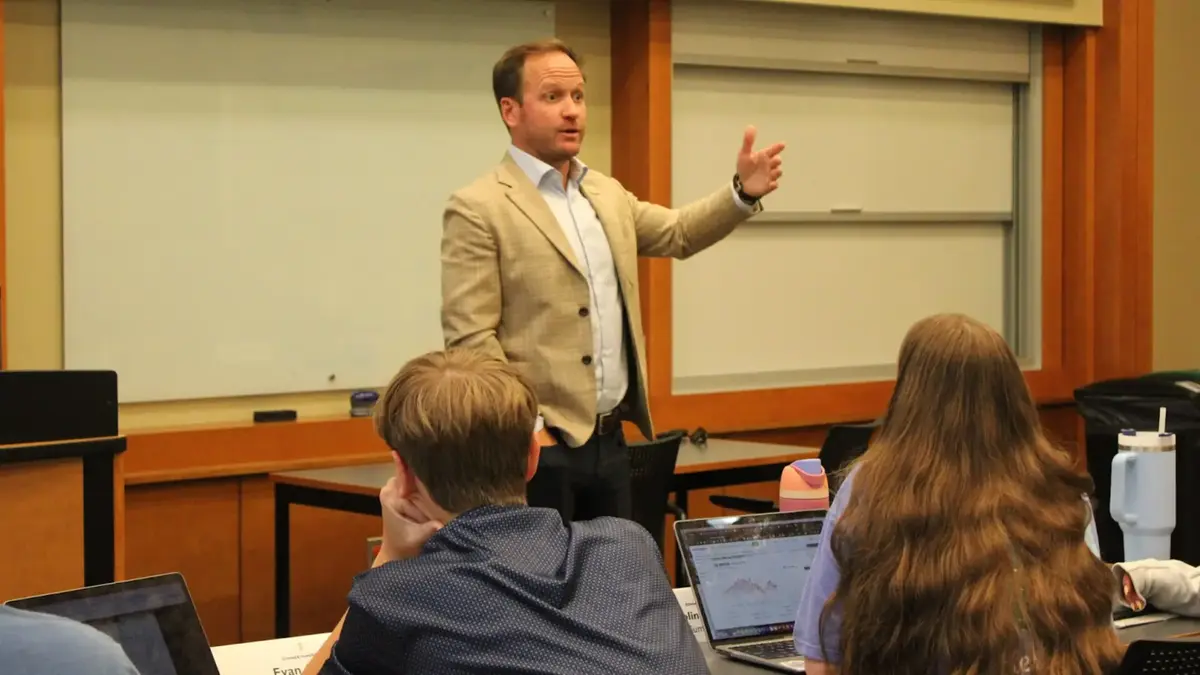
The Finance and Investing Institute offers a hands-on learning experience for high school students and is one of the more practice-focused finance programs for high school students. You’ll explore how investing works, popular investing approaches, techniques, products, and learning how fundamental analysis plays a role in valuation. The faculty and financial leaders provide hands-on learning experience, a tour of a financial institution and trading floor, and participation in a mock investment competition.
The program guides you on how finance impacts both personal and professional lives, covering topics like how the stock market works, market analysis, financial statement analysis, and the time value of money. At the end, you’ll have created your own portfolio, learned the benefits and risks of investing, and received guidance on various careers in finance.
Why it stands out: It introduces you to investment principles through hands-on projects, helping you understand how portfolios are built and evaluated.
Join the Immerse Education 2027 Essay Competition
Follow the instructions to write and submit your best essay for a chance to be awarded a 100% scholarship.
Finance for Curious Young Minds
Exploring finance early helps you move beyond classroom theory and understand how money, markets, and decisions connect in the real world.
The right experience builds confidence, curiosity, and clarity, showing you what studying and working in finance can actually look like.
As this list shows, the best finance programs for high school students combine academic rigour with hands-on learning, guidance, and real insight.
If you’re keen to deepen your understanding between programmes, our Economics Top Books Guide is a thoughtful next step, offering reading that sharpens perspective and keeps curiosity growing.







Unlock Inspiring Opportunities with the Immerse Education Newsletter
Join our newsletter to stay ahead with exclusive updates, exciting programme highlights, and expert insights from the world of immersive education.
Learn how Immerse can transform your life
An in-depth overview of our university and career preparation programmes
Get a glimpse into the life of an Immerse participant
Find the right programme for you with sample timetables, location showcases, and more