15 Internships for High School Students

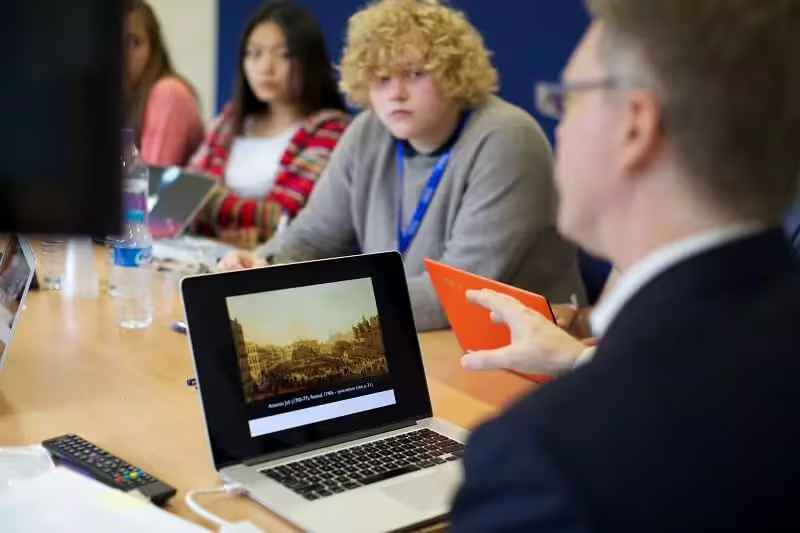
When you’re in high school, the future can feel both exciting and uncertain. You might wonder what the workplace aspect of your favorite subjects at school looks like. But there’s only so much you can learn from textbooks and lectures. At some point, you might want to see what the actual world looks like, and that’s where internships for high school students come in.
Imagine spending your time working alongside professionals, contributing to projects, and getting a behind-the-scenes look at industries you might want to work in someday. You could work at a research lab, a nonprofit office, a tech startup, or a creative studio. Internships for high school students let you step into environments that might be typically inaccessible to you.
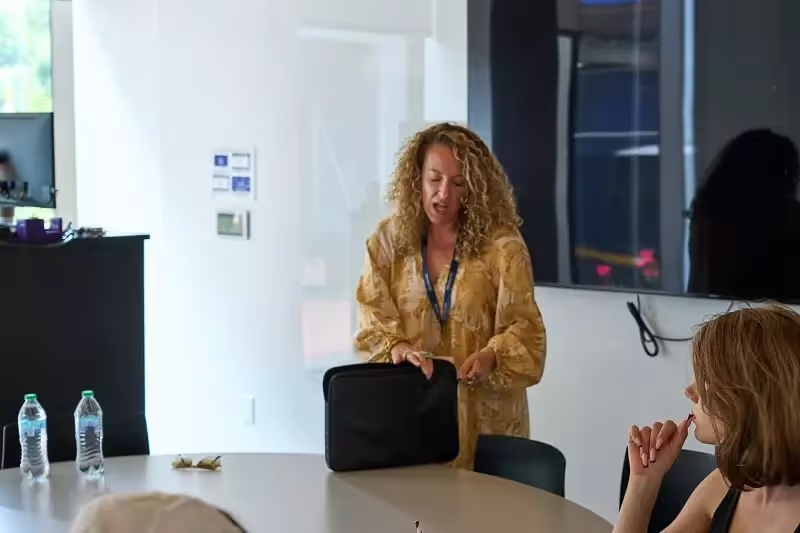
Even if you’ve prior project work experience, internships can still be helpful. You will meet mentors, collaborate with people from different backgrounds, and learn how your strengths translate into the workplace.
What kinds of internships for high school students are available?
It’s true, finding meaningful internships at this age can feel challenging. Some are too basic, others don’t offer real responsibility, and many aren’t designed for high school students. That’s why knowing what to look for matters, so you can identify the opportunities that are best for you.
Across STEM, business, healthcare, media, law, research, and community service, there are internships designed specifically for motivated high school students. You can assist with actual tasks, contribute to ongoing projects, learn workplace communication, and build a resume that stands out. More importantly, you can determine what you’re interested in and better make future academic and career decisions.
To help you navigate the options, we’ve put together a list of 15 Internships for High School Students. To clarify, a few of the items might seem different from traditional internships. We’ve also included programs with a work-learn component that help you develop the necessary skills. These programs have been handpicked for their hands-on experience opportunities, mentorship possibilities, and global reputations.


15 Internships for High School Students
1. MIT Research Science Institute (RSI)
Location: Massachusetts Institute of Technology, Cambridge, MA
Cost: Free
Acceptance rate/cohort size: Highly selective, 100 students
Dates: Late June – Early August
Application Deadline: December 10th
Eligibility: High school juniors worldwide: check if your country participates and apply locally.
If you’re a high school student looking for an internship that combines scientific theory and research, then the Research Science Institute (RSI) at the Massachusetts Institute of Technology could offer an immersive experience. During the first week, you’ll attend intensive STEM classes led by renowned Professors. The next five weeks, you’ll work on individual research projects under the guidance of experienced researchers and scientists who will be your mentors.
You’ll get to read the most up-to-date literature in science and engineering. Along with the intensive academic experience, you will also take part in field trips to science and technology facilities in the Boston Area. In the final week, RSI will give you a chance to prepare your research projects and share them through oral and written presentations.
Why it stands out: You’ll have the opportunity to complete actual research projects at RSI’s cutting-edge labs that are ordinarily inaccessible to high school students.
2. Immerse Education’s Career Insights Summer School
Location: Cambridge, London, New York, San Francisco, Singapore, Sydney, and Tokyo
Cost: Varies; summer school scholarship available through our bursary programme
Acceptance rate/cohort size: Average of 7 participants per class
Dates: 2 weeks during the summer
Application Deadline: Multiple summer cohorts with rolling admissions
Eligibility: High school students worldwide aged 15-18
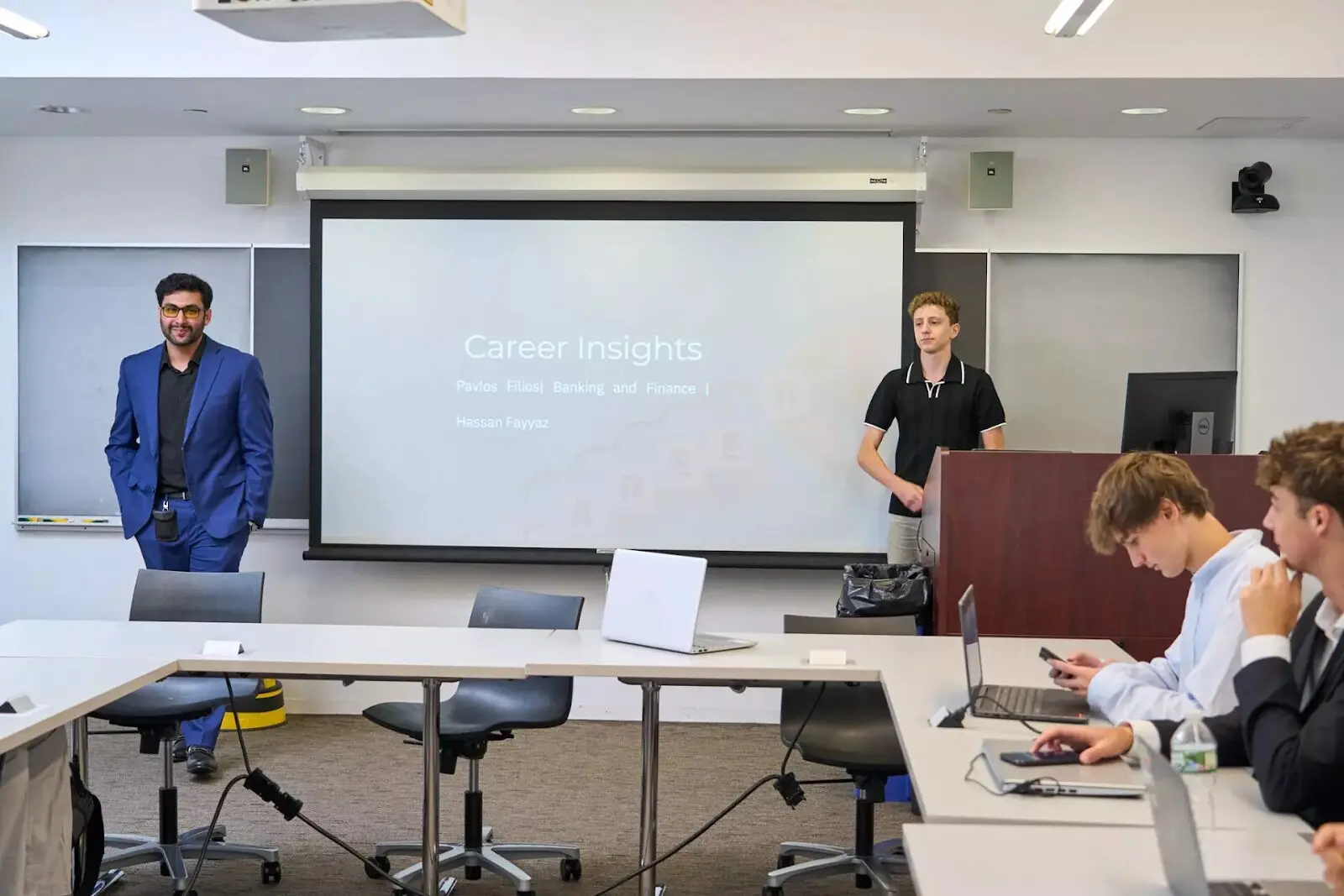
Immerse Education’s Career Insights Pathway lets high school students explore careers in major global industry hubs. Participants engage in project-based learning with established companies, attend interactive workshops, and visit offices, factories, and headquarters.
The program also includes in-person weekly 1:1 career coaching sessions and sessions where you will receive personalized feedback on your resume and overall profile. You’ll also present your findings to industry experts at the end of the program. You can find more details about the application here!
Why it stands out: You’ll explore university-level concepts in fields like medicine and psychology, giving you early exposure to the academic pathways behind real careers.
3. Stanford Institutes of Medicine Summer Research Program (SIMR)
Location: Stanford University, Stanford, CA
Cost/Stipend: $40 application fee (can be waived if gross annual family income is below $80,000); $500 Stipend- All students; $2,500 stipend- Students with financial needs
Acceptance rate/cohort size: 50 students
Dates: June 8th – July 30th
Application Deadline: February 21st
Eligibility: Current high school juniors or seniors; must be 16 years or older and attend a high school in the U.S.; must be U.S. citizens or permanent residents
If you’re a high school student interested in research in the field of medicine, then the Stanford Institute of Medicine Summer Research Program can be a high-impact opportunity for you. You’ll choose a research area of your interest from the eight options available to you, including immunology, neurology, cancer biology, stem cell, CVI, BMI, and genetics. Based on your research area, you’ll be assigned a specific institute.
You’ll conduct hands-on research through one-on-one guidance from a research mentor. You’ll present a research poster of your project on the last day of the program in front of family, teachers, and Stanford community members. If you’re looking for a truly transformative research experience, this might be a good option to consider.
Why it stands out: Its deep connections to Silicon Valley make it easier to transition to interdisciplinary courses such as biomedical entrepreneurship or AI-driven health research.
4. Fred Hutch Summer High School Internship Program (SHIP)
Location: Fred Hutchinson Cancer Center, Seattle, WA
Cost/Stipend: Free; a financial award is provided on internship completion
Acceptance rate/cohort size: Competitive
Dates: June 22nd – August 14th
Application Deadline: March 13th
Eligibility: Rising high school seniors (16+ years old), living in Greater Seattle or surrounding areas
If you’re a high school student with no experience in science and medicine but a deep interest in the field, then the Summer High School Internship Program (SHIP) could be a good start for you. At the beginning of the program, you’ll engage in hands-on activities and learn laboratory safety and techniques.
Afterwards, you’ll be paired with other interns and participate in mentored activities in a Fred Hutch research group in Seattle. You’ll take part in professional development workshops, research seminars, and enjoy time with your peers, engaging in social activities.
Why it stands out: It immerses you in cancer and infectious disease research, helping you build technical skills while learning how large research centers operate.
5. CURE Research Internship Program by UCSF
Location: Multiple UCSF campuses in San Francisco, CA, and Oakland, CA.
Cost/Stipend: Free; a stipend is paid
Acceptance rate/cohort size: Selective
Dates: June 15th – August 7th
Application Deadline: February 8th
Eligibility: Current 11th-grade high school students (minimum age: 16 years) must have completed biology or chemistry, with a minimum GPA- 2.5
The CURE Research Internship Program offers you to spend eight weeks at the University of California, San Francisco, and conduct scientific research. You’ll receive mentorship from the UCSF faculty and researchers, gain college application support, and training in biomedical research.
You’ll explore career opportunities in different research areas, including basic, clinical, population, and behavioral sciences. At the end of the program, you’ll present your research findings and project at a research symposium and will be paid a stipend on completion.
Why it stands out: It gives you experience in biomedical research or clinical support, helping you understand medical careers early.
6. University of Kansas Summer Venture in Business (SVB)
Location: University of Kansas, School of Business, Lawrence, KS
Cost: Free
Acceptance rate/cohort size: Selective
Dates: Session 1: June 15-20; Session 2: July 13-18
Application Deadline: March 31st
Eligibility: Rising high school juniors and seniors from Kansas/Kansas City Metro, minimum GPA- 2.75+
If you’re a high school student looking for a summer internship in the field of business, the Summer Venture in Business (SVB) could be a good option to pursue. You’ll get familiar with college life, explore important topics in business, including personal finance, money markets, corporate finance, and more.
You’ll go to campus and industry tours, engage in panel discussions and academic sessions with alumni and faculty. You’ll get access to the academic resources and opportunities at Kansas University. If you’re interested in learning real-world business skills and exploring careers in the field of business, then this can be a high-impact opportunity for you.
Why it stands out: It introduces you to business fundamentals through collaborative projects, helping you explore future majors in a supportive setting.
7. The Anson L. Clark Scholars Program
Location: Texas Tech University, Lubbock, TX
Cost/Stipend: $25 application fee; $750 stipend is paid
Acceptance rate/cohort size: 12 students
Dates: June 21st – August 6th
Application Deadline: February 16th
Eligibility: High school juniors and seniors (minimum age- 17 years), must be U.S. citizens or permanent residents
The Anson L.Clark Scholars Program will offer you an intensive seven-week summer research experience. You’ll attend weekly seminars, engage in weekly activities, and gain hands-on practical research experience.
You’ll be offered a wide range of research areas, including biology, physics, computer science, chemistry, history, cancer biology, mechanical engineering, and cellular and microbiology. You’ll learn directly from experienced faculty and also get to engage in social activities.
Why it stands out: It offers one-on-one mentorship with Texas Tech faculty, so you’ll be able to deepen your subject understanding and craft a better research project report.
8. MIT – MITES Summer
Location: MIT Campus, Cambridge, MA
Cost: Free
Acceptance rate/cohort size: Selective
Dates: Late June – Early August
Application Deadline: February 1st
Eligibility: High school juniors, U.S. citizens or permanent residents
If you’re a high school student looking for an internship to explore the on-campus life, the MIT-MITES Summer could be a good option for you. You’ll go on lab tours, engage in social events, and pursue five intensive math, science, and humanities courses.
You’ll develop important academic and personal skills and receive valuable counseling for your college admissions. The program will expose you to the new facets of STEM, help you form strong friendships and connections, and understand your potential as a student in STEM.
Why it stands out: You’ll get to join a robust alumni community (90% in selective universities) and potentially obtain career and academic support.
9. NYU Tandon – ARISE
Location: NYU Tandon School of Engineering, Brooklyn, NY
Cost/Stipend: Free, $1,000 Stipend is paid upon completion
Acceptance rate/cohort size: Selective
Dates: June 1st – August 14th
Application Deadline: February 21st
Eligibility: Rising high school juniors and seniors, full-time NYC residents attending NYC schools
The Applied Research Innovations in Science and Engineering will offer you a 10-week summer experience at the NYU Tandon School of Engineering. You’ll receive foundational training, attend college writing workshops, and develop research skills. You’ll assist researchers and faculty by working on real-world research projects.
The program will help you gain 120 hours of lab experience, build connections with professionals, and develop public speaking skills. You’ll also receive a stipend and present your work at the American Museum of Natural History (AMNH) on program completion. If you’re interested in contributing to the latest research in Science and presenting it at the Colloquium to the NYU community, then ARISE could be a good option.
Why it stands out: You’ll get access to NYU’s alumni network with jobs, internships, and research opportunities.
10. Carnegie Mellon’s Summer Academy for Math and Science (SAMS)
Location: Carnegie Mellon University (Pittsburgh, PA)
Cost: Free
Dates: June 20th – August 1st
Application Deadline: February 1st
Eligibility: U.S. high school sophomores or juniors from underrepresented communities, minimum age: 16 years
The Summer Academy for Math and Science (SAMS), led by the Centre for Student Diversity and Inclusion, will offer you an in-depth understanding of STEM. You’ll work on hands-on projects, get to interact with renowned faculty, and attend classroom sessions.
The program curriculum is divided into three parts and equips you with the skills and knowledge to pursue a career in STEM. You’ll attend an award ceremony and present your STEM projects at the SAMS Research Symposium.
Why it stands out: It offers long-term mentoring, helping you better craft competitive applications for selective STEM & math university programs.
11. Geosciences Bridge Program at the University of Maryland Eastern Shore (UMES)
Location: University of Maryland Eastern Shore, Princess Anne, MD
Stipend: $500/week
Acceptance rate/cohort size: Moderately selective
Dates: July 1st – August 9th (tentative, based on previous years)
Application Deadline: May 31st (tentative, based on previous years
Eligibility: Graduating high school seniors, U.S. citizens or permanent residents, planning to pursue a bachelor’s degree in a geoscience discipline
The Geosciences Bridge Program will offer you a six-week summer experience at the University of Maryland Eastern Shore (UMES). You’ll participate in hands-on activities, lectures, and go on field trips. You’ll learn about different areas in geoscience, including biogeochemistry, civil and environmental engineering, atmospheric science, environmental science, marine chemistry, marine geology, physical oceanography, marine biology, remote sensing/GIS, and related fields.
You’ll gain access to a strong network of faculty and staff, such as the Woods Hole Partnership Education Program (PEP), who might support you in finding internships in the future.
Why it stands out: It gives you exposure to Earth science and geoscience research; helpful if you’re interested in geology, climate, or environmental science early on.
12. Bank of America Student Leaders Program
Location: Local nonprofit organizations and a national summit held in Washington, D.C.
Cost/Stipend: Free; a stipend is paid
Acceptance rate/cohort size: 300+ students
Dates: Eight weeks in July (schedule varies by location)
Application Deadline: January 15th
Eligibility: High school juniors/seniors in eligible markets; US work authorisation without sponsorship required
The Bank of America Student Leader’s Program will offer you paid internship opportunities with local non-profits. You’ll gain practical, real-world experience through participation in a national leadership summit.
You’ll witness the collaboration among non-profits, businesses, and governments and their impact on improving social life. Through the program, you’ll develop valuable skills in creating social change through workshops, discussions, and meetings with national leaders.
Why it stands out: You’ll engage in leadership training, community service, and corporate mentorship, helping you build civic awareness and early professional experience within a major financial institution.
13. Science & Engineering Apprentice Program (SEAP)
Location: Naval Air Warfare Center Aircraft Division (NAWCAD), Lakehurst, NJ.
Cost/Stipend: Free; New participants are paid $4,000; Returning participants are paid $4,500
Acceptance rate/cohort size: Highly Selective
Dates: Eight weeks in the summer
Application Deadline: November 1st
Eligibility: High school students must be U.S. citizens
The Science and Engineering Apprenticeship Program (SEAP) will allow you to spend eight weeks in the Department of the Navy (DoN) laboratories and participate in real naval research.
You’ll receive mentorship from renowned scientists and engineers, work on meaningful STEM research, and get to explore research and development opportunities through DoN science and technology. Your application will be judged on academic merit, personal statements, recommendations, and career interests.
Why it stands out: It offers hands-on experience in naval and marine engineering/science, helping you get a sense of defense-sector research and applied STEM work.
14. Hutton Junior Fisheries Biology Program
Location: All 50 states + Canada, Mexico, Puerto Rico, and the Pacific Islands.
Cost/Stipend: Free; $3,000 stipend is paid
Acceptance rate/cohort size: Selective
Dates: Eight-week summer internship (typically mid-June to late July or early August)
Application Deadline: January 25th
Eligibility: Grades 11–12; 16+ by application close; residents of US, Canada, Mexico, or Puerto Rico.
If you’re a high school student interested in biology, then the Hutton Junior Fisheries Biology Program can offer you a real-world experience in the field. Sponsored by the American Fisheries Society, this program will offer you a hands-on experience working with fishery professionals. During this eight-week program, you’ll learn the solutions to environmental issues, understand marine conservation, and gain inspiration to become a fisheries professional in the future. Alongside practical work, you’ll collaborate with your mentor, complete reporting tasks, and learn what a career in fisheries biology truly involves.
Why it stands out: It immerses you in fisheries biology and ecological fieldwork, giving real-world exposure to conservation, marine biology, and environmental research.
15. Student Research Internship Programs at Scripps Research Translational Institute (SRTI)
Location: Scripps Research Translational Institute, La Jolla, CA
Cost: Free
Acceptance rate/cohort size: Selective
Dates: June 1st – August 7th, Or June 15th – August 7th
Application Deadline: March 30th
Eligibility: Highly motivated high school students, minimum age of 16 years
If you’re a high school student interested in health sciences, statistics, and computer science, then the Students Research Internship Program at Scripps Research Translation Institute could be a good option to consider. You’ll understand study design and analysis procedures, gain knowledge about concepts in translation science, and the role of mobile technologies in improving healthcare. You will learn about the genetic basis of common and complex human traits and diseases. The program will equip you with the knowledge and skills to present scientific research findings.
Why it stands out: It places you in a leading biomedical research environment where you assist with translational science projects, giving you a strong early taste of lab-based research and clinical science.
Join the Immerse Education 2027 Essay Competition
Follow the instructions to write and submit your best essay for a chance to be awarded a 100% scholarship.
How Internships Shape Future Career Choices
Early work experience helps you turn curiosity into understanding. When you step into professional environments, you begin to see how ideas from school translate into real responsibilities and outcomes.
Internships for high school students give you space to explore different fields without pressure, allowing you to learn what motivates you, where your strengths lie, and how workplaces actually function.
Through mentorship, collaboration, and hands-on tasks, you gain insight that textbooks cannot offer, helping you approach future study and career planning with greater confidence.
If you want to continue exploring your options, our Career Exploration blogs share guidance on roles, pathways, and next steps to help you make informed decisions about what comes next.







Unlock Inspiring Opportunities with the Immerse Education Newsletter
Join our newsletter to stay ahead with exclusive updates, exciting programme highlights, and expert insights from the world of immersive education.
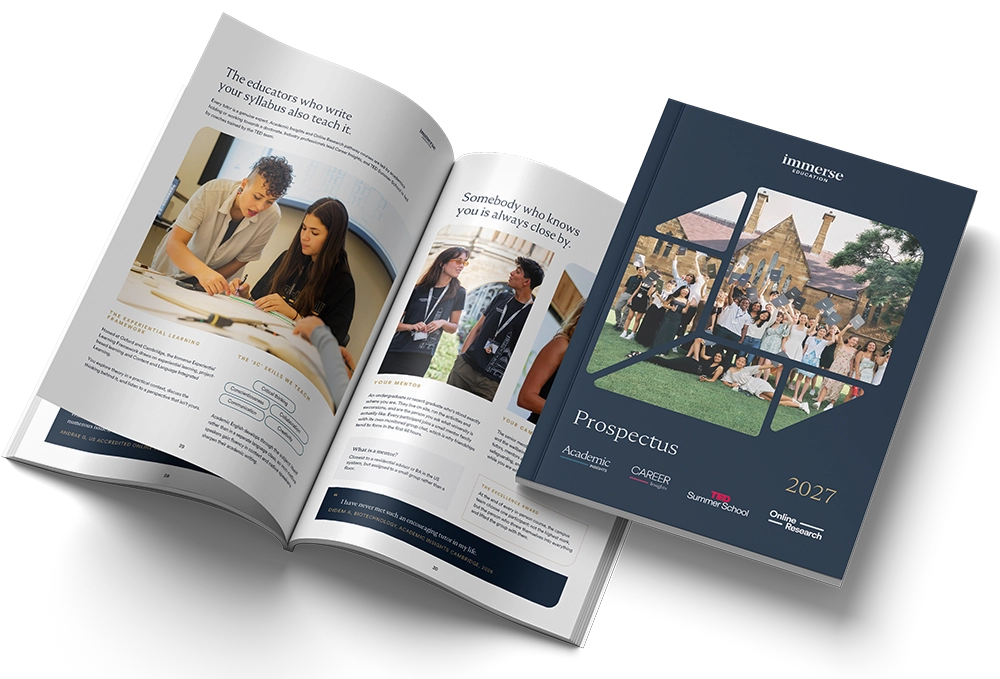
Learn how Immerse can transform your life
An in-depth overview of our university and career preparation programmes
Get a glimpse into the life of an Immerse participant
Find the right programme for you with sample timetables, location showcases, and more