15 Online Physics Programs for High School Students
If you are interested in physics, there is often a point where classroom learning starts to feel limited. Enrolling in online physics programs for high school students offers a way to see how those ideas apply in a broader context without stepping away from your current schedule.
Imagine yourself attending a session where topics like thermodynamics or space science are explained in detail, or working through a simulation that shows how a system behaves over time. You might be solving problems, but also questioning methods, testing ideas, and discussing your reasoning with others. The experience feels different because the focus shifts toward understanding.
How do you choose the right online physics programs for high school students?
It is not always easy to decide which program to pick. Some may feel too introductory, while others might not offer enough structure or depth. That is where clear guidance becomes useful, especially when you are trying to understand what each program actually offers.
Online physics programs vary in format and focus. Some are built around lectures and assignments, while others include projects, simulations, or research-style work. You might come across topics like mechanics, computational physics, or quantum theory. Some programs are self-paced, while others follow a more fixed schedule with instructor feedback.
To help you navigate these options, we have put together a list of 15 online physics programs for high school students!
For an in-person experience, you can check out physics summer programs for high school students.


15 Online Physics Programs for High School Students
1. Aspiring Scientists Summer Internship Program (ASSIP)
Location: Virtual or at George Mason University, Fairfax, VA
Cost/Stipend: Tuition: $1299; $25 application fee; Need-based financial aid available
Dates: June 18th – August 12th
Application Deadline: February
Eligibility: 15+ for computer/remote labs; 16+ required for wet labs; international students are accepted
The Aspiring Scientists Summer Internship Program (ASSIP) is an eight-week research program where you work closely with faculty at George Mason University. You will be placed into a research group and spend the summer contributing to an ongoing project.
Depending on your area, this could involve physics, cybersecurity, software engineering, or related fields. Alongside research, you take part in discussions, develop scientific writing skills, and learn how to present your work clearly. The program ends with a formal poster presentation, giving you experience similar to academic conferences.
Why it stands out: You’ll conduct original research with George Mason University researchers, build scientific writing and communication skills, and present your work in a final poster session while earning college credit.
2. Immerse Education’s Physics Online Summer School
Location: Fully remote
Cost/Stipend: Varies by format; summer school scholarship available through our bursary programme
Dates: Flexible; multiple cohorts in a year.
Application Deadline: Rolling admissions; multiple dates throughout the year
Eligibility: Students aged 13-18 (accredited options require age 14+); Open to students worldwide
The Online Research Program offers high school students the opportunity to conduct rigorous research with tutors from Oxford, Cambridge, and Ivy League universities. You will work with your tutor to explore a subject of your choice in depth and write an academic research paper. The program is offered in 1:1 and small group formats, and you can choose to receive college credit from universities in the US and the UK.
The virtual research program is offered in over 20 subjects, including physics, artificial intelligence, chemistry, psychology, economics, computer science, creative writing, philosophy, and more. At the end of the program, you’ll receive a written evaluation from your tutor, an opportunity to publish your research, and an invitation to present at the Immerse Online Symposium. You can find examples of papers Immerse students have worked on here. You can find more details about the application here.
Why it stands out: You’ll conduct independent research with tutors from Oxford, Cambridge, and Ivy League universities and produce an academic paper, with the opportunity to present your work at the Immerse Online Symposium.
3. MIT Beaver Works Summer Institute (BWSI) – Quantum Software
Location: Virtual
Cost/Stipend: Students with family earnings below $200,000 are eligible to attend for free
Dates: July 7th – August 3rd
Application Deadline: March 31st
Eligibility: High school students living and attending school in the U.S.
BWSI combines a rigorous prerequisite phase with a selective summer program. The preparatory component covers linear algebra, programming, and classical computing concepts. Only students who complete this stage are considered for the summer course.
The summer component focuses on quantum computing, including quantum algorithms and implementation. The structure is intensive, with an expectation of prior preparation and sustained engagement throughout the program.
Why it stands out: You’ll complete online training in linear algebra, classical computing, and Bra–Ket notation before studying quantum computing fundamentals and implementing quantum algorithms in the summer course.
4. Stanford Program for Inspiring the Next Generation of Women in Physics (SPINWIP)
Location: Virtual
Cost/Stipend: Free
Dates: July 6-24
Application Deadline: May 1st
Eligibility: High school students in 9th through 11th grade at the time of application. Open to students worldwide
Stanford Program for Inspiring the Next Generation of Women in Physics (SPINWIP) is a three-week, free virtual opportunity. As a top-tier choice among online physics programs for high school students, you’ll attend lectures and learn from Stanford researchers. You’ll explore research in different areas of physics, including quantum physics, astrophysics, cosmology, and quantum computing.
You’ll develop Python coding skills and apply them to physics-focused projects. You’ll learn to predict event probabilities and characterize statistical distributions using basic models. You will also have the opportunity to explore careers in astronomy and physics.
Why it stands out: You’ll attend lectures and small group sessions, learn from Stanford researchers, and work on Python-based projects while exploring research areas in physics.
5. MIT OpenCourseWare – Thermodynamics and Climate Change
Location: Virtual
Cost/Stipend: Free
Dates: Self-paced
Application Deadline: Rolling
Eligibility: High school students around the world with proficiency in programming and basic calculus
MIT OpenCourseWare Thermodynamics and Climate Change is offered to high school students as a part of MITES Semester, a six-month virtual program. The course will allow you to develop an in-depth understanding of the three laws of thermodynamics. You’ll learn the application of thermodynamics principles to understand how human industrialization impacts the climate, and explore a range of concepts and technologies, including entropy, enthalpy, energy conversion, artificial photosynthesis, molten salt storage, heat pump, metal air batteries, and more.
You’ll understand the competing timescales of the carbon cycle and human consumption, apply Python skills to evaluate the impact of thermodynamic systems on the climate, and work on interactive coding assignments. The course also includes a final project.
Why it stands out: You’ll study the laws of thermodynamics and apply Python to analyze how energy systems and technologies affect climate change, culminating in a final project.
6. EPFLx: Introduction to Astrophysics
Location: Virtual
Cost/Stipend: Free; Optional Certificate (Paid)
Dates: 7-week self-paced course
Application Deadline: Rolling
Eligibility: Open to students worldwide
EPFLx: Introduction to Astrophysics offers an introductory self-paced learning opportunity to high school students. You’ll explore the fundamentals of astrophysics through simplified mathematical developments, understand the impact of gravity on celestial bodies, and learn the basics of cosmology.
You’ll gain knowledge about star formation and evolution, along with matter-radiation interactions. The program does not require any prerequisites for participation and is a great learning opportunity if you’re interested in a virtual, self-paced learning experience.
Why it stands out: You’ll learn the fundamentals of astrophysics and cosmology through a self-paced virtual course designed for beginners.
7. Habitable Worlds: Possible Places for Life in the Solar System and Beyond
Location: Virtual
Cost/Stipend: Varies by program type. more information here
Dates: June 22nd – July 2nd
Application Deadline: Not specified
Eligibility: High School Students worldwide; Must have completed Algebra I and at least one year of high school science (physics, earth and space science, chemistry, or biology).
Habitable Worlds: Possible Places for Life in the Solar System and Beyond offers a two-week program for high school students. You’ll engage in an inquiry-based active learning experience. You’ll read topic introductions, work on assignments, and develop valuable skills in independent research and science communication.
The course will help you understand the aspects of a range of disciplines, including physics, planetary science, astrobiology, chemistry, and geology. You’ll engage in discussions on the meaning of habitability, gain knowledge about exoplanet finding techniques, and participate in the critical evaluation of habitability in diverse environments, including the solar system objects.
Why it stands out: You’ll explore the science of habitability through discussions, assignments, and inquiry-based learning while developing skills in independent research and science communication.
8. MIT OpenCourseWare – Introduction to Oscillations and Waves
Location: Virtual
Cost/Stipend: Free
Dates: Self-paced
Application Deadline: Rolling
Eligibility: High school students with proficiency in calculus and basic programming; Open to students worldwide
MIT OpenCourseWare Introduction to Oscillations and Waves allows you to explore the physics and mathematics associated with oscillatory and wave phenomena. You’ll understand the appearance of oscillations in near equilibrium systems, their mathematical properties in different contexts, and the relationship shared by oscillations and waves.
The course is a part of the MITES Summer program and allows you to develop a strong foundation in STEM. You’ll explore the properties of a wave, interact and connect with like-minded peers and professionals, along with gaining self-confidence.
Why it stands out: It develops a rigorous understanding of oscillations and waves through integrated mathematical and physical analysis.
9. Coursera – Mechanics: Motion, Forces, Energy, and Gravity, from Particles to Planets
Location: Virtual
Cost/Stipend: Free; Paid Certificate (Optional)
Dates: Self-paced
Application Deadline: Rolling
Eligibility: Open to students worldwide
Coursera – Mechanics: Motion, Forces, Energy, and Gravity, from Particles to Planets offers a beginner-level, flexible learning experience to high school students. You’ll explore a range of physics concepts through eight modules, including introduction and basic tools, velocity and acceleration, motion in two dimensions, Newton’s laws of motion, weight, friction and spring forces, work, energy and power, momentum and collisions, and gravity.
The course is offered by The University of New South Wales (UNSW) Sydney and allows you to develop multiple skills in physics, engineering analysis, physical science, mechanics, mathematical modeling, and more.
Why it stands out: You’ll explore core mechanics concepts through a flexible online course while developing skills in physics analysis, mathematical modeling, and more.
10. DelftX: Pre-University Physics
Location: Virtual
Cost/Stipend: Free; Paid Certificate (Optional)
Dates: Self-paced
Application Deadline: Rolling
Eligibility: Open to students worldwide
DelftX: Pre-University Physics is a five-week introductory self-paced learning opportunity for high school students. You’ll gain fundamental knowledge in a range of physics concepts, including electricity, waves, mechanics, and magnetism.
You’ll learn algebraic problem solving in physics without assigning numerical values, learn through an academic approach, and engage in the application of basic differential and integral calculus in physics-related problem solving. The program will allow you to develop skills in physics, applied physics, mechanical engineering, aerospace engineering, and electrical engineering.
Why it stands out: You’ll learn physics through a pre-university academic approach, practicing algebra-based problem solving and applying basic differential and integral calculus to understand concepts more deeply.
11. MIT OpenCourseWare – Introduction to Statistical Physics
Location: Virtual
Cost/Stipend: Free
Dates: Self-paced
Application Deadline: Rolling
Eligibility: High school students all over the world with proficiency in single variable Calculus and basic programming experience
MIT OpenCourseWare Introduction to Statistical Physics is offered as a part of the MITES Summer Program. You’ll be introduced to foundational concepts in statistical physics, develop an understanding of mathematical methods in physical science, and gain knowledge about simulating random events by learning to write short programs.
You’ll learn the qualitative and quantitative definitions of entropy, understand the impacts of thermodynamic laws, and the importance of the Boltzmann distribution in modeling systems at finite temperature. The program will allow you to develop a better understanding of physics.
Why it stands out: You’ll explore how large physical systems behave by studying probability, entropy, and thermodynamics while writing short programs to simulate random events.
12. Johns Hopkins – Engineering Innovation Pre-College Programs
Location: Virtual
Cost/Stipend: Varies by program type. More information here
Dates: June to July
Application Deadline: Rolling basis
Eligibility: Current high school students or recent graduates around the world
Johns Hopkins- Engineering Innovation Pre-College Programs offers an engaging virtual learning experience to high school students. You’ll have the opportunity to explore different programs, including biomedical engineering innovation, explore engineering innovation, and an introduction to Python.
Through these programs, you’ll explore a range of topics and disciplines in technology, design, math, and science. You’ll attend real-time study sessions and interact with teaching assistants, instructors, and fellow students. You’ll also have the chance to attend lab sessions and engage in small groups to answer challenging questions.
Why it stands out: You’ll work on hands-on engineering design challenges and interactive lab activities while learning to apply concepts from physics, math, and programming to real-world engineering problems.
13. High School Aerospace Scholars (NASA)
Location: Virtual
Cost/Stipend: Free
Dates: October to March
Application Deadline: September 27th
Eligibility: High school juniors who are residents of Texas
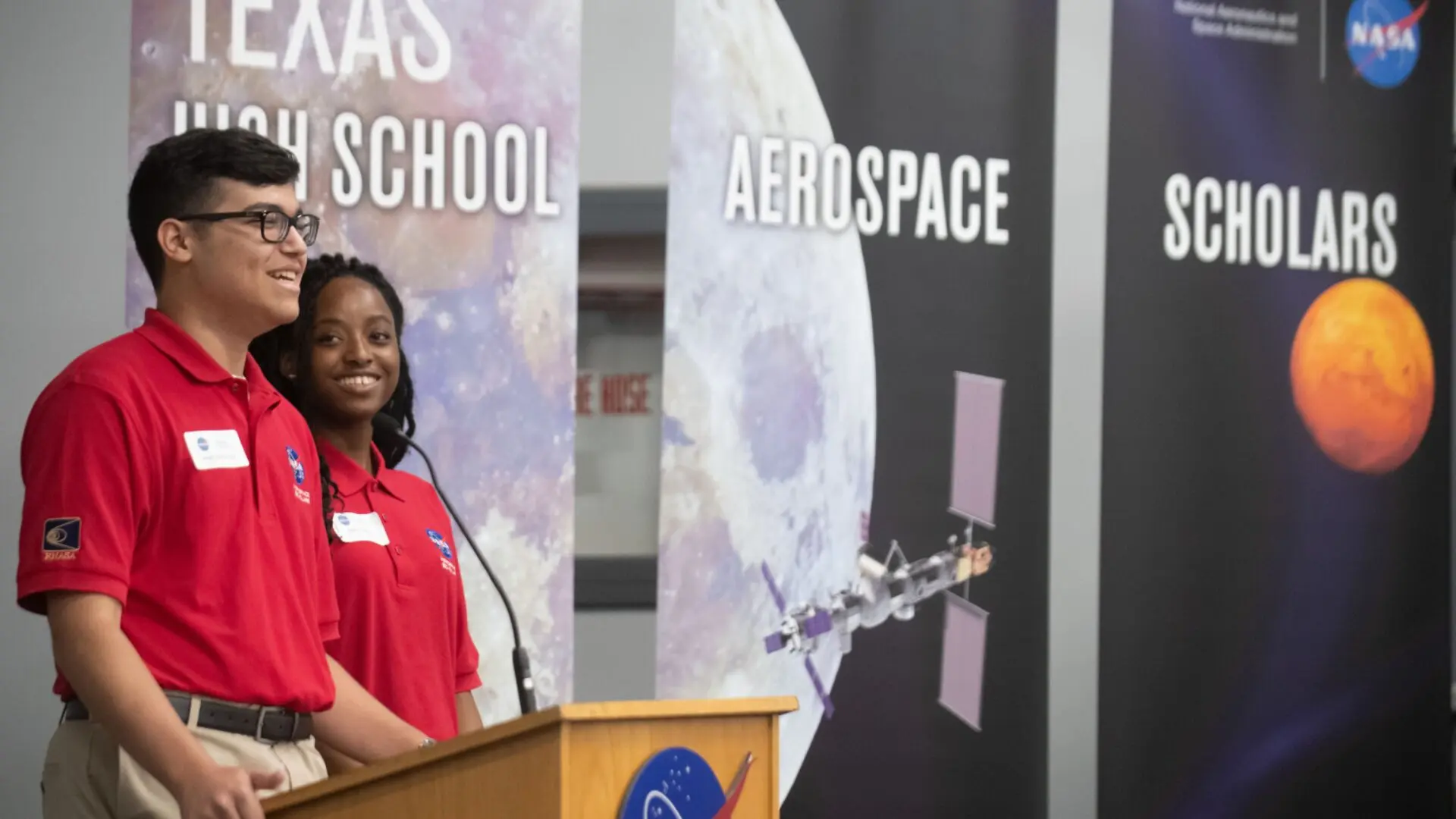
High School Aerospace Scholars (NASA) offers an authentic learning experience to high school students. You’ll have the opportunity to become a part of the next generation of explorers. You’ll gain knowledge about technology, earth science, and aeronautics. You’ll develop important skills required to pursue a career in aerospace, including coding, engineering, and computer-aided design (CAD).
The best performing students will have the opportunity to attend a five-day virtual summer event called Moonshot and receive mentorship from NASA engineers and scientists. The teams that perform the best at Moonshot will have the chance to explore and all expense paid residential experience at NASA’s Johnson Space Center.
Why it stands out: You’ll develop aerospace skills such as coding, engineering, and computer-aided design (CAD), with top students advancing to the Moonshot event and learning from NASA engineers.
14. Python4Physics – UC Berkeley
Location: Virtual
Cost/Stipend: Free
Dates: June 16th – July 11th (tentative, based on previous years)
Application Deadline: Rolling until full for online
Eligibility: High school students around the globe
Python4Physics- UC Berkeley offers a free programming experience to high school students. You’ll learn to write simple code using Python, explore interesting concepts in physics, math, programming, and statistics. You’ll engage in data analysis, modeling systems, numerical problem-solving, and solving equations.
Participation in the class does not require a background in physics or calculus. The program is offered in-person for a limited number of participants, while others have the opportunity to attend the class virtually through Zoom.
Why it stands out: You’ll learn Python by applying it to physics problems, practicing data analysis, modeling systems, and numerical problem-solving.
15. WestonHS: On-Ramp to AP® Physics C: Mechanics
Location: Virtual
Cost/Stipend: Free; Paid Certificate (Optional)
Dates: Self-paced
Application Deadline: Rolling
Eligibility: High school students who have completed an introductory-level physics course; Open to students worldwide
This is a self-paced online course offered by Weston High School through edX, designed for high school students who have already completed an introductory physics course and want to prepare for AP Physics C: Mechanics. The course is fully flexible, so you can move through the content at your own pace without fixed deadlines.
It focuses on three core areas of classical mechanics: kinematics, Newton’s laws of motion, and conservation laws. As you progress, you work on both conceptual clarity and problem-solving, which helps build a more stable foundation for AP-level coursework. The course ends with a final exam that allows you to assess your understanding and readiness.
Why it stands out: It is built as a direct bridge between introductory physics and AP Physics C, with a clear focus on core mechanics topics. The self-paced structure makes it easier to learn without pressure, while the final exam gives you a way to check how prepared you are for more advanced study.
Join the Immerse Education 2027 Essay Competition
Follow the instructions to write and submit your best essay for a chance to be awarded a 100% scholarship.
Bridging the Gap: Computational Physics and Theoretical Books
Standing out in elite university admissions requires more than high grades; it demands proof of the advanced analytical maturity found in top-tier physics departments.
By participating in online physics programs for high school students, you gain the technical expertise and data-driven project results necessary to build an authoritative portfolio.
To truly excel, you must complement this practical experience with the foundational theories found in our curated reading lists for aspiring world-class physicists:
Explore our Physics Top Books Guide to master the core principles of the universe and perfect your academic profile for the world’s elite STEM institutions!





Unlock Inspiring Opportunities with the Immerse Education Newsletter
Join our newsletter to stay ahead with exclusive updates, exciting programme highlights, and expert insights from the world of immersive education.
Learn how Immerse can transform your life
An in-depth overview of our university and career preparation programmes
Get a glimpse into the life of an Immerse participant
Find the right programme for you with sample timetables, location showcases, and more