15 Programs for High School Students

When you’re in high school, it can feel like you’re standing at the edge of the world you might want to enter. You’re curious and driven, and you have a sense of the subjects you might be willing to explore, but you don’t necessarily have the right resources or guidance to pursue those interests. This is where structured programs for high school students can make a difference. They can help place you in an environment focused on challenge and discovery.
Consider this: you’re working in a leading university lab, running tests with faculty researchers, or collaborating with global peers on an independent idea. You could pursue advanced STEM coursework, help bring a research proposal to execution, or even use artificial intelligence to solve relevant problems. As a high school student, such a program can offer a solid foundation for a lustrous career ahead, as you can build a network with professionals at an early age.
Programs like these give you structure to figure out your direction. You learn to work at an advanced level and manage real responsibility. Many programs are fully funded or stipend-based, so your selection depends on merit, instead of personal resources. Various universities and government organizations host these programs, giving you access to work-learn spaces, mentors, and cultures that are usually reserved for older students.
What kinds of programs are available for high school students?
You’ll find several opportunities in mathematics, engineering, computer science, biomedical research, data science, and more. You might have the chance to work independently on an idea through a program, while others might place you in a lab or research team where you can add to ongoing work. The commonality here is the rigor, mentorship opportunities, and the chance to learn beyond typical classroom work.
All these programs offer unique experiences, and choosing which to proceed with can feel tough. To help you select something that aligns with your interests, we’ve curated a list of 15 Programs for High School Students. The list is based on the academic depth of the curriculum, the competitiveness of the selection, and the variety of additional experiences offered. Each program covered here offers the chance to level up your skill set and build the confidence required to shape your path forward.



15 Programs for High School Students
1. Northeastern University’s Young Scholars Program
Location: Northeastern University, Boston, MA
Cost/Stipend: No fee; stipend may be available
Acceptance Rate/Cohort Size: Fairly selective
Dates: June 22nd – July 30th
Application Deadline: March 2nd
Eligibility: Rising high school seniors from Massachusetts; must be U.S. citizens or Permanent Residents
The Young Scholars Program is a six-week summer research experience at Northeastern University for rising high school seniors in Massachusetts. You’ll join Northeastern faculty and students in active research projects, working in labs across areas such as robotics and engineering.
Beyond your lab placement, you’ll attend seminars led by guest faculty, visit companies like Biogen and Akamai, and participate in counseling sessions. Past projects have included accelerating language-processing systems in computer engineering. You can find past projects in YSP research here.
Why it stands out: It blends lab experience with industry site visits, giving you a clear view of how academic research aligns with real engineering and technology careers.
2. Immerse Education’s Career Insights Summer School
Location: Cambridge, London, New York, San Francisco, Singapore, Sydney, and Tokyo
Cost: Varies; summer school scholarship available through our bursary programme
Acceptance Rate/Cohort Size: Average of 7 participants per class
Application Deadline: Multiple summer cohorts with rolling admissions
Dates: 2 weeks during the summer
Eligibility: High school students across the globe aged 15-18
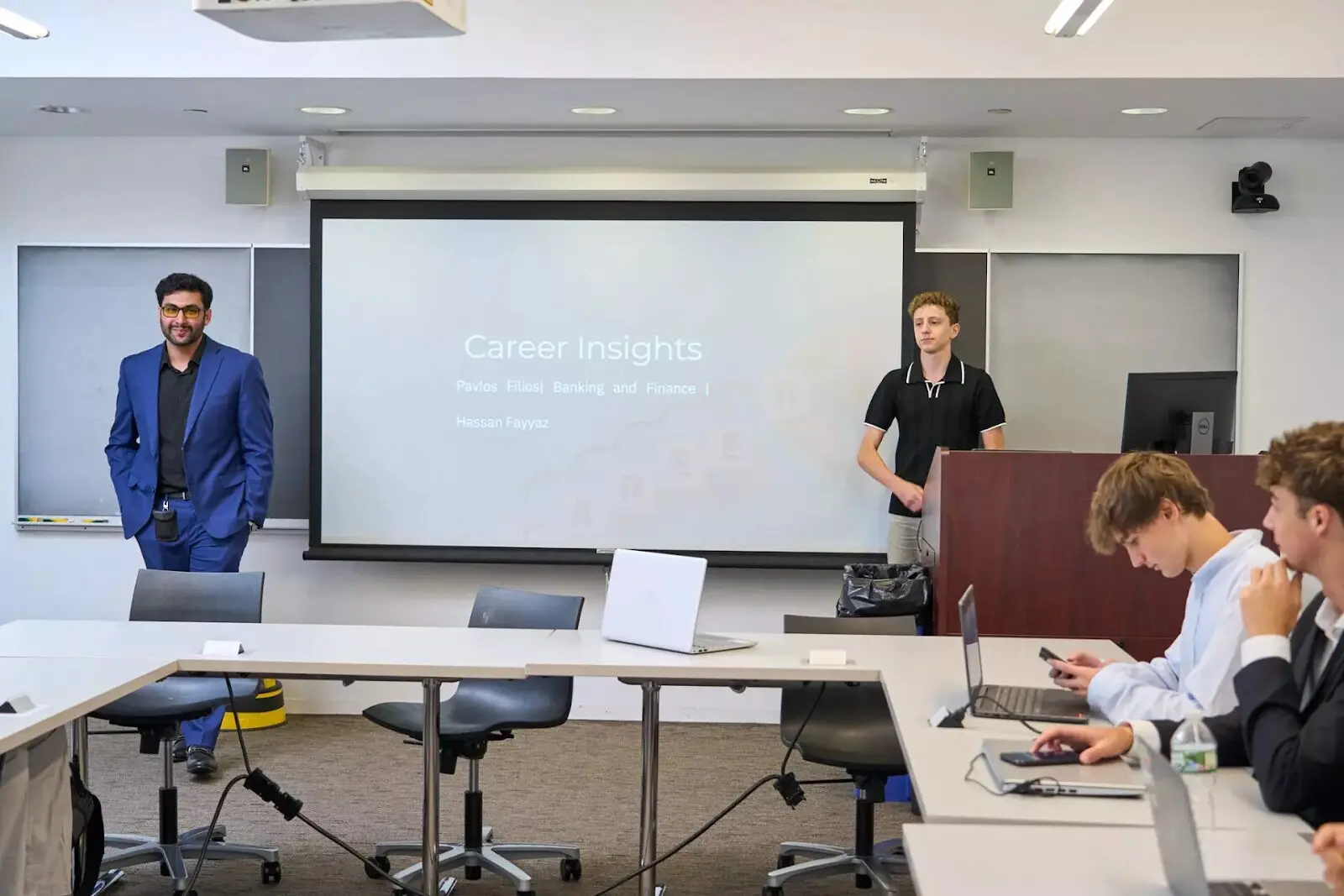
The Career Insights Programme lets high school students explore future careers in major global industry hubs through subject-specific, hands-on learning. You choose a subject pathway, such as Medicine, Engineering, Business Management, Law, or Creative Industries, and follow a syllabus designed specifically for that field.
Each programme combines project-based work, interactive workshops, and industry visits. Depending on your subject and location, this could include analysing healthcare case studies, tackling engineering design challenges, or visiting organisations such as hospitals, law courts, financial firms, media studios, or technology companies.
Alongside this, you receive weekly 1:1 career coaching, personalised feedback on your CV and profile, and present your final work to industry experts at the end of the programme.
You can find more details about the application here!
Why it stands out: Every subject follows a dedicated, career-focused syllabus and blends hands-on projects with real industry exposure, helping you see how academic interests translate into real professional pathways.
3. Research Science Institute (RSI)
Location: Massachusetts Institute of Technology, Cambridge, MA
Cost: Non-refundable application fee of $75; cost-free for all participants, all educational, housing, and dining expenses are covered
Acceptance Rate/Cohort Size: Approx. 100 students globally; very selective
Application Deadline: December 10th
Dates: June 28th – August 8th
Eligibility: Students in their junior year of high school (11th grade); international students accepted, check here if your country is included
The Research Science Institute (RSI) is a highly selective, six-week summer program at MIT. You’ll start with a week of seminars led by MIT faculty. The remaining five weeks are devoted to an original research project under the guidance of a graduate student mentor.
You’ll learn to read academic papers, build a research proposal from scratch, and present your work through a formal paper and a talk at the research symposium. Past projects have covered topics such as Braid Group Symmetries on Punctured Spheres and Poisson Geometry in Cluster Algebras.
Why it stands out: You’ll work directly with MIT researchers and join an alumni network that includes students from MIT, Harvard, and Stanford, helping you build long-term academic connections.
4. MathQuantum High School Fellowship
Location: Virtual
Cost/Stipend: Free, stipend not included
Acceptance Rate/Cohort Size: 10 students
Application Deadline: February 13th
Dates: TBA, Middle/end of July
Eligibility: High school students worldwide interested in Mathematics, Computer Science, Physics, and/or Quantum (Information) Science
The High School Fellowship is a free, two-week online summer program offered by MathQuantum, an NSF-supported Research Training Group focused on applying advanced mathematical tools to quantum information science (QIS). You’ll join a small cohort to study the foundations of QIS through coding labs and mentor-guided discussions, and culminate in a mini-project.
The curriculum covers linear algebra, quantum mechanics, and cryptography. Along with the ethical dimensions of QIS, you’ll be introduced to tools such as ion traps and QLab. You’ll attend career development sessions and may be offered to participate in the Qubit by Qubit summer camp.
Why it stands out: It gives you a focused introduction to quantum science guided directly by researchers shaping the field, with structured math and coding work that’s rare at the high school level.
5. Texas Tech University – Anson L. Clark Scholars Program
Location: Texas Tech University, Lubbock, TX
Stipend: $750, upon completion of a successful research project report
Acceptance Rate/Cohort Size: Highly selective, 12 students
Application Deadline: February 16th
Dates: June 21st – August 6th
Eligibility: High school juniors and seniors who are at least 17 years of age; Must be a U.S. Citizen or Permanent Resident
The Anson L. Clark Scholar Program at Texas Tech University is a seven-week research program for academically advanced high school students. Research areas span fields such as cellular and microbiology, cancer biology, chemistry, computer science, engineering, history, cancer bioimaging, and physics.
You’ll work on campus and at the Health Science Center under the guidance of Texas Tech faculty. The program includes seminars, group discussions, and field trips, and you’ll receive a stipend after submitting your final research report.
Why it stands out: It gives you sustained, full-time access to university labs across a wide set of disciplines, which helps you build a substantial research record by the end of the seven weeks.
6. NYU’s Applied Research Innovations in Science and Engineering (ARISE)
Location: NYU Tandon School of Engineering, Brooklyn, NY
Cost/Stipend: No cost/$1,000 stipend
Acceptance Rate/Cohort Size: Highly selective
Application Deadline: February 21st
Dates: June 1st – August 14th
Eligibility: Rising high school juniors and seniors who are residents of NYC attending NYC schools
The Applied Research Innovations in Science and Engineering program is a ten-week research experience for high school students hosted by the NYU Tandon School of Engineering. The first four weeks are spent in orientation sessions covering the theoretical and practical fundamentals needed for research.
During the remaining six weeks, you’ll assist NYU Tandon faculty and researchers on active projects across areas in computer science, engineering, and automation. You’ll present your work at the end-of-program poster symposium.
Why it stands out: The long timeline helps you move beyond basic lab tasks and contribute meaningfully to a faculty project, which makes your final poster stronger and more grounded in real research.
7. Carnegie Mellon’s Summer Academy for Math and Science (SAMS)
Location: Carnegie Mellon University, Pittsburgh, PA
Cost/Stipend: Fully-funded
Acceptance Rate/Cohort Size: Highly selective
Application Deadline: February 1st
Dates: June 20th – August 1st
Eligibility: Students must be at least 16 years old by the program start date, a U.S. citizen or permanent resident, and in 11th grade in high school at the time of application submission
The Summer Academy for Math and Science (SAMS) is a fully funded, six-week residential program at Carnegie Mellon University for high school students underrepresented in STEM fields. You’ll study advanced mathematics and science through classroom instruction, project-based work, and consistent interaction with faculty and staff mentors.
The program is structured to begin with a virtual jumpstart, followed by the six-week on-campus program, supplemented by enrichment sessions on career exploration. The experience ends with your research presentation at the final symposium.
Why it stands out: It provides sustained mentorship that helps you build stronger, more competitive applications for selective STEM and math programs.
8. MIT THINK Scholars Program
Location: Virtual + in person at MIT, Cambridge, MA
Cost: Fully funded
Acceptance Rate/Cohort Size: 4-7 students (based on previous years)
Application Deadline: January 1st
Dates: Project Completion by June
Eligibility: All U.S. high school students, as individuals or in teams of two
The MIT THINK Scholars Program supports high school students with strong, well-developed STEM project proposals. If your idea is shortlisted, you’ll work with MIT undergraduate mentors to carry out your project and receive up to $1,000 in funding to support the work.
The program includes a four-day visit to MIT, where you’ll attend classes and present your progress to faculty. Since THINK is student-run, the emphasis is on helping you take a proposal from concept to execution with consistent, practical guidance.
Why it stands out: It backs self-driven ideas with funding and mentoring, making it one of the few programs where you can push forward an independent project with MIT support.
9. MIT FutureMakers
Location: Virtual
Cost: Free
Acceptance Rate/Cohort Size: Highly selective
Application Deadline: Applications are expected to open in February/March
Dates: July 1st – August 9th
Eligibility: High school students in the U.S. and Puerto Rico
MIT FutureMakers is a highly competitive, six-week program for high school students interested in exploring digital design and artificial intelligence. In the first four weeks, you attend cohort-based training, and in the final two weeks, you participate in a Create-a-thon, where you and your team design AI solutions for real problems.
You can choose from four tracks: conversational AI app development, applied deep learning, data activism, or a mobile app development track geared toward younger participants. You’ll learn the principles for responsible AI through your interactions with college mentors and guest speakers. The program concludes in a pitch competition, where winning teams present their projects at the ASU-GSV Summit in San Diego.
Why it stands out: It combines training and competition, giving you a structured path from learning core skills to showcasing an AI project on a national stage.
10. FSU Young Scholars Program
Location: Florida State University campus, Tallahassee, FL
Cost: No cost
Acceptance Rate/Cohort Size: Highly selective
Application Deadline: February 15th
Dates: June 7th – July 18th
Eligibility: Rising high school seniors living in Florida who have finished Pre-Calculus, have a minimum unweighted GPA of 3.0, and have a score in the top 90th percentile in standardized math/science exams
Florida State University’s Young Scholars Program is a six-week summer experience for high school students interested in STEM. You’ll spend two days each week working with FSU faculty on a research project and take advanced coursework in areas such as mathematics, science, and computer programming.
Past course options include quantum computing and game theory, both designed to push you beyond standard high school material. The program also includes organized activities, field trips, and social events that round out the experience.
Why it stands out: It blends college-level STEM coursework with faculty-guided research, giving you consistent exposure to advanced material even if you haven’t had access to it at school.
11. MD Anderson Cancer Center: High School Summer Program in the Biomedical Sciences
Location: MD Anderson Cancer Centre, Houston, TX
Stipend: $7,200 stipend if you participate in the 10-week program ($6,480 if participating for nine weeks)
Acceptance rate/cohort size: ~6 students
Application Deadline: January 14th
Dates: June 1st – August 7th
Eligibility: High school seniors in a Texas public, private, charter, or home high school who are 18 or older by the first day of the program. For full details, check here.
The High School Summer Program at MD Anderson Cancer Center is a ten-week research experience for high school students interested in biomedical sciences. You’ll spend five days a week in the lab learning core research techniques and working on your own project.
The program includes seminars, poster and abstract competitions, and public speaking sessions. You’ll conclude the program with a research symposium where you’ll present your work to peers and mentors.
Why it stands out: You gain full-time, hands-on lab experience at a leading cancer research center while developing skills in scientific communication and presentation.
12. University of Houston: Mohanlab Summer Internship Program for High School students
Location: MohanLab, University of Houston, Houston, TX
Cost/Stipend: No cost/No stipend
Acceptance Rate/Cohort Size: 9-10 students
Application Deadline: March 26th
Dates: June 8th – July 31st
Eligibility: Rising high school seniors; Out-of-Houston students accepted
The MohanLab Summer Internship Program at the University of Houston is a ten-week research experience for high school students interested in biomedical science, biomedical engineering, big data analytics, or neuroscience. You’ll start by learning core lab techniques, then spend eight weeks conducting bench research with a graduate student or scientist.
You’ll conclude the program with a research presentation. Based on the project, some research may be up for publication. Some students may have the opportunity to continue their work through manuscript writing or additional data analysis.
Why it stands out: You gain intensive, hands-on research experience in cutting-edge biomedical and data-driven fields, with the chance to extend your project beyond the summer.
13. MD Anderson Division of Anesthesiology, Critical Care & Pain Medicine (DACCPM) – Summer Research Program
Location: MD Anderson Cancer Centre, Houston, TX
Cost/Stipend: Free/$3,600 stipend
Acceptance Rate/Cohort Size: Highly competitive
Application Deadline: January 14th
Dates: June 1st – August 7th
Eligibility: High school students across the world who are 18 years or older
The Division of Anesthesiology, Critical Care, and Pain Medicine Summer Research Program at MD Anderson Cancer Center is a rigorous, ten-week internship for high school students. During the program, you’ll work full-time on a research project under a faculty mentor.
You will learn bench techniques and clinical protocols, collect and analyze data, and review medical literature. The program concludes with a research presentation at the symposium and a published abstract in the CATALYST Summer Program abstract book.
Why it stands out: You will gain full exposure to clinical research methods and assist in producing work for published program findings.
14. Summer Academic Research Experience (SARE)
Location: Johns Hopkins School of Medicine’s East Baltimore Campus, MD
Stipend: $3,000
Acceptance Rate/Cohort Size: Not specified
Application Deadline: February 1st
Dates: June 23rd – August 14th
Eligibility: High school students from an educationally under-resourced background whose household income does not exceed 200% of the federal poverty limit
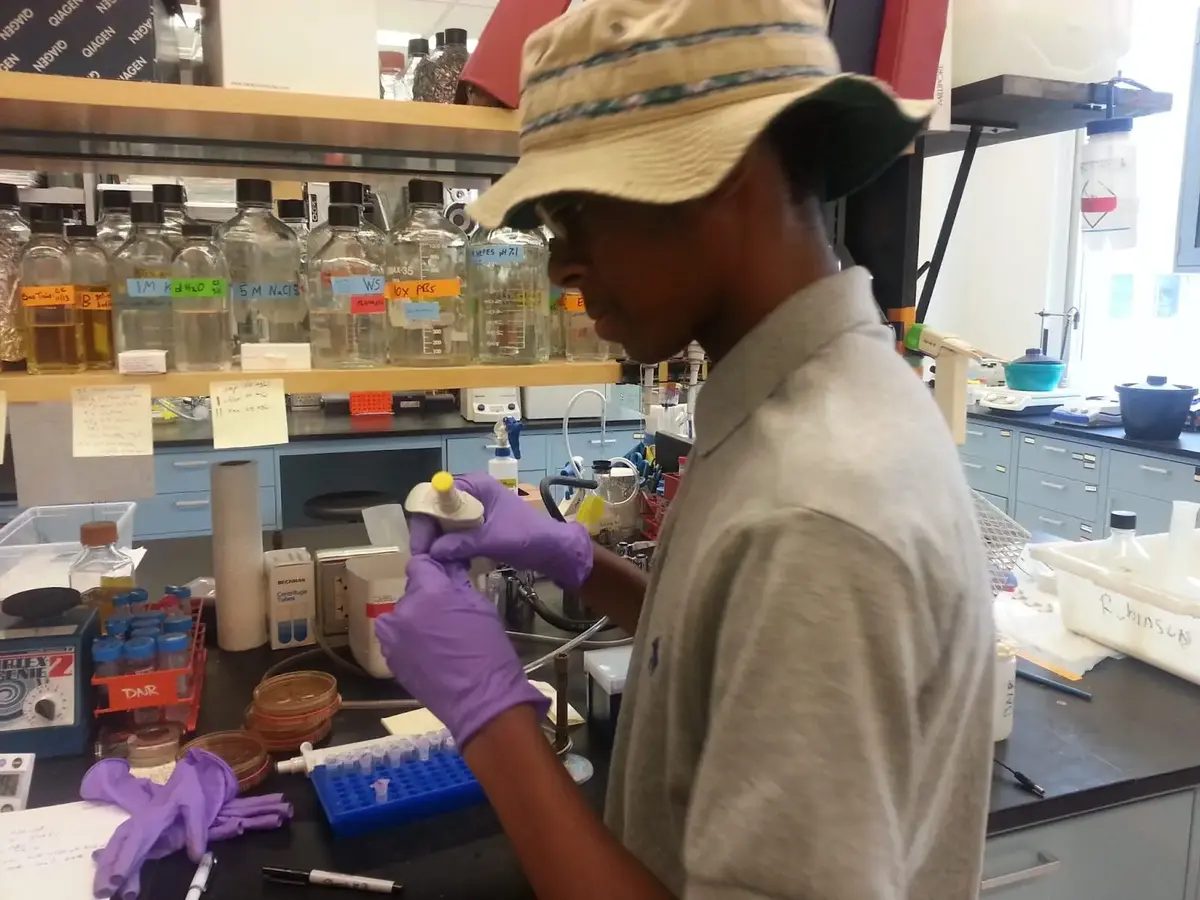
The Summer Academic Research Experience (SARE) is a program for high school students from underrepresented backgrounds interested in medicine or biomedical science. You’ll engage in laboratory work with doctoral-level mentors, and study coursework covering science, mathematics, scientific writing, and bioethics.
The program also includes training in public speaking, communication, and networking. You may contribute to ongoing research and have the opportunity to submit it for publication. The experience concludes with a formal scientific presentation.
Why it stands out: It combines biomedical research with skill-building in communication and professional development.
15. UChicago’s DSI Summer Lab
Location: John Crerar Library at the University of Chicago, Hyde Park campus, IL
Cost/Stipend: No cost / $5,600 stipend
Acceptance Rate/Cohort Size: 22 students
Application Deadline: January 12th
Dates: June 15th – August 7th
Eligibility: High school students (freshmen through seniors) who live/attend school in the Chicago area; international students accepted
The University of Chicago’s DSI Summer Lab is an eight-week paid research program for high school students. Through the program, you’ll work on interdisciplinary, data-driven projects with faculty and graduate mentors.
You’ll collect data and apply AI tools for analysis. You can do research in computer science, data science, social science, climate policy, public policy, materials science, and biomedical research. Beyond research, you’ll attend weekly speaker sessions and community events. Finally, you’ll present your findings at a symposium modeled after a professional research conference.
Why it stands out: You’ll gain practical experience in applied data science and AI, and network with mentors and experts in the field.
Join the Immerse Education 2027 Essay Competition
Follow the instructions to write and submit your best essay for a chance to be awarded a 100% scholarship.
Next Steps After High School Programs
Taking part in structured programmes helps you move from curiosity to confidence. You gain exposure to advanced environments where expectations are higher, and learning feels purposeful.
These experiences show you how to manage responsibility, collaborate with mentors, and work at a level beyond standard classroom learning.
Well-chosen programs for high school students also help you clarify interests, strengthen skills, and build evidence for future academic applications.
As you plan what comes next, our University Preparation blogs offer practical guidance on turning these experiences into strong personal statements, interviews, and long-term academic goals.






Unlock Inspiring Opportunities with the Immerse Education Newsletter
Join our newsletter to stay ahead with exclusive updates, exciting programme highlights, and expert insights from the world of immersive education.
Learn how Immerse can transform your life
An in-depth overview of our university and career preparation programmes
Get a glimpse into the life of an Immerse participant
Find the right programme for you with sample timetables, location showcases, and more