15 Software Development Internships for High School Students

If you are a high school student interested in software development, it can be challenging to understand what the field entails beyond coding assignments. You might enjoy building small projects or learning new languages, but professional software work is very different. Software development internships offer one of the clearest ways to experience this.
Landing a software development internship during high school is a brilliant way to build a solid professional foundation without the high costs usually tied to specialized bootcamps or private coaching. It serves as a practical test drive of what a university-level computer science degree or a high-level tech career actually feels like, helping you decide if you truly enjoy the field before committing years and tuition money to it.
When these internships are held in person, the experience is even more impactful because you are right in the middle of the action, observing how professional teams collaborate, attending meetings, and getting direct, face-to-face mentorship. This hands-on environment helps bridge the gap between basic classroom theory and actual problem-solving, giving you a much clearer vision of your future academic journey.
What kind of software development internships are available for high school students?
Several universities and established tech organizations offer software development internships that combine learning with hands-on work. Many include project-based tasks, coding reviews, and close mentorship, helping you develop technical skills and giving you a glimpse of how developers collaborate in real settings. For high school students, software development internships are usually more about learning than doing heavy coding.
You get to shadow experienced programmers, help test software to find mistakes, or work on very simple web pages and small group projects. To help you find the right fit, we’ve put together a list of 15 software development internships for high school students.
To learn software development skills, you can consider participating in computer science summer programs. If you’re looking for more options, you can also have a look at online coding summer programs for high school students.




15 Software Development Internships for High School Students
1. Meta Summer Academy
Location: Menlo Park, CA
Stipend: Paid, amount not disclosed
Acceptance rate/cohort size: Highly competitive; ~150 students every year
Dates: June 15th – July 24th
Application Deadline: February 14th
Eligibility: High school sophomores who have a minimum of 2.0 cumulative GPA and are residents of East Palo Alto, Belle Haven, or Redwood City; not open to international students
The Meta Summer Academy is a six-week program for high school sophomores interested in software development and career exploration. In this program, you’ll attend daily sessions that include coding, financial literacy, and media-based projects, along with activities focused on communication and networking.
The program also includes interactions with Meta employees through talks, panels, and small-group sessions. You work alongside a cohort of students in structured activities across the program timeline. The schedule requires a full-time commitment, with sessions spread across the week.
Why it stands out: It gives you direct exposure to employees at a major tech company alongside a mix of technical and non-technical career exploration.
2. Immerse Education’s Software Development and AI Summer School
Location: San Francisco, Toronto, Sydney, Singapore
Cost/Stipend: Varies; summer school scholarship available through our bursary programme
Acceptance rate/cohort size: Selective; an average of 7 participants per class
Dates: Multiple summer cohorts available
Application Deadline: Varies based on cohort
Eligibility: High school students worldwide aged 15-18; open to international students
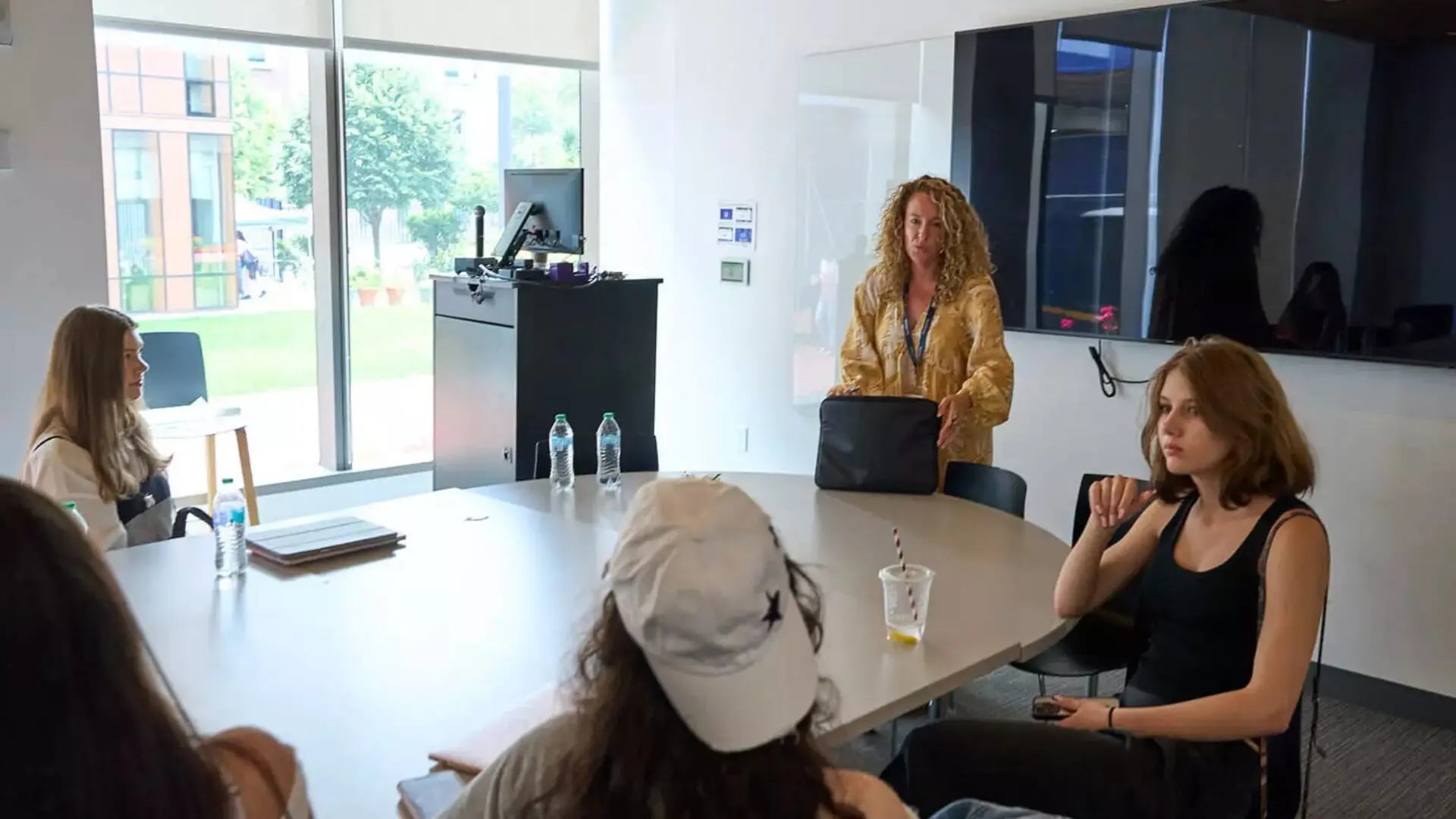
Immerse Education’s Software Development and AI Summer School is a residential program for students aged 15–18 interested in programming and game development. In this program, you’ll attend classes that cover core topics in software development, including coding and basic AI concepts.
The program includes projects where you build simple applications or game-based systems. Sessions also include discussions and insights from professionals working in the tech industry. You will work in small groups and complete tasks across the duration of the program.
Why it stands out: It gives you location-based exposure to Silicon Valley, along with project-based work in software and game development.
3. Lockheed Martin Space High School Internship
Location: Huntsville, AL, Denver, CO, Sunnyvale, CA, Cape Canaveral, FL, King of Prussia/Valley Forge, PA, Herndon, VA
Stipend: Paid, amount not disclosed
Acceptance rate/cohort size: Highly selective; 5-15 students per location
Dates: Summer (9-10 weeks)
Application Deadline: Mid-to-late December
Eligibility: Local high school students; 16+ at the start of the internship; live within a commutable distance of the Lockheed facility; not open to international students
The Lockheed Martin Space High School Internship Program is a summer internship for students interested in STEM and aerospace careers. You’ll spend around nine weeks working on projects with scientists and engineers, contributing to ongoing technical work. The program includes on-the-job training, mentoring, and shadowing opportunities with professionals.
Beyond technical work, you attend professional development workshops and facility tours, giving you a direct look at cutting-edge aerospace products while building networking skills and industry knowledge through community service and social events.
Why it stands out: It places you inside a major aerospace company where you work alongside engineers on real-world technical projects.
4. Tesla – Internship, Software Engineer, Vehicle Software
Location: Palo Alto, California
Stipend: $40-$56/hr
Acceptance rate/cohort size: Highly competitive; limited cohort sizes
Dates: May – August
Application Deadline: Rolling basis
Eligibility: Graduating high school seniors who expect to begin higher education in the fall; not open to international students
In one of the most technically demanding Software Development internships for high school students, you dive directly into Tesla’s engineering core by working on actual vehicle software, covering topics like infotainment systems, firmware, and autonomous driving infrastructure. You will write production-level code in languages like C++, Python, or Go, debug complex software-to-hardware integrations, and participate in rigorous team code reviews.
The internship treats you as a full software engineer, testing your scripts on physical vehicle hardware and potentially pushing updates to actual cars on the road. Through these tasks, you build hard skills in systems architecture, version control, and real-time problem-solving.
Why it stands out: It bypasses the traditional shadowing model of early-career internships, instead trusting you to write and deploy highly technical, production-ready code for advanced consumer vehicles.
5. Intern, Technical High School Year-Round – Monitoring Systems Technology Intern Center (MSTIC), Onsite
Location: Albuquerque, NM
Stipend: 17.75-$19/hour
Acceptance rate/cohort size: Highly selective; cohort size not specified
Dates: Year-round; Summer: 10-12 weeks between May and the end of August
Application Deadline: Rolling basis
Eligibility: Full-time high school students; minimum cumulative GPA of 3.0/4.0; 16+; U.S. citizens, legal permanent residents, asylees, or refugees in the U.S. with a Working knowledge and understanding of an engineering or science-related field; not open to international students
In this internship, you’ll team up with experienced scientists to help solve real-world national security challenges, like designing sensors for space missions or remote monitoring technologies. Alongside your mentors, you will get hands-on practice building and testing practical tools, such as writing software programs, developing interactive computer menus, or analyzing data, to support these important projects.
Beyond your daily tasks, you will also get to tour advanced defense facilities and attend special learning seminars that help you build your skills and explore future career paths in science and engineering.
Why it stands out: It places you inside a national lab working on real-world sensing and security systems alongside technical teams.
6. Microsoft Discovery Program

Location: Redmond, WA or Atlanta, GA (local students only)
Stipend: Paid, amount not specified
Acceptance rate/cohort size: Highly competitive; 100-150 students
Dates: Atlanta: July 6-31, Redmond: July 13th – August 7th
Application Deadline: Late February
Eligibility: High school seniors living and attending schools within 50 miles of Redmond or who live and attend school in and around Atlanta, who have completed pre-calculus or an equivalent course by the program’s start; not open to international students
The Microsoft Discovery Program is one of the most prestigious Software Development internships for high school students, offering a four-week opportunity to explore careers in tech. You’ll work in a small team on a project tied to a product group, moving through early stages of product design and development.
Microsoft engineers and mentors will guide you through concepts in software development, product management, and UX design. Alongside your project work, you will actively participate in technical and professional development workshops, such as resume building, networking, and tech talks, to strengthen your core career skills.
Why it stands out: It gives you early exposure to tech innovation and corporate projects, helping you develop practical skills in software and product thinking.
7. Amazon Future Engineer
Location: Seattle, WA
Stipend: Scholarship of up to $40,000 towards an undergraduate degree in engineering or computer science
Acceptance rate/cohort size: Highly selective; ~400 students every year
Dates: 8 weeks in the summer
Application Deadline: Typically, in January
Eligibility: High school seniors who are U.S. citizens and permanent residents and demonstrate financial need; plan to major in computer science or related fields; have a minimum cumulative 2.3 GPA on a 4.0 scale; authorized to work in the U.S.; not open to international students
The Amazon Future Engineer Internship is a summer internship offered to scholarship recipients pursuing computer science and related fields. You’ll work on a software engineering team, contributing to projects tied to Amazon’s products and platforms. The internship includes mentorship from engineers and managers, as well as exposure to cloud computing and large-scale systems.
You’ll also participate in sessions with teams and leaders to understand how different departments of the company operate. Alongside the internship, the program provides multi-year college funding for selected students.
Why it stands out: It combines substantial college funding with a guaranteed industry internship with Amazon.
8. NASA GeneLab for High Schools (GL4HS)
Location: Online
Stipend: None
Acceptance rate/cohort size: Not selective; typically, large cohorts (>800 students)
Dates: June 1st – August 28th
Application Deadline: March 15th, or until 1,000 applications are received, whichever occurs first
Eligibility: High school students entering junior or senior years; at least 16 years old; U.S. citizens or permanent residents; GPA of at least 3.0; completed at least one high school biology course; not open to international students
The NASA GeneLab for High Schools program is a twelve-week online course for high school students interested in biology, data science, and space research. You’ll work through self-paced modules covering bioinformatics, computational biology, and omics-based research methods. The course includes analyzing biological datasets such as genetic sequences and protein interactions using guided tools and notebooks.
You can attend optional office hours for support and complete exercises and quizzes throughout the program. An optional capstone allows you to work in a team to analyze real datasets and present your findings in a final symposium.
Why it stands out: It introduces you to space biology research using real datasets and bioinformatics tools used in scientific research.
9. NASA & UT Austin SEES Internship
Location: Virtual or in-person (Austin, TX)
Stipend: None
Acceptance rate/cohort size: Selective; typically 15-25 students every year
Dates: Project-specific online work with mentors from May 15th – July 3rd, followed by on-site internship from July 5-18
Application Deadline: February 22nd
Eligibility: U.S. sophomores and juniors who are at least 16 years old and first-time SEES participants; not open to international students
The University of Texas Center for Space Research SEES Summer Intern Program is a multi-week research internship for high school students interested in aerospace and earth science. You begin with online modules in topics like Earth science and Python, followed by project-based work with mentors.
You will collaborate with NASA scientists and researchers to analyze mission data across areas such as astronomy, remote sensing, and planetary science. Selected students attend an on-site session at the University of Texas, where they continue project work and field-based activities. The program concludes with a research presentation at a virtual science symposium.
Why it stands out: It gives you hands-on research involvement under faculty guidance, helping you see how scientific inquiry and engineering projects work in professional settings.
10. Stanford AIMI Summer Research Internship
Location: Virtual
Cost: $2,400 + $45 application fee; financial aid is available
Acceptance rate/cohort size: Highly selective; ~25 students
Dates: Session A: June 15-26, Session B: July 6-17
Application Deadline: February 20th
Eligibility: Students who are entering grades 9-12 in the fall, are at least 14 years old, and U.S. citizens, residents, or valid visa holders; not open to international students
The Stanford Center for Artificial Intelligence in Medicine and Imaging Summer Research Internship is a two-week virtual program for high school students interested in AI and healthcare. You’ll work in a small team on a research project using clinical data to build and evaluate an AI model.
The program includes lectures on machine learning, medical imaging, and clinical applications led by Stanford researchers. You receive mentorship throughout the project and apply concepts during dedicated work sessions. The program ends with a final presentation of your research.
Why it stands out: It lets you build and evaluate an AI model using clinical data while working in mentored research teams.
11. Palantir – Meritocracy Fellowship
Location: New York, NY
Cost: $5,400 per month
Acceptance rate/cohort size: Highly competitive; ~22 students
Dates: August – December
Application Deadline: Rolling basis
Eligibility: Graduating high school seniors who will have a U.S. high school diploma by the start of the fellowship; SAT/ACT score of 1460/33; not open to international students
The Palantir Meritocracy Fellowship offers a rare chance to work as a full-time software engineer before starting college. You will explore complex topics like data integration, backend system design, and product development while embedded directly within Palantir’s engineering teams. Throughout the four-month fall program, you will actively write production code, participate in daily team stand-ups, and debug real software issues.
By collaborating with senior developers to ship live features, you will build hard skills in enterprise-level programming and version control. Ultimately, you will walk away with professional-grade software development experience and advanced problem-solving abilities.
Why it stands out: It trusts high school graduates to build and deploy actual production code alongside seasoned industry professionals.
12. NIST Summer High School Internship Program (SHIP)
Location: National Institute of Standards and Technology Campuses, Gaithersburg, MD, and Boulder, CO
Cost: None
Acceptance rate/cohort size: Highly selective; 35-50 students every year
Dates: June 22nd – August 7th
Application Deadline: January 26th
Eligibility: U.S. high school juniors or seniors during the application period must have a minimum GPA of 3.0, and have a permanent residence within a 50-mile radius of their host campus (NIST Boulder or NIST Gaithersburg); not open to international students
The Summer High School Internship Program (SHIP) at the National Institute of Standards and Technology is a seven-week summer internship for high school students interested in scientific research. You work in NIST laboratories in locations such as Boulder or Gaithersburg, collaborating with scientists and engineers on real research problems.
During the program, you develop and carry out your own project while gaining exposure to advanced research methods and technologies. The experience focuses on hands-on lab work, mentorship, and independent inquiry in a professional research environment.
Why it stands out: You work directly in federal research labs alongside scientists, building an independent project in a real-world research setting.
13. John Hopkins ASPIRE
Location: Johns Hopkins Applied Physics Laboratory (APL), Laurel, MD
Stipend/Cost: None
Acceptance rate/cohort size: Highly selective; ~100-150 students
Dates: June 23rd – August 21st
Application Deadline: February 15th
Eligibility: High school students with a minimum 2.8 GPA; at least 15 years of age by June 1st; permanent residence in one of the following Maryland counties: Anne Arundel, Baltimore (County or City), Carroll, Frederick, Howard, Montgomery, Prince George’s; one of the following Virginia counties/cities: Alexandria, Arlington, or Fairfax; or the District of Columbia; U.S citizen (green card holders are not eligible); not open to international students
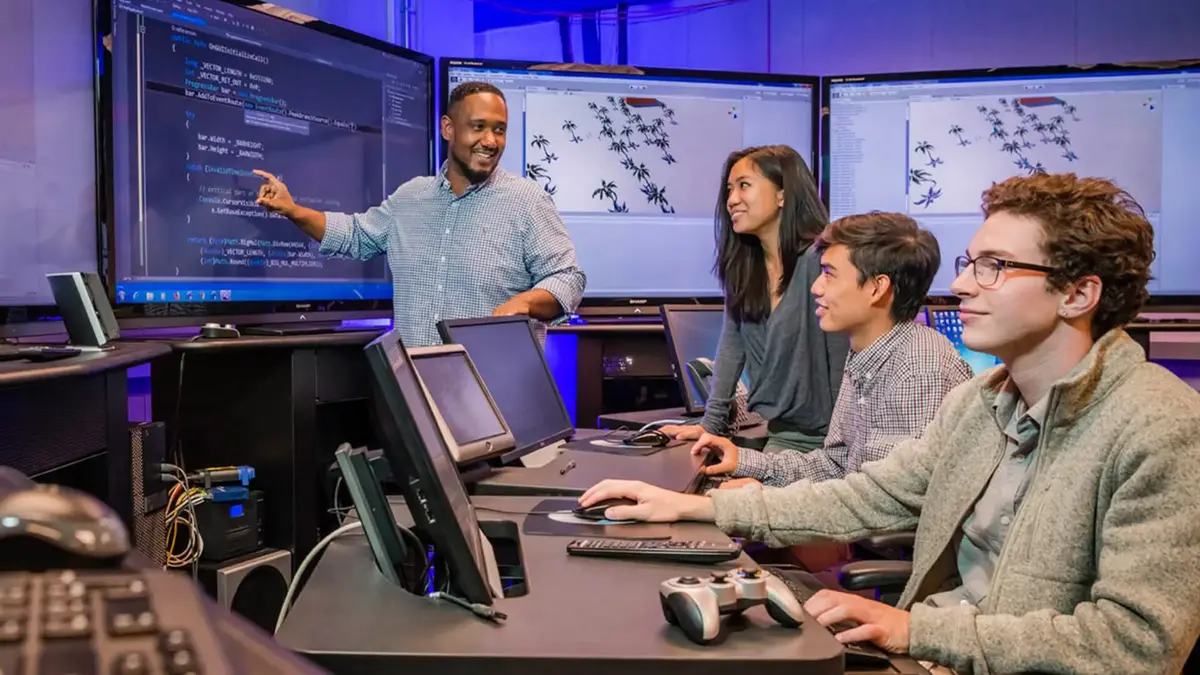
The ASPIRE Program at the Johns Hopkins University Applied Physics Laboratory is an intensive summer internship for high school juniors and seniors interested in exploring STEM careers. You work on-site alongside APL mentors, contributing to projects that range from AI and cybersecurity to engineering design and scientific research.
Each student is matched to a mentor and project based on interests, where you solve real problems, build technical skills, and learn to navigate a professional research environment. Projects vary widely, including coding, lab research, hardware development, and data analysis, depending on mentors. The program concludes with a showcase where you present your work.
Why it stands out: It gives you exposure to applied physics and engineering projects, helping you bridge classroom learning with real technical problem-solving.
14. UC Merced – Inclusive Interaction Lab High School Internship
Location: UC Merced (Merced, California)
Stipend/Cost: None
Acceptance rate/cohort size: Highly selective; ~4 students
Dates: 12 weeks during the summer
Application Deadline: Rolling basis
Eligibility: All high school students; not open to international students
In the UC Merced Inclusive Interaction Lab High School Internship, you will learn about human-computer interaction and software development. You will explore topics such as artificial intelligence, accessible computing, and intuitive interface design. During this free summer program, you will actively design user interfaces, program interactive applications, and conduct formal user studies.
You will then have the opportunity to present your findings alongside university researchers. The program uniquely focuses on building technology for users with disabilities, allowing you to contribute to real projects like mobile lip-reading systems. By the end, you will develop skills in coding, research methodology, data analysis, and UI/UX design.
Why it stands out: It treats you as a legitimate academic researcher, granting you rare, hands-on experience in building software that solves genuine accessibility challenges.
15. MIT Beaver Works Summer Institute
Location: Massachusetts Institute of Technology, Cambridge, MA (virtual and in-person)
Cost/Stipend: None for families with an income under $200,000; otherwise, $2,400
Acceptance rate/cohort size: Highly competitive; around 370+ students each year
Dates: July 6th – August 2nd
Application Deadline: March 30th
Eligibility: U.S. high school students (freshmen, sophomores, and juniors) residing in the U.S. during the program; not open to international students
The MIT Beaver Works Summer Institute (BWSI) at the Massachusetts Institute of Technology is a four-week STEM program for high school students interested in advanced, project-based technical work. You’ll join a focused course track and build and test systems in areas like artificial intelligence, robotics, cybersecurity, and autonomous systems.
Each track centers on a defined technical challenge, where you collaborate in teams to design, develop, and refine solutions. The curriculum mirrors real engineering workflows, with an emphasis on problem-solving, iteration, and applied technical skills.
Why it stands out: You work on rigorous, team-based engineering challenges designed by MIT and Lincoln Laboratory, closely mirroring real-world technical problem solving.
Join the Immerse Education 2027 Essay Competition
Follow the instructions to write and submit your best essay for a chance to be awarded a 100% scholarship.
From First Code to Future Innovation
The best early tech experiences do more than teach syntax, helping you understand how ideas become products, how teams solve problems, and how innovation really happens.
That is why Software Development internships for high school students can be so valuable, giving you practical insight into coding, collaboration, product thinking, and real-world technical work.
What stays with you is not only stronger technical confidence, but a clearer sense of how software connects to creativity, learning, and the fast-changing future of education.
Curious how technology is reshaping the way people learn? Explore our Educational Innovation blogs for fresh ideas, emerging trends, and insights that can keep you one step ahead.






Unlock Inspiring Opportunities with the Immerse Education Newsletter
Join our newsletter to stay ahead with exclusive updates, exciting programme highlights, and expert insights from the world of immersive education.
Learn how Immerse can transform your life
An in-depth overview of our university and career preparation programmes
Get a glimpse into the life of an Immerse participant
Find the right programme for you with sample timetables, location showcases, and more