15 Summer Programs for High School Students in Boston
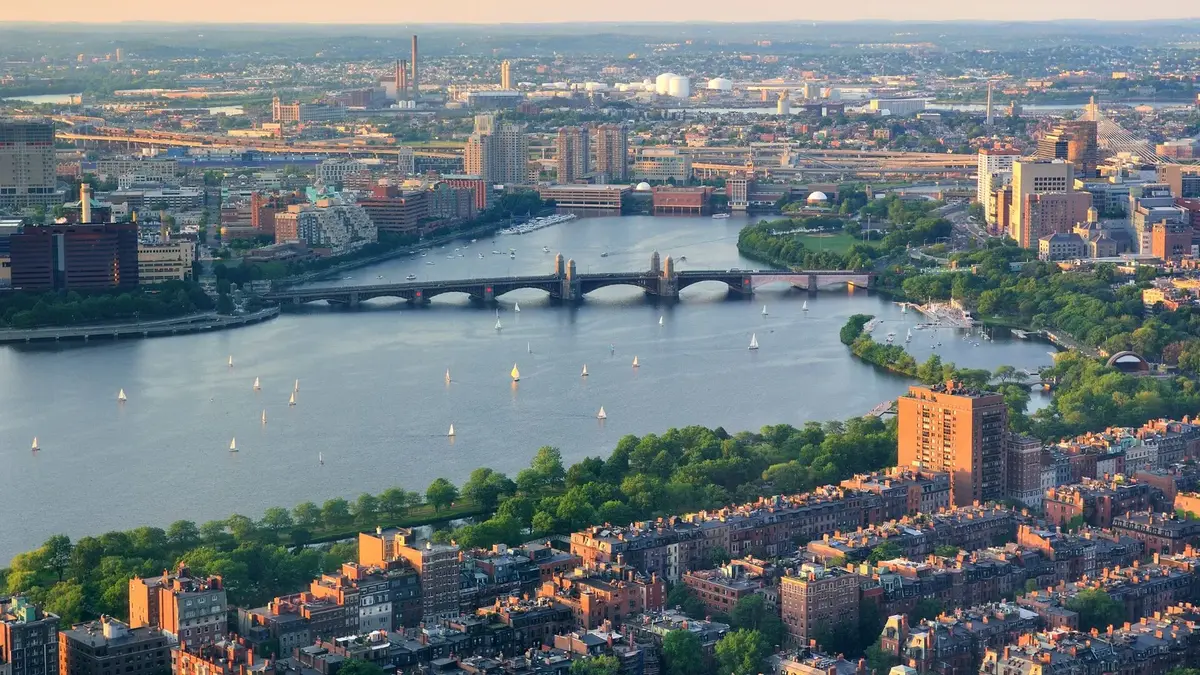
When you’re in high school, summer can feel like a pause from the rush of classes, exams, and deadlines. But it can also be a chance to step into something new: experiences that go beyond the classroom. Summer programs for high school students in Boston give you the opportunity to explore subjects you’re curious about, build confidence in unfamiliar settings, and get a realistic sense of what college life might look like. That’s where in-person summer programs come in.
Imagine spending a few weeks on a university campus in Boston. Picture walking through neighborhoods like Back Bay, Fenway, or Cambridge between classes, and meeting peers from across the country who care about the same things you do. Boston’s universities and organizations make all this possible through programs that blend academic exploration with experiences in one of the most iconic learning hubs in the world.
Even if you already live in Boston, joining a summer program can shift your perspective. You get to see familiar places with new eyes, meet students from different backgrounds, and test out what life might feel like at a college a few years down the road.
What kinds of programs can you find in Boston?
It’s true, some programs can feel like nothing but expensive, non-academically challenging trips to Boston. That’s why thoughtful research is important, to help you identify programs that deliver academic depth, challenge, or value.
Various universities and organizations offer STEM intensives, design studios, research labs, writing workshops, architecture academies, business and leadership courses, and pre-college experiences where you take real university classes. You can explore a new interest or dive deeper into an existing passion.
You learn from faculty, work on real projects, and get a clear view of the routines and expectations that come with living and studying in a major city.
To help you sort through all the options, we’ve curated a list of 15 Summer Programs for High School Students in Boston. These have been selected for their academic structure, on-campus immersion, and the chance they give you to experience college life up close.


15 Summer Programs for High School Students in Boston
1. Three-Week Programs – Boston Leadership Institute
Location: Boston area campuses (Olin/Wellesley, Gann/Bentley in Waltham, The Newman School in Boston) and remote via Zoom
Eligibility: Students worldwide entering 8th grade through entering college
Acceptance Rate: Competitive
Application Deadline: Varies by program
Program Dates: June 22nd – July 31st (exact dates vary by program and session; some remote sessions run June 29th – July 17th or July 6th – July 24th)
Cost: Three-week day tuition $2,500, three-week residential fee $2,097, deposit $500 applied to tuition, stipend, and financial aid details not provided
With Boston Leadership Institute’s three-week programs, your summer is organized around one specific theme, like emergency medicine, engineering, astrophysics, or business. As one of the longer-running summer programs for high school students in Boston, you follow a structured schedule that mixes lectures, labs, and project work, guided by instructors with advanced academic and professional experience.
This structure gives you time to build concrete skills while staying focused on a single subject area. You might spend part of the day in a classroom, part in a lab or project room, and part working with a small group on a longer assignment. Some programs are residential or hybrid, while others are fully in-person or remote. Overall, the three-week tracks focus on applied STEM and business learning in a structured setting.
Why it stands out: It offers intensive, lab-based STEM projects, helping you build early research experience that strengthens future science-focused applications.
2. Looking for Boston-Style Academic Energy? Consider Our New York Summer School

Location: Barnard College, Columbia University, Upper Manhattan, New York, NY
Eligibility: Students worldwide aged 15-18 currently enrolled in middle or high school
Acceptance Rate: Competitive
Application Deadline: Multiple cohorts with rolling admissions
Program Dates: 28th Jun – 11th Jul, 12th Jul – 25th Jul
Cost: Varies; summer school scholarship available through our bursary programme
If you’re drawn to Boston for its academic energy, our New York Summer School offers you a similarly ambitious experience in an equally iconic setting. Based at Barnard College, Columbia University, you study in small-group workshops with expert tutors and close mentor support, choosing from pathways such as Medicine, Engineering, Business Management, and Media & Journalism.
What makes the experience distinctive is the way New York sharpens your thinking. You might spend one part of the programme walking through Central Park, another taking in the atmosphere of Times Square, and another exploring the Metropolitan Museum of Art, with the city constantly adding context to what you are learning.
Rather than feeling removed from the real world, your subject starts to feel closer to it. In New York, you see how ideas move through business, media, medicine, and design, which gives you not just academic challenge, but a clearer sense of where your own interests could take you.
Why it stands out: If Boston appeals to you for its academic atmosphere, New York gives you that same intellectual energy in a city where global industries, culture, and ideas are all within reach.
3. Secondary School Program – Harvard Summer School
Location: Cambridge, MA
Eligibility: Students around the world graduating in 2026, 2027, or 2028 who are at least 16 by June 20th and not turning 19 before July 31st
Acceptance Rate: Competitive
Application Deadline: February 11th
Program Dates: Four-week: July 12th – August 7th; Seven-week: June 20th – August 8th
Cost: $4,180-$15,735 + $75 application fee, depending on format and number of credits
Harvard’s Secondary School Program gives you the chance to take real college courses for credit over four or seven weeks. You choose between a residential, online, or commuting format, with options to take one or two college-level classes taught by Harvard faculty and visiting instructors. The program blends structured academics with enough independence to help you manage coursework, activities, and daily routines.
You spend much of your time reading, writing, and participating in discussions, and you also have access to tutoring and writing support. Residential students follow a campus-based schedule with planned activities, while online and commuting students keep a more flexible routine. The program centers on credit-bearing academic study at a college pace.
Why it stands out: You’ll take actual Harvard courses, giving you firsthand experience with Ivy-level academics and the pace of college learning.
4. Program in Mathematics for Young Scientists (PROMYS)
Location: Boston University, Boston, MA
Eligibility: Domestic and international high school students ages 14-18 who have completed 9th grade and have not enrolled in a college
Acceptance Rate: Approximately 10%
Application Deadline: Early March
Program Dates: June 28th – August 8th
Cost: Free for families making under $80,000 per year; up to $7,000 otherwise (financial aid available)
If you like sitting with hard math problems for a long time, PROMYS gives you six weeks to do exactly that. Your days usually start with a number theory lecture and continue with long problem sessions where you write proofs and compare ideas with other students. You get consistent support from counselors and faculty while still being expected to push your own thinking.
There are also optional seminars and mini-courses that introduce topics beyond the core problem set. Many conversations spill over into common areas, where you keep working through ideas informally. Overall, the program focuses on deep, proof-based mathematical exploration.
Why it stands out: It’s a highly selective program that’ll boost your profile and offer exposure to the pace and expectations of university STEM education.
5. Pre-College Program – Harvard Summer School
Location: Cambridge, MA
Eligibility: Students across the world graduating in 2026, 2027, or 2028 who are at least 16 by June 20th and not turning 19 before July 31st
Acceptance Rate: Highly selective
Application Deadline: February 11th
Program Dates: Session I: June 20th – July 2nd; Session II: July 5-17; Session III: July 19-31
Cost: $6,100 plus $75 application fee; limited financial aid available
During Harvard’s Pre-College Program, you live on campus for two weeks and take one intensive, non-credit course. You choose a subject from areas like humanities, social sciences, or STEM and spend much of the day on reading, discussion, and assignments that run at a college-style pace.
The setup combines focused academic work with structured activities that introduce you to daily campus routines. Outside of class, there are co-curricular sessions, evening events, and time to explore the area with other students under staff supervision. The small class sizes mean you interact closely with your instructor and classmates.
Why it stands out: It offers on-campus residence and faculty and undergraduate interactions, so you’ll get an idea about what academic and student life at a leading university involves.
6. RISE Practicum
Location: Boston University, Boston, MA
Eligibility: Domestic U.S. high school juniors
Cohort Size: 190 students
Application Deadline: December 15th (applications open)
Program Dates: June 29th – August 7th
Cost: $6,185 for commuters and $9,785 for residential students
RISE is a six-week science and engineering research program offering two tracks: Internship and Practicum. In the Internship track, you spend about forty hours per week in a lab working under faculty, postdoctoral researchers, or graduate students on a project designed by your mentor. In the Practicum track, you follow a structured syllabus in either Computational Neurobiology or Data Science, starting each day with a lecture before moving into group research.
Both tracks include weekly workshops that introduce academic and professional skills relevant to university-level research. You also attend scheduled meetings, program activities, and a final Poster Symposium that showcases your work. Whether you live on campus or commute, the program centers on laboratory routines, research ethics, and guided STEM investigation.
Why it stands out: You’ll study the larger research process, giving you an idea of how research works at universities and in actual life.
7. Biomedical Engineering Research Scholars (TUBERS)
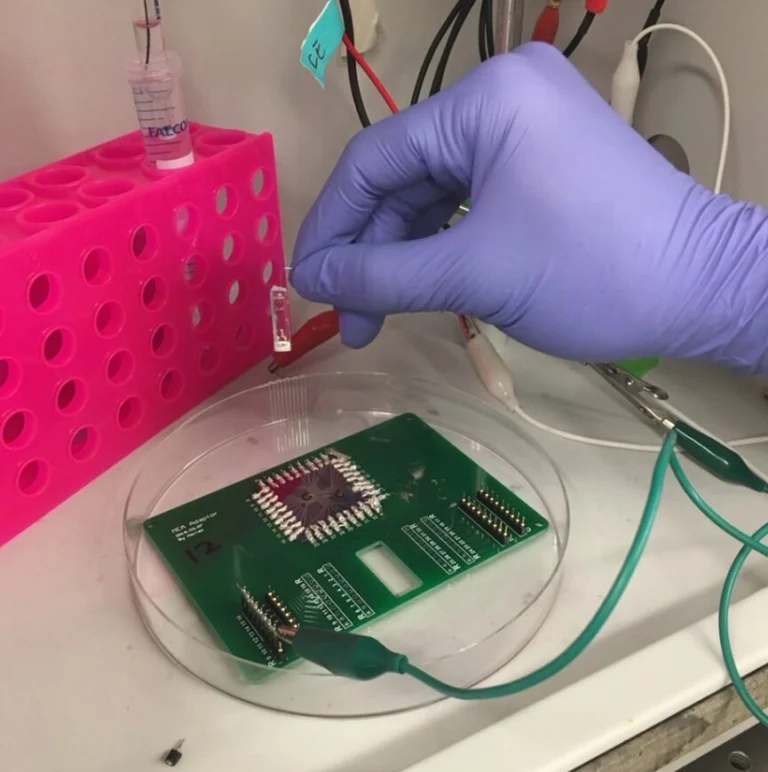
Location: Tufts University, Medford, MA
Eligibility: High school students aged 16+ who reside in Medford, Somerville, Arlington, Cambridge, Malden, Everett, Melrose, Revere, Chelsea, Winchester, Boston, or Quincy
Acceptance Rate: Selective
Application Deadline: February
Program Dates: July 1st – August 15th
Cost: Free
TUBERS places you in a Tufts biomedical engineering lab for about six weeks, where you work on a research project in a specific area of biomedical science. Your daily schedule is arranged with your lab supervisor and typically includes learning protocols, running experiments, and discussing predictions and results. The program is designed so that you move through each step of the scientific process with guidance from undergraduates, graduate students, and research mentors.
You may also have the option to use your project for local or national science competitions with approval from your principal investigator. While the program does not offer housing, it provides a structured setting for exploring biomedical engineering through hands-on lab work.
Why it stands out: It blends small-group academic study with Tufts’ liberal-arts approach, giving you a clearer sense of what college-level inquiry looks like.
8. High School Honors
Location: Boston University, Boston, MA
Eligibility: Students around the globe entering their junior or senior year
Cohort Size: 130 students
Application Deadline: December 15th (applications open)
Program Dates: June 28th – August 7th
Cost: $7,005 for commuters and $10,605 for residential students
High School Honors is a six-week program where you take two undergraduate courses for up to eight college credits. As one of the credit-bearing summer programs for high school students in Boston, it allows you to study alongside university students while managing real college coursework. The setup combines regular university coursework with advising support and structured activities that help you manage expectations at a college pace.
Residential students follow a daily routine that includes classes, group events, and supervised downtime, while commuters attend classes and use campus resources during the day. Online course options may follow a different schedule but maintain the same academic requirements.
Why it stands out: It has strong programs in psychology, biomedical sciences, communications, and international relations, helping you strengthen applications in these fields.
9. ImpactLab – Wentworth Institute of Technology
Location: Boston, MA
Eligibility: Rising domestic and international 11th and 12th graders, ages 15-18
Acceptance Rate: Selective
Application Deadline: Applications open December 12th
Program Dates: Session 1: July 5-17; Session 2: July 19-31
Cost: $3,995 per session or $6,990 for both sessions
ImpactLab is a two-week residential program where you work on hands-on STEM projects in campus labs and studios. You choose a track in areas such as engineering, architecture, computer science, biotechnology, or robotics and spend your days learning technical concepts through guided activities.
The schedule mixes lab time with structured workshops and campus events that give you a sense of college routines. Evenings typically include group activities or time to continue project work. You also have access to faculty and industry partners who introduce tools, methods, and applications within each field. The program centers on applied STEM learning in a residential campus setting.
Why it stands out: You’ll work on real engineering and design challenges, giving you practical skills and insight into hands-on STEM fields.
10. Academic Immersion (AIM)
Location: Boston University, Boston, MA
Eligibility: Students across the world entering their junior or senior year
Cohort Size: 50 students
Application Deadline: December 15th (applications open)
Program Dates: Session 1: June 28th – July 17th (residential) and June 29th – July 17th (commuter). Session 2: July 19th – August 7th (residential) and July 20th – August 7th (commuter)
Cost: $5,708.25 for commuters and $7,245 for residential students
AIM is a three-week program where you focus on one subject area, such as psychology, medicine, creative writing, or business. You attend classes, work on projects, and take part in activities designed to connect classroom content with practical applications.
The schedule mixes lectures, group work, and field-based experiences so you get steady exposure to the topic you choose. Residential students follow an on-campus routine with structured events, while commuters attend daytime sessions and return home afterward. Some tracks include lab work, simulations, workshops, or visits to local sites connected to the field.
Why it stands out: It focuses on one subject in depth, letting you explore a potential major through university-level projects and instruction.
11. Summer Journalism Academy
Location: Boston University College of Communication, Boston, MA, or online
Eligibility: On-campus: rising juniors, rising seniors, and current seniors with journalism experience; Online: students ages 14-18 at any experience level
Acceptance Rate: Selective
Application Deadline: December (applications open)
Program Dates: On-campus: three-week sessions; Online: two-week sessions, dates TBA
Cost/Stipend: TBA
The Summer Journalism Academy introduces you to reporting through daily instruction, hands-on assignments, and guidance from working journalists. On-campus students start mornings with core skills lessons, then move into newsroom sessions where instructors act as editors and assign stories to small reporting teams. Each day includes practical reporting work that takes you around campus or into Boston to interview sources and produce original stories for your portfolio.
Guest speakers from news outlets add context, and on-campus participants also visit local newsrooms and join planned excursions around the city. The online format follows a similar structure, with digital newsroom meetings and remote reporting in your own community.
Why it stands out: You’ll practice reporting, interviewing, and writing, giving you a realistic understanding of how journalism works in the field.
12. Boston College Experience (BCE)
Location: Boston College, Chestnut Hill, MA
Eligibility: High school students worldwide; specific grade requirements not provided
Acceptance Rate: Selective
Application Deadline: TBA
Program Dates: June 29th – July 11th; July 13th – July 25th; July 27th – August 8th
Cost: $5,600 residential or $3,000 commuter for two-week in-person programs; $1,800 for online courses
BCE is a two-week program where you take one non-credit course in an area like economics, psychology, sports management, or global affairs. Each session combines class time with planned academic activities, workshops, and required weekend excursions that bring the course material into a structured routine.
Living on campus gives you a clearer view of the residential side of college, with set quiet hours, staff supervision, and scheduled evening activities. Commuter students take part in all academic components and required events during the week and weekend, with flexibility to join optional activities outside residential spaces. The online format uses asynchronous coursework and virtual programming for students who prefer to participate remotely.
Why it stands out: It combines liberal-arts coursework with leadership development, helping you grow academically while strengthening your personal narrative.
13. Summer Challenge
Location: Boston University, Boston, MA
Eligibility: Rising high school sophomores, juniors, and seniors from all around the globe
Cohort Size: 200-400 students
Application Deadline: December 15th
Program Dates: Session 1: June 14th – June 26th; Session 2: July 5th – July 17th; Session 3: July 19th – July 31st
Cost: $4,860 for residential students
Summer Challenge gives you two weeks on campus to try out subjects you might not see during the school year. You pick two seminars, and each one blends lectures, small-group discussions, and project work so you can really get into the material. The setup balances structured academic time with plenty of chances to meet people and move through a simple campus routine.
Some seminars include short outings around Boston, and there is also an admissions workshop built into the schedule. Residential students live on campus and join evening activities, while commuters stick to daytime classes. The program centers on short-term academic exploration through paired seminar topics.
Why it stands out: You’ll explore two different subjects at once, giving you a low-pressure way to test possible majors before college.
14. Visual Arts Summer Institute (VASI)
Location: Boston, MA
Eligibility: Domestic and international students entering grades 10-12, ages 15-18
Acceptance Rate: Selective
Application Deadline: Rolling
Program Dates: June 29th – July 24th
Cost: $3,800, $80 application fee, and $300 deposit
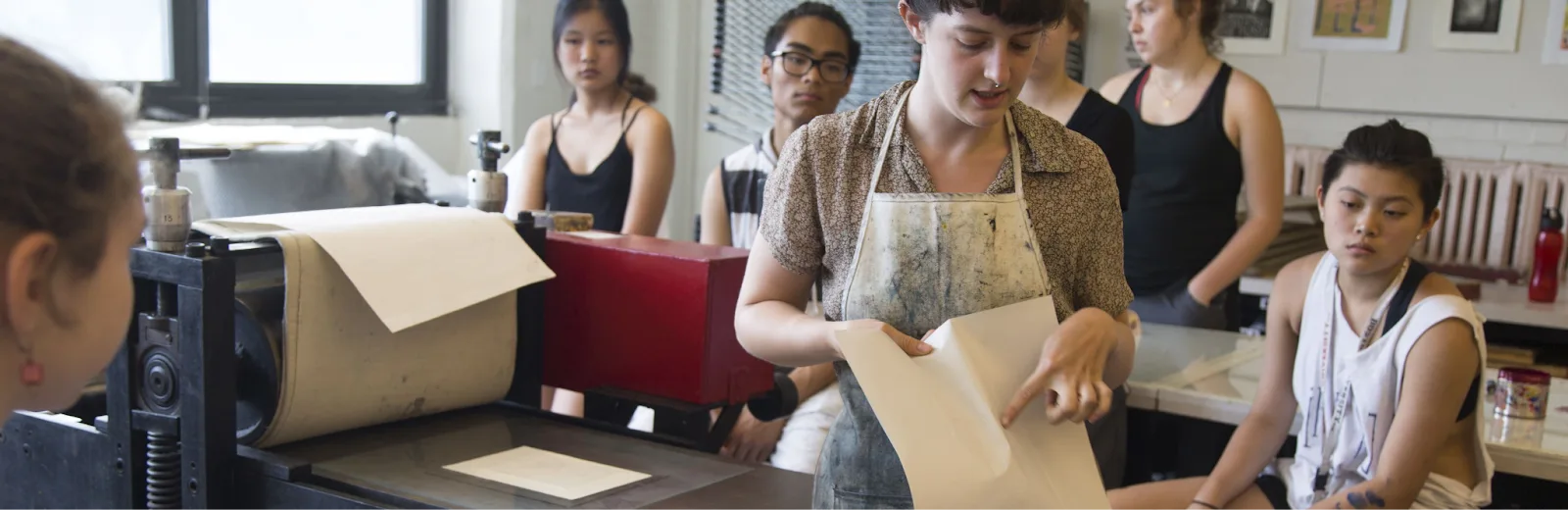
VASI is a four-week daytime program focused on studio practice and portfolio development. Among the arts-focused summer programs for high school students in Boston, you work with faculty from BU’s School of Visual Arts on drawing, painting, and mixed-media projects that mirror college-level artistic routines.
Daily studio sessions emphasise technique, critique, and the development of finished pieces for your portfolio. Because the program does not offer housing, students commute to campus each day and earn three college credits through structured, studio-based learning.
Why it stands out: It guides you through college-level art and design projects, helping you build a stronger, more competitive portfolio.
15. Pre-College Summer Academy – Boston Architectural College
Location: Boston, MA
Eligibility: Students worldwide aged 14+ in grades 9-12
Acceptance Rate: Selective
Application Deadline: June 22nd. Scholarship priority registration deadline is March 1st
Program Dates: July 6th – July 31st (half-day, Monday – Friday)
Cost: $2,000 for credit or $1,800 non-credit; early-bird discounts available
At Summer Academy, you spend your afternoons in a studio setting, getting a feel for how designers work day to day. You join a small group led by a Studio Lead, and the mix of sketching, modeling, and digital design gives you a steady rhythm to settle into. The setup lets you try ideas, get feedback in the moment, and gradually build a project you can show at the end.
You can start in the Exploration track if you want a broad introduction, or choose the Investigation track if you already have some design experience. There are also workshops, site visits, and short fabrication sessions that break up the routine and keep things hands-on. The program wraps with a pin-up review where you share your models, drawings, and digital work with your studio and guests.
Why it stands out: It introduces you to architecture and design through hands-on studio work, giving you early exposure to the creative process used in design professions.
Join the Immerse Education 2027 Essay Competition
Follow the instructions to write and submit your best essay for a chance to be awarded a 100% scholarship.
Experiencing College Life Early
Spending your summer on a university campus changes how you approach learning. In Boston, you step into academic spaces where independence matters, and ideas are taken seriously.
These 15 summer programs for high school students in Boston go beyond enrichment. You follow structured schedules, learn directly from academics, and experience the pace and expectations of higher-level study.
The experience brings clarity. You leave with sharper interests, stronger study habits, and a realistic sense of what university life involves.
If you’re planning your next steps, our University Preparation blogs offer practical guidance on turning these experiences into confident, informed decisions.







Unlock Inspiring Opportunities with the Immerse Education Newsletter
Join our newsletter to stay ahead with exclusive updates, exciting programme highlights, and expert insights from the world of immersive education.
Learn how Immerse can transform your life
An in-depth overview of our university and career preparation programmes
Get a glimpse into the life of an Immerse participant
Find the right programme for you with sample timetables, location showcases, and more