
 Русский (RU)
 Українська (UK)
 Türkçe (TR)
 Italiano (IT)
 Français (FR)
 Português (PT)
 中文 (中国) (ZH)
 Español (ES)
 日本語 (JA)
 ไทย (TH)
 Deutsch (DE)
 Ελληνικά (EL)
 Polski (PL)
 Bahasa Indonesia (ID)
 Nederlands (NL)
 العربية (AR)
 한국어 (KO)

If you’re a high school student who enjoys mathematics, you’ve likely experienced both confidence and doubt along the way. Challenging problem sets can feel rewarding one day and overwhelming the next. Exploring math programs for high school students can help you understand whether your interest in maths is something you want to pursue more seriously beyond school.
After all, mathematics goes far beyond numbers and classroom exercises. It involves abstract reasoning, real-world applications, creative problem-solving, and even collaborative research. That’s why structured summer learning is an effective way to explore the subject more deeply and understand what studying mathematics at a higher level truly entails.
Imagine spending your summer debating number theory with instructors, exchanging geometric proofs with peers, and pushing yourself to approach problems from entirely new perspectives. Through these experiences, you’ll gain exposure to university-level concepts while developing a clearer picture of what an advanced mathematics pathway or career might look like.
How do you choose the best math summer programs for high school students?
With so many programs available, the decision can quickly become overwhelming. Some options may appear costly, overly basic, or disconnected from authentic mathematical thinking. This makes it especially important to know what to look for, because not all math programs offer the same level of rigor, structure, or mentorship.
Around the world, leading universities and institutions host rigorous math programs covering a wide range of subfields, including algebra, combinatorics, number theory, and discrete mathematics. Through problem-solving workshops and guidance from experienced mathematicians, you’ll sharpen your analytical skills and learn to tackle complex challenges with greater clarity and creativity.
No matter where you stand academically, these programs will require dedication and effort, but choosing the right one doesn’t have to be difficult. To help you decide, we’ve created a list of the 15 Best Math Summer Programs for High School Students. They’ve been picked for their academic rigor, institutional reputation, and the quality of mentorship they offer.
15 Math Programs for High School Students
1. Young Scholars Program
Location: Florida State University, Tallahassee, FL
Cost/Stipend: Free
Acceptance rate/cohort size: Each faculty member will choose one to three interns to work with them
Dates: June 7th – July 18th
Application Deadline: January 1st – February 15th
Eligibility: Rising 12th graders who attend a public or private high school in Florida, have a minimum unweighted GPA of 3.0, have permanent residence in the state of Florida, have taken or are currently studying a pre-calculus course, and have scored in the 90th percentile or better in math on a nationally standardized exam
The Young Scholars Program is catered towards high school students who wish to pursue careers in mathematics and other STEM fields. It is a six-week residential program that combines research and an academic curriculum.
You will attend three courses across STEM fields, including math options such as Game Theory: Strategy, Competition, and Cooperation and Exploring the Power of Linear Algebra: From Encryption to Dynamic Systems, but the course topics are subject to change each year. Beyond academics, you will also participate in independent research projects offered by the various departments at Florida State University.
Why it stands out: It immerses you in advanced math and research enrichment, helping you deepen problem-solving skills beyond the standard curriculum.
2. Immerse Education’s Mathematics Summer School

Location: Boston, Tokyo, Singapore, London, Cambridge, and Oxford
Cost/Stipend: Varies; summer school scholarship available through our bursary programme
Acceptance rate/cohort size: An average of 7 participants per class
Dates: 2 weeks during the summer
Application Deadline: Multiple summer cohorts; rolling admissions.
Eligibility: Students from all countries aged 15-18 currently enrolled in middle or high school
Immerse Education’s Mathematics Summer School allows you to dive deep into mathematical theories over two weeks. You will spend your time learning and solving problems in algebra, calculus, and statistics. In addition to solving problems, you will also analyze different math theories and work on group projects.
Other components of the program include attending seminars conducted by experts, one-on-one tutoring sessions, group workshops, research projects, and more, all of which aim to help you build a strong foundation in mathematics.
Why it stands out: Its mix of rigorous math academics taught by esteemed faculty and provision of residential programs at campuses will help you gain an accurate picture of life as a math undergraduate student.
3. Jane Street Academy of Math and Programming (AMP)
Location: Jane Street, New York, NY
Cost/Stipend: Free, and $5,000 scholarship is provided for future college fees
Acceptance rate/cohort size: Highly selective
Dates: June 29th – July 31st
Application Deadline: March 11th
Eligibility: 12th graders with authorization to work in the US
This Jane Street Academy program is aimed at graduating high school students who enjoy doing math and programming. It covers topics in mathematics, computer programming, data analysis, and game theory.
You will learn different concepts through seminars, projects, games, and guest lectures. The program prioritizes students who have enrolled in advanced math and computer science classes, given that the syllabus covers some advanced topics. One of the standout features of the program is that you will be mentored by professional quants.
Why it stands out: You’ll be mentored by professional quants, an opportunity rarely available to high school students.
4. Program in Mathematics for Young Scientists (PROMYS)
Location: Boston University, Boston, MA
Cost/Stipend: Up to $7,000; free for domestic students whose family income is less than $80,000 per annum
Acceptance rate/cohort size: 80 high school students
Dates: June 28th – August 8th
Application Deadline: Early March
Eligibility: Domestic and international high school students who have completed 9th grade and are between the ages of 14 and 18
In this six-week residential experience, you will spend a significant amount of your time solving mathematical problems. Widely regarded as one of the most rigorous math programs for high school students, PROMYS immerses you in daily lectures on Number Theory alongside challenging problem sets designed to develop proof-based thinking.
Each day, before the lecture, your class will discuss the solutions to the previous day’s problems. Beyond that, PROMYS also schedules you with advanced seminar sessions where you will develop your understanding of algebra, primes and zeta functions, quivers and their classifications, and other mathematical concepts. In other words, it prepares you for pursuing a degree in mathematics.
Why it stands out: It’s a highly selective program that’ll boost your profile and offer exposure to the pace and expectations of university STEM education.
5. Stanford University Mathematics Camp (SUMaC)
Location: Stanford University, Stanford, CA
Cost/Stipend: $3,750 for the online sessions and $8,950 for the residential session (need-based financial aid available)
Acceptance rate/cohort size: 16 students per class
Dates: June 15th – July 3rd for session I online, June 21st – July 17th for session I residential, and July 6th – July 24th for session II online
Application Deadline: February 2nd
Eligibility: 10th and 11th graders around the world
This rigorous course offered by Stanford University invites academically talented students from all over the world to explore advanced math topics. If the program selects you, your schedule will include lectures, guided research, and group problem-solving sessions.
Additionally, the program will focus on everything from the history of different math theories to topics that are currently being researched in the field of mathematics. You will also study the applications of mathematics in various scientific fields.
Why it stands out: You’ll be exposed to the proof-based rigor associated with their graduate-level math, serving as an early exposure to methods that not many high school students have access to.
6. Mathcamp
Location: Champlain College, Burlington, VT
Cost/Stipend: Up to $7,500; the program is free for US and Canadian students with an annual household income of less than $100,000
Acceptance rate/cohort size: 120 students
Dates: June 28th – August 2nd
Application Deadline: Opens in early January
Eligibility: Students aged 13 to 18; international students accepted
This is a five-week math camp where you will meet students who share the same level of passion for the subject as you. You will focus on some advanced mathematical theories and discover new ways of looking at different concepts. You will also learn some math topics that are generally covered at the undergraduate and graduate levels.
This will include, but not be limited to, abstract algebra, topology, real analysis, model theory, and spectral graph theory. By the end of the program, you will have developed your problem-solving skills.
Why it stands out: It offers intense, creative mathematical exploration in a collaborative environment, helping you develop original thinking and rigorous reasoning.
7. Summer Math Modeling Program
Location: University of Delaware, Newark, DE, and University of Delaware-Wilmington campus, New Castle County, DE
Cost/Stipend: Free with a stipend of $600
Acceptance rate/cohort size: 20 students per campus
Dates: June 22-26
Application Deadline: May 19th
Eligibility: Rising 11th and 12th-graders who attend a high school in Delaware
Organized by the University of Delaware, this five-day program is well-suited for you if you are interested in math modeling. The program requires prior knowledge in algebra and geometry, giving priority to students who have taken these classes.
As a participant, you will work alongside graduate students and attend lectures and presentations conducted by the university’s professors. You will collaborate with other participants to use math modeling to solve problems, which will ultimately prepare you for solving real-world problems too.
Why it stands out: It strengthens your applied math skills through real modeling projects, helping you see how mathematics solves real-world problems.
8. The Hampshire College Summer Studies in Mathematics
Location: Hampshire College, Amherst, MA
Cost/Stipend: $6511; financial aid available, and the program is free for US students with an annual household income of less than $85,000
Acceptance rate/cohort size: Approximately 51 students
Dates: June 29th – August 9th
Application Deadline: Information about applications will be released in January
Eligibility: High school students from all around the world
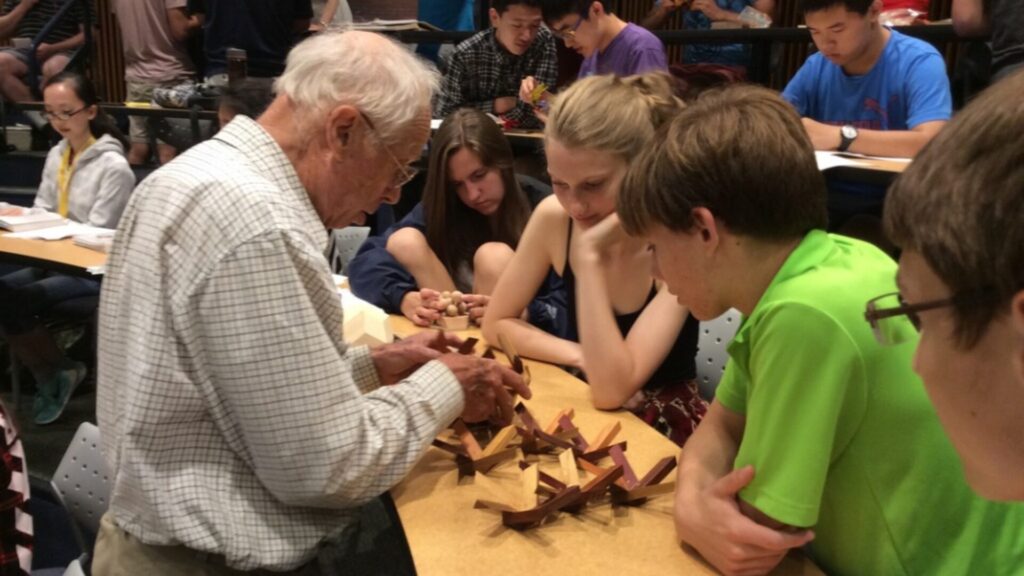
This program gives you the opportunity to explore college-level mathematical concepts. Your daily schedule at this residential program will consist of four hours of theoretical classes, called Prime Time Theorem, in the morning and problem-solving sessions in the evenings. You will participate in workshops where you will study unifying themes, recurrent patterns, and fruitful modes of inquiry.
Three weeks into the program, you will be placed in classes where you will explore topics like combinatorics, number theory, complex numbers, probability, four-dimensional geometry, fractals and chaos, graph theory, topology, and cellular automata.
Why it stands out: Its teaching style emphasizes independent mathematical thinking and will help prepare you for high-level theoretical work.
9. Summer Academy for Math and Science (SAMS)
Location: Carnegie Mellon University, Pittsburgh, PA
Cost/Stipend: Free
Acceptance rate/cohort size: 10 percent
Dates: June 20th – August 1st
Application Deadline: February 1st
Eligibility: High school students between 11th and 12th grades who are at least 16 years old by the start of the program and are US citizens or permanent residents
SAMS prepares you for studying maths or science degrees in top universities and also schedules you with college prep sessions. The program will also help you explore career opportunities in the STEM fields. Prior to coming to the campus for the six-week in-person program, you are required to attend the two-day online session that equips you with the knowledge needed to thrive in SAMS.
The academic curriculum during the in-person session dives deep into STEM topics by involving you in traditional lectures, meetings, and hands-on project sessions. At the end of the program, you will attend a research symposium.
Why it stands out: It offers long-term mentoring, helping you better craft competitive applications for selective STEM & math university programs.
10. CMT’s Summer Math Program for Young Scholars Program
Location: Courant Institute of Mathematical Sciences at NYU, New York City, NY
Cost/Stipend: $2,400 (limited scholarships available)
Acceptance rate/cohort size: Not publicly available
Dates: August 11st – August 29th
Application Deadline: February 1st – May 1st
Eligibility: U.S. 9th to 11th graders
Aimed at high school students who excel in mathematics, this three-week rigorous program encourages you to choose careers in mathematics. You will attend lectures where you will learn college-level math topics like number theory, group theory, graph theory, knots and surfaces, and more.
Following the lecture sessions, you will participate in a problem session guided by graduate students. Once every week, you will also work on mathematical games and puzzles. You will also discover the significance of math in other fields.
Why it stands out: It introduces you to higher-level math theory and proof techniques, helping build a strong foundation for future STEM study.
11. √mathroots @ MIT
Location: Massachusetts Institute of Technology, Cambridge, MA
Cost/Stipend: Free; students only need to pay for travel; limited need-based travel scholarships are available.
Acceptance rate/cohort size: 20 students
Dates: July 1st – July 15th
Application Deadline: Early January – March 3rd
Eligibility: 9th to 11th graders between the ages of 14 and 18 who are US citizens or attend a high school in the USA. Knowledge in algebra, geometry, trigonometry, exponents, logarithms, and precalculus is preferred.
This mathematics program gives you the chance to explore different creative topics within the field of mathematics. You will participate in lectures and group activities, through which you will learn some new math concepts and solve problems in creative ways.
Touching on topics that go beyond your school syllabus, the 14-day program will also teach you the method and meaning behind mathematical proof. With √mathroots being organized by MIT’s mathematics department, you will be taught by its faculty and guest lecturers who have experience teaching for mathematical research and competitions.
Why it stands out: It focuses on deepening conceptual understanding and creative problem solving, helping you prepare for competitive math paths and advanced coursework.
12. Georgia Tech High School Math Day (HSMD)
Location: Georgia Institute of Technology, Atlanta, GA
Cost/Stipend: A registration fee of $20 for each student; a fee waiver is given for Georgia-based schools that are enrolling in HSMD or a math competition for the first time or that demonstrate a financial need.
Acceptance rate/cohort size: 20 students per school
Dates: March 7th
Application Deadline: January 30th; the deadline for fee waivers is January 16th.
Eligibility: High school students; a designated school coach should apply for the event, not the participating students.
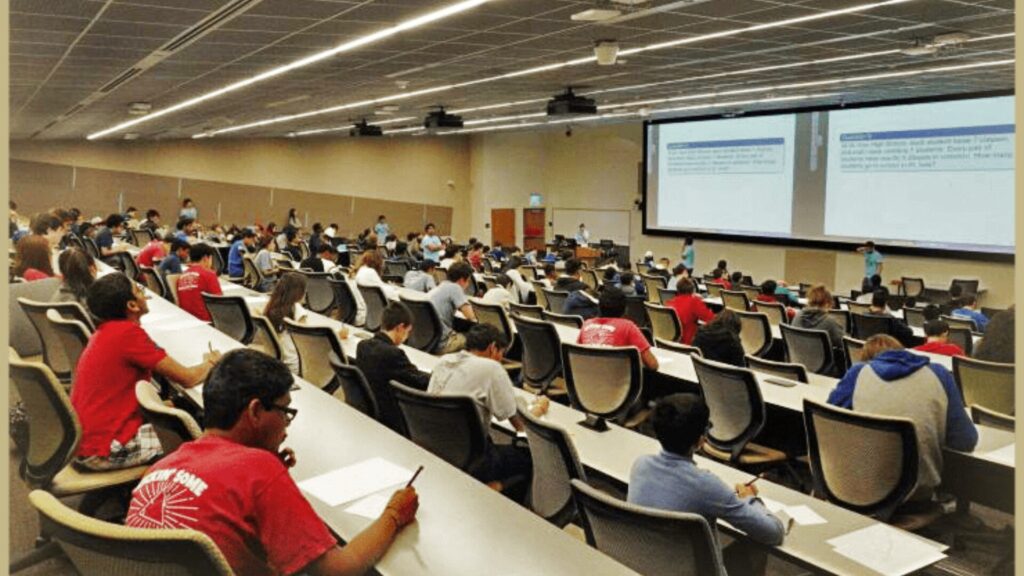
No matter what your level is in mathematics, you can sign up for this one-day program where you will explore different branches of it. The program aims to make the subject both fun and engaging by inviting you to solve a set of mathematical problems. Additionally, the event will also have activity stations, a panel discussion with a group of mathematicians, and a guest lecture.
Some of the fun activities you can expect to do at this program include logic puzzles, board games, math jeopardy, and more, where you will significantly use your knowledge in mathematics.
Why it stands out: It connects you with research-oriented math experiences, helping you explore how collegiate math disciplines operate.
13. Rice University’s Techniques of a Pro Mathematician
Location: Rice University, Houston, TX
Cost/Stipend: $2,500; $2,200 for students who pay before February 1 (limited number of scholarships available)
Acceptance rate/cohort size:
Dates: July 5-10 for session 1, July 12-17 for session 2, and July 19-24 for session 3
Application Deadline: May 1st
Eligibility: Rising 8th-12th graders around the world who have completed a course in geometry and are familiar with the definitions of sine, cosine, and tangent (SOHCAHTOA), including the ability to sketch plots of sin(x) and cos(x) by hand.
In this one-week residential program, you will be challenged with college-level mathematics topics. You will particularly learn some of the techniques used by experts to solve math problems effortlessly. The program encourages you to put what you learn into practice while taking feedback and improving your problem-solving skills.
As a result, it will become easier and more fun for you to calculate the solutions for even the toughest math questions, making the program suitable for high school students who would like to pursue careers in mathematics. This program is part of Rice University’s Tapia Camps and also has STEM Camps, where you will study a range of STEM topics.
Why it stands out: It teaches how mathematicians think and write, helping you understand the craft of mathematical discovery.
14. California State Summer School for Mathematics and Science (COSMOS)
Location: Various University of California campuses (UC Davis, UC Irvine, UC Los Angeles, UC San Diego, UC Santa Cruz, and UC Merced)
Cost/Stipend: A non-refundable application fee of $46 and a program fee of $5,518 (financial assistance available)
Acceptance rate/cohort size: 20-25 students per cluster
Dates: July 5-31 or July 5th – August 1st (end date varies by the campus)
Application Deadline: January 7th – February 6th
Eligibility: Rising 9th through 12th graders who are enrolled in a school in California; each cluster has its own prerequisite course requirement
If you are a high school student who is considering careers in the STEM field, the COSMOS program is for you. Offered across University of California campuses, each college campus offers a list of clusters that you can choose from. Based on the cluster you choose, you will be studying two science and/or math courses and a science communication course.
For those interested in mathematics, your cluster options include Mathematics and Technologies of the Information Age, Number Theory and Discrete Math, Music and Math: The Art of Digital Audio, Tissue and Tumor Biology and Mathematical/Computational Modeling, and more. As a participant, you will be scheduled with lectures, hands-on projects, discussions, and more.
Why it stands out: You’ll be placed in groups built around active UC research, giving you exposure to major UC laboratories, tech partnerships, and undergraduate research pipelines.
15. Mathematics Intensive Summer Session (MISS)
Location: California State University, Fullerton, CA
Cost/Stipend: Free
Acceptance rate/cohort size: Selective
Dates: July 7th – August 1st
Application Deadline: June 6th
Eligibility: Female high school students across the world (rising 10th to 12th graders); must be college-bound
This four-week summer program is well-suited for female high school students who demonstrate an interest in mathematics. In this schedule-packed course, you will spend six hours each day participating in interactive instruction sessions where you learn everything from algebra to precalculus. Your schedule will also include small group work and problem-solving sessions.
By the end of the program, you will be confident in solving advanced math questions and will be ready to choose a degree in mathematics. MISS specifically targets students who will be the first in their families to attend college.
Why it stands out: It brings rigorous math learning together with community engagement, helping you build confidence and readiness for future math study.
Beyond Answers, Toward Insight
Strong mathematical ability is not just about reaching the right answer. It is about learning how to think, question assumptions, and approach complex ideas with confidence.
The 15 math programs for high school students listed here create space for deeper understanding. They encourage exploration, proof, and discussion while helping you develop resilience and precision.
Through advanced coursework and collaboration, these experiences reveal what studying mathematics at university really involves. They help transform interest into clarity and curiosity into commitment.
To keep building that momentum, explore our Mathematics Top Books Guide. It is packed with carefully chosen reads to stretch your thinking and deepen your mathematical insight.