
 Русский (RU)
 Українська (UK)
 Türkçe (TR)
 Italiano (IT)
 Français (FR)
 Português (PT)
 中文 (中国) (ZH)
 Español (ES)
 日本語 (JA)
 ไทย (TH)
 Deutsch (DE)
 Ελληνικά (EL)
 Polski (PL)
 Bahasa Indonesia (ID)
 Nederlands (NL)
 العربية (AR)
 한국어 (KO)

In high school, summer often feels like a pause from classes, exams, and deadlines. But these months can be far more meaningful than just time off. They offer a chance to learn beyond the classroom, challenge yourself in new environments, and gain experiences that support personal growth and academic development. One of the most effective ways to achieve this, without adding financial pressure, is by attending free summer camps specifically designed for high school students.
Imagine spending your summer exploring coding and artificial intelligence, conducting science experiments, learning leadership skills, or diving into creative fields like writing and design. Many free summer camps combine academic learning with hands-on activities, mentorship, and collaboration with motivated peers. These camps are not just about filling time; they help you build confidence, discover new interests, and strengthen your college applications.
Even if you already have access to good educational resources during the school year, free summer camps can still be incredibly valuable. They expose you to new institutions, instructors, and peer groups, often providing a preview of college-style learning.
What kinds of Free Summer Camps for High School Students are there?
Finding free summer camps that are both meaningful and well-structured can be challenging. Some programs may offer limited academic depth, while others may be highly competitive or focused on a narrow skill set. Understanding the different types of free summer camps available can help you choose an experience that truly matches your interests and goals.
Free summer camps for high school students come in many forms. Depending on the program, you might attend lectures, participate in workshops, complete group projects, or receive mentorship from professionals and educators. Many camps also incorporate experiential learning, such as lab work, field activities, or real-world problem-solving. You will be taught by expert instructors, participate in hands-on activities, and connect with like-minded peers.
No matter the format, free summer camps require curiosity, commitment, and active participation. To make your search easier, we’ve curated a list of 15 Free Summer Camps for High School Students. They’ve been selected for their educational value, accessibility, and the meaningful experiences they offer to motivated learners.
15 Free Summer Camps for High School Students
1. SAGE Camp at SLAC
Location: SLAC and Stanford University, Menlo Park/Palo Alto, CA
Cost/Stipend: Free
Acceptance rate/cohort size: Not specified
Dates: June 21st – June 27th
Application Deadline: Typically early in the year
Eligibility: Currently enrolled 9th, 10th, or 11th graders under 18 years old in Northern California high schools
SAGE Camp at SLAC allows you to spend a week immersed in science, technology, engineering, and math alongside professionals at one of the world’s leading research institutions. During the residential experience, you’ll take part in career talks, hands-on group projects, and guided tours of national lab facilities, giving you a real sense of what cutting-edge STEM work looks like in action.
You’ll also get to observe and learn from scientists and engineers, which will help you picture different career paths in STEM and day-to-day work environments in fields you might be interested in pursuing. Living and learning with peers who share your interests makes this camp both inspiring and deeply social. By the end of the week, you’ll not only broaden your STEM knowledge but also join a supportive community that continues to offer opportunities beyond the camp itself.
Why it stands out: You get a summer camp experience at a national laboratory and university campus that introduces you to real scientific careers and research environments in STEM.
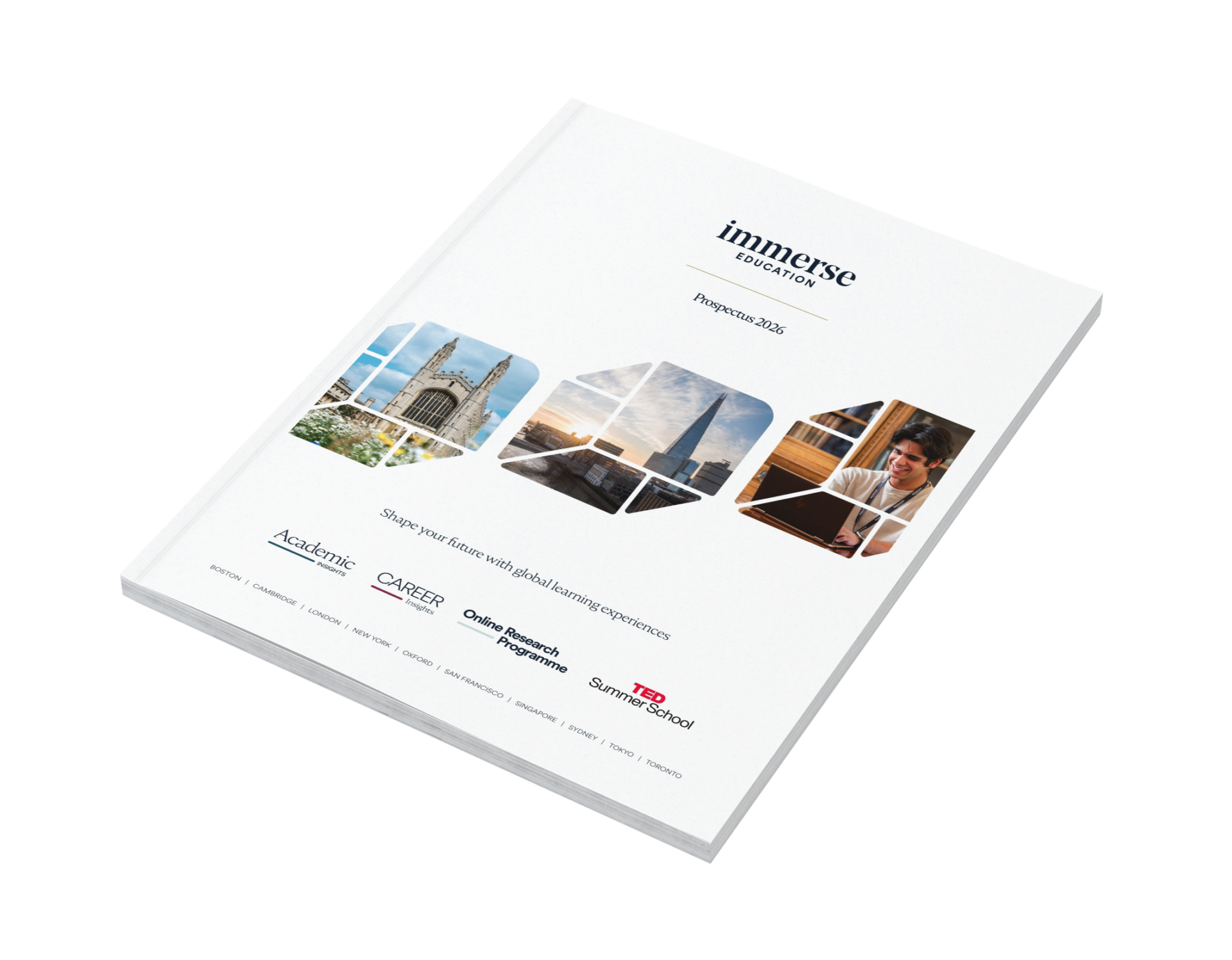
2. Immerse Education’s Academic Insights Summer School
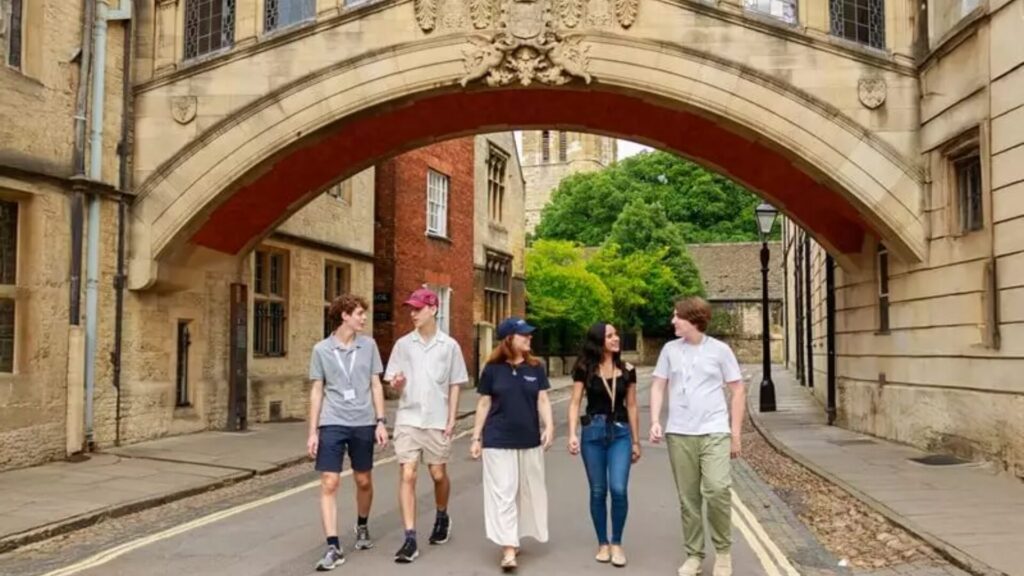
Location: Boston, Cambridge, London, Oxford, Singapore, Sydney, Tokyo, and Toronto
Cost/Stipend: Varies; summer school scholarship available through their bursary programme
Acceptance rate/cohort size: Average of 7 participants per class
Dates: 2 weeks during the summer
Application Deadline: Multiple summer cohorts with rolling admissions
Eligibility: Students worldwide aged 13-18 currently enrolled in middle or high school
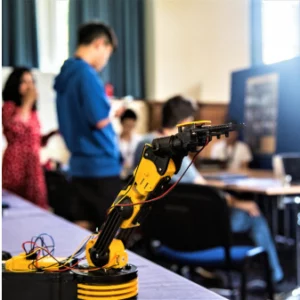
The Academic Insights Program provides you with an opportunity to take undergraduate-level classes at universities around the world. You’ll work with academics from universities like Oxford, Cambridge, and Harvard in classes of 4-10 students. They attend university-style lectures and 1:1 weekly sessions with their tutor. The program includes practical experiences such as dissections in medicine, robotic arm building in engineering, or moot courts for law.
You can choose from over 20 subjects, including architecture, artificial intelligence, business management, computer science, economics, medicine, philosophy, and more. By the end of the program, you will complete a personal project and receive written feedback and a certificate of completion. You can find more details about the application here.
Why it stands out: You get an intensive taste of undergraduate study and personalised academic growth in world-renowned educational settings.
3. IMA-MathCEP Math Modeling Camp
Location: University of Minnesota, Minneapolis, MN
Cost/Stipend: Free
Acceptance rate/cohort size: Not publicly specified
Dates: June 23-27
Application Deadline: May 31st
Eligibility: Current high school students who have completed a year of single-variable calculus by the end of the school year. Must live in or near the Twin Cities metro area
At the Math Modeling Camp run by IMA and MathCEP, you’ll spend a full week learning how mathematicians turn complex real-world issues into structured problems you can analyze and solve. You’ll work in small teams to build mathematical models that explore topics like traffic flow, population trends, disease spread, or climate effects on resources.
Throughout the camp, you’ll refine your problem-solving strategies, sharpen your ability to communicate solutions clearly, and apply calculus and statistics in practical ways. Faculty and instructors guide you without doing the work for you, meaning this is a hands-on environment where collaboration and persistence matter.
Why it stands out: It transforms abstract mathematical skills into real-world problem-solving through collaborative model-building within a supportive academic setting.
4. National Youth Science Camp (NYSCamp)
Location: Monongahela National Forest, near Bartow, WV
Cost/Stipend: Free
Acceptance rate/cohort size: Selective
Dates: July 11th – August 1st
Application Deadline: Typically around the end of February
Eligibility: High school juniors and seniors from around the world
The National Youth Science Camp (NYSCamp) is one of the most selective free summer camps for high school students with a strong interest in science and innovation. Over nearly three weeks in West Virginia, you’ll take part in daily lectures by distinguished STEAM experts, small-group directed studies, and interactive seminars designed to challenge your curiosity and encourage deeper academic inquiry.
Beyond classroom learning, the camp blends outdoor adventure like hiking, rock climbing, and kayaking, along with creative arts opportunities, so you grow both your mind and your sense of confidence in exploring new experiences. You’ll also travel to Washington, D.C., to visit science institutions and engage with professionals, which expands your view of how STEAM connects to society and policy.
Why it stands out: You get an immersive STEAM experience that blends world-class scientific engagement, outdoor adventure, and leadership development.
5. NeuroCamp — UCLA Brain Research Institute (BRI)
Location: UCLA Brain Research Institute, LA
Cost/Stipend: Free
Acceptance rate/cohort size: Small cohort of ~15-20 students
Dates: Two weeks during the summer
Application Deadline: April 27th
Eligibility: High school students worldwide
NeuroCamp at the UCLA Brain Research Institute is an engaging summer program where you’ll dive into the basics of neuroscience through hands-on laboratory experiences and interactive sessions with researchers. Over two weeks, you’ll explore core topics like molecular neurobiology, neurophysiology, and neuroanatomy, gaining practical skills such as dissecting specimens and observing nervous system function.
The camp emphasizes doing real science in a lab setting, so you’ll build confidence with techniques and tools used by professionals. You’ll also learn about the brain’s structure and function from faculty and mentors who are passionate about helping you think like a scientist. Working closely with a small, motivated group of peers gives you a supportive environment to ask questions and grow your curiosity.
Why it stands out: You will learn the fundamental concepts of neuroscience and basic lab techniques in Molecular Neurobiology, Neurophysiology, and Neuroanatomy.
6. Carnegie Mellon University – Statistics & Data Science Camp
Location: Carnegie Mellon University, Pittsburgh, PA
Cost/Stipend: Free
Acceptance rate/cohort size: Not specified
Dates: June 23-27
Application Deadline: March 28th
Eligibility: High school students in Pittsburgh and surrounding school districts
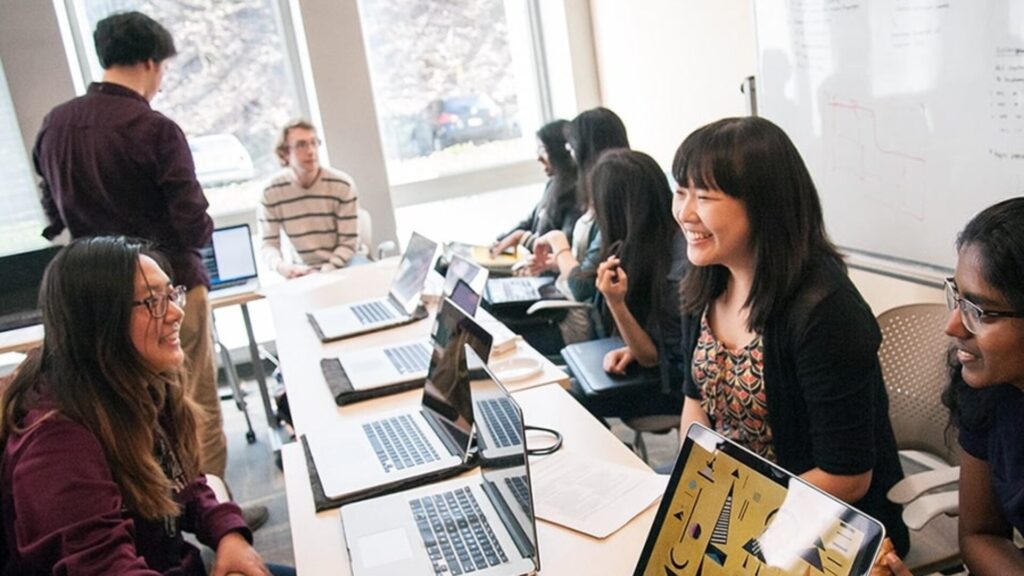
The Statistics & Data Science Camp at Carnegie Mellon gives you a lively introduction to how data shapes everything around us and shows how statisticians and analysts find meaningful patterns in chaotic information. Over the five days of camp week, you’ll dive into computer labs where you’ll learn the basics of R programming alongside talks that connect foundational concepts in statistics and data science to real-world applications.
You’ll participate in engaging demonstrations and collaborative tasks that help you see how data can be collected, modeled, and interpreted in fields from business to health care. A highlight of the week is a field trip to a local company where data science is applied daily, offering you a glimpse into professional practice. Throughout the camp, you’ll discover career paths and build confidence in your analytical thinking.
Why it stands out: You get an immersive introduction to data science right on a top research university campus with real-world industry exposure.
7. GenCyber Camp
Location: University of Missouri, Kansas City, MO
Cost/Stipend: Free
Acceptance rate/cohort size: Not publicly specified
Dates: One-week session during July
Application Deadline: Varies
Eligibility: Domestic and international high school students
At the GenCyber Camp hosted at the University of Missouri–Kansas City, you’ll explore the exciting world of cybersecurity through a mix of classroom instruction and hands-on lab activities designed for high school learners. Throughout the week, you’ll build foundational skills in essential areas like internet safety, ethical hacking, digital forensics, and basic cryptography, giving you a real sense of how digital defenses work.
The camp is set up to be beginner-friendly, so you don’t need any previous coding or security experience to dive in and start learning. Daily sessions include lectures, group discussions, and interactive challenges that help you think like a cybersecurity professional. You’ll also get to work on activities like network scanning and game-based programming, which make abstract concepts tangible and fun. Here’s the application portal.
Why it stands out: This camp gives you a free, structured introduction to cybersecurity that blends theory and practice, whether you’re new to the field or eager to explore it further.
8. Data Science in Action
Location: Harvard T.H. Chan School of Public Health, Boston, MA
Cost/Stipend: Free
Acceptance rate/cohort size: Small cohort
Dates: Two weeks during July
Application Deadline: Typically around early May
Eligibility: High school students from all over the world
Data Science in Action is a hands-on summer camp where you dive into the fundamentals of programming, machine learning, and data science with an exciting real-world project at Harvard. Over two weeks, you’ll learn Python programming and how machine learning algorithms work from the ground up, applying those concepts by building and training models. You’ll work closely in team settings, debugging code, testing models, and learning to think like data scientists as you troubleshoot and improve your projects.
Guest speakers from academia and industry join lunchtime discussions to share perspectives on careers in data science and real-world problem solving. By the end of the camp, you’ll understand core data science tools and gain confidence in building your own intelligent systems and explaining your work to others.
Why it stands out: You get to build and program a machine-learning-driven model while learning core data science skills.
9. RNS NeuroCamp: Rice Neuroscience Society
Location: Rice University, Houston, TX
Cost/Stipend: Free
Acceptance rate/cohort size: Not specified
Dates: Two-day session during the summer
Application Deadline: Applications typically open in March and close in May (rolling until filled)
Eligibility: All high school students
RNS NeuroCamp is a free neuroscience outreach experience that introduces you to the fascinating world of brain science through interactive talks, demonstrations, and activities led by Rice University neuroscience enthusiasts. Over the course of the camp, you’ll explore foundational topics like how neurons communicate, the structure of the brain, and how neurological diseases affect the nervous system. You’ll engage in discussions and guided experiments.
Alongside the science content, the camp features professional development panels and conversations with current Rice students and career advisors, so you get insight into college pathways and STEM careers. The program’s blend of theory, discovery, and mentorship gives you a compelling glimpse into neuroscience as both a discipline and a potential future pursuit.
Why it stands out: You will be provided opportunities to learn skills in STEM as well as general professional skills with representatives from Rice’s Center for Career Development.
10. Telluride Association Summer Seminar (TASS)
Location: Various host sites in the U.S.
Cost/Stipend: Free
Acceptance rate/cohort size: Highly selective
Dates: June 21st – July 25th
Application Deadline: December 3rd
Eligibility: U.S. and international high school sophomores and juniors
The Telluride Association Summer Seminar (TASS) stands out among free summer camps for high school students seeking rigorous academic discussion in the humanities and social sciences. During this six-week residential programme, you’ll enrol in a seminar focused on intensive reading and discussion, guided by experienced faculty and supported by small-group workshops within a close-knit learning community. Each day combines intellectual work with community activities that are planned democratically by participants, helping you build collaboration, leadership, and decision-making skills.
You’ll spend time writing essays, engaging with peers from diverse backgrounds, and exploring ideas at a level that pushes well beyond typical high school classes. Outside of formal sessions, you’ll take part in community living, practice restorative justice principles, and attend talks or events that broaden your academic horizons. TASS emphasizes both personal growth and academic curiosity in a supportive environment that encourages transformative thinking.
Why it stands out: TASS prepares young students to lead and serve through transformative educational experiences rooted in critical thinking and a democratic community.
11. Forensic Science Summer Camp at Purdue University Northwest
Location: Purdue University Northwest, Hammond Campus, IN
Cost/Stipend: Free
Acceptance rate/cohort size: Not specified
Dates: June 16-20
Application Deadline: Varies
Eligibility: High school juniors and seniors worldwide
The Forensic Science Summer Camp at Purdue University Northwest lets you step into the world of criminal investigation and scientific analysis in a hands-on environment. You’ll work on a real crime scenario, learning how to process a mock scene, collect evidence, and apply laboratory techniques to analyze physical clues just like professional forensic scientists do.
You’ll get comfortable with the scientific methods used in disciplines like fingerprint analysis, trace evidence collection, and lab testing while guided by experienced instructors. The camp structure emphasizes teamwork and critical thinking as you collaborate with peers to piece together information and solve the case by week’s end.
Why it stands out: This camp is for you if you’re someone interested in a career as a forensic scientist or are interested in how science and the law intersect.
12. Robotics Camp: Austin Peay State University CoSTEM

Location: Austin Peay State University, Clarksville, TN
Cost/Stipend: Free
Acceptance rate/cohort size: Small cohort
Dates: June 2-5
Application Deadline: TBA
Eligibility: Domestic and international students in grades 8-12
At the CoSTEM Robotics Camp, you’ll get a practical introduction to robotics and electronics in a friendly, hands-on setting over four mornings on the APSU campus. You’ll learn how to assemble and program a small robot, using visual coding tools like Scratch to make it navigate a track and avoid obstacles. As you build and tweak your robot, you’ll also pick up useful project planning and documentation skills that are key to real STEM work.
The camp keeps things interactive and collaborative, so you’ll be sharing ideas and solving problems together with a small group of peers. Even if you’re new to coding or engineering concepts, the instructors guide you step by step so you can gain confidence while doing something fun and technical.
Why it stands out: You can build and program your own robot while gaining real project-based experience in electronics and coding.
13. SYLP Economics & Leadership Summer Camp: Siegfried Youth Leadership Program
Location: University of Delaware, Newark, DE
Cost/Stipend: Free
Acceptance rate/cohort size: Limited cohort
Dates: Typically a one-week session in summer
Application Deadline: Varies
Eligibility: Delaware-area high school students
The SYLP Economics & Leadership Summer Camp at the University of Delaware invites you to spend a week exploring key ideas in economics, leadership, and personal development alongside a small group of motivated peers. Throughout the program, you’ll tackle topics like financial literacy, entrepreneurship, and defining your personal leadership vision in ways that make sense for your future.
Social activities and outings, such as local sporting events or team challenges, help you form bonds with your cohort and experience college campus life firsthand. By the end of the week, you’ll deepen your understanding of economic and leadership concepts and also gain clarity about your own ambitions and how to pursue them.
Why it stands out: It’s an immersive leadership and economics camp that blends college-level insight with real-world skills and community building.
14. Camp Rising Sun (CRS)
Location: Upstate New York
Cost/Stipend: Free
Acceptance rate/cohort size: Highly selective with limited slots
Dates: Varies
Application Deadline: Varies by region
Eligibility: You must be 15-16 years old during the summer of the camp. International students are welcome to apply
Camp Rising Sun is a globally renowned, fully funded summer leadership program where you’ll live and learn with motivated teens from around the world in a close-knit residential community. You’ll engage in experiential learning activities focused on compassionate leadership, decision-making, and ethical problem-solving, with plenty of time for reflection and personal growth. Daily workshops, peer-led projects, and group responsibilities give you real chances to stretch your abilities and try new things while contributing to the life of the camp.
Beyond leadership sessions, the program includes cultural exchanges, discussions on global issues, creative expression, and outdoor activities that help you connect with peers from diverse backgrounds. Whether you’re debating ideas, organizing community initiatives, or simply sharing stories around a campfire, you’ll leave with a deeper sense of your values and the tools to make a difference in your own world.
Why it stands out: This program brings together future leaders from across the globe for an immersive summer of ethical leadership development and lifelong community.
15. WNE-MHC Golden Bear Summer Camp at Western New England University
Location: Western New England University, Springfield, MA
Cost/Stipend: Free
Acceptance rate/cohort size: Limited to the first 35 students who register
Dates: June 23–27
Application Deadline: Registration open until spots fill
Eligibility: High school students from all nationalities aged 13–18
The Golden Bear Summer Camp at Western New England University invites you to explore the world of health sciences through a week of interactive labs, demonstrations, and career insights hosted by the College of Pharmacy and Health Sciences. You’ll get hands-on experience with activities such as DNA extraction, community pharmacy simulations, and introductions to neuroscience and occupational therapy, all designed to let you try out real scientific tools and techniques.
Sessions include discussions with faculty and current students who share practical tips on preparing for careers in healthcare and related fields. You’ll be actively participating in labs and group exercises that help make complex topics accessible and engaging. You’ll also attend talks that offer guidance on building a strong college application and choosing the right academic paths.
Why it stands out: You get introduced to neuroscience and occupational therapy careers with direct mentorship from university instructors.
Plan Your Next Academic Move
Summer experiences can redefine how you learn by placing curiosity into action. You test ideas, collaborate with peers, and discover strengths beyond the classroom.
Across disciplines, free summer camps for high school students offer structure without cost, pairing mentorship with hands-on projects that build confidence, independence, and a clearer sense of direction.
These programmes help you understand academic expectations early, practise commitment, and reflect on what genuinely motivates you before making long-term study decisions.
To plan what comes next, explore our University Preparation blogs for guidance on subject choices, application strategy, and building a strong academic pathway worldwide today.