

 Русский (RU)
 Українська (UK)
 Türkçe (TR)
 Italiano (IT)
 Français (FR)
 Português (PT)
 中文 (中国) (ZH)
 Español (ES)
 日本語 (JA)
 ไทย (TH)
 Deutsch (DE)
 Ελληνικά (EL)
 Polski (PL)
 Bahasa Indonesia (ID)
 Nederlands (NL)
 العربية (AR)
 한국어 (KO)

High school is a great time to lock in your academic interests and really focus on your strengths. If mathematics is your area of expertise, or even if it is something you wish to hone and better, online math programs for high school students might be just what you’re looking for.
These programs offer you the unique opportunity to be within the comfort of your home and collaborate with a diverse pool of peers from various backgrounds, cultures, and educational experiences worldwide.
An online learning format academically covers everything an in-person class provides, and all at lower rates, since there are no housing or travel costs. The social experiences in an online program are also curated to complement the academic experience. Additionally, a virtual program offers you a flexible schedule, allowing you to manage your time on your own terms.
What kind of online math programs are available for high school students?
An online math program, when structured correctly, can act as the foundation for your transition to college and help you prepare for university life. However, not all math programs offer the same level of rigor. That’s why careful research is important, so you can pick the programs that are best for you.
Universities worldwide offer online math programs for high school students that cover advanced mathematics, research internships, or mentorship. During these programs, your math skills will be nurtured under the guidance of undergraduate and graduate mentors.
What runs throughout the programs in the list is the rigor of the curriculum, the prestige of the institution, and the networking and learning opportunities you’ll have. With that, here’s a list of 15 Online Math Programs for High School Students.
Additionally, if you’re also interested in in-person math programs, you can have a look at them here.
15 Online Math Programs for High School Students
1. Comprehensive Oxford Mathematics and Physics Online School (COMPOS)
Location: Virtual
Cost/Stipend: No cost
Acceptance rate/cohort size: Fairly selective
Dates: Years 11 and 13: October to Spring term; Years 10 and 12: October through to July
Application Deadline: Applications open in June
Eligibility: Students in Years 10-13 in a UK state school or sixth form; students studying double or triple GCSE science, physics, and maths A Level
COMPOS is a year-long, online mathematics and physics program for high school students. If selected, you’ll work through problem sets, readings, and webinars, with assignments released every few weeks across both subjects.
Your work is reviewed by an undergraduate tutor from top UK STEM departments, and you’ll meet weekly in small-group tutorials of around seven to eight students. You have to commit to a steady weekly participation, similar to committing to a serious academic club or team. For UK state-school students, the program is fully funded, with a paid Foundation option available for international and private-school students.
Why it stands out: The one-on-one, near-peer tutor-style feedback while studying advanced mathematics content makes the program an accessible option for high school students.
2. Immerse Education’s Math Online Summer School

Location: Fully remote
Cost: Varies; summer school scholarship available through their bursary programme
Acceptance rate/cohort size: Fairly selective
Dates: Flexible; multiple cohorts in a year
Application Deadline: Rolling admissions; multiple dates throughout the year
Eligibility: Students worldwide aged 13-18
The Immerse Education Online Research Programme in Mathematics is an online course designed for high school students who want to go beyond school-level math and experience the subject at the university level. You will focus on developing mathematical thinking, moving from finding answers to constructing clear, logical proofs.
The course covers advanced topics such as modern geometry, number theory, and matrix calculus, with an emphasis on solving university-style problems. Classes are taught online by Oxbridge-trained tutors, allowing you to learn with global peers. Throughout the program, you build analytical, problem-solving, and critical thinking skills through guided instruction and regular feedback.
Why it stands out: You’ll get access to 1:1 Oxbridge- or Ivy-style research supervision.
3. Stanford University Mathematics Camp
Location: Virtual sessions available
Cost/Stipend: Online: $3,750; need-based financial aid is available
Acceptance rate/cohort size: Highly selective. Online – 64 participants
Dates: Session One: Online June 15th – July 3rd, Session Two: Online July 6-24
Application Deadline: February 2nd
Eligibility: Open to rising juniors and seniors with a strong interest in mathematics; open to international students
Stanford University Mathematics Camp (SUMaC) is an intensive online program that offers advanced college-level mathematics for high school students. You go beyond standard high school topics and work with subjects like abstract algebra, number theory, or algebraic topology. Each day includes live lectures, real-time problem solving, and several hours of independent work.
You work closely with other students who are highly focused on math and receive guidance from instructors and undergraduate or graduate teaching assistants. The program emphasises evidence-based thinking. You’ll conclude the program by completing and presenting a final project based on the mathematics you studied.
Why it stands out: You follow a demanding daily schedule with live instruction and advanced material, making SUMaC one of the most rigorous online math programs available to high school students.
4. MITES Semester
Location: Virtual
Cost: Free
Acceptance rate/cohort size:
Dates: June 16th – December 8th (tentative, based on previous years)
Application Deadline: February 1st
Eligibility: High school juniors must be U.S. citizens or permanent residents; not open to international students
MITES Semester is a selective, online STEM program run by MIT that takes place from the summer before your senior year through December. You’ll take two demanding courses during the summer, including one project-based STEM course and one core subject like calculus, physics, computer science, or science writing. The classes are scheduled as live online meetings in the evening, leaving you free for other daytime commitments.
During the summer, you will collaborate with peers on a final project and present it at the MITES Semester Conference. In the fall, the focus moves to preparation for college through weekly webinars, essay reviews, and mock interviews. Throughout the program, you receive mentoring from MIT undergraduates and interact with admissions officers and STEM professionals.
Why it stands out: MITES Semester combines rigorous online STEM coursework with sustained college application support, including a written instructor evaluation that many students submit with their applications.
5. George Mason University: Aspiring Scientists Summer Internship Program
Location: Remote option available
Cost: $25 nonrefundable application processing fee, + $1,299 tuition fee for accepted interns
Acceptance rate: Highly selective
Dates: June 18th – August 12th
Application Deadline: February 15th
Eligibility: For remote internships, high school students must be at least 15 years old by June 18th; some opportunities are available for international students
The Aspiring Scientists Summer Internship Program is an eight-week, full-time research internship run by George Mason University for high school students. If selected, you will work with a faculty mentor on an original research project, using the same tools and methods used in active university laboratories. For students interested in math, remote-only research options are available in areas like mathematical modelling, computational mathematics, mathematical biology, scientific computing, machine learning, and physics-informed neural networks.
You’ll focus on one research area and spend the summer building real research skills. You will write and communicate scientific work, attend discussions with STEM professionals, and explore possible career paths. You earn three college credits from George Mason University upon completion.
Why it stands out: You work one-on-one with a university researcher for a full summer and produce original research.
6. MathQuantum High School Fellowship
Location: Virtual
Cost: Free, stipend not included
Acceptance rate: 10 students
Dates: July 14-25 (tentative, based on previous years)
Application Deadline: February 13th
Eligibility: High school students interested in Mathematics, Computer Science, Physics, and/or Quantum (Information) Science. Non-U.S. persons may apply and be considered for a fellowship, but cannot receive a stipend
The High School Fellowship is a free, selective summer program for high school students interested in mathematics and quantum information science. You join a small cohort for a two-week online experience that combines lectures, coding sessions, discussions, and a guided mini-project. The curriculum covers core topics such as qubits, quantum gates, entanglement, error correction, and basic quantum programming using Python.
Researchers and educators lead the sessions, balancing theory with practical activities and problem-solving. You are expected to attend all sessions and complete a MathQuantum mini-project, which you present at the end of the program. When available, fellows also receive paid attendance at the Qubit by Qubit High School Summer Camp.
Why it stands out: You work in a very small cohort and build a complete quantum mini-project under the guidance of working researchers and PhD candidates.
7. AwesomeMath – Summer Program

Location: Virtual
Cost: $1,275 – $1,575
Acceptance rate: Highly selective
Dates: Session 1: June 8-26 | Session 2: June 29th – July 17th | Session 3: July 20th – August 7th
Application Deadline: Rolling deadlines till May 26th
Eligibility: High school students from all over the globe
The AwesomeMath Summer Program is a three-week online math camp for high school students who want to strengthen their problem-solving skills at the competitive level. You will attend live classes five days a week, with a daily lecture followed by a guided problem-solving session. Courses are offered in Algebra, Geometry, Combinatorics, and Number Theory across four difficulty levels.
The curriculum is designed to help you prepare for contests like AMC 10/12, AIME, and USA(J)MO through challenging, carefully selected problems. International faculty with extensive experience in the curriculum typically lead classroom instruction. You can enroll in one or multiple sessions depending on your schedule and readiness.
Why it stands out: The focus of the program is high-level problem-solving, thus helping you prepare for mathematics competitions.
8. Sutton Trust Online Program
Location: Virtual
Cost: Free
Acceptance rate/cohort size: Fairly selective
Dates: Varies based on programme
Application Deadline: August 26th
Eligibility: U.K. students ages 16-18. More information here
While not a traditional mathematics program, Sutton Trust Online (STO) supports students interested in math and other academic paths by helping plan what comes next after school. You will work through a structured online platform with interactive activities, expert guidance, and practical resources.
The program walks you through exploring post-18 options, applying to universities or apprenticeships, and preparing for academic life beyond high school. You learn how to research courses, build strong applications, write personal statements, and prepare for interviews or admissions tests. Later phases focus on results day planning, financial and accommodation decisions, and adjusting to independent study.
Why it stands out: Instead of teaching subject content, STO focuses on long-term academic decision-making and applications, making it a strong complement to rigorous math or STEM programs.
9. Stanford AIMI Summer Research Internship
Location: Virtual
Cost/Stipend: $2,400 + $45 application fee; need-based fee waivers available
Acceptance rate/cohort size: 50 students
Dates: Session A: June 15-26; Session B: July 6-17
Application Deadline: February 20th
Eligibility: High school students; students with programming/math skills or experience in a healthcare project; not open to international students
Stanford AIMI’s Summer Research Internship is a two-week virtual program for high school students interested in the technical side of AI in healthcare. You will attend lectures that cover core AI concepts used in medical research, including modeling, data analysis, and evaluation. You’ll work in a small group on a research project, guided by Stanford student leads and researchers.
The program is project-heavy, and you are expected to solve a real AI-in-medicine problem with limited step-by-step guidance. You also take part in mentoring sessions and talks with experts from academia, industry, and public health. Students who complete the full program receive a Certificate of Completion.
Why it stands out: The program treats you like a junior researcher by giving you an open-ended technical problem and expecting independent thinking.
10. Johns Hopkins University: ASPIRE High School Internship Program
Location: Virtual options available + mandatory in-person onboarding at APL, Laurel, MD
Cost/Stipend: No stipend
Dates: June 23rd – August 21st
Application Deadline: February 15th
Eligibility: Rising juniors or seniors; at least 15 years of age by June 1st; U.S. citizenship (green card holders are not eligible); Minimum 2.8 GPA; Permanent residence in one of the following Maryland counties: Anne Arundel, Baltimore (County or City), Calvert, Carroll, Charles, Frederick, Howard, Montgomery, Prince George’s; one of the following Virginia counties/cities: Alexandria, Arlington, or Fairfax; or the District of Columbia; Students in Calvert or Charles Counties are only eligible for virtual ASPIRE internship placements
The ASPIRE program at Johns Hopkins Applied Physics Laboratory lets high school juniors and seniors work on applied mathematics and data analysis projects before college. You are paired with an APL mentor and contribute to real research using statistics, modeling, and machine learning.
Math-focused projects include analyzing links between bat populations and disease spread, modeling the impact of a potential Zika vaccine, or using data to predict opioid overdose trends. Over the summer, you complete at least 190 hours working with real datasets, building models, and interpreting results. The program ends with a digital poster that explains your methods, findings, and conclusions.
Why it stands out: You use math to answer real public health and policy questions, not just solve theoretical problems.
11. Illinois Institute of Technology’s Math in Action: Real-World Problem Solving
Location: Virtual
Cost: $300. Need-based scholarship is available
Acceptance rate: Fairly selective
Dates: June 15-19
Application Deadline: January
Eligibility: Rising 9th-12th graders around the world
Math in Action: Real-World Problem Solving is a virtual math camp run by the Elevate College Prep initiative at the Illinois Institute of Technology. The program is designed for high school students interested in STEM fields. You’ll participate in problem-solving sessions and engage with interactive demos that show how math applies to practical situations.
At the end of the program, you will receive a Certificate of Completion from Illinois Tech. If you later enroll as an undergraduate at Illinois Tech, you are eligible for a $1000 Edge Award.
Why it stands out: The program focuses on applied mathematics, making it a good fit for you to see how math connects to a career in technology and STEM.
12. Stanford AI4ALL
Location: Virtual
Cost/Stipend: $4,120; financial aid available; no stipend
Acceptance rate/cohort size: Not specified
Dates: June 15-26
Application Deadline: January 24th (tentative, based on previous years)
Eligibility: 9th graders who are over 14 years of age when the program begins; open to international students
Stanford AI4ALL is a two-week online program for high school students, hosted by the Stanford Institute for Human-Centered Artificial Intelligence and Stanford Pre-Collegiate Studies. During the program, you will work in small groups on a project in the applications of artificial intelligence, guided by Stanford graduate students, postdocs, and faculty.
Topics include computer vision, medical AI, natural language processing, and robotics. You will attend lectures and live demos, with an emphasis on understanding how AI systems are built and evaluated. Students present their research at the end of the program.
Why it stands out: The program introduces you to mathematically grounded AI research early, through projects that connect data, models, and real applications.
13. Year 11 Online STEM Challenge
Location: Hybrid
Cost/Stipend: No cost
Acceptance rate/cohort size: Fairly selective
Dates: June 23-26
Application Deadline: March 4th
Eligibility: For year 11 students who live and go to school in the UK and will be able to travel to campus for the final day of the programme
Imperial College London’s Online STEM Challenge is a four-day hybrid program for Year 11 students. While it is not a traditional mathematics program, you apply mathematical thinking alongside other STEM subjects to solve a real problem. You will work in a small team remotely for the first three days and develop a solution for a problem set by an Academic Leader.
You will meet researchers, industry professionals, and a mentor will guide your work. On the final day, you’ll travel to Imperial’s South Kensington campus to refine your idea and finally pitch your solution to a judging panel.
Why it stands out: The program shows how mathematical reasoning fits into interdisciplinary problem-solving, especially when working under real constraints and presenting solutions clearly.
14. Oxplore: The University of Oxford
Location: Remote
Cost/Stipend: Free
Acceptance rate/cohort size: Open enrolment
Dates: Year-round (Self-paced)
Application Deadline: Not specified
Eligibility: Students aged 11-18 from anywhere in the world
Oxplore is a free online platform designed for high school students by the University of Oxford. Although it is not a traditional mathematics program, the structure helps you build the kind of logical and analytical thinking used across academic fields, including mathematics. You explore “Big Questions” through short articles, videos, debates, and quizzes based on research by Oxford scholars.
Topics span philosophy, science, ethics, politics, and history, and push you to think beyond standard school content. Oxplore also runs occasional live online events and discussions led by Oxford academics. Check here.
Why it stands out: The platform introduces you to university-style reasoning and shows how argument-building connects across subjects, using real research from Oxford.
15. MIT PRIMES USA
Location: Virtual
Cost/Stipend: Free
Acceptance rate/cohort size: 47
Dates: Runs year-long
Application Deadline: December 1st
Eligibility: High school juniors and sophomores (or home-schooled students of the same age) residing in the United States outside the Greater Boston area. Students from Underrepresented groups and disadvantaged backgrounds are encouraged
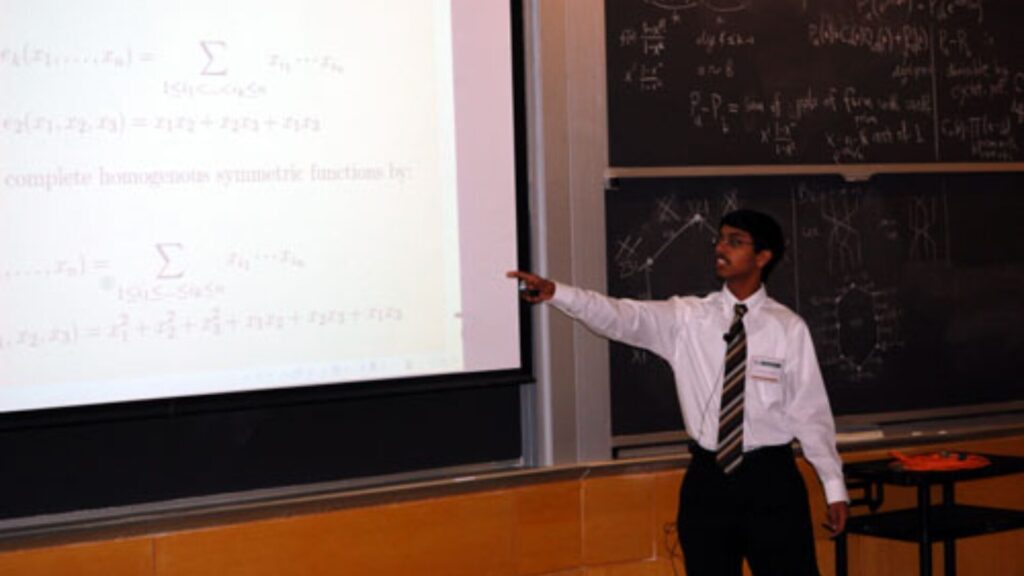
PRIMES-USA is a free, year-long remote mathematics research program run by MIT for high school students with strong math backgrounds. You are matched with a research mentor and work on an advanced math topic through a designated research timeline. In the spring, you begin with guided readings and problem sets, then move into independent research over the summer.
You will conclude with a written research paper and a final presentation in the fall. You will meet with your mentor weekly and manage your work independently on your timeline. Typically, sophomores work in small groups, while juniors have the opportunity for individual projects.
Why it stands out: The program uniquely offers a sustained, mentor-led research structure over an entire year, mirroring how undergraduate and early graduate research is conducted and preparing you for the same.
Deepening Your Mathematical Curiosity
Exploring mathematics beyond school lessons can reshape how you think about the subject. The right challenge builds confidence, discipline, and intellectual independence.
Online math programs for high school students give you structured access to advanced concepts, research exposure, and mentorship. You move beyond memorising formulas and begin understanding how mathematical reasoning truly works.
As you tackle proofs, models, and complex problems, you strengthen analytical thinking that supports future study in STEM, economics, and beyond. Each program becomes a stepping stone toward university-level mastery.
Every great mathematician starts somewhere. Our Mathematics Top Books Guide could be your starting point. Open the page that shapes your future.