
 Русский (RU)
 Українська (UK)
 Türkçe (TR)
 Italiano (IT)
 Français (FR)
 Português (PT)
 中文 (中国) (ZH)
 Español (ES)
 日本語 (JA)
 ไทย (TH)
 Deutsch (DE)
 Ελληνικά (EL)
 Polski (PL)
 Bahasa Indonesia (ID)
 Nederlands (NL)
 العربية (AR)
 한국어 (KO)

In high school, summers are often seen as a necessary reprieve from the rigors of the classroom. However, these months offer a unique window to transcend the standard curriculum and build an advanced skillset that distinguishes you in the academic world through economics research programs for high school students.
Research programs in fields like economics act as an accessible yet profound foundation for your university journey. By diving into data analysis, behavioral modeling, or global policy during high school, you gain a clear preview of what a specific subject feels like at the undergraduate level. These experiences provide a rare “insider’s view” into the academic expectations of top-tier universities, helping you transition from a consumer of knowledge to an active contributor.
Furthermore, conducting economics research at some of the world’s most prestigious institutions is a transformative addition to your professional profile. Beyond the technical mastery of statistical tools or economic theory, the ability to cite a completed research project serves as a high-impact cornerstone for your resume and college application essays.
What kinds of economics research programs for high school students are available?
Finding a program with a research component, rather than just a series of lectures, is essential. You want an opportunity that allows you to work under the guidance of expert mentors, use real-world datasets, and perhaps even move toward publication.
Economics research programs for high school students offer an early opportunity to explore how societies allocate resources, respond to incentives, and design policies that shape real-world outcomes. Through structured research, data analysis, and exposure to economic theory, students begin to understand how economics is studied at the undergraduate and professional levels. These programs go beyond classroom learning, introducing participants to academic inquiry, mentorship, and independent research methods commonly used at universities.
To help you navigate these opportunities, we’ve crafted a list of 15 economics research programs for high school students. We selected these for their academic rigor, their affiliation with top-tier universities, and the hands-on research experience they provide.
For more options, you can check out online economics programs for high school students.
15 Economics Research Programs for High School Students
1. London School of Economics – Pre-University Summer School
Location: London, UK (Houghton Street)
Cost / Stipend: £3,350 (one session)
Dates: Three sessions starting June 22nd, July 13th, and August 3, 2026
Application Deadline: Open (Specific deadline unavailable)
Eligibility: Students worldwide looking to earn credit towards their degree (Specific high school vs. undergraduate constraints unavailable)
The LSE Summer School offers a transformative three-week academic experience in the heart of London, designed for those who wish to engage with contemporary issues through the lens of world-class experts. The program is built around rigorous courses in fields such as Economics, Finance, International Relations, and Law, where faculty teach with a focus on “contemporary relevance.”
Beyond the lecture hall, you are invited into the “Spark” professional skills program, a dedicated curriculum designed to sharpen your career prospects and professional toolkit. Living and studying in central London, you will join a global community of peers, balancing high-level assessment and credit-bearing coursework with an extensive social program.
Why it stands out: It combines elite academic rigor across social sciences with “Spark,” a specialized professional skills program, all while offering the unique opportunity to earn degree-transferable credit in one of the world’s leading financial and political hubs.
2. Immerse Education’s Economics Summer School

Location: Oxford, Cambridge, Toronto, Boston, Tokyo, Singapore, London, and Online
Cost: Varies; summer school scholarship available through their bursary programme
Application Deadline: Rolling admissions; multiple dates throughout the year
Program Dates: Flexible; multiple cohorts in a year.
Eligibility: Students worldwide aged 13-18
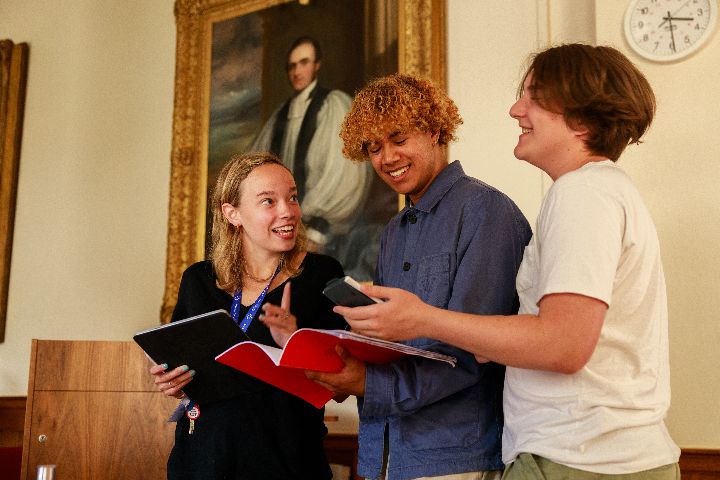
Immerse Education’s Economics Summer School is a two-week academic programme designed for students who want to explore economic theory through real-world application. You’ll study core concepts such as markets, policy-making, and global finance while engaging in group workshops, debates, and collaborative projects led by tutors from leading universities. The programme emphasizes analytical thinking, problem-solving, and structured argumentation through presentations and independent research tasks.
In the in-person format, you’ll experience university-style teaching environments and seminars, while the online pathway offers interactive live sessions and flexible research work. Throughout the course, you receive personalised feedback and 1:1 guidance to refine your academic skills and deepen your understanding of contemporary economic challenges. You can find examples of papers Immerse students have worked on here. You can find more details about the application here.
Why it stands out: You’ll get an early start at university life and academics because the program includes an independent project, discussion-based classes, and living at a college campus.
3. Economics from an Experimental Perspective (University of Chicago)
Location: Residential (University of Chicago Campus)
Cost / Stipend: $9,300 (Need-based financial aid available)
Dates: June 13th – July 3, 2026 (Session 1)
Application Deadline: Rolling basis
Eligibility: 9th, 10th, and 11th-grade high school students around the world; Prerequisite: Pre-calculus and a strong interest in math-based economic patterns.
Deeply rooted in the “UChicago style” of rigorous inquiry, this three-week residential program transforms you into an active participant in the world of experimental economics. Rather than observing from the sidelines, you will engage directly in laboratory and field experiments to uncover what motivates human decision-making, from charitable giving to environmental conservation.
Under the guidance of full-time lecturers, you will master the tools of macroeconomics, microeconomics, and game theory, applying these concepts through hands-on labs, problem sets, and small-group projects. This immersive environment, supported by current UChicago student mentors, challenges you to use math as a lens for determining global economic patterns.
Why it stands out: It moves beyond theoretical lectures by placing students directly into the experimental process, allowing them to participate in and analyze real-world laboratory experiments to understand the behavioral motivations behind global markets.
4. Harvard Pre-College Program
Location: Harvard University (Cambridge, MA)
Cost / Stipend: $6,100 + $75 application fee (Limited scholarships available)
Dates: Session I: June 21st – July 2nd; Session II: July 5-17; Session III: July 19-31
Application Deadline: Early/Priority: January 7th; Regular: February 11th; Late: April 1st
Eligibility: Rising juniors and seniors all over the world (graduating 2027 or 2028); at least 16 years old by June 20, 2026.
The Harvard Pre-College Program offers an intensive two-week immersion into Ivy League life, designed for mature students eager to test their academic limits.
You will reside on the historic Harvard campus, focusing on a single, non-credit college-level course selected from nearly 30 options spanning STEAM, Law, Business, and Philosophy. These small classes, averaging 15 students, prioritize deep inquiry and intellectual curiosity over the pressure of letter grades.
Why it stands out: It provides a high-intensity, “learning for learning’s sake” environment where students can engage in high-level research and debate with Ivy League scholars without the weight of a traditional grading scale.
5. Yale Young Global Scholars (YYGS): Politics, Law & Economics (PLE)
Location: Yale University (New Haven, CT)
Cost / Stipend: $7,000 (Need-based financial aid available, covering up to 100% of tuition)
Dates: Session I: June 21st – July 3rd; Session II: July 5th – July 17th; Session III: July 19th – July 31st
Application Deadline: January 7th
Eligibility: Outstanding high school students from over 150 countries.
Yale Young Global Scholars (YYGS) is one of the most globally recognized economics research programs for high school students, inviting participants into a diverse, interdisciplinary learning community on Yale’s historic campus. Within the Politics, Law & Economics (PLE) session, students explore how economic theory, legal frameworks, and governmental practices intersect in real-world systems.
The curriculum is designed to sharpen critical thinking through a blend of high-level lectures from Yale faculty and small-scale seminars on provocative topics, ranging from “Angrynomics” and Game Theory to the constitutional implications of AI.
Why it stands out: It offers one of the most diverse pre-college environments in the world, bringing together students from 150+ countries to solve global challenges through a unique, interdisciplinary lens of political and economic theory.
6. University of Toronto: World Economics (Pre-University Program)
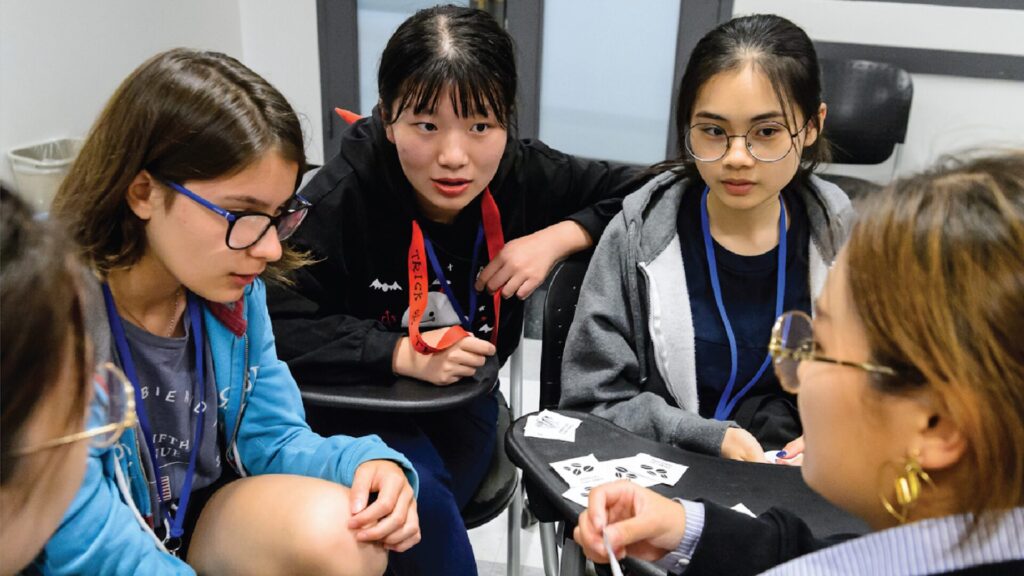
Location: New College, University of Toronto (Toronto, Canada)
Cost / Stipend: $6,275
Dates: 3-week sessions available in June, July, and August
Application Deadline: Rolling basis
Eligibility: Students worldwide aged 15-18; requires an “Advanced+” English proficiency level.
Hosted at Canada’s premier research institution, the University of Toronto’s World Economics course offers a rigorous bridge between high school and undergraduate study. Designed specifically for students with an advanced command of English, this three-week program dives into the mechanics of a globalized, interconnected world.
You will master fundamental concepts such as scarcity, productivity, and market trade-offs while comparing how these economic drivers function across different international contexts. The curriculum goes beyond theory; it is a practical workshop for university readiness, emphasizing critical reading, seminar participation, and high-level academic writing.
Why it stands out: It focuses heavily on “global literacies,” requiring students to research and present how economic concepts are applied in their home countries, creating a truly international exchange of fiscal and social ideas.
7. Youth Programme: International Economics and Finance (NUS SCALE)
Location: Residential (National University of Singapore, Kent Ridge Campus)
Cost / Stipend: Paid
Dates: June 21-27
Application Deadline: Open (Rolling basis via L3AP portal; early application recommended)
Eligibility: High school and pre-university students around the world (ages 15-18)
The International Economics and Finance programme at the National University of Singapore (NUS) offers a sophisticated lens into the economic engines of the developing world, with a sharp focus on the ASEAN and East Asian regions. Over an intensive residential week, you will explore the “Singapore Model” of development and learn how nations navigate global financial crises and international trade.
The curriculum is designed to be accessible yet intellectually rigorous, using empirical evidence rather than dense technical jargon to evaluate policy success. You won’t just be a student in a lecture hall; you will be a policy-shaper, participating in 15 hours of face-to-face teaching that culminates in a team-based project pitch.
Why it stands out: It provides a rare, non-technical yet data-driven deep dive into Southeast Asian economic policy, allowing high schoolers to gain direct insight into Singapore’s unique development journey while earning a verifiable e-certificate from a global top-10 university.
8. Bocconi Summer School for High School Students
Location: Bocconi University (Milan, Italy)
Cost / Stipend: €2,700 (Program fee) | ~€1,600 (Optional housing)
Dates: July 6th – July 17th
Application Deadline: Rolling
Eligibility: High school students worldwide in their third-to-last or second-to-last year of study.
The Bocconi Summer School offers a high-octane introduction to the world of business, economics, and law in the heart of Milan, Italy’s financial capital. Over two intensive weeks, you will dive into a “teaching laboratory” that balances academic rigor with hands-on application.
You’ll select two subjects from a portfolio of 17 cutting-edge labs, ranging from Luxury and Fashion Management to Machine Learning and Artificial Intelligence. Each lab is taught by Bocconi’s world-class faculty and centers on active learning; you might find yourself simulating international trade negotiations one week and presenting empirical social research to a senior analyst the next.
Why it stands out: It bridges the gap between creativity and commerce, offering unique labs like “Luxury and Fashion” where students design future-facing strategies for prestigious brands and have them critiqued by actual industry managers.
9. Economics Policy Academy – Georgetown University
Location: Georgetown University, Washington, D.C.
Cost/Stipend: Residential ~$9,085; Commuter ~$7,085
Acceptance rate/cohort size: Competitive
Dates: June 28th – July 17th
Application Deadline: Varies
Eligibility: High school students worldwide
Georgetown’s Economics Policy Academy ranks among the most policy-focused economics research programs for high school students, immersing you in the relationship between markets and public policy. Over three weeks in Washington, D.C., you attend lectures, participate in workshops, and visit think tanks and institutions that shape real economic decision-making.
Faculty, guest speakers, and discussion groups guide you through topics like globalization, development, behavioral economics, and the fiscal and monetary forces that influence both domestic and global economies. Outside the classroom, group projects and a research-based poster help you apply concepts actively, while residential life builds community and sharpens your collaborative skills. You’ll leave with a Certificate of Participation that reflects both your engagement and growth.
Why it stands out: It combines academic rigor with practical exposure to economic policy settings right in the heart of the U.S. political landscape.
10. U.S. Department of the Treasury: Headquarters Student Internship
Location: Washington, D.C. (Departmental Offices)
Cost / Stipend: Unpaid (A prestigious volunteer career-insight pathway)
Dates: Seasonal sessions (Summer: May – August 2026)
Application Deadline: December (for Summer), June (for Fall), October (for Spring)
Eligibility: U.S. Citizens; currently enrolled high school, undergraduate, or graduate students.
The U.S. Treasury Headquarters Internship is a transformative immersion into the nerve center of global finance and American public service. Located in the historic Departmental Offices just steps from the White House, this program invites you to transcend the classroom and engage with the “living laboratory” of federal policymaking.
You will be embedded within specialized divisions, ranging from the Office of Tax Policy to the Office of International Affairs, where you will conduct substantive research, analyze data for policy priorities, and draft briefing materials for senior Treasury leaders.
Why it stands out: It provides an unrivaled academic advantage by placing students directly in a “career-insight” environment at a cabinet-level agency, combining rigorous data analysis and policy research with a front-row seat to the financial stewardship of the United States.
11. Business Opportunities Summer Session (BOSS)
Location: Penn State University (University Park Campus, PA)
Cost / Stipend: $350 Program Fee (Required only after acceptance)
Dates: June 14-26, 2026 (Two weeks)
Application Deadline: March 20, 2026 (Opens October 20, 2025)
Eligibility: High school juniors from the U.S. and Puerto Rico interested in business education.
The Business Opportunities Summer Session (BOSS) is an intensive two-week residential immersion designed to bridge the gap between high school ambition and the world of corporate strategy. Held at Penn State’s University Park campus, this program offers a “live-action” preview of the undergraduate experience within the Smeal College of Business.
You will move beyond lectures to engage in business courses taught by world-class faculty, exploring the mechanics of operations, from corporate environments like EY to the logistics of amusement parks and sports stadiums. The program centers on hands-on learning, culminating in a competitive business pitch presentation where you apply newly mastered theories to a professional-grade project.
Why it stands out: It provides rare, direct access to industry experts and behind-the-scenes business operations, combining rigorous academic “college prep” with experiential site visits that showcase how diverse industries function from the inside out.
12. Economics for Leaders (EFL)
Location: Various University Sites (Residential)
Cost / Stipend: Varies by site (Scholarships and college credit available)
Dates: Summer 2026 (Multiple sessions across June and July)
Application Deadline: Rolling admissions (Early application recommended due to competitive site limits)
Eligibility: Current high school sophomores and juniors worldwide; selected based on leadership potential and academic vision.
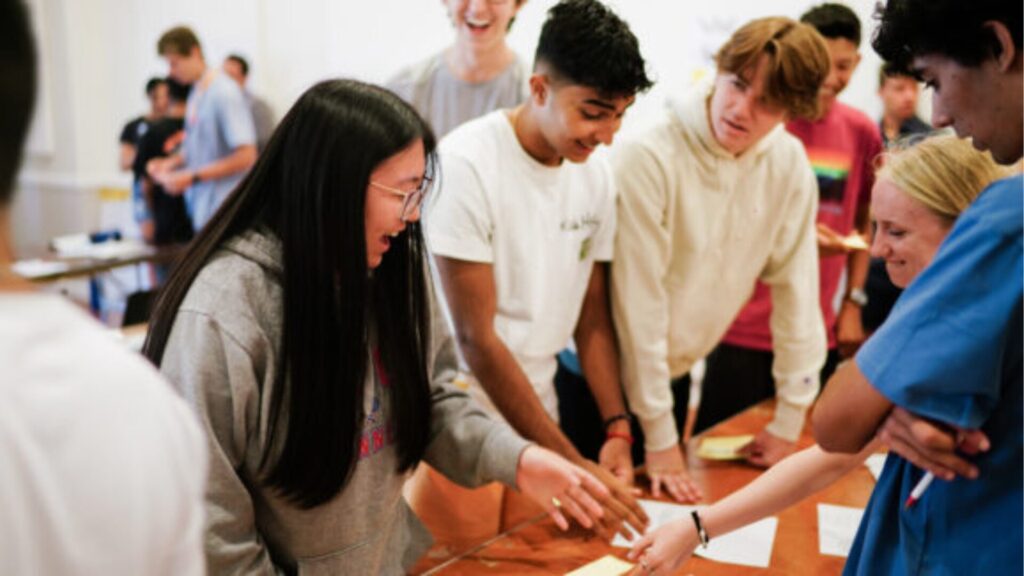
Economics for Leaders (EFL) is an intensive residential immersion designed to empower the next generation of decision-makers by merging economic reasoning with leadership theory. This selective program brings together a cohort of articulate, high-potential students to explore how economic analysis can be applied to complex public policy challenges.
You will move beyond abstract formulas to engage in interactive simulations and discussions that reveal how the “economic way of thinking” can foster future prosperity. Taught by expert faculty, the curriculum emphasizes the practical integration of leadership skills, such as collaboration and strategic vision, with rigorous academic concepts.
Why it stands out: It bridges the gap between theory and practice by specifically teaching students how to use economic tools to solve leadership dilemmas, making it a premier choice for those aiming to influence public policy or global governance.
13. National Economics Challenge (NEC)
Location: State levels (Local/Online) | National Finals: Atlanta, GA
Cost / Stipend: Free to compete; National Finals are all-expenses-paid (excluding travel)
Dates: State/Regional rounds vary | National Finals: May 28-29, 2026
Application Deadline: Varies by state (Typically early Spring 2026)
Eligibility: High school students in the U.S.; Adam Smith Division (Advanced) or David Ricardo Division (Beginner).
The National Economics Challenge (NEC) is the premier high-stakes competition designed to transform high school students into analytical powerhouses. Moving beyond the passive classroom environment, the NEC pits nearly 10,000 students against one another in a rigorous test of microeconomic and macroeconomic principles.
You will work in local teams, mentored by coaches and industry professionals, to navigate a multi-tiered journey, from state-level showdowns to the high-pressure First Round National Challenge. For those with the intellectual stamina to reach the National Finals in Atlanta, the experience shifts into an elite, in-person summit where technical mastery meets rapid-fire problem solving.
Why it stands out: It offers a unique, tiered competitive structure that rewards both technical accuracy and teamwork, providing students with a national platform to prove their subject mastery while competing for significant cash prizes and Ivy League-caliber recognition.
14. Fordham University’s Finance Institute: Wall Street in the Classroom
Location: Fordham University Gabelli School of Business, Rose Hill Campus, Bronx, NY
Cost/Stipend: $1,300 total (including a non-refundable $100 deposit)
Acceptance rate/cohort size: Selective
Dates: Four 1-week sessions in June and July
Application Deadline: Priority registration closes on April 1st
Eligibility: High school students around the world
In this program, you spend a focused week with peers exploring foundational concepts that govern financial markets and personal economic decision-making. The curriculum weaves together economic basics, investment frameworks, and real-world topics like asset management, risk theory, and the role of monetary policy so that you can see how theoretical ideas play out in practice.
Through structured lessons and discussions, you also build practical knowledge about savings, debt, and portfolio strategies that extend well beyond the classroom. You’ll walk away with sharper analytical skills, a stronger grasp of economic reasoning, and a clearer sense of whether economics or finance fits your longer-term academic or career goals.
Why it stands out: It compresses key financial and economic ideas into a hands-on week with direct input from industry professionals in one of the world’s leading financial hubs.
15. Bank of America: Student Leaders® Program
Location: Local Nonprofits (100+ communities across the US) | Summit: Washington, D.C.
Cost/Stipend: Paid Internship (~$15-$17/hr) | All Summit expenses covered
Acceptance rate/cohort size: Not stated
Dates: Summer 2026 (8 weeks total; Summit typically held in July)
Application Deadline: Mid-January 2026 (Applications typically open in October 2025)
Eligibility: High school juniors and seniors in good standing; U.S. residents authorized to work in the U.S.
The Bank of America Student Leaders® program is an elite residential and professional immersion designed for students who are ready to transition from community volunteers to civic architects. This eight-week “stint” in leadership places you at the heart of the social sector, pairing you with a local nonprofit, such as the Boys and Girls Clubs of America or Habitat for Humanity, to address pressing societal issues like economic mobility and youth employment.
Alongside hands-on experience, the program includes financial education resources and coaching that help you think critically about money management and economic participation. You will move beyond surface-level service to gain a profound understanding of how nonprofits, governments, and businesses collaborate to drive responsible growth.
Why it stands out: It is one of the few programs that successfully blends a local, paid professional internship with a high-profile national summit, providing students with both the grassroots experience of community service and the “big picture” perspective of national leadership.
Data, Decisions, and Market Behavior
Economics comes alive when numbers tell stories about incentives, tradeoffs, and human choice. Research lets you move beyond theory into measurable impact.
Through these economics research programs for high school students, you analyze datasets, test hypotheses, and interpret how policies shape markets and communities worldwide.
You learn to question assumptions, defend conclusions with evidence, and communicate insights clearly. These habits sharpen your academic edge and prepare you for university-level expectations.
Ready to think like a real economist? Open our Economics Top Books Guide now, choose one essential read, and start building deeper economic insight today.