
 Русский (RU)
 Українська (UK)
 Türkçe (TR)
 Italiano (IT)
 Français (FR)
 Português (PT)
 中文 (中国) (ZH)
 Español (ES)
 日本語 (JA)
 ไทย (TH)
 Deutsch (DE)
 Ελληνικά (EL)
 Polski (PL)
 Bahasa Indonesia (ID)
 Nederlands (NL)
 العربية (AR)
 한국어 (KO)

If you’re a high school student fascinated by genetics, medicine, or how science can solve real-world problems, biotechnology may already feel like an exciting path. But biotechnology goes far beyond textbook diagrams: it blends biology, chemistry, technology, data analysis, and innovation to address some of the world’s most pressing challenges. One of the most powerful ways to explore this field more deeply is through a dedicated biotechnology program.
Imagine spending your summer in a lab environment learning about DNA extraction, genetic engineering, bioinformatics, or pharmaceutical development. Picture collaborating with peers on research-style projects, analyzing data, and exploring how discoveries move from laboratory research to real-world applications. Biotechnology programs for high school students provide structured, hands-on experiences that bring science to life in a meaningful way.
How do you choose the right biotechnology programs for high school students?
With many opportunities available, it’s important to identify programs that offer genuine lab exposure and academic depth rather than surface-level demonstrations. Some focus on introductory exploration, while others provide immersive research experiences, mentorship from scientists, and structured project work. Thoughtful research ensures you select a program that matches your interests and experience level.
Biotechnology programs may explore areas such as molecular biology, biomedical engineering, bioinformatics, microbiology, and pharmaceutical science. You might participate in guided lab experiments, collaborative research projects, or workshops on topics like CRISPR technology, drug development, or disease modeling. Programs range from beginner-friendly introductions to more advanced experiences.
You’ll learn from experienced instructors, work alongside curious peers, and strengthen essential skills such as analytical thinking, problem-solving, and scientific communication. Along the way, you’ll gain a clearer sense of what pursuing biotechnology, biomedical research, or healthcare innovation at the university level might truly involve.
To help you get started, we’ve curated a list of 15 Biotechnology Programs for High School Students. They’ve been selected for their hands-on learning opportunities, academic rigor, and ability to spark lasting enthusiasm for cutting-edge science.
In addition to biotechnology opportunities, you can check out biology summer programs.
15 Biotechnology Programs for High School Students
1. Immerse Education Biotechnology Summer School
Location: University of Cambridge, Cambridge, England
Cost/Stipend: Varies; summer school scholarship available through our bursary programme
Acceptance rate/cohort size: An average of 7 participants per class
Dates: 2 weeks during the summer
Application Deadline: Multiple summer cohorts; rolling admissions
Eligibility: Students aged 16-18 from anywhere in the world
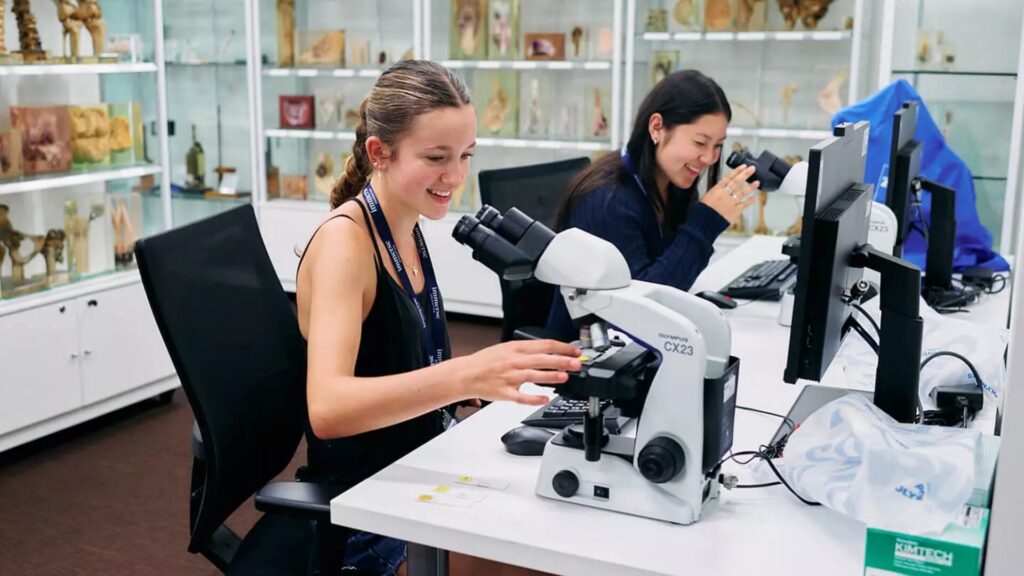
Immerse Education’s Biotechnology Summer School aims to prepare you for careers in today’s rapidly growing biotechnology industry. During the two-week program, you will learn various fundamental concepts in molecular biology, biotechnology, and genetic engineering through hands-on exercises.
Regardless of whether you want to become a biotechnologist working in a lab, an entrepreneur focused on biotech inventions, or take up any role in the field, the program will ensure you gain the skills to approach them with confidence.
Why it stands out: You gain a deeper understanding of where the biotechnology industry is headed in the future, helping you decide how you can contribute to it.
2. Wertheim UF Scripps Kenan Fellows High School Summer Internships
Location: Wertheim UF Scripps Institute, Jupiter, FL
Cost/Stipend: A stipend of $4,480
Acceptance rate/cohort size: Not publicly available
Dates: June 5th – July 31st
Application Deadline: December 8th – March 1st
Eligibility: Rising 11th and 12th graders, ages 16 and up, with a GPA of 3.0 or higher, who live and attend school in Palm Beach or Martin County and are U.S. citizens/permanent residents
Researching alongside scientists can ensure that you gain an in-depth understanding of your research topics, and this internship program offers exactly that opportunity. You get to do chemical and biological research with scientists who specialize in cancer and coronavirus research.
You would be expected to write a scientific abstract and do oral and poster presentations of your research. As a result, you will have improved your lab, research, and presentation skills by the end of the program. The internship will also expose you to careers in drug discovery, biotechnology, and biomedical engineering.
Why it stands out: The program teaches you scientific processes, research planning, bench experience, experimental design, data analysis, and in-lab communication that are essential in any lab or research setting.
3. Progress in Medicine
Location: Live online + 4 days at Stanford University in Palo Alto, CA
Cost/Stipend: $2,000 (scholarships are available.)
Acceptance rate/cohort size: Not specified
Dates: June 15th – July 24th
Application Deadline: December 9th – February 8th
Eligibility: High school students with the ability to travel to California for four days in July
If you are planning to study biotechnology, biology, medicine, or any other related field, this program helps you discover the different careers you can choose after majoring in one of those subjects. As the name suggests, Progress in Medicine will particularly focus on the progress that the medical field has seen in the past decades and the changes you can expect to see in its future.
The goal of the program is to help you recognize the role you can play in these changes. Additionally, you also get support with college preparation and submitting grant applications.
Why it stands out: The program introduces you to mentors with whom you may form long-term connections, receiving guidance and advice even after your participation in the program.
4. Young Scholars Program (YSP)
Location: Northeastern University, Boston, MA
Cost/Stipend: Free
Acceptance rate/cohort size: Highly selective; small cohort size
Dates: June 22nd – July 30th
Application Deadline: December 15th – March 2nd
Eligibility: Rising 12th graders living and attending a school in Massachusetts; must be within a commuting distance from NEU and be a US citizen or a permanent resident
You should consider this program if you want to be introduced to scientific and engineering concepts by conducting research. Northeastern University professors will guide you in completing different experiments in a lab setting while collaborating with you on those experiments.
Consequently, you will gain knowledge across topics like superconductivity, lasers, microwave materials, biotechnology, chemical analysis, and robotics. In addition to focusing on research, you will also participate in education and career counseling sessions and also go on field trips
Why it stands out: Participants have had the opportunity to contribute to some game-changing research projects, such as improving battery energies for remote islands, finding a solution for multi-drug resistance, and many more.
5. MSLC’s High School Apprenticeship Challenge
Location: Various companies across Massachusetts
Cost/Stipend: A stipend of up to $4,080
Acceptance rate/cohort size: More than 150 interns per year
Dates: Internships take place May 1st – April 30th (exact dates vary by host company and role)
Application Deadline: Accepted on a rolling basis
Eligibility: High school students who are at least 16 years old by the start of the internship and attend a high school that meets the requirements of the program (see requirements here)
Thanks to the funding from the Massachusetts Life Sciences Center, many companies, especially research institutions and small life sciences companies across Massachusetts, offer paid opportunities to high school students. You will either get to work part-time or full-time.
Prior to the internship, you will receive training in how to properly conduct research in biotechnology and biomedicine. These sessions are typically conducted in the summer or in the after-school hours and ensure that you are equipped with the professional skills required to excel in your role as an intern.
Why it stands out: Aimed at underrepresented students, MLSC ensures that students from economically disadvantaged backgrounds gain paid work experience while simultaneously learning scientific concepts and research skills.
6. LA Biotech Center (LABC) High School Programs
Location: LA Biotech Center, Torrance, CA
Cost/Stipend: Varies by program; check prices here
Acceptance rate/cohort size: Selective; 6 students per class
Dates: 4-10-day programs; exact dates vary
Application Deadline: One week before the program start date
Eligibility: High school students from ages 15 to 18 who have passed high school Math, English, and Biology or equivalent courses with a grade C or above; open to both residential and international students
LA Biotech Center’s (LABC) High School Programs aim to prepare you for careers in biotechnology while also educating you about what it is like to work in a professional biotech lab.
For this purpose, LABC offers courses in stem cell systems, stem cell biology, regenerative medicine and disease modeling, and stem cell engineering methods. When enrolled in one of these courses, you have the opportunity to learn college-level topics. You also learn various aspects of research, such as planning the experiment, analyzing data, and implementing scientific methods, while getting to conduct experiments as well.
Why it stands out: As the programs take place in a biotech research organization, you gain practice in using industry-grade lab equipment.
7. Keep Engaging Youth in Science (KEYS) Research Internship
Location: BIO5 Institute, Tucson, AZ
Cost/Stipend: No cost / Financial aid/resources for associated program costs, like charges for the University of Arizona’s CatCard, parking permit, transportation, and meals
Acceptance rate/cohort size: Highly selective; About 60 spots available
Dates: June 1st – July 17th
Application Deadline: November 3rd – December 18th
Eligibility: High school students who are 16 years and older and have been a resident of Arizona for at least a year
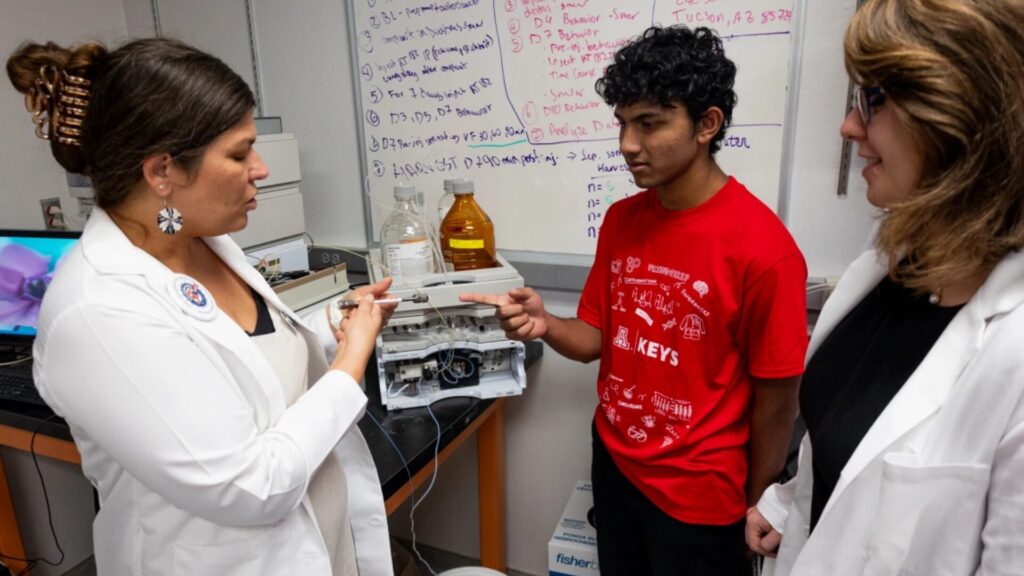
Though the internship runs in June and July, the training starts as early as April, when KEYS sets assignments in biotechnology, data science, and science literacy. That long runway makes it one of the most research-ready biotechnology programs for high school students, because you learn the foundations before you step into real projects.
This ensures that you have sufficient skills to work on research projects alongside University of Arizona professors, which you will be involved in during a significant part of your participation in the KEYS program. You are invited to share your newly acquired knowledge and skills at a research showcase conducted when the program ends.
Why it stands out: There is constant support during the internship with mentorship from professors, university students, and lab staff, so that you can make the best out of the program.
8. NC GlaxoSmithKline Foundation Program in Biotech
Location: North Carolina Central University, Durham, NC
Cost/Stipend: No cost / $1,000 stipend
Acceptance rate/cohort size: Competitive; roughly, 45 students per year
Dates: June 14-26 or July 12-24
Application Deadline: March 30th
Eligibility: Rising 11th and 12th-grade students from North Carolina
For any rising high school juniors or seniors who are considering a career in STEM areas like biotechnology, pharmaceuticals, biological sciences, clinical research, and other related fields, this residential program is worth attending.
Over the two weeks of the program, you will have the opportunity to do some lab experiments and interact with scientists, ultimately covering some important topics in biotechnology and drug discovery. The program gives you a better understanding of the biotech industry by taking you on tours to biotechnology companies. Plus, there are also sessions hosted to prepare you for college and career.
Why it stands out: With the program hosted by the Biomanufacturing Research Institute and Technology Enterprise (BRITE) and the Department of Pharmaceutical Sciences, NCCU notes that students who participate in this program are more likely to get a job after graduation.
9. Biorocket Research Internship Program
Location: Genspace, Brooklyn, NY
Stipend: $2,000
Acceptance rate/cohort size: Highly selective; 15 students
Dates: February 25th – May 21st for the spring session and July 6th – August 14th for the summer session (tentatively)
Application Deadline: November 1st – January 8th
Eligibility: High school students who are 16 and above and enrolled in a New York City public or charter high school within a 45-minute commute to Genspace
Your role as an intern in this six-month program will primarily include working on the summer research project. Through this experience, you will grasp some biology lab and genetic engineering techniques. The program also focuses on teaching you scientific communication so that you can share your research’s outcomes with others.
Apart from conducting research, your schedule will also consist of going on field trips to biotech companies, visiting research labs, meeting with scientists, and receiving career guidance. Moreover, you will be exploring some of the latest developments in biotechnology while in this program.
Why it stands out: Students become actual scientists, discovering something new and intriguing in the field of biology while participating in this program.
10. MIT Research Science Institute
Location: Massachusetts Institute of Technology, Cambridge, MA
Cost/Stipend: $75 non-refundable application fee that can be waived
Acceptance rate/cohort size: Less than 2.5% of applicants are selected; 100 students from all over the world
Dates: June 28th – August 8th
Application Deadline: December 10th
Eligibility: 11th graders who will be at least 16 years old by July 1st; open to US citizens, permanent residents, and international students from countries participating in RSI; additional requirements can be seen here
The Research Science Institute (RSI) is one of the most rigorous biotechnology programs for high school students, starting with a week of STEM classes taught by university professors. After that, you will work on an individual research project with a professor, scientist, or researcher guiding you along the way. RSI offers research opportunities across STEM, so you can highlight biotechnology in your application and be matched with a mentor in that area.
While working on your research project, you will simultaneously learn experimental design, data analysis, and academic technical writing from your mentors. The last week of the program is allocated for making a written and oral presentation of your research.
Why it stands out: MIT’s RSI ensures that the projects you work on challenge you so that it exposes you to the workload you can expect when you do scientific research as a profession in the future.
11. Stony Brook University Pre-College Summer Program: Introduction to Biotechnology
Location: Stony Brook University, Stony Brook, NY
Cost/Stipend: $1,000–1,250 for commuter students and $2,375 for residential students; discounts and need-based financial assistance available
Acceptance rate/cohort size: Small cohort
Dates: Session One: June 28th – July 3rd or Session Two: July 5-10
Application Deadline: May 15th
Eligibility: Rising 11th and 12th graders who are US residents and between the ages of 15 and 17; you should have completed Regents Life Science: Biology/Living Environment (NY students) or an equivalent biology course to be eligible for the Introduction to Biology course
This is a one-week pre-college program that helps you gain foundational knowledge in biotechnology by engaging you in lectures. During your participation in the program, you will predominantly work with Green Fluorescent Protein (GFP), separating its DNA and modifying the sequence to change its color.
You will also work on other genetic modification experiments where you alter bacteria to produce GFP. As part of your experiments, you will also learn how to remove impurities from GFP using chromatography and SDS-PAGE gel electrophoresis.
Why it stands out: Given that biotechnology is used across fields like medicine and agriculture, the program offers experiential learning that prepares you for the diverse career possibilities as a biotechnologist in the future.
12. Rice Bio Academies
Location: Rice University, Houston, TX
Cost/Stipend: $599/week; limited scholarships available
Acceptance rate/cohort size: Space is very limited
Dates: July 6-10 or July 20-24
Application Deadline: April 18th
Eligibility: The BioTech and BioMed sections are open to 9th to 11th graders; you should be enrolled in or completed a biology course or other high school-level science course; open to US and international students
Offered by Rice University’s Office of Stem Management, the Rice Bio Academics consists of three sections, with each focused on teaching you bioengineering, biotechnology, and biomedicine. The most suitable option for you would be the Rice Biotech Academy, which involves you in hands-on experiments that teach you genetics.
In the process, you will develop an understanding of using biotech lab techniques. The ultimate goal of this particular academy is to provide you with foundational knowledge in genetics and other science topics so that you are ready for a career in STEM.
Why it stands out: Working in Rice University’s labs, you gain practice in using some of the technologies in the bio industry, thus giving you the confidence to use them even later in your life.
13. Georgetown University’s Biotechnology for Science & Health Academy
Location: Georgetown University, Washington, D.C.
Cost/Stipend: A non-refundable application fee of $50; $5,530 for commuter students and $6,800 for residential students; no application fee for students who apply before the early-bird deadline (limited need-based scholarships available)
Acceptance rate/cohort size: Not specified
Dates: June 28th – July 10th
Application Deadline: Early-bird deadline is January 31st, and final deadline is April 15th
Eligibility: 8th to 12th graders who are at least 15 years old; open to US and international students
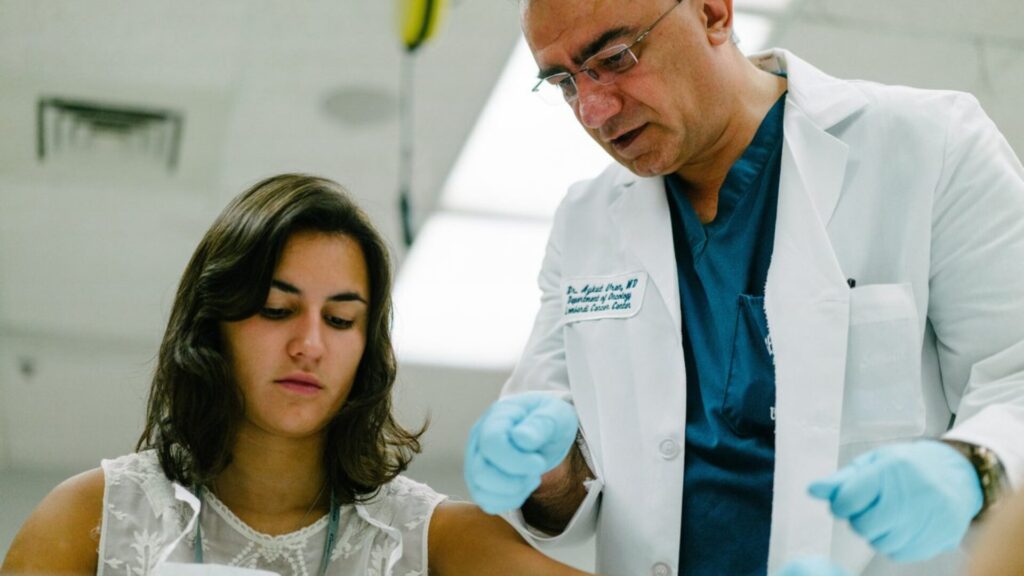
Part of Georgetown University’s Hoya Summer High School Sessions, this academy is centered around the role biotechnology plays in science and healthcare. During the two weeks, you start by learning some important biotech concepts through lectures and then go on to conduct experiments based on the theoretical knowledge you have gained.
Some of the experiments you can expect to do in the program include genetic cloning and examining the results, observing the role DNA plays in forensics and modern healthcare, and more. Overall, the two-week program covers topics such as advanced DNA purification methods, DNA ligation and transformation, bioinformatics applications, protein purification, and more.
Why it stands out: The academy gives you the opportunity to explore biotechnology’s contribution to a wide range of industries, including medicine and health, forensics, agriculture and food science, and basic scientific research.
14. IBBR HS Internship Program
Location: University of Maryland – Institute for Bioscience and Biotechnology Research, North Potomac, MD
Cost/Stipend: Stipends provided
Acceptance rate/cohort size: Limited spots available; about 9
Dates: June 22nd – July 7th (summer internship dates)
Application Deadline: February 13th
Eligibility: Rising 11th and 12th graders who are at least 16 years old, legally authorized to work in the US, attend a Montgomery County Public School, and have a social security number.
The Institute for Bioscience and Biotechnology Research allows students to work on biotech research projects under the mentorship of scientists from the research facility. Past participants have conducted experiments related to RNA structure modeling, immunology bioinformatics, CRISPR-Cas9 technology, and more, so you can expect to work on something similar.
The program focuses on teaching you lab techniques and scientific methods in the process. You can either choose to intern during the full year, working in the summer months and the academic year, or intern only for eight weeks in the summer.
Why it stands out: As you will be working in an actual research facility, you will have the opportunity to gain experience in working on real-world projects.
15. HudsonAlpha Biotech Academy
Location: HudsonAlpha Institute for Biotechnology, Huntsville, AL
Cost/Stipend: Free
Acceptance rate/cohort size: Highly selective program where only one student from each of the 20 listed schools can participate; the life sciences teacher from each school will typically nominate the student
Dates: June 22nd – July 17th
Application Deadline: Teacher nominations are accepted in February
Eligibility: Rising 11th or 12th graders who attend one of the 20 schools listed in the program
In this rigorous programme, you gain the knowledge needed to conduct lab-based research in biotechnology. That breadth and hands-on focus makes it one of the most immersive biotechnology programs for high school students, covering genetic engineering, microbiology techniques, DNA sequencing, RNA interference, and more. You even complete a genetic engineering experiment by purifying and producing Red Fluorescent Protein.
As a participant, you will be taken to research labs and HudsonAlpha Institute’s partner companies so that you can meet with many industry professionals and be introduced to the many career options available in the biotech industry.
Why it stands out: In addition to the program’s learning and career readiness components, you will also be exploring some of the latest inventions in genetics, genomics, and biotechnology.
Turn Lab Curiosity Into A Clear Direction
Biotechnology can feel huge at first. A good programme turns that curiosity into focus, confidence, and real momentum.
The biotechnology programs for high school students in this article help you test interests through labs, projects, and guided research.
You’ll learn how scientists think, record results, and explain findings clearly. Those skills translate straight into stronger applications.
Next, make your experience count on paper. Explore our University Preparation blogs for personal statements, interview prep, entry requirements, and supercurricular ideas you can use today.