

 Русский (RU)
 Українська (UK)
 Türkçe (TR)
 Italiano (IT)
 Français (FR)
 Português (PT)
 中文 (中国) (ZH)
 Español (ES)
 日本語 (JA)
 ไทย (TH)
 Deutsch (DE)
 Ελληνικά (EL)
 Polski (PL)
 Bahasa Indonesia (ID)
 Nederlands (NL)
 العربية (AR)
 한국어 (KO)

Harvard is the dream for most people, but how do you get into the world’s most competitive Business School without gambling on luck?
You can secure a slot in the HBS by proving academic strength, showing real leadership impact, and building a clear, credible story for why an MBA fits your goals.
In this guide, we’ll break down exactly how to get into Harvard Business School step by step, including how to get into Harvard Business School MBA routes like the traditional MBA and 2+2.
Let’s turn your ambition into a plan you can follow.
Understanding Harvard Business School and Its MBA Programme
Harvard Business School runs a two-year MBA designed to build general management skill and real-world leadership. Here’s how the programme typically unfolds:
- Fall term: You build your core toolkit across areas like finance, accounting, leadership, marketing, operations, and strategy, so you can speak the language of business with confidence.
- Spring term: You stretch that toolkit into bigger systems and tougher trade-offs, with themes like data and AI for leaders, the global economy, entrepreneurship, accountability, and what a firm is really for, alongside FIELD work that brings leadership and teamwork into real projects.
- The Summer Work Experience: You meet the requirement by completing a summer role, either with an established organisation or by launching an entrepreneurial venture, paid or unpaid depending on the opportunity.
- Second year electives: You go deeper by choosing from 100+ electives across multiple subject areas, with field-based options and the flexibility to take up to five courses per semester to shape your focus.
What sets HBS apart is its immersive case study method, where you’re making high-stakes calls alongside peers from different industries, countries, and lived experiences. There’s no single right answer: your professors are looking for the strongest decision you can justify. Add Harvard’s prestige and influential global alumni network, and you gain access to people and opportunities that can accelerate what you do next.
And when it comes to admissions, HBS isn’t only looking for perfect grades and scores. They want evidence that you take initiative, influence others, and create impact, then reflect on what you’ve learned and how you’ve grown.
How Hard Is It to Get Into Harvard Business School?
If you’re asking how hard it is to get into Harvard Business School, the honest answer is: very. For the MBA Class of 2027, HBS received 9,409 applications and enrolled 943 students, which works out to roughly one in ten applicants making it through.
Those numbers matter, but they don’t tell the whole story. HBS isn’t just picking the highest scorers. They’re building a cohort where different perspectives sharpen every case discussion and every decision.
Here’s what the typical profile looked like for the Class of 2027 [source]:
- Average undergraduate GPA: 3.76
- Average work experience: 4.9 years (middle 80%: 3–7)
- GRE (median): 164 Verbal, 164 Quant (middle 80%: 158–168 Verbal, 159–169 Quant)
- GMAT Focus (median total): 685 (middle 80%: 645–735)
- Classic GMAT 10th Edition (median total): 730 (middle 80%: 690–770)
So the ranges are broad enough to show some flexibility, but they still sit within a very competitive band. In other words, Harvard Business School admits students with slightly different profiles, but almost all are academically strong. HBS is weighing how you lead, the change you drive, and how you think when decisions are messy and stakes are real, which is why two applicants with similar scores can get very different outcomes.
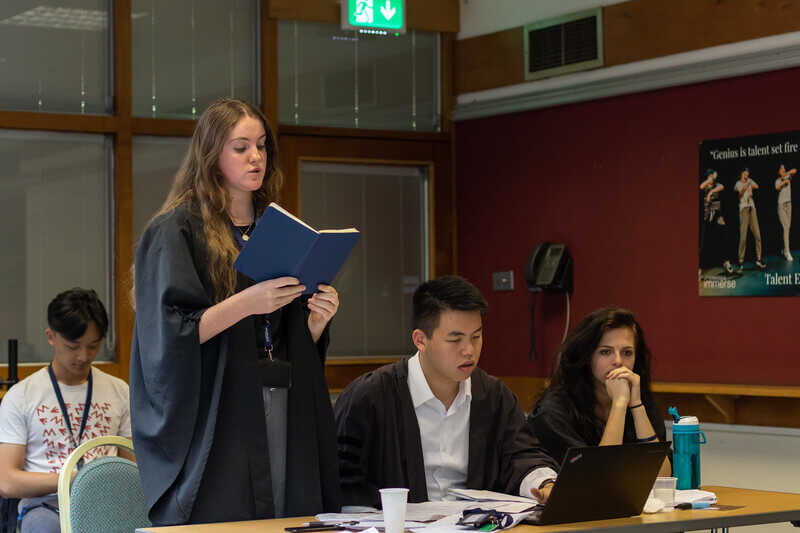
Still in high school, but hoping to build a strong profile? The most useful thing you can do right now is build the foundational skills these programmes value: clear thinking, confident communication, and the ability to analyse problems from multiple angles. Experiences like the TED Summer School are designed for exactly that stage, helping students practise presenting ideas, debating complex issues, and developing the kind of intellectual confidence that later stands out in competitive university and MBA environments.
Business Management
In-person
Develop advanced business acumen in Cambridge, where innovation...

Business Management
In-person
Hone advanced business skills in Oxford, where academic...

Academic Excellence: What You Need Before Applying
With Harvard in the name, academic rigour is always part of the deal, and HBS is no exception. The MBA moves fast and assumes you can keep up from day one.
Your undergraduate performance matters, especially in demanding subjects and tougher modules. It signals discipline, curiosity, and how you handle pressure.
Quantitative readiness is non-negotiable for the HBS MBA. You’ll be working with data, finance logic, and analytical frameworks from day one.
If you’re choosing modules now as a high school student, prioritise classes that build real business fluency, including the right classes for a business management degree.
If your academic profile is weaker, act early and show momentum. Strengthen your quantitative proof through tougher modules, a strong GMAT or GRE quant score, or credible online coursework, and use the optional essay only if context genuinely matters.
Join the Immerse Education 2025 Essay Competition
Follow the instructions to write and submit your best essay for a chance to be awarded a 100% scholarship.
Test Scores: GMAT or GRE Strategy
HBS accepts both the GMAT and GRE, and your goal is to submit a score that supports your academic readiness without letting the test become your whole story.
A more realistic benchmark is the HBS Class of 2027 profile: GRE medians of 164 Verbal and 164 Quant (middle 80%: 158–168 Verbal, 159–169 Quant), GMAT Focus median total of 685 (middle 80%: 645–735), and classic GMAT 10th Edition median total of 730 (middle 80%: 690–770).
If your score is below the class median, a retake can make sense when you know you can improve meaningfully, especially in quant. If your score is already strong, your time is usually better spent building leadership impact and tightening your story.
The most important move is framing: a strong score helps, but it works best inside a clear narrative about why you’re on this path, what you’ve learned, and what you’ve changed through your leadership, because even a perfect 800 won’t guarantee a place at HBS and the test is only one part of the puzzle.
Work Experience: What Kind of Profile Gets In?
HBS strongly recommends you have at least two years of full-time professional work experience by the time you enrol, because the case method relies on real perspectives from the workplace.
In practice, most successful applicants bring more than the minimum. Recent HBS cohorts average about five years of work experience (4.9 years, with the middle 80% range at three to seven years), which gives you time to show progression and outcomes.
What matters most is leadership impact, not job title. HBS wants evidence you’ve taken initiative and influenced results, whether you’re a manager, a nonprofit operator, or someone starting a business and learning fast in the real world.
There’s no single “right” industry, but some pathways are more common. In the 2027 HBS class profile, consulting is the biggest pre-MBA background at 19%, followed by venture capital/private equity at 16% and technology at 13%. The common thread is momentum: increasing responsibility and clear results.
Leadership: The Core of How to Get Into Harvard Business School
Leadership is central to HBS selection because the MBA is built around discussion, judgement, and decision-making. You don’t need a big title to show it. Leadership can mean owning a messy project, mentoring others, or stepping into a gap when nobody else will.
What matters is evidence of influence, initiative, and resilience, including results after setbacks. HBS also values community impact and global perspective, shown through meaningful involvement, cross-cultural teamwork, and respect for different viewpoints.
Extracurricular Impact and Personal Differentiation
Being the top institution in the world, a 4.0 GPA or an 800 GMAT score isn’t enough to get you in, because Harvard reviews your application holistically.
That’s why your 3 extracurricular choices matter, especially when they show depth, perspective, and real influence.
- Quality over quantity: HBS cares far more about depth than a long list of activities. The strongest extracurriculars show sustained commitment, growing responsibility, and a clear reason you stayed with it.
- International exposure: It helps most when it’s meaningful. Working across cultures, adapting in unfamiliar surroundings, and learning from different viewpoints can signal maturity and perspective.
- Communication: It’s a real differentiator. If you can explain complex ideas simply, stay calm under pressure, and bring others along with you, you stand out as someone people trust to lead.
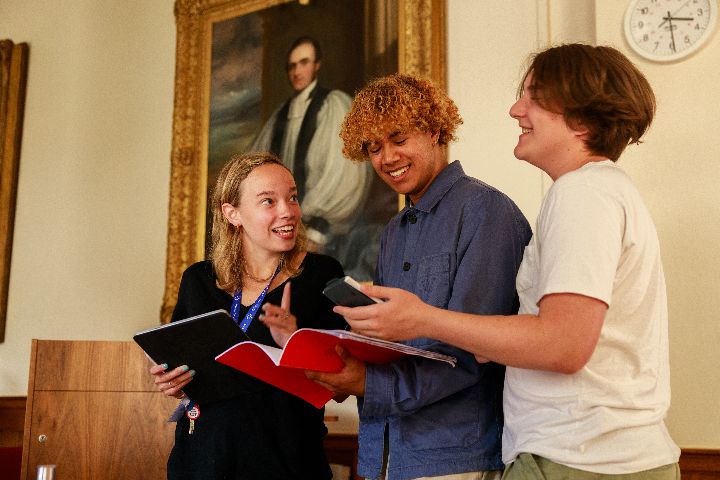
For one standout experience that delivers three wins at once, Immerse Education’s TED Summer School for high school students, built in partnership with TED, sets the global standard. You’ll show clear growth, meet peers across London, New York, and Singapore, and sharpen world-class communication that strengthens your essays, interviews, and leadership presence.
The Application Components Explained
The HBS application is built to show the full picture of your readiness and potential, so each component should support the same story, from academic choices to leadership and communication experience.
Here are the different components you’ll need to prepare and submit.
- Transcripts: Upload all undergraduate and graduate transcripts; unofficial is fine, official required if admitted.
- GRE / GMAT: Submit GRE or GMAT; no minimum, no preference, and official scores sent to HBS.
- English Language Test: Required if undergraduate instruction wasn’t solely English; TOEFL iBT, IELTS, PTE, or Duolingo.
- Essays: You’ll answer prompts on your career choices and aspirations, how you lead and invest in others, and how curiosity has shaped your growth. Use one clear story per essay, show reflection, and link it to direction.
- Recommendations: Two online recommendations, ideally from your direct supervisor or manager. They must compare you to strong peers with examples (300 words) and describe key constructive feedback, circumstances, and your response (250).
- Resume: Use a clean, one-page, impact-first format. Lead with outcomes, scope, and progression. Use strong action verbs, quantify results, and prioritise leadership moments over duties. Ensure clearly labeled dates and locations.
- Fee or Fee Waiver: Pay the $250 application fee, unless exempt or granted a need-based waiver.
- Acceptance of Policies: Sign and accept HBS admissions policies as part of submission.
Writing a Compelling HBS Essay
A compelling HBS essay goes beyond achievements and shows self-awareness, because admissions readers want to understand how you think, not just what you’ve done.
Across the Business-Minded, Leadership-Focused, and Growth-Oriented prompts, the strongest responses connect your choices to your direction, and your experiences to how you lead and grow.
Growth matters most when it’s honest. Strong essays include moments of setback, what you learned, and how that changed your decisions or behaviour afterwards.
Avoid generic leadership stories that could belong to anyone. Focus on the tension, the trade-offs, what you did, and what changed because of you.
Finally, align your story with what HBS values, but don’t force it. If your examples naturally show initiative, impact, and learning, the fit comes through without you needing to spell it out.
The Interview: Final Gatekeeper
The HBS interview is by invitation only, so it’s a positive signal, but it’s not a guarantee of admission.
It’s a 30-minute conversation with an MBA Admissions Board member who has already read your application, so the questions are tailored to you. Interviews may happen on campus, in hub cities, or via Zoom, and the format does not affect your candidacy.
Expect probing behavioural questions that dig into decisions, trade-offs, and impact. Prepare by practising a few clear stories with outcomes and learning, and keep your answers calm and direct.
Within 24 hours, you’ll submit a written post-interview reflection through the online system. This step is relatively unusual in MBA admissions and gives applicants a chance to add context after the conversation while it is still fresh. It is not meant to rewrite your answers, but to reflect briefly on the discussion, clarify anything you wish you had expressed more clearly, and show thoughtful self-awareness about the exchange.
The HBS 2+2 Programme
The HBS 2+2 programme is a deferred MBA pathway for people who are still in university or in a full-time master’s programme. You apply earlier than the traditional route, then work for at least two years before you join the regular two-year HBS MBA, which is why it’s often described as “apply now, enrol later”.
The difference from the regular MBA route is timing and intent. In the standard process, you apply after you’ve built a few years of full-time experience and you enrol soon after. With 2+2, HBS is backing your long-term potential earlier, then giving you time to build real-world experience before you arrive on campus.
This route tends to suit you if you’re still studying, have a strong academic record, and can already point to real leadership and analytical strength. It’s also a good fit if you want the freedom to explore roles, industries, or entrepreneurship after graduation, while knowing you have a confirmed MBA place to work towards.
International Applicants: What to Consider
HBS applies the same admissions criteria to international applicants as to US applicants, but you’ll need to prove you can thrive in a discussion-heavy, public-speaking learning environment in English.
If you didn’t attend an undergraduate institution where the sole language of instruction is English, you’ll need one of these English tests. HBS discourages applying if you score below these thresholds:
- TOEFL iBT: 109
- IELTS: 7.5
- PTE: 75
- Duolingo English Test: 145
Work visas are also part of the reality. Most international MBA participants study on an F-1 visa, then need work authorisation pathways after graduation; HBS notes its STEM track can qualify international students for up to 36 months of US work authorisation through STEM OPT.
Because the competition is global, your edge usually comes from showing impact that travels. Highlight times you’ve adapted across cultures, led through ambiguity, and delivered results with people who think and work differently.
Common Mistakes Applicants Make
Most rejections don’t happen because you “weren’t good enough”, but because the application didn’t show clear fit, depth, and impact. Here are the most common mistakes to avoid.
- Over-focusing on prestige: You chase the brand, but never explain why HBS fits your goals. Saying you want to attend “because it’s Harvard” won’t be considered a meaningful reason unless you can connect the programme’s teaching style, community, or resources to what you actually want to do.
- Writing what they think HBS wants to hear: It sounds polished, but your real voice disappears.
- Ignoring leadership depth: You list roles, but don’t show decisions, influence, or measurable outcomes.
- Submitting rushed essays: Weak structure, shallow reflection, and avoidable errors undermine otherwise strong profiles.
Timeline: When to Start Preparing
The best time to start preparing is 2-4 years before you apply, because HBS is evaluating patterns, not last-minute fixes.
During university, focus on building leadership early. Pick one or two commitments where you can grow responsibility, lead people, and create measurable outcomes over time.
Alongside that, strengthen business fundamentals and communication skills. Build quantitative confidence, learn how businesses actually work, and practise writing and speaking so your ideas land clearly in essays, interviews, and real leadership moments.
Building a Long-Term Strategy for How to Get Into Harvard Business School MBA
A long-term strategy for how to get into Harvard Business School MBA starts with academic positioning. You don’t need to study “business” to be credible, but you do need to show you can handle rigour, especially quantitative work. Choose challenging modules, aim for strong results, and build evidence that you can keep up with an intense pace.
Next comes career progression planning. HBS doesn’t reward a perfect job title so much as clear momentum. Look for roles where you can earn trust quickly, take on responsibility, and point to outcomes that changed something meaningful. Promotions help, but so does taking ownership of messy problems and delivering.
Networking with alumni and current participants is about insight, not favours. Use conversations to understand what the case method feels like, what HBS values in practice, and how people used the MBA to move forward. Track themes you hear, then test your own story against them.
Finally, continuous self-reflection and personal development is what makes your application feel real. Keep a running record of decisions you’re proud of, moments you handled badly, feedback you received, and how you changed. That’s where your essays and interviews get their depth.
Is Harvard Business School Right for You?
It’s worth separating fit from brand name. HBS is powerful, but it’s also intense, discussion-driven, and built for people who like debate, ambiguity, and fast decision-making in public.
Your career goals and long-term vision should lead the choice. If you want to build general management range, accelerate leadership, or open global doors, HBS can make sense. If you need a highly specialised pathway, a different programme may serve you better.
Alternatives to HBS
- Stanford GSB: Best for entrepreneurship, innovation, and tight-knit networks, especially in tech ecosystems.
- Wharton: Ideal for finance, analytics, and scale, with deep resources and global reach.
- INSEAD: Fast, international MBA with strong consulting outcomes and multi-campus global immersion.
- MIT Sloan: Great for tech, operations, and data-driven leadership, with hands-on learning.
- Chicago Booth: Flexible curriculum for analytical thinkers, strong finance, and rigorous decision-making culture.
Conclusion
Even the strongest applicants don’t “wing it” at Harvard, they build a track record that stands up under pressure.
Keep your focus on evidence. Strong academics, real leadership impact, and clear communication will beat polish every time.
Harvard Business School is competitive, but you can learn how to get into it by building real impact, reflecting honestly, and showing steady growth.
If you want more practical, confidence-building guidance, explore our Career Exploration blogs for next steps, examples, and smarter choices you can start this week.