
 Русский (RU)
 Українська (UK)
 Türkçe (TR)
 Italiano (IT)
 Français (FR)
 Português (PT)
 中文 (中国) (ZH)
 Español (ES)
 日本語 (JA)
 ไทย (TH)
 Deutsch (DE)
 Ελληνικά (EL)
 Polski (PL)
 Bahasa Indonesia (ID)
 Nederlands (NL)
 العربية (AR)
 한국어 (KO)

If you are a high school student curious about how the mind works, enrolling in neuroscience summer programs for high schoolers can be a great way to spend your break. These opportunities provide a unique platform to explore the complexities of the brain beyond standard textbooks and classroom lectures.
Imagine spending your summer attending lectures on topics like brain anatomy, neural signaling, cognitive neuroscience, or neurological disorders. Picture participating in lab activities, analyzing data, or exploring how researchers study the brain using modern tools and techniques. These immersive experiences bring complex scientific ideas to life and offer a glimpse into the professional world of research.
How to choose the right neuroscience summer program?
There is a wide range of neuroscience-focused summer programs you can explore today. Each offers a unique learning experience. Some programs emphasize academic exploration, while others immerse you in real laboratory or clinical environments alongside scientists and medical professionals. So, it is important to find an opportunity that aligns with your experience, preferences, and goals.
Neuroscience summer programs can introduce you to topics such as neurobiology, cognition, mental health, and neurological disorders through a mix of lectures, lab work, and research projects. As a participant, you will explore the intersection of biology, psychology, and biomedicine to see how the brain shapes everything from memory to behavior.
Many programs go beyond theory, often requiring you to analyze data, participate in experiments, or even present original research. In the process, you will develop critical thinking, scientific reasoning, and a clearer sense of whether neuroscience is the right path for you. Many of these programs are hosted on university campuses or in professional settings, allowing you to connect theory to practice and prepare for future academic and career opportunities.
To help you get started, we have put together 15 neuroscience summer programs for high schoolers. we have focused on options that combine academic depth, hands-on experience, and exposure to the rapidly evolving world of brain science.
For adjacent opportunities, you can explore psychology summer programs.
15 Neuroscience Summer Programs for High Schoolers
1. Immerse Education’s Psychology Summer School
Location: Toronto, Cambridge, Sydney, Singapore, London, Oxford, and Online
Cost: Varies by format; summer school scholarship available through our bursary programme
Acceptance rate/cohort size: Selective; an average of 7 participants per class
Dates: Two weeks during the summer
Application deadline: Multiple summer cohorts with rolling admissions
Eligibility: High school students around the world, ages 13-18
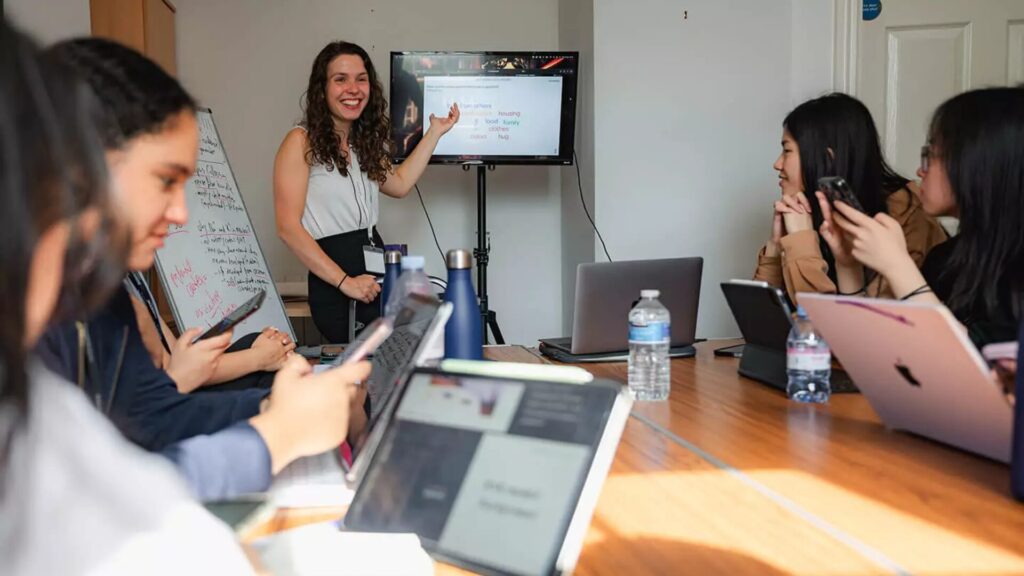
Immerse Education’s summer schools allow high school students to experience university life firsthand. You will live on campus, study in small groups of 7 to 10 students, and learn from tutors at top universities. As a participant, you will explore cognitive psychology, neuroscience, and the principles of behavioural psychology.
You will also study how environmental factors shape human behaviour and understand the concepts that create social dynamics. At the end of the program, you will complete a personal project and receive written feedback along with a certificate of completion. You can find more details about the application here.
Why it stands out: It blends university-style coursework with the experience of living in a student city, creating a brain science-focused summer experience that is immersive and educational.
2. Clinical Neuroscience Immersion Experience (CNI-X) @ Stanford University
Location: Online or Stanford University, Stanford, CA
Cost: 1,725 (virtual) | $3,325 (in-person); scholarships are available.
Acceptance rate: 12%
Dates: Virtual: June 8-19 and June 22nd – July 3rd | In-person: July 6-17 and July 20-31
Application deadline: Rolling until March 1st
Eligibility: Current high school students, ages 14-18; international students can apply.
CNI-X is one of the most clinically-focused neuroscience summer programs for high schoolers, introducing students to psychiatry through faculty-led seminars. The curriculum covers advanced concepts such as neuroimaging and sports psychiatry, offering rare exposure to both research and clinical theory.
You will learn about different mental health career paths and how to enter these fields. You will also work with peers on a capstone project that focuses on real clinical problems. The experience ends with presentations, where you will share what you and your group worked on over the last two weeks.
Why it stands out: It offers insights into neuroscience and psychiatry, along with experience in team-based problem solving, helping you design solutions to real mental health challenges.
3. Neuroscience Research Academy @ University of Pennsylvania
Location: University of Pennsylvania, Philadelphia, PA
Cost: $10,050; scholarships available for local students
Acceptance rate/cohort size: Not specified
Dates: July 11th – August 1st
Application deadline: Rolling admissions until full; international students are advised to apply by February to allow time for visa processing.
Eligibility: Current 9th – 11th grade students who have completed one year of high school biology and one year of high school chemistry; International students can apply, but require a Tourist or B-2 visa.
This three-week residential program at the University of Pennsylvania covers how the brain works, starting from individual neurons and building up to complex topics like memory, emotion, and decision-making.
The program also offers access to a neuroethics club where you discuss ethical questions in the field of neuroscience. You will gain hands-on lab experience and go on field trips to places like the Mütter Museum and the Franklin Institute. At the end of the program, you will receive a Certificate of Completion and can request a letter of recommendation from your instructor.
Why it stands out: It runs a dedicated neuroethics club, giving you a chance to debate real ethical questions in science, which is rare for a high school summer program.
4. Stanford’s SIMR
Location: Stanford University, Stanford, CA
Cost: $50 application fee; waivers and need-based stipends available
Acceptance rate/cohort size: ~50 students/year
Dates: June 8th – July 30th
Application Deadline: 21st January
Eligibility: High school students in their junior or senior year, ages 16 and up when the program starts; applicants must attend high school in the U.S. and be U.S. citizens or permanent residents. Preference is given to Bay Area students.
Stanford’s SIMR is widely considered one of the most prestigious neuroscience summer programs for high schoolers, offering a dedicated neurobiology track for aspiring medical researchers. Students engage in eight weeks of hands-on lab work and one-on-one mentorship within a world-class research environment. Within your chosen track, you will engage in research, lectures, lab work, and college preparation under direct supervision from a Stanford mentor.
Over the course of eight weeks, you will work one-on-one with your mentor within a laboratory setting on a medicine-oriented project. The program ends with a presentation session where you will share your findings with family, teachers, and Stanford community members.
Why it stands out: It allows you to explore neuroscience, science communication, and lab work while working one-on-one with a mentor affiliated with Stanford.
5. USC Pre-College Summer Program – The Brain: Introduction to Neuroscience
Location: University of Southern California, Los Angeles, CA
Cost: $11,570 (residential) | $8,130 (commuter) + $85 application fee
Acceptance rate/cohort size: Not disclosed
Dates: June 22nd – July 17th
Application deadline: May 8th (domestic students) | March 13th (international students)
Eligibility: High school students (domestic and international) who have completed at least the ninth grade by the start of summer programs and are pursuing a rigorous high school curriculum; international students who can demonstrate English proficiency are also eligible to apply.
USC runs various pre-college courses for high school students, offering them the opportunity to explore a field of choice, connect with a diverse group of peers, live and/or attend sessions on campus, and earn college credit in the summer. In the neuroscience track, you will join a multimedia-based course that blends traditional learning with hands-on discovery.
Over four weeks, with each week focusing on a different topic, you will explore topics like neurons, memory and learning, brain anatomy, normal and abnormal function, lifespan development, neuroethics, and neuroimmunology. You will learn about these concepts through lectures, lab sessions, and discussions, as well as field trips to museums. Additionally, you will analyze DNA samples and evidence to solve a mystery case, and engage in a mock trial-style final presentation where you will defend your solution to the mystery.
Why it stands out: The program follows a multimedia-driven curriculum, paired with experiments, lab sessions, and field trips to offer practical exposure to brain science.
6. Columbia University BRAINYAC
Location: Columbia University, New York, NY
Cost/Stipend: No cost; stipends may be available
Acceptance rate/cohort size: Not specified
Dates: Winter/Spring training + 7-10 weeks of summer research
Application deadline: TBA; applications will open in October.
Eligibility: High school students in grades 10 and 11 residing in New York City and enrolled in partner programs; preference is given to students in Upper Manhattan and the South Bronx.
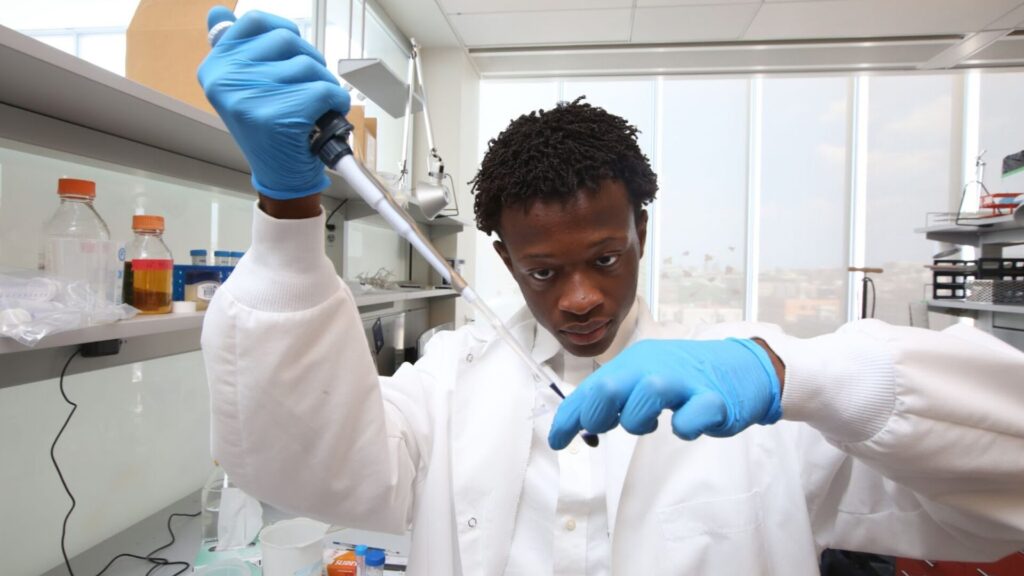
BRAINYAC (Brain Research Apprenticeships in New York at Columbia) places high schoolers in neuroscience labs to work one-on-one with scientist mentors on ongoing research projects. You will begin with training sessions to learn lab safety, experimental design, and research ethics, and prepare for research participation in the summer.
During the summer, you will join your mentor in the lab and conduct experiments, analyze data, and attend meetings, following a schedule that mirrors professional research environments. Workshops will cover scientific writing and communication while also connecting you with peers who share an interest in brain science. The experience concludes with presentations to help you share your insights and progress.
Why it stands out: It offers one-on-one mentorship from a Columbia neuroscientist, providing a true apprenticeship-like experience with lab exposure rather than a typical classroom-based summer program.
7. Duke University Neuroscience Experience (DUNE)
Location: Duke University, Durham, NC
Cost/Stipend: No cost; stipends available
Acceptance rate/cohort size: Not specified
Dates: June 15th – August 7th
Application deadline: February 8th
Eligibility: Current high school sophomores and juniors (grades 10 and 11) who attend a public or charter high school in Durham, NC, are at least 16 years old by June 15, and are U.S. citizens, nationals, permanent residents, or legal residents; international students are not eligible.
DUNE is an 8-week summer research program at Duke University, where you spend your time working in a neuroscience lab full-time. You will be matched to a lab based on your interests and work on a research project under the guidance of professional scientists.
Along with lab work, you will take part in workshops that help you build science communication skills and learn about careers in medicine, academia, and industry. You will also get college application guidance as part of the program. At the end of the summer, you will present your research to an audience and earn a stipend.
Why it stands out: It allows you to spend eight weeks in a real lab, engaging in a neuroscience-focused experience that mirrors the full arc of an authentic scientific research cycle.
8. Massachusetts General Hospital Youth Neurology Education and Research Program
Location: MGH Main Campus or labs in Boston, Cambridge, or Somerville, MA
Stipend: Provided
Acceptance rate/cohort size: Selective
Dates: June 30th – August 8th
Application deadline: January 31st
Eligibility: Rising high school seniors, recent graduates, and undergraduates living or studying in Massachusetts; applicants must be authorized to work in the U.S.
This paid internship offers high school and college students placements in neurology research labs under the mentorship of Massachusetts General Hospital staff. The program begins with a boot camp focused on research training, lab expectations, and professional skills before moving on to mentored research.
You will work with a peer on neuroscience projects, contributing to laboratory investigations. Weekly sessions will introduce you to neurologists and neuroscientists while helping you build a foundation in clinical and research neurology. At the end of the program, you will present your findings to peers and department members.
Why it stands out: This is an opportunity to work within a leading hospital under the mentorship of neurologists and gain a rare clinical perspective on how neuroscience is applied in patient care.
9. Max Planck Florida Institute for Neuroscience (MPFI) Summer Research Internship
Location: Max Planck Florida Institute for Neuroscience, Jupiter, FL
Cost/Stipend: No cost; stipend of $14/hour available
Acceptance rate/cohort size: Selective
Dates: June 22nd – July 31st
Application deadline: February 8th; applications open on December 16th
Eligibility: Rising high school juniors and seniors, ages 16 and up, who reside in Palm Beach or Martin County in Florida (only U.S. students eligible)
The MPFI internship is widely regarded as one of the most technologically advanced neuroscience summer programs for high schoolers, focusing on high-resolution imaging and brain development. You will work alongside world-class researchers to master the “wet lab” techniques essential for modern discovery. The program offers four tracks: Neuroscience, Mechanical Engineering, Scientific Programming, and Programming/Coding for Public Engagement.
The Neuroscience track allows you to conduct neuroscience lab research. As a participant, you will also practice “wet lab” techniques like genetic engineering, microscopy, and microbiology preparations. By the end of six weeks, you will produce a scientific abstract based on your project and deliver a presentation discussing your summer experience.
Why it stands out: It offers exposure to core lab practices and advanced tech used by neuroscientists, helping you learn about modern research activities in the field.
10. State University of New York at Albany’s High School Bioinformatics Summer Camp
Location: Virtual + State University of New York at Albany, Albany, NY
Cost: $1,450; an early-bird discount of $200 is available if you apply before February 1st
Acceptance rate/cohort size: Not specified
Dates: July 6th – August 1st
Application deadline: Rolling admission until 31st March
Eligibility: High school students worldwide with a GPA above 3.0, at least one high school biology credit, and access to consistent high-speed internet
The High School Bioinformatics Summer Camp, hosted by the RNA Institute at the University of Albany, is an online program for high school students interested in biology, neuroscience, and broader life sciences. You will spend four weeks analyzing RNA sequencing data through daily live lectures and completing an independent project in neurodegenerative disease research. The curriculum focuses on teaching you R coding, computing, and RNA sequencing data interpretation and visualization.
At the end of the program, you will join an in-person closing event, RNA Day, to present your final project as a research poster. On successfully completing the virtual summer school as well as the poster, you will receive a Certificate of Completion and an Introduction to Bioinformatics Skills digital badge.
Why it stands out: It introduces you to computational biology and data analysis, helping you understand how biology and technology intersect in neuroscience research.
11. Harvard Pre-college Summer School: Language in the Brain
Location: Harvard University, Cambridge, MA
Cost: $6,100 + $75 application fee; financial aid available
Acceptance rate/cohort size: Not specified
Dates: July 19-31
Application deadline: Early: January 7th | Regular: February 11th | Late: April 1st
Eligibility: High school students worldwide; light programming skills (Matlab or Python) are preferred.
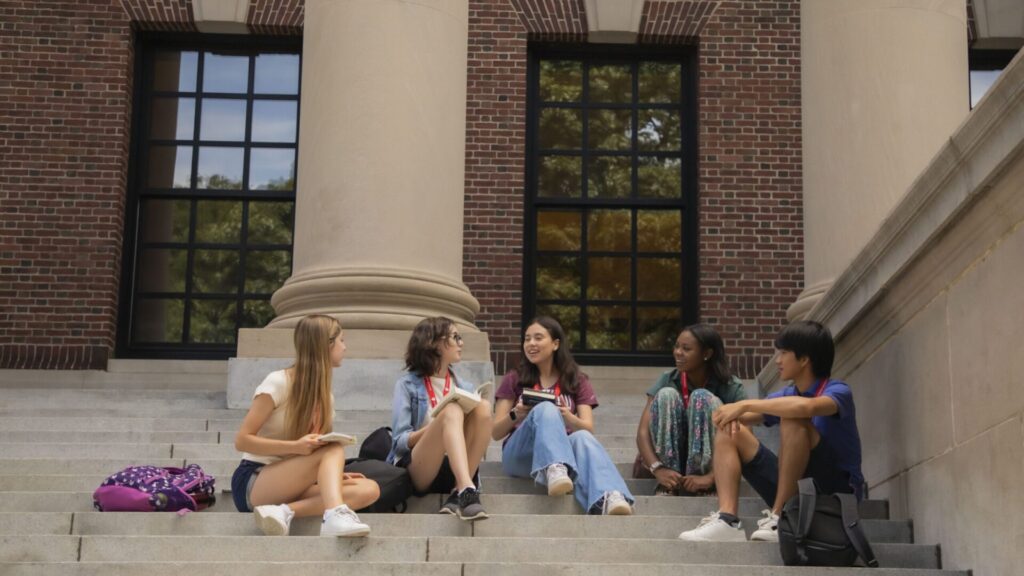
Language in the Brain is an on-campus pre-college course offered by Harvard University that focuses on how the brain processes language. You will spend two weeks learning about the key methods researchers use to study speech and language in the brain, including how language works across different languages. The course also covers how bilingual, multilingual, and polyglot brains are different in structure and function.
A key part of the program is a visit to an MRI facility, followed by a workshop where you will work with real brain imaging data and analyse it to see how language networks interact with other cognitive systems. The program ends with presentations, where you will discuss your findings with peers.
Why it stands out: It allows you to learn how to live independently on an Ivy League campus, experience what it’s like to be a real college student, balance homework, and connect with peers from around the world.
12. Future Physicians America (FPA): Neurology & Psychiatry Tracks
Location: University of Central Florida, Orlando, FL
Cost: Neurology: $1,900 | Psychiatry: $1,600 + housing fees: $450/week
Acceptance rate/cohort size: Not specified
Dates: Neurology: June 22-26 | Psychiatry & Mental Health: June 29th – July 2nd
Application deadline: Rolling admissions
Eligibility: Students in grades 9 to 12; students outside the U.S. can also apply.
The FPA Summer Camps are brief on-campus medical programs held at the University of Central Florida for high school students interested in health and biomedical sciences. The program offers a flexible structure, allowing you to enroll in individual one-week clinical courses or combine multiple courses, with options including neurology and psychiatry. In the neurology track, you will learn about stroke, brain injuries, and epilepsy while also learning how to use a peripheral nerve stimulator, perform cerebrospinal fluid analysis, and read a brain computed tomography (CT) scan.
The psychiatry track covers mood disorders, schizophrenia, and ADHD, while teaching you how to conduct a formal psychiatric history and become familiar with cognitive assessment. Some courses lead to professional certifications or the opportunity to publish research in peer-reviewed journals.
Why it stands out: It combines theory with clinical exposure across medical fields, helping you clarify your interest in healthcare careers.
13. Drexel University’s Neuroscience Camp for High School Students
Location: Drexel University College of Medicine, Queen Lane Campus, Philadelphia, PA
Cost: $2,500
Acceptance rate/cohort size: Not specified
Dates: July 21st – August 1st
Application deadline: April 4th
Eligibility: Rising high school juniors and seniors with a background in biology, chemistry, or research; international student eligibility is not specified.
As one of the most academically immersive neuroscience summer programs for high schoolers, Drexel’s two-week camp provides high-level instruction in electrophysiology and neuropharmacology. Students attend graduate-level lectures and apply their knowledge in daily lab sessions alongside university researchers. This will be followed by an afternoon lab session where you will work on a group project using real neuroscience lab techniques.
You also receive instruction in reviewing scientific literature. At the end, you will present your project and earn a certificate of completion. The program includes field trips to the Academy of Natural Sciences and the Franklin Institute.
Why it stands out: You will get hands-on lab time working directly alongside Drexel graduate students, getting a closer look at what graduate-level neuroscience research actually looks like day-to-day.
14. Explorations in Neuroscience Research Internship Program @ Ohio State University
Location: Ohio State University College of Medicine, Columbus, OH
Cost: Free + stipend available
Acceptance rate/cohort size: Not specified
Dates: Eight weeks in the summer; dates to be released in January.
Application deadline: TBA
Eligibility: Rising high school juniors and seniors who are U.S. citizens, non-citizen nationals, or permanent residents
Ohio State University offers one of the most hands-on neuroscience summer programs for high schoolers, providing a full-time, NIH-funded internship. Students are matched with host laboratories to conduct professional-grade bench research on neurological diseases under the guidance of expert mentors.
Each week, you will also take part in professional development workshops and journal clubs where you will learn to read and discuss scientific papers. Site visits to labs are also part of the experience. At the end of the program, you will present your research findings at a poster showcase attended by the OSU neuroscience community.
Why it stands out: Unlike most high school programs, this internship is NIH-funded, meaning you earn a stipend while engaging in real laboratory research at a major research university.
15. Wake Forest Summer Immersion Psychology Institute
Location: Wake Forest University Reynolda campus, Winston-Salem, NC
Cost: $3,500 + a $60 non-refundable fee; need-based financial aid available for domestic students.
Acceptance rate/cohort size: Not specified
Dates: July 12-17 | July 19-24
Application deadline: Rolling enrollment
Eligibility: Students in grades 9-12; international students can apply
The Wake Forest Summer Immersion Psychology Institute is designed to introduce you to the study of the brain, behavior, and perception through instruction and practical exposure. You will explore concepts like emotion, addiction, sensory processing, and cognitive bias through guided labs and structured discussions.
You will study these concepts through activities such as a sheep brain dissection, sensory perception experiments, and exercises centered on neuroplasticity. You will also conduct observational research as part of a team of peers. At the end of the week, you will present your findings at the end of the program.
Why it stands out: This in-person program allows you to dive into brain science through hands-on exercises like dissections and research work on a university campus.
From Lab Benches to Ivy League Applications
Picture yourself dissecting complex sheep brains or analyzing real-time MRI data alongside world-renowned Stanford researchers while your peers simply read textbooks at home today.
Enrolling in neuroscience summer programs for high schoolers transforms your basic scientific curiosity into a sophisticated professional portfolio that elite admissions officers actually value now.
You will emerge with rare laboratory technical skills and faculty letters of recommendation, effectively bridging the academic gap between secondary school and prestigious university rigor.
Unlock your full potential by exploring our University Preparation blogs to discover how advanced research will transform your college applications and academic future forever today!