
 Русский (RU)
 Українська (UK)
 Türkçe (TR)
 Italiano (IT)
 Français (FR)
 Português (PT)
 中文 (中国) (ZH)
 Español (ES)
 日本語 (JA)
 ไทย (TH)
 Deutsch (DE)
 Ελληνικά (EL)
 Polski (PL)
 Bahasa Indonesia (ID)
 Nederlands (NL)
 العربية (AR)
 한국어 (KO)

As a high schooler curious about economics, economics programs in Singapore for high school students can help you move beyond the textbook and study advanced topics in economic policy, global finance, and macroeconomics. These programs combine lectures or readings with discussions, case studies, and group work, letting you analyse real policy decisions, such as why a central bank raised interest rates, or work through simulations where you manage a budget under constraints.
You will walk away with a clearer understanding of how economic systems work and how to think about trade-offs. You’ll also get a sense of whether the subject is something you’d want to study further at university. During the program, you will meet students from different schools and countries. Some programs offer certificates or college credit, but the more practical benefit is the exposure and the chance to test your interest in the subject.
What kinds of economics programs are available in Singapore for high school students?
Singapore is an epicenter for global banking and digital finance, offering a great environment for studying capital markets. Some programs in the country bring in speakers from finance, policy, or academia who can offer guidance on paths in economics.
The programs focus on a specific area of economics, such as behavioral economics, development economics, or financial markets. Collaborating directly with economists may also be a feature of these programs. You may evaluate monetary policy within a modern financial setting or analyze venture capital structures alongside active wealth managers.
So, not all programs offer similar exposure or rigor. This is why identifying the right economics program requires careful consideration. To help make the process easier, we have put together a list of 15 economics programs in Singapore for high school students.
For related opportunities, you can have a look at the online economics program and summer programs in Singapore.
15 Economics Programs in Singapore for High School Students
1. National University of Singapore SCALE Youth Programme: International Economics and Finance
Location: National University of Singapore (NUS) Kent Ridge Campus, Singapore (on-campus, in-person)
Cost: Varies
Acceptance rate/cohort size: Not specified
Dates: June – August; dates vary by year
Application deadline: Not specified
Eligibility: Pre-university students, ages 15 to 18, who can communicate fluently in English; the program is open to international participants, with separate pricing tiers for ASEAN and international students
NUS SCALE’s International Economics and Finance track places high school students within university classrooms to learn about development and macroeconomic issues affecting ASEAN and East Asian economies. You will attend through lectures, engage in group project-based work, and work with NUS-assigned tutors, exploring topics like trade dynamics, economic growth, financial crises, and policy responses using empirical evidence and regional case studies, including Singapore’s development model.
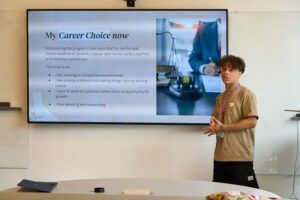
Over 15 hours, you will analyze policy effectiveness, work on real-world development challenges, and develop structured policy recommendations. The course includes quizzes and a graded group presentation, culminating in a final presentation.
Why it stands out: It combines classroom instruction with hands-on project work, introducing you to economic issues around the world and global policymaking within a university setting.
2. Immerse Education’s Singapore Economics Summer School

Location: Singapore
Cost: Varies; summer school scholarship available through our bursary programme
Acceptance rate/cohort size: Selective; an average of 7 participants per class
Dates: Two weeks during the summer
Application deadline: Multiple summer cohorts with rolling admissions
Eligibility: High school students, ages 16-18; open to international students
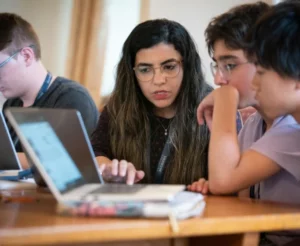
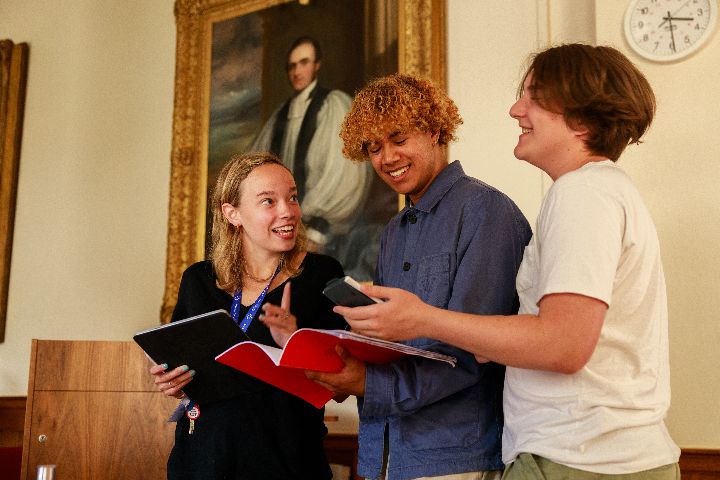
Immerse Education’s Summer School is one of the more personalised economics programs in Singapore for high school students, allowing students to experience university life firsthand. You will study in small groups of 7 to 10 students and learn from tutors from top universities. The courses are experiential and focus on hands-on learning.
You will dive into development, trade, and fiscal systems while engaging in guided research. At the end of the program, you will complete a project and receive written feedback along with a certificate of completion. You can find more details about the application here.
Why it stands out: It combines undergraduate-style economic coursework with project work within a college setting, letting you explore post-secondary environments and Singapore over two weeks.
3. NUS College Summer School

Location: National University of Singapore’s Kent Ridge Campus, Singapore
Cost: S$ 2,725 for Singaporean/PR students | S$ 3,978.50 for ASEAN students | S$ 5,450 for international students
Acceptance rate/cohort size: Not specified
Dates: June 21-27
Application deadline: Not specified; typically, rolling until full
Eligibility: Pre-university students, ages 16-18, who can speak fluently in English; international students are eligible
This one-week program lets you explore your academic interests through taster classes led by NUS faculty across interdisciplinary fields, including topics in economics and social science, while working on team projects. The schedule includes workshops on communication, critical thinking, and leadership, and team challenges in which you will work with peers from around the world.
You will also go on field trips that connect what you are learning during the week to real industrial or cultural settings in Singapore. The week ends with a final team pitch and presentation, followed by a talk on career/academic prep and a closing ceremony. Throughout the program, you will live in a residential college. A Night Tour designed to let you explore Singapore is also part of the week-long schedule.
Why it stands out: It offers a structured look at NSU College’s interdisciplinary coursework, along with career and academic support over the course of a week.
4. Nanyang Research Programme (NRP)
Location: Nanyang Technological University, Singapore
Cost: Not specified; typically free
Acceptance rate/cohort size: Not specified
Dates: April 13th – early March of the following year (progress report due in September; research paper due in January; oral presentations in late February – early March)
Application deadline: February 24th
Eligibility: JC1 (Junior College Year 1) and Year 5 students enrolled in Singapore schools following the GCE A-Level syllabus who have secured their school’s endorsement; international students studying in eligible Singapore schools can apply through their school’s NRP Teacher Coordinator
The NRP is an eight- to nine-month program at Nanyang Technological University, where you will work on a research project supervised by a faculty member or researcher. You will choose one project from available topics in social sciences, the arts, STEM, and business; placements are available in economics and related areas like sociology, public policy, and global affairs.
Over the course of the school-year program, you will submit a report in September, complete your research paper and submit your research log in January, and finally, deliver an oral presentation in February/March. At the end, you will receive a certificate highlighting your award level: Participation, Bronze, Silver, Gold, or Platinum.
Why it stands out: This program offers nearly a full year of supervised research experience in university settings, including submission of a formal research paper and an oral presentation.
5. Nanyang Research Programme Junior Researcher (NRPjr)
Location: Nanyang Technological University, Singapore
Cost: Not specified; typically, free
Acceptance rate/cohort size: Not specified
Dates: April 13th – early March of the following year (progress report due in September; research paper due in January; oral presentations in late February – early March)
Application deadline: February 24th; next application cycle opens in February.
Eligibility: Secondary 3 students and Integrated Programme (IP) Year 3 or Year 4 students enrolled in select Singapore schools; students must apply in pairs from the same school, and they must secure school endorsement. International students are not eligible
NRPjr is a long-term research program at Nanyang Technological University (NTU), designed as a junior version of the NRP for younger students. You and a peer from your school will work on a research project within an area of your choice, which can be economics, under the supervision of an NTU faculty member/researcher. A teacher from your school will also offer support throughout the program.
Over the course of the nine-month program, you will submit a progress report in September, a research paper and research log in January, and an oral presentation in late February or early March. At the end, you and your partner will each earn a certificate showing your award level: Participation, Bronze, Silver, Gold, or Platinum.
Why it stands out: It lets you gain real research experience while working alongside a peer under the combined guidance of a school teacher and an NTU mentor.
6. London School of Business & Finance’s Asia Summer School Programme in Singapore & Malaysia
Location: Singapore and Kuala Lumpur, Malaysia
Cost: SG$ 4,900 (Two weeks in Singapore) | SG $ 7,500 (four weeks in Singapore + Malaysia; GST and accommodation included
Acceptance rate/cohort size: Not specified
Dates: June program (dates not specified); two to four weeks
Application deadline: Not specified
Eligibility: International students at high school and pre-university levels
This program offers high school students academic and cultural experiences across Singapore and Malaysia. The curriculum combines classroom instruction, industrial exposure, and trips to help you explore cultural norms, business practices, and economic systems within Asian countries. A key feature is a two-day Career Immersion experience with Deloitte Singapore, where you will learn about the field of consulting in the Asia-Pacific region.
Other activities include mock interviews with HR consultants, a case challenge, CV and LinkedIn workshops, and networking opportunities with professionals. The program also introduces you to career pathways within global consulting and multinational corporate environments.
Why it stands out: It is one of the few international programs that offers exposure to two countries and a career-immersion experience with a Big Four firm, giving you genuine professional-world exposure alongside academic instruction.
7. Junior Economics Society Singapore Programs
Location: Various competitions, sessions, and events in Singapore; sites vary
Cost: Varies by event (many programmes free or low-cost)
Acceptance rate/cohort size: Not specified
Dates: Events throughout the year (SGNEO in May; Estimathon in February)
Application deadline: Varies by competition
Eligibility: Secondary school and junior college students in Singapore
Junior Economics Society Singapore is a student-led organization that runs national competitions, policy discussions, and speaker-led events to help students explore economics beyond the classroom. The society runs structured academic initiatives designed to refine your economic reasoning and quantitative skills. Its flagship programme, the Singapore National Economics Olympiad (SGNEO), is the official selection platform for Team Singapore at the International Economics Olympiad.
Held each year in May, SGNEO challenges you to find answers to rigorous theoretical and applied economics questions in microeconomics, macroeconomics, and international trade. If you participate and perform well, you may get to represent Singapore on the international stage.
Why it stands out: It offers you easy access to a variety of economics events, both competitive and enrichment-focused, throughout the year.
8. Singapore Management University’s Young Leaders Summer Programme
Location: Singapore Management University (SMU), Singapore
Cost: SG$ 3,500
Acceptance rate/cohort size: Not specified
Dates: July 13-18 (arrival and check-in on July 12th)
Application deadline: May 17th
Eligibility: High school students from Asia and around the world who will be entering university in the next two years, are at least 16 years old by July 1st and will not turn 19 before July 31st; students must have a strong academic record and English proficiency
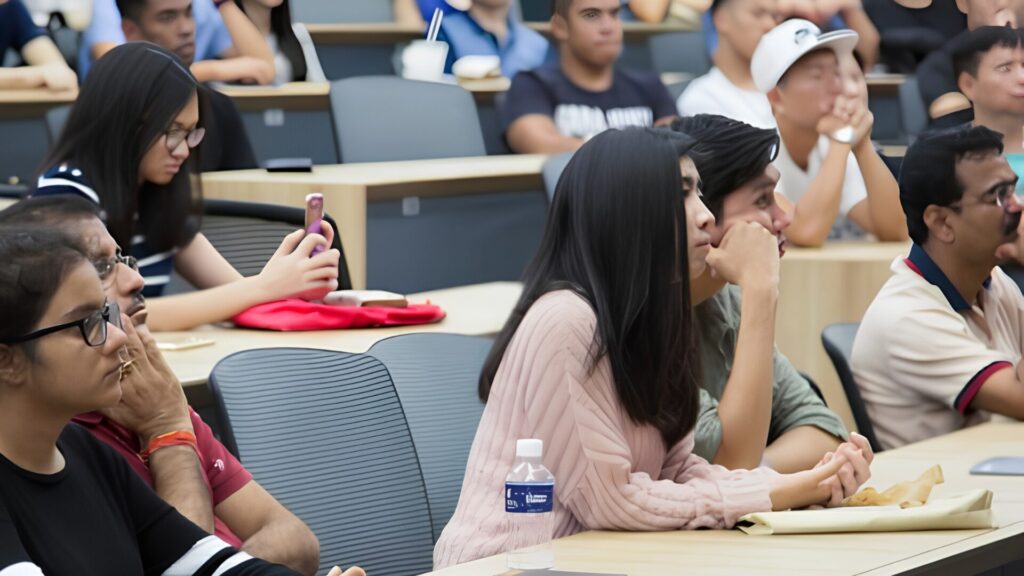
This intensive one-week residential program focuses on developing leadership potential and 21st-century skills identified in the World Economic Forum’s Future of Jobs report, including technological literacy, communication, collaboration, and creative thinking. You will build foundational skills in data analytics, data visualization, and basic machine learning concepts, and gain exposure to Python programming, algorithmic thinking, cybersecurity, and software engineering.
While not a typical economics program, this can be an opportunity to explore SMU’s offerings, connect with economics students, and learn about global issues. Classes are held in SMU’s small-group seminar rooms and are non-credit and non-graded. The program wraps up with a project and final presentation to a panel of judges. At the end, you will receive a certificate of participation from SMU.
Why it stands out: It combines campus exposure with a tech-forward interdisciplinary curriculum, preparing you for future academics and job opportunities.
9. NUS Lee Kuan Yew School of Public Policy: International Youth Discovery Programme (IYDP)
Location: National University of Singapore, University Town, Singapore + Lee Kuan Yew School of Public Policy, NUS Bukit Timah Campus, Singapore
Cost: Not specified; details available upon reaching out to the program point of contact
Acceptance rate/cohort size: Not specified
Dates: June 29th – July 3rd
Application Deadline: May 22nd
Eligibility: Students in grades 10 to 12, including international students with English proficiency
The IYDP, hosted by the Lee Kuan Yew School of Public Policy, is a five-day program designed to help you explore how global developments affect policy design, economic growth, and commerce. You will engage in lectures, case discussions, and panel sessions to learn about topics like behavioural economics, sustainable economics, the digital economy and commerce, international affairs and geopolitics, policy and governance, and leadership.
You will complete an online quiz at the end of each day to track your progress. The program also offers exposure to life on the NUS campus, visits to organizations, a culturally immersive city tour, and a visit to Universal Studios Singapore.
Why it stands out: One of the only programmes for high school students hosted directly by a globally ranked public policy school, the IYDP offers a rare window into how economics, governance, and geopolitics interact; taught through the same participative pedagogy used to train Asia’s future policymakers.
10. SP Jain Global Summer School
Location: SP Jain Global’s Singapore Campus, Singapore
Cost: SG$ 3,200
Acceptance rate/cohort size: Not specified
Dates: June 29th – July 6th
Application deadline: Not specified
Eligibility: Students in grades 9 to 12; international students can also apply
SP Jain’s Singapore Summer School is an eight-day residential program introducing high school students to contemporary business management through the lens of real-world challenges. While not strictly an economics-focused program, it offers exposure to concepts that can help you learn how global economies function.
Led by SP Jain’s international faculty, the curriculum covers topics including finance, marketing, entrepreneurship, business statistics, Excel for decision-making, emotional intelligence, operations and supply chains, design thinking, and technology in business. You will learn through instructional sessions, discussions, and group exercises. You will spend the week living on campus and receive a certificate of participation upon completion.
Why it stands out: It allows you to experience life on a college campus while learning about modern business management alongside a cohort of peers from around the world.
11. Economics for Leaders Virtual
Location: Virtual
Cost: $35 non-refundable processing fee + $900 (fees in USD); scholarships available
Acceptance rate/cohort size: Not specified
Dates: Multiple week-long sessions in the summer
Application deadline: May 6th
Eligibility: High school sophomores and juniors; open to international students
Economics for Leaders Virtual adds a leadership-focused option to the many economics programs in Singapore for high school students, helping you explore how to assess economic problems and develop leadership skills. Sessions are led by economics professors and leadership instructors.
You will learn how economics works through real-world case studies, group activities, and public policy discussions. The program will cover concepts like markets, monetary policy, property rights, labor markets, and international trade. You will also explore what it means to be an effective leader during the program.
Why it stands out: This virtual program combines economics exposure with leadership training, letting you build skills that college admissions teams value.
12. Stanford Pre-Collegiate Summer Institutes: Principles of Macroeconomics
Location: Online
Cost: $3,200 (USD); financial aid available
Acceptance rate/cohort size: Not specified; small class sizes
Dates: Session 1: June 15-26; Session 2: July 6-17
Application deadline: March 13th
Eligibility: Students in grades 9-11 who have completed an algebra course; international students can apply
Stanford’s Principles of Macroeconomics course gives high school students a rigorous two-week introduction to how national economies function. You will study GDP, inflation, unemployment, financial markets, labor markets, and long-run economic growth.
The course uses the same analytical frameworks found in university-level economics, giving you tools to interpret economic data and evaluate policy decisions critically. Live sessions will run in two daily time blocks to accommodate different time zones. You will also complete problem sets and projects outside class, with office hours each weekday for additional support.
Why it stands out: This fully online pre-university allows you to explore Stanford’s university-level macroeconomics, connect with students from around the world, and experience the rigor of a college semester course in two intensive weeks.
13. Columbia University Pre-College – Game Theory: A Course in Mathematical Economics
Location: Online
Cost: $4,018 (USD); need-based financial aid is available.
Acceptance rate/cohort size: Not specified
Dates: July 6-17
Application deadline: May 18th
Eligibility: High school students; open to international students
Columbia University’s Game Theory course adds a strategic decision-making focus to the various economics programs in Singapore available for high school students, allowing you to explore how independent agents make rational choices under uncertainty, such as when to launch a product, how to price it, whether to cooperate in a negotiation, and how incentives shape outcomes.
The course draws on economics, business, political science, and project management, and requires you to use Game Theory to solve complex probability sets and analyse decision-maker payoffs. You will study the works of major pioneers in Game Theory and examine how strategic reasoning shapes real-world outcomes. You will also engage in independent work to build a foundation in economics.
Why it stands out: It allows you to explore college-level mathematical economics under the instruction of Ivy League faculty.
14. Brown University Pre-College: How a Nation’s Economy Works
Location: Online
Cost: $6,520 (USD); financial aid available
Acceptance rate/cohort size: Not specified
Dates: June 15th – July 24th
Application Deadline: May 22nd or until full
Eligibility: High school students, ages 14-18, with an understanding of mathematics at the Algebra II level; international students are also eligible to apply
Brown University’s summer pre-college programs allow you to explore an area of interest through rigorous coursework, lectures, and assignments. The How a Nation’s Economy Works course covers economic issues, institutions, and vocabulary, as well as economic analysis and its application to real social problems. The course is designed to prepare you for advanced study in economics and to help you explore both microeconomics and macroeconomics.
You will spend six weeks learning how to frame hypotheses, assess the impact of key events on the economy, collect data focused on the macroeconomy, assess various economic models, and describe multiple macroeconomic schools of thought. Classes are taught by Brown instructors in a non-graded format that emphasises learning over academic pressure, reflecting Brown’s open curriculum philosophy.
Why it stands out: You will explore Brown University’s Open Curriculum to dive into economic analysis and learn crucial vocabulary in the field without the pressure of formal grades.
15. Columbia University Pre-College: Introduction to Business, Finance, and Economics
Location: Online
Cost: $4,018 (USD); need-based financial aid is available.
Acceptance rate/cohort size: Not specified
Dates: Session 1: July 6-17 | Session 2: July 20-31
Application deadline: May 18th (Session 1) | June 1st (Session 2)
Eligibility: High school students; open to international students
Columbia University’s Introduction to Business, Finance, and Economics course focused on how firms raise and invest capital, how financial markets function, and how the economy values companies, securities, and assets. You will explore topics like optimal investment strategies, accounting statements, stock market mechanics, and sources of financial risk.
You will spend time discussing valuation models, stocks, bonds, and stock markets with peers and faculty. The curriculum includes real company case studies and independent, sustained work to help you build a foundation for future studies.
Why it stands out: It offers a three-week deep dive into business, finance, and economics in an Ivy League classroom environment.
From Singapore Classrooms to World Universities
Singapore gives economics a global setting, where trade, finance, public policy, digital markets, and regional development all connect in real time.
The economics programs in Singapore for high school students listed here can help you study those connections through research, case studies, policy discussions, and university-style learning.
That experience can sharpen your academic direction and help you see whether economics, finance, consulting, public policy, or international development fits your future.
Want to turn that interest into a global university plan? Visit our Study Abroad blogs for destination guides, application advice, and subject-choice support.