
 Русский (RU)
 Українська (UK)
 Türkçe (TR)
 Italiano (IT)
 Français (FR)
 Português (PT)
 中文 (中国) (ZH)
 Español (ES)
 日本語 (JA)
 ไทย (TH)
 Deutsch (DE)
 Ελληνικά (EL)
 Polski (PL)
 Bahasa Indonesia (ID)
 Nederlands (NL)
 العربية (AR)
 한국어 (KO)

As a high school student interested in science, you may already enjoy experiments, lab work, or subjects like biology, chemistry, or physics in school. High school science research programs can help you move beyond classroom learning and understand how researchers ask questions, test ideas carefully, analyse data, and work through uncertainty before reaching a conclusion.
Imagine working on a real project where your ideas matter, whether that involves studying environmental changes, building a simple prototype, or analysing biological data. In a research program, you step into the role of a young investigator. You learn how to think critically, collaborate with peers, and approach problems with creativity and discipline. These experiences can shape how you see science and help you discover which areas genuinely interest you.
How do you choose the right science research programs for high school students?
Finding the right program can take time and careful thought. Some programs may sound appealing but offer limited hands-on experience, while others may be too advanced or not aligned with your interests. It is important to look closely at what each opportunity actually provides before making a decision.
Many scientific research programs are offered by universities, labs, and independent organizations. These programs can cover a wide range of fields such as biology, chemistry, physics, environmental science, and engineering. You might engage in lab work, data analysis, coding, or collaborative projects guided by experienced mentors. Some programs are designed to mirror college-level coursework, while others focus on building core research skills through structured activities.
Regardless of difficulty, you’ll have to work hard once the program starts. For now, though, we’ve made your search easier and drawn up a list of the 15 best science research programs for high school students. They’ve been picked for their academic depth, research opportunities, and strong reputations.
For adjacent opportunities, consider the online research program.
15 High School Science Research Programs
1. MIT PRIMES
Location: Massachusetts Institute of Technology, Cambridge, MA
Cost: Free
Acceptance rate/cohort size: Extremely selective; small cohort size not officially published
Dates: January – December
Application Deadline: December 1st
Eligibility: Open to sophomores and juniors residing in Greater Boston
MIT PRIMES gives you the chance to dive into advanced mathematical research while still in high school. You spend the year working closely with mentors on unsolved problems in areas such as number theory, combinatorics, and computational biology.
The program expects a high level of independence, so you learn how to read academic papers, build proofs, and communicate complex ideas clearly. Weekly meetings and long-term projects create an experience that makes you feel closer to graduate-level research than a traditional enrichment course.
Why it stands out: You work on original math research with MIT mentors in one of the most intellectually demanding high school STEM programs in the country.
2. Immerse Education’s Pre-University Summer School
Location: Cambridge, London, Oxford, Singapore, Sydney, Tokyo, and Toronto
Cost: Varies; summer school scholarship available through our bursary programme
Acceptance rate/cohort size: Small cohorts; class size of around 7 participants
Dates: Multiple 2-week sessions during the summer
Application Deadline: Rolling admissions
Eligibility: Open to students ages 13-18 worldwide, currently enrolled in middle or high school, including international students
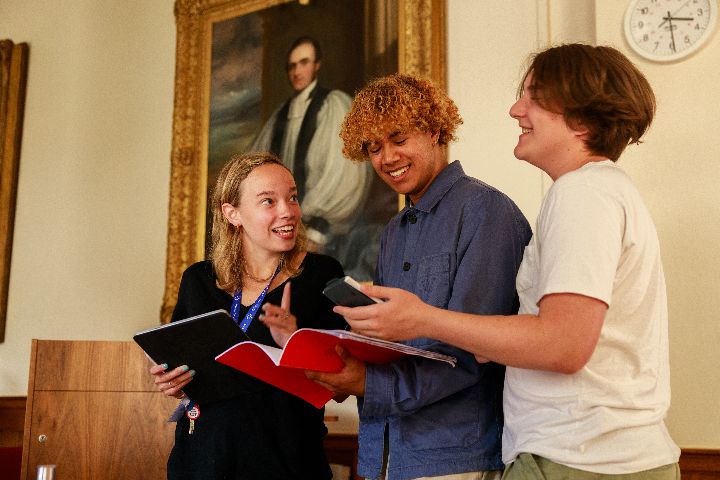
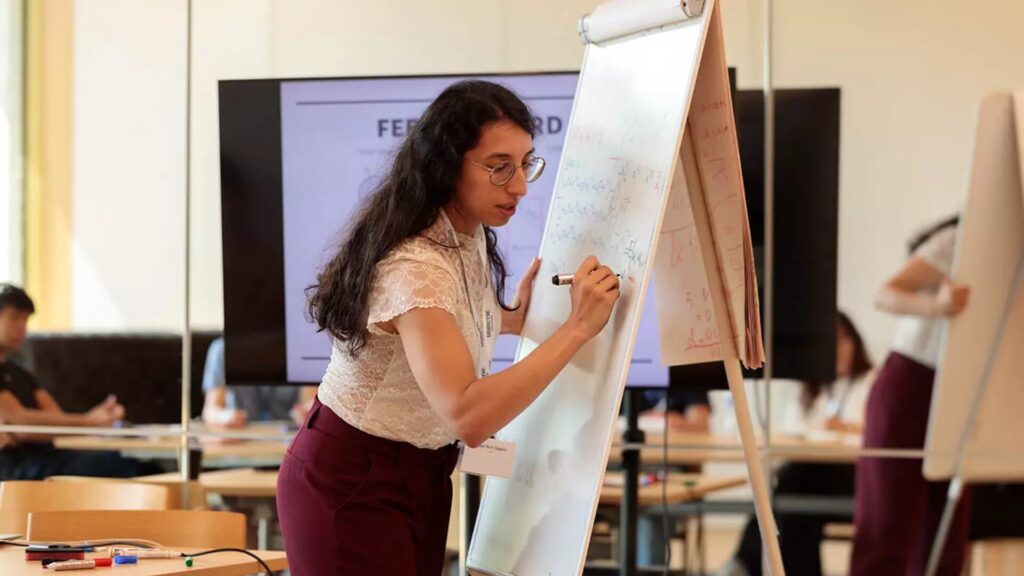
The Academic Insights Program adds a university-style option to the many different high school science research programs, letting students experience academic life firsthand. You will live on campus and study in small groups of 7–10, learning from tutors from top universities like Oxford and Cambridge. You can explore over 20 subjects, including Architecture, AI, Business Management, Computer Science, Economics, Medicine, Philosophy, and more.
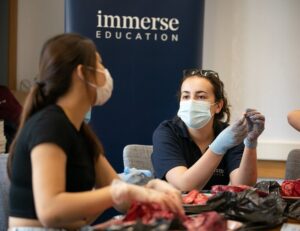
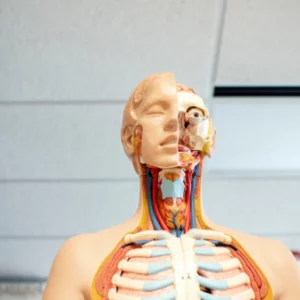
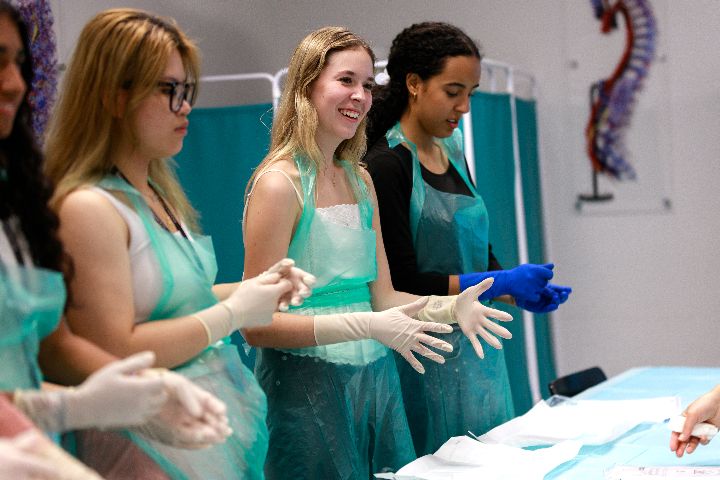
The courses are experiential and hands-on; you may find yourself conducting dissections in medicine, designing a robotic arm in engineering, participating in a moot court for law, or building creative writing portfolios and business case studies. By the end of the program, you’ll complete a personal project, receive written feedback, and a certificate of completion. You can find more details about the application here.
Why it stands out: You’ll study under expert academics, be guided daily by a university student mentor, complete a project you can show in future applications, and experience genuine university college life — with other campuses worldwide as alternatives.
3. Research Science Institute (RSI)
Location: Massachusetts Institute of Technology, Cambridge, MA
Cost: Free
Acceptance rate/cohort size: Highly selective; 100 students
Dates: Late-June to early-August
Application Deadline: Typically around December or January
Eligibility: Open to high school juniors worldwide; applicants are generally expected to have strong achievements in STEM subjects and standardized testing
If you want to experience scientific research at the highest level while still in high school, RSI offers one of the most rigorous opportunities available. You’ll begin with advanced STEM coursework and research seminars led by scientists and MIT-affiliated faculty.
You then spend several weeks conducting independent research under mentorship in labs across the Boston area. Along the way, you learn how to read academic papers, analyze data, and present technical findings with confidence. Since your cohort will be exceptionally driven, discussions inside and outside the lab become just as valuable as the research itself.
Why it stands out: You conduct real, mentor-guided research at MIT through one of the world’s most selective STEM programs for high school students.
4. Science and Engineering Apprenticeship Program (SEAP)
Location: Department of the Navy laboratories across the United States, including Naval Research Laboratory, Naval Surface Warfare Centers, and other participating labs
Cost: $4,000 stipend for new participants; $4,500 for returning participants
Acceptance rate/cohort size: Approximately 300 students selected annually; acceptance rate not officially published
Dates: 8-week internships during the summer
Application Deadline: November 1st
Eligibility: Open to U.S. citizens who are in high school grades 9-12 and at least 16 years old by the internship start date
In this program, you spend your summer inside active Navy research laboratories working alongside scientists and engineers. You can explore projects connected to aerospace, cybersecurity, robotics, ocean engineering, and other advanced STEM fields, depending on your assigned lab.
Throughout the internship, you contribute to ongoing research while building technical and problem-solving skills in a professional environment. Because the work is mentor-driven, you gain firsthand exposure to how large-scale scientific research operates beyond the classroom.
Why it stands out: You conduct hands-on research inside real U.S. Navy laboratories while working directly with professional scientists and engineers.
5. High School Health Careers Program (HSHCP)
Location: UMass Chan Medical School, Worcester, MA
Cost: Free; participants receive a $600 stipend upon successful completion
Acceptance rate/cohort size: Not specified
Dates: June 28th – July 24th
Application Deadline: March 2nd
Eligibility: Open to Massachusetts high school sophomores and juniors who are U.S. citizens or permanent residents and at least 16 years old by the program start date
In this program, you move through a packed schedule of biomedical science classes, healthcare seminars, research projects, and clinical exposure. You strengthen communication and analytical skills while exploring careers in medicine, public health, and research.
Small-group projects encourage collaboration, especially during the program’s health equity research component. Because the experience is residential, you also build close connections with peers who share similar academic goals. Guest speakers, lab activities, and mentorship make the environment feel both demanding and supportive.
Why it stands out: You combine academic enrichment with direct exposure to healthcare careers inside a medical school environment.
6. Simons Summer Research Program
Location: Stony Brook University, Stony Brook, NY
Cost: Free; participants receive a stipend of at least $1,000 upon completion
Acceptance rate/cohort size: 5%; Approximately 100 students selected annually
Dates: June 29th – August 7th
Application Deadline: Typically around the 1st week of February
Eligibility: Open to high school juniors who are at least 16 years old by the program start date; applicants must be U.S. citizens or permanent residents attending school in the United States
Through this program, you step directly into one of the more immersive high school science research programs, spending the summer in university research labs and contributing to active scientific projects. You work closely with faculty mentors and graduate researchers in fields such as biochemistry, physics, computer science, and neurobiology.
Alongside laboratory work, you attend research talks and professional development sessions that introduce you to the realities of academic science. The experience pushes you to think independently while learning how scientific investigations evolve.
Why it stands out: You conduct full-time research at a major public research university while receiving mentorship from working scientists.
7. Applied Research Innovations in Science and Engineering (ARISE)
Location: New York University Tandon School of Engineering, Brooklyn, NY
Cost: Free; students receive a stipend of $2000
Acceptance rate/cohort size: Highly competitive
Dates: 10 weeks during the summer
Application Deadline: Typically in February
Eligibility: Open to New York City high school students who are completing 10th or 11th grade and are at least 16 years old by the program start date; applicants must attend school in NYC
By joining ARISE, you split your summer between rigorous STEM training and independent laboratory research at NYU. Early sessions introduce you to coding, data analysis, and research methods before you move into mentor-guided projects in fields like machine learning, robotics, and biomedical engineering.
You collaborate with university researchers while learning how to approach scientific questions with more precision and creativity. Since the program combines workshops with hands-on experimentation, your experience feels active rather than purely academic. Working in a research setting also helps you in communicating technical ideas.
Why it stands out: You receive formal research training before stepping into real NYU laboratories for mentor-guided STEM projects.
8. Stanford Institutes of Medicine Summer Research Program (SIMR)
Location: Stanford University School of Medicine, Stanford, CA
Cost: Free; limited need-based stipends available for selected students
Acceptance rate/cohort size: Around 50 students participate annually; highly selective
Dates: June 8th – July 30th
Application Deadline: February 21st
Eligibility: Open to high school juniors and seniors in the U.S. who are at least 16 years old by the start date and are U.S. citizens or permanent residents
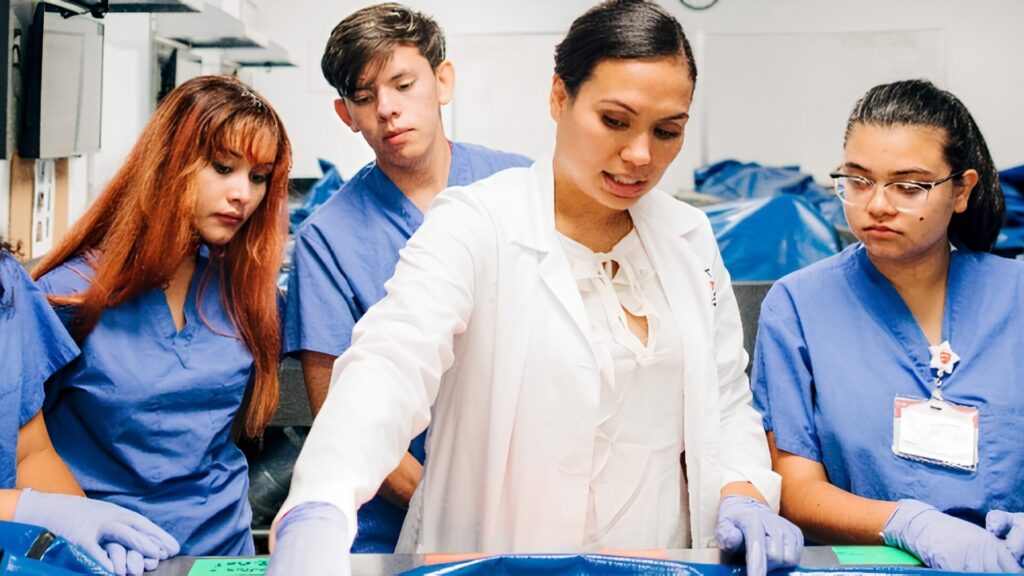
Inside Stanford’s medical research environment, you spend the summer working directly in active laboratories across fields like neuroscience, cancer biology, genetics, and bioengineering. You contribute to experiments and research discussions under close mentorship from scientists and graduate researchers.
Early program lectures help you build scientific context before you transition into full-time lab work. You also learn how researchers communicate findings through presentations and poster sessions. Since the program runs for eight weeks, you have enough time to develop meaningful technical skills.
Why it stands out: You gain immersive biomedical research experience at Stanford while working one-on-one with mentors in professional labs.
9. AEOP High School Apprenticeships
Location: U.S. Army Educational Outreach Program (AEOP) research laboratories and university partners across multiple U.S. states
Cost: Paid internships; stipend amounts vary by site and program duration
Acceptance rate/cohort size: Varies by host institution; not publicly specified
Dates: Summer sessions typically run between June and August; dates vary by location
Application Deadline: Rolling deadlines depending on the internship site
Eligibility: Open to high school students who are U.S. citizens or permanent residents; specific eligibility requirements differ by internship site
Across AEOP internships, you work directly with professional researchers in fields tied to engineering, computer science, chemistry, and advanced technology. Each placement feels different because projects depend on the hosting laboratory or university partner.
Some students focus on data analysis and coding, while others assist with laboratory experiments or prototype development. You gain exposure to collaborative research environments that mirror real STEM workplaces. Since many mentors actively work in defense and innovation research, you also learn how science connects to large-scale national challenges.
Why it stands out: You can explore research across multiple STEM disciplines while working inside professional government and university laboratories.
10. Summer Science Research Program (SSRP)
Location: The Rockefeller University, New York, NY
Cost: Free; need-based stipends available for selected students experiencing financial hardship
Acceptance rate/cohort size: Around 32 students accepted annually
Dates: June 22nd – August 6th
Application Deadline: January 2nd
Eligibility: Open to current high school juniors and seniors worldwide who are at least 16 years old by the start of the program; international students may apply
At SSRP, you join a small research team led by scientists from Rockefeller University and neighboring biomedical institutions. Instead of following scripted experiments, you investigate questions shaped by your team’s scientific interests and your own curiosity.
You learn laboratory techniques, analyze data, and develop a research poster that you present at the program symposium. Workshops, guest lectures, and networking sessions add another layer to the experience. Because the cohort stays small, you receive close mentorship and consistent feedback throughout the summer.
Why it stands out: You work in a tight-knit biomedical research cohort with direct mentorship from scientists at one of the world’s leading research institutions.
11. Anson L. Clark Scholars Program
Location: Texas Tech University, Lubbock, TX
Cost: Free; participants receive a $750 stipend after completing the program
Acceptance rate/cohort size: Highly competitive
Dates: June 21st – August 6th
Application Deadline: In February
Eligibility: Open to applicants who are at least 17 years old by the program start date; international students may apply
Few summer programs give you the level of academic freedom that Clark Scholars does. You work closely with faculty mentors on an individual research project while also attending seminars, discussions, and field trips across disciplines. Projects can range from neuroscience and chemistry to political science and engineering, which creates an intellectually diverse atmosphere.
Because the cohort is intentionally tiny, conversations with professors and peers feel personal rather than formal. You also present your research at the end of the program, strengthening both analytical and public speaking skills.
Why it stands out: You receive one-on-one faculty mentorship in a highly selective interdisciplinary research environment.
12. Carnegie Mellon University – Pre-College Program in Computational Biology
Location: Carnegie Mellon University, Pittsburgh, PA
Cost: Tuition-based; financial aid available for eligible students
Acceptance rate/cohort size: Not publicly specified
Dates: June 20th to July 18th
Application Deadline: March 1st
Eligibility: Open to high school students who are at least 16 years old by the program start date; international students may apply
If you are interested in the intersection of biology, computer science, and mathematics, this program lets you explore all three through a research-oriented lens. You tackle topics such as genetics, programming, machine learning, and bioinformatics while working on collaborative computational projects.
Classes move quickly, so you are encouraged to think analytically and solve problems independently rather than rely on memorization. Alongside technical instruction, you interact with Carnegie Mellon faculty and researchers who introduce you to emerging areas in computational science.
Why it stands out: You explore cutting-edge biology through coding and data science at one of the world’s leading technology universities.
13. Experiences in Research (EinR)
Location: Berkeley Lab, Berkeley, CA
Cost: Free; students receive a stipend during the internship
Acceptance rate/cohort size: Highly competitive
Dates: June 15th – July 24th
Application Deadline: March 22nd
Eligibility: Open to high school students who are at least 16 years old and currently enrolled in a Bay Area school
As one of the most advanced lab-based high school science research programs, this opportunity lets you spend the summer inside one of the nation’s leading national laboratories, contributing to research projects guided by Berkeley Lab scientists and engineers. You can explore fields ranging from environmental science and physics to data science and biotechnology, depending on your placement.
Along the way, you build practical lab and analytical skills while learning how large research teams collaborate on real scientific challenges. Workshops and seminars expose you to scientific communication, career pathways, and emerging technologies.
Why it stands out: You gain hands-on research experience at a U.S. national laboratory while working directly with professional scientists and engineers.
14. Research in Science & Engineering (RISE)
Location: Boston University, Boston, MA
Cost: Varies for the internship and practicum tracks
Acceptance rate/cohort size: Highly selective
Dates: June 28th – August 7th (for the residential program)
Application Deadline: In February
Eligibility: Open to rising high school seniors who are U.S. citizens or legal permanent residents; international students are not eligible; applicants must be at least 16 years old by the start of the program
Whether you choose the Internship or Practicum track, you spend the summer engaging with research and advanced STEM learning at a university level. You work on ongoing research projects under faculty mentorship. You attend presentations, lab discussions, and participate in collaborative problem-solving.
If you select the Practicum track, you complete structured research projects while strengthening technical and analytical skills through workshops and coursework. You interact with motivated peers who share strong interests in science and engineering.
Why it stands out: You can choose between independent lab research and structured research training depending on your experience level and interests.
15. High School Intern Program (HIP)
Location: University of California, San Francisco, San Francisco, CA
Cost: Free; students receive a $4,500 stipend upon successful completion of the program
Acceptance rate/cohort size: Around 25 students are accepted each year from approximately 50 interviewees
Dates: June 8th – July 31st
Application Deadline: February 8th
Eligibility: Open to current high school juniors attending San Francisco Unified School District (SFUSD) schools or SF public charter schools
By participating in HIP, you spend the summer conducting biomedical research alongside UCSF scientists in active laboratory settings. You work on an original project while learning research methods, data analysis, and scientific communication skills through hands-on experience.
Weekly workshops and mentorship sessions help you understand both the technical and personal sides of scientific careers. You also receive college counseling and presentation training throughout the internship. The combination of lab work and mentorship gives you a realistic introduction to biomedical research culture.
Why it stands out: You conduct paid biomedical research at UCSF while receiving intensive mentorship and college guidance in a highly supportive environment.
Turning Scientific Curiosity Into Stronger Applications
Research changes the way you talk about science because you are no longer just saying “I’m interested”; you are showing what you investigated.
Through high school science research programs, you can practise building questions, handling data, using lab methods, and explaining results with clarity.
That evidence can give your application more substance, but it only works if you know how to frame the experience clearly and connect it to your future goals.
How can you turn that research into a stronger university story? Explore our University Preparation blogs for personal statement, interview, writing, and supercurricular guidance.