




 Русский (RU)
 Українська (UK)
 Türkçe (TR)
 Italiano (IT)
 Français (FR)
 Português (PT)
 中文 (中国) (ZH)
 Español (ES)
 日本語 (JA)
 ไทย (TH)
 Deutsch (DE)
 Ελληνικά (EL)
 Polski (PL)
 Bahasa Indonesia (ID)
 Nederlands (NL)
 العربية (AR)
 한국어 (KO)

Every day, global markets move trillions, and in our Banking & Finance Summer School, you study what drives the decisions behind them.
In our Career Insights programme, you explore how banking, finance, markets, business decision-making, and financial careers connect in the real world, especially through industry visits and guided academic reflection.
In this article, we’ll explore what Banking & Finance means, what you may learn through professional environments, how our London and New York locations compare, and which skills the experience can build.
First, what is Banking and Finance?
Key Takeaways
- Our Banking and Finance Summer School helps you understand how money moves through banks, financial markets, businesses, and economies, with a focus on real-world decision-making rather than theory alone.
- In London and New York, you study core finance areas such as financial markets, investment strategy, banking systems, risk management, regulation, fintech, ethical finance, and sustainable banking.
- Industry visits are central to the programme, giving you insight into professional environments such as the Bank of England, the Federal Reserve Bank of New York, Wall Street, investment firms, advisory settings, fintech organisations, and economic research centres.
- The London experience connects you with global banking, policy, investment, advisory work, and fintech through visits such as the Bank of England, Institute of Economic Affairs, Guinness Global Investors, St James’ Place, and io.finnet.
- The New York experience brings finance closer to Wall Street, central banking, financial markets, investment banking, trading, risk management, global economics, and fast-moving financial institutions.
- While Banking and Finance overlap with Economics and Business, they are different subjects: Banking and Finance focuses on banks, markets, investment, risk, and regulation; Economics focuses on inflation, growth, policy, and economic behaviour; Business focuses on how organisations are built, managed, marketed, and grown.
What Is Banking and Finance?
Banking and Finance is the study of how money moves, grows, is protected, and supports decisions in the real world. In our Banking and Finance Summer School, you explore areas such as banking systems, the stock market, financial analysis, reporting, investment strategies, regulatory frameworks, and financial risk.
You also see how these ideas apply beyond theory. Through activities such as evaluating investment decks, analysing real-world portfolios, and developing tailored financial advice, you begin to understand how finance professionals think.
This subject is not only about numbers. It also involves judgement, communication, responsibility, and strategy. By studying Banking and Finance with us, you build a clearer view of the subject and where it could take you next.
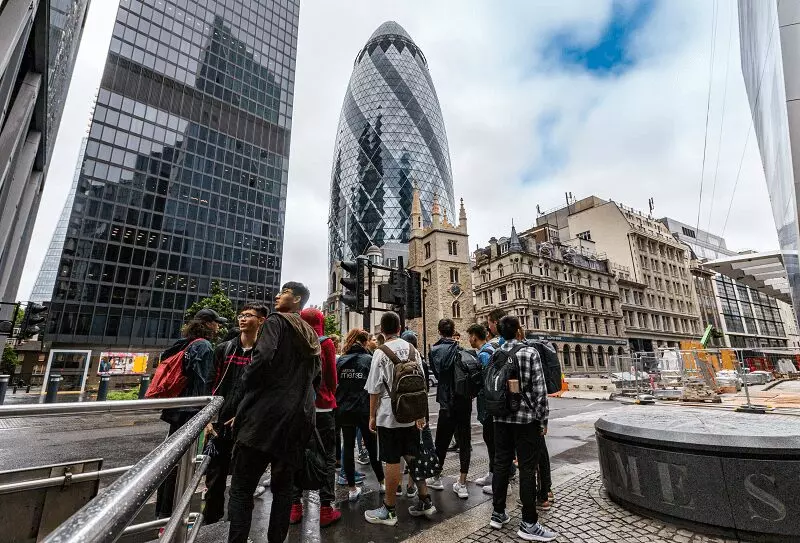
Banking and Finance
In-person
Dive into global finance in London, one of...
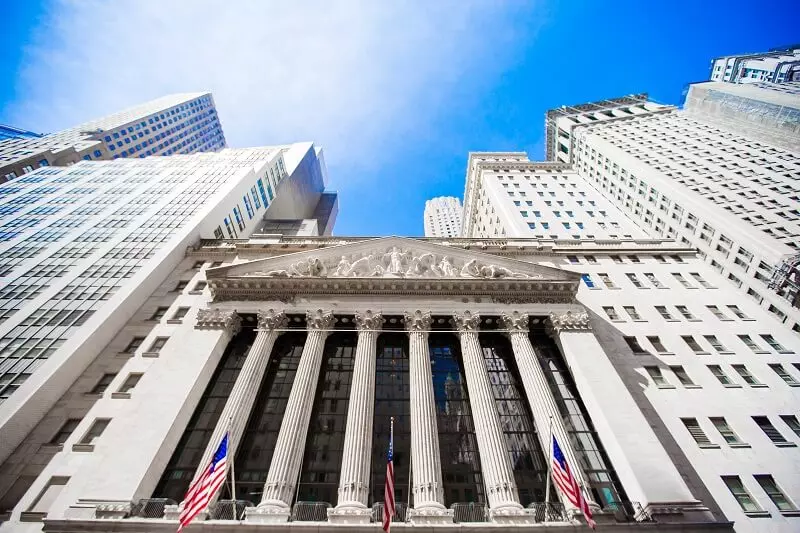
Banking and Finance
In-person
Master financial concepts in New York, the beating...
What Do You Study Through Our Banking & Finance Industry Visits?
While every Banking & Finance Industry Visits programme is shaped by the expertise of the professionals and organisations you meet, you’ll explore a core set of concepts that underpin careers across the financial sector. Topics typically include:
1. How Financial Institutions Solve Real Problems
During our industry visits, you see how financial organisations approach challenges that cannot be solved by theory alone. In London, this may include insight from company visits and expert-led workshops with organisations such as the Institute of Economic Affairs, Guinness Global Investors, St James’s Place, or io.finnet.
You begin to understand how professionals respond to client needs, market pressure, policy questions, investment decisions, and risk. This gives you a clearer view of how Banking and Finance works in real professional environments.
2. How Investment and Portfolio Decisions Are Made
An investment can look promising at first glance, but finance professionals need to test the evidence behind it. In our programme, you may critically evaluate investment decks in a venture capital workshop, analyse real-world portfolios, and develop tailored financial advice for clients.
This shows you how decisions depend on more than potential return. You consider risk, market conditions, client goals, and the strength of the opportunity. Then, you explain which recommendation makes sense and why.
3. How Fintech Is Changing Financial Services
Finance is changing quickly, and technology is a major reason why. In London, our industry insight includes organisations such as io.finnet and Rise Barclays. These visits help you explore fintech, digital platforms, and innovation in financial services.
This can introduce you to areas such as blockchain, cryptocurrency, digital finance, and collaborative financial technology. Instead of treating finance as a traditional office-based career, you see how new tools are changing how money moves, is managed, and is protected.
4. How Trading, Risk Management and Sustainable Finance Work
A trading floor, risk team, or sustainability-focused investment discussion can show you how wide the finance industry really is. In New York, our programme includes industry insight linked to the New York Institute of Finance, where areas such as trading, risk management, and sustainable green investing may be explored.
These experiences help you see how professionals respond to fast-moving markets, protect against financial loss, and consider long-term responsibility when making investment decisions.
5. How Finance Careers Can Fit Your Future
Industry visits also help you connect finance with possible university and career routes. Through our Career Insights pathway, you can take part in expert-led workshops, real-world projects, industry visits, and mentoring designed to show what professional life in finance may involve.
This gives you a clearer sense of whether areas such as banking, investment, fintech, trading, risk management, or sustainable finance match your interests. You leave with more than subject knowledge; you gain direction.
Join the Immerse Education 2025 Essay Competition
Follow the instructions to write and submit your best essay for a chance to be awarded a 100% scholarship.

Should You Study Banking & Finance in London or New York?
Our Banking and Finance Summer School runs in London and New York. Each location gives you a distinct way to explore finance in a world-leading business city.
Here’s the difference between the two locations to help you choose better.
| Area | London | New York |
| City Finance Identity | As one of the world’s major financial centres, London gives you insight into global banking, investment, regulation, and international business. | In New York, you are close to Wall Street, a financial district closely linked with investment banking, global markets, and major financial institutions. |
| Best-fit Student Interest | Choose London if you are curious about global banking, financial services, fintech, investment strategy, and the UK’s role in international finance. | New York is a strong fit if you are drawn to investment banking, trading, financial markets, global economics, and fast-moving finance environments. |
| Industry Visit Focus | The London experience connects finance with banking, investment, fintech, policy, and business through professional environments and industry insight. | Industry insight in New York reflects the city’s links to Wall Street, investment firms, market activity, and global financial organisations. |
| Career Insight Opportunities | In London, you explore finance careers across banking, fintech, investment, advisory work, and wider financial services. | The New York setting brings careers in investment banking, trading, risk management, financial analysis, and global finance into sharper focus. |
| Overall Student Experience | London offers a professional, international, and culturally rich environment for exploring finance in one of Europe’s leading business cities. | New York gives the experience a high-energy, ambitious feel, shaped by one of the world’s most influential business and financial centres. |
What Do You Study in London and New York?
Now that you know the difference between our London and New York locations, it helps to look more closely at what your experience may involve in each city.
Let’s break it down by location.
Banking and Finance in London
In London, our Banking and Finance programme places you in a global finance hub while keeping the learning practical. You study financial markets, investment strategies, global banking systems, corporate finance, modern finance and ethics, valuation, applied finance, and the foundations of banking and markets.
Across the programme, you visit:
- Bank of England: Examine central banking, monetary policy, financial regulation, and economic stability.
- Institute of Economic Affairs: Explore think tank careers, policy advocacy, economic research, and how financial ideas shape public debate.
- Guinness Global Investors: Evaluate an investment deck during a venture capital workshop and decide whether a business opportunity is worth backing.
- St James’ Place: Join adviser masterclasses, analyse portfolios, receive financial guidance, network with professionals, and develop strategic presentations.
- io.finnet: Visit the London headquarters to explore blockchain, cryptocurrency, secure transactions, and digital finance.
Banking and Finance in New York
New York brings the subject closer to Wall Street, major financial institutions, and fast-moving global markets. Our Banking and Finance programme explores investment banking, financial markets, global economics, financial analysis, investment strategy, volatility, risk management, ethical finance, FinTech innovation, and sustainable banking.
Across the programme, you visit:
- Federal Reserve Bank of New York: Examine central banking, monetary policy, financial regulation, monetary stability, and how major financial institutions influence the global economy.
- Wall Street: Take part in immersive simulations and workshops linked to trading, risk management, fast-moving financial decisions, and global market activity.
- Financial institutions, stock exchanges, and economic research centres: Explore investment strategies, risk management, financial market trends, and the technologies reshaping finance.
- Your Career Strategy: Identify your strengths through storytelling, group activities, reflection, career alignment, and AI-supported pathway research.
What Skills Do You Build in a Banking & Finance Summer School?
Whether you join us in New York or London, you build the same core finance skills. These develop through academic sessions, industry visits, workshops, real-world projects, and professional insight.
Here are the skills you build through our summer school:
- Financial awareness: Banking systems, financial markets, investment strategies, central banks, monetary policy, regulation, and the movement of money become easier to understand.
- Investment thinking: You compare risk, return, timing, market conditions, and client needs through activities such as evaluating investment decks, analysing portfolios, and building recommendations.
- Commercial awareness: Real organisations, including the Bank of England, the Federal Reserve Bank of New York, investment firms, fintech companies, and advisory settings, help you connect finance with business.
- Risk assessment: Volatility, uncertainty, regulation, ethical issues, sustainability, and long-term consequences become part of how you judge financial decisions.
- FinTech understanding: Topics such as blockchain, cryptocurrency, artificial intelligence, secure transactions, and digital finance show how technology is changing financial services.
- Ethical judgement: Through financial scandals, responsible banking, corporate social responsibility, green finance, and ethical dilemmas, you consider the real-world impact of financial decisions.
- Career confidence: Industry visits, expert-led workshops, mentoring, and professional development sessions give you a clearer sense of different finance pathways and where your interests could lead.
Banking & Finance Summer School vs Economics vs Business: What Is the Difference?
Banking and Finance, Economics, and Business often overlap, but each subject helps you look at money, organisations, and decision-making from a different angle.
Here’s the difference between these three closely related subjects.
| Area | Banking and Finance | Economics | Business |
| Main Focus | How money moves through banks, financial markets, investment decisions, risk, regulation, and financial organisations. | How economies work, including inflation, growth, employment, trade, policy, and the choices people, businesses, and governments make. | How organisations are built, managed, marketed, financed, and grown in competitive environments. |
| Career Pathways | Banking, investment banking, asset management, fintech, financial analysis, risk management, accounting, corporate finance, and advisory work. | Economic research, public policy, banking, consulting, international development, data analysis, finance, government, and think tank work. | Entrepreneurship, management, marketing, consulting, operations, human resources, business strategy, sales, and leadership roles. |
| Typical Questions | How should money be invested, protected, lent, or managed in a changing market? | Why do prices rise, economies grow, unemployment changes, or governments make certain policy choices? | How can a company attract customers, manage teams, improve operations, and compete successfully? |
| Skills Developed | Financial awareness, investment thinking, risk assessment, commercial awareness, ethical judgement, and career confidence. | Economic reasoning, data interpretation, policy analysis, critical thinking, argument-building, and understanding systems. | Strategic thinking, leadership, communication, problem-solving, creativity, planning, and commercial decision-making. |
| Best Fit For | A strong choice if you are interested in money, markets, investment, banking, fintech, and finance careers. | Suits curious thinkers who want to understand society, policy, global issues, inequality, inflation, trade, and economic behaviour. | Ideal for participants drawn to entrepreneurship, management, marketing, leadership, innovation, and how organisations grow. |
Is a Banking & Finance Summer School Right for You?
Our Banking and Finance Summer School is right for you if you are curious about markets, investment, banking, fintech, risk, and how financial decisions shape real organisations. You do not need advanced knowledge before joining. Instead, you should be ready to question evidence, analyse examples, and engage with professional insight.
It is especially useful if you are considering Finance, Economics, Business, Accounting, Management, or Entrepreneurship, and want clearer direction before university or future career choices.
FAQs
Do You Need Previous Finance Knowledge To Join A Banking And Finance Summer School?
You do not need previous finance knowledge to join our Banking and Finance Summer School. Our programme is designed to introduce you to key ideas in banking, financial markets, investment, risk, and professional finance environments in an accessible way.
You should arrive with curiosity, a willingness to ask questions, and an interest in how money, markets, and organisations work in the real world.
Does A Banking And Finance Summer School Include Maths?
Our Banking and Finance Summer School includes some numerical thinking, but you do not need advanced maths to take part. You may work with financial examples linked to investment, risk, market trends, portfolios, and business decisions.
The focus is on understanding what the numbers mean and how they support decisions. You also learn how finance professionals use evidence to compare options.
Will You Learn About Personal Finance In A Banking And Finance Summer School?
You explore personal finance as part of the wider financial landscape in our Banking and Finance Summer School. This can include financial literacy, investment basics, and managing money. It also helps you understand markets and how financial decisions affect people and organisations.
The programme also goes further by connecting these ideas to banking systems, financial institutions, investment strategy, risk, regulation, fintech, and real professional environments.
Is Banking And Finance More Practical Or Theory-Based?
Our Banking and Finance Summer School combines theory with practical learning. You study concepts such as financial markets, economic theories, banking systems, investment strategies, risk, regulation, and ethical finance, then connect them to workshops, industry visits, real-world projects, and professional insight.
This means you do not only learn what finance terms mean; you also see how those ideas are used by people working in the industry.
Can Banking And Finance Help If You Want To Start A Business?
Banking and Finance can help if you want to start a business because it teaches you how money supports growth, risk, investment, and decision-making. In our programme, you explore areas such as financial analysis, investment strategy, market trends, portfolios, and tailored financial recommendations.
These ideas can help you understand funding, cash flow, investor thinking, and financial planning. They also show the responsibilities involved in building or managing an organisation.
What Careers Can Banking And Finance Lead To Besides Investment Banking?
Banking and Finance can lead to many careers beyond investment banking. Through our Banking and Finance Summer School, you explore roles such as a financial analyst, risk analyst, portfolio manager, asset manager, fintech product manager, corporate finance analyst, accountant, auditor, wealth adviser, trader, compliance officer, sustainability finance analyst, economic researcher, credit analyst, banking consultant, and entrepreneur.
Industry visits and career insight help you see that finance is a broad field with different roles, environments, and ways to contribute.
Conclusion
What you study in a Banking and Finance Summer School should leave you with more than subject knowledge.
Across London and New York, our programme helps you connect financial markets, investment decisions, central banking, fintech, ethics, and risk with real professional environments.
Through industry visits, portfolio tasks, workshops, and career insight, you build confidence in how finance works and where your interests could lead next.
Ready to see finance from the inside? Explore our Banking & Finance Summer School and start building the insight, skills, and ambition to choose your future with confidence in a world-class city this summer ahead.