15 Biology Summer Camps for High School Students
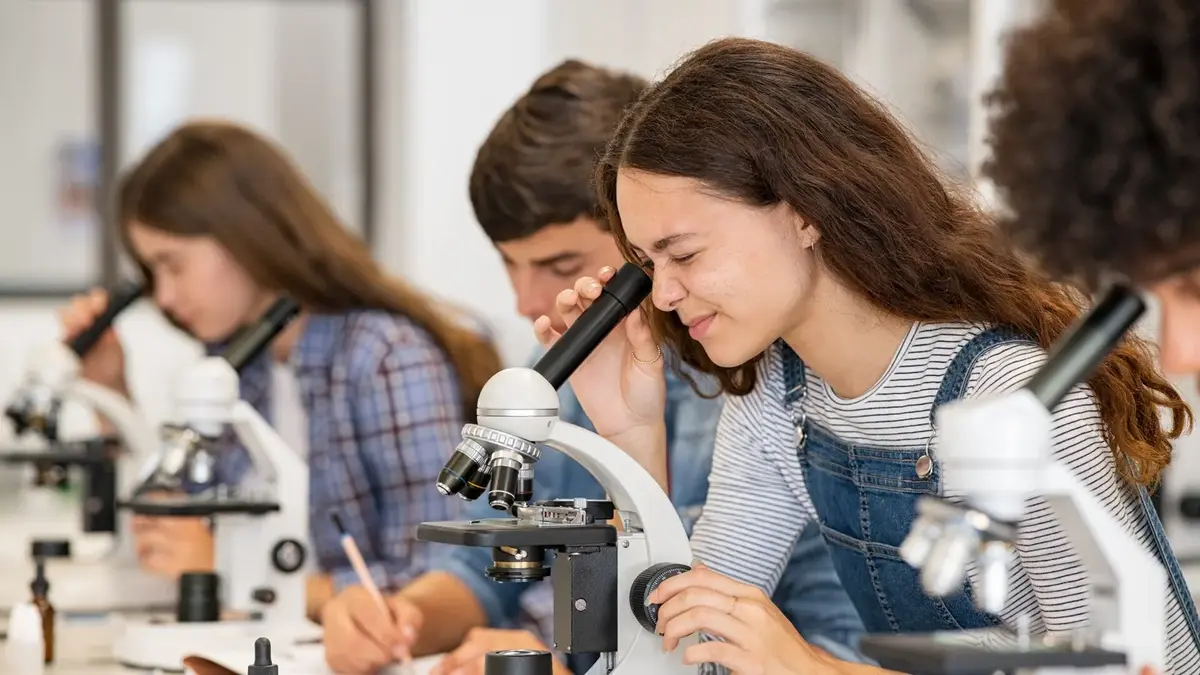
If you’re a high school student curious about biology, summer can be more than just a break from school: it can be a chance to explore the science of life in a hands-on, engaging way. Biology isn’t only learned through textbooks; it comes alive through observation, experimentation, and real-world applications. Biology summer camps for high school students offer an immersive environment to do exactly that.
Imagine spending your days conducting experiments, examining specimens, exploring ecosystems, or learning how biological principles apply to medicine, genetics, or environmental science. With guidance from experienced instructors, these camps help transform abstract concepts into tangible understanding. You’ll explore topics that may go beyond your school curriculum, work alongside peers who share your curiosity, and gain confidence in scientific thinking and inquiry.
How do you choose the right biology summer camps for high school students?
We know that some camps focus more on fun than scientific depth, while others may lack structure or rigor. That’s why thoughtful research matters. The most effective biology summer camps balance hands-on activities with clear learning goals and expert instruction.
Across universities, research institutions, and science organizations, biology summer camps cover areas such as molecular biology, ecology, neuroscience, genetics, and biomedical science. Whether you’re discovering biology for the first time or considering it as a future field of study, these programs provide meaningful exposure.
You’ll learn from experienced instructors, take part in labs, fieldwork, and collaborative projects, and work alongside motivated peers from around the world. Along the way, you’ll sharpen your analytical skills, build scientific confidence, and gain a clearer sense of what studying biology at the next level might look like.
To help you get started, we’ve curated a list of 15 Biology Summer Camps for High School Students. They’ve been picked for their educational quality, hands-on learning, and ability to make your summer both fun and intellectually rewarding.


15 Biology Summer Camps for High School Students
1. Carl B. and Florence E. King Foundation High School Summer Program in Biomedical Sciences
Location: University of Texas MD Anderson Cancer Center
Cost/Stipend: Students will get a USD 7200 stipend by the end of the 10-week program, or USD 6480 if participating for only 9 weeks out of 10 weeks
Acceptance rate/cohort size: 6 students
Dates: 1st June – 7th August
Application Deadline: 14th January
Eligibility: Students enrolled as senior-level high school students in Texas during the Spring semester prior to the start of the program, aged at least 18 years old by the start of the program, US citizens/permanent residents, or work-eligible visa holders
The Carl B. and Florence E. King program in Biomedical Sciences offers high school students interested in the Allied Health program the opportunity to immerse themselves in a research environment and first-hand experience in biomedical sciences. This program is highly competitive as there will only be 6 students admitted to the program every year. During the program, you get to work in the MD Anderson laboratories five days a week. The majority of the program will allow you to do actual hands-on work to make you understand the pathway career in biomedical sciences.
The rest will be spent attending seminars by faculty members and other activities, such as creating posters and competing in elevator speech competitions. By the end of the program, you will get more confidence in preparing your college applications. The program will end by presenting your research and will end with a luncheon.
Why it stands out: It places you in cancer research labs at a leading NCI-designated center helping you build real-world biomedical research skills.
2. Immerse Education’s Biology Summer School
Location: Oxford, Cambridge
Cost/Stipend: Varies; summer school scholarship available through their bursary programme
Acceptance rate/cohort size: Selective; average of 7 participants per class
Dates: 2 weeks during the summer
Application Deadline: Multiple summer cohorts with rolling admissions
Eligibility: Students around the world aged 13-18 who are currently enrolled in middle or high school
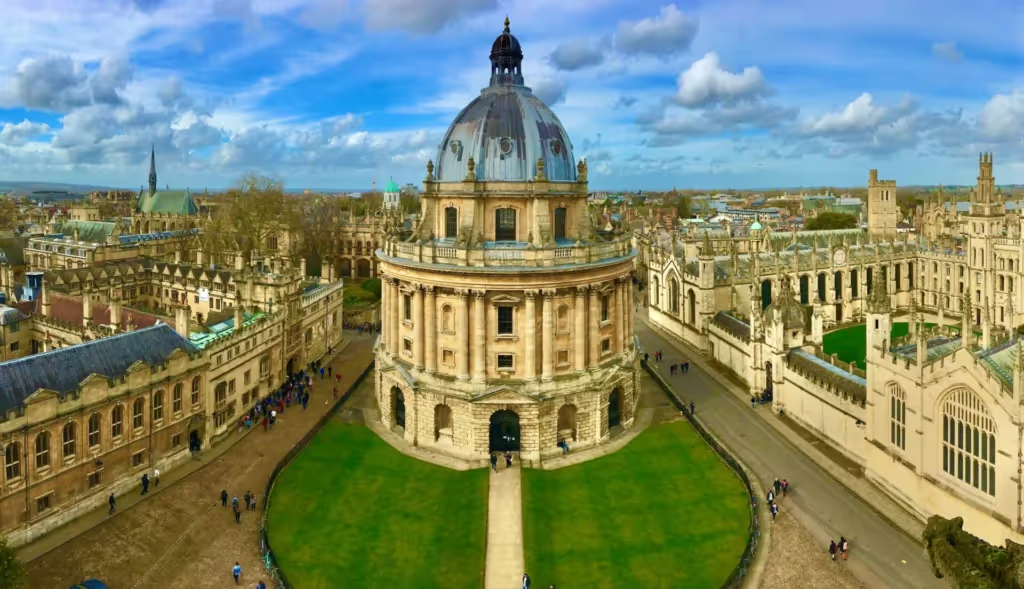
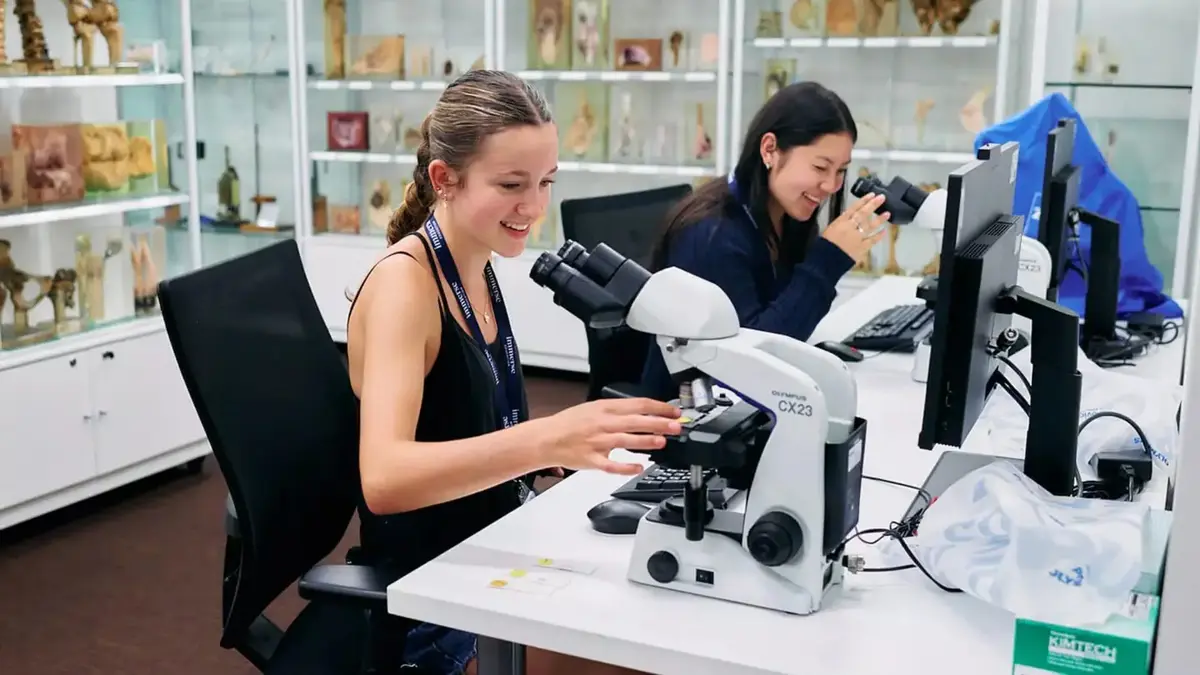
At the Immerse Education Biology Summer School, you will acquire a solid foundation in fundamental biology concepts as you make your way to learning deeper about biology throughout the curriculum. For two weeks in the summer, students aged 16 to 18 years old get to experience this program in university cities like Oxford and Cambridge, where they also get to experience a glimpse of college life.
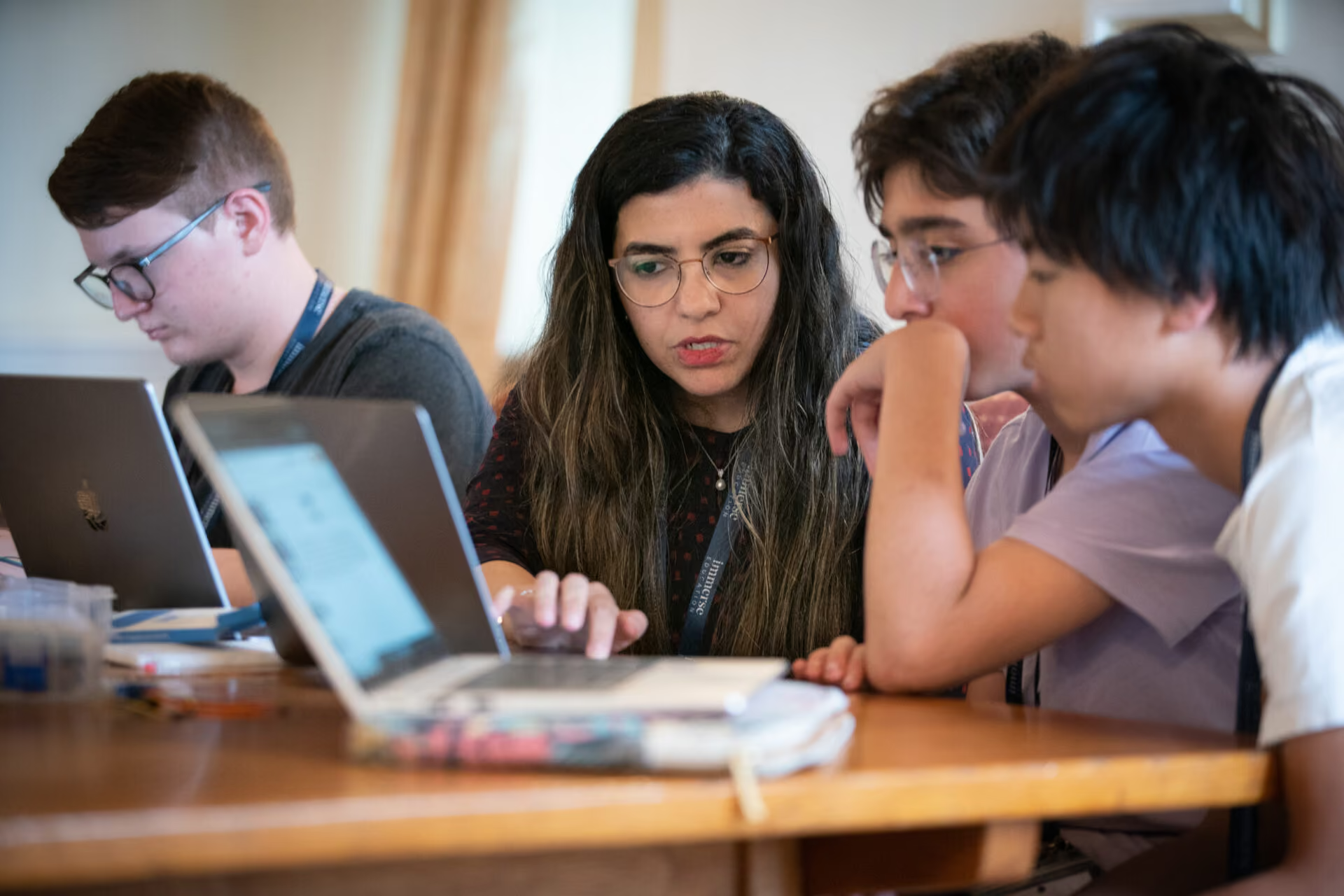
Through active learning and discussion, you get to master core biology skills such as cellular biology, natural selection, evolution, and other important biological processes. You also get to experience real-life challenges through research projects. This program will introduce you to university-style learning, such as group workshops, 1:1 tutoring, personal research projects, attending seminars by experts, going on day excursions, and, at the end, getting a certificate of completion.
Why it stands out: It blends foundational biology concepts with case studies and lab discussions helping you build strong conceptual understanding before college.
3. Marine Biology Adventure Camp
Location: Sea Turtle Camp, North Carolina
Cost/Stipend: USD 2980
Acceptance rate/cohort size: Each camp dates limited to 24 students
Dates: Multiple dates available, ranging from May to July
Application Deadline: Different dates depend on the session
Eligibility: Rising high school freshmen to recent high school graduates from all around the world
The Marine Biology Adventure Camp is one of the most hands-on and immersive biology summer camps for high school students, placing participants directly in active conservation environments. While centred on sea turtle preservation, the programme delivers intensive field training in marine biology and ocean conservation through daily animal care, coastal research, and real-world ecological work.
During the program, you get to take care of five types of sea turtles: loggerhead, green, Kemp’s ridley, leatherback, and the hawksbill sea turtles, work community service at the Karen Beasley Sea Turtle Rescue and Rehabilitation Center, explore coastal habitats, go on turtle patrols early in the morning and late at night, and other interesting work and life experience. The tuition camp includes lodging, all meals during the camp dates, admission to all activities, airport transfer, and Sea Turtle Camp merchandise. As a participant, you must reside in Topsail Island, and the tuition includes air-conditioned rooms, residential halls, and private beach access for camp activities.
Why it stands out: It offers hands-on fieldwork with sea turtles and marine ecosystems, helping you gain real ecological research experience in a coastal setting.
4. Dartmouth Precollege Online Summer Program
Location: Virtual
Cost/Stipend: USD 1895
Acceptance rate/cohort size: Not disclosed
Dates: Rolling admissions throughout the year
Application Deadline: Rolling admissions
Eligibility: Students worldwide aged 13 and up
Dartmouth University’s online Precollege Program is a program that runs on multiple dates throughout the year, where you can focus on one subject of learning, and Biology is one of them. In this course, you can explore deeper subjects in biology from personalised medicine to anti-aging research. This online program helps you develop critical thinking skills, gain insights into revolutionary biology techniques, analyze complex biological networks, and develop a strong foundation for a career in biology-related fields.
Throughout the online program, you will get mentorship from an expert mentor who will help, inspire, and brainstorm for your final Capstone project. The Capstone project is the conclusion of the summer program, where you can show your new skills in analyzing real-world challenges. Once the program is over, you will receive a Certificate of Completion.
Why it stands out: It provides flexible online courses across disciplines, helping you explore academic interests with Ivy League instruction from anywhere.
5. High School Bioinformatics Summer Camp
Location: Virtual
Cost/Stipend: Free
Acceptance rate/cohort size: Not disclosed
Dates: 6th July – 1st August
Application Deadline: Rolling admission until 31st March
Eligibility: Domestic and international high school students with a GPA above 3.0, at least one high school biology credit, and a strong internet connection
The High School Bioinformatics Summer Camp, hosted by the RNA Institute of the University of Albany, is an online summer camp for high school students who are interested in biology and life science. Just like its name, the focus of this camp is to train you in analyzing RNA sequencing data through daily live lectures and completing an independent project in neurodegenerative disease research. Attending this virtual summer camp is free of charge if you are a high school student with a biology credit and a GPA above 3.0. .
At the end of the program, you will be invited to an in-person closing program called RNA Day to present your final project as a research poster. When you have successfully finished the virtual summer school as well as delivered your poster, you will receive a Certificate of Completion and an Introduction to Bioinformatics Skills digital badge.
Why it stands out: It introduces you to computational biology and data analysis, helping you understand how biology and technology intersect in research.
6. Keller BLOOM Program
Location: East Boothbay, Maine
Cost/Stipend: Free
Acceptance rate/cohort size: Not disclosed
Dates: 17-22 May
Application Deadline: 17th April
Eligibility: Home-schooled, public, or private high school students in Maine
The Bigelow Laboratory for Ocean Sciences provides an annual summer program called BLOOM (Bigelow Laboratory Orders of Magnitude) every May for high school students residing in Maine. For a total of 5 days, the BLOOM program offers you the opportunity to work alongside professional researchers in the marine biology field. On the first day of the program, you will learn about data sampling and put this skill into practice on a research cruise in a local estuary.
The next three full days are spent working with scientists and state-of-the-art equipment. On the final day, you give a presentation about your research to other students and families. Not only working hard, but you also get the chance to network with researchers in the marine biology field through Marine Science Career Night, where you can learn more about careers in marine biology in undergraduate programs in marine biology in universities around Maine.
Why it stands out: It immerses you in ocean science and biotech research, helping you build practical lab skills while studying marine systems.
7. Broad Summer Scholars Program
Location: Cambridge, MA
Cost/Stipend: Free, and students will get a stipend of USD 3600
Acceptance rate/cohort size: Not disclosed
Dates: 29th June – 7th August
Application Deadline: 21st January
Eligibility: Rising seniors in high school, US citizens/permanent residents/non-US citizens with employment authorization, who attend high school in Massachusetts or are within commuting distance from the Broad Institute
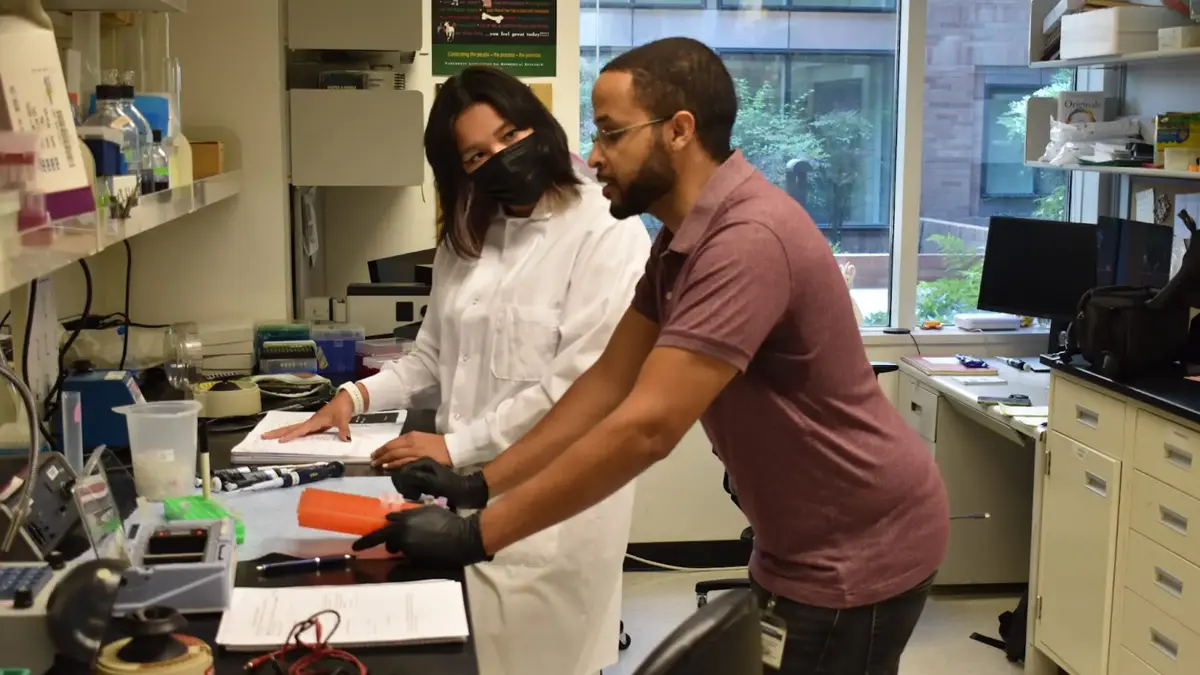
The Broad Summer Scholars Program (BSSP) is a special program for high school students with a strong interest in science. For six whole weeks, you will be paired with a faculty mentor (Broad scientists), and you have to conduct one original project from subjects like clinical biology, psychiatric disease, chemical biology, infectious disease, and more. The project should be translated into the form of a research poster that will be presented at the end of the summer program.
Not only learning and prepare research posters, but you will also get exposure with other participants through social and team-building activities. This program is free of charge, and you even get a stipend of USD 3600. To be eligible for the summer school, you need to be a rising senior in a high school in Massachusetts and be able to attend the whole 6-week duration of the program.
Why it stands out: You’ll join cutting-edge genomics projects, giving you access to computational tools, lab technologies, and mentorship from world-class scientists.
8. Simons Summer Research
Location: Stony Brook, NY
Cost/Stipend: No tuition fees. USD 2450 fee for residential program (room and board). There will be a stipend at the end of the program.
Acceptance rate/cohort size: Not disclosed
Dates: 29th June – 7th August
Application Deadline: 5th February
Eligibility: Junior high school students who are applying, US citizens and/or permanent residents, must be 16 years old by the start of the program
The Simons Summer Research program is a program by Stony Brook University where you get matched with a faculty mentor at Stony Brook. These mentors will be based on your chosen mentors when you are admitted into the program. You will join a research group, take part in a real-life project, attend lectures, and participate in special workshops as part of your program.
As a fellow, you get to choose to live on campus with other students or to commute to campus. At the end of the research program, you will have to present your research through a research poster, and there will be a stipend.
Why it stands out: Its labs are connected to national research centers, and you’ll contribute to cutting-edge computational and applied math projects.
9. Clark Scholars Program
Location: Texas
Cost/Stipend: Free (there’s a USD 25 application fee), and upon completion, each student will receive a USD 750 stipend
Acceptance rate/cohort size: Limited to 12 students
Dates: June 21st – August 6th
Application Deadline: February 16th
Eligibility: Must be 17 years of age by the program start date, and must be a U.S. citizen or a permanent resident
The Anson L. Clark Scholars Program is a highly selective research-based career readiness program for high school students, with a history spanning over three decades. You’ll conduct intensive research across a wide range of disciplines, including mathematics, engineering, humanities, and fine arts. Hosted at Texas Tech University, the seven-week program admits only twelve students each year, allowing for close faculty mentorship and focused academic work.
You’ll live on campus and receive meals, accommodation, and weekend activities at no cost. While there is a non-refundable application fee of USD 25, the program itself is fully funded. Upon completion, you’ll also receive a USD 750 stipend in recognition of your research contributions.
Why it stands out: It places you in mentored STEM research, helping you explore original investigation and academic inquiry at a research university.
10. Hutton Junior Fisheries Biology Program
Location: All 50 states in the USA, Canada, Mexico, Puerto Rico
Cost/Stipend: Students get to receive a USD 3500 stipend once the program ends
Acceptance rate/cohort size: Not disclosed
Dates: June – August
Application Deadline: 25th January
Eligibility: Current juniors and seniors from around the globe in high school
Juniors and seniors in high school who are interested in pursuing fisheries science in college or as a career path can consider taking part in the Hutton Junior Fisheries Biology Program in the summer. Fisheries science is the study of freshwater, marine, and aquatic systems that involve humans, and fisheries scientists analyze the ecological health and assess fish and aquatic population quality to determine the ecological health of an area.
Each one of you will be matched with a mentor, and you will take part in activities such as stream sampling, fish tagging, ecosystem restoration, data analysis, public education, and analyzing fish in a laboratory to determine age and growth. This program is really a gate-opener for you if you are interested in fisheries science, because they have connections with plenty of internships and research opportunities in environmental agencies across the country.
Why it stands out: It immerses you in fisheries biology and ecological fieldwork, giving real-world exposure to conservation, marine biology, and environmental research.
11. Rockefeller University Summer Science Research Program
Location: Rockefeller University
Cost/Stipend: Free
Acceptance rate/cohort size: 32 students, divided into 4 research teams
Dates: 22th June – 6th August
Application Deadline: 2nd January
Eligibility: Current high school juniors or seniors worldwide, and at least 16 years old at the start of the program
The Summer Science Research Program (SSRP) is a team-based mentorship focused on laboratory research for high school students. During the summer, you will be teamed up and guided by trainees from three institutions: Rockefeller, MSK, and WCMC. Each team will have its own space in the dedicated RockEDU teaching laboratories.
The topics of each team will be different from one another, but the general flow has always been the same: Week 1 is filled with introduction to the team and to their research topic, Week 2 is the week where scholars will choose one research question to explore, Week 3-5 is the research week, and ending with week 6 and 7 to prepare and present their research in a form of research poster. Not only going to labs, but you will also get the chance to mingle and network with your peers through elective courses, guest lectures, workshops, and social events.
Why it stands out: It focuses on independent research, mentorship from eminent researchers, and a final poster presentation, providing you with valuable experience for STEM applications.
12. Future Physicians America (FPA)
Location: University of Central Florida
Cost/Stipend: Different costs for different programs, ranging from USD 1700 to USD 2900
Acceptance rate/cohort size: Not disclosed
Dates: Different class dates ranging from June to July
Application Deadline: Rolling admissions
Eligibility: International and out-of-state high school students in grades 9 to 12
The FPA Summer Camps are intensive, campus-based medical programs held at the University of Central Florida for high school students interested in health and biomedical fields. The program offers a flexible structure, allowing you to enroll in individual one-week clinical courses or combine multiple courses for a more comprehensive experience. Available tracks include cardiology, trauma and surgical skills, neurology, psychiatry, dermatology and plastic surgery, medical writing, and clinical research.
The camp emphasizes hands-on simulations, clinical problem-solving, and exposure to real medical tools and techniques. Some courses lead to professional certifications or the opportunity to publish research in peer-reviewed journals. The program is designed for you who are seeking early insight into medical education and research at the undergraduate and professional levels.
Why it stands out: It offers clinical observation and medical exposure experiences, helping you clarify your interest in healthcare careers.
13. Jackson Laboratory Summer Student Program
Location: Bar Harbor, Maine, and Farmington, Connecticut
Cost/Stipend: Free, and students will geta stipend of USD 7000 (including room, board, tuition, and travel costs)
Acceptance rate/cohort size: Not disclosed
Dates: Bar Harbor: 30th May – 7th August, Farmington: 30th May – 10th August
Application Deadline: 26th January
Eligibility: Graduating high school seniors worldwide (Bar Harbor program only) must be 18 years old by the start of the program
The JAX Summer Student Program is a biology program especially for graduating high school seniors to explore more about how genetics and genomics shape biological systems, basically for students interested in genetics and genomes. Throughout 10 weeks, you will build essential skills needed for a career in genetics and biology, such as genetic testing, data visualization, science communication, and peer review.
There will also be sessions attended by JAX scientists and professionals to show you about life and career in this industry. At the end of the program, you will present your work to JAX researchers and students’ family members. The program is offered in two locations: the Jackson Laboratory in Bar Harbor, Maine, and the Jackson Laboratory for Genomic Medicine at Farmington, Connecticut.
Why it stands out: You’ll be working alongside scientists whose research shapes national standards and fuels international collaborations, and gain hands-on experience with techniques ordinarily reserved for undergraduates.
14. Stanford SIMR
Location: Stanford University
Cost/Stipend: Free
Acceptance rate/cohort size: Approximately 50 students
Dates: 8th June – 30th July
Application Deadline: 21st January
Eligibility: High school students in junior or senior year, must be 16 years old or older at the start date of the program, must attend high school in the USA
Stanford SIMR is among the most intensive and research-focused biology summer camps for high school students, designed for students seriously considering advanced study in biology or medicine. Over eight demanding weeks, participants conduct original laboratory research under one-to-one mentorship, developing the analytical skills and academic discipline expected in competitive university research environments. You can choose one out of eight areas of research: Immunology, Neurobiology, Cancer Biology, Bioengineering, Stem Cell and Regenerative Medicine, Cardiovascular Biology, Bioinformatics, or Genetics and Genomics.
Whatever areas of research you choose, you will get to immerse yourself in your field of choice through hands-on research, interactive lectures, lab work, and college preparation under direct supervision from their one-on-one mentors. If you’re a junior or senior year student, you can enroll in this program entirely free of charge, but there’s a limited number of quotas. The SIMR program ends with a presentation session where you will present your findings to family, teachers, and Stanford community members.
Why it stands out: Its deep connections to Silicon Valley make it easier to transition to interdisciplinary courses such as biomedical entrepreneurship or AI-driven health research.
15. Carnegie Mellon University Pre-College Computational Biology Program
Location: Pittsburgh, PA
Cost/Stipend: USD 10750 (Residential), USD 8041 (Commuter), with a USD 50 application fee and USD 800 enrollment deposit
Acceptance rate/cohort size: Not disclosed
Dates: 20th June – 18th July
Application Deadline: 1st February (early deadline) and 1st March (final deadline)
Eligibility: Current sophomore or junior by the time of application, be at least 16 years old by the program start date, and have an average GPA of 3.0 out of 4.0. International students are welcome to apply
Carnegie Mellon University has a Pre-College Summer Program that is dedicated to Computational Biology. Being an interdisciplinary subject, Computational Biology mixes two things: Computer Science and Biology. If you’re good at math and you love science, this field is perfect for you. For four weeks, you get to immerse yourself in cutting-edge laboratory techniques that bring biological data to life, tackle real research problems by doing the same work as a real computational biologist in real life.
Once admitted, as a preparation course, you have to enroll in a foundational computing lesson to ensure you are ready to dive into computational biology. Each day is filled with hackathons where you get to work in teams to find solutions to computational questions, continued with lab work where you create datasets you will solve with your own code.
Why it stands out: It introduces you to the intersection of computing and life sciences helping you build analytical and bioinformatics skills early.
Join the Immerse Education 2027 Essay Competition
Follow the instructions to write and submit your best essay for a chance to be awarded a 100% scholarship.
Prepare for College-Level Biology
Preparing for college-level biology is not only about mastering content, but about learning how scientists think, question evidence, and approach complex problems with curiosity and rigour.
Summer programmes place you in active learning environments where biology becomes something you practise, not just memorise. You learn to observe patterns, interpret data, and communicate findings with clarity.
The right biology summer camps for high school students expose you to advanced topics, independent inquiry, and academic expectations that mirror university study, helping you make informed decisions about future pathways.
If you want to plan strategically for biology degrees and competitive applications, explore our University Preparation blogs for expert guidance on readiness, subject planning, and next academic steps.






Unlock Inspiring Opportunities with the Immerse Education Newsletter
Join our newsletter to stay ahead with exclusive updates, exciting programme highlights, and expert insights from the world of immersive education.
Learn how Immerse can transform your life
An in-depth overview of our university and career preparation programmes
Get a glimpse into the life of an Immerse participant
Find the right programme for you with sample timetables, location showcases, and more