15 College Programs for High School Students in Boston
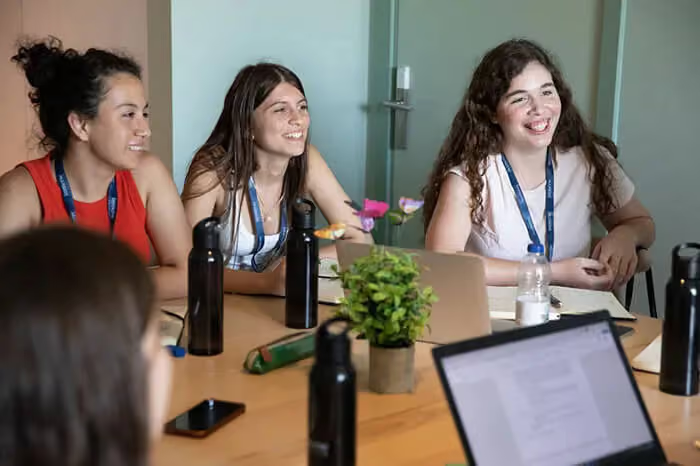
When you’re in high school, summer often feels like a break from the rush of classes, exams, and deadlines. But it can also be a chance to step into something new, something that teaches you what the regular school year doesn’t always offer. The right college programs for high school students in Boston let you explore subjects you’re curious about, build confidence in new environments, and get an early sense of what college life might be like.
Imagine spending a few weeks on a university campus in Boston. Envision walking through picturesque neighborhoods between classes, and meeting motivated peers from across the country who share your interests. Boston’s universities and organizations offer programs that blend academic challenge with life in one of the world’s most iconic learning hubs.
And even if you already live near Boston, joining a summer program can shift your perspective. You’ll see familiar streets in a new way, meet students with different backgrounds and goals, and get a feel for the independence and rhythm of college living long before you arrive on campus as a freshman.
What kinds of summer programs can you find in Boston?
Some programs can seem like pricey trips that don’t offer much academic depth. That’s why thoughtful research matters. The key is knowing which programs provide real structure, meaningful challenge, and genuine educational value.
Across Boston, universities and educational organizations offer STEM intensives, design studios, research experiences, writing workshops, architecture labs, business and leadership courses. Whether you want to explore a new subject or deepen an existing passion, there’s a program that fits.
You’ll learn from faculty and professionals, work on real projects, and get a clear sense of the expectations that come with studying and living in a major city.
To help you navigate your options, we’ve curated a list of 15 Summer Programs for High School Students in Boston. They’ve been selected for their academic rigor, immersive campus environments, and the chance they offer to experience college life up close.


15 College Programs For High School Students in Boston
1. Program in Mathematics for Young Scientists (PROMYS)
Location: Boston University, Boston, MA
Cost/Stipend: Up to $7,000; free for domestic students whose family income is less than $80,000 per annum
Acceptance rate/cohort size: 80 high school students
Dates: June 28th – August 8th
Application Deadline: Early March
Eligibility: High school students worldwide who have completed 9th grade and are between the ages of 14 and 18
If you are someone who gets enthusiastic when solving mathematical problems, this six-week residential option stands out among the various college programs for high school students in Boston focused on mathematics. Each session starts with one and a half hours of Number Theory Lecture, following which you will be given sums to work on for that day.
Before solving that, your class will discuss the solution to the previous day’s questionnaire. Additionally, two to three times a week, you will attend the Advanced Seminars session, where you will study topics such as Algebra, Primes and Zeta Functions, Quivers and their Classifications, and more.
Why it stands out: It’s a highly selective program that’ll boost your profile and offer exposure to the pace and expectations of university STEM education.
2. Drawn to Boston’s Academic Energy? Discover Our New York Summer School

Location: Barnard College, Columbia University, Upper Manhattan, New York, NY
Cost/Stipend: Varies; summer school scholarship available through our bursary programme
Acceptance rate/cohort size: 7 students on average per class
Dates: 2 weeks during the summer
Application Deadline: Multiple summer cohorts with rolling admissions.
Eligibility: High school students around the world aged 15 to 18
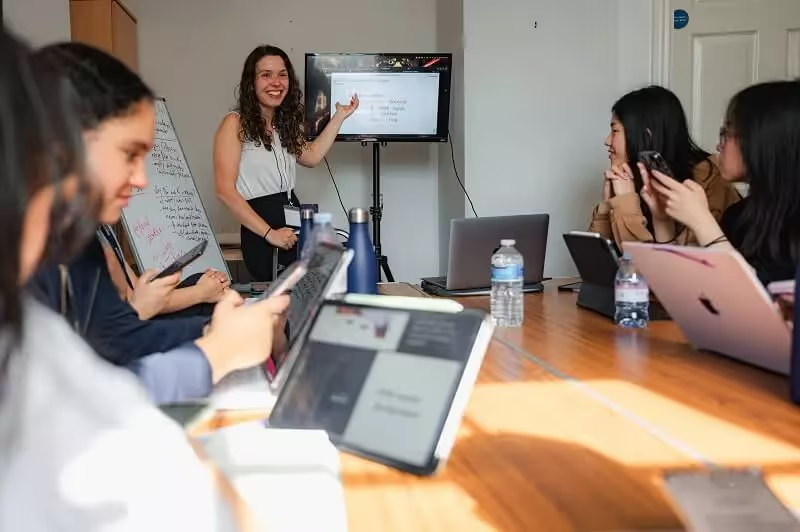
If you’re drawn to Boston for its universities and academic atmosphere, our New York Summer School is a strong alternative. Based at Barnard College, Columbia University, it offers you a similarly rigorous environment, with small-group workshops, expert-led sessions, and close mentor support.
You can explore subjects such as medicine, engineering, artificial intelligence, architecture and design, business management, media and journalism, banking and finance, and fashion and design. Set in one of the world’s most connected cities, the programme also gives you the chance to see how your academic interests connect with culture, industry, and future careers.
Why it stands out: If Boston appeals to you for its academic energy, New York offers you a similarly rigorous experience with broader exposure to global industries and real-world opportunity.
3. Research in Science & Engineering (RISE) Practicum Track
Location: Boston University, Boston, MA
Cost/Stipend: a non-refundable application fee of $60 plus $6,185 for commuting participants and $9,785 for residing participants based on the previous year; limited financial aid available
Acceptance rate/cohort size: 190 students attend the RISE Practicum and Internship tracks combined
Dates: June 29th – August 7th (students who will stay on campus need to come one day early)
Application Deadline: Opens December 15th
Eligibility: Rising 12th graders who are US citizens or permanent residents
This is a six-week program where you contribute to a group research project at Boston University. As a participant of the Practicum track, you will begin each session by attending a two-hour lecture and then spend four hours working on the group research project. The research program is more suitable if you work best in a structured environment.
Since the research topics vary each year, make sure to check what subject you will be working on before applying. The 2026 topics are Computational Neurobiology and Data Science. You will also attend academic and professional development sessions once a week.
Why it stands out: You’ll study the larger research process, giving you an idea of how research works at universities and in actual life.
4. HMS MEDscienceClinical
Location: Harvard Medical, Boston, MA
Cost/Stipend: $2800 for the five-day program and $2250 for the four-day program; limited scholarships available for students from Boston
Acceptance rate/cohort size: Competitive
Dates: Multiple sessions in June, July, and August
Application Deadline: January 1st – March 15th
Eligibility: 9th to 12th graders around the world
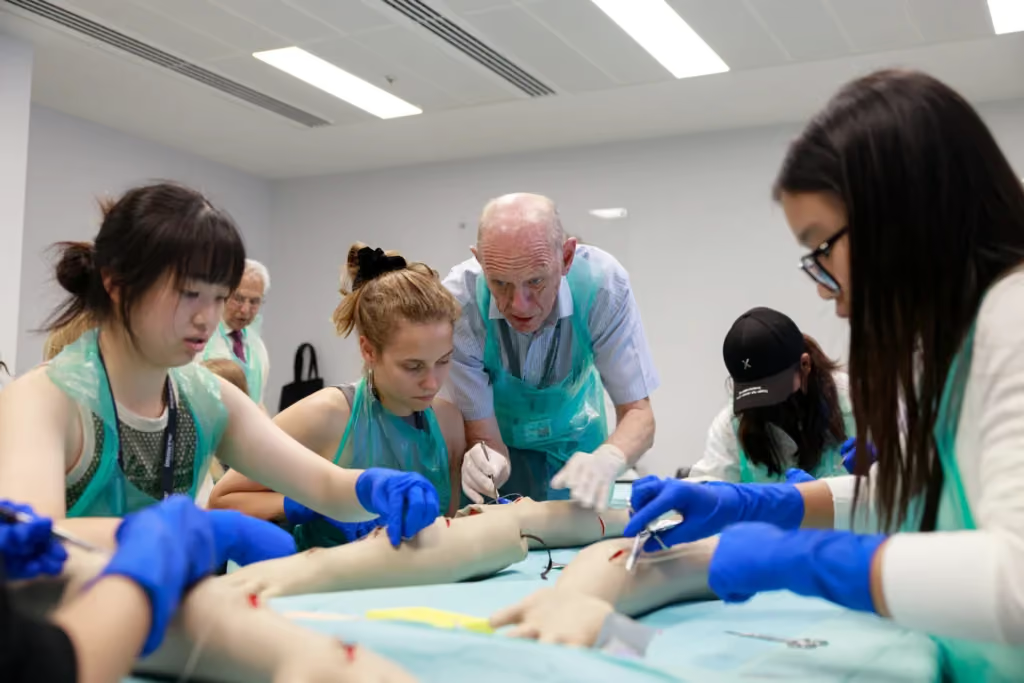
Offered by Harvard Medical School, this programme is one of the most immersive college programs for high school students in Boston interested in medicine and clinical practice. By doing these hands-on exercises, you will learn how to examine, diagnose, and treat patients. Some of the other skills you will learn in this program are interpreting vital signs, suturing wounds, inserting IVs, and intubation.
You can either choose the four-day program or the five-day one, where you can additionally receive trauma care training and certification in Stop the Bleed and American Red Cross CPR/AED certification.
Why it stands out: You’ll work through realistic medical simulations and clinical case challenges giving you a clearer sense of what patient-centered healthcare actually looks like.
5. The Story Lab: Crafting Multimedia Journalism
Location: Northeastern University, Boston, MA
Cost/Stipend: $7,095 (need-based scholarships available)
Acceptance rate/cohort size: Not publicly available
Dates: July 26th – August 7th
Application Deadline: Early December – February 27th (regular deadline)
Eligibility: Rising 11th or 12th graders worldwide
Part of Northeastern University’s Accelerate Precollege offering, this is one of the more creative college programs for high school students in Boston, focused on multimedia journalism. You will learn how to produce a captivating news story while focusing on essential skills such as writing, video, photography, podcasts, and data visualization.
Your schedule will also include site visits to the Boston Globe, TV station WCVB, and GBH News so that you can observe how everything works in a newsroom setting. At the end of the two-week residential program, you would have published an online magazine, showcasing all the skills you have learned, along with other participants.
Why it stands out: You’ll be able to get an understanding of how journalism operates in academia and the way it works in actual newsrooms, putting you in a better position to make career decisions.
6. Young Scholars Program (YSP)
Location: Northeastern University, Boston, MA
Cost/Stipend: Free
Acceptance rate/cohort size: Approximately 32
Dates: June 22nd – July 30th
Application Deadline: December 15th – March 2nd
Eligibility: Rising 12th graders living and attending a school in Massachusetts; must be within a commuting distance from NEU and be a US citizen or a permanent resident
The Young Scholars Program gives you hands-on research experience in science and engineering. As a participant, you will work alongside professors at Northeastern University, gaining the skills and experience required to work and complete experiments in laboratories. You will attend a seminar series where you learn and discover the career prospects within the different engineering fields.
There are also other talks that touch on topics like superconductivity, lasers, microwave materials, biotechnology, chemical analysis, and robotics. Other facets of the program include education and career counseling, going on field trips, and the chance to experience college life.
Why it stands out: Its R1 status would translate into you working in cutting-edge labs with access to real datasets, ongoing experiments, and graduate-level mentorship that is not typically available to high school students.
7. Bunker Hill Community College Dual Enrollment Program
Location: Bunker Hill Community College, Boston, MA
Cost/Stipend: Free for one course per semester; students who want to enroll in more than one course per semester need to pay for tuition and books, which vary by course
Acceptance rate/cohort size: Varies by course
Dates: Courses begin on January 26th
Application Deadline: January 16th
Eligibility: High school students in Boston
This Dual Enrollment Program allows you to attend college-level classes at BHCC while earning college credits and high school credits. By enrolling in this program, you not only earn transferable college credits but also study a course that may not be available at your school.
It also allows you to gain college experience and discover if a certain subject or major is the right choice for you to pursue as an undergraduate in the future. It is recommended that you discuss your choice of course with the Dual Enrollment advisor at BHCC before enrolling.
Why it stands out: It gives you the chance to earn college credit early while exploring strong introductory courses that can strengthen future university applications.
8. Academic Immersion (AIM)
Location: Boston University, Boston, MA
Cost/Stipend: $5,708.25 for commuting participants and $7,245 for residing participants, based on the previous year
Acceptance rate/cohort size: Approximately 50 students per course
Dates: Session 1: June 28th – July 17th (residential) and June 29th – July 17th (commuter). Session 2: July 19th – August 7th (residential) and July 20th – August 7th (commuter)
Application Deadline: Opens on December 15th
Eligibility: Rising 11th and 12th-graders around the world
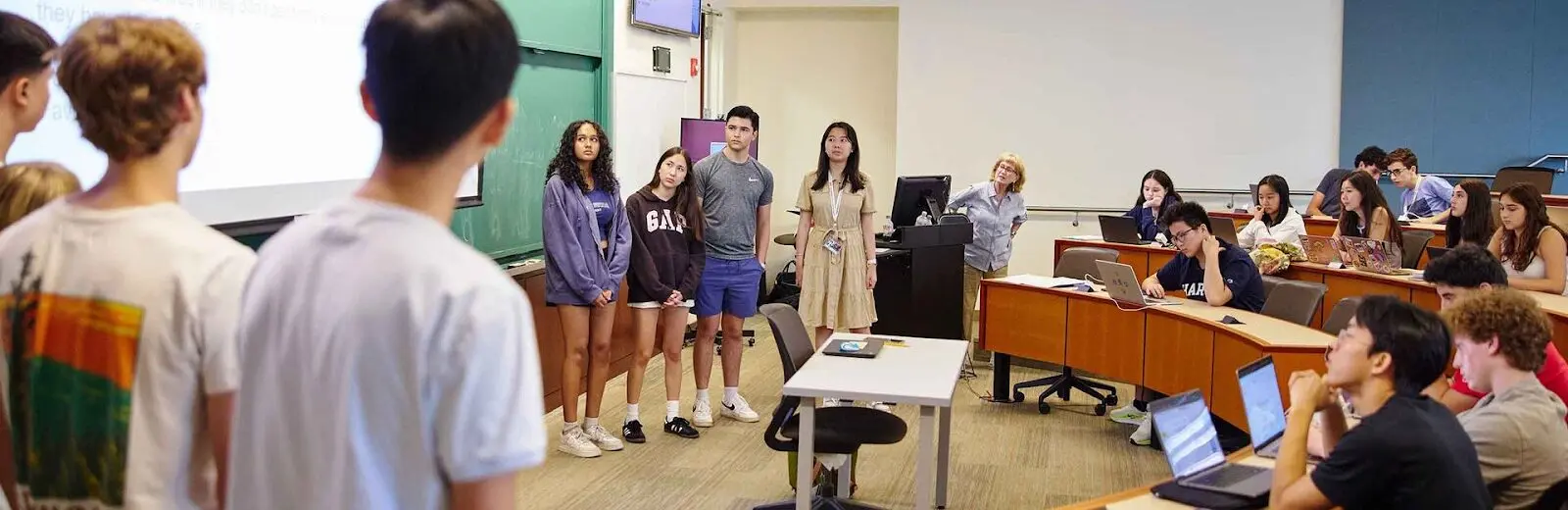
Through this Academic Immersion program, you will be able to dive into a particular subject and study it in depth for three weeks. AIM offers different courses to choose from, including Introduction to Experimental Psychology, Introduction to Medicine, Creative Writing, and Business.
As the course list is subject to change every year, make sure to check out the exact course offering in the year you apply. No matter which course you choose, your curriculum will combine theory and practicals. Your schedule will also include working on group projects, going on field trips, and attending guest lectures.
Why it stands out: It focuses on one subject in depth, letting you explore a potential major through university-level projects and instruction.
9. StatStart
Location: Harvard T.H. Chan School of Public Health, Boston, MA
Cost/Stipend: Free, plus the program will give you a CharlieCard for commuting to the campus
Acceptance rate/cohort size: Approximately 8
Dates: July 1st – July 25th
Application Deadline: May 24th
Eligibility: 9th to 12th graders, but preference is given to rising 11th and 12th graders; should live within commuting distance and have basic algebra knowledge
Organized by the Harvard T.H. Chan School of Public Health, the StatStart is a one-month program focused on data science and computing. As a participant, you will attend lectures and complete lab assignments through which you will learn R programming and introductory statistics.
You will also work on a group research project and get help with college applications, and receive career counseling. By the end of the program, you will improve your skills in statistical programming, computational thinking, and problem-solving.
Why it stands out: You’ll get guided exposure to statistics and biomedical data analysis, allowing you to see how quantitative methods drive decision-making in public health and medicine.
10. Data Science in Action
Location: Harvard T.H. Chan School of Public Health, Boston, MA
Cost/Stipend: Free with stipends provided for students from low-income households
Acceptance rate/cohort size: Not publicly available
Dates: June 27th – July 10th (tentatively)
Application Deadline: May 1st
Eligibility: Rising 9th to 12th graders with basic knowledge of Algebra
In this two-week day camp, you will be introduced to important concepts in data science and machine learning. You will also learn Python programming for building and training a neural network. Using what you learned, you and your teammates will construct and code a self-driving toy car using a laptop, a Raspberry Pi, and other materials provided by the university.
Anytime you get stuck in your project, you can ask for help from teaching assistants and watch YouTube videos. Moreover, you can expect to hear from experts in the field during the lunch hours.
Why it stands out: It introduces you to real data workflows—from cleaning to modeling—so you can understand how data science is applied in academic labs and industry settings.
11. Exploring Modern Physics
Location: Northeastern University, Boston, MA
Cost/Stipend: $7,095; need-based financial aid available
Acceptance rate/cohort size: Not publicly available
Dates: July 26th – August 7th
Application Deadline: Early December – February 27th (regular deadline)
Eligibility: Rising 11th and 12th-graders around the world
The Exploring Modern Physics program, which is part of NEU’s Accelerate Pre-College programs, will teach basic concepts in modern physics through lectures, guest seminars, and laboratory experiments.
You will particularly study special relativity, quantum mechanics, radioactivity, particle physics, nuclear energy, and cosmology. One of the standout components of this physics program is the opportunity to examine cosmic rays using a cloud chamber and measure them with an electronic muon counter.
Why it stands out: You’ll examine key physics ideas through experiments and problem-solving, helping you experience how scientific thinking works beyond the high school level.
12. Summer Academy – Boston
Location: Boston Architectural College, Boston, MA
Cost/Stipend: $2,000, and the early bird discount price is $1,800 until March 1 if you want to earn credits; $1,800, and the early price is $1,600 until March 1 if you don’t want college credits; you can also earn a $2000 scholarship toward BAC’s undergraduate programs.
Acceptance rate/cohort size: 8-10 students in a studio
Dates: July 6th – July 31st; this is a half-day program meeting in the afternoons (1:00-4:30 PM EDT)
Application Deadline: June 22nd
Eligibility: Students who are 14 years and older
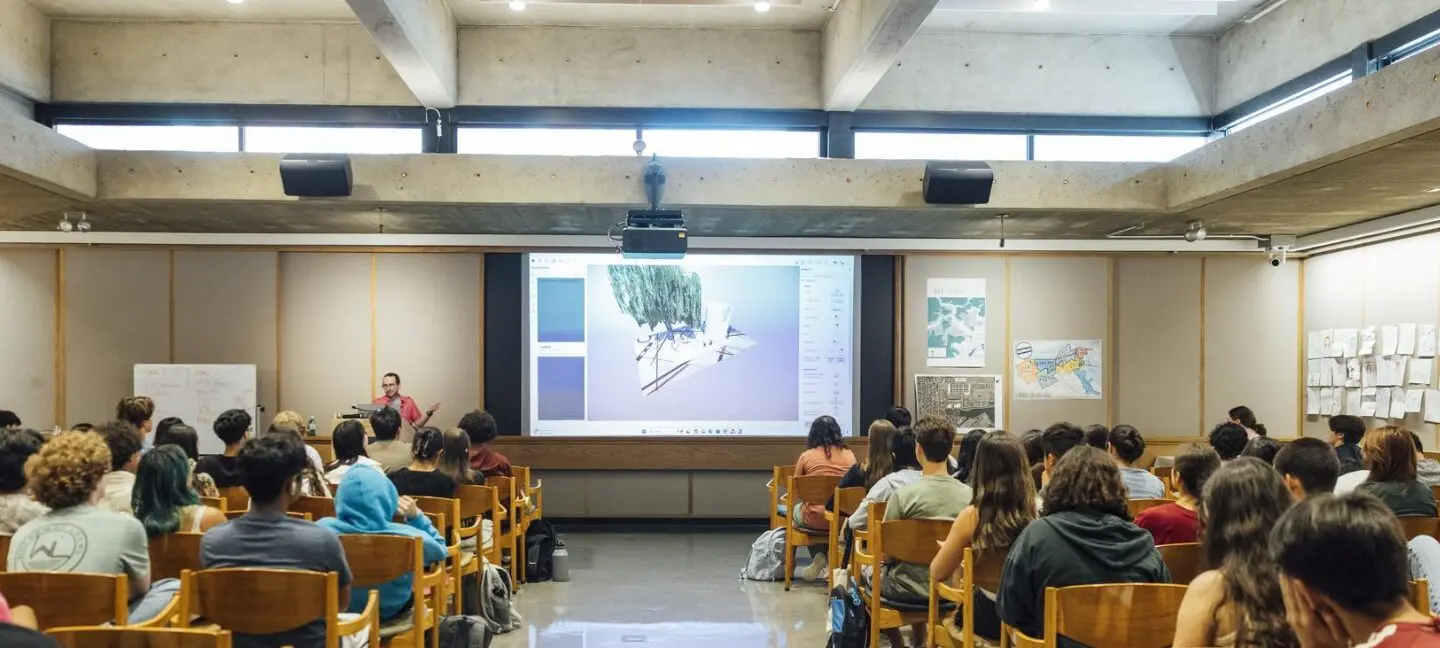
The Summer Academy is for high school students who would like to explore architecture, interior design, landscape architecture, and other related topics. During your participation in the program, you will be working in studio labs, thus gaining hands-on experience in the field.
You will also gain other skills like ideation, sketching, drawing, digital design, digital fabrication, model making, and presentation techniques. You can also earn credits by completing the program. As a beginner, you can choose the Exploration Track, but if you already have design experience, you can opt for the Investigation Track.
Why it stands out: It introduces you to architecture and design through hands-on studio work, giving you early exposure to the creative process used in design professions.
13. Urban Design and Planning Studio
Location: Boston Architectural College, Boston, MA
Cost/Stipend: $4,000 if you want to earn credits; $3,600 if you don’t want college credits
Acceptance rate/cohort size: 8-10 students in a studio
Dates: June 29th – August 7th; attendance is compulsory in week 1
Application Deadline: June 9th
Eligibility: Rising 9th to 12th graders who are 14 years and older
This is another program offered by Boston Architectural College with a specific focus on urban design and planning. You will learn how to come up with a design that adheres to factors like climate change, social justice, and human health. You will also develop design skills with which you will sketch neighborhoods and cities.
Other aspects of the program include a deep dive into select topics, guest talks, field trips, and more engaging activities that help you understand the field better. Note, as a participant in the Urban Design and Planning Studio program, you should attend the Summer Academy program.
Why it stands out: It lets you work on design projects connected to real urban issues giving you practical insight into how cities are shaped by planners and architects.
14. Early College program at UMass Boston
Location: Partnering with high schools in Boston and UMass Boston, Boston, MA
Cost/Stipend: Free
Acceptance rate/cohort size: Approximately 22 students in a class
Dates: All year round
Application Deadline: Discuss with your school counselor or the UMass Boston Early College staff associated with your high school
Eligibility: High school students who attend partner schools (see list here)
Aimed at students who are typically underrepresented in higher education, the Early College program allows you to attend college-level classes. You can choose either the Healthcare/STEM or Education tracks. In addition to earning college credits, this program also lets you explore career opportunities and find the one that suits your interests the most.
When enrolled in the program, university professors will teach you at your school in your sophomore year. Then, in your junior and senior years, you can go to the campus for your classes, thus seeking the college experience too.
Why it stands out: You can take university classes while still in high school giving you a head start on earning credits and adjusting to college-level expectations.
15. Tufts Mini Med School
Location: Tufts University, Medford and Boston, MA
Cost/Stipend: $3,525–$6,750 depending on session and housing; limited need-based scholarships available
Acceptance rate/cohort size: Competitive; exact cohort size not listed
Dates: June 23-27, July 7-18, and July 21-25 (commuter); July 6-18 and July 20-27 (residential)
Application Deadline: May 1st
Eligibility: Rising 11th-12th graders or recent high school graduates from around the world; one year of high school biology required; must be 16 years old by program start date
Catered towards students who are interested in pursuing medical education and health professions, this mini med school program allows you to attend lectures taught by the university’s medical faculty. You will also participate in anatomy dissections, suturing, vital sign monitoring, and other medical activities.
You will also be able to access the Tufts Clinical Simulation Center, case studies, and microbiology labs while enrolled in the program. Moreover, your curriculum will consist of a capstone project, which will be on a health topic or clinical skill.
Why it stands out: You’ll learn how medical research, clinical reasoning, and public health intersect preparing you to make more informed decisions about pursuing medicine.
Join the Immerse Education 2027 Essay Competition
Follow the instructions to write and submit your best essay for a chance to be awarded a 100% scholarship.
From High School to University
Exploring college-level learning early helps you understand what university study really demands, both academically and personally.
The right summer experience builds confidence, independence, and clarity, showing you how learning feels beyond the school timetable.
As this list shows, the strongest college programs for high school students in Boston combine academic depth, campus immersion, and exposure to real expectations.
If you’re thinking about what comes next, our University Preparation blogs offer thoughtful guidance to help you reflect, plan ahead, and take your next steps with confidence.







Unlock Inspiring Opportunities with the Immerse Education Newsletter
Join our newsletter to stay ahead with exclusive updates, exciting programme highlights, and expert insights from the world of immersive education.
Learn how Immerse can transform your life
An in-depth overview of our university and career preparation programmes
Get a glimpse into the life of an Immerse participant
Find the right programme for you with sample timetables, location showcases, and more