15 Math Research Programs for High School Students

In high school, you often think of time outside the classroom as a chance to rest, reset, and step away from assignments. However, when you choose to engage in meaningful academic work outside the regular classroom, you begin to see learning as something active rather than routine. Math research programs for high school students give you the space to investigate questions instead of simply solving problems from a textbook.
Imagine working through an unsolved puzzle, testing patterns, building proofs, or using computation to understand real-world systems. You might collaborate with mentors who treat you like a young researcher rather than a student completing homework. These programs move beyond formulas and memorization, allowing you to experience how mathematics is created, debated, and applied.
What kinds of math research programs for high school students are there?
Searching for the right opportunity can feel overwhelming because programs differ widely in depth, structure, and expectations. Some emphasize guided exploration with strong mentorship, while others simulate independent research environments where you develop and present original work. Without careful selection, you might end up in a course that reviews familiar material instead of challenging your thinking.
You will find programs centered on pure mathematics, applied modeling, data science, cryptography, or interdisciplinary problem solving. Certain experiences take place on university campuses, while others run online with international collaboration. Many include seminars, small research groups, and final presentations that mirror real academic practice. Through these formats, you learn not only mathematical content but also how to ask questions, structure arguments, and communicate discoveries.
No matter which format you choose, meaningful engagement is essential. To help you navigate the options, the following list highlights 15 math research programs for high school students. These programs are designed to provide rigorous learning, strong mentorship, and valuable preparation for future study.
For more options, you can consider online math programs for high school students or online math research programs.




15 Math Research Programs for High School Students
1. Stanford University Mathematics Camp (SUMaC)
Location: Stanford University, CA; virtual options also available
Cost/Stipend: Residential tuition $8,950; online tuition $3,750
Acceptance rate/cohort size: Highly competitive; residential cohort limited to 40 students, online cohort to 64 students
Dates: June 21st – July 17th (residential); June 15th – July 3rd & July 6th – July 24th (online)
Application Deadline: February 2nd
Eligibility: High school students entering grades 10 and 11 at the time of application; international students may apply for both residential and online options
SUMaC invites you to engage with deep and stimulating mathematics alongside peers who share your passion for logical thinking, and it’s widely recognised as one of the strongest math research programs for high school students for advanced, research-informed study. You will participate in advanced lectures, collaborative problem solving, and guided mathematical exploration that go well beyond typical high school coursework.
Instruction centers on two rigorous tracks covering areas like abstract algebra, number theory, and other research-informed fields. The environment encourages active discussion, regular problem sets, and a culminating project that helps reinforce what you’ve learned.
Why it stands out: SUMaC blends collegiate-level mathematics with a global community of peers and gives you a taste of research-oriented study.
2. Immerse Education’s Mathematics Summer School

Location: Oxford, Cambridge, Boston, Tokyo, Singapore, and London; online options available
Cost/Stipend: Varies; summer school scholarship available through our bursary programme
Acceptance rate/cohort size: Selective with small class sizes (an average of 7 participants per class)
Dates: 2 weeks during the summer
Application Deadline: Multiple summer cohorts with rolling admissions
Eligibility: Open to high school students worldwide aged 15-18; age criteria for the online research program is 13-18 years; international applicants are welcome
In the Immerse Education Mathematics Summer School, you will dive into an in-depth study of advanced mathematical ideas through structured lessons, problem sessions, and collaborative projects that build on what you already know from school.
The curriculum covers foundational and higher-level topics, including algebra, calculus, statistics, and logical reasoning. Small class sizes give room for personalised feedback and discussion. By the end of the program, you will complete a personal project and receive written feedback and a certificate of completion. You can find more details about the application here.
Why it stands out: You will explore university-style mathematics and master core concepts in small interactive sessions with tailored guidance from experienced instructors.
3. Summer Academy for Math and Science (SAMS)
Location: Carnegie Mellon University, PA
Cost/Stipend: Fully funded
Acceptance rate/cohort size: Highly competitive
Dates: June 20th – August 1st
Application Deadline: February 1st
Eligibility: Open to U.S. citizens or permanent residents; you must be in your 11th and 12th grade years in high school during the summer of the program year, aged 16+ by the program start
SAMS invites you to immerse yourself in an intensive residential experience where you join peers in advanced math, science, and research activities guided by Carnegie Mellon faculty and mentors. Before the on-campus portion begins, you engage in a virtual skill-building jumpstart that prepares you for the academic depth of the six-week program.
Throughout the summer, you attend full-day courses, develop a STEM research project with support from instructors, and take part in seminars that sharpen both academic competence and collaborative thinking. In addition to rigorous coursework, SAMS provides workshops on college planning, writing, and career exploration that help prepare you for life after high school.
Why it stands out: It offers a research-oriented pre-college experience at a top university for students committed to STEM fields.
4. MathILy
Location: Bryn Mawr College, PA
Cost/Stipend: Program fee approximately $6,175
Acceptance rate/cohort size: About 45 students participate each summer
Dates: June 28th – August 1st
Application Deadline: Typically around early spring
Eligibility: Open to high school students with strong mathematics preparation; students who are not in high school are welcome to apply, but preference will be given to high school students; international applicants may apply
MathILy offers you an intensive five-week residential experience that centers on inquiry-based learning and deep engagement with advanced mathematics. You will spend most days in small, interactive classes where instructors provide frameworks, and you formulate definitions, conjectures, and proofs in collaboration with your peers.
The program emphasizes both rigorous mathematical thinking and creative exploration, going beyond typical high school coursework to introduce you to areas of math that mirror undergraduate and research-level topics. The structure encourages you to refine your problem-solving habits, clarify your reasoning, and articulate mathematical ideas both verbally and in writing.
Why it stands out: You will engage with serious mathematics and improve on your problem-solving skills in an environment that values curiosity, collaboration, and personal growth.
5. Research Science Institute (RSI)
Location: Massachusetts Institute of Technology (MIT), Cambridge, MA
Cost/Stipend: Free
Acceptance rate/cohort size: Highly competitive
Dates: Six weeks during the summer
Application Deadline: Typically around December
Eligibility: Rising high school seniors (students who have completed the equivalent of three years of high school); the program is open to U.S. and international students
The Research Science Institute offers you a rare opportunity to conduct authentic scientific research at one of the world’s leading universities. You will begin the summer with intensive courses in advanced topics taught by distinguished faculty and researchers before being matched with a mentor to work on an independent project for the majority of the program.
This experience mirrors real academic research, as you will review current literature, design and carry out your study, and refine your work into a formal paper. By the end of RSI, you will present your research in both written and oral formats.
Why it stands out: You’ll engage in genuine research under the mentorship of expert scientists while living on the MIT campus at no cost.
6. NYU Center for Mathematical Talent
Location: New York University Courant Institute of Mathematical Sciences
Cost/Stipend: $2,500
Acceptance rate/cohort size: Not specified
Dates: August 10th – August 28th
Application Deadline: March 31st
Eligibility: Current high school students in grades 9-11 are invited to apply; international students must be attending high school in the United States to be eligible
In the Summer Math Program for Young Scholars offered by NYU’s Center for Mathematical Talent, you can dive into advanced mathematical ideas that extend beyond the regular classroom. Over three weeks, faculty from NYU Courant lead engaging lectures on topics like number theory, group theory, graph theory, and other creative areas of math that encourage you to think deeply.
After each lecture, you will work in groups during problem sessions. By the end of the program, you will receive a certificate of completion and have a better sense of how advanced math connects to future academic work. If you’re interested, here’s the application link.
Why it stands out: You’ll explore undergraduate-level topics guided by Courant faculty while working collaboratively with motivated peers.
7. IMA-MathCEP Math Modeling Camp
Location: University of Minnesota, Minneapolis, MN
Cost/Stipend: Free of charge
Acceptance rate/cohort size: Not specified
Dates: June 22nd – June 26th
Application Deadline: May 31st
Eligibility: Open to high school students currently enrolled who have completed a year of single-variable calculus, including rising seniors who graduate before the program; if you are not from Minnesota, you should contact mathcep@umn.edu to explain your situation before filling out the application form.
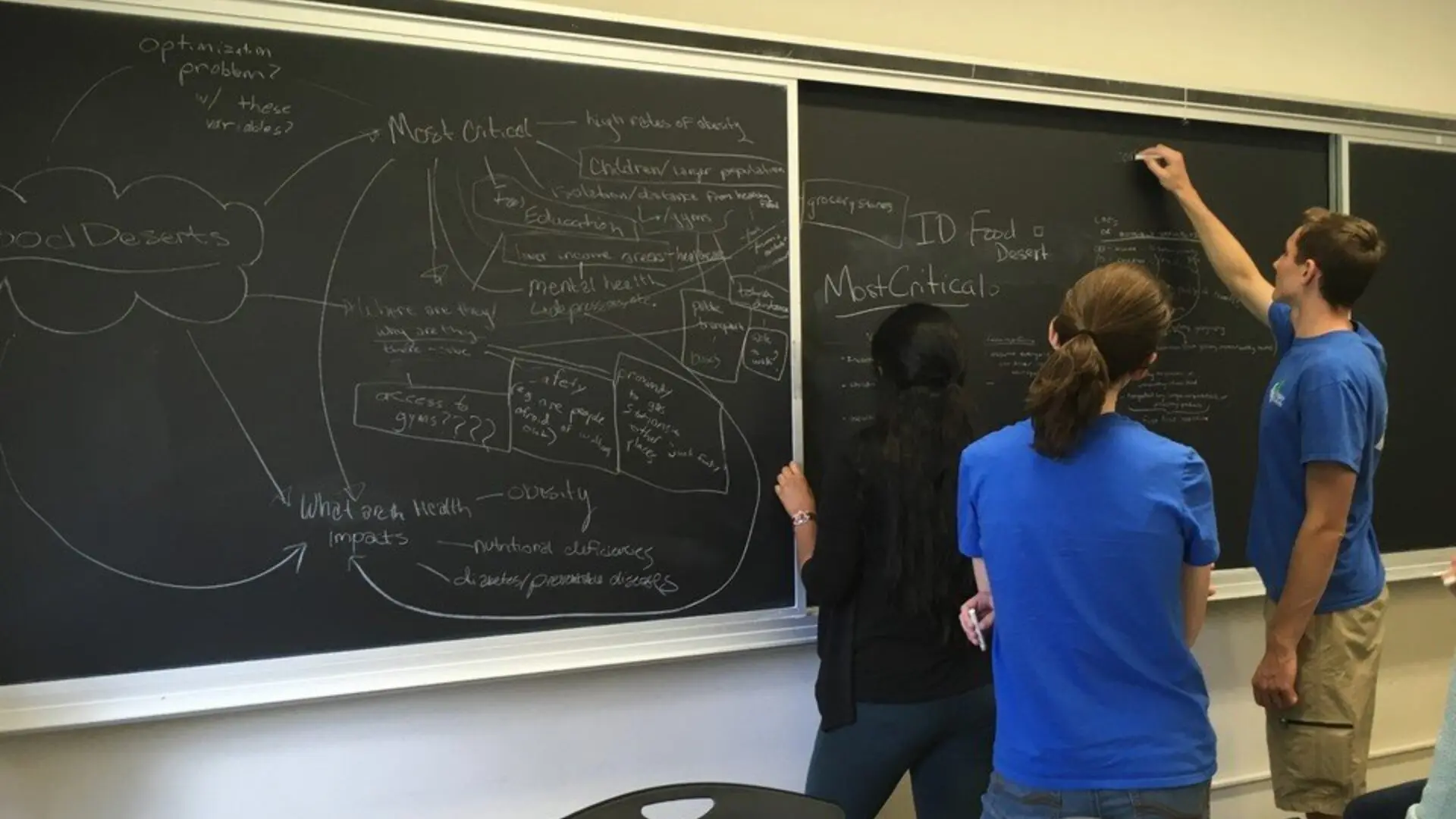
The IMA-MathCEP Math Modeling Camp invites you to spend a week applying mathematical thinking to real-world challenges while based on the University of Minnesota campus. This program emphasizes teamwork and project-based learning, where you work with peers to build mathematical models that help analyze things like traffic patterns, disease dynamics, population shifts, or environmental changes.
Faculty and experienced instructors will guide you through identifying assumptions, selecting appropriate techniques, and interpreting results, which mirrors how professional mathematicians approach open-ended problems.
Why it stands out: You will tackle real-world mathematical modeling problems in teams, gaining insight into how mathematics connects to complex issues facing science and society.
8. MITES Summer Program
Location: Massachusetts Institute of Technology (MIT), Cambridge, MA
Cost/Stipend: Free
Acceptance rate/cohort size: Highly competitive
Dates: Six-week summer session
Application Deadline: Typically closes around early February (exact date varies each year)
Eligibility: To apply, you must be a high school junior who is a U.S. citizen or a U.S. permanent resident
The MITES Summer Program places you in an immersive university environment where you take rigorous classes in advanced math and science alongside students who share your drive for STEM study.
Throughout six weeks at MIT, you balance coursework in subjects like multivariable calculus, physics, and other technical fields with collaborative labs and problem-solving sessions designed to sharpen your analytical skills. Instructors include. You’ll attend seminars that introduce engineering and research pathways, receive mentoring on college planning, and build a supportive community with your cohort.
Why it stands out: You will study advanced math and science on the MIT campus, surrounded by passionate peers and mentors who, like you, are inspired by STEM topics.
9. Challenge to Excellence (C2E) Summer Camp
Location: Southern Illinois University Carbondale, IL
Cost/Stipend: Commuter $480; Residential $595
Acceptance rate/cohort size: Not specified
Dates: June 15th – June 20th
Application Deadline: Typically in early summer
Eligibility: Open to high school students in grades 9-12; international students may apply
The Challenge to Excellence Summer Camp invites you to join a long-standing academic program to stretch your thinking across subjects such as math, science, and the arts. Over the course of the week, you’ll participate in hands-on activities, collaborative workshops, and intellectually stimulating sessions designed to promote creative problem-solving and critical thought.
While the curriculum spans more than just mathematics, you will find opportunities to engage with STEM challenges that exercise reasoning and analytical skills.
Why it stands out: You’ll engage in interdisciplinary academic activities that strengthen higher-order thinking and problem-solving in a supportive university setting.
10. Mathworks Honors Summer Math Camp (HSMC)
Location: Texas State University, San Marcos, TX
Cost/Stipend: $6,600
Acceptance rate/cohort size: Highly selective
Dates: June 21st – August 1st
Application Deadline: Rolling admissions until spots fill; applying early is recommended
Eligibility: Open to high school students from around the United States and various other countries
In the Honors Summer Math Camp at Mathworks, you will spend six weeks immersed in a rigorous residential mathematics experience. Faculty from Texas State University design courses for you that push beyond classroom basics, covering areas like number theory, combinatorics, abstract algebra, and analysis while building proof-writing and reasoning skills.
For students returning for a second or third summer, there is the chance to join a faculty-guided research project, which adds a genuine research component to your growth. The program can be a transformative jump for you from high school math toward college-level inquiry. Here’s the application link.
Why it stands out: You will tackle challenging abstract mathematics while living and learning in a community of passionate peers with opportunities for mentored research.
11. Areteem Math Summer Camps
Location: Boston University, Boston, MA; UC San Diego, San Diego, CA; Axellent Academy, Dublin, CA; online option also available
Cost/Stipend: Fee varies for the residential, day camper, and online camps
Acceptance rate/cohort size: Competitive and selective placement
Dates: Onsite camps span 3 weeks (Boston: June 21st – July 10th; San Diego: July 19th – August 7th)
Application Deadline: Early application deadline: February 28th; regular deadline: April 15th
Eligibility: Current high school students; elementary and middle school camps are also offered
Areteem Math Summer Camps offer you a chance to improve great mathematical problem-solving skills in settings that blend structured workshop learning with collaborative group work. Whether you choose to attend on a university campus in Boston or San Diego or opt for the online track, the curriculum focuses on areas like algebra, geometry, number theory, counting, and probability at levels tuned to your mathematical preparation.
Areteem instructors are drawn from experienced problem-solvers and educators who help make complex ideas approachable while still challenging you to push your abilities.
Why it stands out: You’ll strengthen advanced problem-solving and analytical skills across core mathematical domains in both in-person and online formats.
12. MasterScholar North Carolina Math Camp (NCMC)
Location: Research Triangle Region, NC
Cost/Stipend: Exact cost varies by year and housing choice
Acceptance rate/cohort size: Selective
Dates: Session 1: July 5th – July 18th; Session 2: July 19th – August 1st
Application Deadline: Exact date varies by year
Eligibility: Applicants must be between the ages of 15 and 19 by the start of the program; international applicants are eligible
At the MasterScholar North Carolina Math Camp, you work through challenging concepts that require structured reasoning, persistence, and clear logical explanation rather than memorized methods. Instruction blends guided lessons with independent thinking, helping you transition from solving assigned problems to forming mathematical arguments of your own.
A central feature of the experience is completing a short research-style or expository paper, which strengthens your ability to organize ideas and communicate mathematical insight in writing.
Why it stands out: You move beyond problem-solving into structured mathematical writing and research-style thinking within a focused residential setting.
13. PZMC: Number Theory & Mathematical Thinking
Location: Williams College, Williamstown, MA
Cost/Stipend: $3,100
Acceptance rate/cohort size: Selective; roughly 28-35 students per session
Dates: June 29th – July 10th
Application Deadline: April 24th
Eligibility: High school students who have completed or are enrolled in Algebra 2 or equivalent; international students may apply
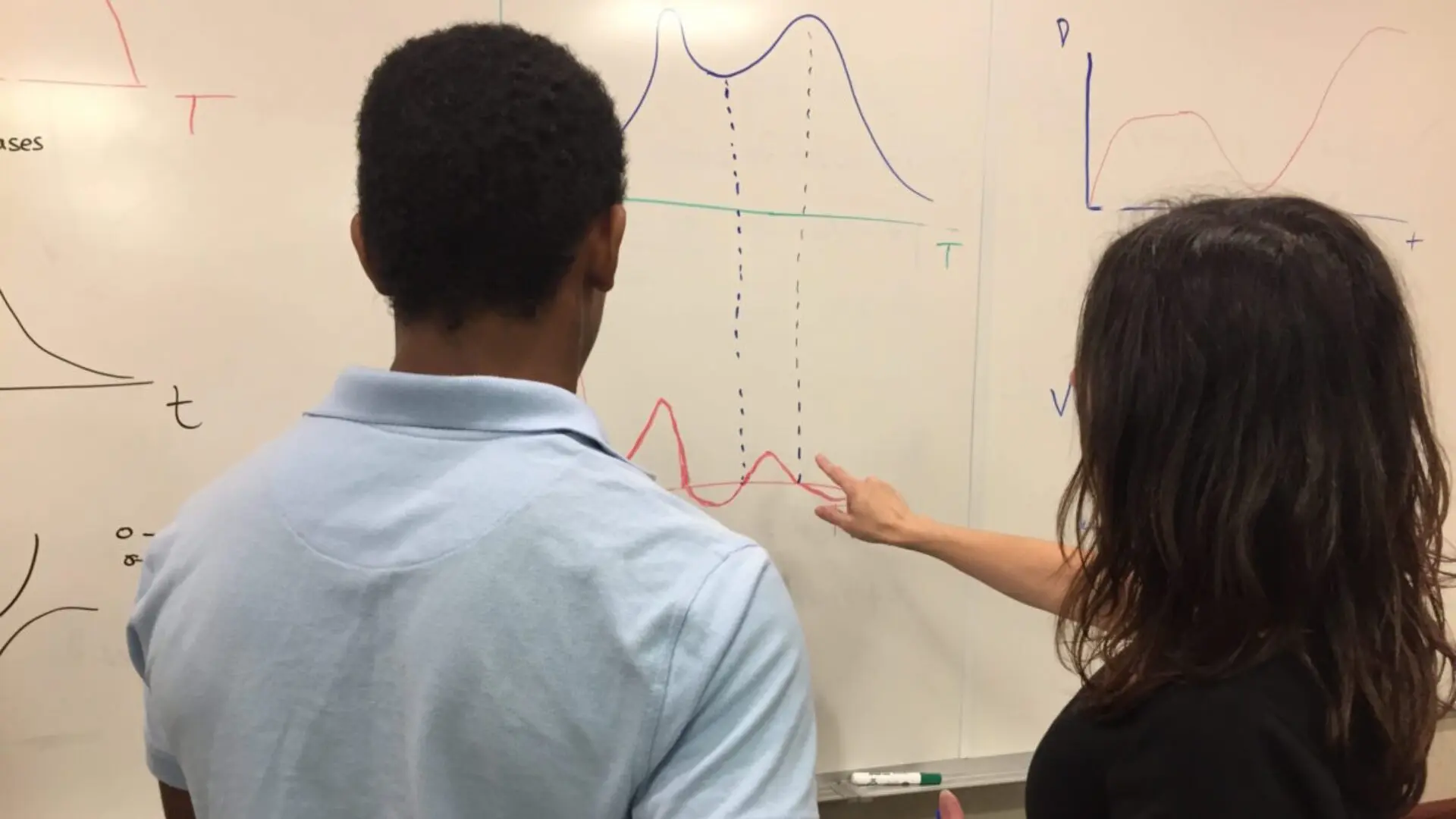
PZ Math Camp immerses you in a residential setting where the main focus is exploring number theory and developing deep mathematical thinking skills. You will attend interactive lectures, engage in group problem solving, and build mathematical arguments from examples to conjectures and proofs, all guided by experienced instructors.
You’ll develop your ability to ask insightful questions, uncover patterns, and justify your ideas rigorously. You also take part in a blend of scholarly and community activities, including guest mathematician colloquia, problem circles, panel discussions about studying math in college, and recreational outings that help you build connections with others. Here’s the application link.
Why it stands out: You learn foundational number theory through discovery and proof in a small, collaborative cohort that challenges you to think like a mathematician.
14. Anson L. Clark Scholars Program
Location: Texas Tech University, Lubbock, TX
Cost/Stipend: Free
Acceptance rate/cohort size: Highly competitive and very small cohort
Dates: June 21st – August 6th
Application Deadline: February 16th
Eligibility: Rising high school seniors or recent high school graduates (must be at least 17 years old by program start); U.S. citizens and permanent residents are eligible
In the Anson L. Clark Scholars Program, you will spend seven weeks immersed in serious academic research under the mentorship of Texas Tech University faculty. This residential experience places you directly in a university lab or scholarly environment where you design, conduct, and write up a research project that reflects your interests and academic strengths.
You’ll attend weekly seminars that introduce you to professional research practices, academic communication, and ethical thinking, and participate in field trips and group activities. The cohort’s small size ensures personalized guidance and plenty of collaboration with fellow scholars.
Why it stands out: You will gain hands-on experience doing university-level research with individual mentorship while living on a major research campus.
15. CyberMath Academy Summer Math Camp
Location: Boston, MA, Silicon Valley, CA, or Oxford, UK
Cost/Stipend: Varies by option and location
Acceptance rate/cohort size: Selective with limited spots
Dates: Boston camp: July 20-31; Silicon Valley: July 6th – July 17th; Oxford: July 5th – July 18th
Application Deadline: Varies by location and session
Eligibility: Age eligibility is 11-18 for residential students, 9-18 for day students; international applicants can attend
At the CyberMath Academy Summer Math Camp, you spend part of your summer learning advanced mathematical concepts alongside peers in vibrant academic settings near elite universities.
You work through problem solving, proof techniques, and hands-on exploration of topics such as logic, number theory, and mathematical reasoning, alongside introductory modules in artificial intelligence and machine learning. You take part in seminars and interactive sessions that push your thinking beyond standard coursework. Here’s the application link.
Why it stands out: You can explore advanced mathematics and foundational AI concepts in high-energy academic hubs while connecting with an international cohort.
Join the Immerse Education 2027 Essay Competition
Follow the instructions to write and submit your best essay for a chance to be awarded a 100% scholarship.
From Patterns To Proof: Read Next
Math research can be the moment you stop chasing the right answer and start asking better questions, then proving what you find.
The 15 math research programs for high school students listed here push you to test patterns, write cleaner arguments, and defend your reasoning in front of others.
You’ll practise the habits that matter most: patience with hard problems, precision with definitions, and confidence presenting a solution clearly.
Want to keep that momentum between programmes and applications? Open our Mathematics Top Books Guide for the titles that sharpen proof-writing, deepen intuition, and level up your problem solving fast.







Unlock Inspiring Opportunities with the Immerse Education Newsletter
Join our newsletter to stay ahead with exclusive updates, exciting programme highlights, and expert insights from the world of immersive education.
Learn how Immerse can transform your life
An in-depth overview of our university and career preparation programmes
Get a glimpse into the life of an Immerse participant
Find the right programme for you with sample timetables, location showcases, and more