15 Psychology Summer Programs for High School Students

As a high school student interested in psychology, the subject can feel both fascinating and complex. You may find yourself curious about why people think, feel, and behave the way they do, and how scientific research helps explain mental processes, emotions, and social interactions. Psychology goes far beyond textbook definitions. It involves research methods, data analysis, observation, and real-world applications. One of the best ways to truly explore the field is by participating in a psychology summer program.
Imagine spending your summer learning how psychologists design experiments, analyze behavioral data, or study topics like mental health, cognition, development, and social behavior. You might work on research projects, engage in case studies, or discuss psychological theories with professors and peers who share your interests. By joining a psychology summer program for high school students, you’ll gain hands-on exposure, collaborate with students, and experience what studying psychology at the university level is really like.
How do you choose the right psychology summer programs for high school students?
Choosing the right psychology summer program can be a challenging task. Some programs may be too broad, too introductory, or only lightly connected to how psychology is actually studied and practiced. That’s why having a clear framework to evaluate your options is important, as it helps you identify programs that align with your academic interests and future goals.
Many universities and research institutions offer structured, research-oriented psychology summer programs that are academically rigorous. These programs will allow you to explore areas such as cognitive psychology, neuroscience, developmental psychology, clinical psychology, and social behavior. You could learn through research projects, group discussions, data collection and analysis, surveys, and lab-based activities. Some programs mirror college-level coursework, while others focus on introducing students to core research methods and ethical practices in psychology.
No matter the level of the program, commitment and curiosity are essential once you begin. To make the selection process easier, we’ve created a list of 15 Psychology Summer Programs for High School Students. These programsstand out for their academic depth, hands-on learning opportunities, and strong institutional reputations.




15 Psychology Summer Programs for High School Students
1. Camp Psych at Gettysburg College
Location: Gettysburg College, Gettysburg, PA
Cost/Stipend: Camp fee is ~$1,395
Acceptance rate/cohort size: Group sizes typically 20-25 campers
Dates: July 13th – July 18th
Application Deadline: Rolling admissions
Eligibility: Rising high school sophomores, juniors, and seniors from all around the world
When you attend Camp Psych, you step onto a college campus and into an environment crafted to mirror how psychological science functions in academic settings. As one of the more research-focused psychology summer programs for high school students, it allows you to explore questions that drive research in areas such as helping behavior, cognition, and social interaction by designing your own studies and gathering data under faculty guidance.
Your daily sessions will be a mix of lectures, discussions, and participative activities, which help you connect theoretical frameworks with actual research practice. Outside of the classroom, living in residence halls with psychology-focused resident advisors gives you space to debrief and reflect on what you’re learning while building community with peers who share your interests. Evening and free-time activities balance the academic rigor with opportunities for relaxation and informal conversation.
Why it stands out: You will get hands-on experiences that’ll introduce you to research in psychology in a fun, challenging, and engaging environment.
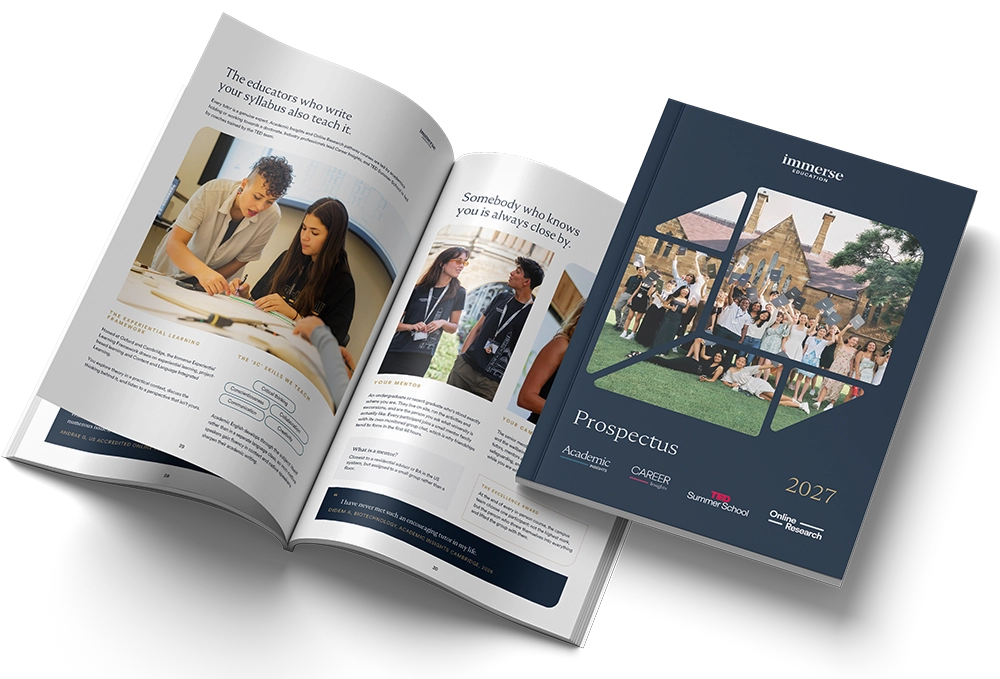
2. Immerse Education’s Psychology Summer School
Location: Sydney, Boston, Tokyo, Singapore, London, Cambridge, Oxford, Toronto, and Online
Cost/Stipend: Varies; summer school scholarship available through our bursary programme
Acceptance rate/cohort size: Average of 7 participants per class
Dates: 2 weeks during the summer
Application Deadline: Multiple summer cohorts with rolling admissions
Eligibility: Students worldwide aged 13-18 currently enrolled in middle or high school
The Immerse Education Psychology Summer School is an immersive two-week academic program designed to introduce you to the scientific study of the human mind and behaviour. You’ll engage with core areas of psychology that include cognitive psychology, behavioural science, and mental health. You’ll dive into cognitive psychology and neuroscience while unpacking the core ideas of behavioural psychology.
You’ll be participating in interactive lectures, case studies, experiments, and group discussions that build analytical, research, and critical thinking skills. Along the way, you’ll see how surroundings and context influence the way people think and act, and you’ll develop an understanding of the forces that shape interactions and social patterns. By the end of the program, you will complete a personal project and receive written feedback and a certificate of completion. You can find more details about the application here.
Why it stands out: It gives you a taste of university-style psychology study, helping you prepare for future university applications or careers in psychology and related fields.
3. Barrow Neurological Institute Summer High School Research Program
Location: Barrow Neurological Institute, Phoenix, AZ
Cost/Stipend: Free
Acceptance rate/cohort size: Not specified
Dates: June 8th – July 9th
Application Deadline: February 10th
Eligibility: High school students worldwide aged 16+
When you join this research internship at a leading neuroscience institute, you enter a setting where scientific inquiry and real-world medical questions intersect, giving you a firsthand look at how research teams investigate the brain and nervous system. You work under mentorship in laboratory or research support roles, which might include hands-on techniques, data analysis, or science writing, depending on your placement and interests. You learn how to interpret scientific literature and communicate your findings clearly, skills that are central to the practice of psychological and neuroscientific research.
In addition to lab duties, you participate in weekly workshops and community events that connect your work with broader themes in neurobiology and human behavior. The program culminates in a High School Symposium where you present your project to peers and professionals. Applications will open on January 6.
Why it stands out: This program gives you an opportunity to gain valuable exposure to and participate in scientific research in a professional setting.
4. UNIQ Experimental Psychology- University of Oxford Access Program
Location: University of Oxford, Oxford, UK
Cost/Stipend: Free
Acceptance rate/cohort size: Not specified
Dates: July 20th – July 24th
Application Deadline: January 13th
Eligibility: Students in the first year of UK further education attending a state school
When you join this Oxford University access programme, you step into a week of intensive engagement with experimental psychology as it is taught at one of the world’s most historic research institutions. Over five days of residential activity, you attend lectures and seminars delivered by Oxford academics. You’ll get introduced to core ideas concerning how psychologists study behavior and cognition, including theories of development, interaction, and psychological disorders.
You also discuss these topics with peers and faculty, which helps sharpen your analytical thinking and gives a sense of the intellectual rigor expected at the university level. Living in an Oxford college for the week also means you experience university life firsthand while participating in social and academic events designed to build community and confidence. Here’s the UNIQ account registration link.
Why it stands out: You’ll be introduced to concepts and theories that are covered in the undergraduate curriculum in a series of lectures that look at different aspects of human behavior.
5. YMHA Summer Academy
Location: Child Mind Institute, San Mateo, CA
Cost/Stipend: Stipend of $1750 – $2000
Acceptance rate/cohort size: Varies
Dates: Summer academy June 22nd – July 23rd
Application Deadline: Priority deadline is January 15th; final deadline is February 28th
Eligibility: High school students enrolled in public or private schools in California
If you are curious about how mental processes shape behavior and want to understand the science behind emotional well-being, you may consider this program. The program’s layered structure helps you connect academic content with real-world practice, so you can see how psychological knowledge is applied beyond the classroom. The program starts with an intensive five-week summer academy where you explore topics like mental health conditions, treatment, and career paths through project-based learning and structured discussions.
Throughout the year, you stay connected with a mentor working in a related health field, attend workshops, and prepare for a research-informed capstone project that synthesizes your learning. The second summer builds on this foundation with a paid internship that places you in real settings where mental health work unfolds, sharpening both practical skills and professional insight. Along the way, you join a broad community of peers and professionals focused on advancing equity in mental health fields, making it both a deep learning experience and a chance to expand your network. Here’s the application link.
Why it stands out: You’ll explore career pathways, gain hands-on experience, and join a network of young leaders who are shaping the future of mental health care.
6. Wake Forest Summer Immersion Psychology Institute
Location: Wake Forest University Reynolda Campus, Winston-Salem, NC
Cost/Stipend: Tuition ~$3,500 (subject to change year-wise)
Acceptance rate/cohort size: Not specified
Dates: July 12th – July 17th; July 19th – July 24th
Application Deadline: Applications open in November and are reviewed on a rolling basis
Eligibility: Current high school students all over the world in grades 9-12
If you are fascinated by how the brain and behavior connect, this institute immerses you in psychological inquiry that goes beyond simple lectures and into experiential learning. Over approximately one week on campus, you explore how emotions, perception, and cognitive biases shape the way people think and behave.
You’ll be engaging in hands-on activities like sensory experiments and brain dissection to ground abstract concepts in real experience. Structured sessions also guide you through basic research design and observation, so you can conduct your own short study and reflect on what evidence reveals about human behavior. Here’s the online application link.
Why it stands out: You’ll dive into the structure of the brain through hands-on dissection and learn about how illusions, emotions, and biases affect how we see and interact with the world.
7. UChicago’s Fundamentals of Psychology: Theory & Research
Location: University of Chicago, Chicago, IL
Cost/Stipend: ~$9,300 tuition
Acceptance rate/cohort size: Competitive selection
Dates: July 5th – July 24th
Application Deadline: Applications open in January
Eligibility: Domestic and international high school students
When you take this summer course, you step into a rigorous academic environment where you explore core topics in the scientific study of human behavior. It is one of the most academically intensive psychology summer programs for high school students, especially if you want a research-led learning experience. You’ll learn topics like sensation and perception, memory, development, emotion, and psychological disorders. The structure combines lectures, readings from both textbooks and academic articles, discussions, and even field experiences.
You’ll also take part in research demonstrations in lab settings, which help you translate abstract theory into observable practice, and work in small teams to design and execute your own experimental project by the end of the session. By completing this programme, you gain not only substantive psychological knowledge but also a sense of how structured research unfolds within an academically intense environment.
Why it stands out: This course will introduce you to basic concepts and research in the study of human behavior.
8. University of Toronto’s Summer Psychology Research Initiative (SPRINT)
Location: St. George campus, University of Toronto, Canada
Cost/Stipend: Free
Acceptance rate/cohort size: ~50–60 students
Dates: Last two weeks in July
Application Deadline: Not specified
Eligibility: High school students in Ontario
This SPRINT summer program allows you to explore psychological science in a community-oriented academic environment that foregrounds research and critical thinking. For about ten days, you attend structured sessions covering a wide array of topics, starting from research methods and statistics to diverse areas within psychology that are delivered through lectures, panels, and interactive discussions.
Here, you are not just a listener; the group work and mentorship allow you to co-create a research proposal under the guidance of undergraduate and graduate student mentors. Throughout the program, you engage with peers who share your interest in psychological inquiry. The program’s focus on equity, diversity, and inclusion means that it intentionally supports students whose voices are underrepresented in academic psychology.
Why it stands out: It prioritizes and involves training in topics such as research methods, statistics, and equity, diversity, and inclusion (EDI).
9. USC Pre-College Program’s Psychological Science & Society Course
Location: University of Southern California, Los Angeles, CA
Cost/Stipend: Residential option $11,570; commuter option $8,130
Acceptance rate/cohort size: Selective
Dates: June 22nd – July 17th
Application Deadline: Domestic deadline is May 8th; international deadline is March 13th
Eligibility: High school students who have completed at least ninth grade by the program start; international students are welcome to apply
If you want to explore psychology in a context that blends theory with real social issues, this four-week college-level course invites you to dive into classic and contemporary psychological science. You will explore fundamental branches of psychology, from cognition and personality to developmental and social psychology, through hands-on labs, lively discussions, and field experiences that connect concepts to everyday behavior.
You’ll practice scientific thinking through collaborative projects and research design exercises. The structure encourages you to reflect on how psychological insights shape communities and individual lives, helping you develop the ability to think like both a scholar and a citizen. Here’s the application link.
Why it stands out: You’ll investigate major branches of psychology while connecting scientific insights to real-world issues and your own lived experiences.
10. University of Brighton’s Social Science Residential Summer School
Location: Moulsecoomb campus, Brighton, UK
Cost/Stipend: Free
Acceptance rate/cohort size: Not specified
Dates: July 7th – July 9th
Application Deadline: Not yet published
Eligibility: U.K. students in Year 12 or the first year of sixth form/college, aged 16-17
If you gravitate toward the questions social scientists ask about how people, institutions, and societies interact, this three-day residential at the University of Brighton gives you a sampler of key themes and methods in social science that includes psychology, among others. You join subject-specific sessions drawn from disciplines like psychology, criminology, politics, sociology, and broader social sciences, which get you thinking about evidence, interpretation, and real-world issues.
You’ll participate in social activities in the evenings and stay in campus halls, which gives you a short experience to live like a university student. Organized activities and informal discussions alike encourage you to reflect on your interests and how they might translate into further study. You may register your interest, and you’ll be contacted when the applications open.
Why it stands out: You’ll experience professional-standard facilities, including multi-purpose psychology resource laboratories.
11. Nova Southeastern University’s Summer Training Program
Location: Nova Southeastern University, Fort Lauderdale, FL
Cost/Stipend: $400 tuition fee
Acceptance rate/cohort size: ~16 participants
Dates: July 7th – July 18th
Application Deadline: Rolling admissions
Eligibility: High school students worldiwde entering their junior or senior year in the Fall
If you are intrigued by the biological mechanisms that underlie thought, behavior, and emotion, this two-week neuroscience training program offers a compact but immersive introduction to the science of the brain. Faculty experts lead you through workshops and demonstrations on topics ranging from EEG measurement of brain activity to brain dissection, gene editing techniques, and how stress or genetics influence cognition and perception.
You also work on your own mini research project that you present at a final luncheon attended by your peers, mentors, and family. Because the programme keeps its group small, you have frequent opportunities for individualized feedback and interaction with faculty.
Why it stands out: You’ll participate in workshops with NSU faculty-experts with demonstrations.
12. Pre-University Summer School (Psychology Module) at King’s College London
Location: King’s College, London, UK
Cost/Stipend: Tuition ~£3,195 for one week (residential packages available from ~£3,965)
Acceptance rate/cohort size: Competitive
Dates: Multiple sessions in July
Application Deadline: April 10th
Eligibility: Students aged 16-17; international students are accepted
This summer course places you in the classrooms of a research-intensive institution where you engage with foundational ideas in the science of mind and behavior. Over a one-week module embedded within King’s broader Pre-University Summer School, you cover core themes and debates in psychology through lectures, structured discussions, and active workshops designed to mimic real academic inquiry.
Attendance and engagement are closely monitored, and assignments give you a window into the kinds of assessments typical of undergraduate courses. In addition to academic sessions, you often take part in group activities that encourage collaboration and peer learning, which can deepen your conceptual understanding. Residential options mean you can live near campus and interact with other students in an immersive setting that blends study with social and cultural experiences in central London. Here’s the application link.
Why it stands out: Witness the type of teaching and learning that you can expect if enrolled at the BSc in Psychology, offered by the King’s Institution of Psychiatry, Psychology and Neuroscience (IoPPN)
13. Harvard Summer School Secondary School Program
Location: Harvard University campus, Cambridge, MA; virtual option also available
Cost/Stipend: Fee varies depending on format and number of college credits
Acceptance rate/cohort size: Competitive
Dates: 7-week session June 20th – August 8th; 4-week session July 12th – August 7th
Application Deadline: Early application & priority financial aid January 7th; regular deadline February 11th
Eligibility: High school students around the globe aged 16-19
If you are ready to tackle college-level psychology or neuroscience courses alongside peers from around the world, Harvard’s Secondary School Program is one of the most recognisable psychology summer programs for high school students, especially if earning transcripted credit that appears on a Harvard transcript is part of your goal. During the 4-week or 7-week terms, you immerse yourself in a rigorous academic schedule where lectures, discussions, and projects are taught by Harvard faculty and distinguished instructors.
Within the psychology and neuroscience track, you can explore topics like introduction to psychology, the neuroscience of learning, social psychology, and even interdisciplinary courses that connect brain science with decision-making or law and logic. Living on campus in Harvard dorms (for residential options) lets you experience life as a college student, access libraries and facilities, and join social and academic activities that enrich the classroom experience.
Why it stands out: Allows you to explore psychology and neuroscience subjects that you can study at Harvard.
14. Clinical Neuroscience Immersion Experience (CNI-X) at Stanford University
Location: Stanford, CA; virtual option available
Cost/Stipend: ~$3,325 for in-person session; ~$1,725 for virtual option
Acceptance rate/cohort size: Competitive
Dates: Two-week sessions during the summer
Application Deadline: Typically early spring
Eligibility: High school students around the world aged 14-18
In this intensive summer programme, you step into an academic environment where psychological science, clinical neuroscience, and behavioral inquiry intersect, guided by Stanford faculty and department researchers. You’ll attend interactive lectures and seminars that cover a breadth of topics such as neuroimaging, behavioural neuroscience, mental health conditions, psychosocial interventions, and the latest research methods in psychiatry and psychology.
You also join a small team to develop a collaborative capstone project addressing a real-world issue related to mental health or neurological function, culminating in a presentation to peers and faculty. Sessions are designed to balance conceptual depth with critical thinking, encouraging you to ask questions and connect content to larger social and scientific contexts.
Why it stands out: During each session, you’ll be exposed to the breadth of research found in the Stanford Department of Psychiatry and Behavioral Sciences.
15. Duke Pre-College High School Courses
Location: Duke University campus, Durham, NC
Cost/Stipend: Program fee varies for residential and commuter options
Acceptance rate/cohort size: Selective
Dates: Three 2-week sessions during June and July
Application Deadline: Not yet specified
Eligibility: Domestic and international high school students
If you are ready to explore topics at a deeper academic level while living and learning on a major research university campus, Duke’s Pre-College Courses offer that environment. Each session lasts roughly two weeks and places you in small, interactive courses that balance presentations, discussions, and participative learning. Although courses cover a range of disciplines, including science, humanities, and business, if you are interested in psychology, you can find relevant electives that sharpen your analytical skills and introduce you to collegiate academic expectations.
Session offerings include topics like developmental psychology, social psychology, intro to cognitive neuroscience, behavioral psychology, and more. By living on campus and attending classes in Duke’s academic buildings, you also gain first-hand experience of university life and the rhythms of higher education.
Why it stands out: You’ll get the opportunity to work firsthand with Duke Ph.D. students and faculty members.
Join the Immerse Education 2027 Essay Competition
Follow the instructions to write and submit your best essay for a chance to be awarded a 100% scholarship.
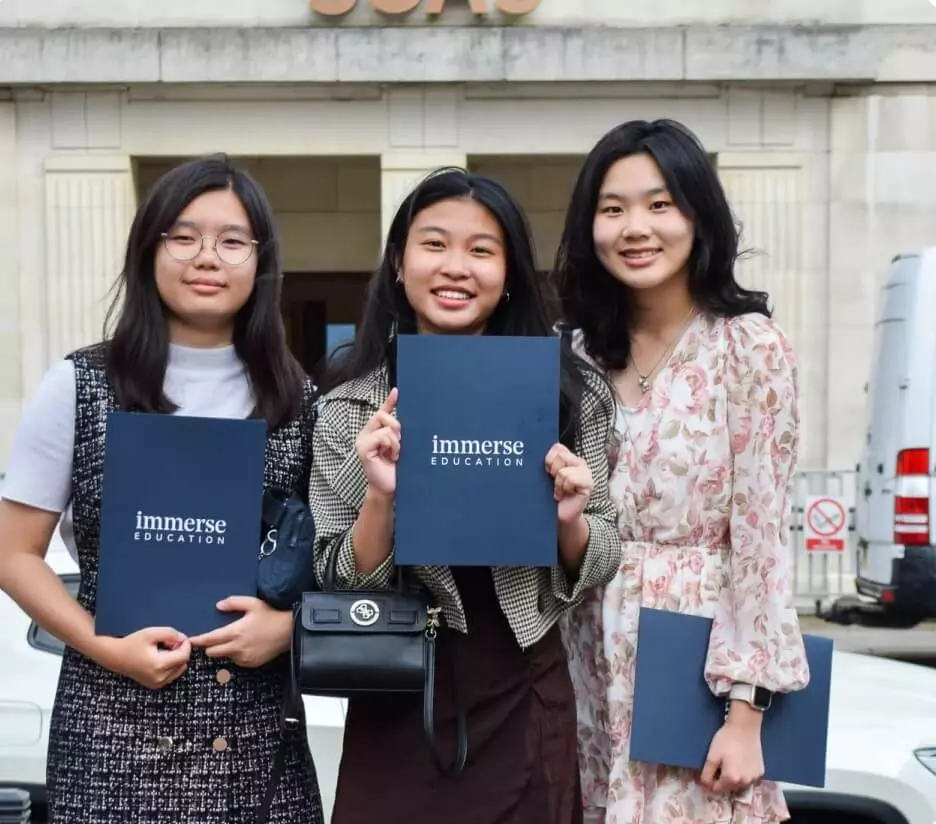
Insight Into Everyday Impact
Psychology is not just something you study. It shapes how you understand conversations, choices, stress, and motivation in everyday life. When theory connects to real behaviour, learning becomes meaningful.
Psychology summer programs for high school students create that connection. They place you in settings where observation, research, and discussion help you see how psychological ideas work beyond the classroom.
As you test concepts and question assumptions, you build more than academic knowledge. You develop awareness, resilience, and analytical thinking that support both learning and personal growth.
To keep building those skills, explore our Personal Development blogs for practical guidance on self-awareness, confidence, and navigating challenges with clarity.






Unlock Inspiring Opportunities with the Immerse Education Newsletter
Join our newsletter to stay ahead with exclusive updates, exciting programme highlights, and expert insights from the world of immersive education.
Learn how Immerse can transform your life
An in-depth overview of our university and career preparation programmes
Get a glimpse into the life of an Immerse participant
Find the right programme for you with sample timetables, location showcases, and more