15 Science Summer Schools in Cambridge for High School Students

If you’re a high school student who loves science, you may already enjoy experimenting in the lab, solving complex problems, or asking big questions about how the world works. But beyond school classes and textbooks, you might still wonder what studying science at a world-class university truly feels like. One of the most exciting ways to experience that environment firsthand is by attending a science summer school in Cambridge.
Imagine spending your summer in a historic academic setting, attending seminars in subjects like biology, chemistry, physics, environmental science, or biomedical research. Science summer schools in Cambridge combine academic rigor with collaborative exploration, offering a glimpse into what university-level scientific study really involves.
How do you choose the right science summer schools in Cambridge for high school students?
With many programs available, it’s important to identify those that provide genuine academic depth rather than surface-level exposure. Some emphasize lectures, while others integrate laboratory work, small-group seminars, and project-based learning. Thoughtful selection ensures you find a program that balances support with meaningful intellectual challenge.
Across Cambridge, science summer schools may offer focused tracks in natural sciences, life sciences, physical sciences, or emerging interdisciplinary fields. You might participate in collaborative research-style projects, attend expert-led workshops, or present findings in seminar-style discussions that mirror university expectations. Programs range from accessible introductions to more intensive experiences for students seeking advanced academic enrichment.
To help you begin your search, we’ve curated a list of 15 Science Summer Schools in Cambridge for High School Students. They’ve been selected for their academic quality, immersive environments, and ability to spark lasting enthusiasm for scientific discovery.
For broader subject options, you can consider summer programs in Cambridge. Additionally, you can also check out online STEM summer programs.



15 Science Summer Schools in Cambridge for High School Students
1. Immerse Education’s Cambridge Summer School
Location: Cambridge, UK
Cost: Varies; summer school scholarship available through our bursary programme
Dates: 2 weeks during the summer
Application Deadline: Multiple summer cohorts; rolling admissions
Eligibility: All students aged 13-18 currently enrolled in middle or high school
The STEM Summer School in Cambridge allows high school students to take undergraduate-level classes in science, technology, engineering, and mathematics within a historic university setting. The programme pairs you with academics from leading institutions in classes of 4–10 students. You’ll attend university-style lectures and 1:1 weekly sessions with your tutor.
The programme includes practical experiences such as laboratory investigations, coding challenges, mathematical problem-solving, and engineering design tasks. You can explore a range of STEM subjects, including artificial intelligence, computer science, engineering, mathematics, medicine, and related scientific disciplines. By the programme’s end, you will complete a personal project and receive written feedback and a certificate of completion. You can find more details about the application here.
Why it stands out: This program provides early exposure to university-level science education, combining theoretical knowledge with practical application in a historic academic setting.
2. Sutton Trust Summer School – University of Cambridge
Location: University of Cambridge, UK
Cost: Free (includes tuition, accommodation, meals, and activities)
Dates: Typically one week in summer
Application Deadline: Midday on 12th February
Eligibility: Restricted to Year 12 students attending UK state-funded, non-fee-paying schools; not open to international students.
The Sutton Trust Summer School at Cambridge allows you to explore scientific subjects through university-style teaching delivered by Cambridge academics and researchers. You will participate in lectures, seminars, and small-group discussions that emphasize analytical reasoning, evidence-based thinking, and academic independence. The structure is designed to reflect elements of the Cambridge supervision model, helping you understand how scientific concepts are debated and refined in higher education settings.
Living in a Cambridge college further immerses you in the routines and expectations of undergraduate life while enabling you to collaborate with peers who share strong academic interests. This program offers a realistic introduction to studying science at Cambridge while helping you evaluate your readiness for academically rigorous degree pathways.
Why it stands out: Provides an authentic taste of Cambridge’s academic environment at no cost, empowering students from diverse backgrounds to envision and pursue higher education aspirations.
3. Immerse Education’s Biology Online Summer School
Location: Online
Cost: Classic: £2,895 (~$3,650); UK/US Accredited: £3,995 (~$5,040); Publication Track: £4,995 (~$6,300)
Dates: Flexible start dates; multiple cohorts throughout the year
Application Deadline: Rolling admissions
Eligibility: All students aged 13-18 currently enrolled in middle or high school; open to international students
Immerse Education’s Biology Online Research Programme provides one-on-one mentorship with academics from leading universities such as Oxford and Cambridge, allowing you to investigate advanced biological topics beyond the high school curriculum. You will learn to read scientific literature, develop research questions, and construct evidence-based arguments through personalized sessions with your mentor. The program culminates in an independent research project, helping you strengthen skills in scientific writing, data interpretation, and critical analysis that mirror expectations in undergraduate biology courses.
Depending on the track selected, you may earn UCAS points, receive a US college credit recommendation, or prepare your work for potential publication in a student research journal. The flexible format enables you to pursue rigorous academic work while managing existing academic commitments, reflecting the independence required in university study. This program offers an early introduction to academic biological research while helping you assess whether laboratory and research-driven learning aligns with your long-term educational goals.
Why it stands out: You complete a substantial independent research project under individualized mentorship, creating a strong academic artifact that can support future college applications.
4. Cambridge Future Scholar Programme – CCIR Academy
Location: Online
Cost: $1,500; scholarships and financial aid available
Dates: 13-week sessions offered in Spring, Summer, and Fall
Application Deadline: Early and regular deadlines are provided for each cohort; summer early deadlines typically fall in May
Eligibility: High school students worldwide with a strong academic record; open to international students
The Cambridge Future Scholar Programme is a selective online research program that allows you to explore advanced scientific topics through structured academic mentorship. Working in small cohorts, you will engage with faculty and researchers from leading institutions as you progress from foundational seminars to independent research.
The program emphasizes research methodology, scientific inquiry, and analytical reasoning. You will develop a substantial research paper with guidance from your mentor’s guidance, strengthening your academic writing and evidence-based thinking. Opportunities to present your work and receive detailed feedback further reinforce the scholarly focus of the experience.
Why it stands out: Its research-centered structure allows you to produce an independent scientific paper under expert mentorship, creating a strong academic foundation ahead of college.
5. Downing College International Advanced Programme
Location: Downing College, University of Cambridge, UK
Cost: £9,000 GBP (approximately $11,400 USD); includes tuition, accommodation, meals, excursions, and full access to College facilities.
Dates: Multiple sessions available: Programme A: July 12-25, Programme B: July 26th – August 8th, Programme C: August 9-22
Application Deadline: Rolling admissions; early application recommended
Eligibility: High school students aged 15-18; open to international students
The Downing College International Advanced Programme offers a comprehensive four-week academic experience, combining two weeks of online foundational coursework with two weeks of in-person, subject-specific study at Downing College. During the online phase, you’ll take basic skills courses that are specific to your field of study, like Biological & Medical Sciences, Engineering, Mathematical Sciences, or Physical Sciences.
During the residential phase, you will have 90-minute classes every day with different Academic Tutors, totaling about 60 hours of instruction. You will also do a research project that ends with a written report and a 15-minute presentation, both of which your tutor will grade. The program includes full board, trips to cultural sites in London and Cambridge, and social events, giving students a complete picture of university life.
Why it stands out: Combines rigorous STEM-focused academics with a research project and cultural immersion, offering a realistic preview of undergraduate study at Cambridge.
6. She Talks Science STEP Summer School
Location: Murray Edwards College, University of Cambridge, UK
Cost: Free (includes tuition, accommodation, meals, and activities)
Dates: August 26-28
Application Deadline: April 24th
Eligibility: Women and non-binary students in Year 12 (England/Wales), Year 13 (Northern Ireland), or S5 (Scotland) studying or planning to study A-level Maths and Further Maths, IB Higher Level Maths, or Scottish Higher/Advanced Higher Maths; strongly considering applying to mathematics courses requiring STEP
This three-day residential program is designed to prepare you for the Sixth Term Examination Paper (STEP), a requirement for mathematics applicants at Cambridge and other top universities. You’ll participate in four STEP workshops focused on problem-solving strategies, followed by supervision-one-on-one or small-group sessions – to develop complete solutions and deepen your understanding.
Additional activities include admissions talks, enrichment lectures, a tour of the Centre for Mathematical Sciences, and social events such as formal dinners. The program aims to build your confidence in tackling challenging mathematical problems and provides insight into the teaching methods at Cambridge.
Why it stands out: Offers targeted STEP exam preparation within a supportive community, enhancing both mathematical skills and familiarity with Cambridge’s academic environment.
7. Downing College International Foundation Programme
Location: Downing College, University of Cambridge, UK
Cost: £6,500 for two weeks; includes tuition, accommodation, meals, excursions, and activities
Dates: Programme B: July 26th – August 8th
Application Deadline: Rolling admissions; early application recommended due to limited availability
Eligibility: Students aged 15-18; open to international students
This two-week residential program offers you an immersive experience in Cambridge’s academic environment. You’ll choose between STEM or Humanities pathways, each comprising four subject strands, allowing you to delve into areas of interest. The curriculum includes English for Academic Purposes (EAP) sessions to enhance your academic communication skills.
Beyond the classroom, you’ll participate in excursions to London and Cambridge landmarks, providing cultural enrichment. Evening activities such as BBQs, sports, and trivia nights offer opportunities to socialize with peers from around the world. Upon completion, you’ll receive a certificate recognizing your academic engagement.
Why it stands out: You gain firsthand experience of Cambridge-style teaching while enhancing your academic English, providing a solid foundation for future university studies.
9. CATS Cambridge Summer School – STEM & English for Science
Location: Cambridge, UK
Cost: £3,340 (2 weeks)
Dates: June 28th – July 12th
Application Deadline: Rolling admissions
Eligibility: Students aged 14-17 with upper-intermediate (B2) English proficiency; open to international students
This two-week residential program combines STEM education with English language development.You’ll participate in lectures, workshops, and lab sessions covering topics like physics, robotics, coding, and real-world scientific problem-solving. English lessons focus on scientific vocabulary and grammar to enhance your ability to communicate complex ideas.
The program includes excursions to places such as the Science Museum, National Space Centre, or Bletchley Park, linking classroom learning with real-world examples. Evening activities like talent shows and international evenings provide opportunities to socialize with peers from around the world. Upon completion, you’ll receive a certificate recognizing your academic engagement.
Why it stands out: You simultaneously develop subject knowledge and academic English within a residential Cambridge setting, making it particularly valuable if you plan to pursue STEM education in an English-speaking university.
9. Online Engineering Programs – Johns Hopkins University
Location: Virtual
Cost: $3,800 (Engineering Innovation and Biomedical Engineering Innovation) + lab kit ($269.47–$320); $1,265 (Intro to Python); application fees: $50 (EEI/BMEI), $25 (Python)
Dates: Engineering Innovation: June 30th – August 1st | Biomedical Engineering Innovation: June 23rd – August 1st | Intro to Python: May 19th – June 30th or June 30th – August 11th
Application Deadline: May 17th
Eligibility: High school sophomores, juniors, and seniors with strong math and science grades; coursework in Algebra II, Trigonometry, and at least one lab science required
These college-level online engineering courses allow you to explore multiple engineering pathways while developing practical technical skills under the guidance of Johns Hopkins instructors. Engineering Innovation introduces disciplines such as civil, chemical, mechanical, and materials engineering through structured coursework and hands-on projects, including bridge design, electronics creation, and chemical process analysis.
Courses blend asynchronous learning with scheduled checkpoints, helping you manage a college-style workload while building accountability. Students who complete Engineering Innovation or Biomedical Engineering Innovation can earn Johns Hopkins University credit, while all tracks provide an official certificate of completion. Together, these programs offer early exposure to rigorous STEM academics and help you assess whether engineering aligns with your intended college major.
Why it stands out: Unlike many pre-college offerings, Engineering Innovation and Biomedical Engineering Innovation provide the opportunity to earn transferable college credit from Johns Hopkins, giving you a measurable academic outcome alongside technical experience.
10. Project SEED Summer Program by the American Chemical Society
Location: In-person labs at universities, government labs, and other facilities, with virtual research options also available
Cost: No cost / paid
Dates: 8-10 weeks in summer
Application Deadline: April 14th
Eligibility: High school students from all around the world
Project SEED is a paid summer research program that places you in real chemistry labs for 8 to 10 weeks. You’ll work closely with a scientist mentor on a hands-on research project, gaining experience in experimental design, data collection, and scientific communication. The program also includes professional development activities such as webinars, college-prep workshops, and opportunities to present your research at conferences.
At the end of the summer, you’ll submit a final report and may be eligible to apply for a Project SEED college scholarship of up to $5,000 per year. Some sites offer virtual research options if you can’t commute to a lab. Note: Project SEED is open only to U.S. citizens or permanent residents; international students are not eligible.
Why it stands out: Project SEED offers a rare opportunity to conduct real-world research in chemistry while earning a stipend, making it accessible to students from economically disadvantaged backgrounds. The program not only builds your scientific skills but also provides mentorship and college preparation resources to support your future academic and career goals.
11. WIE RISE! Summer Research Program
Location: Virtual (live sessions via Zoom)
Cost: Free
Dates: July 28th – August 1st
Application Deadline: Rolling admissions; best consideration by April 25th
Eligibility: Rising 9th – 12th grade students; open to all genders; international students welcome
WIE RISE! is a free, week-long virtual program designed to introduce high school students to engineering research. Through live workshops, virtual lab visits, and interactive conversations with researchers from the University of Maryland, you will learn about a new engineering discipline every day.
By conducting experiments at home with everyday household items, you will improve your comprehension of scientific ideas. Along with opportunities to network with current Maryland Engineering undergraduates, the program provides instruction on reading and writing scientific articles. During the live sessions, which run from 1:00 PM to 3:00 PM ET, vigorous involvement is anticipated.
Why it stands out: WIE RISE! offers a unique opportunity to delve into various engineering fields through a structured, interactive virtual format, all at no cost. The program’s emphasis on hands-on experimentation and direct engagement with university researchers provides a valuable glimpse into the world of engineering research.
12. Stanford Program for Inspiring the Next Generation of Women in Physics (SPINWIP)
Location: Virtual (hosted by Stanford University, Stanford, CA)
Cost: $14,650 (Session D, six weeks) / $15,950 (Session C, eight weeks)
Dates: July 7th – July 25th
Application Deadline: Not specified
Eligibility: Domestic and international 9-11 grade students
This is a three-week virtual outreach program where you explore advanced physics topics while learning directly from Stanford professors, researchers, and undergraduate mentors. In addition to learning the fundamentals of Python programming and applying them to physics-based projects, you will study topics such as quantum physics, quantum computing, astrophysics, and cosmology.
The program consists of structured workshops on college preparation and STEM career pathways, faculty lectures, and small-group collaborations conducted by Stanford undergraduates. To better comprehend academic pathways in physics, you will also have the chance to establish mentorship links with researchers and university students.
Why it stands out: Unlike many introductory STEM programs, SPINWIP centers on cutting-edge physics research combined with coding instruction, offering a structured yet accessible pathway into highly technical fields at no cost.
13. Stanford Pre-Collegiate Summer Institutes
Location: Online (US-based)
Cost: $3,200
Dates: June 15th – June 26th and July 6th – July 17th
Application Deadline: March 13th
Eligibility: Students in grades 8-11, open to international students
This virtual program gives curious high schoolers a chance to spend two weeks zooming in on just one topic, such as Artificial Intelligence, Biomedical Engineering, or Chemical and Environmental Engineering. You may choose from an extensive catalog of STEM course options.
You’ll join live classes once a day, and work on group projects with students all over the world under the guidance of Stanford educators. Unlike a typical high school course, it’s fast-paced and seminar-style, focused on topics not taught in most high schools.
Why it stands out: Most high schoolers don’t get a single-subject college-level course in a specific topic. Stanford’s version of this experience is highly interactive, and it doesn’t require travel.
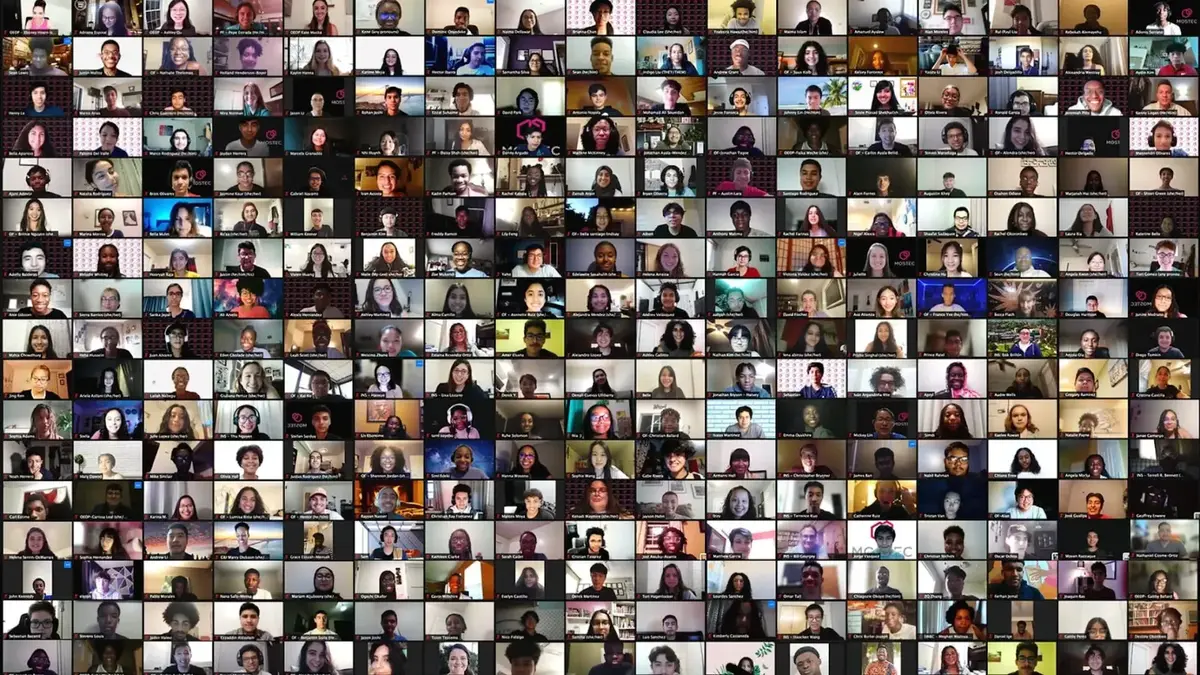
14. MITES Semester (MIT Introduction to Technology, Engineering, and Science)
Location: Online
Cost: Free (Fully funded charity program)
Dates: June – December
Application Deadline: Application typically opens in November; due February 1st
Eligibility: High school juniors (11th grade) who are U.S. citizens or U.S. permanent residents
During the summer “STEM Immersion” phase, you complete two online STEM courses and participate in synchronous sessions, office hours, and community meetings, followed by a fall “College and Career Prep” phase with webinars, small-group discussions, and ongoing skill-building during the school year.
Additionally, you’ll participate in networking events with STEM professionals and receive assistance such as essay critiques, practice interviews, and admissions advice tailored to the senior-year application schedule. Although the classes are demanding, students do not receive formal grades or college credit; instead, they receive qualitative final evaluations from instructors that can be used as supplemental context in applications.
Why it stands out: It’s a rare national, online MIT-affiliated program that runs across both summer and fall, pairing substantial STEM coursework with sustained mentorship and college/career preparation—and it is free of charge
15. Brown University Pre-College – Neural Systems: The Biological Basis of Behaviour
Location: Online
Cost: $3,096
Dates: Multiple 2-week sessions in late June and July
Application Deadline: Rolling admissions
Eligibility: Students completing grades 9-12 or aged 14-18
Brown’s Investigating the Biology and Psychology of Mental Illness course explores how biological processes and psychological factors combine to influence brain function and behaviour. You look at the major concepts such as neural circuitry, neurotransmission, and how disruptions in these systems can contribute to mental health disorders.
Through guided readings, discussions, and case studies, you deepen your ability to analyze scientific evidence linking biological mechanisms to psychological outcomes. The course helps you develop scientific reasoning and insight into how interdisciplinary research informs our understanding of complex human behaviours.
Why it stands out: It reflects Brown’s inquiry-driven teaching style and how top universities approach biological sciences
Join the Immerse Education 2027 Essay Competition
Follow the instructions to write and submit your best essay for a chance to be awarded a 100% scholarship.
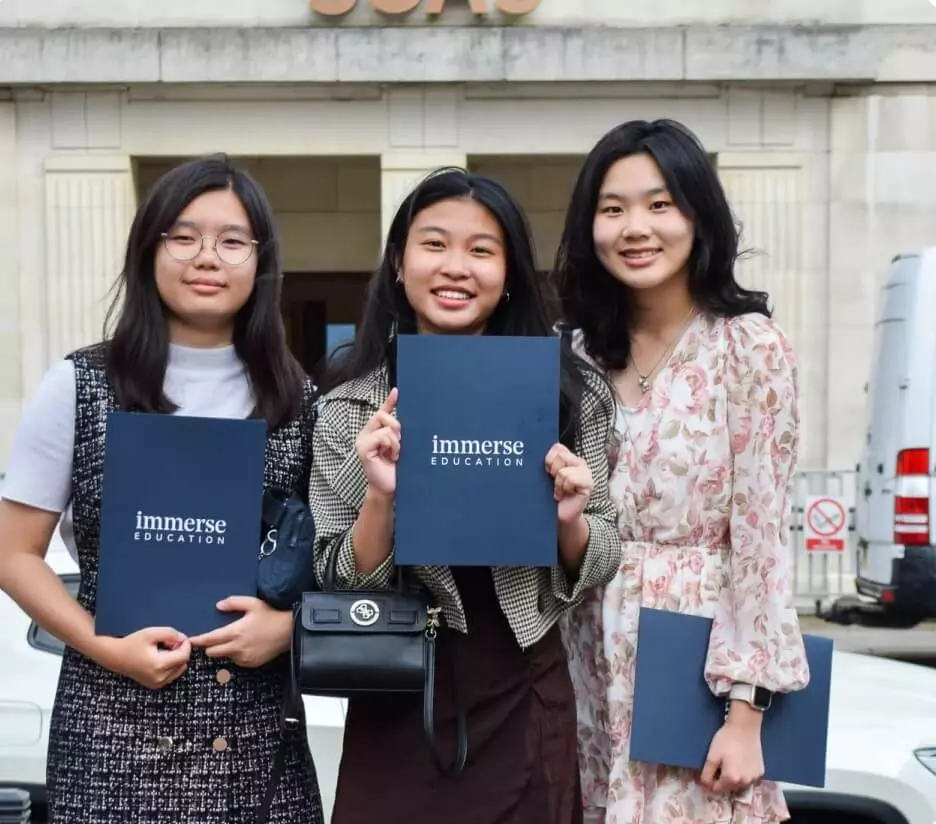
Get Ready For Cambridge Academic Life
A science summer school in Cambridge can turn your summer into real academic momentum, with seminars, problem sets, and hands-on tasks that feel university-level.
You might move from a morning lecture on biology or physics to an afternoon workshop, then finish by refining a project or presentation.
Along the way, you’ll build sharper scientific thinking, stronger communication, and the confidence to ask better questions in any lab or seminar.
Want to make the most of your time in the city too? Explore our Ultimate Guide to Cambridge for college life tips, must-see spots, and practical advice to plan your best Cambridge summer.






Unlock Inspiring Opportunities with the Immerse Education Newsletter
Join our newsletter to stay ahead with exclusive updates, exciting programme highlights, and expert insights from the world of immersive education.
Learn how Immerse can transform your life
An in-depth overview of our university and career preparation programmes
Get a glimpse into the life of an Immerse participant
Find the right programme for you with sample timetables, location showcases, and more