15 Summer School Programs for High School Students
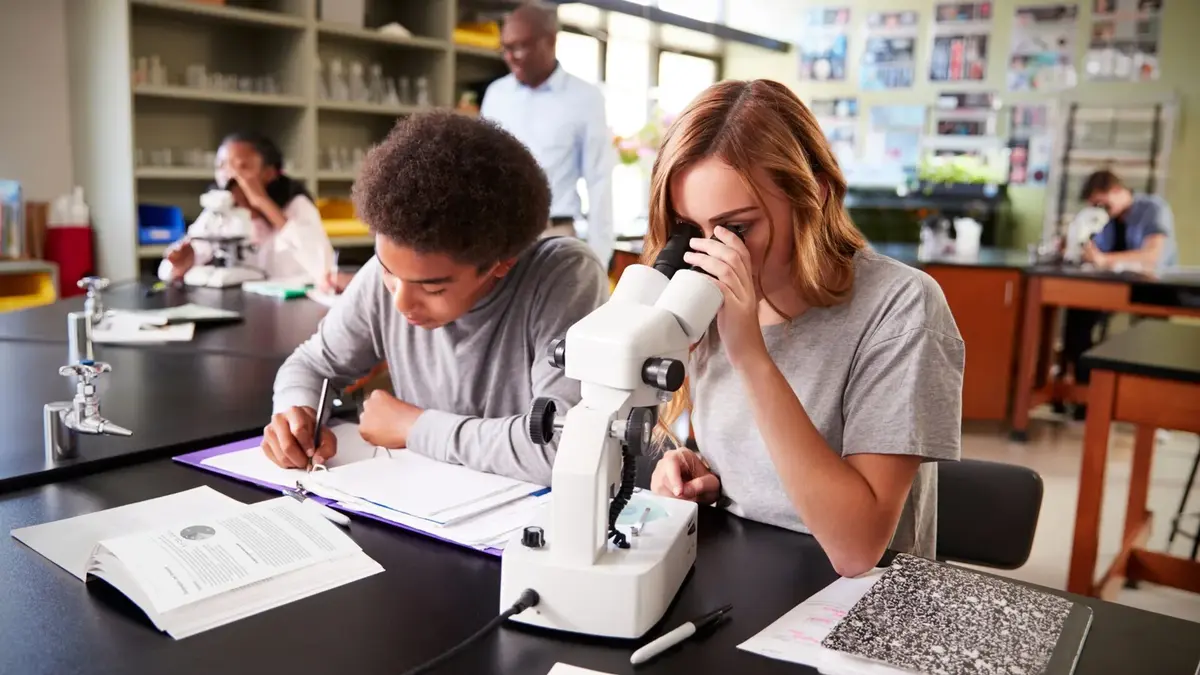
When you’re in high school, summer can feel like a welcome pause from classes, exams, and packed schedules. But it can also be an opportunity to turn that time into something meaningful. Summer school programs for high school students challenge you academically while giving you room to explore new interests.
Imagine spending a few weeks learning alongside motivated peers, guided by experienced instructors, and tackling material at a faster, more in-depth pace than during the school year. Many summer school programs are hosted on university campuses or designed by academic institutions, offering an early look at what college-level learning can feel like.
What kinds of summer school programs for high school students are offered?
We know that picking the right summer school program can be difficult. Some programs out there can be too basic, too costly, or not offer meaningful skill development. That’s why getting the right information is important, so you can identify the genuinely useful summer school programs.
Various universities and institutions offer summer school programs in STEM, humanities, math, creative disciplines, research, computer science, social sciences, and more. These programs include smaller class sizes, discussion-based teaching, and hands-on projects that allow for deeper exploration than what’s possible at school.
By participating in these programs, you can get a new perspective on the subjects you’re interested in. By the end, you will have developed confidence and teamwork skills, and be able to better decide what you want to study in the future.
You’ll have to work hard once the program starts, but we’ve made things easier for now. To help you decide, we’ve curated a list of 15 Summer School Programs for High School Students. They’ve been handpicked for their academic quality, engaging instruction, and opportunities for growth.
Environment & Sustainability



15 Summer School Programs for High School Students
1. Harvard Pre-College Summer School Program
Location: Harvard campus, Cambridge, Massachusetts
Cost: $6,100 + $75 application fee
Application Deadline: February 11
Program Dates: Session I: June 21–July 2; Session II: July 5–17; Session III: July 19–31
Eligibility: Students must be at least 16 years old by the start of the program and will not turn 19 years old before the end of the program
Harvard is a two-week summer program for high school students designed to prepare you for college life. The program offers 30 courses per session, like writing, journalism, psychology, biology, legal studies, government, economics, computer science, mathematics, and philosophy. You will participate in co-curricular activities each week to learn and gain well-rounded experience beyond lectures.
The program offers non-credit classes so you can learn college-level courses and participate in social activities to network. In the program, you will enhance your knowledge in a subject or field of your choice and explore your future academic interests. The classes and extra-curricular activities are mentored by Ivy League scholars.
Why it stands out: It offers on-campus residence and faculty and undergraduate interactions, so you’ll get an idea about what academic and student life at a leading university involves.
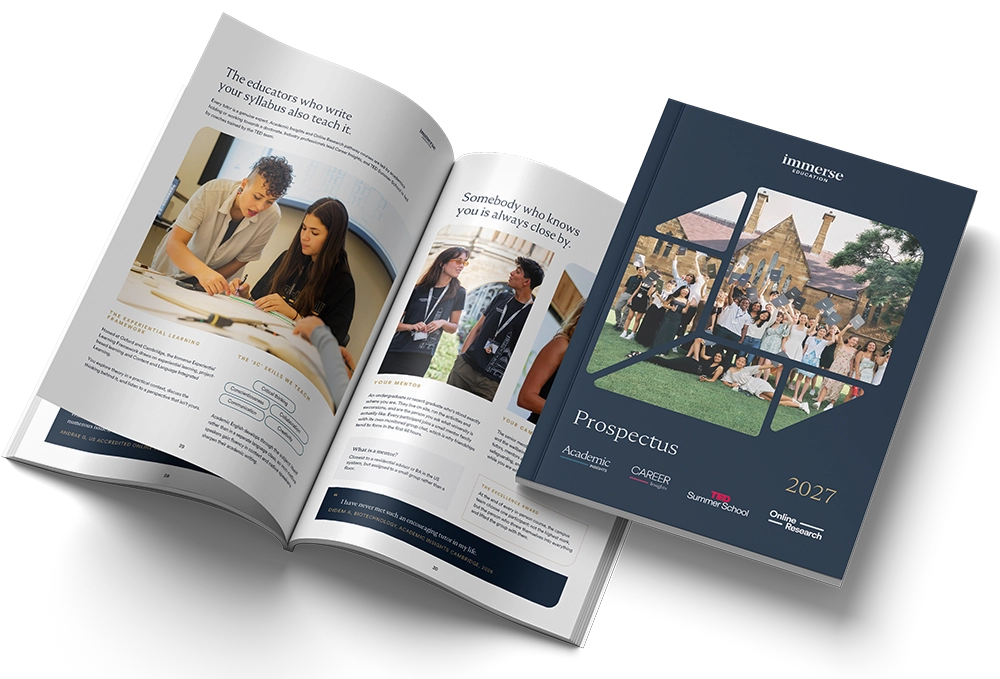
2. Immerse Education’s Pre-University Summer School
Location: Boston, Cambridge, London, Oxford, Singapore, Sydney, Tokyo, and Toronto
Cost: Varies; summer school scholarship available through our bursary programme
Application Deadline: Multiple summer cohorts; rolling admissions
Program Dates: 2 weeks during the summer
Eligibility: Students across the globe aged 13-18 currently enrolled in middle or high school
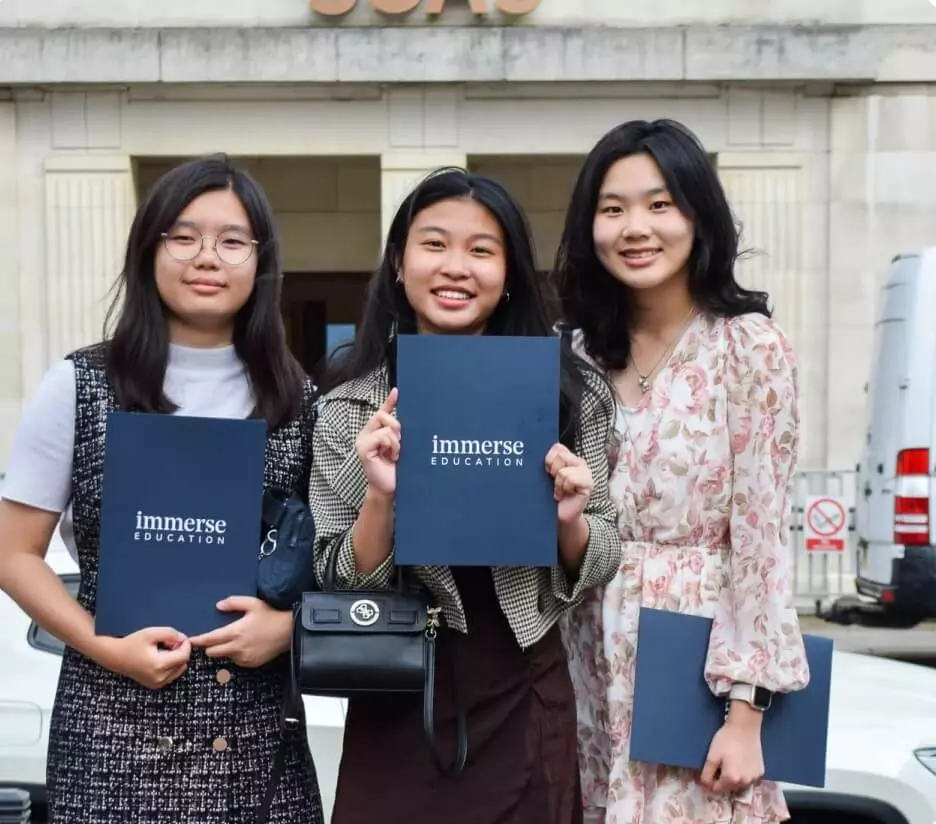
Immerse’s Academic Insights Program lets high school students experience university life firsthand. You will live on campus and study in small groups of 7-10, and learn from tutors from eminent top universities like Oxford and Cambridge. You can explore a wide range of subjects, spanning over 20 options, including Architecture, AI, Business Management, Computer Science, Economics, Medicine, Philosophy, and more. The courses are experiential and focus on hands-on learning.
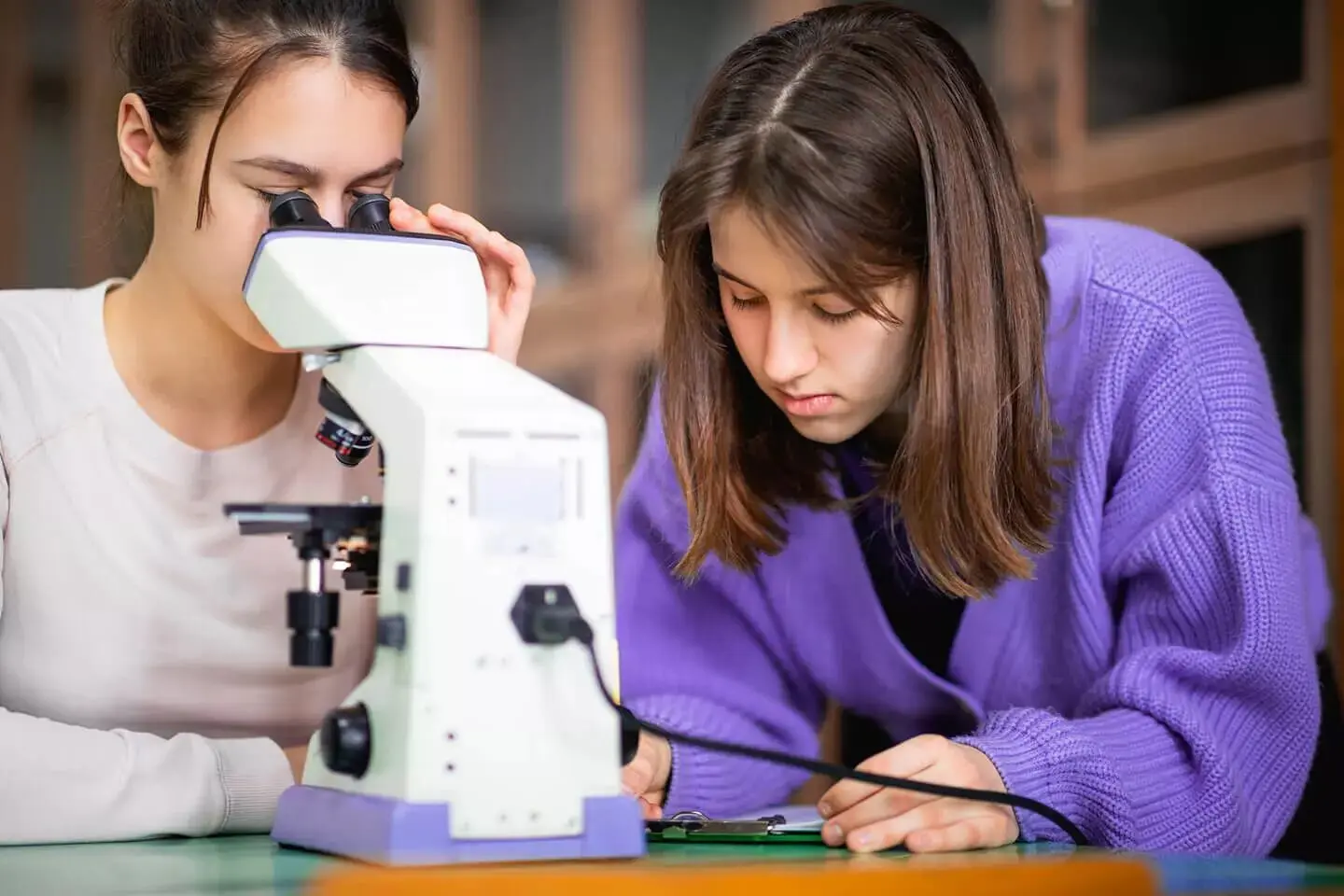
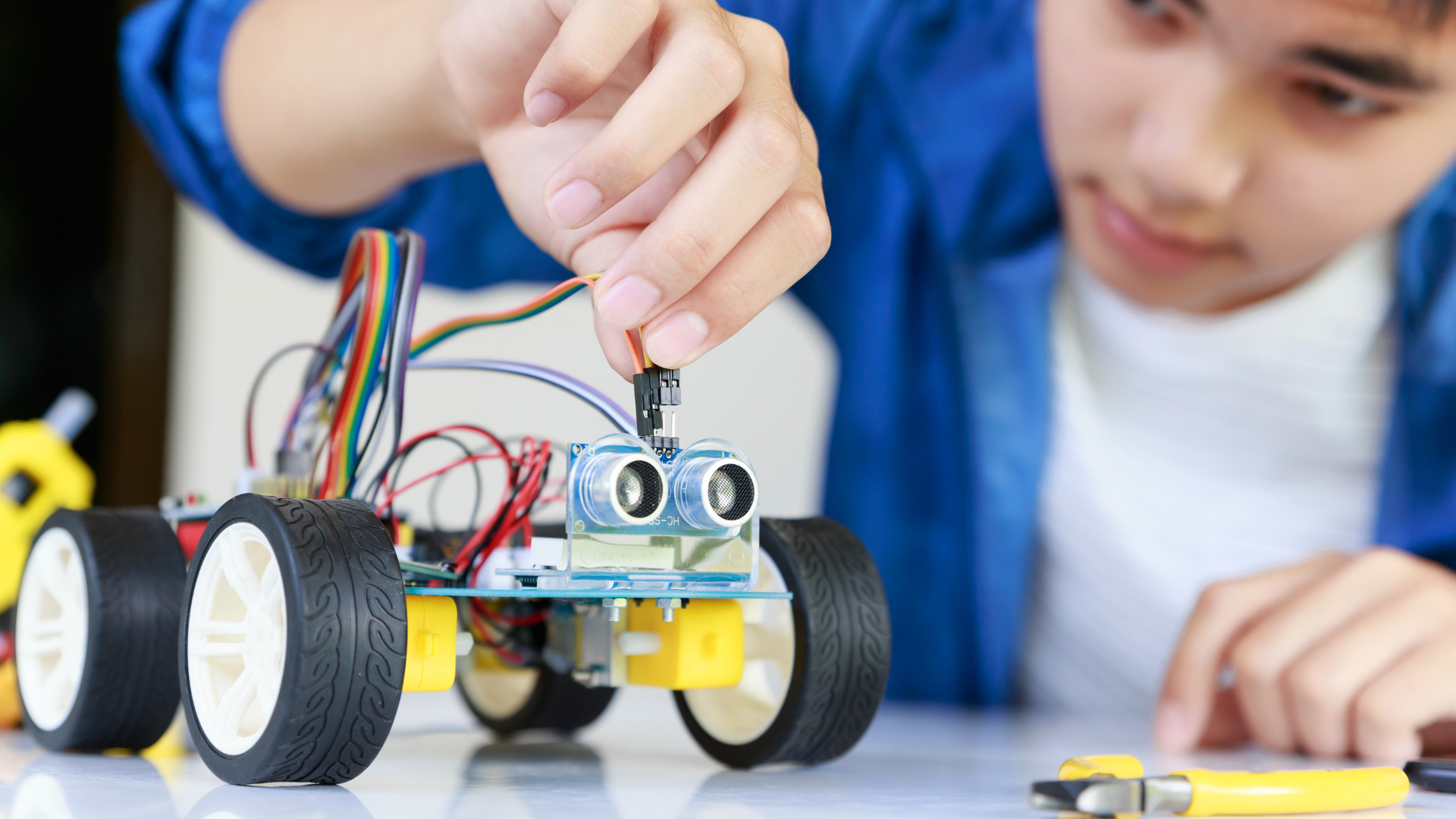
You may find yourself conducting dissections in medicine, designing a robotic arm in engineering, participating in a moot court for law, or building creative writing portfolios and business case studies. By the end of the program, you’ll complete a personal project, receive written feedback, and receive a certificate of completion. You can find more details about the application here.
Why it stands out: You’ll get an early start at university life and academics because the program includes an independent project, discussion-based classes, and living at a college campus.
3. Telluride Association Summer Seminar (TASS)
Location: Cornell University, Ithaca, New York
Cost: Free
Application Deadline: December 3
Program Dates: June 21 – July 25
Eligibility: For high school students aged 15-17
TASS is a fully-funded high school program offering courses in humanities and social sciences. The program offers topics like history, politics, literature, art, and other disciplines. You will participate in college-level seminars, lectures, discussions, and hands-on experiences led by two experienced faculty members. You’ll participate in activities led by instructors, like reading books and articles, analyzing films and art, and writing essays.
You will work in a team to democratically make decisions, from planning group activities and outings, planning community service projects, and spending from a program budget. By the end, you’ll develop reading, writing, speaking, and critical thinking skills as you explore your interests through classrooms and hands-on experiences.
Why it stands out: It offers rigorous intellectual seminars and community living, helping you develop advanced critical thinking and collaborative discussion skills well before college.
4. SPARK Research Mentorship Program
Location: Mayo Clinic campus, Jacksonville, Florida
Cost: Not disclosed yet
Application Deadline: December 31
Program Dates: June 2 – December 3
Eligibility: For high school juniors or seniors in Duval County or St. Johns County in Florida
If you are a high school junior or senior interested in biomedical sciences, the SPARK program provides mentored hands-on experience in Mayo Clinic biometric labs. You’ll learn and gain experience from basic science, the research process, to critical thinking. During the program, you’ll develop highly competitive projects that you can enter in science fairs, and may win regional and state awards, honors, and prize dollars for research.
You must commit to a minimum of 25 hours per week during the summer break from school, in mentored laboratories. You’ll explore areas like biochemistry, molecular biology, drug development, immunology, cancer biology, artificial intelligence, neuroscience, and regenerative sciences.
Why it stands out: It pairs you with leading researchers, allowing you to participate in authentic biomedical investigations rarely accessible to high school students.
5. Research Science Institute (RSI)
Location: MIT Cambridge, Massachusetts
Cost: Free
Application Deadline: December 10
Program Dates: June 28 – August 8, details here
Eligibility: Domestic high school students in the middle of their junior year (third year, or grade 11). And, international students have their own selection procedure & selection schedule.
The RSI program at MIT is a six-week, fully funded STEM program. You will begin the first week with seminars and evening lectures where you will meet science and technology leaders, including Nobel laureates and technology entrepreneurs. By the end of the first week, you’ll receive your research project assignments and begin reading advanced texts and recent journal articles. From week two through week five, you’ll join laboratories, spend business hours conducting the assigned research led by mentors.
In the end, you’ll prepare an academic conference-level paper and oral presentation and present your findings to the Institute. Beyond the research, you’ll tour cultural attractions and expeditions to science and technology facilities in the Boston Area. At the conclusion, an external panel of Boston-area scientists from academia and industry will recognize five papers and five presentations with special commendation.
Why it stands out: You’ll have the opportunity to complete actual research projects at RSI’s cutting-edge labs that are ordinarily inaccessible to high school students.
6. Carnegie Mellon University’s Summer Academy for Math and Science (SAMS)
Location: CMU campus, Pittsburgh, Pennsylvania; Online
Cost: Free
Application Deadline: February 1
Program Dates: June 20 – August 1
Eligibility: Students must be between 11th and 12th grade in high school
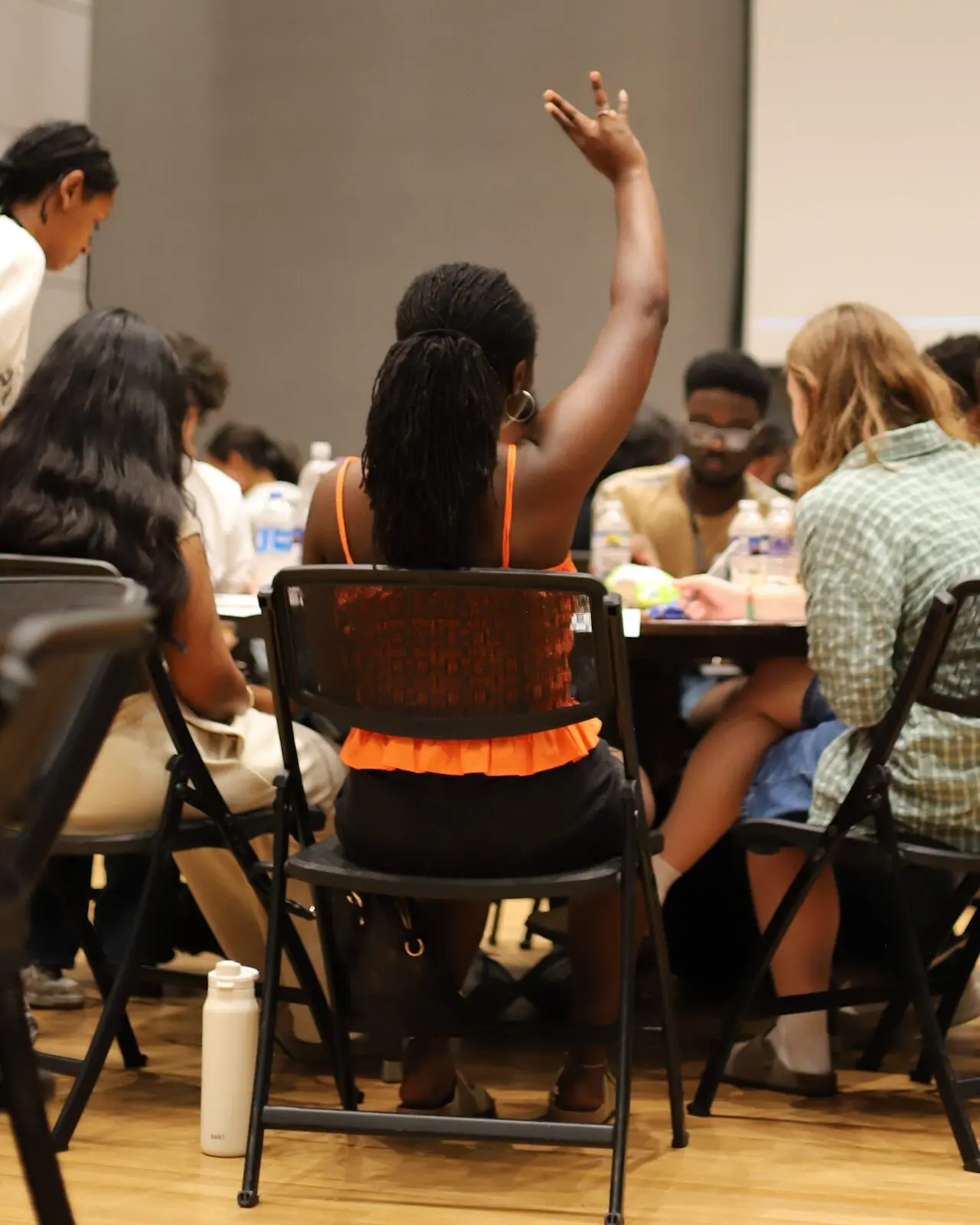
The Summer Academy for Math and Science (SAMS) at Carnegie Mellon University is designed in three parts to offer high school students rigorous coursework and hands-on experience. Part one is a virtual start where you’ll develop skills needed for the in-person program. In part two of the program, you’ll enhance your knowledge and understanding of STEM fields through courses and meetings.
During the six weeks of part two, you will participate in seminars to develop skills like quantitative and computational, and complete an assigned research project either led by the university faculty or a graduate student. You will be prepared for college and careers in the field by the university alumni and local industry leaders through weekly writing workshops.
Why it stands out: It offers long-term mentoring, helping you better craft competitive applications for selective STEM & math university programs.
7. Princeton Summer Journalism Program (PSJP)
Location: Princeton University, Princeton, New Jersey
Cost: Free
Application Deadline: January 26
Program Dates: From late June through early August
Eligibility: High school Students must be currently enrolled juniors at the time of application. No current senior or sophomore will be considered. No exceptions.
The Princeton Summer Journalism Program is a college preparation program for high school students interested in journalism. In the virtual phase, you’ll complete weekly reading assignments on current events, start writing your own articles, and work with your assigned college counselor to complete college applications. The program ends with a 10-day residential experience on the Princeton University campus, where you’ll stay in undergraduate dorms and attend workshops and lectures led by renowned educators and journalists.
You’ll tour major news organizations like The New York Times, Huffington Post, and Bloomberg to learn journalism in action and practically. On the last day of the program, your designed newspaper, The Princeton Summer Journal, will be published.
Why it stands out: It gives you hands-on research involvement under faculty guidance, helping you see how scientific inquiry and engineering projects work in professional settings.
8. Dartmouth Entrepreneurship: Driving Change Through New Businesses
Location: Dartmouth College, Hanover, New Hampshire; online
Cost: $1,895
Application Deadline: Varies depending on the session
Program Dates: Multi-length sessions available throughout the year, details here
Eligibility: For students ages 13 and up
The Driving Change Through New Businesses program guides high school students about entrepreneurship, identifying real-world problems through observation and research, and developing solutions. You’ll develop skills like designing and communicating a minimum viable product (MVP) and understanding customer needs. You’ll develop a business model sketch, conduct audience analysis, and craft a compelling narrative that highlights your product, mission, and what makes your idea unique in the market.
Through simulations and assignments, mentors will guide you to understand foundational business strategies. The industry founders, tech innovators, and educators will also guide you on career paths in entrepreneurship. By the end, you’ll design a business idea that offers a solution to a real-world problem and present your business plan through a final pitch deck or video presentation.
Why it stands out: It combines real startup frameworks with entrepreneurial thinking, helping you learn how new ventures are ideated and developed before college.
9. Women’s Technology Program (WTP) at MIT
Location: MIT campus, Cambridge, Massachusetts
Cost: Free for students with family income $120,000 or less, more details here
Application Deadline: December 15
Program Dates: June 27 – July 25
Eligibility: High school students currently in grade 11
The four-week Women’s Technology Program at MIT is a hands-on learning program for high school students. The program offers practical learning and experience in mechanical engineering while being mentored by MIT graduate and undergraduate students. You will participate in problem-solving and design activities and work on projects like trajectories, rotational motion, structures, CAD, programming, heat transfer, and manufacturing principles to develop your skills.
You’ll visit labs, engineering companies like Google, EPAM Continuum, and participate in measurement activities and workshops. You will work in pairs with MIT mentors on a poster project based on your interest from various areas of mechanical engineering. By the end, you will have a portfolio to showcase for future college and job applications. More details are here.
Why it stands out: It offers deep engineering and design exploration within MIT’s labs, helping you gain hands-on exposure to tech fundamentals and systems thinking.
10. Stanford University Mathematics Camp (SUMaC)
Location: Stanford University, California; online
Cost: Residential: $8,950
Application Deadline: February 2
Program Dates: Session One Residential: June 21 – July 17
Eligibility: High school students in grades 10 – 11
Stanford University Mathematics Camp (SUMaC) is a residential program that offers an opportunity to enhance your knowledge and understanding of advanced mathematics. You’ll study abstract algebra and number theory or algebraic topology. You will gain experience beyond classrooms through lectures, guided research, and problem-solving group sessions.
The program is focused on mathematics independently from other sciences while learning practical applications, and you will explore current mathematical research, the historical development of important mathematical areas, and applications across scientific disciplines. By the end, you’ll have experienced college life and college-level courses and workload of assignments.
Why it stands out: You’ll be exposed to the proof-based rigor associated with their graduate-level math, serving as an early exposure to methods that not many high school students have access to.
11. SUNY Oneonta Biological Field Station (BSF) Internships
Location: SUNY Oneonta Campus, Oneonta, NY
Cost: One college credit; Free
Application Deadline: Opens in January
Program Dates: Late May through August; exact dates not specified yet
Eligibility: New York State resident of age 16 or older
Biological Station Field (BSF) Summer Internship at SUNY Oneonta is a hands-on experience for high school and undergraduate students. During the program, you will participate in daily activities, work on your own research projects while helping other interns as well.During the program, you’ll participate in a mix of field work, like fisheries surveys, plant surveys, laboratory analyses, data analysis, and writing.
You will attend weekly seminars led by BSF faculty covering topics such as the ecology of Ostega Lake and the hydrology of its watershed. Upon completion, you will present the final report and a larger poster of the project before the final day of the internship. If the project is still in progress, its plan of completion must be approved by the faculty.
Why it stands out: It places you in field biology settings, helping you develop ecological research skills and a deeper connection to environmental science in action.
12. Seattle Children’s Hospital Research Training Program
Location: Seattle Children’s Research Institute, Seattle, WA
Cost: $2,000 stipend
Application Deadline: March 8
Program Dates: July 13 – August 7
Eligibility: High school students currently in 10th grade (rising junior)
The Research Training Program (RTP) at Seattle Children’s Research Institute is an opportunity for high school students to build a foundation in biomedical research for future careers. You’ll work in a research laboratory on microscopy, agarose gel electrophoresis, immunoassays, isolating white blood cells, and polymerase chain reaction in a professional environment in the Institute.
You’ll cover topics like biochemistry, immunotherapy, gene editing, and infectious diseases. You’ll conduct your own project, develop skills and participate in workshops, and explore further career options in the field. Upon completion, you’ll receive a stipend of $2,000 and give a final oral presentation.
Why it stands out: It exposes you to pediatric research and scientific methods, helping you understand how clinical studies and child health research operate.
13. Aspiring Scientists Summer Internship Program (ASSIP)
Location: GMU Science and Technology Campus, Manassas, VA; GMU Potomac Science Center, Woodbridge, VA
Cost: $1299 for three college course credits
Application Deadline: February 15
Program Dates: June 18 – August 12
Eligibility: Students must be 16 or older. But, they must not have graduated from university before or during their internship
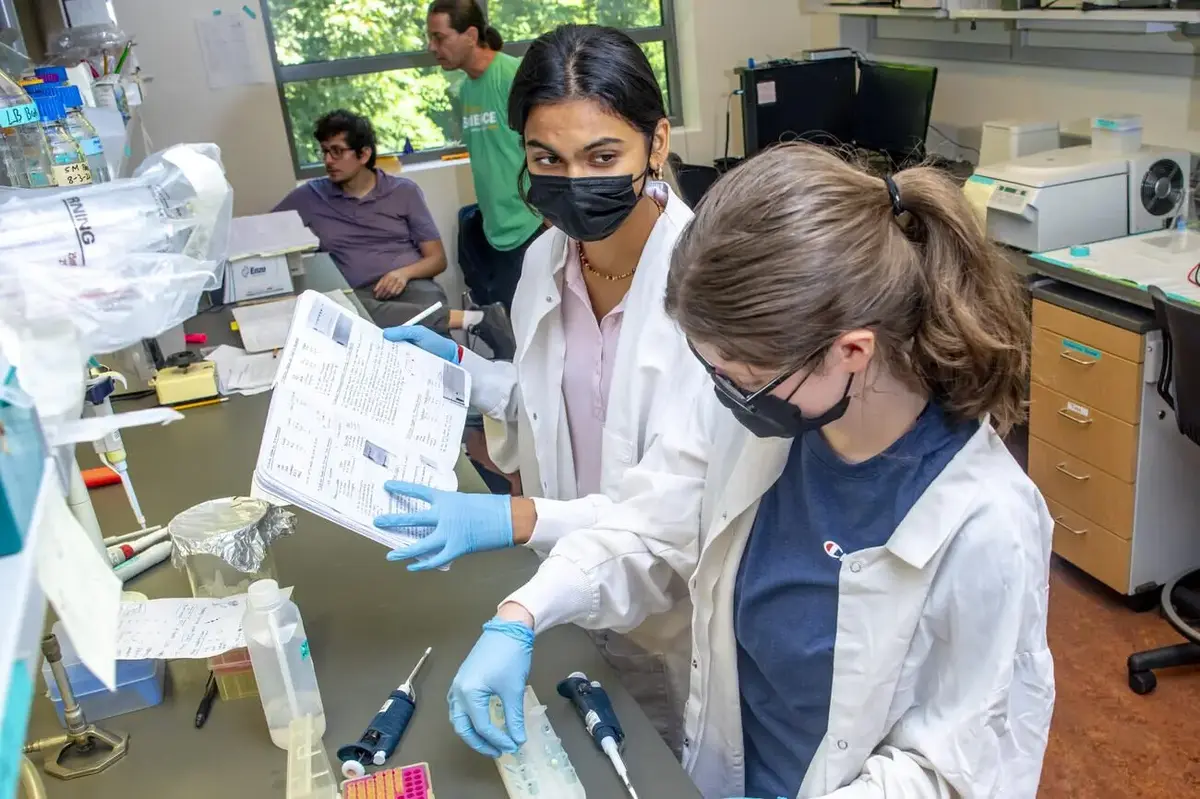
The Aspiring Scientists Summer Internship program is a full-time time hands-on experience program. You will gain practical experience using cutting-edge equipment and technologies and work one-on-one with faculty researchers. You’ll develop scientific writing and communication skills through practice.
You participate in discussion forums and connect with role models from the field, and you will be exploring STEM career choices. Besides technical skills, you will have developed creative skills that are necessary for research. Upon completion, you will earn a stipend and three college credits from George Mason University.
Why it stands out: You’ll contribute to posters, conference presentations, and co-authored publications, which is rare at the high-school level.
14. ASU Cybersecurity and Trusted Foundations
Location: CTF Lab, Arizona State University, Tempe, AZ
Cost: Not disclosed yet
Application Deadline: Not disclosed yet
Program Dates: 8 weeks, mostly across June and July
Eligibility: For Phoenix area high school juniors and seniors
The Cybersecurity and Trusted Foundations Internship at Arizona State University is a research internship on cybersecurity, hacking, and computer science. The program exposes you to the environment of a professional cybersecurity research lab where you will spend 15 – 20 hours per week, and you’ll conduct academic research.
The internship prepares you for computer science careers and future academic choices. You’ll network with researchers in the field, participate in Capture The Flag competitions, and learn fundamental emerging concepts and techniques like binary analysis using angr. At the end, you’ll receive a Letter of Recommendation based on your performance during the internship.
Why it stands out: It gives you practical work experience aligned with technical and career pathways, helping you build employable skills while exploring future options.
15. Stanford Medical Youth Science Program (SMYSP)
Location: Stanford School of Medicine, Stanford University Campus, Stanford, California
Cost: Free
Application Deadline: Opens in mid-December
Program Dates: June 22 – July 26
Eligibility: SMYSP is specifically for high school juniors in Northern California
The Stanford Medical Youth Science Program (SMYSP) is an internship held at Stanford Hospital where high school students will gain hands-on experience in healthcare and medical research. You will work in laboratories, participate in departmental activities, and experience shadowing, observation, and patient interaction.
You will attend two weekly lectures covering public health and research methodology, human anatomy, mentored by a Stanford medical student, and academic planning workshops to prepare for college. Throughout, you’ll engage in health disparities group research projects, participate in tours and demonstrations from Stanford Medical Community. At the end, you’ll write a college-level research paper, presentation, and academic poster.
Why it stands out: It exposes you to both community health issues and medical research, providing a broader view of how medicine operates beyond the hospital.
Join the Immerse Education 2027 Essay Competition
Follow the instructions to write and submit your best essay for a chance to be awarded a 100% scholarship.
Turning Summer Experiences Into Growth
Summer doesn’t have to be a break from momentum. When you choose to learn differently, it becomes a space to test ideas, stretch habits, and rethink what you’re capable of.
Immersive academic settings invite you to move faster and think deeper. You’re exposed to new standards, sharper discussions, and the satisfaction that comes from mastering something unfamiliar.
This is where summer school programs for high school students matter most. They create room for intellectual risk-taking, independence, and discovery, helping you understand how you learn best beyond school structures.
If you’re reflecting on how these moments shape confidence and direction, our Personal Development blogs explore how short experiences can lead to lasting growth.






Unlock Inspiring Opportunities with the Immerse Education Newsletter
Join our newsletter to stay ahead with exclusive updates, exciting programme highlights, and expert insights from the world of immersive education.
Learn how Immerse can transform your life
An in-depth overview of our university and career preparation programmes
Get a glimpse into the life of an Immerse participant
Find the right programme for you with sample timetables, location showcases, and more