
 Русский (RU)
 Українська (UK)
 Türkçe (TR)
 Italiano (IT)
 Français (FR)
 Português (PT)
 中文 (中国) (ZH)
 Español (ES)
 日本語 (JA)
 ไทย (TH)
 Deutsch (DE)
 Ελληνικά (EL)
 Polski (PL)
 Bahasa Indonesia (ID)
 Nederlands (NL)
 العربية (AR)
 한국어 (KO)
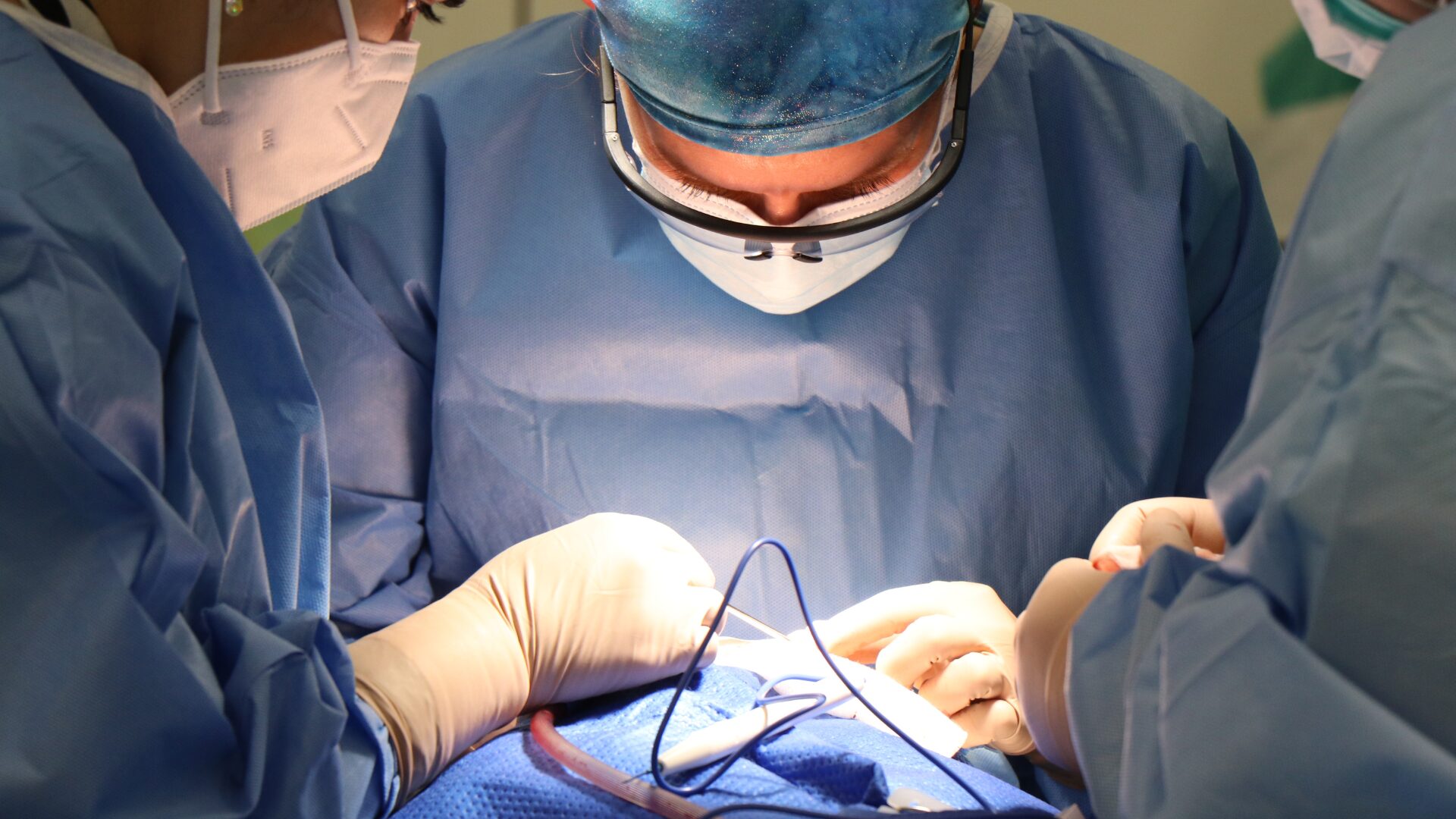
By Dr Aakashi Bhatt who is a specialist paediatric surgeon, Fellow in Robotic Surgery, and super-specialist in Fetal Surgery. She recently completed her DPhil at the University of Oxford, where her research aimed to produce novel surgical protocols for the application of Robotic Surgical Systems in Fetal Surgery. Alongside her clinical and research work, she lectures at the University and at Immerse Education, where she is a member of the Academic Advisory Panel, mentoring aspiring medical students from around the world.
Habits That Separate Exceptional Students from Merely Good Ones
Fetal surgery rests on a simple conviction: the earliest intervention can change the course of an entire life. We act before damage becomes permanent, creating possibilities that may never exist again. Every decision carries weight. Every movement is guided by knowledge painstakingly accumulated long before the operation begins.
Your education is no different.
The habits you build now, the questions you choose to pursue, the uncertainty you refuse to escape, the standards you uphold when no one is watching, are not merely preparation for university or a career. They are the architecture of the mind you will inhabit for the rest of your life.
I. Complexity is not the enemy – Superficiality is.
In fetal surgery, a procedure that appears straightforward on the surface conceals layers of anatomical, physiological, and ethical complexity that demand continuous interrogation. The surgeon who sees only the surface will eventually be destroyed by what lies beneath it. When you study, go beneath the surface. Every concept you encounter is the visible tip of something vast. Ask what is underneath. Ask what assumptions are holding it up. Ask what would happen if one of those assumptions were wrong. This is not extra work. This is the only work that actually matters.
II. Sit with uncertainty.
The students who struggled most at Oxford were not those who knew the least. They were those who were most uncomfortable not knowing. Learning to tolerate ambiguity, to stay curious rather than anxious when you do not have an answer, is a skill you can practise deliberately. The next time you encounter a concept you do not understand, resist the urge to move on. Stay with it. Turn it over. Let it bother you productively.
III. The boundaries between disciplines are where the breakthroughs live.
My work in robotic fetal surgery exists because I refused to think like a surgeon alone. The advances that define my field have emerged where surgery meets robotics, computer science, engineering, and neonatal physiology. I did not become an expert in each of these disciplines, rather I became fluent enough to ask the right questions, and it is in those conversations that new knowledge is created.
Whatever subject you love, learn enough about its neighbouring disciplines to have those conversations. The student who can think across disciplines is worth ten who cannot, because the greatest intellectual breakthroughs rarely come from thinking harder within a field; they come from importing an idea from outside it.
Read beyond your syllabus. Seek out people whose expertise differs from your own. Above all, cultivate the habit of asking: How would someone from an entirely different discipline approach this problem? The answer may change not only your perspective, but the future of your field.
IV. Standards must be set by you, not for you.
In surgery, the standard is not set by a regulator or a curriculum. It is set by the patient on the table and the irreversibility of every decision you make. I carry that standard into every environment I enter. When I teach students, young doctors, surgical interns and residents, I watch carefully for the ones who bring their own standard, who are dissatisfied with a merely correct answer when a better answer exists, who push back on explanations when something does not quite fit, who would rather sit with an unresolved question for a week than accept a convenient but incomplete resolution. Those students already understand something that most people do not learn until much later: excellence is a personal commitment, not an institutional expectation.
So, do something no one asked you to do. At school, almost everything is prescribed, structured, and assessed by someone else. At University and any career in Surgery or Medicine will require something different: the initiative to pursue questions that nobody assigned. Start now. Find a problem that genuinely fascinates you and follow it wherever it leads. Research it. Build something. Share your ideas. The specific project matters far less than the habit it develops, because nothing signals intellectual maturity more clearly than the willingness to learn without being told.
The Intervention That Defines a Life
I return, finally, to the operating theatre. To the unborn patient. To the extraordinary responsibility of intervening irreversibly, precisely, with every year of training, research, and disciplined thought distilled into each movement.
I have operated on patients who will never know my name, yet whose futures were quietly altered in a single moment. I have taught students who will perhaps one day make clinical and surgical breakthroughs one cannot yet imagine.
Both remind me of the same truth: the earliest investments often produce the greatest transformations.
You are living through the most consequential period of your intellectual formation. What you choose to build now will echo for decades. Having stood on both sides of the operating table and the tutorial table, I have seen what separates those who reach the frontier from those who stop just short of it – They never lose their curiosity.
So, wherever your path leads, keep asking better questions. Keep thinking more deeply. Keep choosing understanding over certainty.
The future belongs to those who never stop asking why!
Medicine
In-person
Explore cutting-edge medical science in Cambridge, home to...
Medicine
In-person
Explore Medicine in Tokyo and build skills necessary...
Join the Immerse Education 2025 Essay Competition
Follow the instructions to write and submit your best essay for a chance to be awarded a 100% scholarship.