


 Русский (RU)
 Українська (UK)
 Türkçe (TR)
 Italiano (IT)
 Français (FR)
 Português (PT)
 中文 (中国) (ZH)
 Español (ES)
 日本語 (JA)
 ไทย (TH)
 Deutsch (DE)
 Ελληνικά (EL)
 Polski (PL)
 Bahasa Indonesia (ID)
 Nederlands (NL)
 العربية (AR)
 한국어 (KO)

If you want to know how to get clinical experience for med school, start with roles that bring you close enough to patients to understand the responsibility, pressure, and purpose of care.
To get clinical experience, you can work as a medical scribe, EMT, CNA, medical assistant, hospice volunteer, clinic volunteer, or hospital ward volunteer.
In this guide, we’ll explore what counts as clinical experience, which roles are most valuable, how to build meaningful hours, and how to reflect on what you learn.
By the end, you’ll know how to take your next step with purpose, so let’s get right into it.
What Counts as Clinical Experience for Med School?
You can get clinical experience for med school in many ways, but the strongest opportunities involve real patient contact. They usually mean seeing, supporting, or communicating with patients in a healthcare environment, not just observing from a distance.
These are the roles that help you move beyond watching from the sidelines.
The Golden Rule: Close Enough to “Smell the Patients”
A role usually counts as clinical experience when you are close enough to patients to understand their needs and emotions. It should also help you see their routines and concerns, not just give you access to a hospital corridor.
For example, helping a patient settle into a clinic room, taking basic observations under supervision, or transporting patients between departments can give you a clearer view of real care. Assisting with comfort rounds, supporting hospice patients, or documenting a doctor-patient conversation as a medical scribe can do the same.
Clinical experience can broadly be divided into active and passive forms, both of which can help you develop an understanding of patient care and the healthcare environment.
- Active clinical experience: you are directly involved in patient-facing tasks, such as recording vital signs, assisting with mobility, preparing rooms, speaking with patients, supporting care routines, or documenting appointments under supervision.
- Passive clinical experience: you are mainly observing care, such as shadowing a doctor, watching ward rounds, sitting in on consultations with permission, or learning how a healthcare team communicates and makes decisions.
Does Shadowing Count as Clinical Experience?
Shadowing usually does not count as hands-on clinical experience, but it is still valuable – and a great example of passive clinical experience. When you shadow a doctor, you observe consultations, ward rounds, patient conversations, diagnoses, and team decisions. That helps you understand medicine, but you are not actively supporting patient care.
For example, watching a GP consultation differs from taking observations, helping with intake forms, or supporting patients in hospice care. Treat shadowing as a strong addition, not your main clinical experience for applications or interviews.
Clinical vs. Non-Clinical Volunteering
Understanding the difference between active and passive clinical experience is helpful, but it is equally important to distinguish clinical volunteering from non-clinical volunteering.
Clinical volunteering means your service brings you into meaningful contact with patients. While, non-clinical volunteering usually supports the healthcare setting without much direct exposure to patient care.
Here are specific examples of clinical and non-clinical volunteering roles.
| Clinical Volunteering | Non-clinical Volunteering |
| Supporting patients on a hospital ward | Working in a hospital gift shop |
| Helping in a free clinic | Filing documents in a hospital office |
| Volunteering in hospice care | Organising charity fundraisers |
| Assisting with patient transport | Managing supplies or stockrooms |
| Spending time with care home residents | Helping with general event support |
| Helping patients complete intake forms | Reception work with little or no patient interaction |
| Shows patient contact, empathy, communication, and comfort around illness | Shows service, responsibility, organisation, and teamwork, but usually not direct clinical exposure |
Why You Need Clinical Experience: Beyond the Application
Clinical experience is not just something to list on your med school application. It helps you test whether you can handle the realities of med school, from the pace and pressure to the emotional weight of medicine.
A hospital ward, hospice, emergency department, care home, or free clinic can expose you to tired patients and anxious families. It can also show you long waiting times, uncomfortable conversations, and routine tasks that still require patience and dignity.
It also builds bedside manner in ways textbooks cannot. You learn how to introduce yourself clearly, listen without interrupting, notice when someone is nervous, explain simple information respectfully, and stay calm when a patient is confused, upset, or in pain. These small interactions help you become more confident and compassionate.
Clinical experience also supports your wider preparation for entry requirements. Strong grades still matter. Our A-Level requirements for Medicine guide explains subject choices, grade expectations, and academic preparation alongside your patient-facing experience.
Medicine
In-person
Explore Medical science in London and build necessary...
Medicine
In-person
Explore careers in Medicine in New York
What Is the Best Way to Get Clinical Experience for Medical School?
The best way to get clinical experience for medical school is to start with opportunities that match your age, schedule and level of training. In high school, this often means volunteering, shadowing, care home visits, hospital support, hospice companionship, health outreach or summer programmes.
These roles can still teach you about patients, communication and healthcare. As you get older, you can consider paid or certified roles, often after high school, during college, or during a gap year.
High School-Friendly Volunteer Clinical Experience
These options are usually the most realistic starting points for high school students.
- Hospital volunteering: Many hospitals offer volunteer programmes for students, although age limits and duties vary. You may help with wayfinding, patient transport, ward support, reception guidance, comfort rounds or delivering items to patients.
- Care home volunteering: Spending time with older residents, helping with activities or offering companionship can build patience, communication and confidence around people with different health needs.
- Hospice volunteering: Some hospices allow teen volunteers, often in companionship, family support, reception or event roles. Direct patient contact may depend on your age, training and the hospice’s policies.
- Free clinic or community health volunteering: You might help with intake forms, translation support, patient flow, health education events or community outreach. This can show you how access, cost and social factors affect healthcare.
- Doctor shadowing: Shadowing is usually observational rather than hands-on, but it can help you understand what doctors do, how they speak with patients and how healthcare teams make decisions.
- Community health outreach: Health fairs, vaccination events, blood drives, public health workshops and local charity projects can introduce you to prevention, education and underserved communities.
- Youth volunteer programmes: Some hospitals, universities and non-profit organisations run structured programmes for high school students interested in healthcare. These can be useful if you are too young for paid clinical roles.
- Health-related summer programmes: A medicine summer school, pre-med programme or hospital-based youth programme can give you structured exposure to clinical topics, simulations and healthcare careers.
Paid or Certified Roles to Consider Later
These roles can be excellent, but they usually require more time, training, maturity and eligibility checks.
- Certified Nursing Assistant, or CNA: A CNA helps patients with daily care, such as washing, dressing, eating, mobility and comfort. Some states allow students to begin CNA training at 16, while others require you to be 17 or 18. This can be possible in high school in some areas, but it is often more realistic in the summer, after graduation, during college, or during a gap year.
- Emergency Medical Technician, or EMT: EMTs respond to urgent calls, assess patients, take vital signs and support transport to hospital. This role usually requires a formal EMT course, certification and state licensure. Some students train as EMTs near the end of high school, but many pursue it after graduation or during a gap year because of the time commitment and age requirements.
- Medical scribe: Scribes document appointments, record medical histories and observe how clinicians think through diagnoses. Some scribe roles require applicants to be 18 or to have graduated from high school, so this is often more realistic after high school.
- Medical assistant: Medical assistants may prepare examination rooms, take blood pressure, update records and support clinicians. Some roles require formal training or certification, while others offer on-the-job training. This is usually more suitable for older students, college students or gap year applicants.
- Phlebotomy or patient care technician roles: These roles can involve blood draws, samples, monitoring or routine patient support. They usually require training and may have age restrictions, so they are better treated as later-stage options rather than a first step in early high school.
Join the Immerse Education 2025 Essay Competition
Follow the instructions to write and submit your best essay for a chance to be awarded a 100% scholarship.
How to Get 2000 Hours of Clinical Experience
Typically, you might aim for around 150 to 300+ hours of clinical experience for med school. However, with competitive applications, gap years, and highly committed applicants, some students choose to build much higher clinical hours.
Below is a step-by-step guide you can use to work towards 2,000 hours of clinical experience in a realistic, structured way.
A Realistic Timeline for High School Students
The best plan is to start with accessible roles, then increase responsibility as you become older and more qualified.
- Early high school: Start with low-barrier exposure. Look for hospital volunteering, care home visits, charity work, health outreach, school health clubs, first aid training or medicine-related summer programmes. At this stage, focus on curiosity, service and communication rather than hour totals.
- Later high school: Look for more regular patient-facing opportunities. You might volunteer weekly at a hospital, hospice, care home, free clinic or community health organisation. If your state or local programme allows it, you may also explore CNA training, junior EMT programmes or structured healthcare career pathways.
- Summer after high school: This can be a good time to complete training that was difficult to fit around school. Depending on your location and age, you might consider CNA training, EMT training, phlebotomy, medical assistant training or a longer clinical volunteer placement.
- College or pre-med years: This is often when students build more substantial hours. You may work as a scribe, EMT, CNA, medical assistant, patient care technician or regular clinic volunteer. These roles can give you stronger examples for applications because they involve repeated patient contact and responsibility.
- Gap year: A gap year can make 2,000 hours realistic if you work close to full time in a clinical role. For example, a full-time scribe, CNA, EMT or medical assistant role over 12 months can build a large number of hours and give you recent, detailed experiences to discuss in applications and interviews.
Should You Take a Gap Year to Get Clinical Experience?
A gap year can be useful if you need more time to build clinical experience, strengthen your application or decide whether medicine is right for you. It’s not required for everyone.
For high school students, it may help if patient-facing roles have been limited or if you want more responsibility. You could use the year to complete EMT or CNA training, work as a scribe or medical assistant, or take on a regular patient care role.
A gap year should have a clear purpose. Avoid using it only to collect hours. A strong plan includes clinical work, reflection, academic preparation where needed and enough balance to avoid burnout. You might consider a gap year if:
| A gap year may help if… | You may not need one if… |
| You have very little patient-facing experience | You already have consistent, meaningful clinical exposure |
| You need time to complete training for EMT, CNA or another role | You can continue volunteering or working during college |
| You want stronger examples for applications or interviews | Your current experiences already show maturity and service |
| You need to improve academic readiness alongside clinical work | A gap year would mainly add pressure without a clear plan |
Balancing Quality vs. Quantity
High clinical hours can strengthen your application, but only when those hours show real exposure to patients, healthcare teams, and the responsibilities of care. For example, 500 hours as a CNA helping with mobility, hygiene, meals, and comfort can give stronger insight. This can be more valuable than 2,000 hours spent mostly filing paperwork in a clinic office.
Quality experience should give you specific moments to reflect on. For example, you might calm an anxious patient, notice how nurses protect dignity, or learn how communication affects trust.
That does not mean hours are unimportant. Consistent experience shows commitment, reliability, and maturity, especially when you stay in a role long enough to build confidence.
For a deeper breakdown of realistic hour ranges, use our Clinical Hours for Med School guide to plan a target that fits your timeline, role, and application goals.
How to Find and Secure These Opportunities
Finding clinical experience often starts with being proactive. Many useful roles are not advertised as “pre-med clinical experience”, especially for high school students.
Start by looking for patient-facing settings near you, then check whether they accept volunteers under 18. Age rules, training requirements, background checks, vaccinations and supervision policies can vary.
1. Start With High School-Friendly Places
Begin with organisations that are more likely to accept younger volunteers.
- Hospital volunteer departments: Many hospitals have formal volunteer programmes. Ask whether they accept high school students and whether any roles involve patient contact, such as wayfinding, patient transport, ward support or waiting room assistance.
- Care homes and assisted living facilities: These settings may offer companionship, activity support or mealtime support. They can be a practical way to build communication skills before you are old enough for more advanced clinical roles.
- Hospices: Ask whether they offer teen volunteer roles. Some opportunities may involve companionship, family support or community events, while others may be limited to older volunteers.
- Free clinics and community health charities: Look for organisations supporting underserved groups, older adults, disabled people, refugees or low-income patients. You may be able to help with forms, patient guidance, translation support or outreach.
- Local first aid, Red Cross, public health or emergency response programmes: These can help you develop useful skills and may lead towards EMT or other clinical training later.
2. Check the Requirements Before You Apply
Before spending time on an application, ask:
- “Do you accept high school students or volunteers under 18?”
- “Is this role patient-facing?”
- “What training, vaccination records or background checks do I need?”
- “Can I volunteer during evenings, weekends or school holidays?”
- “Is there a minimum time commitment?”
- “Will I have a supervisor who can verify my hours?”
For paid or certified roles, also ask whether you need a high school diploma, state-approved training, certification, licensure or a minimum age. This is especially important for CNA, EMT, phlebotomy, medical assistant and patient care technician roles.
3. Use a Simple Outreach Email
Here is a short email you can adapt:
Dear [HR Manager’s Name],
My name is [Your Name], and I’m a high school student interested in studying medicine in the future. I’m looking for a volunteer role that would help me understand patient care, communication and healthcare environments.
Do you accept high school volunteers, and are there any patient-facing roles available? I’m especially interested in helping with wayfinding, patient support, care home activities, clinic flow or community health outreach.
I’m available [days/times], and I would be happy to complete any required training or checks.
Thank you for your time.
Kind regards,
[Your Name]
Documenting Your Experience for the AMCAS or UCAS Application
Documenting your clinical experience matters because applications should show what you noticed, learnt, questioned, and changed after patient-facing work.
Keep a simple journal after each shift: date, setting, role, hours, tasks, and one reflection on a specific interaction. You might note how you helped a nervous patient find the right clinic room, watched a nurse calm a distressed family, or saw clear language reduce confusion.
Protect privacy by avoiding names, birthdays, addresses, room numbers, diagnoses, or details that identify someone. Write “an older patient managing a long-term condition” instead.
For personal statements, choose moments that reveal growth. These might include dignity during personal care, barriers to access, hospice companionship, teamwork, or discovering how patience builds trust. Those details make your experience specific, reflective, and more convincing than a simple hour count.
Supplemental Preparation: Medicine Summer Schools
Medicine summer schools are not a replacement for clinical experience, but they can strengthen the academic side of your preparation.
Through our Medicine Summer School, you can explore scientific foundations, clinical communication, critical thinking, hands-on medical simulations, and discussions across different specialities and healthcare settings.
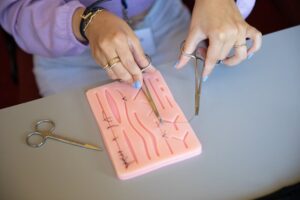
You can also practise skills such as suturing or knot-tying in selected locations, build confidence through expert-led academic sessions, and receive personalised guidance from experienced practitioners.
If you want structured preparation alongside patient-facing experience, our programs can help you deepen your understanding of medicine before applying.
Conclusion: Taking the First Step Toward Your Medical Career
Clinical experience is not just about reaching an impressive hour count; it is about understanding patients, pressure, teamwork, and responsibility before you apply to medicine.
If you are still deciding how to get meaningful clinical experience for med school, start with roles that bring you close to patient care and help you reflect honestly.
Paid roles, volunteering, shadowing, journaling, and gap years can all play a part, but choose opportunities that teach communication, empathy, and resilience in practice daily.
To strengthen your preparation alongside clinical exposure, explore our Medicine Summer School and take your next step towards medicine with confidence.