
 Русский (RU)
 Українська (UK)
 Türkçe (TR)
 Italiano (IT)
 Français (FR)
 Português (PT)
 中文 (中国) (ZH)
 Español (ES)
 日本語 (JA)
 ไทย (TH)
 Deutsch (DE)
 Ελληνικά (EL)
 Polski (PL)
 Bahasa Indonesia (ID)
 Nederlands (NL)
 العربية (AR)
 한국어 (KO)

When summer comes, it can sometimes feel like a well-deserved break from the typical high-school routine of classes and tests. But it can also present a meaningful opportunity: one where you can challenge yourself in pursuing your intellectual interests and experiencing real research environments. For many, that opportunity takes the form of summer research internships for high school students.
Picture this. You’re working with researchers to contribute to their ongoing projects in a field that perfectly complements the theories you’ve studied in class. You’re in a lab, studio, or field, assisting with experiments and analysing data, learning how knowledge advances through collaboration and discovery. These are not run-of-the-mill academic experiences, but a glimpse into the intellectual inquiry that drives universities, hospitals, and research institutions worldwide.
You might already be familiar with academic settings, but a research internship allows you to experience that world day to day. Being part of a team, learning from mentors, and taking on real responsibility are all part of the process.
What kinds of research internships can high school students pursue?
Not all research internships are built to offer the kind of academic rigor, mentorship, or practical experience that makes them so rewarding. It’s important to research carefully to avoid the ones that are too basic and not genuinely focused on research.
As for the fields, there are internships that are focused on a variety of fields, including biology, engineering, medicine, computer science, psychology, environmental science, and physics. Be it a university, lab, hospital, nonprofit, or private entity, you can either explore a new interest or nurture a deep passion.
Through learning practical skills, confidence, and the ability to collaborate in a professional environment, you’ll get a glimpse into what the world of research is all about. It’s not just about gaining experience that would strengthen your college application, but also about figuring out what kind of future academic path you’d want to take.
Now, you’ll likely have to put in a lot of dedication and hard work in doing the internship itself, but we’ll make the search for them easier. Below, we’ve curated a list of 15 Summer Research Internships for High School Students, keeping in mind their academic rigor, mentorship opportunities, and hands-on experiences.
15 Summer Research Internships for High School Students
1. Fermilab Program for Research, Innovation, and STEM Mentorship (PRISM)
Location: On-site and off-site work schedule
Stipend: $500 weekly
Dates: July 13th – August 7th
Application Deadline: March 1st
Eligibility: High school seniors or recent graduates; must be a U.S. citizen; have proof of medical insurance; and have an Illinois high school enrolment
The Fermilab PRISM program is a summer internship for high school seniors and recent graduates who want to explore advanced areas of science and technology. You’ll explore quantum science, particle physics, engineering, and artificial intelligence through weekly sessions, lectures, hands-on activities, and facility tours.
Throughout the program, you work closely with Fermilab researchers and STEM professionals to create a research abstract and poster that you’ll present at the end. The experience gives you a look at scientific careers at the intersection of artificial intelligence and physics.
Why it stands out: It places you in cutting-edge physics and engineering research environments, helping you gain hands-on experience with real experiments and advanced instrumentation.
2. Immerse Education – Summer Research Internship Track
Location: London, New York, San Francisco, and Tokyo
Cost: Varies according to program. Financial aid available
Dates: 2 weeks during the summer
Application Deadline: Multiple summer cohorts with rolling admissions
Eligibility: High school students worldwide aged 15-18
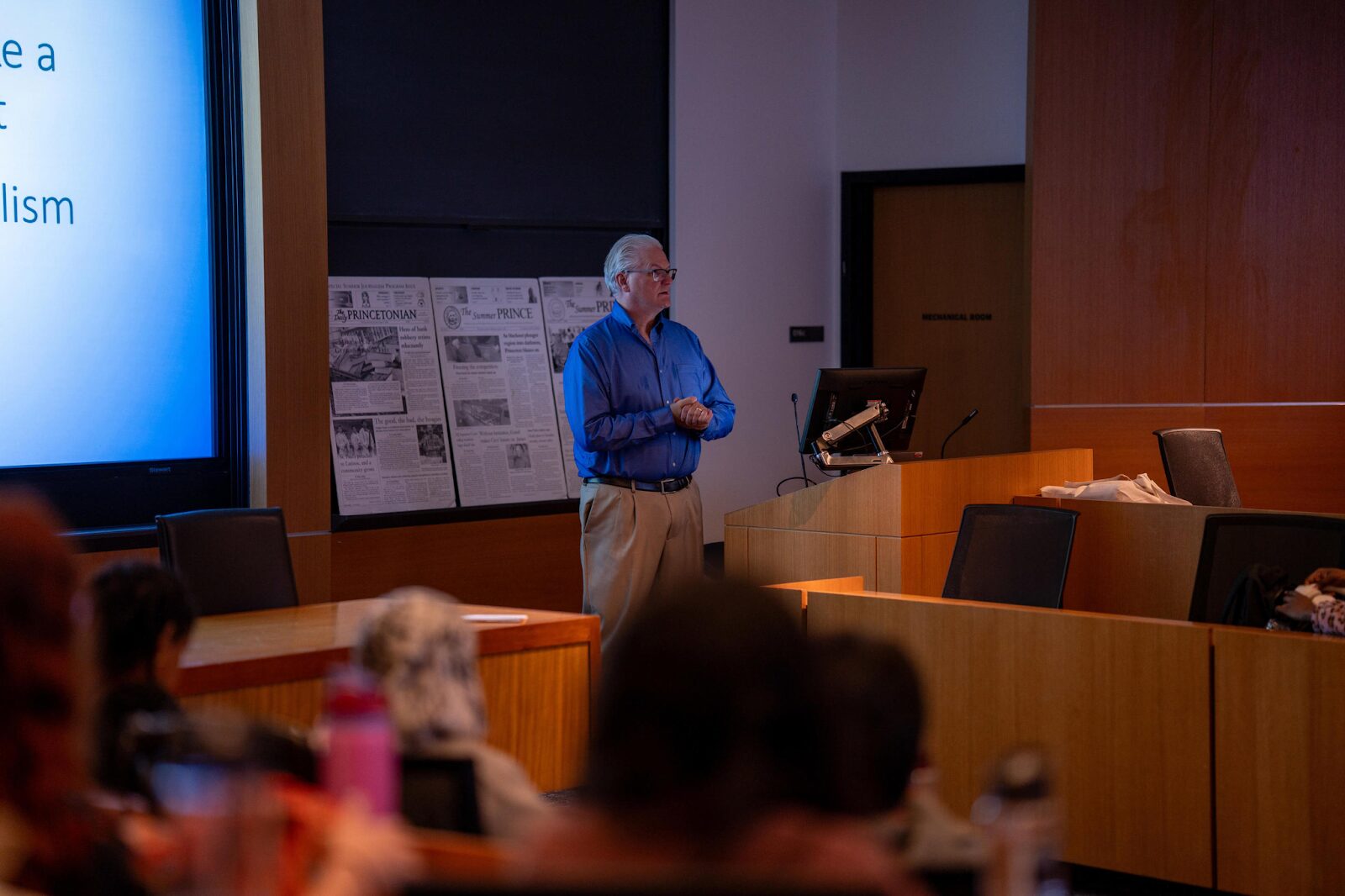
The Career Insights Program lets high school students explore careers in major global industry hubs. The Summer Research Internship track is designed to introduce you to thorough research environments in your chosen subject area. Participants engage in project-based learning with established companies, attend interactive workshops, and visit offices, factories, and headquarters.
The program also includes in-person weekly 1:1 career coaching sessions and sessions where you will receive personalized feedback on your resume and overall profile. You’ll also present your findings to industry experts at the end of the program. You can find more details about the application here!
Why it stands out: You’ll explore university-level concepts in fields like medicine and psychology, giving you early exposure to the academic pathways behind real careers.
3. Max Planck Florida Institute for Neuroscience (MPFI) Summer Research Internship
Location: Max Planck Florida Institute for Neuroscience, FL
Stipend: $13/hour
Dates: June 17th – July 26th
Application Deadline: March 4th
Eligibility: Rising high school juniors and seniors who are at least 16 years old, live in Palm Beach or Martin County, and have U.S. work authorization
The Max Planck Florida Institute for Neuroscience Summer Research Internship is a six-week program for rising high school juniors and seniors, and one of the most lab-intensive summer research internships for high school students. You work alongside MPFI researchers on a project within one of three tracks: neuroscience, scientific programming, or mechanical engineering.
During the internship, you get hands-on experience across MPFI labs, and at the end of the summer, you present your research to the community. You can look at past intern presentations here.
Why it stands out: It introduces you to world-class biomedical and ecological research, helping you understand how international science institutions operate and collaborate.
4. Johns Hopkins University: ASPIRE High School Internship Program
Location: Virtual options available + mandatory in-person onboarding at APL, Laurel, MD
Cost/Stipend: No stipend
Dates: June 23rd – August 21st
Application Deadline: February 15th
Eligibility: Rising juniors or seniors; at least 15 years of age by June 1; U.S. citizenship (green card holders are not eligible); Minimum 2.8 GPA; Permanent residence in one of the following Maryland counties: Anne Arundel, Baltimore (County or City), Calvert, Carroll, Charles, Frederick, Howard, Montgomery, Prince George’s; one of the following Virginia counties/cities: Alexandria, Arlington, or Fairfax; or the District of Columbia; Students in Calvert or Charles Counties are only eligible for virtual ASPIRE internship placements
The ASPIRE program at Johns Hopkins Applied Physics Laboratory gives high school juniors and seniors the chance to work on real STEM projects before college. You are matched with an APL mentor and contribute to ongoing work in AI, cybersecurity, aerospace engineering, or environmental science.
Over the summer, interns complete at least 190 hours designing experiments, coding, researching, or building tech solutions based on their placement. You’ll wrap up the experience by creating a digital poster that outlines your project and takeaways.
Why it stands out: It gives you exposure to applied physics and engineering projects, helping you bridge classroom learning with real technical problem-solving.
5. Aspiring Scientists Summer Internship Program (ASSIP)
Location: Remote options available
Cost: Tuition costs $1,299; you receive three university course credits for participation in ASSIP
Dates: June 18th – August 12th
Application Deadline: February 15th
Eligibility: Applicants must be 16 years old or older as of the first day of the program each year if they are working in a laboratory with biological or chemical hazards. For all other internships, applicants must be 15 by the first day of the program, including remote internships; international students accepted
The Aspiring Scientists Summer Internship Program is an eight-week research experience for high school students interested in pursuing advanced STEM work. You’ll collaborate one-on-one with faculty researchers in computational, mathematical, computer, and data sciences.
Alongside your project, you’ll learn scientific writing and build your communication skills. You can review prospective mentors and their research areas here. Past ASSIP projects have included work on Rapid Quantum Computation of Ionizable Lipid Acidity Constants at the College of Science: Department of Chemistry and Biochemistry.
Why it stands out: You’ll contribute to posters, conference presentations, and co-authored publications, which is rare at the high-school level.
6. Stanford Science, Humanities, Technology, Engineering, and Mathematics (SHTEM) Internship for High School Students
Location: Stanford University, Stanford, CA
Cost/Stipend: No cost, but a $95 application fee is required; need-based fee waivers are available / No stipend
Dates: June 22nd – August 14th (dates subject to change)
Application Deadline: January 25th
Eligibility: High school juniors or seniors who will be at least 14 years old by June 1st
The Stanford SHTEM Internship connects high school students with faculty and staff from the Stanford Compression Forum and affiliated groups to work on projects at the intersection of science, technology, and the humanities. You’ll join a small team of 2–5 students on an interdisciplinary project.
Past topics have included linguistics, psychology, computer science, and design, with recent collaborations introducing students to generative AI and data visualization using Amazon QuickSight. Expect to spend roughly 20 to 30 hours a week on research and mentor meetings.
Why it stands out: It lets you join research teams in compression science and engineering, offering you an early taste of university research culture and lab techniques.
7. USC Dornsife Center for the Political Future and Wrigley Institute for Environment and Sustainability: High School Summer Internship Program
Location: Virtual
Cost/Stipend: No cost, no stipend
Dates: June 1st – August 1st
Application Deadline: May 19th
Eligibility: High school students with a minimum GPA of 3.5; graduating seniors are not eligible
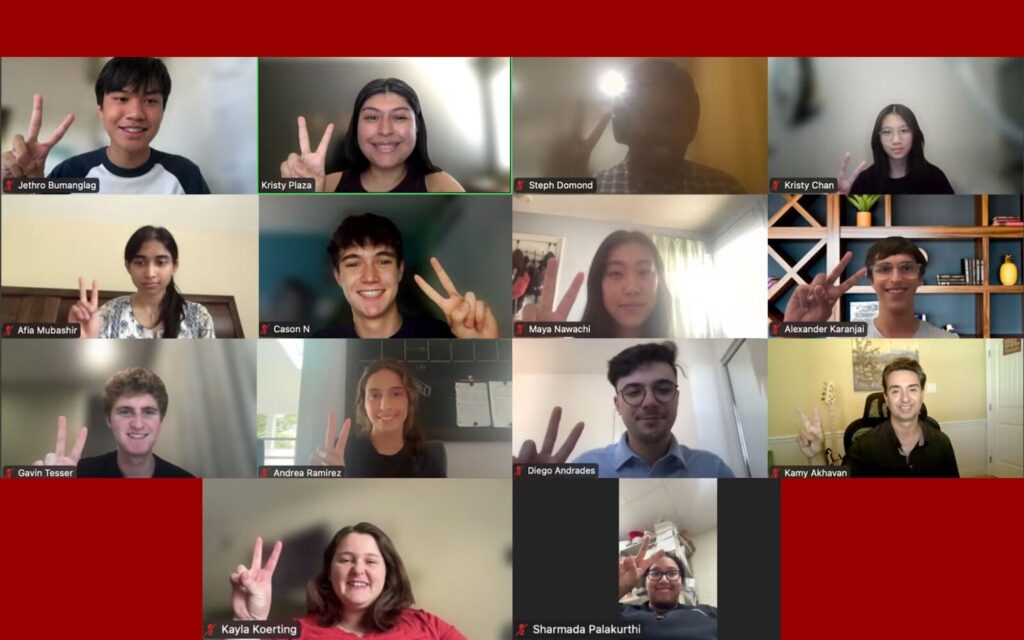
The USC Dornsife Center for the Political Future High School Summer Internship Program is a competitive research and policy internship for high school students. Over the summer, you’ll select a bill connected to environmental policy or sustainability, whether it has passed, stalled, or is still moving through the legislature.
You’ll complete two main projects: a legislative policy memo and a legislative process analysis. This work helps you understand how political systems influence environmental decision-making. Students who finish the program successfully may have one assignment published online and receive recognition as a ‘Summer Research Intern’.
Why it stands out: It provides experience in public policy research and political studies, helping you understand how civic institutions and campaigns work.
8. American Anthropological Association: Virtual High School Internship
Location: Virtual
Stipend: None
Dates: Multiple 12-week cohorts, including summer, fall, and spring
Application Deadline: Varies as per cohort; Summer: March/April; Fall: July/August; Spring: November/December
Eligibility: High school juniors and seniors
The American Anthropological Association Virtual Internship is a four-week remote program for high school students interested in social science and research. You’ll spend about 10 hours a week working with AAA staff to adapt anthropological scholarship for younger audiences. Most interns break down topics like migration and displacement into research summaries, infographics, or short videos.
Past projects have covered return migration in Ghana and the role of culture in health in the Marshall Islands. In addition to your main research project, you’ll complete a secondary one focused on accessibility or public education.
Why it stands out: It engages you in anthropological research and practice, helping you develop critical cultural analysis and fieldwork planning skills.
9. Research Science Institute (RSI)
Location: Massachusetts Institute of Technology, Cambridge, MA
Cost/Stipend: Non-refundable application fee of $75; cost-free for all participants, all educational, housing, and dining expenses are covered
Dates: June 28th – August 8th
Application Deadline: December 10th
Eligibility: High school juniors from around the world
The Research Science Institute is a highly selective six-week summer program at MIT. You’ll start with a week of seminars taught by MIT faculty. For the remaining five weeks, you’ll work full-time with a graduate student mentor on an original research project. You’ll learn to read academic papers, outline and execute a research plan, and present your results through a written paper and a talk at the program’s research symposium.
You’ll also be part of an alumni community that includes students who went on to MIT, Harvard, and Stanford. Past topics have included research titles like “From Satellite Observations to Submesoscale Ocean Dynamics: Geostrophic Field Smoothing and Diffusion-Based Reconstruction”.
Why it stands out: You’ll have the opportunity to complete actual research projects at RSI’s cutting-edge labs that are ordinarily inaccessible to high school students.
10. NASA and UT Austin’s SEES Virtual Summer Intern Program
Location: Hybrid
Cost/Stipend: No cost
Dates: Remote: June – July 5th; followed by on-site internship: July 6th – 19th; Virtual SEES Science Symposium: July 21st – 22nd
Application Deadline: February 22nd
Eligibility: Grade 10 and 11 U.S. students
The SEES High School Summer Intern Program, run by NASA and the University of Texas at Austin’s Center for Space Research, is one of the most structured summer research internships for high school students, offering a hands-on introduction to Earth and space science. You’ll learn to work with real NASA satellite data using tools like Python and collaborate with scientists and engineers on projects in astronomy, remote sensing, and climate science.
Before starting, interns complete distance-learning modules, then join their project teams for online or on-site research through June and July. Past interns have modeled natural hazards, mapped ice sheets, and built data visualizations. You’ll wrap up the program by presenting your work at the Virtual Science Symposium.
Why it stands out: It gives you structured research involvement with faculty mentors, helping you see how scientific inquiry and experimentation unfold in professional settings.
11. University of Georgia’s Young Scholars Internship Program (YSP)
Location: University of Georgia campuses in Athens, Tifton, and Griffin, GA
Cost/Stipend: Stipend provided
Dates: Internship: June 1st – July 7th; July 8th – July 10th: Young Scholars Pre-Collegiate Research Conference
Application Deadline: January 23rd
Eligibility: Students must have completed their sophomore year of high school, be at least 16 years old by the program start date, and have completed one high school science course, including laboratory, and one semester of algebra
The Young Scholars Program at the University of Georgia is a paid five-week summer internship for high school students interested in agricultural, food, and environmental sciences. Run by the UGA College, the program pairs you with a faculty mentor for about 30 hours of weekly research on one of the Athens, Griffin, or Tifton campuses.
Alongside your project, you’ll join site visits and explore career paths in the agricultural sector. You’ll end the program by presenting your work at the Young Scholars Pre-Collegiate Research Conference.
Why it stands out: It offers research and academic enrichment in agricultural, environmental, and biological sciences, helping you explore STEM pathways early.
12. Stony Brook University – Simons Summer Research Program
Location: Stony Brook University, Stony Brook, NY
Cost/Stipend: Estimated residential cost: $2,450/Stipend award received at completion
Dates: June 29th – August 7th
Application Deadline: February 5th
Eligibility: High school students in grade 11 at the time of applying; must be US citizens and/or permanent residents; and must be at least 16 years of age by the start of the program
The Simons Summer Research Program is a six-week research experience at Stony Brook University, where you work directly with a faculty mentor on a defined project. Before arriving on campus, you’ll connect with your mentor and review any suggested readings to prepare.
The program begins with required lab safety training in the first week, after which you’ll join your assigned lab and spend at least four hours a day on research. By the end of the six weeks, you’ll write a formal abstract and share your results in a poster session. Check past research projects here.
Why it stands out: Its labs are connected to national research centers, and you’ll contribute to cutting-edge computational and applied math projects.
13. New York Historical Society: Student Historian Internship Program
Location: New York Historical Society, New York, NY
Stipend: $700
Dates: Academic Year Internship: October 29th – June 24th, Summer Internship: early July through mid-August
Application Deadline: Summer applications open in February
Eligibility: High school students in grades 10-12 who live in and attend school in the NYC metro area
The Student Historian Internship at The New York Historical Society is an academically demanding program where high school students conduct original research and learn how public history is created and documented. You’ll study the New York Historical Society’s ‘Composite Nation’ exhibition along with related materials from its permanent collections to examine how historical ideas shape civic life.
Interns tour exhibitions and meet professionals working in digital humanities and museum studies. The program culminates in your digital projects, such as blog posts or online exhibits, which are published on the New York Historical Society’s Teen Blog.
Why it stands out: It lets you work with historical collections and public history projects, helping you build archival research and museum interpretation skills.
14. The Rockefeller University – Summer Science Research Program
Location: The Rockefeller University, New York, NY
Stipend: Stipends are not guaranteed, but may be awarded to students experiencing financial hardship and who meet all the attendance and research requirements of the SSRP
Acceptance rate/cohort size: Highly selective, 32 students
Dates: June 22nd – August 6th
Application Deadline: January 2nd
Eligibility: High school juniors or seniors around the world who are at least 16 years old at the program’s start
The Summer Science Research Program at Rockefeller University is a seven-week biomedical research internship and is often cited as one of the most rigorous summer research internships for high school students in the life sciences. You’ll join one of four research teams of 8-10 peers and work under scientists from Rockefeller, Memorial Sloan Kettering, and Weill Cornell.
After completing lab safety training, you’ll spend the summer designing experiments, collecting data, and analyzing results. You’ll wrap up with a formal poster presentation. Beyond your research work, you’ll take part in elective courses, guest lectures, workshops, and community events that introduce you to careers in science.
Why it stands out: It focuses on independent research, mentorship from eminent researchers, and a final poster presentation, providing you with valuable experience for STEM applications.
15. DSI Summer Lab
Location: John Crerar Library at the University of Chicago, Hyde Park campus, IL
Stipend: $5,600
Dates: June 15th – August 7th
Application Deadline: January 12th
Eligibility: High school students (freshmen through seniors) who live/attend school in the Chicago area, can comfortably commute to UChicago Hyde Park, familiar with at least one programming language (Python, Java, C++, etc.)
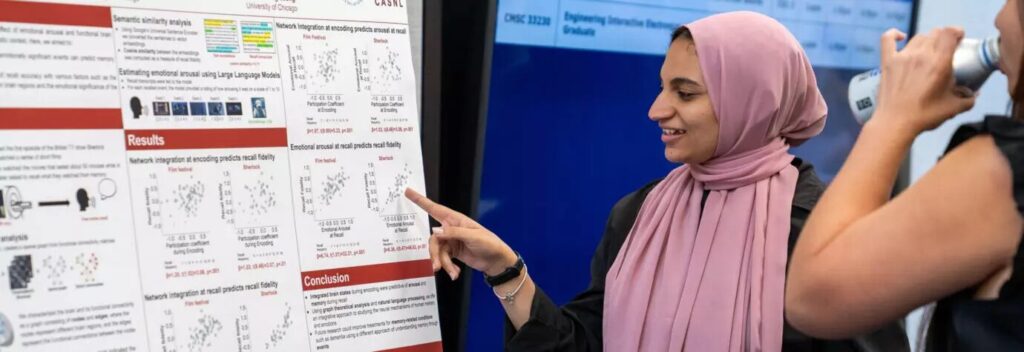
The DSI Summer Lab is an eight-week paid research internship at the University of Chicago’s Data Science Institute. You’ll work on an applied, interdisciplinary project that uses data science and AI to tackle real-world problems while working under the guidance of a faculty or graduate mentor.
Over the summer, you’ll collect and analyze data, apply AI methods, and take part in weekly seminars led by speakers who discuss their work and career paths. The program concludes with a symposium modeled on a professional research conference, and some students continue collaborating with their mentors after the summer ends.
Why it stands out: You’ll engage in data science projects that blend statistics, computation, and real datasets, helping you understand how data-driven research works across disciplines.
From Classroom Concepts to Real-World Discovery
Research experiences during the summer show how curiosity becomes structured inquiry and ideas are tested in real academic settings.
By working alongside researchers and mentors, you begin to understand how knowledge is built, challenged, and refined. You also gain insight into the collaboration that defines professional research environments.
These 15 summer research internships for high school students offer a chance to explore interests before committing to an academic path. They can confirm a passion or open unexpected directions.
If this has sparked further questions, our Career Exploration blogs offer thoughtful guidance on where those interests might lead next.