

 Русский (RU)
 Українська (UK)
 Türkçe (TR)
 Italiano (IT)
 Français (FR)
 Português (PT)
 中文 (中国) (ZH)
 Español (ES)
 日本語 (JA)
 ไทย (TH)
 Deutsch (DE)
 Ελληνικά (EL)
 Polski (PL)
 Bahasa Indonesia (ID)
 Nederlands (NL)
 العربية (AR)
 한국어 (KO)

You’re excited, uncertain, and stepping into something unfamiliar, knowing that studying abroad means learning to navigate a new place on your own. Wherever you choose to go, it’s a guarantee that the best places to study abroad in Europe shape how you think, grow, and engage with the world.
Europe’s strongest study destinations are academically rigorous cities such as Oxford, Cambridge, London, Paris, Berlin, and Barcelona, where teaching quality and cultural immersion go hand in hand.
These environments support independence, critical thinking, and global perspective through everyday international experience.
Here are ten of the strongest European destinations to consider.
Top 10 Best Places to Study Abroad in Europe
From Oxford to Paris, the best places to study abroad in Europe combine academic rigour with cultural richness, supporting international learners through structured programmes and global perspectives.
Here are ten of the best places to study abroad in Europe for academic and personal growth.
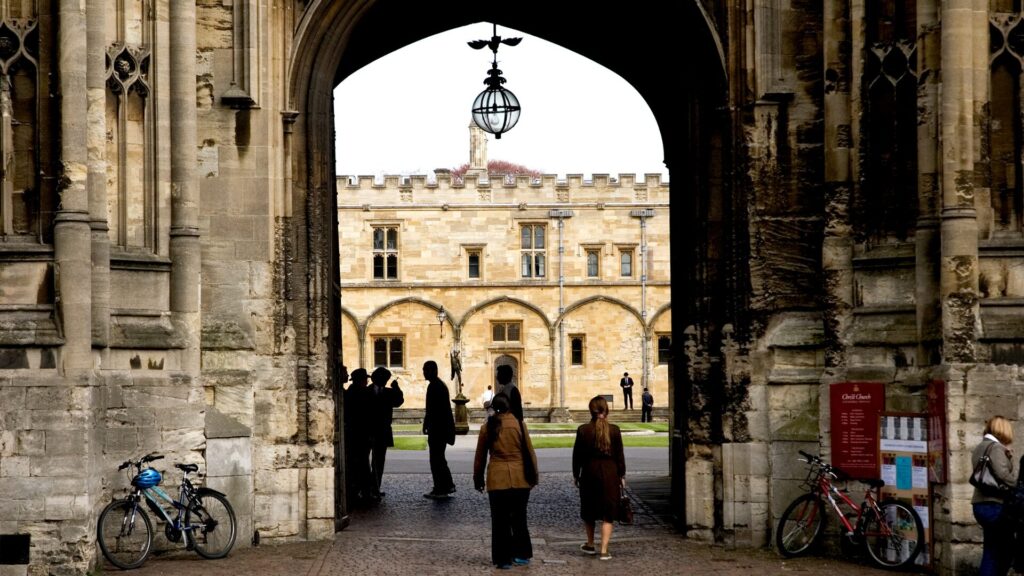
1. Oxford, United Kingdom
- Academic focus: Based on Oxford’s historical strengths and academic legacy, key areas of focus include English language and literature, anatomy and physiology, and geography
- Leading institutions: University of Oxford (QS 2026: 4th)
- Student experience: Small-group tutorials that expect prepared work and discussion-led feedback
- Cost of living: Estimated £1,425–£2,035 per month for 2025-26
- Best suited for: Ambitious learners seeking intellectual challenge and academic independence
- Highlights for locals: Riverside walks (or rowing!) along the Isis, historic venues like the Turf Tavern, and afternoons spent with a book in quiet corners of libraries that feel untouched by time.
Sometimes it’s hard to remember that Oxford is actually a city, not just a university that people casually name-drop. The university has become so synonymous with the place that the two often blur together!
Studying here means living in a city built around ideas. Tutorials are demanding and personal, pushing you to defend your thinking with confidence. It’s intense, humbling, and deeply rewarding if you’re ready for a serious academic challenge.
Looking for a summer school in Oxford? Check out our 2-week programmes for ambitious high schoolers.
2. Cambridge, United Kingdom
- Academic focus: Shaped by a long tradition of scholarship, Cambridge is especially associated with the sciences, alongside strong foundations in archaeology, English language and literature, and mathematics
- Leading institutions: University of Cambridge (QS 2026: 6th)
- Student experience: Supervisions (small-group tutorials) with high expectations for independent study and regular academic feedback
- Cost of living: Estimated monthly living costs around £1,305
- Best suited for: Learners who want an intense academic challenge with close academic support
- Highlights for locals: Punting on the Cam, cycling everywhere in under 15 minutes, and college gardens that double as study escapes.
Ever heard of Isaac Newton, Charles Darwin, or Alan Turing? Yes, they all studied here. Cambridge has a habit of producing people who change how the world thinks.
Today, that legacy shows up in supervisions that challenge your ideas fast and often. You’re expected to prepare, question, and refine your thinking independently. It’s demanding, focused, and ideal if you thrive under intellectual pressure.
Interested in studying in Cambridge this summer? Our two-week programmes are built for motivated high school students ready for an academic challenge.
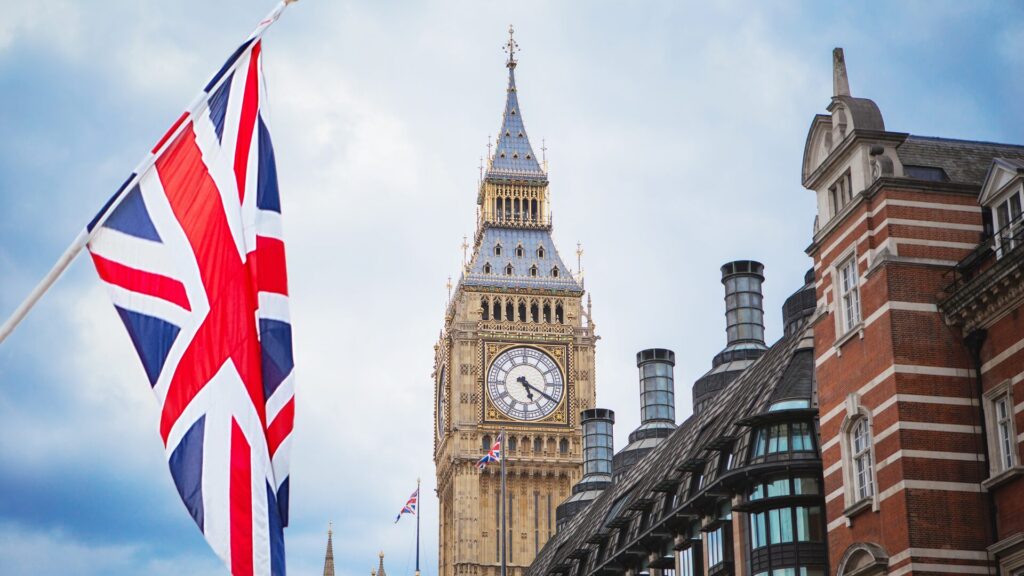
3. London, United Kingdom
- Academic focus: Science, engineering, medicine, and business, plus world-leading education and architecture.
- Leading institutions: Imperial College London (QS 2026: 2nd); UCL (QS 2026: 9th); King’s College London (QS 2026: 31st).
- Student experience: City-based learning with access to major museums, archives, hospitals, and industry networks alongside study.
- Cost of living: King’s estimates around £1,734 per month for living costs in London.
- Best suited for: Learners who want academic variety, real-world exposure, and a fast-paced international environment
- Highlights for locals: Free world-class museums, neighbourhood food markets, and the feeling that whatever your interest, it has a community somewhere in the city.
London isn’t just where you study, it’s where your timetable collides with the real world. One morning, you’re in a lecture, the next, you’re hopping on the Tube to a museum, lab, or internship.
With institutions like Imperial, UCL, and King’s, the city rewards curiosity and initiative. It’s fast, expensive, and energising, ideal if you want learning with global momentum and a community that doesn’t sit still.
4. Paris, France
- Academic focus: Arts and humanities, social and political sciences, and STEM strengths in mathematics, physics, and engineering
- Leading institutions: PSL University (QS 2026: 28th); Institut Polytechnique de Paris (QS 2026: 41st); Sorbonne University (QS 2026: =72nd)
- Student experience: A high-energy, ideas-first culture with lectures, talks, exhibitions, and globally mixed cohorts across the city’s institutions
- Cost of living: Often quoted around €1,200–€1,300 per month for students, with rent a major variable
- Best suited for: Learners who want serious academics alongside constant cultural and intellectual stimulus
- Highlights for locals: Independent bookshops, late-night cafés for debating ideas, and stunning museums that become part of everyday life rather than tourist stops.
Aside from the Eiffel Tower and its reputation as the city of love, Paris is a city built on ideas. Academic life here is woven into everyday experience, from lectures and debates to museums and public talks.
Hundreds of years ago, writers, philosophers, and scientists gathered in Parisian salons to argue, question, and share new ways of thinking. Those conversations helped shape modern politics, art, and science, and that spirit of discussion is still part of the city today, just in classrooms, cafés, and public spaces instead.
You’re constantly surrounded by history, politics, and culture that challenge how you think. It’s demanding, stimulating, and ideal if you want learning to feel alive beyond study spaces.
5. Berlin, Germany
- Academic focus: Social sciences and humanities, plus strong natural and Earth sciences, computer science and mathematics, and engineering and technology
- Leading institutions: Freie Universität Berlin (QS 2026: =88); Humboldt-Universität zu Berlin (QS 2026: 130); Technische Universität Berlin (QS 2026: 145)
- Student experience: International-facing study with interdisciplinary learning and strong links between research, industry, and city institutions
- Cost of living: Roughly €1,600 per month, including rent and general living costs
- Best suited for: Curious, independent learners who want big-city energy and modern academic thinking
- Highlights for locals: Affordable cultural events, lakes and green spaces for downtime, and neighbourhoods that feel creative rather than curated.
If you learn best by questioning everything, Berlin will feel like home. Seminars often spill into conversations along the Spree, in repurposed factories, or at public talks near Museum Island.
The city’s layered history, from the Berlin Wall to contemporary political spaces, becomes part of your learning. It’s a place where ideas feel lived, debated, and constantly reshaped.
6. Barcelona, Spain
- Academic focus: Life sciences and medicine, arts and humanities, and social sciences
- Leading institutions: Universitat de Barcelona (QS 2026: 160); Universitat Autònoma de Barcelona (QS 2026: 172); Universitat Pompeu Fabra (QS 2026: =265)
- Student experience: Multilingual learning environment with Catalan and Spanish widely used across campuses
- Cost of living: Approximately €850–€1,400 per month, depending on rent and lifestyle
- Best suited for: Learners who want rigorous academics alongside creativity, language exposure, and international energy
- Highlights for locals: Studying near the sea, evening walks through historic districts, and a social life shaped by food, language, and shared public spaces.
Famous for Gaudí’s architecture, the Mediterranean coastline, and a strong Catalan identity, Barcelona blends academic study with constant cultural energy. You might revise near the Gothic Quarter, pass the Sagrada Família on your daily walk, and switch between Catalan and Spanish on campus.
It’s a city where learning feels active, multilingual, and creative, ideal for students who want serious academics in a vibrant, outward-looking environment.
7. Amsterdam, Netherlands
- Academic focus: Communication and media studies, psychology, geography, and anthropology
- Leading institutions: University of Amsterdam (QS 2026: 53rd); Vrije Universiteit Amsterdam (QS 2026: =194).
- Student experience: International, discussion-led learning in a compact city where you can realistically bike between seminars, libraries, and neighbourhood study spots.
- Cost of living: Expect around €975–€1,500 per month in living expenses (includes rent, excludes tuition).
- Best suited for: Independent learners who want world-class social sciences in a city built for easy daily life
- Highlights for locals: A bike-first lifestyle, neighbourhood cafés that double as study spots, and easy access to nature just beyond the canals.
Amsterdam makes it easy to feel capable fast. You’ll cycle past a UNESCO-listed canal ring on your way to class, then switch from a seminar to a quiet library session in minutes.
For many learners, Amsterdam stands out as one of the best places to study abroad in Europe, thanks to its manageable scale and strong academic focus, especially in communication and behavioural sciences. It’s calm, clever, and confidence-building.
8. Florence, Italy
- Academic focus: Strong subject areas include agriculture, pharmacy, nursing, sociology, and history, with architecture and several Earth sciences also performing well.
- Leading institutions: University of Florence (QS 2026: =404)
- Student experience: Research-based teaching in a city known for its cultural heritage, with a clear international outlook and a wide programme choice.
- Cost of living: Student budgets are often estimated around €1,300 per month (including rent), while general costs excluding rent are about €975 per month.
- Best suited for: Learners who want academics rooted in history, culture, and real-world context
- Highlights for locals: Morning espresso rituals, sunset views over the Arno, and living among art that most enthusiasts only see in textbooks.
Florence is the kind of place where your walk to class feels like a history lesson. You’ll study in a city shaped by the Renaissance, with the Duomo on the skyline, the Uffizi minutes away, and Ponte Vecchio always pulling you back into the centre.
It’s quieter than bigger capitals, but intensely inspiring, especially if you want learning that feels connected to art, heritage, and ideas.
9. Zurich, Switzerland
- Academic focus: Engineering and technology, computer science, and natural sciences, alongside strong life sciences research
- Leading institutions: ETH Zurich (QS 2026: 7th); University of Zurich (QS 2026: 100th)
- Student experience: Research-led, high-expectation learning with strong links between academia, industry, and innovation
- Cost of living: Around CHF 2,200 per month as a minimum student cost-of-living estimate
- Best suited for: Learners seeking world-leading STEM education in a high-performing, globally influential city
- Highlights for locals: Swimming in the lake in summer, efficient transport that actually works, and clean, calm spaces ideal for focused study.
Zurich looks postcard-perfect, but behind the calm streets is one of the world’s leading financial and innovation centres. Academic life mirrors that precision. You can move from ETH’s hilltop campus to the banking district or lakeside study spots within minutes.
Research, technology, and industry are tightly connected here. It’s structured, demanding, and ideal for students who thrive in high-performing, globally influential environments.
10. Vienna, Austria
- Academic focus: Communication and media, history and classics, and other humanities and social sciences, alongside engineering and natural sciences.
- Leading institutions: University of Vienna (QS 2026: 152); TU Wien (QS 2026: 197).
- Student experience: A structured, research-led environment where you can combine deep reading-based study with technical, applied pathways.
- Cost of living: Around €1,200 per month as a guideline student budget (including accommodation, food, and personal expenses).
- Best suited for: Learners who want a calm, organised city with serious academic expectations
- Highlights for locals: Affordable classical music, long café study sessions, and a slower pace that makes sustained academic work feel manageable.
Vienna is famous for Mozart, grand coffeehouses, and imperial palaces, so it’s hard not to feel inspired. Beyond the landmarks, it’s a calm, well-organised city where academic life feels structured and focused.
Days move at a manageable pace, making it easier to settle into study without distraction. It’s a strong choice if you value depth, balance, and a serious but supportive academic environment.
Cultural and International Exposure
European study destinations place academic learning within lived cultural environments that shape global understanding.
In cities like Paris and Berlin, history and politics influence daily discussion, while Barcelona and Amsterdam offer multilingual settings where language learning happens naturally. Oxford and Vienna embed scholarship within centuries of intellectual tradition.
Museums, public lectures, and civic spaces often sit alongside universities, making ideas part of everyday life. Studying in these environments builds intercultural competence, adaptability, and perspective, helping you engage confidently with diverse viewpoints long after your programme ends.
Architecture
In-person
Study in the historic city of Cambridge, surrounded...

Business Management
In-person
Hone advanced business skills in Oxford, where academic...

Programme Diversity and Student Support
European study abroad programmes are designed with structure and flexibility in mind. Many offer specialised subject pathways, personalised academic mentoring, and internationally oriented curricula that help students build confidence while engaging with global perspectives.
Strong support systems are essential for international learners. Academic guidance, accommodation advice, and pastoral care help students settle quickly, feel supported, and focus fully on their learning.
Common programme formats include:
- Short courses: Intensive academic experiences lasting a few weeks
- Seasonal programmes: Summer or winter study focused on enrichment or preparation
- Semester systems: Extended study within a host institution’s academic calendar
- Full degree pathways: Long-term immersion leading to an internationally recognised qualification
Join the Immerse Education 2025 Essay Competition
Follow the instructions to write and submit your best essay for a chance to be awarded a 100% scholarship.
UK Academic Excellence
Known for world-leading institutions such as the University of Oxford, the University of Cambridge, and leading London universities, the United Kingdom has long set the global benchmark for academic excellence. Its education system is respected for intellectual rigour, depth of scholarship, and a strong tradition of independent thought.
If you want a real taste of what university-level study feels like, programmes like our Oxford summer school, Cambridge summer school, and London summer school offer that experience in a focused, supportive way. You engage with challenging ideas, practise academic discussion, and receive expert guidance that mirrors university expectations.
Together, these environments cultivate critical thinking, scholarly independence, and strong academic foundations that appeal to ambitious international learners.
Flexible Preparatory Pathways Enabled by Online Summer School
Not every study abroad journey needs to begin with travel. Online academic programmes offer a flexible way to explore European-style learning while staying at home, helping students prepare with confidence before committing to an international move.
Our online summer school, delivered through the Online Research Programme, allows participants aged 13–18 to experience undergraduate-level study in a structured, supportive setting. You work one-to-one with tutors from Oxford, Cambridge, or Ivy League universities, combining subject learning with an independent research project.
Running for ten or 15 hours, the programme is available in Classic, Accredited, and Publication formats. Accredited options offer UCAS points or US college credits. These online pathways complement in-person study by widening access and strengthening academic readiness.
Conclusion
Choosing where to study abroad means choosing the environment that will shape how you think, learn, and grow.
Europe offers a rare blend of academic rigour, cultural depth, and structured support that helps students thrive.
From historic university cities to modern academic hubs, the best places to study abroad in Europe combine strong teaching with a global perspective and meaningful independence.
If you’re ready to turn ambition into action, explore Immerse Education programmes and enquire about upcoming study abroad opportunities designed to challenge you, support you, and prepare you for what comes next.