
 Русский (RU)
 Українська (UK)
 Türkçe (TR)
 Italiano (IT)
 Français (FR)
 Português (PT)
 中文 (中国) (ZH)
 Español (ES)
 日本語 (JA)
 ไทย (TH)
 Deutsch (DE)
 Ελληνικά (EL)
 Polski (PL)
 Bahasa Indonesia (ID)
 Nederlands (NL)
 العربية (AR)
 한국어 (KO)

As a high school student interested in economics, the subject can feel both fascinating and overwhelming. You might wonder what economics really involves beyond supply-and-demand graphs or textbook definitions of markets. Economics is about understanding how individuals, governments, and societies make choices, using data analysis, mathematical modeling, policy evaluation, and real-world case studies. One of the best ways to truly understand economics is by joining an economics summer program.
Imagine analyzing income inequality using real datasets, debating public policy with students from around the world, or learning how economists study global trade, development, and financial crises. Whether you’re interested in public policy, business, finance, international relations, or social justice, economics programs for high school students can help you build a strong foundation while sharpening your analytical and critical-thinking skills.
How do you choose the right Economics Summer Programs for High School Students?
Choosing the right economics summer program can be challenging. Some programs may be too broad, too theoretical, or disconnected from how economics is actually practiced in academic research and policymaking. That’s why careful guidance is important; it helps you identify programs that align with your interests, academic goals, and current skill level.
Many universities, research institutes, and organizations offer economics summer programs that are rigorous, interactive, and grounded in real-world applications. In these programs, you might explore topics such as microeconomics and macroeconomics, behavioral economics, public policy, development economics, econometrics, or global trade. Learning often happens through data-driven projects, policy simulations, debates, and collaborative research rather than rote memorization.
Some programs are designed to replicate the intensity of undergraduate economics coursework, while others focus on introducing core economic concepts. Regardless of the level, all strong programs require commitment, curiosity, and a willingness to engage with complex ideas. To make your search easier, we’ve curated a list of the 15 Best Economics Summer Programs for High School Students. These programs were selected for their academic rigor, experiential learning opportunities, mentorship, and overall reputation.
15 Economics Summer Programs for High School Students
1. U.S. Department of the Treasury Headquarters Student Internship Program
Location: Department of the Treasury headquarters, Washington, D.C.
Cost/Stipend: Free; unpaid
Acceptance rate/cohort size: Highly competitive
Dates: Multiple terms offered (spring, summer, and fall)
Application Deadline: Varies by term
Eligibility: Must be a U.S. citizen enrolled or accepted at an accredited school
The Headquarters Student Internship Program at the U.S. Department of the Treasury places you inside a leading federal institution where economic policy, finance, and public administration intersect. In this role, you contribute to real work across Treasury Departmental Offices, including research, data analysis, and policy support that inform national financial strategy. You will engage with economists, analysts, and professionals who handle issues from domestic finance to international affairs, gaining exposure to how government shapes economic outcomes.
Expect to build analytical foundations by collecting and summarizing information, preparing briefing materials, and attending relevant meetings. This experience gives you practical insight into public sector economics and the chance to see how large-scale financial decisions are crafted and communicated.
Why it stands out: It lets you build real experience in governmental economic work and policy analysis inside one of the most influential financial institutions in the United States.
2. Immerse Education’s Economics Summer School
Location: Cambridge, Boston, Oxford, Tokyo, Toronto, Singapore, and London
Cost/Stipend: Varies; summer school scholarship available through our bursary programme
Acceptance rate/cohort size: Selective; an average of 7 participants per class
Dates: 2 weeks during the summer
Application Deadline: Multiple summer cohorts with rolling admissions
Eligibility: Students from all around the world aged 13-18 currently enrolled in middle or high school
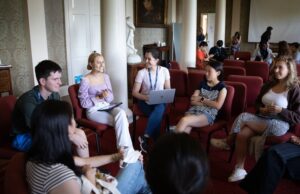
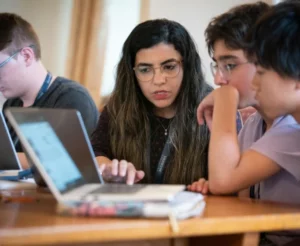
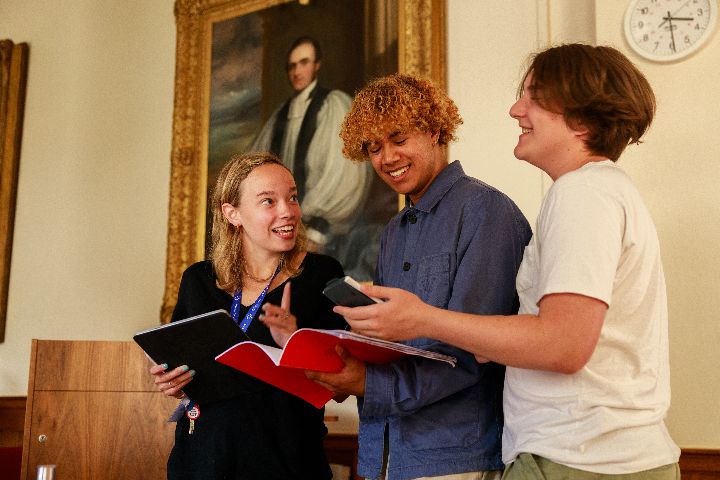
Immerse Education’s Economics Summer School gives you a focused, two-week immersion into economic theory and real-world applications, taught by expert tutors associated with top universities and academic institutions. The program aims to deepen your understanding of fundamental economic principles, global markets, and policy-making. Across lively seminars, workshops, and discussions, you’ll explore core concepts such as market behaviour, inflation, trade, inequality, fiscal and monetary policy, and how these forces shape global economies.
Small class sizes make room for personalized support, spirited debates, and collaboration on a research project that lets you apply what you’ve learned to issues that matter to you. Beyond the classroom, excursions and cultural activities help you connect lessons to the world around you, while living and studying alongside peers from around the globe adds an international perspective. Completion earns you a certificate of achievement and, in some cases, optional UCAS points if you’re looking toward UK university applications. You can find more details about the application here.
Why it stands out: It blends concentrated academic development with an immersive international summer experience, helping you deepen your economics knowledge while engaging with peers in diverse cities worldwide.
3. Business Opportunities Summer Session (BOSS)
Location: Penn State Smeal College of Business, University Park, PA
Cost/Stipend: ~$300-$350 registration fee (only if accepted); may vary year-wise
Acceptance rate/cohort size: Selective
Dates: June 14th – June 26th
Application Deadline: March 20th
Eligibility: Rising high school juniors in the U.S. and Puerto Rico
The Business Opportunities Summer Session, known as BOSS, is a two-week residential program that introduces you to the fundamentals of business and the rhythms of college life at Penn State University’s Smeal College of Business. You will take classes led by faculty that cover core topics like management, marketing, and financial concepts while also participating in workshops that strengthen your academic and professional skills.
Group projects, interactive sessions, and networking opportunities are woven into the schedule so that you can test your teamwork and problem-solving in ways that go beyond reading a textbook. The connections you make with classmates, faculty, and potential mentors can shape your future academic and career decisions.
Why it stands out: It gives you a meaningful first look at university-level business education and professional environments while living on a major research university campus.
4. UCLA Summer Economics Courses (Precollege Focus Series)
Location: University of California, Los Angeles, CA; virtual options available
Cost/Stipend: Fee varies; fee calculator
Acceptance rate/cohort size: Competitive
Dates: Multiple sessions during the summer
Application Deadline: Registrations open on February 18th
Eligibility: High school students worldwide (usually 15 years and older)
The Summer Precollege Focus Series, specific to economics, offers a structured and immersive short program, such as Intro to Investments or Principles of Economics, designed for advanced high school students and is widely regarded as one of the most competitive economics summer programs for high school students, offering early access to university credit. The program offers you a mix of academic lectures along with participative activities and peer collaboration.
Whether you take one rigorous class for credit or join a focus series that emphasizes deeper engagement with economic topics, these offerings allow you to have a peek into real university-level study. This blend of UCLA’s academic environment, summer flexibility, and access to college coursework makes this a strong option if you want to test your interests in economics before college.
Why it stands out: You can take authentic UCLA economics courses for university credit, giving you both collegiate experience and academic advancement before you even enter college.
5. University of Toronto Pre-University Courses (World Economics Track)
Location: University of Toronto, St. George campus, Toronto, Canada
Cost/Stipend: All-inclusive program fee ~ CAD $6,275
Acceptance rate/cohort size: Selective
Dates: Three 3-week sessions during the summer (June 14th – July 4th; July 5th – July 25th; July 26th – August 15th)
Application Deadline: Deadline details vary by course
Eligibility: Domestic and international high school students
The University of Toronto’s Pre-University Courses give you a structured three-week academic immersion in subjects ranging from World Economics to Global Leadership and related fields. If you choose World Economics, you will break down core concepts like scarcity, productivity, and market behaviour, then discuss how these ideas operate in global economic systems and relate them back to issues in your own community, in a programme widely regarded as one of the most globally focused economics summer programs for high school students.
These courses mix seminars, readings, and projects that demand critical thinking, academic research, and reflective discussion with classmates from around the world. While classes are intensive, you also benefit from supervised activities and cultural experiences that round out your summer abroad. Here’s the application link.
Why it stands out: It combines rigorous academic exploration with a fully supported residential experience at one of Canada’s most prestigious universities, giving you both economic insight and global perspective.
6. Columbia University Pre-College Explore Courses (Economics, & Business Tracks)
Location: Both online and in-person in NYC, NY
Cost/Stipend: Tuition varies by course and session
Acceptance rate/cohort size: Selective
Dates: Multiple summer terms (1-week, 2-week, and multi-week sessions are typically offered)
Application Deadline: Varies by session
Eligibility: High school students all over the world
Columbia University’s Pre-College Explore Courses let you tailor your summer around rigorous academic study in economics, business, and related social sciences while experiencing a world-class university environment. You can choose from courses that introduce core economic concepts, examine financial markets, or explore business and entrepreneurship in depth.
These courses combine discussion, case studies, and project work that challenge you to think critically about how economic systems operate and intersect with business decisions and public policy. Over the course, you’ll sharpen analytical skills and deepen your insight into economic reasoning in ways that extend beyond typical classroom experiences. Upon completion, you gain a Columbia University certification of participation that reflects your work and commitment over the summer.
Why it stands out: It gives you a flexible way to explore economics topics at an Ivy League institution while experiencing college-style learning and community, whether on campus or online.
7. King’s College London Pre-University Summer School (Business Management Track)
Location: King’s College, London, UK
Cost/Stipend: Tuition ~£3,195 for one week (residential packages available from ~£3,965)
Acceptance rate/cohort size: Competitive
Dates: Multiple sessions in July
Application Deadline: April 10th
Eligibility: Students worldwide aged 16-17
At King’s College London’s Pre-University Summer School, you can choose the Business Management module to dive into core ideas that shape how organisations function in global markets. You will explore fundamental facets of management, including the basics of finance, marketing, operations, and leadership, through a mix of lectures, class discussions, and engaging activities that mirror undergraduate study.
The program’s location in central London gives you a chance to connect classroom concepts with real economic activity around Europe’s financial hub. You engage with peers from different countries, work on team presentations, and complete assignments that challenge you to apply critical thinking to practical business problems. By course end, you leave with a deeper understanding of business reasoning and a certificate of completion that reflects your academic effort.
Why it stands out: This course will introduce you to a range of management disciplines and related skills, allowing you to use the knowledge gained to begin to formulate your own business strategies.
8. Research Mentorship Program – University of California, Santa Barbara (UCSB)
Location: University of California, Santa Barbara, Santa Barbara, CA
Cost/Stipend: Commuter ~ $5,675; Residential ~$13,274 (need-based scholarships available)
Acceptance rate/cohort size: Highly selective
Dates: June 15th – July 31st
Application Deadline: March 9th
Eligibility: High school students (primarily 10th & 11th grade; outstanding 9th graders considered); international students are welcome to apply
The UCSB Research Mentorship Program invites you to dive into university-level research under the guidance of faculty, graduate students, or postdoctoral mentors across disciplines ranging from biology and economics to environmental policy and media studies. You begin with an online orientation that introduces you to resources and mentors before you come to campus for an intensive six-week experience.
Once on site, you’ll be matched with a project that aligns with your interests and spend each week deeply engaged in research activities like data collection, fieldwork, library investigations, and lab work, all while earning eight university credits. Alongside your project, you’ll take supportive courses on research writing and presentation skills, culminating in a formal symposium where you present your results. Because the program is immersive, you’re expected to focus fully on your research and not participate in other courses or activities simultaneously.
Why it stands out: It offers a rare chance to conduct mentored, credit-bearing research and communicate your findings much like a university student would, giving you an authentic preview of academic research life.
9. Economics Policy Academy – Georgetown University
Location: Georgetown University, Washington, D.C.
Cost/Stipend: Residential ~$9,085; Commuter ~$7,085
Acceptance rate/cohort size: Competitive
Dates: June 28th – July 17th
Application Deadline: Varies
Eligibility: High school students around the world
Georgetown’s Economics Policy Academy immerses you in the dynamic relationship between markets and public policy by blending foundational economics with real-world case studies and policy analysis. Over three weeks on the historic Washington, D.C. campus, you’ll attend lectures, participate in interactive workshops, and join field trips to local think tanks and policy institutions that frame how economic decisions shape society.
Faculty, guest speakers, and discussion groups guide you through topics like globalization, development, behavioral economics, and the fiscal and monetary forces that influence both domestic and global economies. Outside the classroom, group projects and a research-based poster help you apply concepts actively, while residential life builds community and sharpens your collaborative skills. You’ll leave with a Certificate of Participation that reflects both your engagement and growth.
Why it stands out: It combines academic rigor with practical exposure to economic policy settings right in the heart of the U.S. political landscape.
10. Fordham University’s Finance Institute: Wall Street in the Classroom
Location: Fordham University Gabelli School of Business, Rose Hill Campus, Bronx, NY
Cost/Stipend: $1,300 total (including a non-refundable $100 deposit)
Acceptance rate/cohort size: Selective
Dates: Four 1-week sessions in June and July
Application Deadline: Priority registration closes on April 1st
Eligibility: High school students all around the globe
In this program, you spend a focused week with peers exploring foundational concepts that govern financial markets and personal economic decision-making. The curriculum weaves together economic basics, investment frameworks, and real-world topics like asset management, risk theory, and the role of monetary policy so that you can see how theoretical ideas play out in practice.
Through structured lessons and discussions, you also build practical knowledge about savings, debt, and portfolio strategies that extend well beyond the classroom. You’ll walk away with sharper analytical skills, a stronger grasp of economic reasoning, and a clearer sense of whether economics or finance fits your longer-term academic or career goals.
Why it stands out: It compresses key financial and economic ideas into a hands-on week with direct input from industry professionals in one of the world’s leading financial hubs.
11. Bank of America Student Leaders Program
Location: Various locations across the U.S.
Cost/Stipend: Free; paid internship
Acceptance rate/cohort size: Highly selective
Dates: 8 weeks during the summer
Application Deadline: Typically in mid-January
Eligibility: Current high school juniors or seniors who are legally authorized to work in the U.S.
The Bank of America Student Leaders Program integrates paid work with leadership development for high school students who want to deepen their understanding of community service, workplace expectations, and economic engagement. Over eight weeks, you work at a local nonprofit, contributing to real projects that support community needs while also building professional skills in areas such as communication, problem-solving, and project coordination.
Alongside hands-on experience, the program includes financial education resources and coaching that help you think critically about money management and economic participation. Your summer culminates in an all-expenses-paid leadership summit in Washington, D.C., where you connect with other Student Leaders, hear from cross-sector leaders, and explore how business, government, and nonprofit sectors intersect to address complex social challenges.
Why it stands out: It blends paid work, community impact, and national leadership development, giving you real workplace experience and a powerful platform to grow as a civic-minded leader.
12. The Michigan Ross Summer Business Academy
Location: Ann Arbor, MI
Cost/Stipend: $5,500 program fee plus a $75 application fee
Acceptance rate/cohort size: ~72 students
Dates: June 7th – June 17th; June 21st – July 1st
Application Deadline: January 8th
Eligibility: Rising high school seniors; international students are accepted, but U.S. residents are prioritized
The Michigan Ross Summer Business Academy is designed to give you a compact but rigorous immersion into business principles and leadership thinking on a major research university campus. The program’s structure sharpens your analytical skills and expands your perspective on how business intersects with broader economic and social systems. Over two weeks, you will attend classes and workshops led by Ross faculty that explore how companies function, how leaders make decisions, and what connects theory with action in business contexts.
Beyond academics, the program gives you a taste of college life, from living in residence halls to collaborating with students who share your interest in economics, markets, and organizational strategy. Through structured learning and peer interaction, you get a clearer sense of whether a future in business or economics aligns with your strengths and ambitions. Here’s the application link.
Why it stands out: It gives you a high‑impact, immersive taste of business education at a leading business school while connecting you directly with faculty, industry voices, and a small, engaged student cohort.
13. Yale Young Global Scholars: Politics, Law & Economics
Location: Yale University, New Haven, CT
Cost/Stipend: ~$7,000 tuition
Acceptance rate/cohort size: Highly competitive
Dates: Three 2-week sessions in June and July
Application Deadline: January 7th
Eligibility: High school sophomores or juniors from all countries (typically ages 16–18)
In the Politics, Law & Economics track of the Yale Young Global Scholars program, you dive into big questions about governance, markets, legal systems, and public policy in an academic environment that blends history, theory, and contemporary analysis. Over two weeks on Yale’s campus, you attend lectures from Yale faculty, engage in small-group seminars, and participate in discussions that push you to think critically about how economic ideas intersect with political structures and legal frameworks.
You explore topics like regulation and market behaviour, human rights and economic inequality, and comparative policy approaches across different societies. Because students come from around the world, you also gain cross-cultural perspectives while building a network of peers with similarly curious minds.
Why it stands out: It combines immersive interdisciplinary study with intense global perspectives, helping you sharpen both analytical and communication skills while experiencing Yale’s academic culture firsthand.
14. Economics Academy – University of Pennsylvania (Penn Arts and Sciences High School Programs)
Location: University of Pennsylvania, Philadelphia, PA
Cost/Stipend: Tuition and fees vary by program
Acceptance rate/cohort size: Competitive
Dates: July 11th – August 1st
Application Deadline: Rolling admissions
Eligibility: Domestic and international high school students
If you’re curious about how markets work and want a structured introduction to economic theory through current events, Penn’s Economics Academy gives you a rigorous yet accessible dive into key concepts. Over three weeks, you’ll attend daily lectures, workshops, and discussions led by Penn faculty and teaching assistants who encourage active participation and debate on topics such as scarcity, market structures, and government roles in economies from around the world, in a programme widely regarded as one of the most academically demanding economics summer programs for high school students.
The curriculum doesn’t require advanced math or calculus, which makes it approachable if you’re newer to economics, but you’ll still engage with real examples and apply models in group work. Outside of the classroom, the program includes field trips and organized activities that connect what you learn to everyday issues and global policy challenges. You’ll also collaborate on a capstone project where your group analyzes a real economic issue and presents solutions, helping you build both analytical and communication skills.
Why it stands out: It blends academic economic foundations with global context and hands-on projects, all while letting you experience life on an Ivy League campus.
15. Tufts University Pre-College Entrepreneurship & Innovation Bootcamp
Location: Tufts University campus, Medford/Somerville, MA
Cost/Stipend: Commuter $4,225; Residential $5,750
Acceptance rate/cohort size: Moderately selective
Dates: July 5th – July 17th
Application Deadline: May 1st
Eligibility: Students worldwide entering grades 10-12
In the Tufts Pre-College Entrepreneurship & Innovation Bootcamp, you spend two weeks turning abstract ideas into real ventures while learning directly from entrepreneurial mentors and faculty. You work in teams to identify problems worth solving, test assumptions, and build a business case from scratch, gaining exposure to frameworks of economics and business that entrepreneurs use when launching startups or mission-driven initiatives.
The experience culminates in a dedicated pitch event where your team presents your concept to a panel of judges, simulating a real startup accelerator demo day and sharpening your communication skills under pressure. Beyond the structured project work, you also build soft skills through collaboration, critical thinking, and iterative design thinking that extend well beyond traditional classroom learning.
Why it stands out: It gives you a structured yet creative space to design, test, and pitch your own venture idea with real mentorship and collaboration, all within a supportive pre‑college community.
Learning to Think Like an Economist
Thinking like an economist means learning to slow down and ask why. Why do markets behave the way they do? Why do policies create unintended effects? Why do incentives shape human behaviour?
The 15 economics summer programs for high school students listed here help you practise that kind of questioning in structured, academic settings. You move beyond memorising concepts and begin testing ideas through data, models, and debate.
As you work through real economic problems, you learn to weigh evidence, recognise trade-offs, and challenge assumptions. Those habits of thought are valuable far beyond economics.
If you want to keep sharpening that perspective, explore our Economics Top Books Guide to see how leading economists frame the questions that still shape the world today.